.jpg)
%20(m).jpg)
Photo Credit
For those living in cold regions, a high-quality pair of winter boots is essential. They help keep your feet warm, dry, and planted on the ground as you navigate months of snowy and icy conditions. Below, we break down all the important considerations for choosing the right winter boot for you, including warmth, height, waterproofing, weight, fit, and more. To check out our current favorite designs, see our articles on the best winter boots and best women's winter boots.
Editor's note: We updated this article on December 18, 2025, to reflect our current top picks, incorporate new photos from testing, and review all other sections for accuracy.
The first step in choosing a winter boot is to consider your intended uses. For the most part, there are three categories: casual winter boots, which are great for everyday wear, commuting, and light outdoor use; winter work boots that are highly durable and optimized for extended time outside; and backcountry-focused models that resemble hiking boots but with added insulation and winter-specific traction. Lightweight backcountry models excel for sports like winter hiking and snowshoeing, while thicker and warmer versions are ideal for outdoor work and more sedentary activities in cold conditions.
As you might expect, many casual winter boots have a sleeker, more urban look. Some of our favorites are not only stylish but also offer good value. Additionally, these designs typically provide a decent grip in most snow conditions. The insulation should keep your feet reasonably warm (unless you’re out for a long time), and almost all of them are waterproof for walking through light snow and puddles. However, if the weather and terrain are particularly harsh or you’ll be out for extended periods, it’s worth upgrading to a more serious boot that's either optimized for longer periods outside with increased insulation or improved traction and waterproofing for winter hiking.
.jpg)
A great winter boot must be warm, and there is a notable difference between brands and designs. Many brands provide a temperature rating, although we always recommend taking those with a grain of salt. You may see impressive ratings like -25°F or lower, but the truth is that, unlike sleeping bags, there is no standardized rating system to measure the warmth of footwear. Additionally, several other factors contribute to this, including your activity level, circulation, sock type and thickness, and even the fit of the boot. We like reading the temperature ratings and taking note, but we always assume they are overly generous, and we also look at other details and specifications.
In terms of insulation, winter boots come in various types. The most common is synthetic fill, such as PrimaLoft and Thinsulate, along with a gram rating showing the thickness. We prefer synthetics, especially for footwear—unlike down, synthetic insulation resists water and continues to insulate when wet, which is crucial if water enters your boot or your feet get sweaty. For reference, many light to midweight boots have 200- to 400-gram insulation, while true cold-weather boots can reach 1,200 grams with a thick liner (these types of boots are often used for hunting, ice fishing, and by workers who are outside for much of the day). In addition to synthetic insulation, some winter boots include a separate, removable felt liner (more on this in Two-Piece vs. One-Piece Designs below) or have interiors filled with sheepskin or wool. The efficacy of these insulation types varies significantly from model to model, and the majority of brands use synthetics.
.jpg)
In addition to warmth, your winter boot is designed to keep snow and ice out. If you aren’t pulling snow pants over the top or using gaiters, height matters a lot, plus it impacts the design. A boot's shaft height, which is a measurement taken from the footbed to the top of the boot, is a great basis for comparison between models. At the low end of the spectrum, a number of hiking-centric models are around 6 to 7 inches in height, which does a fairly good job unless the snow is deep. Casual options designed for added warmth and style may feature a height of up to 10 inches. And if you really want to increase warmth and protection, consider a model that falls within the 11- to 15-inch range. As mentioned above, consider how you intend to use your boot and the rest of your winter gear when choosing an ideal height.
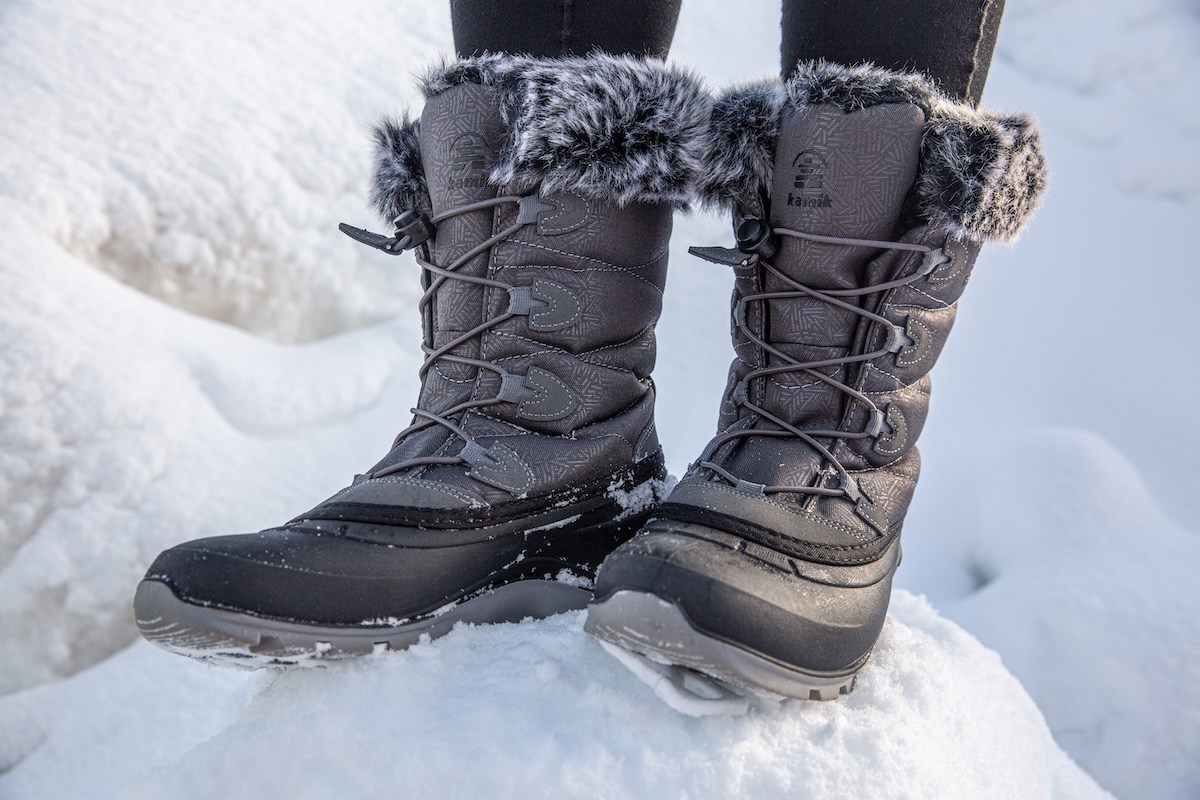
Winter boots are designed with traction on snow and ice in mind, so you’ll find a wide variety of grippy outsoles and tread patterns to choose from. Snow boots have a distinct lug pattern and rubber compound compared to their hiking boot counterparts. The compounds are softer and don’t harden when temperatures drop, which helps them continue to grip on slick surfaces, and the lug patterns are designed to prevent snow buildup. Generally, hiking-ready models offer the best traction, while casual boots may be more prone to slippage. Additionally, there are specialized technologies, such as Vibram’s Arctic Grip and Michelin’s Winter Compound, which have enhanced performance on ice.
That said, when conditions get more intense, such as steeper terrain and widespread ice, you may want to consider adding a traction device. For wearing with winter boots, one of our favorite systems is the Kahtoola Nanospikes—we’ve found their minimalist style to work very well on icy sidewalks. Another popular option is the Yaktrax Diamond Grip, which we find to be highly versatile. And for serious outdoor use, including icy winter hiking, the Kahtoola Microspikes essentially function as mini mountaineering crampons. They are overkill for most conditions but offer some of the best traction on the market on ice.

A key feature to look out for is whether a winter boot is a one-piece or two-piece design. Classic two-piece set-ups, such as the Sorel Caribou and Joan of Arctic, feature a thick outer shell (leather and rubber in this case) along with a removable liner (typically felt). The result is excellent waterproofing and the ability to remove the liner to dry it out or even wash it (not to mention Sorel sells replacement liners in case they pack out before your boots break down). In addition, removable liners are generally soft, providing more cushioning and overall comfort than many one-piece designs.
On the other hand, we’ve found that two-piece boots are less than optimal for covering much ground and engaging in outdoor activities like snowshoeing and winter hiking. One-piece boots—and especially those based on hiking designs—offer better mobility, feel less sloppy, and have fewer moving parts that can rub and feel out of place. And perhaps most importantly, they commonly weigh significantly less for the pair. As an example, Sorel’s two-piece Caribou weighs about 4 pounds 10 ounces, while the similarly warm one-piece Oboz Bridger 10” Insulated comes in at 3 pounds 6 ounces. For these reasons (and more), you’ll find that most models intended for active use are one piece.
.jpg)
Given that you’ll be walking in snow and over wintery slush, all winter boots offer some degree of water protection. As covered above, two-piece boots tend to provide maximum waterproofing: the burly rubber around the feet and leather uppers on the outer shell are pretty imperious to the elements, with a removable liner underneath. One-piece boots, on the other hand, feature a thinner, waterproof, and breathable membrane sandwiched between the outer and lining. One-piece boots are waterproof, but extended exposure can eventually lead to moisture making its way through the membrane.
Other key pieces in staying dry relate to overall height and the tongue of the boot. Specifically, if your feet will be submerged in ankle-height or deeper water on occasion, it’s a good idea to verify the tongue stays connected to your boot’s upper as high as possible (an opening in the tongue means water can seep through). And regardless of the boot design, it’s important to take measures to prevent snow from entering over the top of the collar. If possible, wear pants that can be pulled over your boots, or if not, tighten your boots closely at the top and consider wearing gaiters. If you'll be winter hiking or snowshoeing, gaiters are the most surefire way to stay dry.

With most categories of outdoor gear, weight is a primary consideration, but not so much in this case. The truth is that for winter boots, you’re generally not carrying them in a pack, you’re not covering super long distances, and you’re usually not putting them in a suitcase for travel. This means that a total weight of 3 to 4 pounds per pair, or even higher, doesn’t make all that much of a difference. That said, if you have ambitious snowshoe and hiking plans, or just prefer a shoe that’s light and nimble, it’s worth double-checking the weight.
Additionally, bulk can be a significant factor. As mentioned above, Sorel’s Caribou is extremely popular and has been for years. For casual use, such as walking to your car or shoveling the sidewalk, it’s a fine option. But with a weight of 4 pounds 10 ounces, the Caribou is a heavy boot, and more importantly, it feels big and rather burdensome on your foot. As with any key specification, consider the weight in conjunction with the overall build.
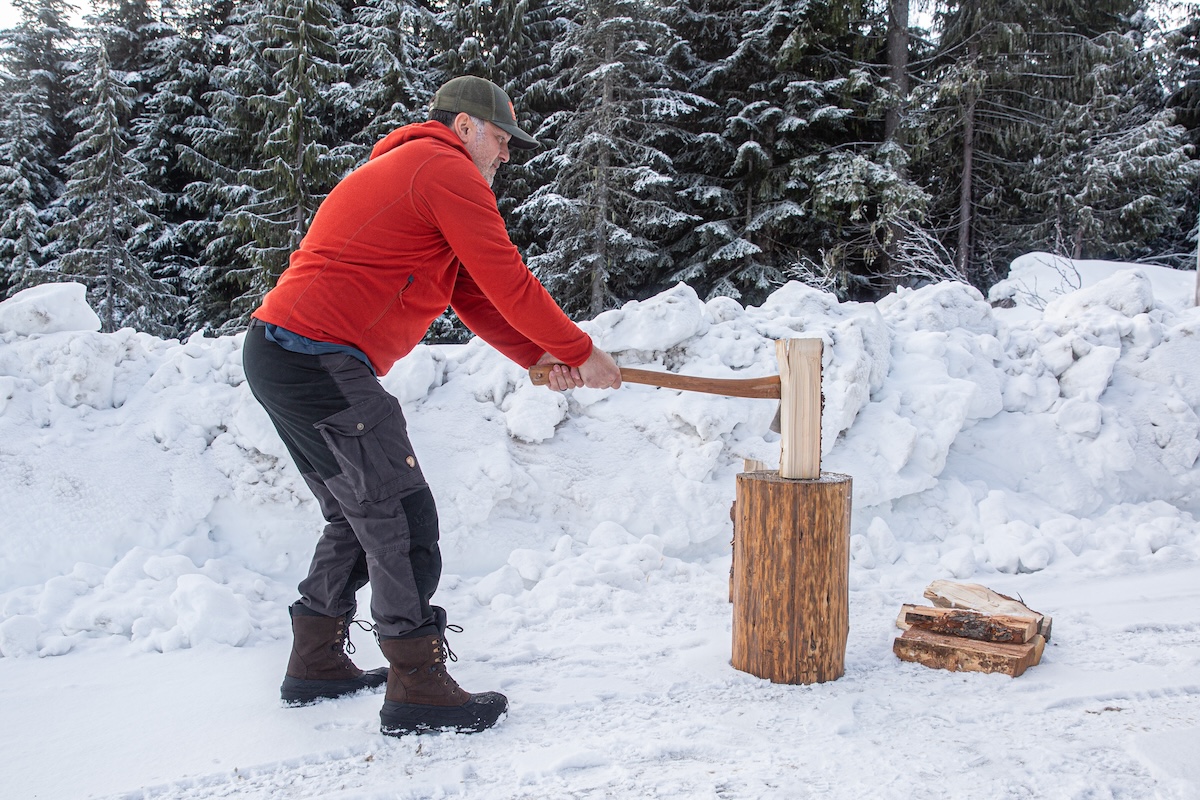
Fit is always an important consideration when it comes to footwear, and the same holds true for winter boots. A properly sized boot should be large enough to accommodate your preferred winter socks without pinching. On the flip side, a fit that is too snug may inhibit circulation and can end up compromising the warmth the boot provides. It’s also important to consider the activities you'll be engaging in: a boot that will only be worn around town doesn’t have to fit perfectly to perform well (you can err on the side of going a little loose). But for a more hiking-focused model, it’s best to get fit dialed in to avoid hot spots and discomfort—you’ll be covering a lot of ground, after all. As always, it’s best to try on your boots and buy them in person, but if shopping online, do your research and be prepared to size up.

If there were one category of outdoor gear where styling matters, winter boots would be a strong contender. The truth is that some people use winter boots for activities like hiking and snowshoeing, but many more wear them around the city, to work, and even out at night. The good news here is that manufacturers have taken note—there are now plenty of stylish options, and even traditional outdoor brands are making their winter boots more fun. Some new types of insulation are so discreet that it may not even look like you're wearing a warm and weather-optimized boot.

After reading the information above, it's time to choose the perfect winter boots for you. We cover all of our top picks in our articles on the best winter boots and women's winter boots, but below are our top recommendations:
See Our Winter Boots Guide See Our Women's Winter Boots Guide


_0bc58.jpg?h=fbc67360&itok=y-RAM9m9)
3f56.jpg?h=fbc67360&itok=McVYCRci)


6677.jpg?h=fbc67360&itok=Xm31Zirv)
77b1.jpg?h=fbc67360&itok=WqLUcpaD)
770d.jpg?h=fbc67360&itok=g6hRf8Vx)
8857.jpg?h=fbc67360&itok=2LUFcwl7)
4f14.jpg?h=fbc67360&itok=8XGQz5fv)