.jpg)
.jpg)
Photo Credit
It’s that time of year! Time to find the perfect present for our adventurous loved ones. We have a list of editor-approved gifts for backpackers, as well as more outdoor gift guides tailored for other pursuits. Happy gift giving!
Gone are the days when backpacking consisted of strapping on a huge external frame and lumbering through the forest with an aching body. Thankfully, modern designs lean towards minimalism and thoughtful, ergonomic designs. From the lofty, moss-strewn trails of the Pacific Northwest to the dusty, blistering heat of the African savannah, the Switchback Team has shouldered hundreds of backpacks over just as many miles to narrow in on the list of 17 worthy models below. These are our favorite backpacks of 2025, from ultralight bags for minimalists and thru-hikers to comfort-oriented options for weekend warriors and extended trips. The men's Osprey Atmos AG 65 and women's Osprey Aura AG LT 65 snagged our top awards this round thanks to their impressive all-around performance. For more background information, see our comparison table and buying advice below the picks, along with details about our testing process. Finally, while the options below include both men's and women's styles, we've also compiled a list of the best women's backpacking packs, as well as a roundup of the best ultralight backpacks.
Editor's note: We updated this guide on December 23, 2025, to remove several models, add the Rab Exion 65, and make the guide more unisex overall. We also updated the photos with recent shots from testing, added a 'tested and dismissed' section, and ensured that all information was accurate at the time of publication.

Weight: 4 lb. 9.8 oz. (men's), 4 lbs. 7.0 oz. (women's)
Fabric: Nylon (210D & 500D)
Capacities: 50, 65L
What we like: A standout all-rounder with especially great ventilation.
What we don’t: Pricey and fairly heavy.
The Atmos AG deftly balances comfort, organization, and durability. The attention grabber is the “Anti-Gravity” suspended mesh backpanel, which replaces the protruding foam found on more traditional designs to maximize both ventilation and comfort. But that’s not all the Atmos has going for it: The pocket design is thoughtfully laid out with plenty of options to divvy up gear, the Fit-on-the-Fly harness and hipbelt offer an easily customizable fit, and the premium materials hold up well to rough treatment. Overall, the Atmos is an extremely well-rounded backpack that works great for anything from quick overnight trips to extended jaunts into the backcountry.
The Atmos tacks on two side zippers for convenient access to the main compartment, a torso-length adjustment, and an integrated rain cover. The pack’s fabric also prioritizes sustainability (like a lot of gear manufacturers, they’ve moved to a PFAS-free DWR finish). These notable features, unfortunately, translate to a pretty high price tag. But we still stand behind the balance of weight, carrying comfort, and features this pack offers, and Osprey products are well-made and sure to last you for many years. For everything from quick overnight missions to week-long backpacking trips, the Atmos AG 65 is a tried-and-true choice.
Read more: men's Osprey Atmos AG 65 review and women's Aura AG 65 review
See the Men's Osprey Atmos AG 65 See the Women's Osprey Aura AG 65
/Osprey%20Atmos%20AG%2065%20backpacking%20pack%20(reaching%20into%20side%20zipper).jpg)
 Weight: 4 lb. 0.2 oz. (women's), 4 lbs. 1.0 oz. (men's)
Fabric: Nylon (210D & 500D)
Capacities: 50, 65L
What we like: The comfort, durability, and performance of a high-end backpacking pack in a reasonably light package.
What we don’t: You give up some pockets and organizational add-ons; there are plenty of lighter options available.
The best overall backpack isn’t always the flashiest option, and Osprey’s Aura AG LT 65 stands out for getting the fundamentals exactly right. With the LT, Osprey distilled the comfort, organization, and durability of a premium backpacking pack into a more streamlined package, trimming away excess without sacrificing performance. The result is a pack that covers everything from quick overnights to week-long adventures, with class-leading comfort, smart storage, dependable weather protection (including a rain cover), and excellent ventilation. An adjustable torso length helps dial in fit, and unlike many lightweight-leaning designs, the Aura AG LT maintains a confidence-inspiring build with a burly 500D base and 210D body fabric. At 4 pounds and a relatively low price tag, it’s tough to beat the Aura’s blend of price, weight, and all-around capability.
That said, the Aura AG LT won’t be the perfect match for everyone. Backpackers who prioritize extensive organization may prefer a more feature-rich option like the Gregory Deva 70—or Osprey’s standard Aura AG 65, which adds side-zip access, extra lid and front pockets, and a dedicated sleeping bag compartment. On the flip side, the Aura AG LT is too heavy to qualify as truly lightweight, and ounce-counters may gravitate toward lighter options like the ULA Ultra Circuit 68, Hyperlite Southwest 55, or Osprey’s own Eja 58. Even so, the Aura AG LT strikes an ideal balance between comfort, features, and weight, making it an easy top pick for most backpackers, whether they’re just starting out or logging serious miles.
Read more: women's Osprey Aura AG LT 65 review and men's Osprey Atmos AG LT 65 review
See the Women's Osprey Aura AG LT 65 See the Men's Osprey Atmos AG LT 65
.jpg)

Weight: 3 lb. 5.0 oz. (men's), 3 lb. 3.0 oz. (women's)
Fabric: Nylon (100D & 400D)
Capacity: 60L
What we like: Decent performance for the price; sizing is very adjustable.
What we don’t: Cheap materials and budget-feeling fit and finish.
For value seekers or those just dipping their toes into backpacking, REI’s in-house collection is a really nice place to start. The Trailmade 60 is far from the most premium pack we’ve tested—in fact, it carries the vibe of a 90s-era hauler—but it certainly gets the job done. We found the suspension to be comfortable on multi-day trips with up to 40 pounds in tow, and organization was good, thanks to a roomy main compartment, dedicated sleeping bag storage, and plenty of external pockets. For just $179, the Trailmade 60 is an excellent pick for beginners or those who get out just a few times a year. The latest upgrade features a generous U-zipper for easy internal access, a switch to a different backpanel design, and a front-panel cinch-cord pocket with mesh side panels for easily stashing extra layers, all with a slight reduction in weight.
What do you give up by choosing REI’s entry-level pack over the pricier options on this list? In short, the fit and finish are what one would expect from a $179 pack: Materials are obviously cheap, the pack is quick to wet out in moisture, and ventilation is limited. Additionally, the hipbelt pockets are a bit small, and we expect the squishy foam on the hipbelt, shoulder straps, and portions of the back to pack out over time. Additionally, the one-size-fits-most torso adjustment (two hipbelt sizes are offered, accommodating sizes S to 3XL) results in a less tailored feel compared to packs made in multiple torso sizes. On the other hand, this adjustability makes the pack a great one to share. Summed up, if you’re a new or casual backpacker in the market for a no-frills pack, the REI Trailmade 60 gets our nod as the best budget design of the year. Note: We have yet to test the latest Trailmade 60, but we will update our review once we have the opportunity to do so.
Read more: women's REI Co-op Trailmade 60 review (previous version)
See the Men's REI Co-op Trailmade 60 See the Women's REI Co-op Trailmade 60
 Weight: 2 lb. 12.0 oz. (women's), 2 lb. 13.0 oz. (men's)
Fabric: Nylon (100D & 210D)
Capacity: 18, 22, 55L
What we like: Relatively inexpensive; great adjustability and customization; lightweight.
What we don’t: Materials and load limit are a step down from the Osprey Eja or Gregory Facet.
REI Co-op has long been known for strong value, but its packs don’t often lead the class in outright performance. The Flash 55 is a notable exception. Despite its approachable price tag, this pack is respectably light and comes well equipped with practical storage, including four oversized side pockets (handy for tent poles or a tall water bottle) and a roomy front dump pocket. The roll-top closure makes it easy to cinch things down for smaller loads, and we especially like the modular design: Compression straps, two hipbelt pockets, and a shoulder strap pocket can all be removed to streamline the pack.
We put the Flash 55 through its paces on a three-day trip in Wyoming’s Wind River Range and came away largely impressed. For a pack this light and affordable, it carried surprisingly well near its 30-pound ceiling, and overall storage proved functional for a long weekend in the backcountry. That said, the single lid pocket and lack of secondary access to the main compartment limit convenience compared to more premium designs, and the removable shoulder strap pocket is a weak point—it tends to come loose, is tricky to reattach, and barely fits our phone. Still, these are relatively minor gripes given the Flash’s price, thoughtful customization options, and clean, modern feel. Rounding things out, the current version is offered in four sizes—including an extra-small torso paired with a medium hipbelt—making it a strong fit option for a wide range of hikers. For an even cheaper alternative, check out the women's version of the Trailmade 60 above.
Read more: men's REI Flash 55 review and women's REI Flash 55 review
See the Women's REI Co-op Flash 55 See the Men's REI Co-op Flash 55


Weight: 1 lb. 13.3 oz. (medium)
Fabric: Dyneema Woven Composite 3.9 Hardline
Capacities: 40, 55, 70L
What we like: Impressively light but strong and can carry a full load.
What we don’t: Expensive and minimal organization.
A number of ultralight packs are designed for thru-hikers and minimalists, and our top men's pick is the Hyperlite Mountain Gear Southwest 55. What sets the Southwest apart is its Woven Dyneema Composite construction, which offers incredible strength and water resistance at a very low weight. Tack on a firm foam backpanel and aluminum stays, and the Southwest handles heavy loads with relative ease. For the whole enchilada at under 2 pounds, it’s no wonder it’s one of the most popular UL packs on the trail. And Hyperlite offers a range of other options, with the primary difference being the external pocket fabric—the Windrider, for example, has mesh pockets and is a great choice for those who want to dry their gear out on the go.
At 55 liters, the Southwest (also available in 40L and 70L versions) has the capacity to take on seriously long trips and has become a go-to pack for thru-hikers. In our hands, it has served as both an overnight and multi-day backpacking pack, as well as a packrafting dry bag. The design is undeniably basic, with only the main compartment and a few exterior pockets for organization, and the Dyneema-lined backpanel falls short in terms of breathability. But the Southwest is still one of the most uncompromised options available, and there’s no denying the trail style you get with that premium Dyneema white. Finally, it’s also worth mentioning Hyperlite’s Unbound 55, which is a touch lighter, less torpedo-like, and offers a few more features (including external daisy chains, stretchy pockets, and a removable, reverse-pull hipbelt) but gives up a little support with just a single stay (compared to the Southwest’s two). Note: This stood out as our favorite ultralight backpack for men, but this is a unisex pack.
Read more: Hyperlite Mountain Gear Southwest 55 review
See the Hyperlite Mountain Gear Southwest 55
.jpg)
 Weight: 2 lb. 4.8 oz.
Fabric: Ultra (200D & 400D)
Capacity: 68L
What we like: Competitively lightweight and durable construction designed for and by thru-hikers.
What we don’t: Not the lightest pack here; you can save considerably with the Robic nylon version.
Based in northern Utah, ULA Equipment has long been a favorite among thru-hikers and ultralight enthusiasts, and the Circuit remains their marquee pack. In 2024, ULA introduced the Ultra Circuit, which builds on the original Circuit's comfort and dialed fit with notable boosts in durability and weather resistance over the Robic nylon version. The Ultra version costs more, but for frequent users or those tough on their gear, the cutting-edge fabric—widely regarded as one of the most advanced materials in the ultralight space—is a compelling upgrade. Fit customization is another standout, with options to fine-tune torso length, hipbelt size, and shoulder strap style. And at just 2 pounds 4.8 ounces, the Ultra Circuit is impressively light for a 68-liter pack, rounding things out with a functional storage layout that includes large front and side pockets, zippered hipbelt pockets, and numerous external attachment points, such as ice axe and trekking pole loops.
We’ve carried the Circuit on multi-day outings in Patagonia and while tagging Colorado 14ers, and it has consistently impressed us with how easy it is to pack, adjust, and strip down for shorter excursions from camp. We love the customizability, abrasion resistance, and water resistance of this pack, as well as its sustainable construction—the Ultra fabric is made entirely from recycled polyester. All of this does translate to a slightly higher weight than other truly ultralight designs, but we appreciate the bump in durability and performance. It's also on the pricey side compared to some of the competition, and you can save a good deal by snagging the Robic Nylon version. Note: This stood out as our favorite ultralight backpack for women in our women's-specific round-up, but this is a unisex backpack.
See the ULA Equipment Ultra Circuit 68

.jpg) Weight: 5 lb. 0 oz. (men's), 4 lb. 11.2 oz. (women's)
Weight: 5 lb. 0 oz. (men's), 4 lb. 11.2 oz. (women's)
Fabric: Nylon (210D, 420D, & 630D)
Capacities: 65, 75L (Baltoro); 60, 70L (Deva)
What we like: Heavy-hauling comfort with a great feature set.
What we don’t: Pretty hefty and overkill for weight-conscious backpackers.
Gregory has earned a reputation for comfort over the years, and their flagship men’s Baltoro and women’s Deva packs carry on the tradition. These bags are designed to carry heavy loads with strong suspensions, firm yet supportive padding, and excellent organization. With a fully mesh backpanel, it remains well ventilated even when fully loaded, and the hip-hugging suspension and pivoting shoulder straps keep the pack stable when hiking over uneven terrain. We also appreciate the generous storage layout for shuttling multi-day loads, including nine exterior pockets, U-shaped front access to the main compartment, and massive hipbelt pockets that easily swallow a large smartphone.
Among other places, we've tested the Baltoro 75 while trekking in Patagonia, and the pack lived up to its intentions as one of the most comfortable and feature-rich designs on the market. We appreciate the highly customizable hipbelt and shoulder straps (great for achieving a proper fit) and the use of more recycled materials with each iteration. But, as you might expect, the biggest downside of the Baltoro and Deva is their weight. In short, if you aim to keep things light and simple on a backpacking trip, this probably isn’t the pack for you. But if you plan to carry 40 pounds or more, the Baltoro and Deva will shoulder the load better than most—and chances are you won’t notice the extra pound or two. Note: The current Baltoro and Deva are scheduled for an upgrade in the Spring of 2026, so stock is a bit low for the outgoing version at the time of publication (meaning this is a great time to grab one at a discount!) We will be sure to update this review with information on the update once it is released.
Read more: men's Gregory Baltoro 75 review and women's Gregory Deva 70 review
See the Men's Gregory Baltoro 75 See the Women's Gregory Deva 70
.jpg)

Weight: 2 lb. 13.4 oz. (men's), 2 lb. 11.5 oz. (women's)
Fabric: Nylon (100D & 400D)
Capacities: 38, 48, 58L
What we like: Excellent mix of carrying comfort, ventilation, and build quality at a reasonable weight.
What we don’t: Relatively thin materials; overly complicated for many minimalists and thru-hikers.
Osprey is a backpack powerhouse known for their quality builds, excellent organization, and comfort, as seen in industry-leading designs like the Atmos and Aura above. First released well over a decade ago, the Exos (and women’s Eja) was their original take on an ultralight pack and remains a popular pick in this category. At 2 pounds 13.4 ounces for men's the 58-liter version, it can’t compete with streamlined haulers like the Hyperlite Southwest or Gossamer Gear Mariposa, but the additional weight translates to a boost in organizational features, carrying comfort, and ventilation. The Exos and Eja also feature a convenient torso-length adjustment and hipbelt pockets.
If you’re accustomed to a traditional backpack but curious about dipping into the UL world, we think the Exos and Eja are a great place to start. With a robust suspension system and practical feature set, these packs are pushing the definition of "ultralight," yet they remain significantly lighter and more streamlined than packs like the Atmos and Aura. And held up against the similarly intentioned Gregory Focal and Facet, the Exos and Eja boast a few more bells and whistles (including the adjustable torso length) and feature a slightly more plush backpanel. You do trade a bit of durability compared to burly traditional haulers or pricier ultralight designs (which generally use Dyneema or tough Robic nylon), but we’ve been surprised with how well the 100-denier (D) body and base have held up. For an even more streamlined option from Osprey, check out the Exos Pro 55 and Eja Pro 55, which weigh just 2 pounds 1.2 ounces and 1 pound 14.8 ounces, respectively, and are quickly becoming favorites among thru-hikers and minimalists willing to take a deeper dive into the UL space.
Read more: men's Osprey Exos 58 review and women's Osprey Eja 58 review
See the Men's Osprey Exos 58 See the Women's Osprey Eja 58
 Weight: 4 lb. 0.3 oz. (men's), 4 lb. 2.5 oz. (women's)
Fabric: Polyester & Nylon (400D & 420D)
Capacity: 65L (Zulu); 63L (Jade)
What we like: Thoughtful and well-rounded design built specifically for plus-size backpackers.
What we don’t: Only offered in one capacity and colorway.
Historically, it’s been difficult (if not impossible) to find backpacking gear in plus sizes, which has excluded many from enjoying the outdoors. Gregory was one of the first companies to right this wrong, and they now offer quite a few of their leading designs in dedicated plus-size offerings to appeal to a wider range of hikers. The Zulu 65 Plus Size and Jade 63 Plus Size are our current favorites and stray from the straight-size models with longer and wider shoulder straps, a hipbelt that fits waists from 39 to 60 inches (the straight-size Zulu and Jade can accommodate hips from 25 to 48 in.), and repositioned load lifters and hipbelt pockets for easier access. For reference, Gregory states that the Zulu 65 and women’s Jade 63 are comparable to sizes 2X to 6X in apparel, which is a healthy range that significantly widens their overall appeal.
We were happy to see that Gregory chose the Zulu and Jade to bring to their plus-size audience, as they offer a hard-to-beat combination of carrying comfort, durability, weight, and features—all at a reasonable price point. The thickly padded straps and body-hugging suspension system move with your body over rocky and rooted trails, and the robust fabrics hold up well to frequent use. Top, front, and bottom access to the main compartment make it easy to locate gear inside, and there’s plenty of zippered storage for divvying up the essentials. We came away a little underwhelmed by the ventilation and weatherworthiness in testing, but overall, the Zulu and Jade check all the boxes for most backpackers, striking a nice middle ground between streamlined UL packs and feature-rich, heavy haulers.
Read more: women's Gregory Jade 63 review (straight-size version)
See the Men's Gregory Zulu 65 Plus Size See the Women's Gregory Jade 63 Plus Size

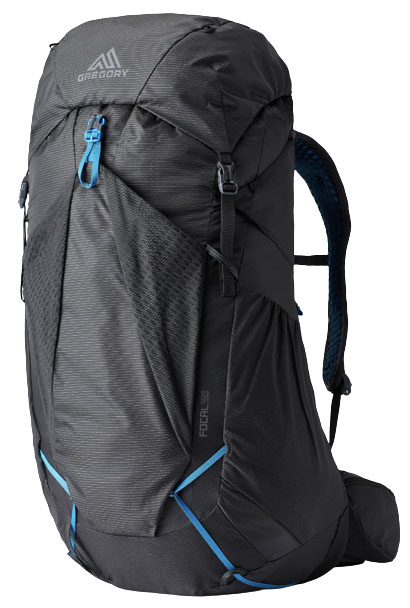 Weight: 2 lb. 10.4 oz. (men's), 2 lb. 8.8 oz. (women's)
Fabric: Nylon (100D & 210D)
Capacities: 48, 58L (Focal); 45, 55L (Facet)
What we like: A strong alternative to the Osprey Exos—if it fits.
What we don’t: No torso length adjustment.
Replacing the well-loved Optic, Gregory’s Focal (and women’s-specific Facet) highlights the brand’s premium ethos in an ultralight package. The pack drops weight with stripped-down features and simple organization, but comfort remains a priority: The body-hugging hipbelt, lightweight aluminum frame, and full mesh backpanel offer significantly more support than the streamlined suspension systems typically found on minimalist packs. You’ll still want to make sure the rest of your gear is appropriately pared down—especially if you’re opting for the smaller 48-liter Focal or 45-liter Facet version—but the good news is there’s no shortage of ultralight tents, sleeping bags, sleeping pads, and other UL gear to choose from.
The Focal and Facet go head-to-head with Osprey’s Exos and Eja above, the longstanding favorites in this category. Both packs come in 48- and 58-liter versions (the Exos and Eja are also available in a 38L option) and check in around the same price. However, the Focal and Facet are a bit lighter, carry just as well, and feature a simpler design that’s easier to pack. The potential hangup, however, is that the Gregory packs lack any torso adjustability. This isn’t especially noteworthy compared to ultralight designs—packs like the Hyperlite Southwest also feature fixed torso lengths—but it’s an undeniable shortcoming compared to the Exos and Eja. Gripes aside, if the Focal or Facet fits your body (they're available in three sizes), they are excellent alternatives for weight-conscious backpackers.
Read more: women's Gregory Facet 55 review
See the Men's Gregory Focal 58 See the Women's Gregory Facet 55
 Weight: 4 lb. 14.7 oz. (men's), 4 lb. 13.6 oz. (women's)
Fabric: Nylon (210D & 420D)
Capacities: 55, 65L
What we like: Great adjustability and very comfortable for hauling heavy loads.
What we don’t: Heavy and most backpackers are better off with the Atmos.
The Atmos AG and Aura AG above are Osprey’s leading backpacking packs, but for heavy hauling and light mountaineering, the Aether and Ariel offer even more in the way of comfort and features. The latest iteration of the pack dropped the AntiGravity (AG) suspension system for an AirScape backpanel, which is less elaborate but still has breathable foam and mesh to help keep you cool. And you get all kinds of adjustability, including a rip-and-stick system that easily tailors the fit of the shoulder straps and hipbelt, along with ample compression straps and attachment points for ice axes, tent poles, and more. Last but not least, the large J-shaped zipper at the front provides easy access to the main compartment.
The primary downside of the Aether and Ariel is weight, which comes in at just under 5 pounds for both genders. On top of that, organization is middling: You only get five external pockets (seven if you count water bottle holders), and the hipbelt pockets are oddly placed and difficult to reach. For the majority of backpackers, we think the Atmos and Aura are the more practical all-around designs at a lighter weight, and the Gregory Baltoro 75 and Deva 70 get you more capacity for around the same weight. But in terms of premium haulers, the Aether and Ariel have a lot to offer, and those lugging heavy loads will appreciate the durable, sturdy build. Keep in mind that Osprey also makes the beefed-up Aether Plus (see our in-depth review here) and stripped-down Aether Pro, which could be great alternatives depending on your needs.
Read more: men's Osprey Aether 65 review and women's Osprey Ariel 65 review
See the Men's Osprey Aether 65 See the Women's Osprey Ariel 65
 Weight: 3 lb. 8.3 oz. (men's), 3 lb. 6.4 oz. (women's)
Fabric: Nylon (100D, 210D, & 300D)
Capacities: 50, 60, 70L (Paragon); 48, 55, 58, 65, 68L (Maven)
What we like: A well-balanced design with a useful feature set.
What we don’t: Heavier design without providing more comfort than lighter models.
It doesn’t get much more premium than Gregory’s Baltoro and Deva above, but a strong case can be made for a more affordable and lightweight design like the Paragon and Maven. At 3 pounds 8.3 ounces for the men's Paragon 60 (3 lb. 6.4 oz. for the women's Maven), this is a great option for smaller loads and those looking to save a bit of cash. You don’t get the same level of padding or organization as the Baltoro and Deva above, but the Paragon and Maven offer easy fit adjustments, plenty of mesh along the backpanel to help you stay cool, and a quality feel overall with sturdy zippers and supportive foam. These packs don't skimp on useful extras either, with features like a large mesh front pocket, dual access to the main compartment (via the top or full-length side zipper), a zippered sleeping bag compartment, and a bear canister-friendly shape.
With an all-rounder design that finds a nice middle ground between stripped-down UL models and heavy comfort-first haulers, the Paragon and Maven also go head-to-head with packs like the Osprey Atmos and Aura above. However, while the Gregory packs have the clear edge in weight and price, the Osprey's are the better pick in terms of comfort, exterior storage, and ventilation. Further, the Atmos and Aura have a higher-end feel and more durable construction with thicker fabrics throughout. That said, the weight and price savings you get with the Paragon and Maven are substantial, so we recommend visiting your local gear shop to compare these models side by side in person, if you're able.
Read more: Gregory Paragon 58 review (prior version)
See the Men's Gregory Paragon 60 See the Women's Gregory Maven 58
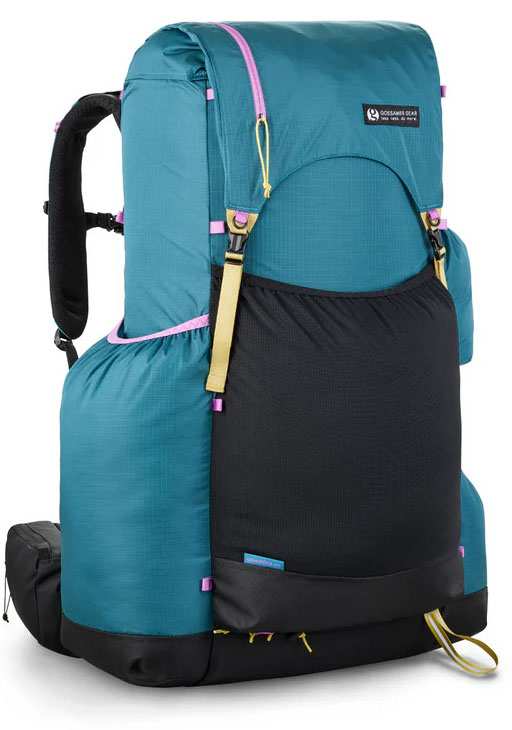 Weight: 2 lb. 2.2 oz. (medium pack and straight hipbelt)
Fabric: Recycled Robic nylon (100D & 210D)
Capacity: 60L
What we like: Superlight with great organization and customization.
What we don’t: Low and wide design doesn't do well with being overloaded.
The Gossamer Gear Mariposa has long been a favorite among thru-hikers, and for good reason. What sets it apart is how few compromises there are with this 2-pound-2.2-ounce bag (for a size medium with a straight hipbelt). You get a total of seven external pockets—more than the Hyperlite or ULA—which make it easy to distribute and organize your gear. And while brands like Hyperlite and Zpacks use Dyneema to cut weight, Gossamer Gear’s tough Robic nylon (similar to the ULA’s but thinner) keeps cost in check and does a great job resisting punctures (the downside is you’ll have to add your own waterproofing in the form of a pack cover or dry bags inside). Finally, Gossamer Gear offers great customization: The standard pack comes in three sizes, and you can order your hipbelt separately to nail that perfect fit.
Comfort-wise, we’ve found the Mariposa has sufficient padding and plenty of support right up to its 35-pound maximum rating. However, go much heavier, and the pack quickly becomes off-balance, resulting in compromised carrying comfort and weight distribution. On the bright side, Gossamer Gear addressed one of our primary complaints about the past version of the pack during their most recent update: the back panel. The removable foam padding is no longer prone to bunching, although the pack still rides lower and wider than models like the Southwest, which has a bit more of a torpedo shape— some folks might not like the look as much, but for those carrying a bear canister, it’s a really functional design. There’s no shortage of good competition in the ultralight pack market, but the Gossamer Gear is nevertheless a strong contender, especially for those who like to stay organized.
Read more: Gossamer Gear Mariposa 60 review
See the Gossamer Gear Mariposa 60
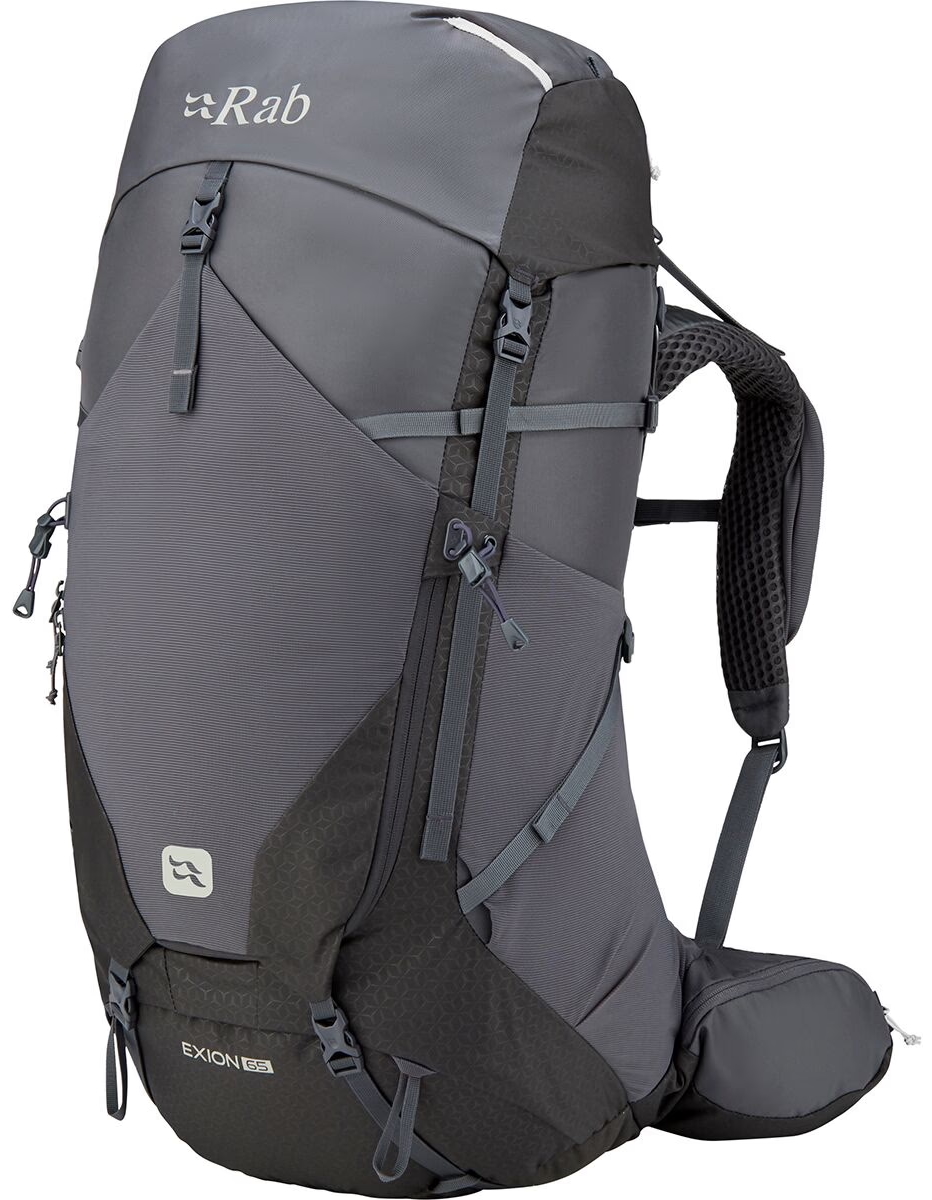
Weight: 4 lb. 10.0 oz. (men's), 4 lb. 8.0 oz. (women's)
Fabric: Nylon & Polyester (330D & 600D)
Capacity: 38, 48, 55, 65L (men's); 35, 45, 55, 65L (women's)
What we like: Smart features to help with packing (especially with a bear can); spacious hip belt and shoulder strap pockets.
What we don’t: Stretchy fabric rips easily; upper part of the side pockets are hard to reach.
Rab’s Exion 65 is a capable framed backpack built for hikers who regularly haul heavier loads and want a supportive, confidence-inspiring design. While it doesn’t aim for the ultralight crowd, the Exion’s sturdy suspension and generous padding do a nice job maintaining comfort over long miles, even when fully loaded or carrying a bear canister. Storage is another highlight: the pack feels notably roomy for its 65-liter capacity and offers thoughtful access points, including a bottom zipper for reaching gear beneath the divider and well-sized hipbelt and shoulder strap pockets that keep snacks and essentials close at hand. Taken together, the Exion is a solid choice for comfort-minded backpackers who prioritize support and organization over shaving ounces.
Where the Exion falls short is in its use of stretchy fabric across the front panel. While convenient for stuffing layers, this material proved to be the pack’s weakest point in testing, showing signs of wear and raising questions about long-term durability. The rest of the pack’s materials held up well, and we did appreciate the stretch pockets on the shoulder straps, which offer impressive capacity for food during long days on the trail. The side pockets can also become a bit unwieldy if overloaded, but this is a minor gripe compared to concerns about the front fabric. All told, the Exion 65 gets a lot right in terms of comfort and usability, but we’d hesitate to recommend it to those who put a premium on rugged, long-haul durability.
See the Men's Rab Exion 65 See the Women's Rab Exion ND65
 Weight: 5 lb. 2.6 oz. (men's), 4 lb. 11.8 oz. (women's)
Fabric: Polyamide (235D & 500D)
Capacities: 50, 65, 70L (men's); 45, 60L (women's)
What we like: Great comfort and organization for significantly less than the competition.
What we don’t: Only available in one size; limited load carrying despite being the heaviest pack here.
Germany-based Deuter has been producing high-quality packs since the early 1900s, and their current collection holds court with premium offerings from brands like Osprey and Gregory. The Aircontact Core is the brand’s all-rounder, prioritizing comfort and organization for multi-day backpacking trips. Similar to packs like the Osprey Aether/Ariel and Gregory Baltoro/Deva, the Aircontact Core features a thoughtfully designed suspension system and harness, adjustable torso length, and ample storage, including dual hipbelt and lid pockets, as well as a handy J-shaped zipper on the front. We took the women’s Aircontact Core 60 + 10 SL backpacking in Washington’s Glacier Peak Wilderness and were very pleased with its comfort and convenience throughout big days on the trail.
The Deuter Aircontact is a wonderful value for those who don’t want to fork over $300+ on a backpack, but it doesn’t quite measure up to the aforementioned Osprey and Gregory options The pack checks in at a similar weight as the heavy haulers, but its load limit maxes out at 44 pounds (compared to its competitors’ 55- to 60-lb. limits). Second, the Aircontact Core is only available in one size, resulting in a less tailored overall feel. But if you’re curious about trying something different than the standard fare, Deuter is well deserving of a closer look and will save you a decent chunk of change in the process. A final bonus: Deuter will repair any of their packs free of charge, regardless of the age or cause of the damage.
Read more: women's Deuter Aircontact Core 60 + 10 SL review
See the Men's Aircontact Core 65 + 10 See the Women's Aircontact Core 60 + 10 SL

Weight: 2 lb. 9.3 oz. (unisex & women's)
Fabric: Robic nylon (100D & 210D)
Capacity: 40, 60L
What we like: Great price for a versatile and competitively lightweight pack.
What we don’t: Lacks the premium fit and finish of many competitors; short and squat build isn't our favorite.
More than any other model, the 60-liter Crown has put Granite Gear solidly on the ultralight map. Now in its third iteration—fourth if you include the old Vapor Trail—the Crown3 is one of the most affordable yet versatile options available. The pack features a plethora of customizable features, including a variety of removable straps, a top lid that doubles as a chest or fanny pack, and a roll-top closure for securing loads of varying sizes. Unlike much of the competition, the hipbelt can be adjusted to your exact waist measurement with the Crown’s Re-Fit system. And to help you maximize all 60 liters of capacity, Granite Gear offers the option of adding a lightweight aluminum stay to increase the pack’s load limit to 43 pounds (without the stay, the Crown3 maxes out at 35 lb.).
The latest Crown is the most comfortable yet, featuring a compression-molded PE frame sheet and molded foam backpanel. But after testing it on a recent three-day backpacking trip, we have our fair share of gripes. For one, the pack features a very short and squat build, which ends up feeling squirrely when loaded down (the lack of stabilizer straps connecting the hipbelt to the pack doesn’t help). Second, we found the Crown to be almost too featured—we removed a pile of straps (including front water bottle holders and a second sternum strap) before taking it into the field. And finally, it simply lacks the fit and finish of packs from companies like Osprey, Gregory, and Hyperlite. Still, if you’re looking to save money without compromising on a customizable fit and feature set, the Crown3 is a nice value pick.
Read more: women's Granite Gear Crown3 60 review
See the Unisex Granite Gear Crown3 60 See the Women's Granite Gear Crown3 60
 Weight: 1 lb. 6.6 oz. (men's, M torso & belt, standard straps), 1 lb. 6.2 oz. (women's, M torso & belt, S women's shoulder straps)
Fabric: Ultra (100D)
Capacity: 40, 50, 60, 70L
What we like: Incredibly lightweight, ventilated, and water-resistant.
What we don’t: Not very durable and doesn’t carry loads as well as the other UL packs here.
Boasting the lightest scale reading on this list, the Zpacks Arc Haul Ultra takes the ultralight crown. The 60-liter model we tested comes in at an amazing 1 pound 6.6 ounces, and you can tack on modular add-ons like shoulder and belt pockets or a water bottle holder to complete your setup. In terms of construction, the Arc Haul Ultra uses a 100D Ultra build, which comprises a woven UHMWPE face fabric (short for Ultra High Molecular Weight Polyethylene) laminated to a waterproof lining. Pitted against the Hyperlite Southwest above, we've found the Zpacks to be less durable overall (we got a small puncture in the bottom of our pack after putting it down on a particularly rocky section of trail), but the Ultra is simple to patch, and the drop in weight will be worth it for serious thru-hikers and ounce-counters.
The “Arc” in the Zpacks’ name comes from a unique tensioning system that pulls the middle of the bag away from the back, encouraging airflow and alleviating the need for a foam backpanel. Breathability is one of Dyneema’s shortcomings, so this design is particularly helpful for warm weather and those prone to working up a sweat. Combined with a carbon fiber frame, the pack has a solid structure and provides good support for loads up to about 30 pounds. However, the complex nature of the Arc Haul Ultra does give us durability concerns—especially compared to the simple Hyperlite; the pack’s abundant straps, buckles, stitching, and add-on components could all be points of failure over time. All in all, it may not be durable or comfortable enough for regular weekend backpackers (hence our ranking), but if you treat it with care, the Arc Haul Ultra is an excellent option for serious hikers and minimalist trekkers. The women's version of the Arc Haul offers the option of the Small/Women’s shoulder straps, which offer a narrower, more contoured fit for enhanced comfort and support.
Read more: Zpacks Arc Haul Ultra 60 review
See the Men's Zpacks Arc Haul Ultra 60L See the Women's Zpacks Arc Haul Ultra 60L
In addition to the backpacking backpacks highlighted above, we’ve put a number of other high-quality models through their paces that ultimately didn’t make the final cut. Our aim is to spotlight true standouts—backpacks that deliver standout value, reliable performance, and long-term durability. Every piece we recommend has been tested over multiple seasons to ensure it holds up. Still, we think it’s helpful to share the other contenders we’ve evaluated to give readers a broader sense of the field.
The Granite Gear Blaze 60 is the first pack we removed this round. While it is a time-tested and solid option, it doesn't offer much that the other models on our list don't, and stock is becoming increasingly scarce at the time of publication. We also felt that the durability and back ventilation couldn't match those of packs like the Atmos AG. That said, if you can get your hands on it, it provides a stellar combo of carrying comfort, organization, and weight.
Next we removed the ULA Equipment Circuit 68. In light of the Ultra Circuit, it didn't seem prudent to include both in this guide, and we feel that the Ultra offers a bit more value than the regular Circuit. Still, this is a fantastic option if you're after a more affordable alternative to the Ultra.
We've been testing the Outdoor Vitals Shadowlight Carbon 60 this season, and while it's an interesting design from a reputable company, we didn't feel that it offered much that the competition doesn't already provide. That said, it's surprisingly lightweight for how comfortably it carries, and features a full suspension frame and a wide, padded hip belt for hauling truly massive loads.
Finally, we opted to remove the classic REI Co-op Traverse 60 pack in this update. While we love the retro vibe and timeless appeal of this design, the high weight and basic silhouette simply aren't competitive enough. Still, as a time-tested pack from a reliable brand, it's an affordable and perfectly serviceable option.

| Pack (Men's/Women's) | Price | Weight (M/W) | Fabric (body) | Capacities (M/W) | Access | Pockets |
|---|---|---|---|---|---|---|
| Men's Osprey Atmos AG 65 Women's Osprey Aura 65 | $370 | 4 lb. 9.8 oz./ 4 lbs. 7 oz. | Nylon (210D) | 50, 65L | Top, sides | 8 exterior |
| Men's Atmos AG LT 65 Women's Aura AG LT 65 | $320 | 4 lbs. 1 oz./ 4 lb. 0.2 oz. | Nylon (210D) | 50, 65L | Top | 6 exterior |
| Men's REI Trailmade 60 Women's REI Trailmade 60 | $179 | 3 lb. 5 oz./ 3 lb. 3 oz. | Nylon (100D) | 60L | Top | 6 exterior |
| Men's REI Flash 55 Women's REI Flash 55 | $219 | 2 lb. 13 oz./ 2 lb. 12 oz. | Nylon (100D) | 18, 22, 55L | Top | 6 exterior |
| Hyperlite Southwest 55 | $399 | 1 lb. 13.3 oz. | Dyneema Woven | 40, 55, 70L | Top | 5 exterior |
| ULA Ultra Circuit 68 | $380 | 2 lb. 4.8 oz. | Ultra (200D & 400D) | 68L | Top | 5 exterior |
| Men's Gregory Baltoro 75 Women's Gregory Deva 70 | $380 | 5 lb. 0 oz./ 4 lb. 11.2 oz. | Nylon (210D & 420D) | 65, 75L/ 60, 70L | Top, front | 9 exterior |
| Men's Osprey Exos 58 Women's Osprey Eja 58 | $280 | 2 lb. 13.4 oz./ 2 lb. 11.5 oz. | Nylon (100D) | 38, 48, 58L | Top | 6 exterior |
| Men's Gregory Zulu 65 Women's Jade 63 | $280 | 4 lb. 0.3 oz./ 4 lb. 2.5 oz. | Polyester & Nylon (400D) | 65L/ 63L | Top, front | 7 exterior |
| Men's Gregory Focal 58 Women's Gregory Facet 55 | $270 | 2 lb. 10.4 oz./ 2 lb. 8.8 oz. | Nylon (100D & 210D) | 48, 58L/ 45, 55L | Top | 6 exterior |
| Men's Osprey Aether 65 Women's Osprey Ariel 65 | $345 | 4 lb. 14.7 oz./ 4 lb. 13.6 oz. | Nylon (420D) | 55, 65L | Top, front | 7 exterior |
| Men's Gregory Paragon Women's Gregory Maven | $300 | 3 lb. 8.3 oz./ 3 lb. 6.4 oz. | Nylon (100D & 210D) | 50, 60, 70L/ 48, 55, 58, 65, 68L | Top, side | 7 exterior |
| Gossamer Gear Mariposa | $315 | 2 lb. 2.2 oz. | Robic (100D & 210D) | 60L | Top | 7 exterior |
| Men's Rab Exion 65 Women's Rab Exion ND65 | $275 | 4 lb. 10 oz./ 4 lb. 8 oz. | Nylon & Polyester (330D & 600D) | 38, 48, 55, 65L/ 35, 45, 55, 65L | Top, front | 7 exterior |
| Men's Deuter Aircontact Women's Deuter Aircontact | $260 | 5 lb. 2.6 oz./ 4 lb. 11.8 oz. | Polyamide (235 & 500D) | 50+, 65+L/ 45+, 60+L | Top, front | 6 exterior |
| Unisex GG Crown3 60 Women's GG Crown3 60 | $260 | 2 lb. 9.3 oz. (both) | Nylon (100D & 210D) | 40, 60L | Top | 6 exterior |
| Men's Zpacks Arc Haul 60 Women's Zpacks Arc Haul 60 | $399 | 1 lb. 6.6 oz./ 1 lb. 6.2 oz. | Ultra (100D) | 40, 50, 60, 70L | Top | 3 exterior |
From gear-intensive, technical approaches to months-long thru-hikes across the country, the Switchback Travel team has logged thousands of miles in dozens of different backpacks to narrow down the streamlined selection of 17 standout models above. This guide was first crafted with an initial selection of seven packs back in 2015, and senior editor Chris Carter picked up the torch in 2024. Chris has been attending gear shows, pestering the pros, and testing numerous models ever since to stay on top of current trends and the most groundbreaking designs. An alumnus of each of the Triple Crown trails in the United States (the AT, PCT, and CDT), Chris is an avid long-distance backpacker who continues to trek and explore around the world.
We keep a variety of key factors in mind when analyzing the merit of a backpacking backpack. Durability, support, organizational features, and ventilation are all top considerations, and each pack has to stand out in one—or all—of these categories to warrant any real estate above. We test each pack on real-world backpacking trips to ensure we can confidently recommend any of them for your backcountry adventures (as we do with other gear like backpacking tents and sleeping bags). Finally, we recognize that the backpack competition is constantly evolving, which is why we've incorporated this guide into an iterative update schedule to stay ahead of market shifts and new innovations as they emerge.
.jpg)
Rules about how big a pack you need are not set in stone. Multiple factors come into play, such as how many nights your trips will be, what time(s) of year you go backpacking, and if you ever plan to tack on any additional activities (e.g., packrafting or mountaineering). One point should stand out, however: ensure that your pack's capacity matches the type of gear you'll be bringing. Do you have dated or entry-level backpacking equipment that doesn't compress well, or do you like to bring along a few extras? Then make sure to get a correspondingly cavernous pack. Alternatively, if you've dialed in your kit with lightweight and modern gear, you'll have more flexibility in size options.
.jpg)
The majority of backpackers take short trips—usually around one to three nights—and for those uses, a pack in the 50 to 70-liter range is most popular. With designs like the Osprey Atmos AG 50 and Aura AG 50, you’ll need to keep your packed weight low, stick to the essentials, and be sure to utilize the aforementioned compressible gear. At 60 liters and above, you have sufficient space to accommodate a few additional items—perfect for parents with kids in tow. Within each of the ranges we have listed below, you can follow those general guidelines:
Overnight and/or ultralight gear: 35 to 55 liters
Long weekend (2-3 nights): 50 to 70 liters
Extended trips (over 3 days): 60+ liters
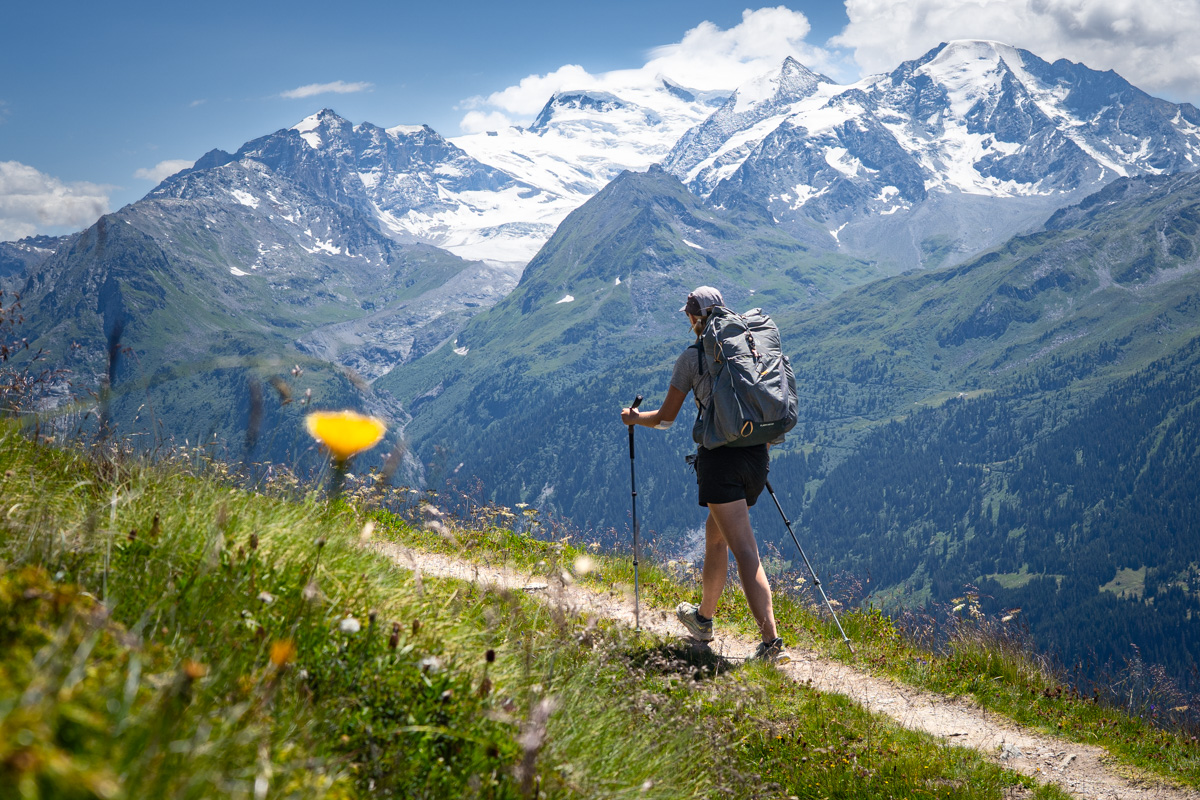
Looking beyond how much space your gear takes up in a pack, it’s also important to ballpark the total weight. Backpackers often refer to the weight of their gear (minus consumables) as their base weight. Base weights range from 8 or fewer pounds at the low end to over 20 pounds at the high end. Tack on food, water, and fuel, and you’re looking at anything between 15 and 50 pounds on your back—or more if you’re not careful. We’re big fans of doing whatever we can to keep our gear (and food) light, as this generally correlates to more enjoyment on the trail.
Most manufacturers list a load limit or range for their packs—on our list, these vary from 15 to 30 pounds for the REI Co-op Flash 55 to 60 pounds for the Osprey Aether 65. Several factors contribute to a pack’s load limit, including the materials and construction of its frame, suspension, and padding. If you don’t see a specified load limit, a convenient reference point is the pack’s empty weight. As we'll discuss more below, a heavier pack is generally more capable of hauling more weight, thanks to its sturdy frame, durable fabrics, and thick padding. This comes at the cost of a heavier base weight and a less maneuverable kit, which may be suitable for casual hikes on established trails but isn't ideal for technical terrain. In our opinion, load limits are more of a command than a suggestion: It’s our experience that going over a pack’s specified load limit results in a noticeable drop in comfort and can actually limit the lifespan of your pack.
The backpacks on our list above range from 1 pound 6.6 ounces for the Zpacks Arc Haul Ultra 60L to 5 pounds 2.6 ounces for the Deuter Aircontact Core 65 + 10. Backpack weight is a bit of a mixed bag: On one hand, a heavier pack, like the Rab Exion 65, will add multiple pounds to your back; on the other, these packs generally have robust suspension systems and harnesses that offer an increase in comfort and load distribution compared to more minimalist designs. We’ve found that packs roughly in the 2.5- to 4.5-pound range—such as the Osprey Atmos AG 65 (4 lb. 9.8 oz.) and Gregory Focal 58 (2 lb. 12.8 oz.)—strike a really nice balance of weight and performance for loads up to about 35 pounds. If you anticipate a heavier load, it’s worth considering a heavier pack.
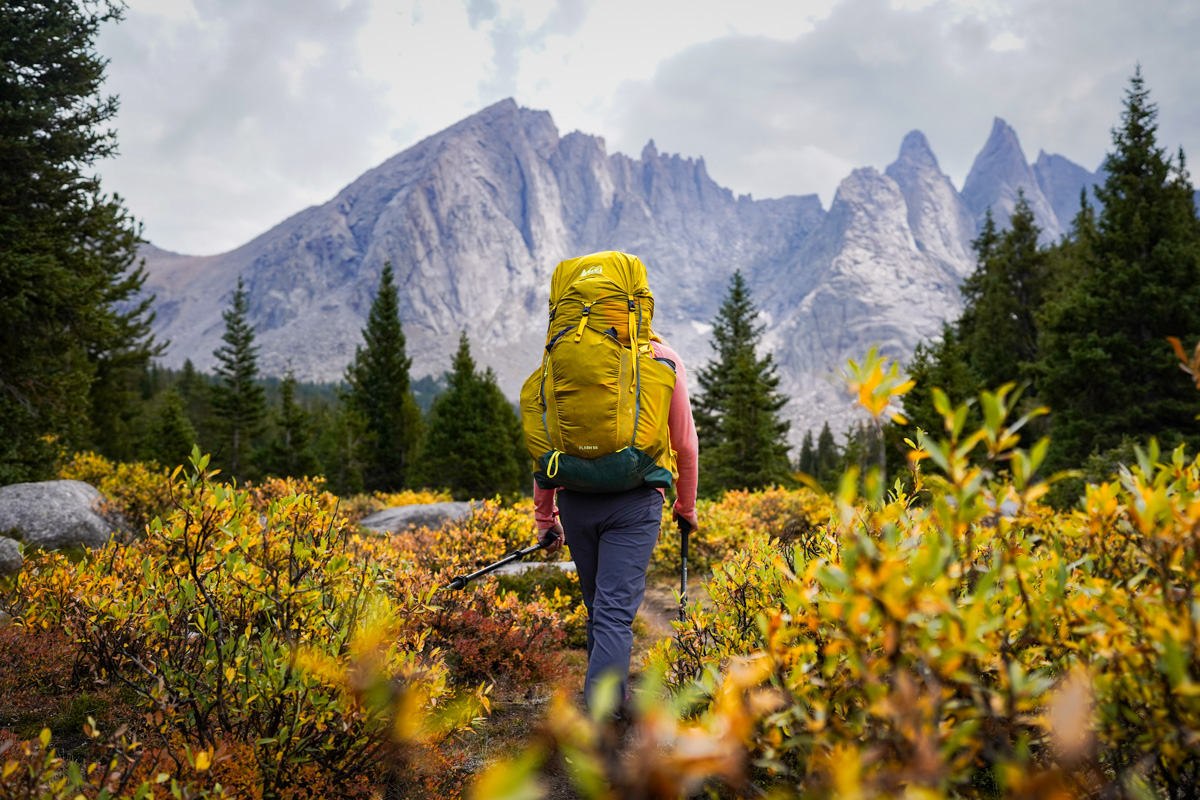
Ultralight Backpacking Packs
Weight is so important to many backpackers that a whole category of backpack exists based on this spec alone. Ultralight packs cut roughly 2 to 3 pounds off the weight of standard models and feature barebones organization—most have a main compartment, one or two hipbelt pockets, and a few external dump pockets. Additionally, they utilize thin but ultra-premium materials (Dyneema and Robic nylon are common) and simple suspension systems that generally include only an aluminum stay and foam backpanel. As a result, ultralight backpacks do compromise on comfort, especially when your load exceeds 30 pounds. But for ounce-counters focused on minimizing weight, the difference between a traditional and UL pack can be significant. Just make sure you have the rest of your kit dialed in before charging into the backcountry with an ultralight model, as an overloaded pack can lead to long-term discomfort or pack failure mid-trip (for a deep dive into this category, see our article on the best ultralight backpacks).

Backpacking backpacks are built to hold up to a whole lot of abuse—after all, what other piece of gear do you routinely rake past sharp branches, throw on the ground, or sit on top of? That said, not all packs are created equal, and some are much more durable than others. The fabric denier (a measure of the fabric's thickness) offers the best clue to a pack's durability—on our list, the packs range from 100D to 420D nylon, with reinforcements as strong as 500D. As expected, packs are generally reinforced at their base, in addition to common wear points like the front, lid, and hipbelt pockets.

Of course, the main downside to thicker fabric is added weight. As a result, many lightweight and ultralight backpacks sacrifice some durability due to their relatively thin builds. To maintain the best of both worlds, premium UL backpacks will often feature Dyneema or Ultra, both of which are known for their impressive strength-to-weight ratios (and steep price tags). But while it's worth being aware of a pack's fabric weight and composition, thin fabrics shouldn't necessarily be a deterrent unless you're incredibly hard on your gear, love to bushwhack, or wear a backpack for work (as is the case for guides or trail crew). We've been pleasantly surprised with the durability of packs like the Gregory Focal (100D & 210D) and Osprey Exos (100D) and consider them to be sufficiently durable for most users.
All overnight packs feature foam padding in their shoulder straps and hipbelt (and sometimes backpanel), which can vary in terms of thickness and quality. The goal of the padding is to increase comfort, spread out the load, and isolate your body from the sharp contours of the pack or straps. Foam and the fabric that covers it do add ounces, so manufacturers are always trying to find the right balance of weight and comfort. In general, heavier packs offer more padding (and thus more comfort), while lighter and ultralight packs feature streamlined padding (and thus less comfort, especially with a heavy load).
.jpg)
We prefer foam that errs towards firm support rather than being soft and compressible. Excessively soft padding might feel great when first trying on a pack, but it doesn’t offer the long-term support needed for hauling heavier loads. Packs like the Gregory Baltoro/Deva and Osprey Aether/Ariel are great examples of effective use of this type of high-quality, firm padding. On the other hand, many modern designs (like the Osprey Atmos/Aura or Exos/Eja) swap out some padding in lieu of suspended mesh, which achieves a similar effect with less weight (and more ventilation). We were initially skeptical of the suspended mesh design, but after many years of testing various iterations, we are now full converts. With loads under 40 pounds, these airy backpanels offer just as much comfort as the padded competition.

When you’re playing the part of a moving van, carrying all your possessions in one place, organization is of utmost importance. As expected, storage options increase with a pack’s weight. Ultralight packs often feature just one cavernous compartment and a number of external pockets, while luxury designs offer a dedicated sleeping bag compartment, multiple access points to the main compartment, a lid, and a few external zip pockets. That said, more isn’t always better: the amount of organization you need ultimately comes down to a matter of personal preference.

Exterior Pockets
In our comparison table above, we list the number of external pockets for each pack. Most designs feature at least five compartments, including three dump pockets and two hipbelt pockets, while many high-end packs add a few more. Hipbelt pockets are indispensable for quick access to items like lip balm, a phone, or Lifesavers (a great energy boost on the trail). We’ll almost always keep a layer or two in the front dump pocket, and side dump pockets are ideal for items like water bottles or trekking poles. Finally, most packs also feature a top lid with one or two zippered pockets—this is a great place to store small items like a headlamp or trail snacks, and can be removed to tote essentials around camp. But before you go pocket-crazy, just remember that sometimes, less is more: five to six pockets is just right for us, while nine can be a recipe for misplacing your gear.
.jpg)
Main Compartment Access
Nearly every backpacking pack available will have an opening at the top that is secured with a cinch cord or roll-top mechanism, referred to as a top-loader. Additional access to the bottom or middle of the pack via a side zip(s) or U-shaped opening can be a big help, keeping you from having to shovel through a once-meticulously organized pack to find some elusive item. These extra zippers add a little weight, but are often worth it. In cases like the Gregory Baltoro/Deva or Osprey Aether/Ariel, the U-shaped opening is so wide that you can pack and remove items much like a travel suitcase.
.jpg)
Sleeping Bag Compartment
Feature-rich backpacks often include dedicated sleeping bag storage, which is typically located below the main compartment. This pocket generally opens with a zipper, is large enough to accommodate most sleeping bags (even relatively bulky ones), and includes external compression straps to eliminate dead space. Sometimes, manufacturers make it possible to merge the sleeping bag compartment with the main compartment by adding a zipper to the divider. However, all of this adds weight and bulk and doesn’t result in the most streamlined load. In the end, we prefer designs without sleeping bag compartments, which allow the freedom to stuff our sleeping bag in a compression sack and toss it—along with our tent—at the bottom of the pack. For a deeper dive into proper organization, check out our article on How to Pack a Backpack.
Water Reservoir (Bladder) Compatibility
Water reservoirs have become our (and most hikers') preferred way of staying hydrated on the trail, thanks to their on-the-go convenience. As a result, the vast majority of backpacking backpacks offer a number of features to accommodate reservoirs. Look for either a dedicated sleeve or clip from which to hang the reservoir, in addition to an exit port for the tube and straps or clips to secure the tube to the shoulder strap. It is worth noting that you'll want to pack your hydration bladder first before loading the rest of your gear into your pack, so that it can hang freely along the length of the backpanel. But don't fret: If you're anything like us and forget about it until your pack is fully packed, you can always rest it on top of your gear. To keep it from sloshing, invert it first and suck all of the air out of the reservoir.
.jpg)
Compression Straps
Compression straps tighten a pack from front to back and pull the load close to your body, helping to keep you balanced on the trail. Make sure the pack you’re looking at has these side compression straps at both the top and bottom to aid in load stability, and give them a good cinch each time you put your pack on. These straps are also useful for storing taller items (such as tent poles) along the side of your pack. When used for this purpose, we especially like a system like REI's Packmod—seen on the Flash 55 pack—which allows you to move the straps to your preferred height via a series of daisy chains (or remove them altogether). And while some compression straps secure tightly with a simple plastic cinch, we prefer those with buckles for their ease of use, especially when attaching larger items like a sleeping pad.
.jpg)
Backpanel and hipbelt ventilation is a significant consideration for some, especially if you tend to run warm or plan on hiking in the summer heat. But finding an internal framed pack that breathes well can be a challenge, primarily because the point of a pack is to hug and conform to your body, moving with you as you walk. Most packs have offsetting foam and mesh panels that do a passable job of encouraging airflow, but you’ll likely still get sweat art on your back that traces where the foam panels contact your body. On the other hand, designs such as Osprey’s Anti-Gravity (seen on the Atmos/Aura) or Gregory’s FreeFloat (on the Focal/Facet, for example) feature a fully suspended mesh backpanel and hipbelt that cradle the body while still allowing for great airflow. For the most part, we love this design and recommend it for those who want to prioritize ventilation, but it does cut a bit into the main compartment’s capacity and won’t hold up to especially heavy loads.
Many items that we store in our backpacks are vulnerable to moisture—including a camera, phone, and down sleeping bag—so we place a high priority on water protection. The good news is that most backpacks offer decent water resistance, thanks to hard-face nylon and a durable water repellent (DWR) coating, although expect sustained rainfall to penetrate the fabric. There are also a number of waterproof backpacks on the market, including those made with Dyneema or Ultra fabrics. In fact, we’ve used the 100% Dyneema Hyperlite Windrider as a dry bag (see our in-depth review), and it didn’t let us down.
.jpg)
If you don’t have a waterproof backpack (which is likely the case), it’s a good idea to take a few extra precautions to ensure your gear stays dry. Some packs include a built-in waterproof cover that stows away inside the pack (the Gregory Baltoro/Deva, for example). You can also purchase one separately—REI Co-op's Duck's Back Raincover gets the job done—but keep in mind that they aren’t foolproof and can be hard to trust in windy conditions.
.jpg)
A final strategy is to protect items from the inside, either by lining the entire pack body with a waterproof bag or using an assortment of waterproof stuff sacks or dry bags. You can even make do with garbage bags in a pinch—when guiding in British Columbia’s wet Coast Mountains, we used a trash compactor bag to line our backpack and experienced zero leaks or issues. Regardless of the liner you choose, it will work best with backpacks that feature a cavernous main compartment, like what you get with many ultralight designs.

Two of the most popular waterproof pack liners are Nylofume bags, such as this one sold by Garage Grown Gear, and polyethylene bags, such as this one from Gossamer Gear. Both are fantastic alternatives to trash bags or rain covers and can also serve as odor barriers when tied off securely at the top. For reference, one Nylofume liner kept a tester's gear safe and dry for an entire three-month thru-hike of the Appalachian Trail. These things are relatively cheap, way stronger than they appear at first glance, and add negligible weight to your pack.
.jpg)
One of the most important factors for enjoying the trail is getting your pack's sizing and fit correct. Packs generally come in men’s and women’s versions (for a full look at the women's market, see our article on the best women's backpacking backpacks) and are offered in one to three sizes. These sizes vary most in terms of torso and hip measurements and are most often differentiated by their torso length. Hipbelts are generally very adjustable, but if your hip measurement is not proportional to your torso, it might be a good idea to opt for a pack with a customizable hipbelt. And once you dial in your size, there is still plenty of potential for adjustment, both before you put your pack on and after it’s loaded. In most cases, you can adjust the torso length by a considerable margin, and the majority of packs also allow you to adjust the height of the hipbelt. For a full breakdown of dialing in the proper fit, see our Backpack Fit and Sizing Guide.

Importantly, some brands have also started to offer their most popular backpacks in extended and plus sizes. Our current favorites are Gregory's Zulu 65 and the women's Jade 63. Osprey offers several of its leading designs in Extended Fit variations, including the heavy-hauling Aether and Ariel. These packs don’t just increase dimensions; rather, they’re thoughtfully built with a wider distance between shoulder straps, well-placed hipbelt pockets, and lots of room for adjustment throughout (you can read more about Osprey’s Extended Fit collection here and Gregory’s Plus Sizing here). Options are still fairly limited, but we look forward to seeing more plus-size backpacks in the near future.

Our impact on the environment has never been of greater concern, and it’s encouraging to see gear companies adopt more sustainable practices. The use of recycled fabrics has grown substantially in recent years, with companies like Osprey, Gregory, and Deuter prioritizing these materials. We're also seeing a lot more PFAS-free durable water-repellent (DWR) finishes on backpacks, which eliminate the use of some—or at times, all—per- and polyfluoroalkyl substances (these “forever chemicals” have been linked to a range of environmental and health issues). With many states stepping up to ban the sale of items that include PFAS, the outdoor industry is seeking better solutions for water- and stain-resistant finishes (you can read more about Patagonia’s take on the issue here). All told, it’s an exciting time for sustainability, and we’re happy to see this reflected in the backpacking pack market.
Back to Our Top Backpacking Pack Picks Back to Our Backpacking Pack Comparison Table

-%20sac4b.jpg?h=d4c92dd0&itok=KMSwcfQl)
37d3.jpg?h=fbc67360&itok=TOEvTocq)
c9f6.jpg?h=fbc67360&itok=uj5sROnf)
.da2ed2f.delaye?h=fbc67360&itok=alJCQBk9)
d2fa.jpg?h=fbc67360&itok=fIc64U9k)

e622.jpg?h=fbc67360&itok=nggraBnh)
2ef1.jpg?h=d1272f3a&itok=IRcCIeye)
