.jpg)
.jpg)
Photo Credit
It’s that time of year! Time to find the perfect present for our adventurous loved ones. For that person in your life who loves all things cold weather, check out our gift guide for skiers and snowboarders. For ideas tailored to other pursuits, we also have more editor-recommended gift guides to explore. Happy gift giving!
Ski goggles are a specialty of ours: We’ve tested, reviewed, and all-around debated the merits of more than 50 designs over the years. It’s a dynamic market, but the good news is that no matter your experience level or budget, there is a great ski goggle out there. At the premium end, magnetic interchangeable lenses and HD-like optical quality are the norm. Our top recommendation is the Smith I/O Mag ChromaPop, which has a snappy lens changing system, offers fantastic field of view, interfaces with helmets seamlessly, and is super comfortable.. And intermediate, beginner, or casual skiers can still pick up a good goggle for $150 or less. Below are our top ski goggle picks for the 2026 season. For more background, see our ski goggle comparison table and buying advice below the picks, as well as details about our testing process.
Editor’s note: We updated this guide on October 22, 2025, to include more in-depth information about the Smith 4D Mag and Julbo Launcher. We’ve also added photos from our most recent testing day at Palisades resort in Lake Tahoe, California, and swept the guide to ensure all prices and specs were accurate at the time of publishing.
 Frame sizes: Small/medium/large
Number of lenses included: 2
Lens shape: Spherical
What we like: Fantastic optics, comfortable fit, and available in a range of sizes.
What we don’t: Pricey; quick-change system isn't the most efficient.
If Smith dominates one area, it’s snow goggles. There are a number of models to choose from at varying price points, but the I/O Mag is our favorite. Released as a quick-change variation of the classic I/O, the goggle features superb optics with an expansive field of view, comes with two lenses, has an extremely comfortable fit, and is one of the best ventilators we’ve tested. Smith's ChromaPop technology offers HD-like color quality, translating to exceptional clarity in a wide range of conditions. The lenses do a remarkable job of highlighting small details, such as bumps, crud, and debris—even in low light. The goggle also comes in three different frame sizes to dial in fit.
Despite our love for the I/O Mag, no goggle is perfect. For one, the Smith's lens interchange system isn’t the quickest on the market—that title goes to Anon's M4 below. While the locking levers do give us peace of mind from a security standpoint, you have to remove the goggles to change out the lenses (for comparison, the Anon's lenses can be swapped without removing the goggles—just twist the frame and pull the lens away). The I/O Mag's field of vision is also a slight step down from larger designs like Smith's own 4D Mag below or the XL variation mentioned above, although the difference in performance is relatively minor (and the bigger size may be uncomfortable for medium faces). A final nitpick is the lack of a hard-sided case, which we typically expect at this price point. But for top-of-the-line optics, quality, and durability, the I/O Mag is a runaway favorite and checks all the boxes for most skiers.
Read more: Smith I/O Mag review
See the Smith I/O Mag See the Smith I/O Mag S See the Smith I/O Mag XL
.jpg)
 Frame size: Medium
Number of lenses included: 2
Lens shape: Cylindrical
What we like: Decent all-around performance; magnetic lens-change system, two lenses, and a hard case all at a great price.
What we don’t: Not the highest-quality optics; unproven over the long term.
Just about everything involved with skiing is expensive—from the equipment to lift tickets—so we love finding a good value. With an MSRP that’s less than one-third the price of our top pick, the Goodr Snow G is just that. Best known for their wallet-friendly and eye-catching sunglasses, Goodr’s first foray into the snow goggle market is a pretty solid one: The Snow G features a versatile medium frame with decent edge-to-edge visibility that minimizes the tunnel effect you find on many cheap designs. Further, you get upgrades like a magnetic lens-change system and two included lenses, both of which are rare in the budget market. Finally, like their sunglasses, Goodr’s snow goggles have a refreshingly classic look (although we hope to see more strap designs and lens tints offered soon).
What are you giving up at the Goodr Snow G’s budget-friendly price? In testing the goggles side by side with Smith’s Squad Mag below, which features their venerable ChromaPop optics, the difference in quality and clarity was noticeable. This wasn’t exactly a fair test given the Squad Mag’s much higher price point, but we’d say the Snow G’s lenses are on par with the brand’s sunglasses: serviceable but not standout, and relatively easy to scratch. The Goodr also lacks the time-tested track record of most brands here, although our pair has held up well to about 20 days of resort riding this past winter—thanks in no small part to the hard case included with purchase, something hardly (if ever) seen at this price point. Those who spend a lot of time on the hill may want to upgrade to a higher-end model, but the Snow G represents a strong value for the entry-level and casual crowds.
See the Goodr Snow G
.jpg)

Frame size: Large
Number of lenses included: 2
Lens shape: Cylindrical
What we like: The best lens change system around and an extra-wide field of vision.
What we don’t: Expensive; not everyone needs the quick-change system.
Smith may have pioneered the interchangeable-lens system, but Anon is mastering it. Much like its predecessors, the M4 and M5, the M6’s magnetic lens swapping is best-in-class. It’s as easy as giving the frame a slight twist to expose the lens and pulling it away from your face. We still give ChromaPop a slight optical edge due to its more vibrant and natural colors, but Anon has the top quick-change system on the market. In terms of helmet integration, the M6 is one of the best, and to accommodate varying face shapes, the M6 is also available in a low-bridge version. If you choose to go with an Anon MFI mask, the M6 has improved the magnetic attachment system to allow for better ventilation than previous iterations.
The MFI in the M6’s name refers to the included magnetic clip-in face mask, which combines with the goggle to create a blocker system against driving wind and snow without fogging the lens. Our one nitpick with the MFI masks we’ve used is that they’re so thin that they lack a strong structure, so if you’re breathing heavily while hiking, the material can be sucked into your mouth. But all of the other key components are there with the M6 MFI, including triple-layer foam and a variety of lens options to cover you from bright to cloudy. Another option is Anon’s widely available M5 MFI, which incorporates a toric lens and is slightly more expensive, but has the magnetic lens and facemask system that we have come to love. We tested the M6 in Patagonia over the summer and will report back soon.
See the Anon M6 MFI
.jpg)
 Frame size: Medium/large
Number of lenses included: 1
Lens shape: Cylindrical
What we like: Excellent price for a well-built goggle with a quick-reacting photochromic lens.
What we don’t: Availability can be hit or miss; bulky look.
With big players like Anon (Burton), Smith, and Oakley dominating the goggle scene, it’s a tough place to break through. But that’s exactly what Glade has pulled off. The secret: quality builds with mass appeal at standout prices. Our current favorite from their humble lineup is the Adapt 2 (and smaller Adapt 2S), which packs in a string of high-end features for a wallet-friendly $149. Design highlights include a clean, frameless shape, stout materials that are clearly made to last, and a competitive field of view for its medium/large size (although the relatively thick shape of the goggle does impact visibility straight down). Additionally, we think Glade nailed the essentials with comfy padding, excellent fog prevention, and a frame that paired well with a range of medium-sized ski helmets we tried.
We’ve had mixed experiences with photochromic lenses over the years: The adjustable tint can be slow to react to changing conditions, and they often run too dark. But Glade’s lens tech is the best we’ve used, with a super wide VLT range of 16% to 61% that excels even during heavy snowfall. In terms of optical quality, it may lack the HD-like effect of some of the premium options from Smith or Oakley, but it’s not far behind and roughly half the cost. Our only real nitpicks are the aforementioned bulky shape and that Glade is a small, online-only brand, so availability can be hit or miss (plus, you can’t try them on before buying). But if you can score a pair and want a photochromic lens, the combination of price and performance is hard to beat.
See the Glade Adapt 2 See the Glade Adapt 2S
.jpg)
 Frame sizes: Small/medium/large
Number of lenses included: 2
Lens shape: BirdsEye Vision
What we like: Top-quality build with a noticeable boost in downward visibility.
What we don’t: Hard to justify the jump in price over the I/O Mag above.
Released several seasons back and recently updated with an even more expansive field of view, is Smith's top-end 4D Mag. Building off the standard I/O Mag above, this goggle has an improved magnetic lens-change system and larger fit, but the big news is the lens shape. Called BirdsEye Vision, the lower portion of the lens curves inwards, opening up downward visibility by 25% (according to Smith). It’s hard to fully verify that claim, but the difference is immediately apparent when trying it on back-to-back with alternatives like the I/O Mag and Oakley Flight Deck. For those who put a premium on maximum field of vision—such as riders who spend a lot of time in difficult terrain off piste or in the bumps—the 4D Mag is a nice option.
Why hasn’t the 4D Mag overtaken the I/O Mag as our top-rated goggle? The primary reason is price: There's no doubt it's a fun piece of tech, but visibility in general has become much less of an issue among modern, premium goggles. As such, many skiers will find it difficult to justify the $65-$95 jump in cost (although the included hard-sided case is a nice touch). Finally, like the I/O Mag above, the 4D Mag's lens-change system is a little slower and clunkier to use than Anon's. But in the end, it comes down to priorities, and the 4D is truly best-in-class when it comes to unencumbered views.
Read more: Smith 4D Mag review
See the Smith 4D Mag See the 4D Mag S See the Smith 4D Mag XL
.jpg)

Frame size: Large
Number of lenses included: 1
Lens shape: Cylindrical
What we like: Simple yet extremely effective anti-fogging system.
What we don’t: Only offered in a large size and with photochromic lenses.
For uphill travel, many backcountry skiers are forced to ditch their goggles due to persistent issues with fogging. Enter Julbo and their simple yet effective SuperFlow Pro system: The lens on their Launcher goggle is attached to a set of small hinges, which can be pushed forward to separate it from the frame. This creates enough airflow to dissipate any moisture buildup and eliminate fogging, even during high-output activities. And it’s quick and easy to push the lens back into place (even with ski gloves on) for the descent. For backcountry riders, ski mountaineers, or even those who often run hot on extended sidecountry hikes, the Julbo Launcher is a revelation.
What are the compromises with this ventilation-focused design? For one, you pay a premium for the goggles, and the price only includes a single lens. The good news is that it’s a quality photochromic design with a wide VLT range that will work in the vast majority of conditions. This is particularly great for ski mountaineers who start their day in the dark and finish on blinding glaciers. As with other photochromic lenses, it does have some pitfalls—such as reacting slowly going in and out of trees—but it’s largely effective, and we rarely noticed any issues. A bigger potential concern is fit: The Launcher is currently only offered in a large frame size, which could be too much goggle for some folks. But if you can get a good fit, the Julbo’s combination of versatile optics and truly impressive ventilation makes it a great do-it-all resort and backcountry option.
See the Julbo Launcher


Frame size: Large
Number of lenses included: 1
Lens shape: Spherical
What we like: Massive field of view and quality optics.
What we don’t: Only comes with one lens; old lens-change system.
One of the more distinctive designs on the mountain, Oakley’s Flight Deck has been a longtime favorite thanks to its oversized, rimless style. The spherical lens gives the goggle its signature look, and combined with a low-profile shape, you get one of the largest fields of view on the market, especially in the large-sized option. Compared with most framed goggles, you see more of the mountain in all directions—up, down, and side-to-side. And beyond Oakley’s anti-fog coating, the higher-volume fit means this goggle is even more fog-resistant. Tack on Oakley’s Prizm technology, which is neck-and-neck with Smith’s ChromaPop, and this is one impressive—and stylish—ski goggle.
The most notable downside is that the Flight Deck only comes with one lens (additional Flight Deck Prizm lenses are of course available, though they don't come cheap). And should you invest in a second lens, the quick-change isn’t exactly fast by most people’s standards and less intuitive than modern options (we’ll admit to turning to YouTube for a tutorial). The goggle's large surface area and frameless design also result in a slight drop in durability—it's important to store them correctly between uses to avoid scratches. But this doesn’t detract from the excellent visibility, all-day comfort, and high-end build quality of the Flight Deck. For a similar all-around design but with a trimmed-down, medium/large fit, check out the Flight Deck M.
See the Oakley Flight Deck L Prizm See the Oakley Flight Deck M Prizm

Frame size: Large
Number of lenses included: 2
Lens shape: Cylindrical
What we like: Great peripheral vision for a mid-range design.
What we don’t: Middling fog prevention.
We’ve found Giro comes up a little short on average compared to Smith, Oakley, and Anon at the premium end of the market, but they excel in the sub-$200 category. Their Method is a case in point: Its large yet low-profile frame delivers excellent peripheral vision, and the three-layer foam padding does a nice job with both next-to-skin feel and moisture wicking. The design is also hardwearing with a full frame to protect the sides of the lens and rugged materials in general. While not as quick as magnetic designs, the Giro's interchange system is relatively easy to use, and we appreciate that two lenses are included with purchase. For park riders and beginners alike, the popular Method is a solid option—and the plethora of unique strap designs to choose from only adds to all-around appeal.
Where does the Method come up short? The ventilation system seems to prioritize protection around the frame over all-out airflow, which makes it a bit more prone to fogging up. In addition, the large shape and relatively tall height can impact compatibility with some helmets, although it pairs well with Giro products. The goggle also only comes in one size (large), which may look—and feel—overly bulky on those with smaller heads (those folks may want to check out Giro's Article II, which has a medium fit). But all in all, the Method is a well-executed mid-range design, earning it a respectable finish on our list this season.
See the Giro Method

Frame size: Medium
Number of lenses included: 2
Lens shape: Cylindrical
What we like: A well-rounded performer with high-end optics, an expansive field of view, and quality photochromic tech.
What we don’t: Only available in one size, and falls slightly short of the I/O Mag in a couple of areas.
Zeal Optics may lack the name recognition of big players like Smith and Oakley, but make no mistake: This Colorado-based brand has a healthy lineup of quality designs ranging from budget to premium. The Lookout featured here sits at the very top and is highlighted by Zeal’s Observation Deck Technology (ODT), which positions the bottom of the frame closer to the face than the top to boost upward and downward visibility while minimizing reflection on the inner lens. In testing, the increased field of view was immediately noticeable when wearing the Lookout back-to-back with other goggles, allowing us to clearly read the terrain below. We also came away impressed by how quickly the photochromic lenses adjusted as we dipped in and out of the trees, and overall lens clarity and quality line up with the goggle’s premium intentions (although Smith’s ChromaPop is essentially unmatched).
The Zeal Lookout was an admirable all-around performer in testing, but we did come away with a few small complaints. First, while the aptly named Rail Lock lens-change system is overall very user-friendly and doesn’t require taking the goggles off, it’s a little less intuitive—and not as glove-friendly—as what you get with Smith’s Mag designs or Anon’s M4. Our photochromic lens also incurred some minor scratches, which were partially a result of haphazard packing, although we wish Zeal included a hard-sided case for better assurance over time. Finally, the Lookout only comes in a single medium-size fit, which may not work for those with particularly small or large faces. But the Lookout has still won us over for its performance, build quality, and reasonable price tag.
See the Zeal Optics Lookout
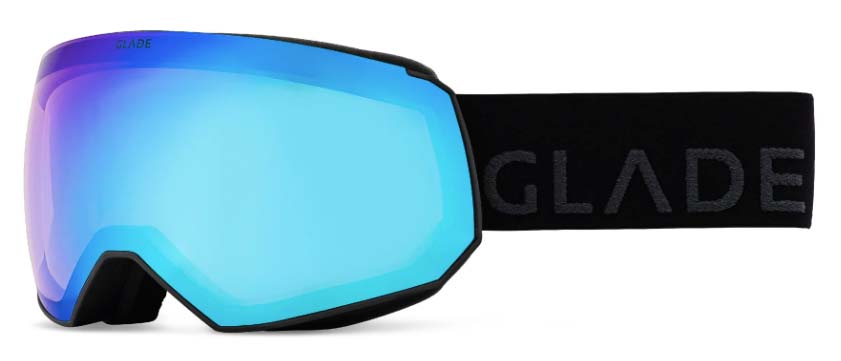 Frame size: Medium
Number of lenses included: 2
Lens shape: Toric
What we like: Great value for a magnetic quick-change system and quality photochromic lens.
What we don’t: A little less refined than its primary competitors (although it’s cheaper).
Glade is really making a name for itself in the ski goggle space, and the second model to make our list is their mid-range Fathom+. Like the Adapt 2 above, the Fathom offers a lot of bang for your buck: a high-quality photochromic lens (16%-61% VLT) and a sturdy frame, excellent ventilation, and niceties like triple-layer foam with a soft, next-to-skin feel and silicone striping on the inside of the strap to keep everything in place. But where the Fathom+ stands on its own is the magnetic quick-change system and the included second low-light lens. For storm days that are truly socked-in—we get our fair share of those in the PNW—the low-light lens’ 70% VLT has a lot of value. And speaking of value, the Fathom+ comes in at a very palatable $199 all in.
Why did we end up ranking Glade’s Adapt 2 above the Fathom+? The short answer is you’re not getting any optical improvements for your extra $50—in fact, the Fathom has a slightly smaller field of view (although its correspondingly smaller frame size is a plus for those who prefer a standard, medium fit). Additionally, we think the magnetic system could use a little refinement: The stiff frame requires more effort than Anon’s M or Smith’s Mag designs to remove, and we found the lens didn’t always snap back into place perfectly (it sometimes required a second push to lock in the bottom and top edges). But we’re still talking about a screaming deal here, as most magnetic quick-change goggles are well over $200.
See the Glade Fathom+
 Frame size: Small/medium/large
Number of lenses included: 2
Lens shape: Cylindrical
What we like: Classic Squad looks and performance with a faster lens-change system.
What we don’t: Pricey for a cylindrical design with only average field of view.
Smith's Squad Mag combines a quick-change system that's nearly identical to their pricey 4D Mag above with a more budget-friendly cylindrical shape. Its semi-framed look is immediately recognizable—the standard Squad has been a go-to for years among snowboarders—and we found that it fits nicely with a wide range of helmet models. Like the other Mag designs, you get two high-quality ChromaPop lenses to maximize performance in a range of conditions, effective venting, a quality anti-fog coating, and triple-layer foam along the interior that's proven to be extremely comfortable. It's available in a low-bridge version, too.
When wearing the Squad Mag back-to-back with the other Smith options, however, some complaints popped up. Most notably, the Squad’s bulkier frame has a pretty big impact on field of view, particularly along the sides and in the bottom corners. It also feels quite a bit heavier, which means the goggle doesn’t fade as much into the background throughout the day, and the foam padding started showing signs of wear after just a few days of testing. None of these are dealbreakers for us, and those who like the look of a cylindrical lens shouldn’t be deterred, but the downsides push the Squad Mag to a mid-pack finish.
Read more: Smith Squad Mag review
See the Smith Squad Mag
 Frame size: Medium
Number of lenses included: 1
Lens shape: Cylindrical
What we like: Premium optics and comfort with a bold look.
What we don’t: Not a leader in field of view; many competitors include two lenses.
Oakley’s Fall Line M goggle (formerly called the Fall Line XM) packs their premium lens technology into a trimmed-down shape. With a similar fit as Smith’s I/O Mag above and Giro’s Axis below, the goggle fits easily under most ski helmets but still makes a pretty big statement with its bold, frameless style. As expected from Oakley, the goggle is very well made, and the range of Prizm lenses are strong all-around performers. The Fall Line M does buck the quick-change trend and sticks to the somewhat clunky Ridgelock lens-swapping system, but we do appreciate that it provides a very solid seal with no room for wind to sneak through. Importantly, breathability is still competitive, and we've had no issues with fogging throughout testing.
We like the Fall Line M, and the medium-size fit is a nice way to get a toned-down version of the Flight Deck above, but we do have a couple of nitpicks. Most importantly, the Fall Line only comes with a single lens while nearly every other competitor includes two. Second, the substantial frame makes the goggle sit a little too far off the face, which translates to less peripheral vision. If you’re an Oakley devotee and like the styling, the Fall Line certainly won’t be a letdown, but we think there are better alternatives out there. For a lens that lands somewhere between the Fall Line here and Flight Deck above, Oakley's Flight Tracker line comes with toric lenses that balance the wide field of view of spherical lenses with the low-profile styling of cylindrical designs.
Read more: Oakley Fall Line M review
See the Oakley Fall Line M See the Oakley Fall Line L
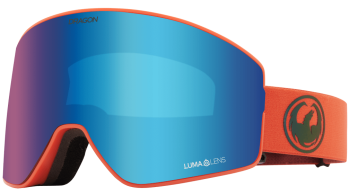
Frame size: Medium/large
Number of lenses included: 2
Lens shape: Toric
What we like: Great field of view and long-lasting anti-fog coating.
What we don’t: So-so build quality.
One of the newer additions to their collection, Dragon’s PXV2 addresses a common complaint in the goggle market: field of view. With a relatively low-profile shape, toric lens, and medium to large fit, the PXV2 offers comparable peripheral vision to top players like the Smith I/O Mag above (and noticeably better than the brand’s X2 and NFX2). We’ve also been impressed with the anti-fog coating, which kept the lens moisture-free even on a couple of extended sidecountry trudges. Optics fall towards the middle of the pack—in favorable conditions and for night skiing, the two included lenses covered the bases, but we found the mirrored option (Lumalens Red Ion) was rather dull, making it hard to pick out small bumps and details in shadowed sections on the hill.
In general, we like the PXV2 and have found it to be the best all-around model we’ve tested yet from Dragon. Unfortunately, however, it’s not that much cheaper than the Smith I/O Mag and falls short in a number of ways. Most prominently is build quality: The Dragon’s frame is rather stiff and prone to creaking, and the semi-rigid shape meant that it never completely conformed to our face (there was a small but noticeable gap along the cheeks). In addition, the Swiftlock quick-change system is a little finicky and can’t match the convenience of a magnetic design. Specifically, you have to make sure you’re lining up the top and nose bridge portions of the lens before securing or else it won’t seat properly. In the end, the Dragon isn’t one of our favorites, but it's a solid pickup if you happen to find it on sale.
See the Dragon PXV2 Goggle
 Frame size: Large
Number of lenses included: 2
Lens shape: Toric
What we like: A strong value for what you get, including great all-day comfort, two lenses, a hard-sided case, and a quality lens-change system.
What we don’t: Not the widest field of view; limited availability.
Like Goodr above, Blenders Eyewear specializes in sunglasses but offers some quality snow goggles, too. Our favorite from their four-goggle collection is the top-end Nebula. “Top-end” is relative, however—the Nebula costs a very affordable $119 while packing in a number of noteworthy features. First is the magnetic quick-change system, which we found to be very fast, intuitive, and secure. The goggles also come with a protective hard-sided case (a rarity at this price point) and two lenses: one darker tint and one for low-light conditions. In testing, both performed admirably—the yellow lens even avoided glare from overhead lights when night skiing, which is no easy feat. Rounding out the design is an effective anti-fog coating and a sleek, semi-frameless style that lends a very modern look.
Why does the Blenders Nebula fall toward the bottom of our list? While we found optical clarity to be solid, field of view wasn’t anything to write home about. Peripheral visibility in particular was a little obscured, although the Nebula is still a notable step up from true budget designs. Another potential downside is Blenders’ direct-to-consumer model, which means you won’t have the chance to try the Nebula on in person before buying (Blenders does list the exact dimensions for the goggles on their product page, which we appreciate). In the end, the Nebula is a bit of an underdog compared to many of the more recognizable options here, but nevertheless stands out as a strong value for what you get.
See the Blenders Eyewear Nebula
| Goggle | Price | Lenses | Shape | Style | OTG? |
|---|---|---|---|---|---|
| Smith I/O Mag ChromaPop | $283 | 2 | Spherical | Frameless | Yes (I/O XL) |
| Goodr Snow G | $75 | 2 | Cylindrical | Frameless | No |
| Anon M6 MFI | $295 | 2 | Cylindrical | Framed | Yes |
| Glade Adapt 2 | $149 | 1 | Cylindrical | Frameless | No |
| Smith 4D Mag | $348-$378 | 2 | BirdsEye | Frameless | Yes |
| Julbo Launcher | $290-$320 | 1 | Cylindrical | Frameless | No |
| Oakley Flight Deck Prizm | $207-$313 | 1 | Spherical | Frameless | Yes |
| Giro Method | $175 | 2 | Cylindrical | Framed | Yes |
| Zeal Optics Lookout | $199 | 2 | Cylindrical | Frameless | Yes |
| Glade Fathom+ | $199 | 2 | Toric | Semi | Yes |
| Smith Squad Mag | $253-$283 | 2 | Cylindrical | Semi | No |
| Oakley Fall Line M | $207-$250 | 1 | Cylindrical | Frameless | Yes |
| Dragon PXV2 Goggle | $250 | 2 | Toric | Semi | No |
| Blenders Eyewear Nebula | $119 | 2 | Toric | Semi | No |
Many staff members at Switchback Travel love to ski—whether that entails skinning deep into the backcountry or lapping the resort. Snowsports editor Ross Patton began skiing at the ripe old age of one year old and has been wearing goggles ever since. Shifting from competitive ski racing to freestyle snowboarding, he’s owned (and likely broken) just about every type of goggle on the market. Previously, editors Maddie Downie and Sarah Nelson managed this guide. Maddie is a longtime Washington resident who has toured all over the North Cascades and is intimately familiar with socked-in days and challenging conditions. Sarah wove in her experiences testing goggles at resorts throughout Lake Tahoe (close to her home base in Reno) and the Mountain West.
Our current lineup of 14 goggles reflects our ongoing testing experiences, firsthand info from testers and gear-savvy friends, and feedback from the online skiing community. Optical quality is one of our primary considerations when testing ski goggles, so we make a point to take them into varying conditions, from whiteouts to bluebird days. We also pay close attention to breathability, especially when touring or venturing into the sidecountry, as well as how well each goggle holds up over time. Finally, we evaluate features like padding and lens-change systems to discern comfort, ease of use, and overall quality. We recognize that the ski goggle market isn't static, and as a result, we continue to test new and noteworthy designs as they become available.
.jpg)
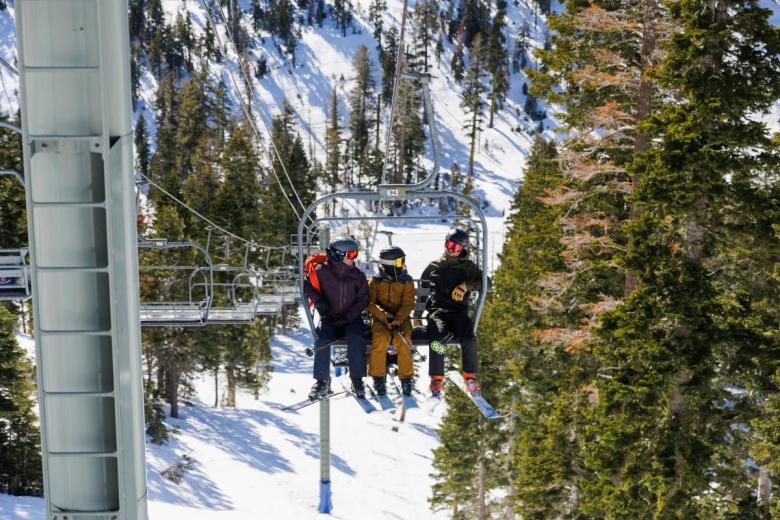
For our most recent round of testing, we headed to Palisades Resort in Lake Tahoe, California, where there are steep slopes, sunshine, and side-country galore. With a massive elevation gradient and terrain for all abilities, Palisades is the perfect place to check goggle performance in terms of ventilation, fogging, and reactivity to changing light conditions. We carved up corduroy, navigated some ice, put our knees to the test in the mogul fields, and even got out for a sidecountry hike with a local.
Cylindrical
Most entry-level ski goggles are cylindrical, meaning they curve across your face horizontally but are flat vertically. This shape is easier and cheaper to manufacture but can result in less peripheral vision, minor distortion at the top and bottom of the lens, and more glare. The primary reason to opt for a cylindrical lens is cost, but some just prefer the look, which avoids the bug-eye style on many modern spherical models. Notably, there has been a shift in the market over the past couple of years, with a number of mid-range and premium goggles released with cylindrical lenses. Advances in lens technology (covered below) are decreasing the negative impacts of the cylindrical shape, and many of our top models have this lens type, including the Giro Method. Its large lens is competitive in field of view and clarity with pricier spherical options from Smith and Oakley.
.jpg)
Spherical
Even with the recent shift towards cylindrical designs, many premium goggles are spherical, meaning the lens curves both horizontally and vertically. The curve is designed to mimic the shape of your eyeball, providing a natural and superior field of view and optics. In use, we’ve found this to be largely true (especially in peripheral vision), although as mentioned above, the differences between lens types aren't as noticeable as they once were. Spherical lenses do give the goggle a taller profile with its bubble-like shape, and while it’s a matter of personal preference, we like the look most of the time when it’s paired with a ski helmet. Another model that features this shape is the Oakley Flight Deck.
.jpg)
Toric
A third shape that is gaining traction is the toric-style lens. This design splits the difference between cylindrical and spherical: It’s curved both vertically and horizontally to mimic the shape of the eye like a spherical lens, but is less pronounced and bulbous-looking. The advantage of a toric lens is largely aesthetic, and it will appeal to folks who don’t like the bug-eye look of a spherical lens but still want the rounded shape. From an optical perspective, it’s becoming more and more difficult to parse out the differences, but it should perform similarly to a spherical lens by minimizing distortion at the edges. Top toric-shape goggles for the 2025 season fall primarily on the premium end of the spectrum, including Anon’s M4 MFI and Giro’s Contour (not included here). With the 4D, Smith has introduced a lens shape they call “BirdEye Vision” which adds curvature to the very bottom portion of the lens and increases your field of view by upwards of 25%.
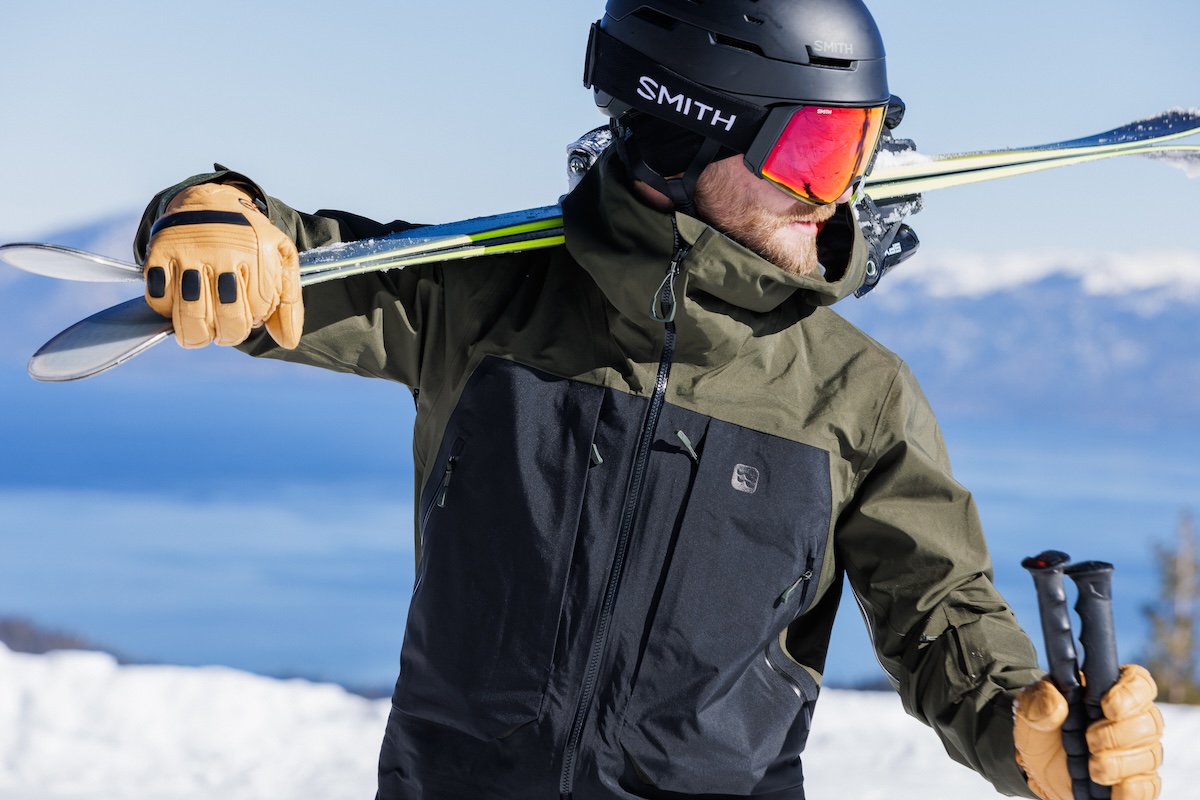
Advancements in quick-change technology are exciting, but we prioritize optical quality above all else. It’s the reason why a total of four Smith goggles with ChromaPop lenses made our 2025 list. The lens technology is that good. ChromaPop is the best we’ve used for richness of color and contrast (it's nearly HD-like in its clarity and natural feel), and we're happy to see the lens offerings have increased to include most styles in the Smith lineup.
.jpg "Smith's ChromaPop gives HD quality views")
ChromaPop surely is not alone in high-quality optics. Oakley’s premium competitor is their Prizm lens, which does a great job in making details stand out, although it can look a little more artificial than ChromaPop in certain tints (some are overly pink, for example). Giro turned to Zeiss, a proven camera lens manufacturer, for help with their lenses, and we’ve been impressed with the clarity of the Vivid lens line. Anon and Dragon keep most of their lens development in-house and offer competitive detailing (Anon's top-end Perceive lenses are particularly good), although in general they fall a little short in overall quality. It's important to note that these upgraded lenses are most valuable in difficult lighting and aren't a necessary feature, but the difference is noticeable and can be worth the extra investment for the committed skier and snowboarder.
.jpg)
Moving beyond families of lenses like Prizm, Vivid, or ChromaPop, there are specific lens technologies designed for harsh or variable conditions. For bright, sunny days, mirrored lenses work really well. The lens has a reflective coating on the outermost layer that softens the glare by allowing less light to enter. You’ll find mirrored lens options across the board, designed for use in the brightest conditions. Another lens technology is polarized, which was originally intended for use on the water, but it also reduces eye fatigue on a bright day by blocking strong bursts of horizontal light. The technology doesn’t translate perfectly to snow when you may want to see the glare of an icy patch, and their biggest downside is cost—expect to pay a premium for the added tech.
.jpg)
The final technology is photochromic lenses, which adjust automatically to lighting conditions based on the intensity of light. This gives them a very wide VLT range (more on that below), and they are great if you don’t want to have to swap lenses during the day. However, we’ve had mixed experiences with photochromic lenses over the years. For example, on our Smith Skylines, a section of the lens refused to change tint, rendering them useless. And others we’ve tried ran dark enough to be problematic on socked-in days, plus the tint didn’t change fast enough as we dipped in and out of trees. That said, both Julbo's and Glade’s photochromic tech—as seen on Julbo's Launcher and Glade's Adapt 2 above—have proven to be quick-reacting, reliable through multiple seasons of testing, and offer a super wide VLT range that isn’t excessively dark. If you want a single-lens solution, Julbo's goggles at the high end and Glade’s at the mid-range are what we currently recommend. We've also had positive experiences with Zeal Optics' photochromic lenses for their Lookout Goggle.
.jpg)
VLT is the amount of light that is allowed to pass through a lens (measured from 0% to 100%). In the brightest sun, you may want a lens with as little as 10% VLT. For night skiing, a “clear” goggle is around 90% VLT. There is some variation between manufacturers, but lenses generally are 15-40% VLT for bright to normal conditions and 40-70% VLT for cloudy and snowy days. For reference, the Julbo Launcher has the widest VLT range on our list (7% to 80% for a couple of the tint options), which is particularly helpful for ski mountaineers who may experience everything from low-light conditions in the early morning to blinding glaciers in the mid-afternoon sun. Other factors matter, like polarization and lens color, but these are the general parameters.
.jpg "A goggle with high VLT on the left vs. one with low VLT on the right")
You’ll often see a product page for a popular snow goggle showing a huge range of lens color options. The choice comes down to 1) VLT, and 2) Your tint preference (i.e., how you want to see the ski world around you). At the low end of the VLT spectrum are blacks, grays, and blues, which are designed to block out the most light and therefore are the darkest. Toward the middle for partly cloudy days are purples, reds, and greens, which, as you can imagine, color how the snow and mountains look significantly. For overcast and gray days, you’ll find lenses that are much clearer than the first two categories and come in very light shades of yellow and blue.
.jpg)
Snow is a highly reflective surface, causing the sun’s rays to bounce off. In addition to sunburn, this can lead to snow blindness if you don’t wear goggles or sunglasses to protect your eyes. The good news is that all modern snow goggles meet the EN174 standard, which ensures they feature 100% ultraviolet (UV) protection, filtering out all UVA, UVB, and UVC rays. Importantly, this is true regardless of lens tint or VLT, so there’s no need to worry if you’re rocking a light lens in bluebird weather. You’ll likely want to swap in a darker tint—or even better, a polarized lens—to reduce glare, but from a UV protection standpoint, there’s no added risk.
.jpg)
Nearly every goggle made has the option to change out the lenses, although the difficulty varies by manufacturer and product. The traditional method involves pulling (and sometimes lightly tearing) the frame away from the old lens and sliding/snapping in the new one. It’s a clunky and slow process that can be frustrating, especially when reconnecting the lens around the nose bridge. That said, for those who purchase a goggle with a single lens or only plan to change tints on rare occasions, it can be serviceable (although we recommend making the swap at home rather than outside on the mountain). Many budget-oriented models rely on this basic system.

Quick-Change Lens Systems
If you intend to purchase a goggle with two lenses and swap them a fair amount, even during the middle of a ski day, opting for a modern, quick-change design is worth it. The current leader in this technology is Anon, which uses a magnetic system on their “M” collection that allows you to swap out lenses without taking the goggles off your head. It’s amazingly simple (we’ve timed ourselves doing the swap in just 5 seconds), and the powerful magnets do a great job of keeping the lenses from falling out in all but the worst crashes.
Smith and Giro have similar magnetic designs that are featured on models like the Smith I/O Mag and Giro Axis, although you’re required to push a button/lever to release the lenses on certain models, which we’ve found to be slightly less convenient but a bit more secure. And brands like Dragon and Scott utilize lever-based systems that offer similar convenience, albeit in a slightly less premium setup. Again, not everyone needs to put a quick-change system high on their priority list, but it’s a useful feature for adapting quickly to variable lighting conditions.
.jpg)
With the growth of large-frame goggles has come a corresponding jump in field of view (also referred to as “field of vision”). Modern designs feature wide and tall lenses and low-profile frames, which enhance peripheral vision and help avoid the narrow, tunnel-like feeling that was inherent with older goggles. More visibility makes for a safer day on the mountain, so we’re completely on board with this trend. In general, spending more gets you an improved field of view, and a well-made, large-size frame like the Oakley Flight Deck Prizm is almost as good as not wearing a goggle at all. The Smith 4D Mag takes it to another level by curving the bottom of the lens to increase visibility straight down (for easily accessing things like a jacket zipper) and in the bottom corners. And for smaller faces, Giro’s Expansion View technology (found on the Giro Axis and others) does a nice job of retaining good visibility with a compact, face-hugging design on both their spherical and cylindrical lens models.
.jpg)
If your goggles are all fogged up, it doesn’t really matter what kind of lenses you are using. The first step in minimizing this issue is to ensure you choose a model with a double lens (note: All models on our list have this feature). Next, consider the frame design: Ventilation comes from the sides, top, and bottom of snow goggles, and the more air that moves through, the less fogging will occur. The specific size and shape of the vents are goggle-specific, so make sure to inspect the pair that you are considering. If possible, try it on while wearing your ski helmet to ensure the latter doesn’t block your venting. Other tips to avoid fogging include not overdressing (which can cause your face and head to sweat more) and keeping your goggles on throughout your ski day. Moving goggles to your forehead will cause the heat and moisture emanating there to fog up.
.jpg)
Another key piece to the puzzle is the anti-fog coating on your goggles, which is applied to the inside of the lens. To avoid degrading the treatment, it's essential to limit the number of times you wipe moisture off the lens (only do this in the most extreme cases). Instead, if they get wet, air-drying is the best solution, or you can bring an extra pair of goggles (or lenses) in your ski pack if you need them in a hurry.
For those with persistent fogging issues during downtime (such as on the lift) or if you want to wear your goggles during high-output activities like ski touring or sidecountry hiking, Julbo has an innovative solution with their SuperFlow technology. With hinges on the sides of the Launcher's frame, you can push the lens away to create enough separation to quickly dissipate moisture and avoid fog buildup. Clearly, it’s a unique system that excels in certain environments (you’ll need to push the lens back into place on the downhill), but the technology is there for those who need it. The above tips cover some of the basics of this topic, but for a deeper look, check out our article on How to Prevent Your Ski Goggles From Fogging.
.jpg)
Frameless or rimless designs ditch the plastic around the edges of the lens on a traditional goggle, giving them a distinctive, oversized look. The most common argument in support of these designs is their improved field of vision. And a frameless goggle like the Oakley Flight Deck admittedly does have expansive views (at the compromise of a little more vulnerability to damage at the edges). However, the majority of the credit should be given to its large spherical lens and low-profile design. Frameless goggles can also make it easier to remove the lenses, although again, the more important factor is their interchange technology. In the end, the disparities in performance between a framed and non-framed goggle are pretty negligible. Just pick the style you like best.
.jpg)
As with many types of outdoor gear, like ski helmets and ski backpacks, the quality of padding differs significantly on ski goggles and gets markedly better the more you spend. On basic models, the padding is simple single-layer foam that isn’t as comfortable around your face as pricier models and won’t fit as snugly. It will also retain more smell and moisture and break down more quickly. When the price tag reaches the $100 to $200 range, you’ll find multi-layered foams and flexible plastic frames that are impressively contoured to the shape of the face. If you plan to ski only a few weekends each year, opting for a cheaper ski goggle is a perfectly rational choice. But those who spend a lot of time on the slopes will appreciate the comfort and fit of a higher-end goggle with superior padding.

Sizing is one of the most important—and sometimes confusing—parts of the goggle buying process. First and foremost, ski goggles come in three general sizes: small, medium, and large. You will find some women’s-specific models in more “feminine” colorways and with a slightly narrower frame, but goggles really are a unisex piece of gear. In addition, you'll see "low bridge" options for those who find the fit of a standard nose bridge to be too tall.
When trying on a goggle, you want the fit to be snug but not tight enough to cause discomfort. Additionally, pay attention to your field of vision. A goggle that is too small will impact your vision side to side and up and down. Common pressure points are the nose and around the eyes, which can be relieved by making adjustments either with the sliding clip or buckle system around the back. If the goggle still feels tight after loosening, it’s time to move up in size. As we cover below, trying goggles on with your ski helmet (or at least a similar ski helmet in the store) will give you the most accurate picture of how everything will feel on the mountain.

We have good news for wearers of prescription glasses: There are a number of over-the-glasses (OTG) goggles on the market. OTG goggles are defined by a generous opening between the lens and face to fit a pair of average-sized spectacles. In addition, there will be notches in the sides of the frame to accommodate the arms of the glasses. Oakley is a leader in OTG designs, and from their lineup, everything from the medium-fit Fall Line M to the oversized Flight Deck are compatible. Smith, Giro, Anon, Glade, and others also have a range of eyewear-ready models, including the Smith I/O Mag and Anon M6 MFI. It’s worth noting that a goggle that’s labeled as OTG does not guarantee your glasses will fit inside, particularly if they’re bulky and large. That said, most medium to small glasses with low-profile arms will work.
One nagging issue with wearing your prescription glasses under a pair of ski goggles is fog buildup. The extra material inside of the lens impacts airflow, and just as importantly, your prescription glasses lack an anti-fog coating. Plenty of eyeglass wearers are willing to make this compromise (or switch to contacts), but there’s another solution: prescription inserts. These compact liners fit right on the inside of the lens, which greatly improves airflow and allows your venting system to function normally. California-based SportRx is the market leader in prescription inserts with a range of models that allow you to tailor the fit to your goggles (you include the make and model with the purchase, and they manage the rest). The cost is somewhat high at $95 for a standard insert, but it’s a good investment for those who want to maximize all-around performance.
.jpg)
Finding a suitable helmet to pair with your ski goggles that doesn’t result in the dreaded gaper gap (a large opening between the goggle and helmet) or worse, doesn’t fit at all, used to be a challenge. Nowadays, most helmets and goggles work pretty well together. That being said, if you aren't able to try the goggles and helmets on before buying, it's safest to stick to a single brand (i.e., purchase both a Giro-brand helmet and goggle).
_0.jpg)
One exception is tall, large-framed goggles like the Smith Squad XL. Those may require a helmet with an accommodating brim, such as the Smith Level MIPS. Overall, we’ve found that premium helmets are the most compatible with a wide range of goggle sizes, but keep an eye out for features like a baseball hat-like bill that could interfere with the goggles. The large, angled brim on the Bern Watts is one of the worst offenders and limits its compatibility to mostly medium-sized goggles. And if you’re somehow still not wearing a helmet, it’s time to change that: check out our article on the best ski helmets.
Back to Our Top Ski Goggle Picks Back to Our Ski Goggle Comparison Table

bcdc.jpg?h=fbc67360&itok=wmPMXiEZ)
e5f1.jpg?h=fbc67360&itok=vxewJsot)
4ed2.jpg?h=fbc67360&itok=SDjaYCfy)
ca51.jpg?h=fbc67360&itok=X2rkJbjm)
c149.jpg?h=fbc67360&itok=vcIod759)
6963.jpg?h=fbc67360&itok=Spqml68p)
_01074.jpg?h=fbc67360&itok=LZfjph4c)
14ab.jpg?h=fbc67360&itok=1n06ZZey)