.jpg)
.jpg)
Photo Credit
It’s that time of year! Time to find the perfect present for our adventurous loved ones. For that person in your life who loves all things cold weather, check out our gift guide for skiers and snowboarders. For ideas tailored to other pursuits, we also have more editor-recommended gift guides to explore. Happy gift giving!
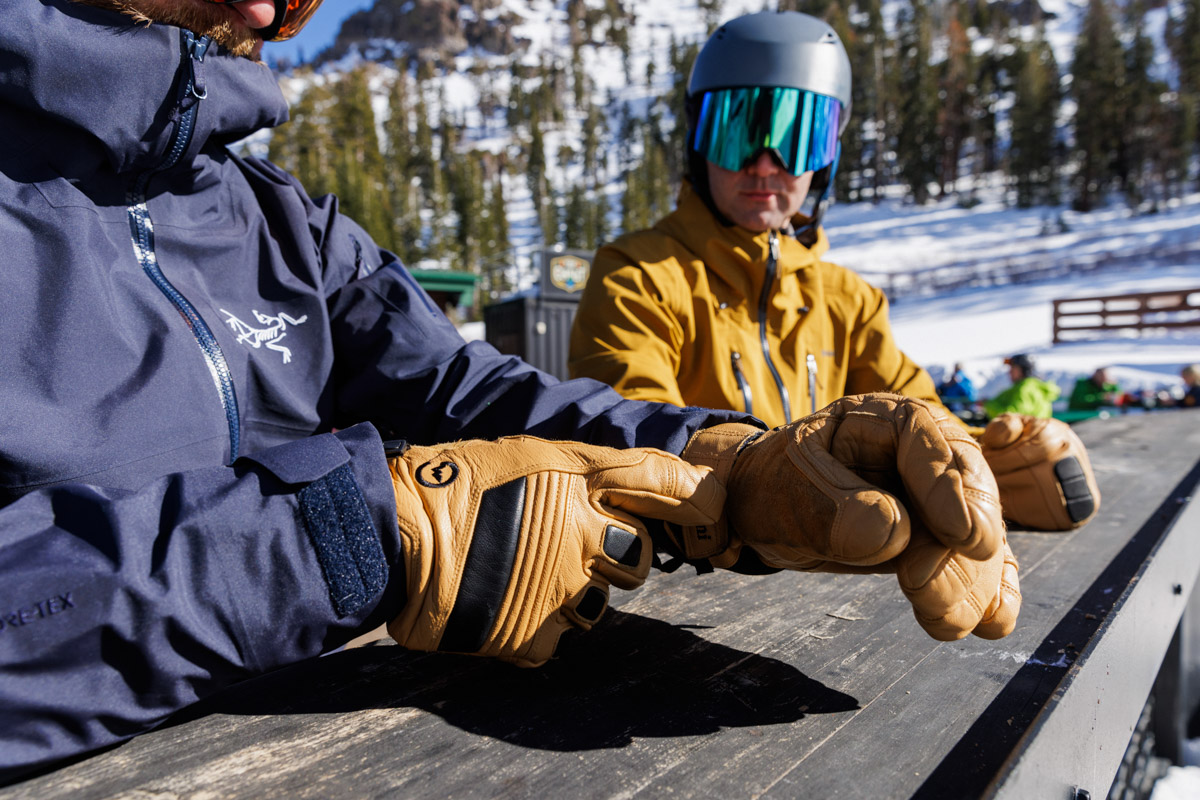
Nothing ruins a great day on the slopes like frozen fingers, and a quality glove or mitten can make all the difference. Choosing one that suits the conditions and type of skiing you do most is an important decision. The more you ride, the more you should consider making an investment that will keep your hands dry and toasty during wickedly cold or wet and sloppy conditions. Options range from gauntlet-style synthetic gloves to undercuff leather designs from powerhouses such as Swedish manufacturer Hestra and backcountry mainstays Black Diamond and Outdoor Research. Below are our picks for the top ski gloves and mittens for the season, with the Hestra Army Leather Heli Glove as our favorite overall glove and the Black Diamond Mercury Mitt as our favorite mitten. For more background information, see our comparison table and buying advice below the picks.
Editor’s note: We updated this guide on December 4, 2025, to hone in our list of favorite ski gloves based on testing experiences and use cases (you can see our list of dismissed ski gloves and mittens below). We also added new gloves to the list: Rab's Khroma Tour Windstopper as our favorite backcountry glove, the Outdoor Research Alti II Mitts, and Black Diamond's Cirque Gloves. Lastly, we refreshed the imagery with photos from recent testing and ensured all other information was up to date at the time of publishing.
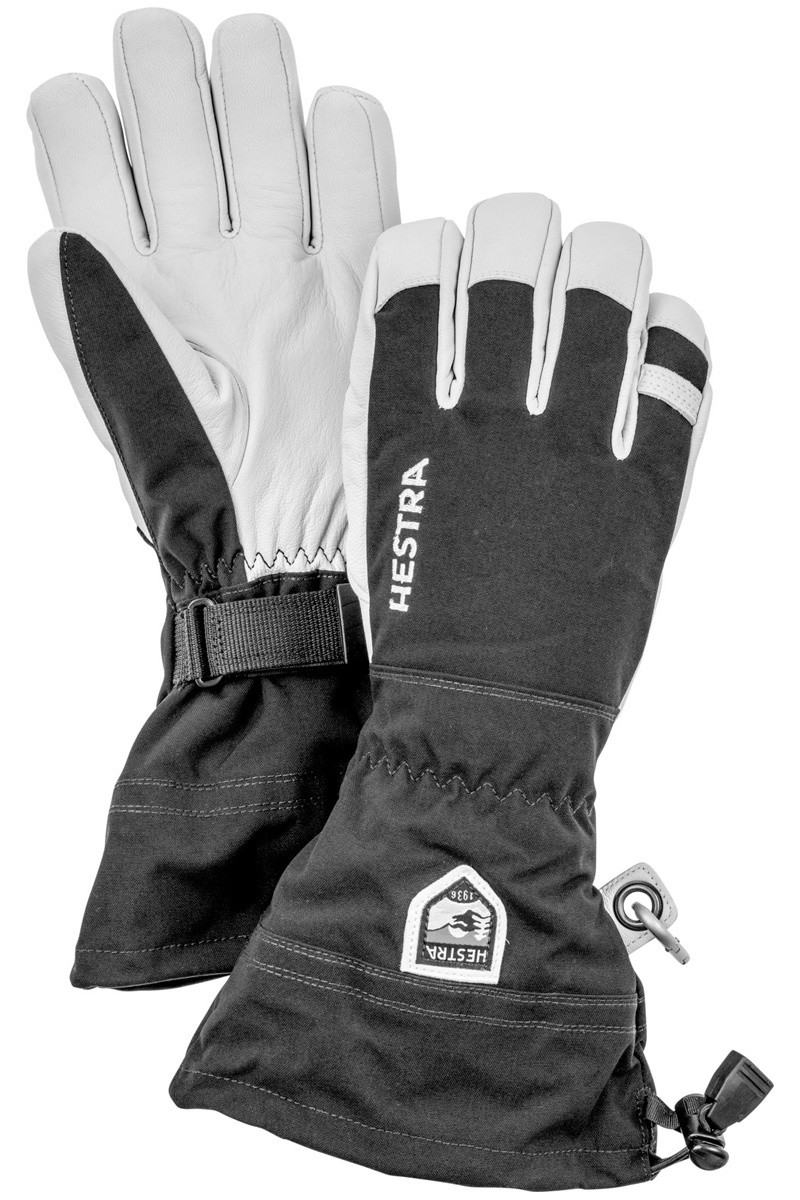 Cuff style: Gauntlet
Shell: Polyamide/goat leather
Insulation: G-Loft synthetic & fleece
What we like: Beautifully made, cozy and warm, and good dexterity.
What we don’t: Requires some maintenance to stay waterproof.
Ski professionals worldwide have trusted Swedish manufacturer Hestra for decades, and their Army Leather Heli glove is our favorite in their lineup. This comfortable and highly functional ski glove has been around for years, and its hybrid leather and synthetic construction remains best in class. The Heli’s premium build quality, warmth, and comfort all stand out at a price that undercuts other high-end ski gloves. For these reasons, we think the Heli is the ideal partner for keeping you warm on the mountain, especially on deep powder days.
As with nearly all Hestra products, the Heli has liberal amounts of leather in its construction. The benefit is that the glove flexes easily and is very durable, but you will occasionally want to reapply a leather conditioner to the palm and fingers to keep moisture at bay (a small sample of Hestra’s Leather Balm is included with purchase). Some prefer a glove with a nylon shell for better waterproofing, but we find the simple maintenance and increased dexterity the leather provides are well worth the effort—even for skiing in the wet snow of Tahoe and the Pacific Northwest. This popular glove has spawned a couple of variations, including a Heli mitten for maximum warmth and a 3-finger glove that splits the difference.
See the Men's Hestra Heli Glove See the Women's Hestra Heli Glove

 Cuff style: Gauntlet
Shell: Nylon/leather
Insulation: PrimaLoft One (200g) & wool
What we like: Very warm, long-lasting build, and comfortable.
What we don’t: Takes some time to break in; below-average dexterity.
Black Diamond’s Guide glove is legendary among hardcore skiers for its impressive warmth and durability. It’s near the top in terms of hand protection on this list, and unlike the Hestra Heli above, the design is completely waterproof with a Gore-Tex insert. Inside its very tough exterior, Black Diamond uses both synthetic insulation and thick, boiled wool in the removable liner for insulation. If your hands are consistently cold or you ski regularly in frigid conditions, the Guide Glove is hard to beat.
The downside of all this material is that the BD Guide can take some time to break in. And even after many days of consistent use, ours still lacks the flexibility that you get right out of the box with the Hestra Heli, which is similarly warm (this is one downside of the Gore-Tex liner). It’s a compromise many are willing to make, however, and the Guide is among the most popular ski gloves on the market. If you run warm or only head out in mild conditions, you can save money by opting for a glove with lighter insulation and better dexterity, such as the Black Diamond Legend.
Read more: Black Diamond Guide review
See the Black Diamond Guide Glove

.jpg) Cuff style: Gauntlet
Cuff style: Gauntlet
Shell: Nylon/leather
Insulation: PrimaLoft Gold (133 & 170g)
What we like: Warm, tough, and reasonably affordable.
What we don’t: Harder to grip a ski pole and adjust boots.
For keeping your hands as warm as possible, you just can’t beat a mitten design. It may compromise dexterity for skiers trying to grip a ski pole, but by keeping your fingers together, you get extremely efficient warmth thanks to your fingers warming each other. The Black Diamond Mercury is our favorite mitten option for offering the expected increase in warmth without a significant price increase. It’s also made with a four-way stretch in the shell and includes removable split-finger liners, making it very user-friendly.
As with other BD ski gloves we’ve worn, the Mercury features a durable construction that should withstand plenty of wear and tear. Really, the only downside is whether or not you’re comfortable wearing a mitten. We still find gloves to be more convenient and effective for skiing, especially if you’re one to unbuckle your boots on the lift. The Mercury, in particular, is a bit bulky for handling a pole or adjusting buckles—you can achieve a bit more dexterity with a sleeker or non-leather design. But for those prone to getting cold hands, the Mercury is tough to beat.
Read more: Black Diamond Mercury Mitt review (women's version)
See the Black Diamond Mercury Mitt See the Women's BD Mercury Mitt


Cuff style: Gauntlet
Shell: Polyester
Insulation: Polyester
What we like: Standout comfort, warmth, and waterproofing at a great price.
What we don’t: Fake leather palm; liner isn’t removable.
If you only get out a handful of times each year or don’t want to blow your ski gear budget on gloves, the Gordini GTX Storm is a winner. You don’t get the premium shell fabric or leather palm of our top picks, but this glove is durable, features Gore-Tex waterproofing, and just plain works. In addition, warmth and coziness are surprisingly good considering the price—it’s a step down from the Hestra Heli and Black Diamond Guide above, but the difference isn’t substantial, and this glove should be plenty for most days on the hill.
The GTX Storm is a solid option for wet conditions with its top-shelf Gore-Tex membrane. There are warmer options to be sure, but generally that will mean more bulk. Outdoor Research's Revolution Glove is another great contender (the mitten version is featured below), but it’s hard to beat the quality, fit, and finish of the GTX Storm, which is one of the best budget ski gloves we’ve used to date. Its combination of comfort, dexterity, and protection make it a standout in the sub-$100 price range.
See the Men's Gordini GTX Storm See the Women's Gordini GTX Storm

Cuff style: Gauntlet
Shell: Polyester
Insulation: EnduraLoft (200g)
What we like: Warm, well-made, and touchscreen- and handwarmer-compatible.
What we don’t: Harder to grip skis, a bit limited in ultra-cold conditions.
Sometimes simple and affordable gets the job done, and Outdoor Research's Revolution Gore-Tex Mitt is our favorite budget mitten of the year. With 200-gram synthetic insulation and a proven Gore-Tex insert, the Revolution is both warm and reliably protective. What's more, the combination of ladder-lock wrist cinch and drawcord-equipped gauntlet make it easy to batten down the hatches. As we touched on above, it's also sold in a glove version (called the Revolution II) that's an equally standout value.
While the value is there, some of the quality refinements found in more expensive options are missing—namely a leather palm for better grip and feel—and other mittens have easier-to-use cinch cords. The Hestra Powder Gauntlet costs a bit more, but it provides slightly better warmth, comes with a leather palm and removable liner, and is made by one of the best companies in the business. Still, for those who prefer to avoid leather or are set on Gore-Tex, the OR Revolution is an incredible deal.
See the Men's OR Revolution Gore-Tex Mitten See the Women's OR Revolution Gore-Tex Mitten

Cuff style: Undercuff
Shell: Nylon/leather
Insulation: Fleece lining
What we like: A lightweight, warm, and dexterous glove for backcountry skiing.
What we don’t: Not the warmest for the way down.
Rab is well-known for making premium backcountry gear, and their Khroma Tour Windstopper glove is hands down our favorite for ski touring. The glove is expertly crafted with Gore-Tex’s Windstopper fabric and leather along the fingers and palm, providing warmth, durability, and dexterity in a relatively thin and lightweight package. In fact, we think they offer just the right amount of warmth for the skin track: Not too much as to overheat, but plenty to cut the cold on mid-winter pursuits. And if you do work up a sweat, the interior fleece does a great job at wicking it. Best of all, Rab puts it all together in a relatively low-cost package.
Many backcountry skiers—especially those who keep it fairly tame and aren’t venturing into technical mountain terrain—can get away with a simple liner for the uphill and a thicker glove for the down. In testing, we have found the Khroma Tour a bit chilly for the ride back down the mountain, especially in powdery conditions (the undercuff design relies on your jacket sleeve to keep snow out). But other than that, we really don’t have any gripes. The Khroma is well-made, very effective, and has lasted us several seasons of consistent use, which will save you even more money in the long run (as we usually have to replace our liners each season).
See the Rab Khroma Tour Windstopper

Cuff style: Gauntlet
Shell: Nylon/leather
Insulation: EnduraLoft (133 & 333g) & AltiHeat system
What we like: Effective battery-powered heater for maximum warmth.
What we don’t: Expensive, high setting depletes battery, and not compatible with avalanche beacons.
For sub-zero conditions or for skiers who just can’t keep their hands warm, a heated glove may be the ticket. Year after year, Outdoor Research is known for having a strong lineup of heated handwear, and we like their Prevail Gloves best. The time-tested tech—including a built-in battery and heating element—gives you a rush of heat that a hand warmer just can’t match. Pushing the button on the gauntlet switches between three heat settings (low, medium, and high), and the thick EnduraLoft insulation effectively traps the warmth inside. With its removable and rechargeable lithium-ion battery (extra sets can be purchased separately), keeping the gloves powered is simple.
There are two significant impediments to a battery-powered design: price and compatibility with avalanche beacons. We understand that there’s a lot of technology that goes into keeping the streamlined battery performing in frigid temperatures, but the Prevail gloves are one of the most expensive on this list. More concerning is the fact that the electronic components can interfere with beacons and impede location during a rescue, so these are gloves for the resort only. Another option is opting for a super warm, but non-heated glove, like OR’s Alti Mitts below, which are purpose-built for high-elevation missions. But it’s tough to beat a heated glove for the utmost warmth and comfort.
See the Outdoor Research Prevail Heated GTX Glove

Cuff style: Gauntlet
Shell: Softshell/goat leather
Insulation: Microfleece
What we like: A top-end mitten with extended, maximum warmth.
What we don’t: Very expensive, somewhat bulky, and should not be used with a beacon.
For ultra-wet cold days or for hands that don't last long in sub-zero conditions, sometimes you need to bring all the firepower you can muster. Enter the heated mitt. Great for folks with Raynaud's syndrome or those who regularly ski in the coldest places, a heated mitten can make a huge difference, with Hestra's top-of-the-line Power Heater leading the charge. The microfleece liner provides next-to-skin softness, and the USB rechargeable heating system keeps the mittens toasty warm. The heat lasts for 8 to 10 hours on low, 4 to 5 hours on medium, and approximately 2 hours on high.
As we touched on above with the OR Prevail, the largest hurdle to a battery-powered design is price—the Power Heater Mitts are the most expensive on this list. But if you find yourself stopping regularly because your fingers are too cold, the high cost may very well be worth it. That said, keep in mind that the electronic components of heated gloves can interfere with avalanche beacons, so the Power Heater should be used exclusively inbounds at a resort. If that’s not an issue for you and your main priority is warmth, then the Power Heater is worth a look.
See the Hestra Power Heater Gauntlet Mitt
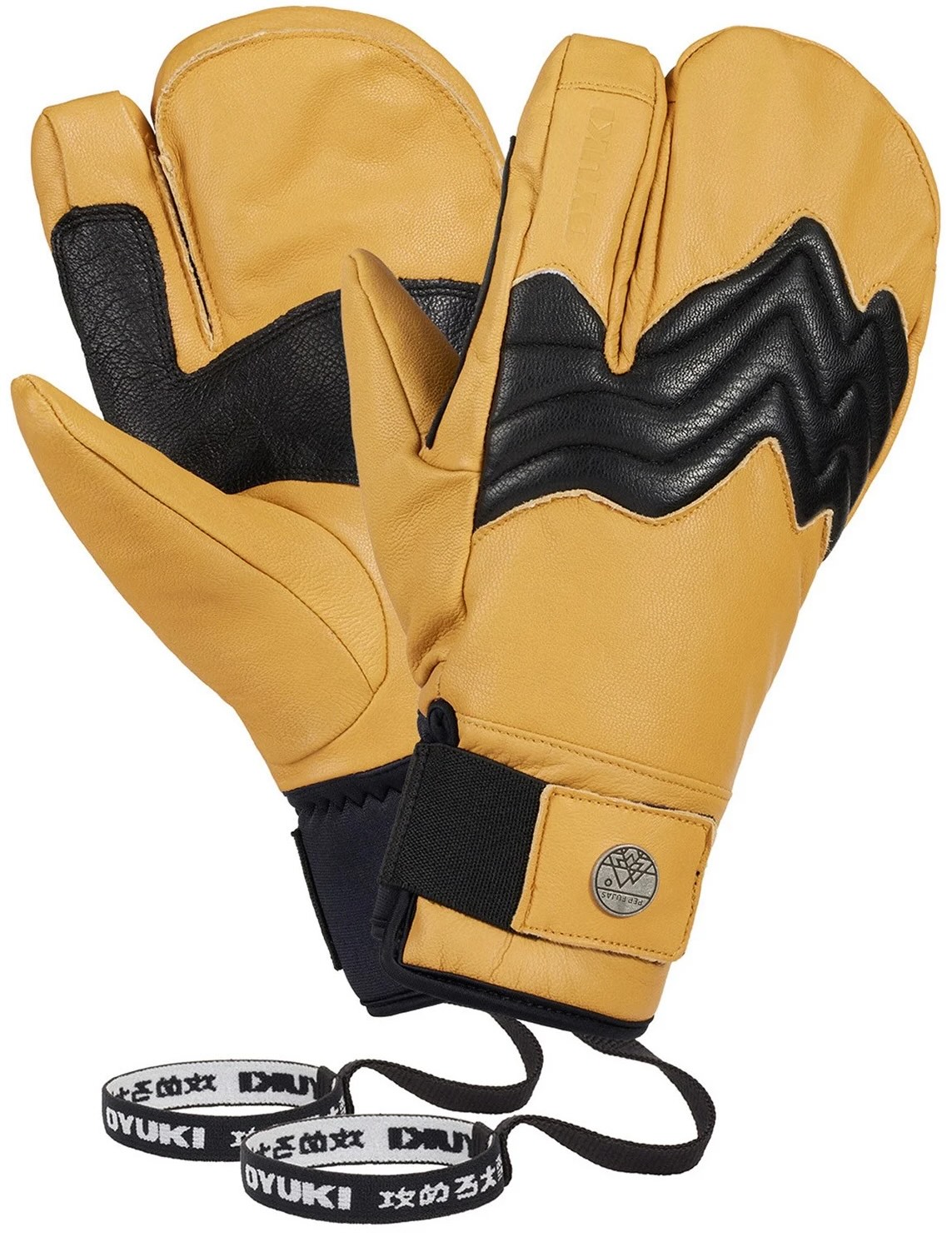
Cuff style: Undercuff
Shell: Leather
Insulation: PrimaLoft Gold (133 & 200g)
What we like: Premium build at a reasonable price.
What we don’t: Split-finger design still can’t match the warmth of a mitten.
If you’re on the fence between a glove and a mitten, it’s worth looking into a trigger mitt (also known as a three-finger mitt or lobster mitt). On paper, this concept is the best of both worlds: Combining a mitten with a dedicated slot for your pointer finger, you get more thermal efficiency than a standard glove, while retaining enough dexterity to pinch a zipper, fiddle with your bindings, or even send a text. The downsides are that your pointer finger ends up being just as cold as it would be in a glove, and freedom of movement still falls short of a regular five-finger design. But trigger mitts nevertheless provide a nice middle ground of warmth and dexterity, and we think Oyuki’s Pep and women’s Chika pull it off better than most.
We snagged a pair of the Pep Trigger Mitts a couple winters back—our tester's first experience with the three-finger design—and were immediate converts. Built from premium goatskin leather, these Oyukis only get better with age, and the undercuff design is sleek yet secure, featuring a wide hook-and-loop cinch. There’s a lot going on under the hood, too: The Pep and Chika come with high-quality touches like a Gore-Tex waterproof insert, warm synthetic insulation (200g on the back of the hand and 133g on the palm), and a soft fleece lining. And Oyuki nailed the styling with a simplistic aesthetic and fun mountainscape sewn into the padded back of the hand (the Chika has an artsy flower design). If you’re curious about the trigger design, the Pep and Chika is a solid option.
See the Oyuki Pep Trigger Mitt See the Women's Chika Trigger Mitt

 Cuff style: Undercuff
Shell: Leather
Insulation: Greenloft (100g & 180g)
What we like: Durable yet supple, affordable, and leather is pre-treated for waterproofing.
What we don’t: Not as warm as most gloves here; not great for areas with consistently wet snow.
Blame it on the lifties—leather work gloves have gained popularity in the ski world thanks to their durable and low-cost design. Among the options, which include hardware-store specials, we like Flylow's Ridge Glove best. Like many modern leather designs, the Ridge features a supple pigskin leather shell and soft polyester lining, with synthetic fill placed in between (100g at the palm and 180g at the back of the hand). But unlike most leather work gloves, the Ridge comes pre-treated with a durable water-repellent finish, so you won’t have to apply your own aftermarket wax ( at least not right away). This gives the Ridge a whole lot of budget appeal.
The Flylow Ridge is a great resort and backcountry glove for anyone on a budget. It's excellent for spring or fair weather, and it’s quite durable and breathable, all things considered. As for downsides, they're not the warmest available, and the lack of a waterproof membrane can be a problem in areas known for consistently wet snow (you’ll want to make sure to refresh the coating if you notice the gloves starting to absorb moisture). But these are minor complaints considering the price, and we especially appreciate how supple the Ridge is out of the box—far from the very stiff initial feel of Kincos, another popular glove in this space. A final note: Flylow’s sizing tends to run small, so you’ll want to try the glove on if possible and consider sizing up.
See the Flylow Ridge Glove
 Cuff style: Gauntlet
Shell: Nylon/leather
Insulation: VerticalX Eco (130 & 200g)
What we like: Desirable mix of price, toughness, and warmth.
What we don’t: Fairly bulky, which impacts dexterity.
In most cases, Outdoor Research hits a really desirable mix of price and performance. We’ve had a number of their gloves on this list over the years, and one of our current favorites from their resort line is the Carbide. For the price, this glove packs in a whole lot: a supple goat leather palm, a burly yet stretchy shell, and a healthy dose of warmth. The interior is soft and impressively cozy, and it has a secure feel in general, thanks to the large gauntlet closure and tightener at the wrist. It’s true the Carbide doesn’t have a removable liner, but otherwise it checks a lot of boxes for most skiers.
One area where the Carbide comes up a bit short is bulk. This isn’t a low-profile design by any means, and dexterity does suffer as a result. You may find yourself needing to slide them off more often than some of the pricier options, and it does make it a little harder to use the touchscreen-friendly fingers. Additionally, we’ve found that our Outdoor Research gloves don’t have particularly long lifespans, although there are no notable areas of concern with the Carbide specifically. In fact, its tough bulk is a hallmark of the glove and one of many reasons we have it ranked as highly as we do. For another style, we recommend checking out the Flylow Super D Glove, which has a nice leather construction, though its build quality falls just short of the Carbide.
See the Men's Outdoor Research Carbide See the Women's Outdoor Research Carbide
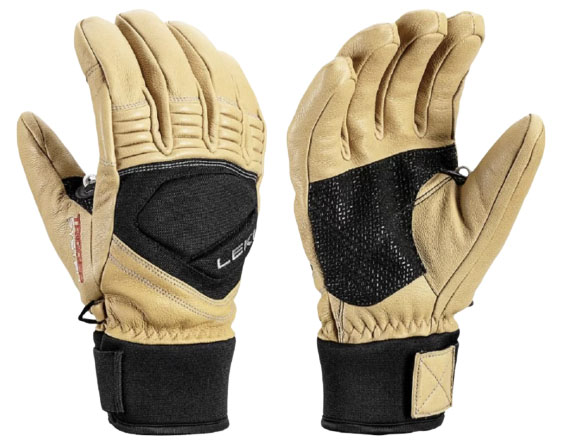 Cuff style: Undercuff
Shell: Leather/neoprene
Insulation: Fiberloft synthetic
What we like: Sleek Trigger system allows strap-free pairing with compatible Leki poles.
What we don’t: Not enough glove for particularly cold climates.
Leki is best known for their ski and trekking poles, but the German company also offers a full lineup of gloves for a range of outdoor uses. The Copper S is one of our favorites for its classy leather build and attention to performance, especially when it comes to ski pole interfacing. The silicone palm is very grippy, and Leki’s Trigger system—a durable fabric loop between the thumb and forefinger that attaches to a click-in/click-out hook on compatible Leki poles—is a handy tool. This added tech not only removes the extra bulk and hassle of a strap but also offers a boost in safety with a 220-degree release angle that detaches the pole from the glove in the event of a snag or fall. In practice, we’ve found the Trigger System to be very slick: It's easy to locate the loop, and clicking in and out quickly becomes second nature.
The Copper S is one of our favorite Leki gloves, and there’s more to love than just the compatibility with Leki poles. Specifically, you get a thin layer of synthetic insulation, stretchy Velcro cuffs that cinch close to the wrist to keep out drafts and snow, knuckle pads, and a neoprene patch for back-of-hand protection. It all adds up to a near-ideal mix of reliability, warmth, and dexterity for mild conditions or skiers who like a secure grip on their poles. If you run cold or ski in particularly frigid climates, the Copper S wouldn’t be our top pick, however. The insulation is relatively light. But if your priorities are leather construction and build quality, the Copper S is a great choice at a fairly reasonable price.
See the Leki Copper S

Cuff style: Gauntlet
Shell: Synthetic/Leather
Insulation: PrimaLoft Active (40g)
What we like: Breathability and dexterity for the climb; lightweight warmth and wind protection for the descent.
What we don’t: Pretty backcountry-specific.
We’re big fans of the hybrid glove/mitten concept, which combines the breathability and dexterity of a glove with the warmth and wind-blocking protection of a mitten (we’ve also heard this design referred to as a “glommit,” which makes us love it even more). Purpose-built for backcountry skiing, the Black Diamond Cirque has become a staple in our kit. The Cirque pairs a capable yet lightweight ski glove, complete with a reliable DWR finish and leather palm, with a lightly insulated and windproof “hood” that stows away neatly in the cuff when not in use. The effect is immediate when donning the hood—a true illustration of the power of shared body heat.
The hybrid design is great for those who need a little more protection on the way down, but don’t want to waste backpack space or weight by packing a thick pair just for the descent. And we’re big fans of the gloves' dexterity, which makes it easy to fiddle with bindings and boots. Their lightweight, uninsulated build also keeps them breathable for the skin track. Though versatility is certainly a highlight of the Cirque, the relatively light dose of synthetic insulation (40g) doesn’t make it the best choice for resort skiing, especially in colder areas. Some users have also reported some issues with durability, but we’ll be sure to report back once we put a full season into ours. Gripes aside, the Cirque is a unique and very functional design for those who aren’t willing to suffer in the backcountry.
See the Black Diamond Cirque Gloves

Cuff style: Gauntlet
Shell: Nylon/leather
Insulation: PrimaLoft Gold (170g & 340g)
What we like: Very warm and very hard-wearing; a great match for the extreme cold.
What we don’t: Overkill for most skiers; dexterity is an issue.
There’s a reason that 8,000-meter mountaineers and Arctic explorers love Outdoor Research’s Alti II Mitt: they’re seriously warm and cozy. The hefty glove is outfitted with 340 grams of synthetic insulation in the liner and another 170 grams in the shell. The shell is made of a thick 70-denier fabric and features a quality leather palm. Added up, this mitten means business, with serious warmth retention and durability. Additionally, the waterproof membrane prevents any moisture from seeping inside. The liner is also removable, allowing for some customization in terms of warmth. You shouldn’t expect a lot of dexterity in these beefy mitts, but the leather palm grips easily onto ski poles. For resort skiers who run cold and don’t want to spend up for a heated glove, the Alti is a compelling alternative.
As mentioned above, one of the biggest downsides to the Alti is dexterity. They’re simply too bulky and thick for precise tasks like boot adjustments (though that’s a common drawback of most mittens). And unless you truly run cold, the Altis are overkill—we suggest mogul skiers and sidecountry enthusiasts steer clear. But they have a surprising amount of appeal in the backcountry space, particularly for those headed out on multi-day trips: You won’t be able to wear them on the skin track, but they’ll provide a great amount of warmth at camp. Most recently, one of our testers put the Altis to the test while ski guiding Denali and found them ideal for frigid nights.
See the Men's OR Alti II GTX Mitts See the Women's OR Alti II GTX Mitts
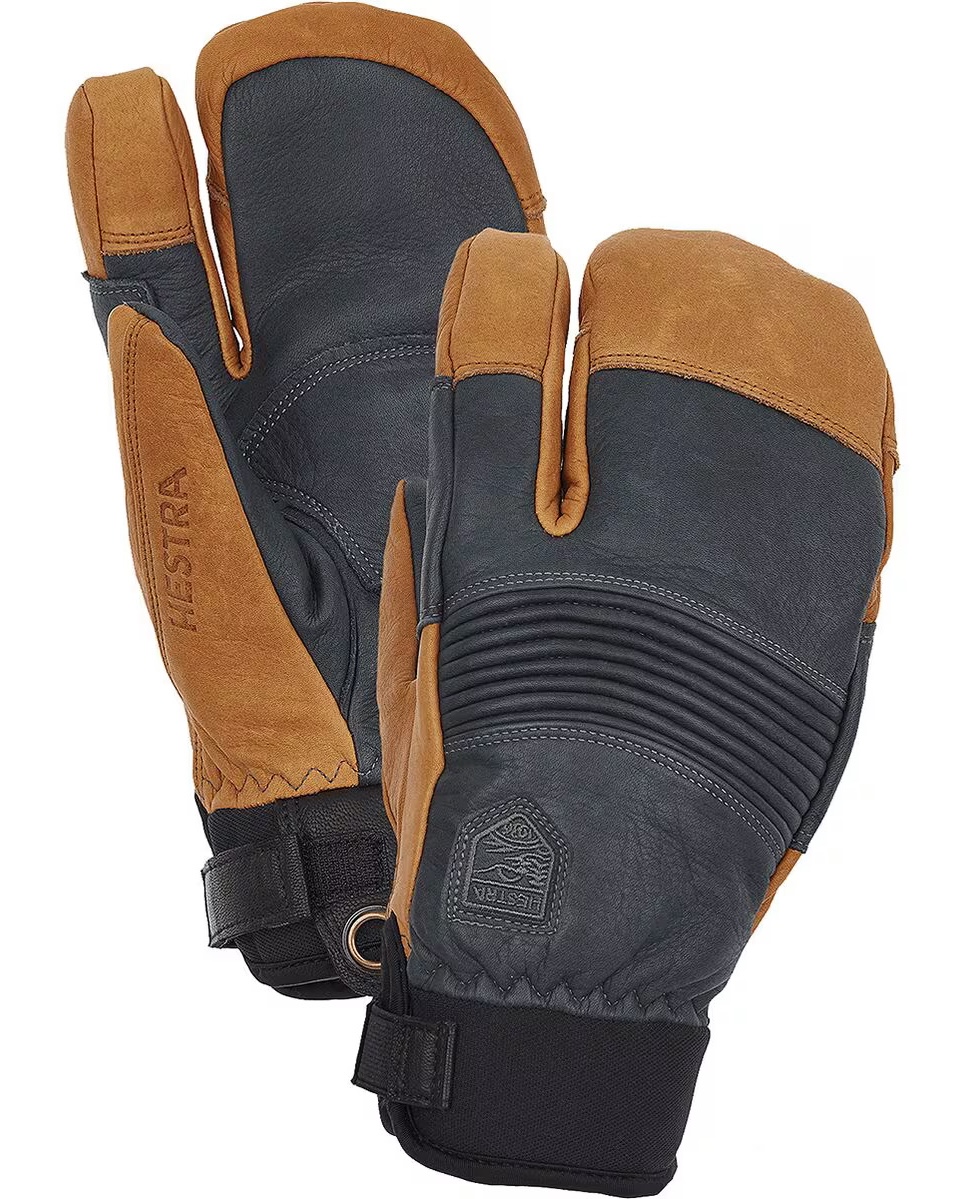 Cuff style: Undercuff
Shell: Leather
Insulation: Foam & synthetic
What we like: Work glove feel and fantastic look.
What we don’t: Not as warm as other options.
You won’t find a more beautiful ski glove than the Hestra Freeride CZone 3-Finger. This all-leather, undercuff design with exposed stitching is a work of art. It’s a great tribute to Hestra’s long history of glove making, and in addition to skiing, the Freeride CZone 3-Finger is one of our favorite options for everyday wear and work in the winter. It’s true that the Freeride isn’t for everyone as warmth falls short of the Oyuki Pep above (it’s best for mild days or those working up some heat), but you won’t find a better-made mitt. Period.
One small design oversight we’ve noticed is that when we cinch the cuff, a fair amount of excess strap hangs off the end. This will likely only be an issue for those with small wrists, although the loose strap did occasionally catch on our jacket sleeve and was a minor annoyance. But that did little to dampen our enthusiasm for the Freeride. Added up, the Hestra deftly balances comfort, dexterity, and a premium look and feel, making it one of our favorite high-end gloves for stormy days at the resort.
See the Hestra Freeride CZone 3-Finger

Cuff style: Gauntlet
Shell: Polyurethane
Insulation: Acrylic
What we like: A waterproof and breathable backcountry-ready glove.
What we don’t: Looks odd and isn't a great option for the resort.
Choosing the right full-on conditions ski glove can be a tricky process, but one model that’s starting to separate itself from the pack is Showa’s Temres 282-02. Don’t let the odd name and low price tag fool you: this is a seriously capable glove. It’s extremely waterproof, yet surprisingly breathable, has a soft-touch fleecy liner, and is just warm enough to keep you comfortable on the downhill. Plus, the Temres is quite versatile, and its excellent dexterity and grippy build have made it a popular choice for everything from ice climbing to shoveling the driveway.
If you want a waterproof design for touring, the Temres 282-02 is pretty hard to beat, although don’t expect to see too many of these gloves at your local resort. Most notably, the acrylic insulation isn’t intended for low-output use and sub-freezing days—it’ll run quite cold when you’re sitting on a slow-moving chairlift—and they can’t match the leather and nylon gloves on this list in terms of styling (you might be mistaken for a crab fisherman rather than a skier). Durability-wise, we’ve found the thin shell to be rather resistant to abrasion, although our palm did tear on a particularly sticky pair of skins. And a final insight on fit: the Temres is known to run small, so it’s best to go up one size.
See the Showa Temres 282-02 Glove
It's easy to tell that the ski glove and mitten market is extensive just from the length of this list. It can be overwhelming trying to sift through the options, but we aim to help you narrow down your choices by testing new and interesting ski gloves every season. Our standards are high, however, and not every contender makes the cut. We understand that you may be interested in learning about the gloves and mittens that we've tested and ultimately dismissed.
First, we decided to remove the Kincos Pigskin Leather Glove. Despite being a classic leather-working glove choice, we believe that Flylow's Ridge glove is a better option in this category. The Kincos are very thin and don't come pre-treated for water resistance, which only makes them a good choice for those living in high and dry areas. For just a bit more, Flylow's Ridge is waterproof and warmer.
The Black Diamond Legend Glove also didn't make the cut this year. In testing, we found that the leather absorbs water, which makes it a poor match for wet snow and powdery conditions. For the price, we think you're better off with the other Black Diamond options on this list or the Hestra Army Leather Heli Glove.
We also removed the Ortovox Merino Freeride 3 Finger Glove from this list because we didn't find that it lived up to its $200 price tag. It was quick to wet out when resort skiing in western Washington, and the build quality fell short of many of the comparably priced options on this list.
There are lots of other gloves and mittens we've tested that simply don't stand out from the competition. They weren't necessarily poor performers, but they fell short of the best and didn't stand out in their price or use cases. From recent testing, the Flylow Super D Glove, Swany X-Cell Glove, Gordini Cirque 3 Finger, and Dakine Titan didn't make the cut for this reason.
| Glove (Men's / Women's) | Price (M/W) | Style | Shell | Insulation | Liner |
|---|---|---|---|---|---|
| Men's Hestra Leather Heli Glove Women's Hestra Leather Heli | $185 | Gauntlet | Polyamide/leather | G-Loft synthetic & fleece | Yes |
| Black Diamond Guide Glove | $190 | Gauntlet | Nylon/leather | PrimaLoft (200g) & wool | Yes |
| Men's BD Mercury Mitt Women's BD Mercury Mitt | $140 | Gauntlet | Nylon/leather | PrimaLoft Gold (133 & 170g) | Yes |
| Men's Gordini GTX Storm Glove Women's Gordini GTX Storm | $83 | Gauntlet | Polyester | Polyester | No |
| Men's OR Revolution GTX Mitten Women's OR Revolution GTX | $90 | Gauntlet | Polyester | EnduraLoft (200g) | Yes |
| Rab Khroma Tour Windstopper | $110 | Unfercuff | Nylon/leather | Fleece | No |
| OR Prevail Heated GTX Gloves | $339 | Gauntlet | Nylon/leather | EnduraLoft (133 & 333g) | Yes |
| Hestra Power Heater Gauntlet | $575 | Gauntlet | Softshell/leather | Microfleece | Yes |
| Men's Oyuki Pep Trigger Mitt Women's Oyuki Chika Mitt | $170/ $160 | Undercuff | Leather | PrimaLoft Gold (133 & 200g) | No |
| Flylow Ridge Glove | $55 | Undercuff | Leather | Greenloft (100 & 180g) | No |
| Men's OR Carbide Sensor Women's OR Carbide Sensor | $130 | Gauntlet | Nylon/leather | VerticalX (200g) | No |
| Leki Copper S | $120 | Undercuff | Leather/neoprene | Fiberloft synthetic | No |
| Black Diamond Cirque Gloves | $110 | Gauntlet | Synthetic/leather | PrimaLoft Active (40g) | No |
| Men's OR Alti II GTX Mitts Women's OR Alti II GTX Mitts | $209 | Gauntlet | Nylon/leather | PrimaLoft Gold (170g & 340g) | Yes |
| Hestra Freeride CZone 3-Finger | $195 | Undercuff | Leather | Foam & synthetic | No |
| Showa Temres 282-02 Glove | $28 | Undercuff | Polyurethane | Acrylic | No |
Gloves and mittens are one of the most important pieces of snow gear you can invest in. There's nothing worse than having to end early because your fingers went numb, so happy hands equal happy days. In narrowing down our list to the gloves and mittens above, we took many factors into account, and we relied almost exclusively on performance in the field: wet cold, dry cold, deep pow, sunny days, and touring days. Synthetic designs often hit the best middle ground between price and performance, which is why many of the picks above use synthetic fill and nylon. Premium leather offers better grip and dexterity, but to be waterproof, it requires a synthetic layer and synthetic insulation, which increases costs. Ultimately, the more you ride in harsher conditions, the better it is to make an investment in a quality product. Finally, the smaller details can make or break a design, so we ensure that each feature (e.g., Velcro, clips, gauntlet straps) works properly and will hold up over time.
The Switchback Travel crew first compiled this guide in 2015, featuring 10 picks. Former editor-in-chief John Ellings took over soon after, curating the list over the next several years based on his experiences in the notoriously wet Pacific Northwest. Bellingham, Washington-based editor Maddie Downie took over the guide in 2025. As both an in- and out-of-bounds skier (and as someone who runs cold), Maddie knows what's needed to keep the digits warm and protected on both groomers and the skin track. Since the market is constantly changing, we’ve slotted this guide into an iterative update schedule to stay on top of the latest and greatest options.

Ski gloves are the classic choice for resort and backcountry skiing and remain the most popular, but mittens can be a viable alternative. In comparing the two, gloves win by a wide margin in dexterity. If you need to grab a lift pass out of your zippered pocket, good luck pulling that off without removing your mittens. It’s also easier and feels far more natural to retain a good grip on a ski pole or adjust your boots or bindings with gloves. But as we touch on in the “warmth” section below, there’s simply no replacement for a heavily insulated mitten. The good news is that many of the offerings above come in both glove and mitten varieties (or in the case of the Black Diamond Cirque Gloves, a hybrid design), so you can take your pick depending on weather and personal preference.

A final alternative is the 3-finger glove (also called a trigger, split-finger, or lobster glove), which brings together the attributes of glove and mitten designs. With this design, the pointer finger and thumb have their own slots while your remaining fingers huddle together for warmth. This style can vary a great deal in the amount of warmth it provides—that lone finger sometimes ends up just as cold as it would be in a standard glove—and we've found that freeing up your pointer finger isn’t a huge difference-maker for dexterity. Some of our favorites in this category include Oyuki's Pep and Hestra's Freeride CZone.
.jpg)
Ski gloves and mittens are constructed with two general material types: synthetic and leather. From a glance at the table above, you’ll notice that many gloves utilize both materials, playing to their respective strengths, so this isn’t always a question of exclusivity. But knowing what each material is best for goes a long way in finding the ideal glove.

Leather
Leather ski gloves are durable and extremely comfortable, but they are typically more expensive than synthetic alternatives. From premium Hestras to budget options like the Flylow Ridge, they have a much more natural feel right away and are usually more flexible and dexterous than a comparable synthetic. It is way easier to grip ski poles and feel secure with a leather glove or mitten than with a synthetic one. The biggest downside is moisture protection. Leather—and particularly treated leather—is somewhat water resistant and can withstand light to moderate wetness. However, they will eventually soak through in wet conditions. To keep your leather ski gloves dry and extend their lifespan, try using Sno-Seal or a Nikwax waterproofing treatment. Most top-end leather gloves feature a Gore-Tex or other waterproof layer built in, so while the exterior may become damp, your hands stay dry.

Synthetic (Nylon and Polyester)
Leather has had a resurgence, but many ski gloves still use a synthetic shell. At the mid-range, you’ll find tough but pliant nylon shells that fend off snow, wind, and cold conditions. Cheaper synthetic gloves often use a less flexible polyester shell that doesn’t hold up as well to moisture and can feel bulky. With either type of shell, a waterproof insert is often incorporated between the exterior and insulation. Leather has its advantages, but synthetic gloves usually offer the highest levels of waterproofing. To get the best of both worlds, many synthetic gloves add leather or synthetic leather on the palm and fingers for better grip and dexterity, like Gordini's GTX Storm Glove.

If you’re prone to cold fingers or live in an area with frigid temperatures like the Northeast, you’ve probably found ski glove shopping to be a bit challenging. Most ski gloves under $100 just aren’t warm enough to be comfortable on the chairlift when the temperature dips below about 20 degrees Fahrenheit. In the end, we've found that more expensive gloves like the Black Diamond Guide and Hestra Heli offer the warmth we need. If you have very cold hands and fingers, a heated glove or mitten like Hestra's Power Heater Gauntlet might be the best call, so that you can keep riding longer. Just keep in mind that the electronics in heated gloves can interfere with avalanche beacons. Conversely, if you run really warm or ski in milder temp conditions, you can save some money with a less insulated glove.
.jpg)
Gloves are insulated in a wide range of ways, from fleece to synthetic fill, so it’s hard to establish exactly how warm a glove will be without trying it on first. Some indications include the weight of the synthetic (listed in grams) as well as the quality. PrimaLoft is the leader for lofty warmth and is popular on many high-end gloves. Some of the warmest designs use a mix of insulation: The Black Diamond Guide has 200-gram PrimaLoft fill as well as plush boiled wool in the lining. For absolute warmth, we turn to mittens instead of gloves, which heat more effectively due to your fingers pressing against one another. Some skiers may miss the control and dexterity that you get with each finger gripping a ski pole, but it may be worth the trade-off for others.
.jpg)
Aside from warmth, waterproofness is the second major factor that can make or break your days on the slopes. And not only does your glove need to keep snow from entering, but it also needs to let perspiration out from the inside. Located between the shell material and insulation in a fully waterproof design is a membrane or insert. Gore-Tex offers the best combination of waterproofing and breathability on the market. Cheaper gloves often use a non-Gore-Tex insert of varying names (BD.dry, DryVent, etc.) and degrees of efficiency. Keep in mind that if you choose a cheaper ski glove in the sub-$100 range, you can expect decent waterproofing, but it likely won't hold up as well over time or on particularly wet days (a notable exception is Showa's polyurethane Temres 282-02). Entry-level gloves can be suitable for those who ski occasionally at the resort, but serious skiers will want a more advanced glove to stay comfortable throughout the day.
.jpg)
Some gloves forego the Gore-Tex insert and are merely water resistant, which can work in dry climates like Colorado and Utah or if breathability is a priority (one exception is Hestra's Heli, which doesn't include an insert but still has held up well for us in the Pacific Northwest). Usually, the shell has a DWR finish and is treated with a water-resistant coating to shed snow. A non-waterproof design like the Hestra Fall Line can work just fine on clear days, and a well-maintained leather glove can definitely do the trick all season long (for more on this topic, see the care section below). But a fully waterproof design is the safer bet for most weekend warriors.
.jpg)
A good number of our favorite ski gloves above include leather in the construction. The natural material is supple and offers excellent dexterity, but it also requires occasional maintenance to prevent moisture absorption. Most leather gloves come pre-treated, so it’s not something you’ll need to do right away. But if you start noticing the material soaking up moisture—also known as “wetting out”—it’s a good indicator that the leather needs some attention. Sno-Seal is a beeswax-based solution that is a long-time favorite among skiers. It does require some effort—including baking the glove in an oven—and will darken the leather, but it’s a proven formula that effectively repels moisture. Less involved treatments that still provide good protection include Nikwax’s Waterproofing Wax and Hestra’s Leather Balm. Finally, for gloves with a combination of leather and nylon, we recommend Nikwax’s Glove Proof, which adds a solid water-resistant coating to the outer materials.
.jpg)
In general, warmth and dexterity go hand in hand. A heavily insulated glove like the Black Diamond Guide is bulkier and harder to use for tasks like unbuckling a ski boot or grabbing your phone. In addition, ease of use correlates with style: Gloves are significantly more dexterous than mittens, and 3-finger mitts split the difference. A final element is the level of R&D—high-end gloves and mitts are better tailored to fit a hand and have a pre-curved shape for a natural feel.

Individual needs will vary, but dexterity shouldn’t be the top consideration for most resort skiers. Even a very thick glove or mitten is serviceable for gripping a ski pole for downhill use (unzipping a pocket and pulling out your phone without removing your gloves is a different story, however). We look for a good mix of freedom of movement without compromising warmth and protection, which is why we find a glove like the Hestra Heli just about perfect. It’s when you ski big mountains, venture off-trail in harsh conditions, or need added dexterity for handling backcountry or ice tools that it becomes worth it to upgrade to an option like the Black Diamond Legend.
.jpg)
Gauntlet Style
Different skiers prefer different cuff lengths, but there are some concrete concepts that can help make your decision easier. Longer gauntlet-style gloves extend well beyond your wrist, covering the cuff of your ski jacket. This style is generally warmer because it has more insulation and seals out the cold very effectively with a drawcord (the Outdoor Research Alti II Gore-Tex Mitt is a great example). This also means less range of movement in your wrist with more material in the way. Shorter gauntlet-style gloves that barely cover the cuffs on a jacket leave a pathway for moisture to enter in particularly wet conditions (more on wrist cinches in our features section below), but this style is also the easiest to put on and take off.
.jpg)
Undercuff
Shorter undercuff gloves tuck into your ski jacket, which requires more work than simply sliding on a gauntlet glove, and they don’t provide quite as much warmth. Also, if your sleeves ride up when you’re reaching forward, say to plant a ski pole, you can expose some skin. On the other hand, they offer more agility with less bulk getting in the way of wrist movement and are easier to ventilate—one of the many reasons the Rab Khroma Tour Windstopper gloves are our favorite for backcountry skiing. On the flip side, gauntlets are popular for maximum protection in deep powder and cold weather (or wet) resort days.
.jpg)
Across all price ranges, you’ll have the choice between gloves that are made with or without removable liners. In general, gloves with removable liners will be slightly warmer but are a little bulkier and less dexterous. For us, the most compelling reason to choose a glove with a liner is that it’s more adaptable to different temperatures. You can wear the shell on a warm spring day and use both (or swap out other liners you may own) for the rest of the season. Another benefit is that it’s easier to dry out the gloves if they happen to get wet by separating the two pieces. And as a bonus, if you get a glove with thin liners (like the Dakine Titan), you can use them for activities like cold-weather running or driving.
.jpg)
A properly fitting glove helps maximize everything from warmth to dexterity, so it’s worth the time to find your ideal size. And while the market isn’t consistent with how they list glove and mitten sizing—you’ll see standard small, medium, and large options as well as numbers-based sizing from a brand like Hestra—the good news is that most rely on a simple hand circumference measurement. To get your size, wrap a soft tape measure around the widest point of your hand (typically right behind the knuckles) and match it to the manufacturer’s corresponding range. If you wind up in between sizes, it’s best to go up to avoid pinch points or an overly tight fit (which compromises both comfort and warmth).

It’s worth noting that relying on your hand circumference isn’t a foolproof process, as the sizing doesn’t account for finger length, so it’s always ideal to try gloves on before purchasing. But if you need to buy online or just prefer the convenience, following the manufacturer-specific fit guidelines (avoid generic charts) and buying from a reputable ski retailer with a good return policy is a smart way to go.

Touch-Screen Compatibility
Why wouldn't you want touch-screen sensitivity on your ski gloves? A number of manufacturers now offer exactly this so that you can snap photos or videos without taking your gloves off. You'll most often find the technology on thin gloves and liners where it's easier to incorporate, plus the thinner liners are more precise when typing. On some models, only pointer fingers and thumbs are touch-screen compatible (as is the case with OR's Carbide Sensor). Overall, we consider this a nice feature if a model you like has it, but it's not the first factor we consider in selecting a glove.

Wrist Cinches
Gauntlet-style gloves in particular often have a cinch or draw cord to tighten the opening where snow can enter (this differs from a wrist strap, which tightens the glove over the hand and wrist). By pulling the cinch or draw cord, you can effectively prevent moisture from entering your glove in all but the wettest of conditions. Much like a powder skirt on a ski jacket, this can be very effective at tightening down your gear before skiing through the deep stuff.
.jpg)
Wrist Leashes
Wrist leashes—also known as keeper cords or retention straps—are a fairly common feature among resort models as a way to keep you and your gloves together should you take a serious fall. The design is simple: you slide your wrists through the adjustable cuffs (they can be as minimalist as a piece of string), and a strap connects you to the gloves. The main advantage is not leaving them behind if you take a tumble, but the straps also provide security if you remove your gloves while riding the chairlift. It’s certainly not a necessary feature, and some don’t like the extra bulk, but most skiers find the trade-off worth it for the added peace of mind on the slopes. From our picks above, wrist leashes are included on gauntlet-length designs like the Hestra Heli, Outdoor Research Prevail, and Gordini GTX Storm.
.jpg)
Nose Wipes
It's not easy to grab a tissue with your gloves on, so many models feature a soft patch of fabric on the thumb or pointer finger to help with your runny nose. Nose wipes are good in a pinch, and the fabric helps to avoid irritation that you might get from doing the same thing with the tough shell fabric of your jacket. Of course, they lose their effectiveness when overused or when the temperature really drops, but they are a nice touch nevertheless.

Leki’s Trigger System
Typically, skiers will secure their poles to their hands using wrist straps—an age-old system that few innovations have challenged. But it’s not foolproof and can be especially hazardous in the event of a fall (many skiers—especially backcountry skiers—don’t use their straps because of this). Seen on the Copper S above, Leki’s Trigger System offers a really intriguing alternative, pairing a small fabric loop on the glove with a click-in/click-out hook on compatible poles. The hook eliminates the extra bulk and hassle of a strap, is super slick in practice (clicking in and out of it quickly becomes second nature), and releases either with the touch of a button or when the glove’s loop reaches a specific angle (220˚). Not every skier will be interested in such a high-tech system, but it certainly has its appeal. And the good news is that Leki offers a near-complete range of gloves and poles, so you don’t have to compromise on warmth or performance.
Back to Our Top Ski Glove Picks Back to Our Ski Glove Comparison Table


bcdc.jpg?h=fbc67360&itok=wmPMXiEZ)
8534.jpg?h=fbc67360&itok=zoe9mQ63)
c149.jpg?h=fbc67360&itok=vcIod759)
cef9.jpg?h=fbc67360&itok=qyeBWUTt)
0ec1.jpg?h=fbc67360&itok=oGaifWVw)
263f.jpg?h=fbc67360&itok=82qUQm2r)
f6af.jpg?h=fbc67360&itok=JShxB9ES)
6638.jpg?h=fbc67360&itok=4Xc8CqwI)
d2fe.jpg?h=fbc67360&itok=9OxKROqi)