.jpg)
%20(m).jpg)
Photo Credit
Cozying into your sleeping bag at the end of a long day on the trail is one of the great pleasures of backpacking. And today’s sleeping bags offer exceptional warmth for the weight, along with a range of technologies that help them stay dry and perform in a variety of conditions. The majority of the bags on this list are filled with down, which is warmer, lighter, and more compressible than synthetic insulation. We've tested countless sleeping bags all over the world—from snow-laden peaks in southern Patagonia to the dusty East African savanna—to narrow in on our 15 picks below, with the REI Co-op Magma 15 leading the charge. For more background information, see our comparison table and buying advice below the picks, along with details about our testing process. Finally, if weight is at the top of your priority list, we've also compiled a list of the best ultralight sleeping bags and quilts.
Editor's note: We updated this guide on November 17, 2025, to remove the unavailable Therm-a-Rest Parsec 20 and Patagonia Fitz Roy 30°F, add the Nemo Pulse Quilt, and bump the REI Co-op Magma 15 to our best overall slot. As always, we also swept the guide to ensure all other information was current at the time of publishing.
 Temperature rating: 21°F ISO Comfort, 9°F Lower Limit
Other option: 30°F
Weight: 2 lb. 3.6 oz.
Fill: 23.3 oz. of 850-fill down
What we like: A lightweight sleeping bag for less than the competition; nice selection of sizes.
What we don’t: Pricier and heavier than the past version, although warmth increased.
REI Co-op’s in-house offerings have been impressive of late, with a strong lineup of quality backpacking gear at competitive prices. The latest Magma 15 is a case in point: you get a premium, warm backpacking bag loaded with 23.3 ounces of 850-fill down (REI also makes a 30-degree version). On paper, it’s right in line with top-tier brands but with less damage to your wallet. The Magma isn’t cheap by any means—down is the most expensive insulator—but it’s a solid value, especially during sale periods.
REI's overhaul of the Magma line brought several tweaks, with the biggest change being the swap from separate men’s and women’s versions to more cohesive unisex sizing. Both the Magma 15 here and the cheaper Magma 30 are now offered in nine sizes with three length and width options to choose from. The latest Magma 15 is also warmer than the past-generation version, with an additional 7.3 ounces of down in the medium size. However, overall weight and price also went up, but we’re happy with the changes, which included a new recycled shell and a PFAS-free DWR coating. The Magma still can’t match the ultra-high-end feel of bags from Feathered Friends and Western Mountaineering, but you’d be hard-pressed to find a better value for the weight and warmth.
See the REI Co-op Magma 15
.jpg)
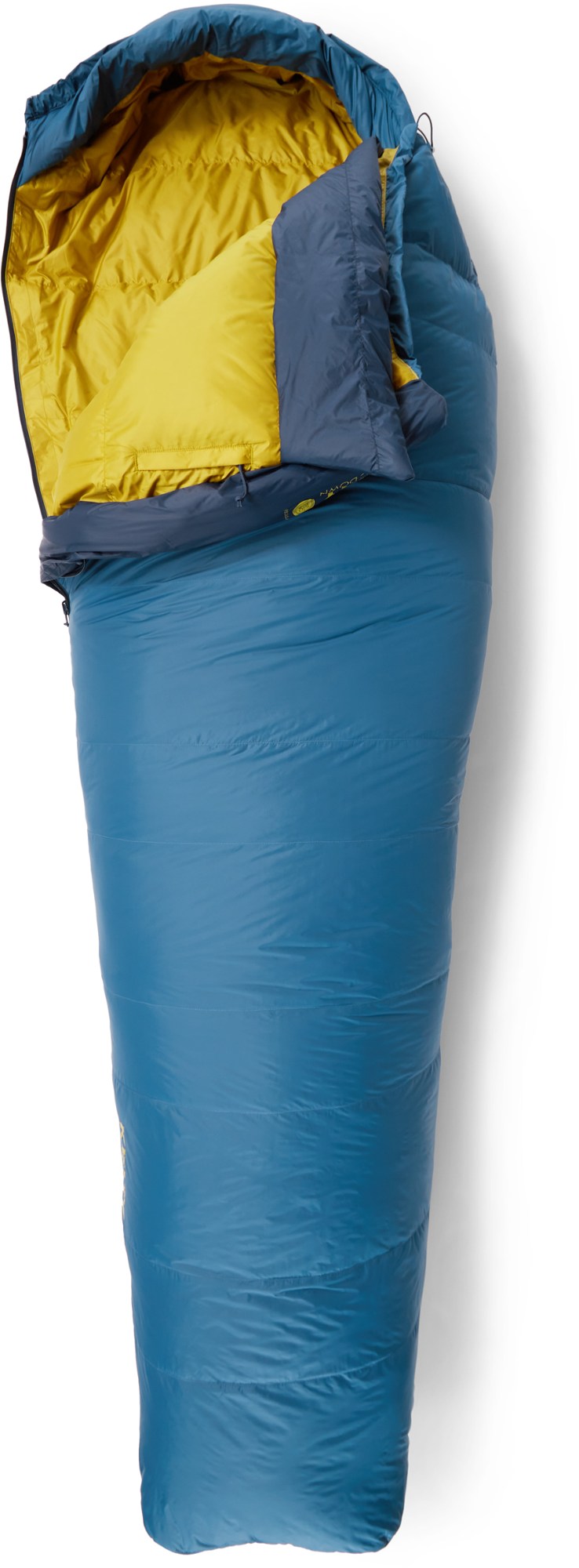 Temperature rating: 31°F ISO Comfort, 21°F Lower Limit
Other options: 0, 40°F
Weight: 2 lb. 7.0 oz. (men's), 3 lb. 4.8 oz. (women's)
Fill: 16.4 oz. of 550-fill down (men's), 29.6 oz. of 550-fill down (women's)
What we like: Inexpensive for a warm and well-made down sleeping bag.
What we don’t: Heavy and not as packable as more premium models.
For new backpackers and budget travelers, Kelty offers inexpensive gear that may surprise you with its quality. The Cosmic Down 20 is one of the less expensive down sleeping bags, but its ISO Comfort rating of 31 degrees Fahrenheit should keep you cozy in most 3-season conditions. You also get a zippered internal pocket for stashing a headlamp or phone, a supple—and recycled—nylon shell, a draft tube and collar to minimize heat loss, and multiple zippers for venting. Finally, we should note that Kelty's latest update to this bag included a 3-ounce weight reduction (fill power and weight remained the same). At under 3 pounds for the regular version, it’s our favorite budget down bag for 2025.
Keep in mind that, due to its lower fill power, the Kelty Cosmic Down is not as light or packable as the more premium options on this list. By spending up, the Feathered Friends Swallow UL 20 offers more warmth for almost a full pound less, though it's also nearly four times the price (and a bit more fragile). Unlike down, synthetic fill will continue to insulate when wet. But for space-conscious backpackers keeping an eye on their wallet, it’s hard to beat the down-filled Cosmic, which packs down smaller than the Trestles.
See the Men's Kelty Cosmic Down 20 See the Women's Kelty Cosmic Down 20
.jpg)
 Temperature rating: 25°F ISO Comfort, 14°F Lower Limit
Other option: 30°F
Weight: 2 lb. 11.0 oz. (men's), 3 lb. 5.0 oz. (women's)
Fill: 23 oz. of 650-fill down (men's), 32 oz. of 650-fill down (women's)
What we like: A roomy and comfortable sleeping bag for those who toss and turn.
What we don’t: Heavier and bulkier than slimmer-cut bags with similar temperature ratings.
Nemo does things differently with their sleeping bags, and they’re a big hit among comfort seekers and side sleepers. Unlike slender mummy designs that trim dimensions to shave weight, Nemo utilizes a "spoon”-shaped concept on the Disco. The focus is on comfort: The bag is wider than a typical mummy, particularly in the elbows and knees, so sleepers can roll from side to side without feeling constrained. You also get features like two “Thermo Gill” vents running lengthwise at the top of the bag—unzipping them creates intentional cold spots to release hot air in warm conditions—an oversized draft collar at the neck, and a built-in pillow sleeve. Finally, the Disco 15 uses 650-fill, PFAS-free hydrophobic down, and a waterproof panel around the toe box for added protection.
The Disco was updated in the spring of 2024, and the newest version joins Nemo’s Endless Promise collection with a recycled, repairable, resellable, and recyclable design. It also boasts a redesigned draft collar and updated vents, which now feature zippers on both the inside and the outside of the bag for convenient access. As with previous versions, the biggest downsides are weight and bulk: The spacious design means more fabric and down fill are required, and the Disco 15 weighs 2 pounds 11 ounces for the regular size. It also doesn’t help that the bag uses 650-fill down, which is mid-range—check out the 800-fill Nemo Riff 15 for a lighter but pricier alternative. But if the roomy fit and comfort-focused feature set appeal to you, the Disco 15 is a great option.
See the Men's Nemo Disco 15 See the Women's Nemo Disco 15
.jpg "Nemo's Riff and Disco have a blanket fold and zippered gills to adapt to a variety of temperatures")
 Temperature rating: 51°F ISO Comfort, 45°F Lower Limit
Other options: 0, 15, 30°F
Weight: 12.8 oz. (men's), 13.5 oz. (women's)
Fill: 5.3 oz. of 850-fill down (men's), 7.1 oz. of 850-fill down (women's)
What we like: Crazy light and packable; wet-weather assurance of hydrophobic down.
What we don’t: Only warm enough for mid-summer use, partial-length zipper limits ventilation, and thin shell fabric will require extra care.
Most of the sleeping bags here weigh between 1 and 2 pounds and have temperature ratings as low as 20 degrees Fahrenheit. While these are great all-around designs for a range of conditions and backpacking trips, they verge on overkill—both in terms of weight and warmth—for minimalist missions in warm summer weather. For these conditions, we love the Sea to Summit Spark, a 12.8-ounce, 45-degree bag that packs down to the size of a 1-liter Nalgene bottle. The Spark is well-rounded for its weight: Unlike the Feathered Friends Tanager and Enlightened Equipment Enigma, it comes complete with a hood and zipper, and its hydrophobic down offers great wet-weather assurance. All told, you’d be hard-pressed to find a lighter, more functional design without bumping up to the 50-degree category.
But versatility is limited with such a minimalist bag. To put it in perspective, our top-ranked Swallow UL 20 contains over three times as much down as the Spark, which is a welcome addition on cool summer nights spent up high. Further, while its 10-denier shell isn’t the thinnest here (the Tanager’s is 7 x 5D), it will still require considerable care when packing or sleeping outside on rough ground. To be fair, we've cowboy camped in the Spark without issue, but don't expect any miracles in terms of abrasion resistance. Additionally, the streamlined build translates to somewhat tight quarters, and our 5'8" tester wishes she had gone with a long instead of the regular length. But these shortcomings aside, the ultralight and ultra-compressible Spark will disappear into your pack or bike pannier better than just about any other sleeping bag, making it a solid choice for mid-summer outings at low elevations.
See the Men's Sea to Summit Spark 45 See the Women's Sea to Summit Spark 45
 Temperature rating: 12°F EN Comfort, 0°F Lower Limit
Other options: 0, 15°F
Weight: 2 lb. 10.4 oz.
Fill: 30.5 oz. of 800-fill down
What we like: Cozy loft and warmth-trapping features for cold-weather missions.
What we don’t: Shell offers little in the way of wet-weather protection; it's pricey.
Cold environments call for a warm sleeping bag, and Mountain Hardwear’s Phantom 0F has long been a go-to choice for winter camping and high-altitude expeditions. Filled with almost 2 pounds of 800-fill down and featuring a lofty draft collar, cinchable hood, and protective face gasket, the Phantom is a warm haven from sub-freezing temperatures. Its 2-pound-10.4-ounce build is heavy compared to the 3-season competition, but it's impressive given the bag’s warmth: Mountain Hardwear keeps weight and bulk low with a thin 10-denier shell, a lightweight zipper, and a streamlined (yet still comfortable) profile. It all adds up to our favorite down sleeping bag for human-powered endeavors in the cold, including backcountry hut trips, snow camping, and expeditions up the world’s tallest peaks.
We’d be remiss not to mention Feathered Friends’ Snowbunting ES 0 here. Designed for serious adventures, the Snowbunting offers more protection from drips and condensation with a water-resistant Pertex Shield EX fabric. The shell is also thicker at 15-denier, and 40-denier ripstop reinforcements provide peace of mind when you’re sleeping beside your climbing gear. The Snowbunting’s water-resistant shell does slightly compromise breathability—and adds a few ounces to the total weight—but the trade-offs will be worth the added assurance for some. All told, the Snowbunting is the better bag if you anticipate needing to fend off moisture, but for dry conditions and shorter trips, the Phantom offers a more competitive combination of price and warmth for the weight.
See the Mountain Hardwear Phantom 0F
 Temperature rating: 30°F
Other options: 0, 10, 20, 40, 50°F
Weight: 1 lb. 1.9 oz.
Fill: 12.4 oz. of 850-fill down
What we like: Super customizable, versatile, and great warmth for the weight.
What we don’t: Not everyone will love the hoodless, backless design.
Sleeping quilts are popular among ultralight enthusiasts: With an open-back design that wraps around a pad, they provide sleeping-bag-like warmth for less weight and bulk. Quilts are the bread and butter of Minnesota-based Enlightened Equipment, so it’s no surprise to see their Enigma at the top of our list. The Enigma 30 packs a serious punch with a whopping 12.4 ounces of 850-fill down. And because ULers love customization, Enlightened Equipment quilts are available in a wide variety of sizes, with options for 850- or 950-fill down, various nylon shells (7D or 10D), and a generous range of temperature ratings (0 to 50 degrees F).
We’re big fans of sleeping quilts for their versatility and warmth-to-weight ratio, and despite their backless design, we’ve taken them into inclement conditions. In fact, the Enigma was one editor's quilt of choice for all three of the Triple Crown trails (AT, PCT, and CDT), keeping him cozy in everything from freezing whiteouts in Colorado's San Juans to weeks of chilly drizzle in the Pacific Northwest. You do give up a bit of security, and with no hood, you’ll want to be sure to pack additional head coverage (a beanie or a hooded down jacket will do), but we’ve learned to trust quilts no matter the conditions. If you’re willing to try something different, they offer impressive warmth, alongside great ventilation for hot sleepers. For another stellar ultralight quilt option, check out the Nemo Pulse.
See the Enlightened Equipment Enigma Quilt

Temperature rating: 20°F
Other option: 30°F
Weight: 1 lb. 11.3 oz.
Fill: 16.8 oz. of 950-fill down
What we like: Excellent warmth-to-weight ratio and build quality for serious backpackers.
What we don’t: Pricey and lacks some modern features; difficult to pack down into its stuff sack.
For the best combination of premium down, high-quality construction, and warmth-to-weight ratio, it’s hard to beat a Feathered Friends sleeping bag. This boutique Seattle-based brand specializes in down products and hand-makes just about all its products in the Pacific Northwest. Climbers stop in religiously before heading to Mt. Rainier, Alaska, and far-off places like the Himalayas, and it’s well worth a visit if you’re in Seattle (their store is right across from the REI flagship). And with a direct-to-consumer model, Feathered Friends sleeping bags and other down products are well-made and well-priced for what you get.
We've been using their Swallow UL for years and brought it on a backpacking trip in Wyoming's Wind River Range, where it kept us cozy in driving winds and plummeting temps. The bag is stuffed with over a pound of 950-fill goose down, features a durable, water-resistant Pertex shell, and weighs a reasonable 1 pound 11 ounces for the 20-degree model. It’s also built to last: After almost a decade of use, our bag shows little sign of wear and is as warm as the day we bought it. But the Swallow is indeed pricey and lacks some of the modern touches you get with other bags, including a draft collar (the passive collar is a bit less effective at trapping heat), pillow pocket, and toe box vent. For a lighter, more affordable option with trimmer dimensions, check out the Hummingbird UL 20.
Read more: Feathered Friends Swallow UL 20 review
See the Feathered Friends Swallow UL 20
.jpg)
 Temperature rating: 26°F ISO Comfort, 15°F Lower Limit
Other option: 0°F
Weight: 2 lb. 5.4 oz.
Fill: 21 oz. of 650-fill down
What we like: A bit warmer and lighter than bags with similar specs.
What we don’t: A Tapered cut is not ideal for those who toss and turn.
There are many very expensive sleeping bags that use 800-fill-power down or higher, as well as budget-oriented synthetic options, but the mid-range down offerings are limited. In this category, we like the Mountain Hardwear Bishop Pass, which does a nice job of putting it all together at a reasonable price. You get a cozy 26-degree Fahrenheit ISO Comfort rating at 2 pounds 5.4 ounces total—a good deal lighter than bags with similar specs. This bag is both well-built and comfortable, with premium touches like a generous draft collar to seal out cold and a soft liner that feels supple and cozy against the skin. At a fraction of the cost of a high-end model like the Feathered Friends Swallow UL, we find the Bishop Pass offers good value.
Keep in mind that the Mountain Hardwear Bishop Pass keeps weight low by tailoring the bag's cut. The regular size is 53 inches at the hip, whereas the Kelty Cosmic is roomier at 58 inches. If you are a side sleeper who tosses and turns throughout the night, we recommend choosing the Kelty (alternatively, Nemo makes the roomiest bags out there). But for those who don’t mind a trimmer mummy cut, the Bishop Pass is a quality mid-range bag that will save you some weight.
See the Men's Mountain Hardwear Bishop Pass 15 See the Women's MH Bishop Pass 15
 Temperature rating: 20°F
Weight: 1 lb. 13.0 oz.
Fill: 16 oz. of 850-fill down
What we like: Lightweight, super comfortable, and well built.
What we don’t: Lower-quality down and trimmer dimensions than the Feathered Friends Swallow UL 20.
Feathered Friends sets the gold standard for premium down products, but Western Mountaineering is hot on their heels. Specializing in down sleeping bags, this San Jose-based company offers a complete collection for every type of adventurer, from durable, waterproof expedition bags to featherweight quilts. The UltraLite here is their fully-featured 20-degree offering, with a very healthy 16 ounces of 850-fill down (5 in. of down loft), a wraparound draft collar, and a full-length #5 YKK zipper. All in all, it's for good reason that the longstanding UltraLite is Western Mountaineering’s most popular 3-season backpacking bag for shoulder-season adventures and alpine conditions in the Lower 48.
Compared to the Feathered Friends Swallow UL 20, the UltraLite has trimmer dimensions (a noticeable five inches less at the hip), uses lower-quality down (850- vs. 950-fill), and weighs 2 ounces more. The bag does feature thicker shell fabric (12 vs. 10D) and is cheaper, but that isn't enough to justify the Western Mountaineering over the Feathered Friends. Comparisons aside, the UltraLite is a premium bag that’s high on comfort and attention to detail. For more room, check out the AlpinLite, which gives you an extra 5 inches of girth in the shoulders and 4 inches in the hips, while adding only 2 ounces to your total weight.
See the Western Mountaineering UltraLite
 Temperature rating: 34°F ISO Comfort, 23°F Lower Limit
Weight: 1 lb. 2.0 oz.
Fill: 12.0 oz. of 1,000-fill down
What we like: Strong sustainability focus, ultralight, and packable.
What we don’t: Pricey; the cinch system is finicky to use.
Weighing just 1 pound 2 ounces and packing down to the size of a Nalgene, the Nemo Pulse 20/30 stands out as one of the lightest backpacking quilts we’ve tested. Its innovative Karo Step baffle construction keeps the 1,000-fill hydrophobic down evenly lofted while shedding unnecessary bulk, maintaining warmth without adding weight. Nemo also nailed the finer details, from the cozy collar baffle and cohesive hardware that help seal out drafts to the recycled ripstop shell with a PFAS-free DWR coating. And when it’s time to retire the quilt, Nemo’s Endless Promise program ensures it’ll be recycled rather than sent to a landfill—a standout commitment in the ultralight space.
We chose the Nemo Pulse as our cocoon of choice for a month-long bikepacking tour in Kyrgyzstan and Tajikstan, and felt toasty and safe through frigid temps and blasting winds alike. We unfortunately lost it down a mountainside during this adventure due to a seat bag malfunction, but the nights we spent cozied up in it have us convinced—this is hands down one of the best ultralight quilts. The Pulse is an investment, and we found its 30-degree rating to be a bit on the generous side—extra layers are wise when temps dip. The footbox cinch system also requires a bit more fiddling than we’d like, especially in the dark. Still, for weight-conscious adventurers who value sustainability and premium craftsmanship in a featherlight package, the Pulse 20/30 is one of the most impressive new ultralight quilts.
See the Nemo Pulse 20/30 Endless Promise Quilt
 Temperature rating: 20°F
Weight: 1 lb. 2.6 oz.
Fill: 12.6 oz. of 950-fill down
What we like: The hoodless design hits the sweet spot for weight and performance.
What we don’t: No zippers and very thin fabrics.
The ultralight sleeping bag world is chock full of models that trim weight with premium down, ultra-thin shell materials, streamlined feature sets, and narrow dimensions. The Sea to Summit Spark gets our top pick for its uncompromised design, but the hoodless Feathered Friends Tanager is an intriguing alternative. With no zipper or hood, this dedicated ultralight build saves weight on features but doesn't sacrifice on insulation with premium 950-fill down. The result is impressive, to say the least: The 20-degree Tanager weighs just 1 pound 2.6 ounces total but contains a whopping 12.6 ounces of insulation. Do the math—you get 7.3 ounces more down (of a higher quality) in a 5.8-ounce heavier build—and it’s even warmer for the weight than the Spark.
There are a few reasons the Tanager doesn’t get our top UL pick, including the zipperless design, lack of hood, and ultra-thin fabric (you can literally see through the 7 x 5D Pertex Quantum shell). What’s more, the majority of thru-hikers and fastpackers won’t be venturing into sub-freezing temperatures, making the Tanager’s warmth a bit overkill for most conditions (it doesn’t help that you can’t zip open the bag for ventilation). But 3-season alpine climbers will find a lot to like with this purpose-built bag, and we think these compromises are well worth it for the weight savings. And for a full mummy design from Feathered Friends with a zipper, check out the Hummingbird UL, which features 14 ounces of down in a 1-pound-8-ounce build.
Read more: Feathered Friends Tanager 20 review
See the Feathered Friends Tanager 20 CFL
 Temperature rating: 28°F ISO Comfort, 15°F Lower Limit
Other option: 30°F
Weight: 2 lb. 4.0 oz. (men's), 2 lb. 12.1 oz. (women's)
Fill: 19 oz. of 750-fill down (men's), 28.1 oz. of 750-fill down (women's)
What we like: Very warm and cozy with lots of ways to vent in mild temperatures.
What we don’t: Less of a value than the REI Magma; bulky when packed.
We covered Sea to Summit’s ultralight Spark 45, an excellent option for backpackers who backpack in warm weather. For most of us, however, a warmer design like the Ascent 15 makes more sense. In addition to boasting around three times the amount of down (albeit of a lower quality), the Ascent features a thicker 20-denier shell (the Spark’s is 10D), along with a box baffle construction that allows the down to loft (the Spark’s sewn-through baffles compress the insulation at the seams). But the biggest selling point is Ascent’s Free-Flow Zip System, which offers several venting options: One side unzips to the hips, while the other wraps all the way around the footbox, with snaps at the neck to keep the bag in place. Fully unzipped, this allows you to stick out your arms and feet while still keeping your torso (and head, if you keep the hood on) covered. We tested the Ascent 15 in Patagonia during a very warm stretch—warm enough that we should have opted for the cheaper 30-degree version—and the myriad of venting options saved us from sweating out of the bag in the middle of the night.
Why the lower ranking for the Sea to Summit Ascent 15? We were surprised at how bulky the bag is when stuffed down. To be fair, the included stuff sack is a quality design that goes a long way toward reducing packed size, but the 750-fill down doesn’t compress as well as higher-fill-power varieties. Speaking of premium down, REI’s Magma uses loftier, more compressible 850-fill down, resulting in added warmth at a similar weight—at a cheaper price. In other words, the Ascent doesn’t strike us as a strong value for what you get. But the ventilation design is well executed, and the bag has a very premium feel for cozying up on cold nights.
See the Men's Sea to Summit Ascent 15 See the Women's Sea to Summit Ascent 15
 Temperature rating: 39°F ISO Comfort, 30°F Lower Limit
Other options: 15, 25, 40°F
Weight: 1 lb. 2.7 oz. (men's), 1 lb. 1.8 oz. (women's)
Fill: 800-fill down
What we like: Baffle-free exterior and internal diagonal baffles balance weight and comfort.
What we don’t: The shell is thin and fragile.
Like Western Mountaineering and Feathered Friends, Japan-based Montbell is a leading down specialist, and their Seamless Down Hugger collection is among the most unique. In lieu of baffles, the Down Hugger uses a web of polyester threads (dubbed the “Spider Baffle System”) to keep the insulation in place, delivering more warmth with less down (read: less weight) than traditional designs. On the inside, the liner features a spiraled elastic thread that expands with your movements and constricts to hug your body, trapping warmth. Added up, the Seamless Down Hugger is an efficient sleeping bag that works with a range of body sizes and will make side sleepers happy, too.
The biggest downside to cutting weight is durability: The Down Hugger’s shell is made with Montbell’s Ballistic Airtight nylon, which is tightly woven to increase tear resistance, but it’s undeniably thin (10D) and requires extra care to avoid snags and punctures. But as a result, the 800 #3 is among the lighter bags on this list at 1 pound 2.7 ounces. That said, while Montbell specifies the Down Hugger 800 #3 as a 30-degree bag, keep in mind that this is its lower limit rating. Montbell offers the Seamless Down Hugger in a variety of temperature ratings (15-40 degrees F) with either 800- or 900-fill down, including “WR” models with a windproof Gore-Tex Infinium shell fabric and water-resistant zippers for added assurance in inclement weather.
See the Montbell Seamless Down Hugger 800 #3 See the Women's Seamless Down Hugger 800 #3
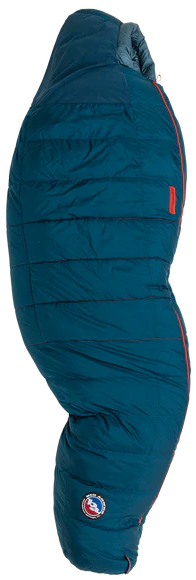
Temperature rating: 20°F
Other option: 35°F
Weight: 2 lb. 4.0 oz. (men's), 2 lb. 7.0 oz. (women's)
Fill: 19 oz. of 650-fill down / Fireline Eco synthetic (men's), 22 oz. of 650-fill down / Fireline Eco synthetic (women's)
What we like: Another option for side sleepers that is lighter than the Nemo Disco.
What we don’t: Not as roomy as the Nemo.
For years, Nemo has dominated the market in sleeping bags built for side sleepers, but Big Agnes stepped up to the plate with the Sidewinder. There is a lot going on with this bag: It’s spacious, has a unique fit designed to move with you when you turn over, a large hood with excellent coverage no matter your sleeping position, and extra padding (via synthetic insulation) at the hip and foot, which are major ground contact points for those who sleep on their side. If you toss and turn at night, the design is much more functional than a traditional mummy bag and a viable competitor to the Nemo Disco.
How does the Sidewinder differ from the Nemo Disco? Most notable is shape: The Big Agnes is slimmer, with dimensions of 61 inches in the shoulders and 55 inches at the hips (the Nemo is 62 and 57 in., and broadens at the knees to 61 in.). It’s hard to argue with the extra space, but the Sidewinder does weigh 7 ounces less (with identical 650-fill down and 30D shell). And like the Nemo, it also features a built-in pillow pocket, which keeps your camp pillow (or stuffed down jacket) in place throughout the night. With a good number of comfort-related differences, finicky sleepers may prefer to try both bags before buying, but the Sidewinder is great for side sleepers.
See the Men's Big Agnes Sidewinder SL 20 See the Women's Sidewinder SL 20
| Sleeping Bag | Price | Temp* | Weight | Fill | Shoulder/ Hip | Shell |
|---|---|---|---|---|---|---|
| REI Co-op Magma 15 | $399 | 21°F (ISO) | 2 lb. 3.6 oz. | 23.3 oz. of 850-fill | 62.5/54 in. | 15D |
| Kelty Cosmic Down 20 | $180 | 31°F (ISO) | 2 lb. 7.0 oz. | 16.4 oz. of 550-fill | 62/58 in. | 20D |
| Nemo Disco 15 Endless Promise | $300 | 25°F (ISO) | 2 lb. 11.0 oz. | 23 oz. of 650-fill | 62/57 in. | 30D |
| Sea to Summit Spark 45 | $349 | 51°F (ISO) | 12.8 oz. | 5.3 oz. of 850-fill | 61/53 in. | 10D |
| Mountain Hardwear Phantom 0F | $710 | 12°F (EN) | 2 lb. 10.4 oz. | 30.5 oz. of 800-fill | 58/52 in. | 10D |
| Enlightened Equipment Enigma 30 | $330 | 30°F | 1 lb. 1.9 oz. | 12.4 oz. of 850-fill | Various | 10D |
| Feathered Friends Swallow UL 20 | $659 | 20°F | 1 lb. 11.3 oz. | 16.8 oz. of 950-fill | 60/56 in. | 10D |
| Mountain Hardwear Bishop Pass 15 | $285 | 26°F (ISO) | 2 lb. 5.4 oz. | 21 oz. of 650-fill | 62/53 in. | 20D |
| Western Mountaineering UltraLite | $610 | 20°F | 1 lb. 13.0 oz. | 16 oz. of 850-fill | 59/51 in. | 12D |
| Nemo Pulse 20/30 | $550 | 34°F (ISO) | 1 lb. 2.0 oz. | 12.0 oz. of 1000-fill | 10D | |
| Feathered Friends Tanager 20 | $489 | 20°F | 1 lb. 2.6 oz. | 12.6 oz. of 950-fill | 62/52 in. | 7 x 5D |
| Sea to Summit Ascent 15 | $469 | 28°F (ISO) | 2 lb. 4.0 oz. | 19 oz. of 750-fill | 62/57 in. | 20D |
| Montbell Seamless Down Hugger | $385 | 39°F (ISO) | 1 lb. 2.7 oz. | 800-fill down | Unavail. | 10D |
| Big Agnes Sidewinder SL 20 | $250 | 20°F | 2 lb. 4.0 oz. | 19 oz. of 650-fill | 61/55 in. | 30D |
*Editor's note: For the purposes of this table, we have included the EN or ISO Comfort rating, which we feel is the most accurate point of comparison. When available, we've listed both the Comfort and Lower Limit in the product specs. For more on the differences, see our buying advice.
While hauling gear miles into the mountains is rarely easy, the reward—accessing wild places off the beaten path—is almost always worth the effort. Backpacking sleeping bags are one of the most vital elements of your loadout in the backcountry, and we take our testing process seriously. Each model above was thoroughly tested on real-world adventures all over the world to ensure they hold up to the rigors of life on trail. Our first line up of 11 contenders was assembled 2016. Later, more options for ultralight hikers were considered, as well as a number of speciality designs that began proliferating soon after. Senior editor Chris Carter has since taken over this guide, and has been managing research and testing since 2024. A lifelong backpacker and alumnus of each of the Triple Crown trails (AT, PCT, and CDT), Chris has shivered himself to sleep more times than he’d like to admit in search of the ideal warmth-to-weight ratio.
Our current lineup of picks runs the gamut from budget-friendly designs for casual backpackers to premium bags stuffed with ultra-high-quality down to maximize warmth while minimizing weight and bulk. Priorities will vary depending on your objectives, but all of the bags stand out in one way or another. In general, we look for accurate temperature designations (and call out when bags fall short of their EN/ISO ratings), high-quality materials and components that hold up well over time, and enough room to sleep comfortably without feeling restricted. Beyond that, characteristics like weight, down quality, and down fill will depend on your budget and personal preferences. Finally, it’s important to note that our list isn’t static, and we will continue adding new and noteworthy designs to the test to highlight our favorites.
_0.jpg)
The single most important decision you’ll make when choosing a sleeping bag is the temperature rating. Few things are worse than a long, sleepless night shivering inside your tent, and we always believe that it’s best to err on the side of caution when choosing your bag. We break down what you need to know about temperature ratings, including the EN/ISO standard, non-standardized models from cottage brands, and how to choose the right rating.
.jpg "The 20-degree Western Mountaineering UltraLite is a 3-season backpacking favorite")
The EN/ISO Rating System Explained
Instead of relying on manufacturers and their marketing whims for temperature ratings, the sleeping bag industry has attempted to standardize the system with the help of the EN (European Norm) and, more recently, the ISO (International Organization for Standardization). This criterion (now known as ISO 23537) establishes guidelines for testing a bag's warmth and enables consumers to make accurate comparisons between products. Both standards give us four numbers—upper limit, comfort, lower limit, and extreme—with the middle two ratings being most significant for the majority of backpackers.

Comfort Rating: The temperature at which an average woman can sleep comfortably. Generally, women sleep colder than men, hence the importance of the comfort rating.
Lower Limit: The temperature at which an average man can sleep for eight hours without waking. We rarely sleep for eight hours without waking on a backpacking trip, but you get the idea.
Of course, all of the EN/ISO ratings are based on averages, and in general, we've found them to be rather optimistic. As such, we've found that the higher EN/ISO Comfort rating is a better basis for across-the-board comparison than the EN/ISO Lower Limit, and therefore have listed it in the comparison table.

Sleeping Bags Without an EN/ISO Rating
Some manufacturers—typically smaller companies like Western Mountaineering, Feathered Friends, and Enlightened Equipment—do not submit their bags for EN/ISO testing. Based on our experience, we've found these brands rate on the conservative side and take pride in offering very realistic temperature ratings. For example, the Feathered Friends Swallow UL 20 is a very warm bag that has kept our tester (an average male) comfortable into the 20s, whereas the Kelty Cosmic Down 20—with a 21-degree Fahrenheit ISO Lower Limit—will be cold if temperatures dip below freezing. As a result, we've found that in most cases, the EN/ISO Comfort rating (the Cosmic's is 31 degrees F) offers the best point of comparison to unrated designs.
.jpg)
Choosing the Right Temperature Rating
When choosing your bag’s temperature rating, look specifically at the EN/ISO numbers (when applicable), not just the temperature in the bag's name. We recommend using the Comfort rating as the more realistic of the two numbers. And for non-EN/ISO-rated bags from high-end manufacturers like Feathered Friends and Western Mountaineering, you can just utilize their listed rating. In both cases, it's also a good idea to leave a reasonable buffer (10 degrees F or more) to be on the safe side. For example, if you anticipate nighttime lows around freezing (32 degrees F), you’ll want to aim for a bag that's rated at 20 to 25 degrees Fahrenheit. Other factors to consider are your age (people typically don’t sleep as warm as they get older), whether you are a cold or warm sleeper (gender can factor in here, too), and whether you’ll be sleeping in a tent or under the open sky.
The majority of backpacking sleeping bags (including most of the models on our list) are 3-season models, rated from around 20 to 30 degrees Fahrenheit. We love the versatility of these designs: In the summer, you can unzip the bag and stay cool, but they also allow for spring, fall, and alpine backpacking when the temperature drops to freezing. Summer bags have lower limits around 40 degrees and offer the least room for error, but keep weight low for warm-weather use at low elevations. Winter or expedition bags are the warmest of all and overkill for most recreational backpackers. Within this category, a model like the Mountain Hardwear Phantom 0F is a good choice, and there are a number of options from climbing-centric companies like Western Mountaineering and Montbell that are rated down to -10°F and lower.
Down vs. Synthetic Insulation
The down vs. synthetic debate is not unique to backpacking sleeping bags. Midlayers, camping bags, and even sleeping pads are all insulated with these fill types. For a certain piece of gear or apparel, one has the leg up on the other, and for backpacking sleeping bags, we still give the clear edge to down fill. There are a few major reasons for that, including the best warmth-to-weight ratio, far better packability (i.e., a smaller compressed size), and a more premium warmth. The last one is a bit subjective, but it’s a clear consensus from us that down’s lofty warmth feels more luxurious. Down varies in quality, but even a mid-grade down fill is a superior insulator.
So why consider synthetic? The most common reason for most is price. Even a premium synthetic bag like the Nemo Forte 20 Endless Promise slides in around $200, while a nice down bag doubles that. In addition, synthetic performs far better than down in wet weather. While there have been improvements in down’s performance in the wet thanks to the application of hydrophobic coatings on the feathers, synthetic will insulate far better if moisture enters the bag. So, for starting out, if you’re looking for a budget option or backpacking in really wet conditions, synthetic bags remain a great choice. For an even more in-depth explanation of this topic, see our article on down vs. synthetic insulation.
.jpg)
Down Quality: Fill Power
If you decide down is going to be your insulation of choice, one of the first specs to look at is the quality of a specific down, known as its fill power. Specifically, it’s a measure of how much loft or fluffiness the down clusters have, and this correlates with warmth (note: Both duck and goose down are measured in the same way). The highest down fill power is 1,000, and you’ll see cheaper sleeping bags closer to 500. Generally, the higher the fill power, the more expensive the sleeping bag. The lower the fill power, the more it must weigh to provide the same level of warmth. High fill powers in the 800s and 900s are great, but don’t be turned off by 550- or 600-fill—it’s a great way to save money on an otherwise excellent bag.
Down and Synthetic Fill Weight
Fill weight is the actual amount of insulation stuffed into a sleeping bag. If it’s a close call between two bags with the same type of insulation (down or synthetic) and neither has EN or ISO ratings, you can compare fill weight to get a better idea of which will be warmer. Cut does matter here: A bag with a slender cut may offer less insulation than one with a roomy cut, despite providing similar or even more warmth. Fill weight is more helpful for a category like down jackets, which don’t have EN/ISO ratings, but it’s good to know here, too. And it's a good visual for how much more insulation is required for a synthetic bag to compete with down. For comparison, the aforementioned Nemo Forte 20 requires nine additional ounces of synthetic fill to achieve approximately the same temperature rating as the down-filled Disco 15.
.jpg "Premium down offers amazing warmth and compressibility")
Down feathers lose much of their insulating ability when wet, so manufacturers have taken steps to provide built-in protection with hydrophobic down and water-resistant shell fabrics. In the case of hydrophobic down, the feathers are coated with a polymer that protects them from moisture and prevents clumping. In use, this means you don’t have to worry as much about brushes with water inside or outside of your backpacking tent—although you still don’t want to soak your bag fully. Hydrophobic down adds a little weight, but we’re big fans overall, especially for those headed out in wet areas like the Pacific Northwest or New Zealand.
.jpg "Nemo uses hydrophobic down and waterproof panels around the feet to protect against moisture")
Some sleeping bags also use water-resistant shell fabrics to keep moisture at bay. We see this in bags like the Feathered Friends Hummingbird YF, which features a Pertex Quantum shell with YFuse technology and a durable water repellent (DWR) finish. The goal of this combination is to bead up moisture and roll it off rather than allowing it to soak through to the down feathers beneath. Whether you’re opting for a bag with hydrophobic feathers, water-resistant fabrics, or both, it’s important to remember that these technologies protect against light—think condensation in a tent or dew during an open-air bivy—and will do little to keep you dry and warm in sustained or heavy rain.

Along with your backpacking tent, your sleeping bag is one of the heaviest and bulkiest items in your pack. The models here run the gamut from just 12.8 ounces for the ultralight Sea to Summit Spark 45 to 3 pounds 8.4 ounces for the roomy and warm Marmot Trestles Elite Eco 20. In general, weight is reduced by using premium fill-power down (800+), thin-shell fabrics, and zippers (often half-length), and trimmer profiles. To better evaluate and compare weights, we’ve included this key spec in each product write-up and our sleeping bag comparison table. If you want to take an even deeper dive, check out our sleeping bag weight comparison article, which includes comprehensive comparative charts.
Packability is another big selling point of premium down. Natural goose and duck down compresses in a way unmatched by any synthetic, and it’s not even close. In general, higher-end down bags like the Feathered Friends Tanager are the most compressible due to the down's loft and the use of thinner shell fabrics. Lower fill-power down and synthetic bags will be the least compressible options. Other indicators include the bag's cut—a tapered cut will trim fabric and stuffed size—and the temperature rating (warmer bags have more insulation). Summer bags can get away with using less insulation and will be highly compressible as a result.

To take full advantage of the small-stuffed-size potential of your sleeping bag, consider picking up a compression sack (one of our favorites, due to its waterproof construction, is the Sea to Summit Ultra-Sil Compression Sack). Most sleeping bags only include a non-compressible stuff sack, but this won’t do your sleeping bag justice in terms of how small it can get. Do take care when using a compression sack—try to lightly compress the bag so that it fits easily into your pack without overdoing it, and don’t store your sleeping bag in a compression sack for extended periods, as that can permanently damage the down.

For sleeping bags, durability is commonly measured by the denier (D) of the shell fabric, which indicates its thickness; the higher the number, the thicker the thread. At the ultralight end of the spectrum, the Feathered Friends Tanager 20 uses a thin 7D x 5D fabric, through which you literally can see the feathers. On the other hand, most 3-season sleeping bags fall somewhere in the 10D to 30D range. In general, sleeping bags are one type of outdoor gear that we don’t worry much about in terms of denier. Your bag goes from storage, to the bottom of your pack, directly into your tent. Unless you bring your dog inside your tent or haul the bag out by the campfire for extra warmth, we’ve seldom punctured our sleeping bag. That said, given their high cost, it’s unfortunate if you do (we always pack repair tape in case), so take care with the surrounding gear inside your pack and tent.
.jpg)
In addition to considerations like warmth and down fill, the cut of a sleeping bag is an important factor. The three most common points of measurement for sleeping bags are the girth (i.e., circumference) at the shoulders, hips, and feet (59"/51"/38", for example), which gives an idea as to how roomy or tapered the bag is. The shoulder and hip measurements are the most significant for comfort, which is why we’ve included them in the comparison table.
Many ultralight sleeping bags save weight by tapering the cut for less fabric and down. If you toss and turn at night or just prefer more space, make sure to consider a roomier bag (the spoon-shaped Nemo Disco 15 is a great example). The downsides are that these bags can feel draftier and may not retain heat quite as well, and often weigh more because more fabric and insulation are required to fill the larger surface area. The good news is that many manufacturers make the same bag in varying widths. The Western Mountaineering AlpinLite is the broader version of the UltraLite, for example, and the Feathered Friends Hummingbird and Swift are similar to our top-ranked Swallow but with trimmer and roomier dimensions, respectively.

In terms of length, most sleeping bags come in two or three lengths that are meant to fit men and women of varying heights. For men’s bags, the regular size is often 72 inches long, and the tall size is 78 inches long. If the bag doesn’t have a women’s-specific version, you’ll often see a short 66-inch option. If you are on the border and want the hood to extend over your head, it’s a good idea to size up. Keep in mind that larger sizes cost more, weigh more, and have a larger packed size.
Many sleeping bags are made in a women’s version, which is typically narrower at the shoulders, roomier around the hips, and available in shorter lengths. However, the biggest differentiating factor is that women’s bags are advertised by their Comfort rating, while men’s bags are marketed with their Lower Limit. For example, the men's Nemo Disco 15 has a Lower Limit of 16 degrees Fahrenheit (which corresponds to the 15 in its name), while the women's Disco 15 has a Comfort rating of 17 degrees Fahrenheit (and a Lower Limit of 4 degrees Fahrenheit). In other words, the women's Nemo Disco 15 is a lot warmer than the men’s, which is important to keep in mind when purchasing. And nowadays, we’re seeing many brands returning to unisex (rather than men’s and women’s) designs, which, in our opinion, is a healthy switch that mitigates a lot of confusion. For instance, REI’s latest Magma 15 is offered in nine sizes (when in stock), including various lengths (short, regular, or long) and widths (narrow, standard, or wide) to choose from, depending on your build and sleeping preferences.
Once you purchase your bag, keep a few things in mind to maximize warmth. Perhaps the most important consideration is your sleeping pad’s R-value, which indicates how well it insulates you from the ground. R-values range from 1.0 (almost no insulation) to about 9.5 (winter-ready warmth), and the average 3-season backpacker should look for something in the 3-4 range or higher. Next up, eliminating drafts can go a long way—on a cold night, make sure your zipper is closed all the way and cinch the draft collar and hood close to your neck and face. It’s also a good idea to have some extra clothing in case you need it. A warm hat can help retain a lot of heat, and wool baselayers will add warmth as well. Finally, you’ll want to be sure to get the right-sized bag, which we address in the "Dimensions" section.

Our impact on the environment has never been of greater concern, and it’s nice to see gear companies step it up with more sustainable practices. In the world of sleeping bags, common features include responsibly sourced down, recycled materials, and PFAS-free durable water repellent (DWR) finishes. When shopping for sleeping bags with responsibly sourced down, look for an RDS certification or Advanced Global Traceable Down. All of these buzzwords translate to greater transparency in down sourcing and ensure the birds were treated humanely and not subjected to unnecessary harm, such as force-feeding or live-plucking.
Many companies now also make their sleeping bags with recycled fabrics, including REI Co-op and Mountain Hardwear. Nemo threw their hat into the ring with the Endless Promise collection (such as their Pulse 20/30 quilt), which includes recyclable gear (the Disco is just one example) that can be repurposed at the end of its lifespan. Finally, we’ve started to see PFAS-free DWR finishes from almost all companies, eliminating the use of perfluorinated compounds—"forever chemicals" linked to a range of environmental and health issues.
Sleeping quilts fall into a different category than sleeping bags, but they’re worth mentioning for those who run warm or want a lighter option. A sleeping quilt (we include the Enlightened Equipment Enigma, but you can find all of our recommendations in our buyer’s guide to the best ultralight sleeping bags and quilts) is a minimalist backcountry sleep system popular among ultralighters and thru-hikers, characterized by an open back (read: no zipper) and emphasis on weight savings. Quilts feature enclosed or cinchable footboxes, connect to your sleeping pad via included straps, and cinch around the neck to provide wraparound and (hopefully) draft-free protection.
The biggest concern backpackers have with quilts is the lack of insulation at the back. However, you compress the down on the underside of a traditional sleeping bag so much while sleeping that its insulating properties are reduced. As a result, if you have a warm and reliable sleeping pad underneath, you'll stay almost just as cozy with an open-backed quilt as you might with an enclosed sleeping bag—as long as you take measures to seal the sides to reduce drafts. This can be done by tucking the quilt's sides under your body or by using sleeping pad straps to attach the quilt to your pad.
Ultimately, the sleeping bag versus quilt debate comes down to personal preference. Some backpackers (including several of our editors) swear by quilts and love that they’re lightweight, focus the insulation on top of the body (your sleeping pad should take care of the underside), and ventilate well on warm nights. But not everyone is keen on the compromises: You have to bring proper head coverage (a beanie will do), the quilt/sleeping pad system isn’t always perfect and can let in drafts, and you might feel vulnerable on cold nights. All in all, most recreational backpackers will prefer the coziness and simplicity of a lightweight mummy bag, but quilts are a viable option, especially for warm nights.
Back to Our Top Sleeping Bag Picks Back to Our Sleeping Bag Comparison Table

b19d.jpg?h=d1272f3a&itok=pIiUisJh)
f8eb.jpg?h=fbc67360&itok=2-ih7vy-)
%20(s)1d74.jpg?h=fbc67360&itok=gCwlp_N_)
6087.jpg?h=fbc67360&itok=H8kE4-37)
b487.jpg?h=fbc67360&itok=V2LmOxVD)

ad6d.jpg?h=fbc67360&itok=_31ZUgeg)
-tfe3e.jpg?h=fbc67360&itok=tQQ0SQx9)
