
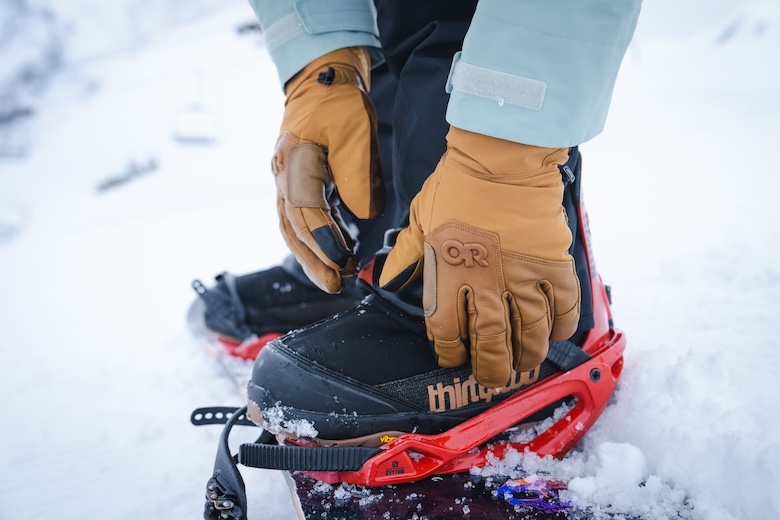
Photo Credit
It’s that time of year! Time to find the perfect present for our adventurous loved ones. For that person in your life who loves all things cold weather, check out our gift guide for skiers and snowboarders. For ideas tailored to other pursuits, we also have more editor-recommended gift guides to explore. Happy gift giving!
As the critical link that transfers your body's energy and movements to your board, snowboard bindings are an essential component of your setup. Choosing the right bindings can significantly impact your performance and overall experience on the mountain, whether you're just starting out or are an experienced rider with years of shredding under your belt. Our top recommendation for men is the Union Force, which has proven to offer the perfect balance of comfort, ease of use, and responsiveness while not destroying bank accounts. For women, our favorite is the Union Trilogy, which is similar to the Force but with a shorter highback and a narrower chassis. For more background information, see our comparison table and buying advice below the picks, along with details about our testing process. And to complete your setup, check out our articles on the best all-mountain snowboards and best splitboards.
Editor's note: We updated our snowboard binding guide on November 7, 2025, to include the Jones Mercury FASE, which uses an innovative step-in hybrid system. We also reviewed the list of discontinued and updated models for the 2026 season.

Flex: Medium-stiff
Style: Strap-in
Weight: 4 lb. 4.4 oz.
What we like: A jack of all trades: comfortable, durable, and easy to use.
What we don't: Not the best for park riders or experts looking for top-end performance.
If you’re on the hunt for a quiver-of-one snowboard binding that can keep up with most all-mountain terrain, the Union Force gets our resounding vote. With a medium-stiff flex that still maintains enough forgiveness for progressing riders, the bindings performed well on terrain ranging from icy groomers to off-piste powder. The ankle and toe straps were also supportive without cramping our feet, providing excellent all-day comfort, and Union’s Molecular Binding System and canted EVA footbed do a great job of dampening vibration without compromising responsiveness. User-friendliness also stood out: It was easy to fine-tune our stance, adjust the highback position, and loosen and secure the buckles (bonus: They never froze on cold days). For a very palatable $330, the Force packs a lot of performance for intermediate and advanced riders.
However, there are downsides to a jack-of-all-trades design like the Union Force. While we think it will satisfy the majority of riders (hence our ranking), expert snowboarders may want more responsiveness, in which case it’s worth opting for a stiffer design like the Burton Cartel X below. On the flip side, park riders may find the Force too stiff for jibbing and buttering—for those folks, we’d recommend checking out Union's own Ultra below. It’s also worth noting that the Force felt a little flimsy out of the box, with the ankle strap, toe strap, and highback all seeming vulnerable to wear. The good news is that the bindings held up flawlessly throughout a full season of use, proving our concerns invalid. And while certainly not a performance consideration, we appreciate that the Force comes in multiple colorways to complement the rest of your setup. If price is a concern, it’s also worth considering Union’s Force Classic ($300), which is a step down in build quality compared to the standard Force here but a capable alternative nonetheless.
See the Union Force
.jpg)

Flex: Medium-stiff
Style: Strap-in
Weight: 3 lb. 15.5 oz.
What we like: Well-rounded like the Force above, but with a lower highback and narrower fit.
What we don't: A bit of a ‘tweener for those at either end of the ability level spectrum.
Union has been pumping out quality bindings since the early 2000s, so it comes as little surprise that their women’s-specific Trilogy joins the Force above on our podium this year. At a quick glance, the Trilogy shares a lot in common with the Force: Its medium-stiff flex is great for intermediate and advanced riders and can handle most terrain you’ll encounter on the slopes. The generously padded, canted footbed (slightly raised on the outside of the foot) offers great all-day comfort and solid shock absorption in hardpack conditions. Plus, the two bindings share many of the same components, which we’ve found to be very high-quality overall. The differences are in the details: This women’s-specific binding has a lower highback (women's calves are generally shorter than men’s) and a narrower fit to accommodate lower-volume boots. It also comes in a couple of pastel colors (along with standard black and white), compared to the Force’s flashier selection.
Similar to the Force, the Union Trilogy’s medium-stiff flex puts it in a bit of an awkward in-between spot: too soft for expert riders but too stiff for beginners and park rats. And while we generally like Union’s most recent updates to the design—including a shorter and lower-profile highpack, more supportive straps, and improved shock absorption—we feel the prior model performed slightly better at high speeds. For a step up in stiffness, it’s also worth considering Rome’s Katana ($400), which we found to be a bit nimbler and more responsive than the Trilogy. However, we think the Trilogy balances its priorities a little better at a lower price point to boot, earning it our vote as the best women’s-specific binding this season.
See the Union Trilogy

Flex: Medium-soft
Style: Rear-entry
Weight: 4 lb. 6.4 oz.
What we like: An affordably priced binding that’s great for beginners and park rats alike.
What we don't: Rear-entry system can be tricky to master; soft flex is limiting for advanced and expert all-mountain riders.
There's a lot to like about Flow’s Fenix binding beyond its economical $250 price tag. Most notably, the medium-soft flex is forgiving for beginners, the rear-entry design offers smooth entry and exit (once you master it), and the durable construction is built to withstand considerable use and abuse. The Fenix also boasts a generous amount of padding underfoot, along with a slight canting to help promote a proper stance. We especially like the Quick-Set ratchet system for cinching down the ankle and toes, which maintains a secure fit throughout the day, along with the high-coverage Exo-Frame Fusion strap, which evenly distributes pressure over the foot. Finally, the mounting disk offers a variety of stance adjustments that new riders will find helpful as they hone their riding style.
To be clear, the Fenix isn’t just for beginners—freestyle riders will also enjoy the medium-soft flex, easy entry and exit, and generous cushioning for taking the sting out of hard landings. On the flip side, advanced and expert all-mountain riders will find the soft flex limiting, especially when it comes to responsiveness for carving at high speeds or surfing through off-piste powder. The rear-entry system is also a bit polarizing: Some users report the bindings are tricky to mount, and the highback wears snowboard boots quickly. Rear-entry bindings are also tough to master in soft snow, which is something to consider if you’re just starting out. Finally, you can certainly go cheaper—Union’s Flite Pro, for instance, costs just $200 but is even softer and less responsive than the Fenix. In the end, no binding is perfect, but we think Flow did an admirable job packing in a solid amount of performance for the price.
See the Flow Fenix
.jpg)
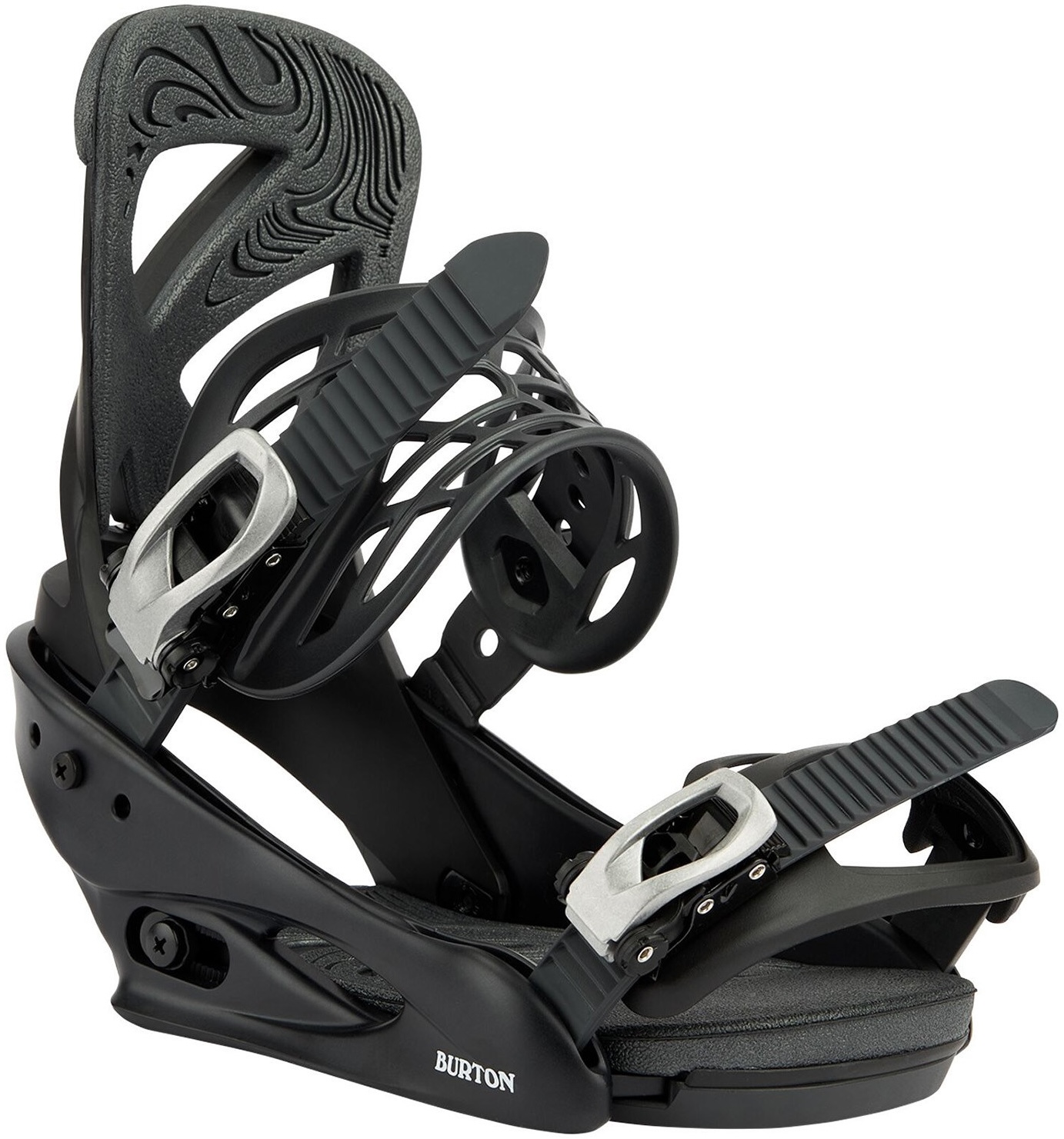 Flex: Medium
Style: Strap-in
Weight: 4 lb. 4.8 oz.
What we like: Better responsiveness and precision than the Fenix above for a little less.
What we don't: Freestyle riders may want something softer, like Burton's Citizen (which is also cheaper at $180).
Burton has been churning out high-quality snowboarding gear for decades and remains a staple. Whether you’re just starting out or have hundreds of days on your setup, you’ll likely be able to find what you’re looking for in their lineup. At the entry-level end of the spectrum, their Scribe stands out as our favorite budget design for female riders. Much like the Flow Fenix above, the Scribe features a relatively soft flex that’s forgiving for beginners yet playful enough for park riders. It’s not a rear-entry design like the Fenix, so you’ll need to reposition your buckles each time you get on and off the chairlift. Still, we found the ratcheting system very intuitive and easy to operate, even with bulky mittens. And like the Trilogy above, the Scribe has a women’s-specific highback and is built to accommodate narrower boots.
It’s worth noting that the Scribe has a slightly stiffer flex than the Fenix, which translates to better responsiveness and control at higher speeds. In sum, we think it’s a great option for quick learners and those who already have a handful of days under their belt, although it’s less appealing than the Fenix for hitting tricks in the terrain park. From Burton’s lineup, we recommend the Citizen as a softer option for freestyle riders, although all-mountain snowboarders will benefit from spending up for the Scribe. Finally, it’s worth noting that snowsports retailer Evo offers several bundles that include the Scribe binding plus a snowboard. While we generally recommend purchasing your setup components independently, it’s not a bad option for beginners looking to take some of the guesswork out of the equation. If that sounds appealing to you, we particularly like this bundle with Burton’s Cultivator board.
See the Burton Scribe

Flex: Medium-stiff
Style: Strep-in with straps
Weight: 4 lb. 4.6 oz.
What we like: A great binding with a new system that reduces the time to strap in and unstrap.
What we don't: The system is a bit quirky and can slow you down in certain types of snow.
Jones has been in the binding game for close to ten years now, and their bindings have always been solid. The Mercury series is already widely known for being a hard-charger, but with the introduction of the FASE system this year, this model is officially on the map. In addition to the comfort and high level of response we’re used to from these bindings, they’re now incredibly easy to strap into and even easier to get out of. Once we got the hang of the system, we found that it’s pretty basic to step right into the rear binding on a ski lift unload ramp, crank the ankle strap, and get right to shredding. Unstrapping is practically effortless: you pop your rear foot ankle ratchet, lift your heel, and you’re out. We’d say it’s every bit as easy as releasing a step-on binding, but, unlike step-ons, the ride is truly a traditional two-strap system that you can use with any conventional boot.
The FASE system isn’t perfect. It takes a bit of getting used to, and the way that you insert your foot can jam snow into the base and toe of the binding in certain snow conditions. They’re also a bit awkward if you’re postholing on a quick side-country mission and strapping in in the powder. The FASE system adds a bit of volume to the heel loop on the binding, which could potentially add to heel drag if you’re really laying a trench. But, if you’re hot-lapping the chairlift and you want to save a few strap-in seconds without committing to step-on boots and bindings, the Mercury FASE is the way to go.
See the Jones Mercury Fase


Flex: Medium-stiff
Style: Step-in
Weight: 4 lb. 8.0 oz.
What we like: The Step-On system is fast, intuitive, and allows for great precision.
What we don't: Limited boot and board compatibility; boots can feel clunky when you're not on the board.
Now for something entirely different: Burton’s Step On bindings, which helped define a new category of boot-to-binding connection systems. In lieu of toe and ankle straps, the Step On features three attachments—two hooks at the toe and one connection point at the heel—that make getting in and out of your bindings speedy and relatively effortless. Step into the bindings heel-first, then press down your toes—you’ll hear an audible click once you’re in. To get out, lift the lever on the highback to release the hooks and slide your foot out. We love the convenience of the Step On when getting on and off the chairlift, and performance is up to snuff, too: The hooks provide more direct power transfer from your foot to your board, which makes for a very precise and controlled ride. All in all, it’s a truly innovative and very well-executed design that minimizes fuss and maximizes time on the slopes.
The biggest downside to Burton's Step On system is that it's only compatible with specialized Step On boots. These are unfortunately quite pricey, with Burton options running from $350 to $620. However, Nitro and DC also offer several compatible boots (Burton licensed the Step On tech to both brands to appeal to a broader range of riders). K2 also offers a similar system under the Clicker X HB name, although Burton’s design is more popular and widely available. We’ve also found that the Step On works best with Burton boards—we experienced limited stance adjustment when mounting it on our Korua Shapes snowboard. And finally, you can expect a bit of a learning curve with the Step On, especially when it comes time to release your boots: It took us a few sessions to master wiggling our ankle out of the back hook. Gripes aside, the Step On makes it easy to step in and go—no sitting down on cold snow or fussing with finicky straps required.
See the Men's Burton Step On See the Women's Burton Step On
.jpg)

Flex: Medium
Style: Strap-in
Weight: 3 lb. 13.0 oz.
What we like: Flexible, comfortable, and durable—great for freestyle riding.
What we don't: The lack of forward lean adjustment limits performance on steep terrain.
If jibbing and buttering are a part of your vocabulary, chances are you spend a good amount of time in the terrain park. For these uses, Union’s Ultra stands out as our favorite freestyle design of the season. Paired with a similarly park-ready board, this binding offers excellent flexibility (both laterally and heel-to-toe) for hitting boxes, rails, and other features. Between the pliable highback, soft ankle and toe straps, and asymmetric baseplate—which minimizes excess material at the toe and heel for a boost in torsional flex—the Ultra is noticeably playful and easy to maneuver. Plus, the generous footbed padding and grippy straps help promote a secure feel, and the high-quality materials are exactly what we’ve come to expect from Union—we felt the buckles and ratcheting system were especially smooth and easy to operate.
However, while the Union Ultra is great for freestyle riding, all-mountain users will likely find it a bit limiting. The main downside is the lack of forward lean adjustment, which won’t be an issue for most park rats (who generally prefer a less aggressive stance to allow for better freedom of movement and stability when performing tricks) but results in less control and responsiveness on steeper ground. If you’re looking for a do-it-all binding that can handle most terrain, including the occasional park lap, we recommend taking a closer look at the Union Force above. But if stomping jumps and throwing grabs get you more excited than lapping long runs, the Ultra is an excellent tool for the job.
See the Men's Union Ultra See the Women's Union Ultra
.jpg)
Flex: Stiff
Style: Strap-in
Weight: 4 lb. 6.4 oz.
What we like: Responsive, precise, and secure with great shock absorption.

What we don't: We experienced a couple of fit-and-finish-related issues in testing; no dedicated women’s version.
Burton’s Cartel line has been an all-mountain staple for years, with the Cartel X slotting in as a souped-up version of the original model. The most notable difference between the Cartel X and standard Cartel is its upgraded baseplate, which offers a nice bump in stiffness compared to the flagship model—reminiscent of a carbon build but without the hefty price tag. In testing, we enjoyed the generous forward-lean adjustment and highback rotation, which helped us dial in an aggressive stance for carving. The Cartel X also features a practical Heel Hammock at the back and grippy silicone inside the toe strap, which combine to offer a very secure and confidence-inspiring fit. Rounding out the build, you get cushy gel padding underfoot that takes the sting out of big impacts and minimizes vibration on hardpack. And while stiffer bindings generally cost more, we appreciate that Burton kept the price pretty reasonable at $330.
However, we did identify a few durability concerns during testing. Specifically, our Cartel X bindings showed some premature wear along the highback foam and footbed after just a few days on the mountain. The bottom of the baseplate also has sharp corners, which left a few dents on our board. And like Burton’s own Step On, we found the Cartel X tricky to adjust on a non-Burton snowboard. If these are dealbreakers for you, it’s also worth checking out Union’s Atlas Pro, which boasts a forged carbon construction and a higher-quality feel overall but will cost you a whopping $470. Finally, while there’s no identical women's counterpart, Burton's Lexa X comes close, but with minor differences in materials and components.
See the Men's Burton Cartel X
.jpg)

Flex: Medium/medium-stiff
Style: Strap-in
Weight: 3 lb. 11.3 oz.
What we like: A high-quality binding that can be adjusted to tailor responsiveness.
What we don't: No highback rotation, limited stance options, and no similarly stiff women’s model.
Founded by legendary freerider Jeremy Jones, Jones Snowboards is well known for its quality all-mountain snowboards and splitboards. Their binding selection is nothing to scoff at, either, and we like the Mercury in particular. A couple of things stand out, starting with Jones’ Skate Tech system, which is designed to transfer input directly from your binding to your board’s edges. Our tester likened the design to power steering in a car, enabling improved control while minimizing fatigue. Another unique feature is the ability to customize dampening and responsiveness by swapping bushings and tweaking the ankle strap: Use hard bushings and position the wide half of the strap above the buckle for more support and quicker response to input, or swap in the softer bushings and move the strap below the buckle for a more playful, surfier ride. All told, it’s an innovative and well-executed system that adds a nice dose of versatility.
Overall, we’ve had largely positive experiences with the Jones Mercury: We didn’t have any hotspots or other fit-related issues, all of the buckles operated smoothly, and there was minimal wear after a full season of use. However, it’s worth noting that there’s no highback rotation, which can help tweak pressure distribution and improve comfort, and that the baseplate offers limited stance options. And due to the Jones’ stiffer flex, we wouldn’t recommend this binding for park riders—even if you keep it in “Surf Mode” with softer bushings—or beginners, who will likely find the Mercury unforgiving and won’t be able to utilize its full performance potential. Finally, we wish Jones offered a comparably stiff option for women (all of their women’s-specific bindings are restricted to soft and medium flexes). Still, the option to tweak responsiveness by swapping bushings is a great one, and it’s hard to deny Jones’ well-earned industry reputation.
See the Men's Jones Snowboards Mercury
Some people swear by their Nidecker OG Supermatics, but we weren’t totally sold. While the Supermatic step-on hybrid system is innovative, we cringe at the weight of these bindings — 5lb. 9.6 oz. per pair, they’re more than a pound heavier than the second heaviest model in our lineup. The weight, in combination with their $430 price tag, makes them hard for us to recommend.
| Snowboard Binding | Price | Flex | Style | Weight (pair) | Mounting Style(s) |
|---|---|---|---|---|---|
| Union Force | $350 | Medium-stiff | Strap-in | 4 lb. 4.4 oz. | 4x4, 2x4, Channel |
| Union Trilogy | $350 | Medium-stiff | Strap-in | 3 lb. 15.5 oz. | 4x4, 2x4, Channel |
| Flow Fenix | $270 | Medium-soft | Rear-entry | 4 lb. 6.4 oz. | 4x4, 2x4, Channel |
| Burton Scribe | $250 | Medium | Strap-in | 4 lb. 4.8 oz. | 4x4, 2x4, Channel |
| Jones Mercury FASE | $380 | Medium-stiff | Step-in with straps | 4 lb. 4.6 oz. | 4x4, 2x4, Channel |
| Burton Step On | $320 | Medium-stiff | Step-in | 4 lb. 8.0 oz. | 4x4, 2x4, Channel |
| Union Ultra | $330 | Medium | Strap-in | 3 lb. 13.0 oz. | 2x4, Channel |
| Burton Cartel X | $350 | Stiff | Strap-in | 4 lb. 6.4 oz. | 4x4, 2x4, Channel |
| Jones Mercury | $360 | Medium/medium-stiff | Strap-in | 3 lb. 11.3 oz. | 4x4, 2x4, Channel |
While testing snowboard bindings is objectively fun, we approach it with a commitment to thoroughness and accuracy. Our process involves direct comparisons between bindings—riding the same run with each binding we’re testing, for instance—as well as subjecting each model to a range of conditions to evaluate their overall performance. No feature goes untested, and we’re sure to take notes on all components, from buckles and straps to padding, canting, and more. Given the range of ability levels, riding styles, and preferred terrain, we also make an effort to cover the full gamut of binding designs, from soft and affordable options for those just getting started to stiff, responsive models for advanced riders.
Our lineup of 10 snowboard bindings above was a joint effort between editors Ross Patton and Maddie Downie, and gear tester Ben Ketler. For the last 25 years, Ross has been nerding out on snowboard gear, and bindings are his favorite piece of equipment to talk about. Years ago, he was a team rider for Rome Snowboards and has competed in events such as the North Face Masters and Transworld Snowboard Magazine’s Team Challenge. Though Maddie now prefers to make her way down the mountain on two sticks, she grew up snowboarding in Colorado and uses that experience to inform her coverage. Ben has been snowboarding for more than three decades and has ridden some of the most iconic terrain across the world, from chest-deep powder in Japan to “cold smoke snow” in the Tetons. As the market continues to evolve, we are committed to staying on top of new and noteworthy releases.
.jpg)
All-Mountain
As their name suggests, all-mountain snowboard bindings are built to handle a range of resort terrain, from groomers to powder and even hitting the occasional feature in the terrain park. The average all-mountain rider—i.e., someone who spends most of their time on groomers and occasionally ventures off-piste or into the park—should look for a binding with a medium to medium-stiff flex (look for a rating between 4 and 7), like the do-it-all Union Force and women's Trilogy bindings. Additionally, all-mountain bindings should prioritize comfort, with generous underfoot padding and supportive toe and ankle straps. Many all-mountain bindings also have canted (read: tilted) footbeds that position the outside of the foot higher than the inside to help with turn initiation and reduce knee strain.
.jpg)
If you opt for an all-mountain binding, the entry and exit system is mostly a matter of personal preference. Some riders are content with traditional strap-in designs, while others prefer a rear-entry or step-in system for quicker transitions when getting on and off the chairlift. There is a new system for 2026 that is used on the Jones Mercury FASE and a few other select bindings. The FASE system has two straps like traditional bindings and you step into it in a similar fashion as a rear-entry binding. Still, a mechanical lever on the highback snaps it in place when you step in–the only thing you’ve left to do is tighten the ankle ratchet (we break all four binding types down further in our section on “Entry and Exit Styles” below). Finally, most all-mountain bindings offer a good amount of adjustability, with the option to tweak the stance and highback position (for more, check out our section on "Binding Fit and Adjustments").
.jpg)
Freestyle
Freestyle riders—or those who spend a lot of time hitting features in the terrain park—often want more maneuverability and playfulness in their bindings, which means opting for a softer flex. In general, we’ve found bindings with a flex rating of around 3 to 4 to be ideal for most park rats, although those looking to hit natural features and big jumps will almost certainly want something stiffer (if this sounds like you, check out our next section on freeride bindings). Freestyle snowboarders can get away with little to no adjustment of forward lean, since an upright stance is preferred for performing tricks on the snow (e.g., butters) and on rails/boxes. Further, while shock absorption will help keep your joints happy, most park riders can get away without a canted footbed since laps are usually short. The case for a rear-entry binding (like the Flow Fenix) is strong for this reason, too: Having a binding that’s easy to get in and out of can save a lot of energy and time when lapping the park.
_0.jpg)
Freeride
Aggressive downhill riders—or freeriders—often prefer stiffer and more responsive bindings for hitting long, steep, and often committing lines while maintaining edge hold at high speeds. In general, we recommend a flex rating of 7-10 to maximize precision and energy transfer. Most freeriders are willing to sacrifice some comfort in the name of performance, but finding a binding with a canted footbed, molded straps, and a decent amount of underfoot padding for shock absorption is key. We also look for a good amount of forward lean adjustment and a secure attachment system for connecting to your boots—like what you get with Burton's Cartel X, which features their Heel Hammock that wraps around the heel of your boot and a grippy silicone toe strap. Most freeride snowboarders will want to steer clear of rear-entry bindings, as they can be difficult to step into on certain terrain (like powder).
.jpg)
It’s imperative to consider your ability level when choosing a snowboard binding. In general, beginners working to master control at low speeds should look for a binding with a softer flex, which will be easier to maneuver and more forgiving overall. Intermediate riders who are becoming more proficient at controlling their turns and speed will benefit from stepping up to a medium or medium-stiff binding, while advanced snowboarders tackling steep and consequential terrain will likely prefer a stiff, performance-oriented design that maximizes responsiveness and precision. Park rats are a bit of an exception, with many preferring soft or medium-soft bindings for their added freedom of movement and stability when hitting jumps and performing other tricks in the terrain park.
.jpg)
Strap-in
There are three main types of snowboard bindings: strap-in, rear-entry, and step-in. Strap-in bindings are the most common style due to their security and reliability (for reference, seven of the 10 bindings above feature this type of system), with adjustable straps running across the toes and ankle. Getting in and out of strap-in bindings is pretty intuitive, although you’ll need to fully release the straps each time you want to get out of the bindings, then reattach and readjust them once you’re ready to ride. The good news is that the process becomes relatively quick once you master it, especially if you opt for a model with a high-quality ratcheting system and buckles.
.jpg)
Rear-entry
Rear-entry bindings like the Flow Fenix and Nidecker Supermatic work by releasing the highback so a rider can slide their foot in and out of the strap (note: The toe and ankle straps are connected, resulting in continuous coverage over the foot). Key benefits to a rear-entry design include efficiency and the ability to "set and forget" your ankle and toe adjustments—simply cinch them down to your preferred tightness before you hit the slopes. You may need to make small tweaks throughout the day, but the amount of effort and time saved over a traditional strap-in system will add up. Primary downsides include less fit customization than strap-in designs and more moving parts that can break or fail over time. Some users also find it difficult to step into powder, though it does get easier with practice.
.jpg)
Step-in
Last but not least are step-in bindings, which are the least common but arguably the most innovative option. Unlike strap-in and rear-entry bindings, step-in designs—like the Burton Step On above and K2 Clicker X HB (just to name a couple)—omit toe and ankle straps entirely. Instead, they use a series of hooks and clips to connect your boots to your snowboard, allowing you to slide your boot in and click your heel into place, then your toe. The biggest draw is convenience: No sitting on the cold ground fiddling with straps every time you get on and off the chairlift—simply step in and go. However, step-in bindings require specialized step-in boots since each component makes up half the locking system. The good news is that we’re seeing more players enter the space each year, with Burton leading the category.
.jpg)
FASE Bindings
New for 2026, several manufacturers have employed the FASE Fast Entry System. The basics of this design are to maintain the feel and ride of a traditional two-strap system while making it quicker and easier to get in and out of. A small lever on the lower inside of the highback pushes the highback into place as you step into the binding. Once the toe strap is adjusted properly, you shouldn’t have to adjust it for the rest of the day. The ankle strap still needs to be tightened every lap and is also the primary mechanism for releasing your foot at the end of each run. With the ankle strap ratchet released, you lift your heel up, the lever flips the other way, the highback leans back, and you can step right out. A huge benefit of FASE bindings over step-ons is that they are compatible with standard snowboard boots. The common factor that all snowboard bindings share is that, whether you’re riding traditional straps, rear-entry, FASE, or step-ons, you still have to bend over to unstrap. The question is, how involved do you want the process to be?

Unlike ski bindings, snowboard bindings require greater fit customization for male and female riders, as they wrap around the entire boot. In general, women’s-specific bindings—like the Union Trilogy and Burton Scribe—have a shorter highback and narrower footbed to accommodate women’s calves (which are generally shorter than men’s) and lower-volume boots. There are also often differences in colors, with designs like the Trilogy available in several pastel options. In our opinion, most women will benefit from purchasing a women’s-specific binding, as it will generally offer better comfort and leverage when paired with a women’s-specific boot. But in the end, gender designation matters far less than fit and feel. In other words, if you try on a men’s boot and like it, it may be worth considering a men’s or unisex binding.
In terms of boot and binding compatibility, there are a few factors to consider. As we mentioned above, men’s and women’s bindings typically differ in terms of highback height and footbed width, with women’s models featuring narrower footbeds to accommodate lower-volume (read: women’s) boots. Another consideration is entry and exit style: Strap-in and rear-entry bindings will work with most snowboard boots, while step-in systems (as seen as on the Burton Step On above, as well as K2’s Clicker X HB), are only compatible with a handful of boots since they make up half the locking system. Finally, you’ll want to take sizing into account by referencing the manufacturer’s binding size chart or product page. If you’re building your kit from scratch, we recommend doing your research beforehand and considering both your boots and bindings before purchasing either component.
.jpg)
Compatibility with your snowboard is similarly important. As we covered above, it’s imperative that each component of your setup—bindings, boots, and board—complement each other, so choosing a board that lines up with your ability level and preferred terrain is a good place to start. In general, snowboarders seeking maneuverability and forgiveness (e.g., park riders and beginners) should opt for a softer board, while aggressive riders will benefit from the responsiveness of a stiffer design.
When it's time to mount your bindings to your board, ensure the mounting pattern is compatible. Just like snowboards, bindings come with different options for mounting, and the binding’s mounting disc holes must align with the hole patterns on the snowboard. The good news is that many brands offer universal discs or multiple discs that work with various mounting holes.
.jpg)
There are three common hole patterns on snowboards: 4x4, 2x4, and Channel systems. 4x4 patterns consist of two rows of holes, each 4 centimeters apart vertically and horizontally. 2x4 systems are narrower and can thus accommodate smaller discs, with 4-centimeter vertical spacing and 2-centimeter horizontal spacing. The Channel system was originally specific to Burton, though it's since been licensed to several other brands. A Channel-mounted board has two integrated slots that run parallel to the edge, allowing full customization of your stance since it’s not limited by predetermined hole patterns. Our comparison table above indicates which mounting system each binding is compatible with (note: We've found Burton bindings work best with Burton boards). There are a variety of tutorials and helpful breakdowns online, but you can always bring your board and bindings into a local shop if you’re not inclined to DIY.
.jpg)
Before deciding on a pair of bindings, it’s important to know what each part does. There are three main components of a snowboard binding: the base, highback, and straps. Below, we break down the role each part plays, materials to look for, and other noteworthy considerations.
Base
The base consists of the baseplate (which serves as the primary connection between the board and the binding), the footbed (which provides comfort and shock absorption), and the heel loop (which grips the back of your boot for support). The baseplate can be constructed from a variety of materials, each with different strengths and flexibilities. For instance, the Burton Cartel X’s short-glass/nylon composite baseplate provides a stiffer, more responsive ride (reminiscent of a carbon baseplate). At the same time, the polycarbonate Burton Scribe is noticeably more flexible. In terms of footbed cushioning, popular materials include gel and foam, aiming to maximize comfort and minimize fatigue. Footbeds can be flat or canted, with canted designs featuring a slight tilt to promote a more natural stance. Finally, we look for a secure heel cup that effectively keeps our boot in place. We particularly like the Heel Hammock featured on Burton’s Cartel X, which does a great job of locking things down for a secure, confidence-inspiring fit.
.jpg)
Highback
The highback is the part of the binding that runs from the heel cup to the lower calf and supports the back of the lower leg. Designed to control the heelside edge of your board, highbacks vary in terms of height and flexibility, with stiffer and taller designs offering better control and responsiveness than softer and shorter highbacks, which are generally more flexible and forgiving for beginner riders and park rats. Many highbacks feature a forward lean adjustment (in the form of a lever or screw) that allows you to customize the responsiveness and power of your heelside edge: more forward lean equates to more aggressive heelside turning ability, while less results in better flexibility and stability.
.jpg)
Straps
There are two straps on most snowboard bindings: One running over the ankle and one over the toes. Exceptions to this rule include rear-entry designs, which feature a single continuous strap (as with many youth bindings), as well as step-in models like Burton's Step On that forgo straps entirely. In a traditional strap-on setup, both the ankle and toe straps feature buckles and ratcheting systems to achieve your desired tightness. The toe strap sits at the front of the boot, wrapping over the toe box for comfort and security, while the ankle strap is generally larger and secures over the top of your foot to lock things down. Together, the system is designed to provide a snug yet not restrictive fit with no pesky pressure points, and to minimize play between your bindings and boots.
.jpg)
Heel Loops
This often-overlooked binding component can make a night-and-day difference in performance. How and where the heel loops integrate with the rest of the binding chassis dictates where kinetic energy is focused throughout the binding and, subsequently, throughout the board. Many bindings use a plastic unibody design in which the heel loop is the same piece as the base plate. Others integrate metal heel loops that often anchor to the binding base in several points, even as far forward on the binding as underneath the balls of your feet. In our experience, plastic unibody bindings are sufficient and comfortable for most people and riding styles. Still, for those who like to charge hard and go big, an aluminum heel cup offers better response and stronger durability, minimizing heel drag on those 65-degree pitches.
The weight of a binding is typically not a serious consideration for resort riders (it’s a different story for backcountry-goers who can save precious energy on the uphill by shaving weight). Looking at our comparison table above, most snowboard bindings weigh between 4 and 5 pounds per pair, with the Season Universal (3 lb. 11.2 oz.) being the lightest option on our list and the Nidecker Supermatic (5 lb. 9.6 oz.) the heaviest. Construction is directly tied to weight, with carbon fiber offering impressive strength for minimal weight (making it a great choice for aggressive riders in particular). On the flip side, budget-oriented designs like the Flow Fenix use heavier but more cost-effective—and often longer-lasting—materials. Again, this won’t be a primary consideration for most all-mountain riders. Still, suppose you’re concerned about hauling your setup from the car to the lodge or hiking into the sidecountry. In that case, it may be worth choosing a binding at the lighter end of the spectrum (and selecting a comparably lightweight board).
.jpg)
Fit
Dialing in the right fit is key to maximizing your bindings’ performance on the slopes, and it all starts with choosing the proper size. Most snowboard bindings come in small, medium, large, and extra-large sizes. To find the right option, we recommend checking the manufacturer’s sizing chart or the individual product page to see the proper fit for your boot length. Ideally, your boot will fit neatly inside the binding footprint without hanging over the edge or sitting too far inside the perimeter. The straps should fit snugly once cinched down with no excess slack or restriction from overtightening (note: It’s often possible to adjust the strap ladder, which we break down in more detail below). Finally, a correctly sized binding should effectively grip the heel of your boot, allowing it to flex without any extra play at the rear.
.jpg)
Adjustments
Once you've chosen the right size, there are several adjustments you can make to your bindings, starting with stance angle. Stance angle refers to the angle of your feet on your board. A zero-degree angle means your feet are perfectly perpendicular to the board. In contrast, positive and negative angles refer to your toes pointing toward the nose (front) or tail (back), respectively. In general, we recommend that those just starting out begin with a duck stance—with their feet slightly angled away from each other—so they can ride in both directions. Park riders, freeriders, and advanced all-mountain snowboarders will likely have stronger preferences and can adjust the angle to suit their style. There’s no right answer, as it’s largely a matter of personal preference, but we found this binding angles guide from Snowboarding Profiles to be a helpful resource.
.jpg)
Stance width is also important to consider, as it plays a critical role in your balance and turning ability. Again, the width you choose is largely a matter of personal preference, but we recommend that those just starting out mount their bindings slightly wider than shoulder-width apart. From there, you can make adjustments as you see fit. For reference, a narrower stance will allow you to pivot quicker from edge to edge, while a wider stance offers better stability for hitting jumps or charging through variable snow at speed.
.jpg)
As we mentioned previously, it’s often possible to adjust the forward lean and positioning of a binding’s highback. Increasing the forward lean will push your calves forward and force your knees to bend, putting you in a more aggressive position for tackling steep terrain or committing lines. A lower forward lean will result in a looser, surfier feel, with the biggest trade-off being reduced precision and power. Most bindings have an adjuster at the back of the highback (often a lever or dial) for achieving your desired setting. Finally, having your highback run parallel with the side of your board will help maximize your bindings’ energy transfer and overall performance.
.jpg)
With the ability to separate your board on the way up and secure the halves together for a true snowboarding experience on the way down, splitboarding opens up access to untracked terrain and big-mountain objectives. However, compared to traditional snowboard gear, splitboard equipment—including bindings—is decidedly limited. Suppose you’re just dipping your toes into backcountry riding and are looking to save some cash. In that case, there’s the option to use a traditional snowboard binding (like the ones listed above) and tack on Voile’s splitboard hardware (if you already own a splitboard) or their Split Kit, which requires sawing an old snowboard in half. For those who aren’t inclined to DIY, opting for a dedicated splitboard-specific setup will provide benefits in weight, durability, and reliability. Many of the brands above offer splitboard-specific bindings, including Union and Burton, and several other players not represented here—like Karakoram and Spark R&D—also have healthy lineups.
Back to Our Top Snowboard Binding Picks Back to Our Snowboard Binding Comparison Table



%20(s)48aa.jpg?h=fbc67360&itok=LvUlkI0t)
a7f9.jpg?h=fbc67360&itok=_RZ8v0GW)
6638.jpg?h=fbc67360&itok=4Xc8CqwI)
487f.jpg?h=fbc67360&itok=56VKoOU8)
cbb5.jpg?h=fbc67360&itok=glGqOBuw)
da3c.jpg?h=fbc67360&itok=DZ8F8qZl)
46db.jpg?h=fbc67360&itok=atEYZCV4)
