Photo Credit
It’s that time of year… time to find the perfect present for our adventurous loved ones. For fun, functional, and thoughtful gift ideas, browse our gift guides for hikers, travelers, backpackers, campers, runners, and snow sports enthusiasts.
With a wide variety of insulated jackets on the market, the classic fleece is still the most comfortable and affordable. These polyester jackets have been providing cozy warmth for years, from campsites and ski resorts to the streets and restaurants of mountain towns. Fleeces run the gamut from casual and cozy to breathable performance pieces for serious adventures. Below are our picks for the best fleece jackets of 2025, with options from leading outdoor brands across a range of price points, and the Arc’teryx Kyanite Hoody snags our top slot. For more background, see our comparison table and buying advice below the picks, along with details about our testing process. Of note: This article includes options for both men and women, but we’ve also written a dedicated round-up on the best women’s fleece jackets.
Editor's note: We updated this guide on November 19, 2025, to include men's and women's picks in the round-up and make the guide more unisex overall. We also added the Himali Endeavor to the lineup, included new photos from recent testing trips, and added a new tested and dismissed section below the picks to provide some insight on things we've tested but chosen not to include.
 Category: Performance/casual
Weight: 15.0 oz. (men's), 12.9 oz. (women's)
Fleece weight: Light/midweight
What we like: Comfortable, highly mobile, breathable, and versatile for both casual and performance use.
What we don’t: No chest pocket; a bit heavy for performance use.
For the top all-around fleece on the market, we give the nod to the sleek Kyanite from Arc’teryx. With equal appeal as a midlayer or standalone hoody, the Kyanite is a fantastically versatile piece that places a premium on performance. The Power Stretch Pro fleece is one of our all-time favorites in terms of comfort: It offers an impressive amount of stretch, has a smooth face (great for layering) and a brushed liner that’s soft against the skin, and it maintains a high-end fit and finish throughout its lifespan. It excels at temperature regulation, too, with enough warmth for spring and fall weather and the ability to effectively dump heat during high-output activity. All told, the Kyanite fits the bill as a premium fleece for everything from daily use to resort skiing, shoulder-season backpacking, and more.
What are the downsides of the Kyanite? While undeniably versatile, we’d recommend looking further down the list if you have a particular end use in mind—a more sweater-like fleece (like Patagonia’s popular Better Sweater) will be a more suitable match for professional settings, while skiers and climbers might want a more weather-resistant or lightweight option. Pilling has also been an issue with the Kyanite, although you’d be hard-pressed to find a fleece that doesn’t show wear over time. Finally, we wish the jacket included a chest pocket for stashing a phone or other valuables while skiing, and we’re not big fans of the slick mesh backing along the hand pockets. But minor nitpicks aside, this is a great quiver-of-one fleece, and the newest version includes recycled content in the fabric.
Read more: Arc'teryx Kyanite Hoody review (women's version)
See the Men's Arc'teryx Kyanite Hoody See the Women's Arc'teryx Kyanite Hoody

 Category: Casual
Weight: 12.7 oz. (men's), 10.9 oz. (women's)
Fleece weight: Midweight
What we like: Comfortable, inexpensive, and fun.
What we don’t: Slightly inferior build quality and fit.
Let’s face it: Many people want a fleece as a basic layering piece to stay cozy around the cabin or out by the campfire, and they don’t want to spend $200 to get it. If this sounds like you, the REI Trailmade Fleece is a quality option that truly outperforms its budget-friendly $60 price tag. It’s decently lightweight and relatively easy to squeeze into a pack on a day hike or bike ride, yet built well enough to last through several seasons of wear, especially with proper care. Tack on zippered handwarmer pockets and availability in a large range of sizes (including men’s tall sizes and eight options for women), and there’s a lot to like about this jacket.
What do you sacrifice by going with a fleece like the REI Trailmade? The jacket is built reasonably well, but its recycled polyester is a notable step down in quality compared to more premium options from Patagonia and Arc’teryx. In addition, overall fit and finish fall short, and the feature set is fairly basic (you don't get a chest pocket or thumb loops). But the Trailmade is nevertheless an excellent value and can be worn for everything from outdoor use to travel, which is why it's ranked where it is in our lineup. And we gotta hand it to REI: It’s decently stylish for a budget piece (especially compared to the Columbia below), with fun colorways, thoughtful accent stitching, and contrasting elastic at the cuffs and waist.
See the Men's REI Co-op Trailmade See the Women's REI Co-op Trailmade


Category: Performance
Weight: 12.9 oz. (men's), 10.9 oz. (women's)
Fleece weight: Lightweight
What we like: Combination of warmth and breathability makes this an excellent midlayer for performance use.
What we don’t: Fabric loses its loft and softness over time.
Patagonia’s Regulator (R) collection fleeces are high on performance, from the standard R1 pullover (our favorite climbing midlayer for years) to the TechFace series below. The R1 Air here is lighter and more breathable than the original, thanks to an innovative material that uses hollow-fiber yarns and zig-zag patterning to trap heat when you want it and dump it when you don’t. We’ve worn the R1 Air for everything from shoulder-season backpacking to backcountry skiing and winter climbing and have found its combination of warmth and breathability to be superior to most fleeces. And with three streamlined zip pockets, off-shoulder seams for comfort while carrying a pack, and a low-profile hood, it’s fully functional as a standalone piece, too.
Our biggest gripe with the R1 Air is that its fabric deteriorates over time—it starts out super soft (so cozy that we wore it every day for a month) but packs out and gets slightly abrasive after a bit of wear and washing. What’s more, not everyone will love the look and feel of the raised zig-zags—for comparison, the Kyanite above has a much sleeker exterior that fits the part for standalone use and layers smoothly under a shell. But it’s hard to beat the R1 Air’s lightweight and breathable construction for activities like skiing, climbing, and backpacking, and our hoody has held up decently well over two years of solid use despite the fabric changes. The design has become so popular, in fact, that Patagonia offers the R1 Air in zip-neck and crew versions, too.
Read more: Patagonia R1 Air Full-Zip Hoody review (women's version)
See the Men's Patagonia R1 Air Hoody See the Women's Patagonia R1 Air Hoody
.jpg)

Category: Casual
Weight: 17.1 oz. (men's), 15.6 oz. (women's)
Fleece weight: Heavyweight
What we like: Warm and tough; classic styling.
What we don’t: Fit is a little baggy for our taste.
The Denali line from The North Face has been on the market for years and is right up there with the Patagonia Synchilla in terms of its iconic status (it’s particularly popular for urban use in cold climates like the East Coast of the United States). The most recent version, which features a slightly thicker fabric than previous models, provides the most warmth and wind protection of any jacket on this list. The fleece is thick and made to last, and the shoulders, hood (there's a hooded version), and chest feature nylon panels that resist light wind and moisture. For moderate fall and early winter days, the Retro Denali can easily be your only outer layer.
Keep in mind that The North Face Retro Denali is one of the heavier and bulkier fleeces on this list. Additionally, the jacket lacks any real compression abilities, meaning it is not easily stowed away in a pack. But most people don’t buy the Retro Denali for the backcountry, and it makes a really nice fleece for walking around the city, blocking wind, and providing warmth where others on this list will not. If you’re looking for a substantial and tough fleece jacket from a respected brand, this is it.
See the Men's The North Face Retro Denali See the Women's The North Face Retro Denali


Category: Performance
Weight: 14.2 oz. (men's), 10.5 oz. (women's)
Fleece weight: Light/midweight
What we like: Cozy yet tough and weather-protective, men's TechFace has a helmet-compatible hood.
What we don’t: Design is on the technical side for daily wear; women's CrossStrata has a less technical hood.
A softshell or synthetic insulated jacket is a common choice for aerobic activities in cool weather, but performance fleeces are on the rise, and some can give those jackets a run for their money. In this category, the Patagonia R1 TechFace Hoody and the women's R1 CrossStrata are fantastic pieces of gear that perform exceptionally well as an outer layer for backcountry skiing, ice climbing, and other winter pursuits. Like most fleeces, these R1s breathe well, but they take it a step further with a tough and weather-resistant face fabric. This fabric is slightly less breathable than other options here on our list, but it will provide some peace of mind if the weather gets drippy. When a hardshell is too much jacket but you still need some amount of protection, the TechFace and CrossStrata are great options.
When the R1 TechFace got updated last year, Patagonia added a larger, helmet-compatible hood—we could stretch the past version's over a low-profile climbing helmet, but we appreciate having more room now. Unfortunately, the CrossStrata (which is the closest version to the TechFace for women), features an under-the-helmet hood instead. Depending on your preferences, you may not mind this, but we'd love to see Patagonia offer the same feature set with a women's-specific TechFace. The hood on the TechFace is also adjustable and features a laminated brim for standalone use in inclement conditions, but the women's CrossStrata opts instead for soft elastic that fits snugly around the face and underneath a helmet. Outside of this complaint, either of these layers might be a bit overkill for casual use (depending on your style), but for the right user, it’s the complete package.
Read more: Patagonia R1 TechFace Hoody review
See the Men's Patagonia R1 TechFace Hoody See the Women's Patagonia CrossStrata Hoody
/Patagonia%20R1%20TechFace%20Hoody%20(flyfishing%20action%20shot).jpg)

Category: Casual
Weight: 13.2 oz. (men's), 12.8 (women's)
Fleece weight: Midweight
What we like: Very cozy and warm.
What we don’t: No features—this is fleece and nothing more.
It’s hard to move very far down this list without including the Synchilla Snap-T. This pullover is pretty much synonymous with the word “fleece,” and despite the simple appearance, it can be a pretty versatile piece of gear. The Synchilla is easy to throw on before heading out for a walk or bike ride, and it's perfect for wearing out on the town after a day of skiing. It’s definitely not performance-oriented in any way, but the masses have had no problem embracing its casual slant.
Don’t expect a whole lot of features on the Patagonia Synchilla. The lack of pockets is one potential issue (aside from the famous snap chest pocket, of course), and you don’t get panels of fancy stretch fabrics or adjustments like some of the technical pieces on our list. But it’s the fleece itself that matters here: soft, two-sided, and extremely cozy. Despite the "lightweight" designation, this version of the Synchilla is still surprisingly thick and warm. Keep in mind that it has a fairly roomy fit, much more so than the Better Sweater below. For a couple more stylish options from Patagonia, it's worth checking out their Retro Pile and Classic Retro-X.
See the Men's Patagonia Synchilla Snap-T See the Women's Patagonia Synchilla Snap-T


Category: Casual
Weight: 10.0 oz. (women's), 11.5 oz. (men's)
Fleece weight: Midweight
What we like: Cozy and casual vibes with a bit of that Melanzana flair.
What we don’t: Not as ideal for performance use.
Melanzana may have put the micro-grid fleece hoodie on the map, but their iconic pullovers are famously tough to get—typically requiring an in-person visit to their Leadville, Colorado shop, and even then, without an appointment, you’re limited to overstock (though at the time of writing, you can occasionally score one online, which is a rare treat). Fortunately, if you’re more interested in the style and performance than the “Melly” name, there are plenty of worthy alternatives—like the Mountain Hardwear Summit Grid featured here. The now-discontinued tunic version became a cult favorite thanks to its gridded midweight fleece, roomy fit, and kangaroo pocket, but we’ve come to appreciate the updated Half Zip even more for its ability to dump heat quickly when you're working hard. It’s also far easier to buy, thanks to its widespread availability online.
The Summit Grid Hoody includes a high, zippered turtleneck, full hood, drawcord hem adjustment, and a slightly elongated cut that gives it that signature cozy, tunic-style coverage. While we still think the old tunic (sans zipper) came closest to capturing true Melanzana vibes, the Half Zip is undeniably more versatile. It’s not our top pick for technical performance—it's a bit bulky, lacks zippered hand pockets, and we generally prefer a full-zip for active use—but as a casual, everyday fleece with great warmth and comfort, it shines. And if you’re chasing that true Melly aesthetic and don’t mind looking beyond big brands, several cottage companies offer excellent micro-grid pullovers too—like Fayettechill, SkyGoat, LightHeart Gear, and HoudaTrail (the latter even offers fully custom builds with your own colors and measurements). Aside from a slightly higher weight and small branded changes, the men's and women's versions are largely similar, though the men's does not include a pull cord at the hem.
See the Women's MH Summit Grid Half Zip Hoody See the Men's MH Summit Grid Half Zip Hoody
 Category: Casual
Weight: 1 lb. 6.5 oz. (men's), 15.9 oz. (women's)
Fleece weight: Midweight
What we like: Classy looks and versatile performance.
What we don’t: Thick and bulky; can feel a bit restrictive; women's version doesn't have the chest pocket.
Patagonia has more fleece options than just about any other gear company, ranging from the casual Synchilla Snap-T to the performance Regulator (R) series. Sitting conveniently in the middle is the popular Better Sweater, which can be used for anything from daily wear to light outdoor activities—we find it to be a great midlayer for resort skiing. Most of the colors feature a muted heathered-knit aesthetic—earning the “sweater” in the name—but this fleece tacks on a lot of function compared to your standard cardigan, including zippered pockets and an easy-to-launder polyester build that's 100% recycled. If you’re in the market for an everyday fleece and the Kyanite above is a bit too techy for your liking, the Better Sweater is a trusted and good-looking alternative.
Style is largely subjective, but in our opinion, the Better Sweater looks a lot more at home during the commute to the office than post-hike at the brewery (if it says anything, our 30-something tester didn’t love it, but it’s now her mom’s favorite fleece). The thick fabric can also feel a touch restrictive, and it doesn’t help that the jacket runs a little small (you might need to size up). Additionally, the women's version opts for a pocket on the outside of the left sleeve instead of a chest pocket like the men's, which we don't find nearly as practical. Still, if you want the performance of a fleece without looking like you just stepped out of the campground, it doesn’t get much better than the Better Sweater. Patagonia also offers the design in a 1/4-zip and vest varieties.
Read more: Patagonia Better Sweater review (men's version)
See the Men's Patagonia Better Sweater See the Women's Patagonia Better Sweater

Category: Performance
Weight: 8.5 oz. (men's), 6.8 oz. (women's)
Fleece weight: Lightweight
What we like: Excellent mobility and extremely lightweight.
What we don’t: Light and technical build makes it less of an everyday piece.
U.K.-based Rab makes some of our favorite down jackets and hardshells for demanding backcountry use, so it comes as little surprise that their fleece jackets are impressively well built and competitive. From their collection, the Ascendor Light is a high-performance pick that offers a modern take on a classic lightweight design. The jacket is made of a Thermic S, their lightest Thermic material, which boasts alternating stripes of low and high lofted fleece to improve breathability and reduce weight. Warmth is still quite good for such a light piece, and a drop tail hem helps keep out sneaky drafts. Tack on a low-profile brushed finish and trim-fitting hood that slides easily underneath a climbing helmet, and the result is a decently warm yet breathable performance piece built for action.
The single chest pocket could be a pro or a con depending on your preferences (it’s a tight fit for even the smallest of smartphones), but compared to the BD Coefficient just below, the Ascendor is quite similar and will save you a whopping $99. It’s worth mentioning that not everyone will prefer a hood for midlayer use (they can get in the way under a hardshell), but Rab also offers the Ascendor Light Pull-On for $10 less. For a step up in performance, check out the Ascendor Summit Full Zip Hoody, which tacks on windproof and water-resistant fabric in high-exposure areas and is a more direct competitor to the Black Diamond Coefficient LT Hybrid Hoody (although neither is great for standalone use due to the lack of hand pockets).
See the Men's Rab Ascendor Light Hoody See the Women's Rab Ascendor Light Hoody

Category: Performance
Weight: 1 lb. 0.6 oz.
Fleece weight: Midweight
What we like: Exceptionally soft, stretchy, and breathable with great warmth; lots of pockets.
What we don’t: Heavier and more form-fitting than expected; no women's model.
The Himali Endeavor stands out for one big reason: comfort in performance. The high-stretch fleece is exceptionally soft, moves easily with you, and delivers a close-to-the-body fit without feeling restrictive. It layers cleanly over a baselayer or under a shell, and the snug hood, tall collar, and thumb loops add welcome warmth and protection on cold, windy days. Breathability is another highlight—our tester found it dumped heat well during high-output hikes in the Canadian Rockies and even dried quickly after light precipitation. Storage is also excellent with five total pockets (including two roomy internal dump pockets), and overall build quality is impressive with smooth YKK zippers and tidy stitching.
At just over one pound, the Endeavor isn’t especially lightweight, and the “regular” fit trends slightly slim—those wanting more room may prefer to size up. We also wish it were offered in a few more colorways, and that there was an equivalent women's model (the closest thing Himali currently offers is the non-hooded Mindset 1/4 Zip Pullover for $155). However, as a versatile fleece that transitions seamlessly from alpine hikes to around-town wear, the Endeavor is a highly capable and well-rounded midlayer to add to your backcountry wardrobe.
See the Men's Himali Endeavor

Category: Performance
Weight: 7.7 oz. (men's), 7.2 oz. (women's)
Fleece weight: Lightweight
What we like: A snug-fitting and breathable performance fleece with an extra dose of warmth and wind protection at the chest.
What we don’t: Thin back material is vulnerable to wind; expensive.
Black Diamond's popular Coefficient is a warm yet snug-fitting layer for performance use, akin to the Patagonia R1 discussed above. But the real treat in the Coefficient lineup is the LT Hybrid here, which thins out the Polartec Power Grid fleece fabric significantly (119 gsm vs. the standard Coefficient's 180) and adds a sleek layer of Primaloft Silver synthetic fill at the chest (covered in stretch-woven nylon). The result is the feel and warmth of a sleek fleece in the back and arms, with an added boost of wind resistance and insulation at the front. Tack on a fairly slim fit, under-the-helmet hood, and zippered chest pocket, and the Coefficient LT Hybrid has become our jacket of choice for hiking and rock climbing on mild shoulder-season days.
Hybrid performance fleeces are becoming standard in our personal repertoires (the Patagonia Nano-Air Light Hybrid is another one of our favorites, but even pricier). They're breathable yet weather-resistant (at the front) and cozier than a straight synthetic jacket. They also generally have a snugger fit than standard fleeces, which is a boon for performance use and also great for layering. It is worth noting that the Coefficient LT Hybrid's thin back material can be very vulnerable to wind (especially if you're not wearing a backpack), but it's perfect for dumping heat during moderate- to high-output activity. If you're looking for something a little different than the average fleece, and you're not scared away by the price, this hybrid is a great choice.
See the Men's Black Diamond Coefficient LT Hybrid See the Women's BD Coefficient LT Hybrid
 Category: Casual
Weight: 1 lb. 2 oz. (men's), 14 oz. (women's)
Fleece weight: Midweight
What we like: A lighter and better-fitting alternative to the Better Sweater.
What we don’t: Might run too long for some; limited colorway selection compared to Patagonia.
Nestled at the base of the Tetons in Jackson Hole, Wyoming, Stio crafts stylish, high-quality outerwear that blends mountain-town aesthetics with functional performance. Their Wilcox (men’s) and Sweetwater (women’s) fleece jackets are excellent alternatives to the Patagonia Better Sweater for those wanting a slightly more modern look. Like the Patagonia, these pieces use a sweater-knit exterior with a soft brushed liner, delivering the cozy appearance of wool without the itch or upkeep. But unlike the often short-and-boxy cut of the Better Sweater, Stio opts for a longer silhouette with a drop-tail hem, giving it a flattering shape and extra coverage. We’re also fans of the extended zipper pulls on both the main zip and hand pockets of the women's version, as they are much easier to operate than Patagonia’s, especially when you're wearing gloves.
For women, the Sweetwater Hoodie is arguably even more popular. This pullover adds a wide collar with a hood, and a stylish offset front zipper, which contribute to a look that’s equally casual and classy. It’s the kind of piece you’ll reach for on crisp fall days in your favorite mountain town—and it's $10 cheaper than the zip version. On the men's side, there's a hooded version of the Wilcox that retains the full zip and costs $10 more than the non-hooded version. No matter which version you choose, you’re getting a well-made, warmth-driven fleece that nails the balance of comfort, function, and mountain-town style. The men's Wilcox and women's Sweetwater jackets are largely similar (the Sweetwater is lighter with slightly different branding), but the Sweetwater features an upper sleeve pocket, whereas the men's Wilcox has a chest pocket.
See the Men's Stio Wilcox Fleece Jacket See the Women's Stio Sweetwater Fleece Jacket
 Category: Casual
Weight: 1 lb. 0.6 oz.
Fleece weight: Midweight
What we like: Available in tons of colors and sizes; a serviceable everyday piece for a great price.
What we don’t: Middling build quality and baggier fit.
Soft, inexpensive, and offered in a ton of sizes and colors, the Steens Mountain (and women's Benton Springs) is a popular budget fleece. First and foremost, this is a very simple jacket: The fabric is basic, and you don't get any features to speak of apart from the two zippered hand pockets and hem drawcord. But it provides decent warmth and styling and a hefty dose of coziness, which is realistically enough for many casual uses. The cherry on top is the price tag, which is the second cheapest on our list, just after the REI Trailmade, but both the Steens and the Benton are often easy to snag well below the full MSRP.
It’s a good idea to set reasonable expectations for a fleece in this price range. For its weight and bulk, the Steens and Benton do very little to trap warmth or keep out wind, nor are they super breathable. They also aren't trim-fitting, so they may be harder to layer underneath a hardshell or rain jacket. And then there’s build quality, which is middling at best, but aligns pretty much as you'd expect for the price. To put it simply, the Steens Mountain and Benton Springs won’t be your workhorse for any kind of serious outdoor use. But if you’re looking for an inexpensive layering piece to wear around town, these simple jackets will get the job done and come in a wider range of colors than many other offerings here.
See the Men's Columbia Steens Mountain See the Women's Columbia Benton Springs
Outside of the models highlighted above, we’ve tested plenty of excellent fleece jackets that didn’t ultimately make the list. We focus on true standouts, pieces that deliver exceptional value, performance, and long-term reliability. Every pick here has been vetted over multiple seasons, so you can feel confident in its quality. Still, we think it’s helpful to show what else we’ve tried along the way, offering a transparent look at the other contenders that crossed our desks.
For a handful of seasons, the L.L. Bean Sweater Fleece Full-Zip lived on this list as a solid budget alternative. It looks good and has an affordable price tag, but in light of the competition, we just don't feel like it holds its own, especially when stacked up against the Patagonia Better Sweater.
We also removed the stylish Fjallraven Keb Hoodie. While we love the sleek look and overall build quality that Fjallraven is known for, this feels like an overengineered generic hoodie, and is on the pricey side for what you get. That said, if this hoodie ends up in your closet, we think you'll be really satisfied.
The Kühl Interceptr Fleece Jacket is another one we showed the door. In this case, we just don't feel like it needs a place in our round-up when held side by side with the Arc’teryx or Patagonia models above. Its build quality is fine, but it wasn't offering much that the other jackets weren't (though it does have two chest pockets), and our lineup is competitive.
The Arc'teryx Covert Cardigan fell in a similar camp. At the end of the day, it just feels like a standard jacket, and the steep price tag is hard to swallow for what you get with such a basic design. Finally, the Cotopaxi Abrazo Fleece Full-Zip, while competitively priced, feels too heavy for our use, and the hand pockets aren't zippered.

| Fleece Jacket (Men's/Women's) | Price | Category | Weight (M/W) | Fleece Weight | Pockets (M/W) |
|---|---|---|---|---|---|
| $200 | Performance/ Casual | 15.0 oz./ 12.9 oz. | Light/mid | 2 hand | |
| $60 | Casual | 12.7 oz./ 10.9 oz. | Midweight | 2 hand | |
| $179 | Performance | 12.9 oz./ 10.9 oz. | Lightweight | 2 hand, 1 chest | |
| $180 | Casual | 1 lb. 1.1 oz./ 15.6 oz. | Heavyweight | 2 hand, 2 chest | |
| $219/ $189 | Performance | 14.2 oz./ 10.5 oz. | Light/mid | 2 hand, 1 chest | |
| $139 | Casual | 13.2 oz./ 12.8 oz. | Midweight | 1 chest | |
| $95 | Casual | 11.5 oz./ 10.0 oz. | Midweight | 1 hand | |
| $159 | Casual | 1 lb. 6.5 oz./ 15.9 oz. | Midweight | 2 hand, 1 chest/arm | |
| $130 | Performance | 8.5 oz./ 6.8 oz. | Lightweight | 1 chest | |
| Himali Endeavor | $180 | Performance | 1 lb. 0.6 oz. | Midweight | 2 hand, 1 chest |
| $229 | Performance | 7.7 oz./ 7.2 oz. | Lightweight | 1 chest | |
| $159 | Casual | 1 lb. 2 oz./ 14. oz. | Midweight | 2 hand, 1 chest/arm | |
| $65 | Casual | 1 lb. 0.6 oz. | Midweight | 2 hand |
What's cozier than pulling on your favorite fleece on a chilly day? Not much, in our opinion. This guide was originally compiled in 2015 by former editors, starting with a modest eight picks, some of which have remained in our lineup ever since—most notably, the Patagonia Better Sweater and The North Face Denali (now called the Retro Denali). Our list has expanded to 13 competitive options for 2025, spanning everything from casual day-to-day designs to more technical, performance-ready layering pieces. Whatever your needs are, we feel confident that you'll find something here that's perfect for keeping the cold at bay.
Editor-in-chief Penney Garrett and Senior Editor Chris Carter now manage this guide, soliciting feedback from both male and female testers to keep the list above fresh and well-rounded. It's a labor of love—every chance we get, we're snatching up new fleece jackets to test out in the field. From backpacking to hiking to skiing, we've pushed many of these layers to their limits—and also enjoyed their coziness on rest and travel days. We assess every spec, from material composition to the quality of the components, and try to sweat, shiver, and get rained on in each one. The available options are always changing and growing, so rest assured, we will continue to update this list as new and exciting products hit the market.

Fleece is a man-made material designed to mimic wool, first created in the late '70s or early '80s by a wool apparel company called Malden Mills (fun fact: Malden Mills went bankrupt in the 2000s and re-emerged as Polartec—the current industry giant). Fleece is made from petroleum that is formed into strings, which are then woven into fabric. Although it’s synthetic, fleece shares a number of properties with wool: It traps air and is thus very insulating, naturally repels water (making it quick-drying and fairly water-resistant), and is very breathable. And unlike wool, fleece is machine-washable and hypoallergenic—and, of course, it’s vegan, too.
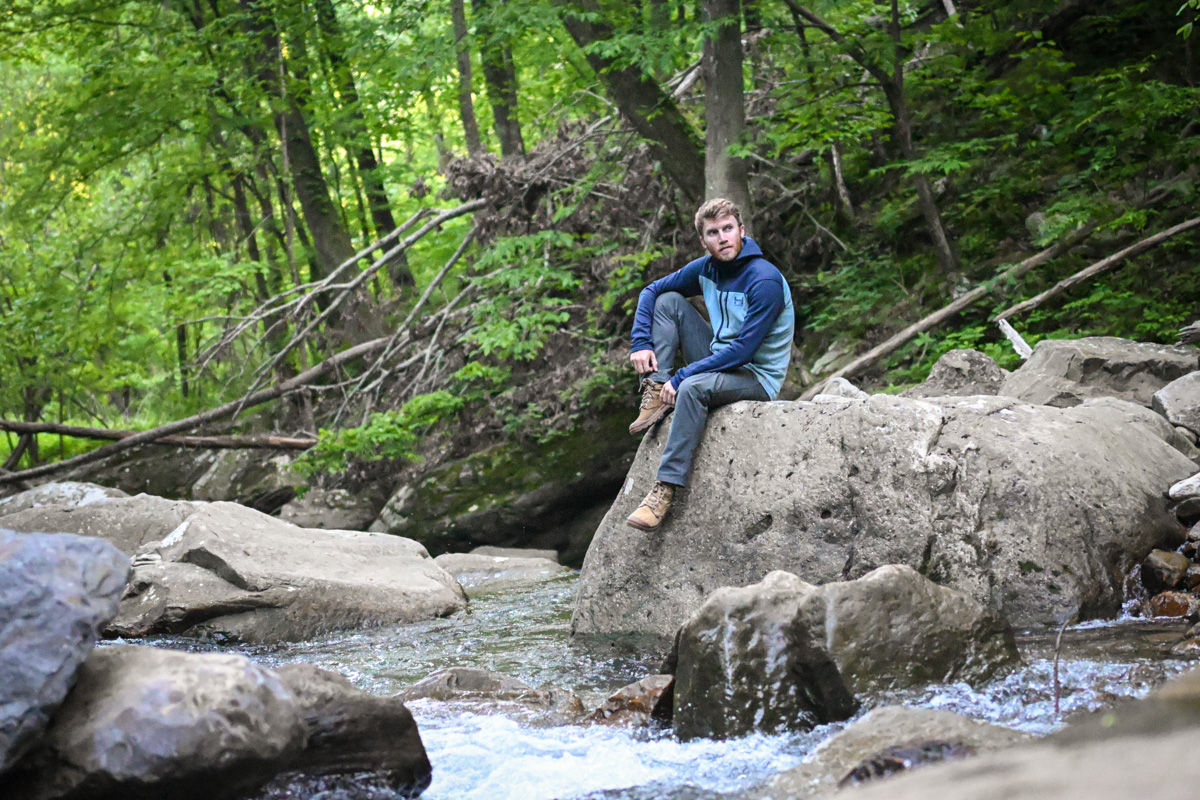
As an outerwear material, fleece is fairly distinct from other insulators such as down and synthetic fill. For one, it's less expensive, and despite its tendency to pill, it can be fairly durable (just don't get it too close to a flame—it will melt). It's also cozier and significantly more breathable, which has massive benefits as a midlayer or an insulator in casual and performance settings. But fleece can't quite match the warmth-to-weight ratio of down especially, and it's not as water-resistant as synthetic insulation (most synthetic jackets feature a nylon shell with a DWR finish). There's certainly a time and place—we love our fleeces for resort skiing, rock climbing (particularly hybrid designs), hiking, and of course casual use—but they're not our first choice for fast-and-light missions or serious endeavors when we want maximum warmth efficiency or weather resistance.

Fleece was originally designed to mimic a sheep’s hide and wool, meaning traditional varieties had a high-pile exterior and smooth interior. But given its fully synthetic makeup, the category has now evolved into a variety of forms, from thick sherpa fleece to sleek grid-backed fabrics. Really, the sky's the limit—if you want an example of how many different styles of fleeces there are in today's market, check out the fabrics section on Polartec’s website. Below, we break down the fleece types displayed in the jackets above (our list is by no means comprehensive).

Polar Fleece
Imagine a thick fleece jacket akin to The North Face's Retro Denali, and you’ve got polar fleece: A simple, double-sided fabric that’s warm, cozy, and more prone to pilling than most. Polar fleece is such a staple that its name was co-opted by the brand Polartec, responsible for high-end fleeces like Polartec Alpha and Polartec Power Stretch Pro. Polar fleece is very simple compared to more tech-savvy fabrics: You don’t get any windproofing or water resistance, no special breathability or weight-saving measures, and no gridded patterns. But it still hits all the features that we look for in a fleece and is affordable to boot. Note: In thinner varieties (less than 200 gsm), polar fleece is often referred to as microfleece.

Knit Fleece
Knit fleece, or sweater-knit fleece, is epitomized by jackets like the Patagonia Better Sweater and Stio Sweetwater, which feature a heathered knit face fabric (reminiscent of wool) alongside a cozy, brushed interior that acts and feels like traditional fleece. Jackets with knit fleece are prized for their classy looks, pill resistance, and warmth, and are great alternatives to wool cardigans or jackets. On the other hand, their fairly thick and bulky build means they’re not an ideal choice for serious outdoor use.
.jpg)
Gridded Fleece
Whereas sweater-knit fleece is a very casual material, gridded fleece (also known as waffle or thermal fleece) takes a high-performance approach. Characterized by fleeces like the classic Patagonia R1 (which uses Polartec’s Power Grid) and Outdoor Research Vigor Grid, the interior of a gridded fleece features patterns of raised fleece (squares, circles, or hexagons, for example) with channels in between for air to flow. On the exterior, you often get a smooth surface that distributes moisture to speed up evaporation. The result is maximum warmth and breathability with minimal weight and bulk—the difference in breathability is particularly palpable compared to other types of fleece. Note: While the Patagonia R1 Air is technically defined as a jacquard fleece (meaning that a raised pattern is woven into its material), for all intents and purposes, it fits into the gridded fleece category.
.jpg)
Sherpa/Faux-Shearling Fleece
Sherpa fleece is about as close as you can get to fleece’s origin story without dipping into shearling wool (for this reason, it’s also commonly called faux-shearling fleece). On one side, you get a smooth knit backer (if we’re drawing comparisons, this would be the sheep’s hide); on the other, you get a lofty, high-pile fleece that’s reminiscent of unprocessed wool. We don't include any Sherpa fleece jackets on our list above, but the Patagonia Retro Pile Fleece is a popular design with double-sided shearling (the faux-wool material is both on the interior and exterior). Sherpa fleece is bulky and decidedly casual, but if you’re looking for the epitome of cozy, this is it.
Other Dual-Surface Fleeces
Many gridded and sherpa fleeces feature a smooth side and a fleecy side (ironically, gridded fleeces generally place the fleecy side next to skin, while sherpa fleeces do the opposite), but they’re not the only types of fleece that fall into the dual-surface category. Here we want to specifically highlight Polartec’s Power Stretch Pro material, which is almost sweatshirt-like in nature with a soft polar fleece on the interior and smooth, low-friction exterior. With this construction, Power Stretch Pro and other similar blends retain all the benefits we love about fleece while adding an excellent range of motion, shape retention, and durability. For a closer look at this technology, check out offerings like the Arc’teryx Kyanite above.
.jpg)
In general, we can organize fleeces into two main categories: casual and performance. Casual fleeces provide an unbeatable combination of coziness and warmth for everyday use. They are terrific for layering on chilly evenings, wearing around the cabin, and daily commutes. Our favorite casual fleeces range from sweater-knit designs that dress up nicely (the Patagonia Better Sweater, for example) to basic pieces that are little more than the fabric itself. And while many fleeces on our list are intended for performance use, in reality, they can all be worn in casual settings (when we first got our R1 Air, we never wanted to take it off). That’s the glory of fleece: Unlike many pieces of activewear, fleece’s hallmark features of warmth, comfort, and breathability seamlessly crossover for daily wear.
Performance fleeces have a number of common attributes: They’re snug-fitting (unlike many casual offerings, which can be on the boxy side) and stretchy, feature high-tech fabrics like Polartec Power Stretch Pro and Alpha, and often include hoods and thumb loops. One of our current favorites in this category is the Himali Endeavor. Hybrid fleece/synthetic jackets also fall into the performance category (more on these below), in addition to fleeces with weather-resistant face fabrics (such as Patagonia’s TechFace collection). When deciding on a performance fleece, it’s worth thinking about your needs in terms of weather protection, mobility, warmth, and packability. There’s virtually something for everyone.
.jpg)
For an idea of how warm a particular fleece will be, some jackets list the fabric thickness or fleece weight. This is often expressed in terms of grams per square meter—100, 200, and 300-gram, for example—and some brands have come up with their own rating system (Patagonia's R1 and R2, for instance). In its lightest form, a fleece is only a small step up in terms of insulation from a baselayer (the Black Diamond Coefficient LT Hybrid is one example) and ideal for high-output activities when breathability wins out over maximum warmth. Midweight or 200-weight fleeces are warmer and make a great pairing for fall and spring or mild-weather days on the slopes. Heavy fleeces of the 300-weight variety are warm and can insulate when temperatures dip below freezing, but their bulk often comes at the cost of mobility and breathability.
As more companies have moved toward designing their own in-house fleeces and Polartec has diversified their offerings, the demarcation isn’t quite as simple as explained above. But it’s still helpful when available, and in general, the weight of the fleece correlates with its warmth. The heavier a jacket is, the more likely it will be able to keep you warm and block wind from entering.
.jpg)
Although often worn as standalone pieces, fleece jackets are not intended to combat heavy wind or rain. The synthetic fabric itself is hydrophobic (i.e., it won't absorb moisture), but wind and water can make their way through the porous construction rather easily. What's more, unlike down or synthetic jackets, fleeces—even dual-surface designs with low-friction exteriors—do not feature a durable water-repellent (DWR) finish. Some, like the classic The North Face Retro Denali, incorporate non-fleece nylon panels that can repel light amounts of precipitation, but these only cover a few inches across the chest.

We'll sometimes see manufacturers add a tough, weather-resistant shell to boost the wind and water protection of fleece. The Patagonia R1 TechFace Hoody, for example, pairs gridded fleece with a woven softshell exterior. This style—which we call hard-face fleece—is a great alternative to a full-blown softshell, and it's cozier, too. But while hard-face fleeces are impressively wind-resistant and can fend off light moisture—great for PNW commutes and shoulder-season days in the mountains—we don't recommend them for all-out rain. In truly wet weather, you'll still want a more reliable rain jacket or hardshell.
.jpg)
A notable upside to fleeces is their breathability, which is one of the primary reasons that they work so well as a midlayer. Compared to a softshell, down, or synthetic insulated jacket, a fleece is dotted with tiny openings—hold a fleece up to the sun, and you’ll see light streaming through, which helps a great deal with airflow. And of course, the thinner the fabric, generally the more breathable the fleece will be. On the other hand, it also contributes to their shortcomings as a true outer layer in the cold and wind. As we mentioned above, some hybrid fleeces include wind-resistant fabrics, making them less permeable to air, but keep in mind that while these styles offer more protection against the elements, breathability takes a back seat. If we know we’re venturing out in inclement weather, we usually prefer to pair a baselayer with a windbreaker jacket, or wear a softshell or synthetic insulated jacket with wind-blocking fabric instead.
.jpg)
Fleece jackets vary widely in terms of fit, and it's important to consider the jacket's intended use to ensure it aligns with your needs. Performance pieces like the Rab Ascendor Light Hoody and Black Diamond Coefficient LT Hybrid have a trim cut that is designed to remove excess fabric for added mobility and efficient ventilation. While very effective on the mountain, the style doesn't always translate well to urban life. If you're in search of a jacket adept at both, something like the Arc'teryx Kyanite may be the ideal choice, with enough room to be comfortable but not so loose as to be useless in the backcountry when layering. For casual wear, a roomier fit option like the Patagonia Synchilla Snap-T or one of the other budget options will be just fine.

Hood
Many fleeces are offered in either hooded or non-hooded varieties. For use as a classic midlayer, we typically lean towards a non-hooded option, as even a low-profile hood can get in the way underneath your shell (unless you always use both hoods). And for pairing under a ski jacket, it’s a no-brainer to go with a non-hooded model. Alternatively, a hood is a welcome addition in colder conditions, and many are nicely fitted and stay in place even while exercising. For climbing and backcountry skiing—and particularly if you’re planning on wearing your fleece as an outer layer—a hood can be a really nice feature, and we appreciate both under- and over-the-helmet varieties.
.jpg)
Thumbholes
Performance fleeces designed for activities such as running or cross-country skiing often feature thumbholes built into the sleeves. While serving as an opening for cold air to sneak in when not in use, the openings work well for keeping the sleeves in place during high-effort activities or when taking on and off layers. User tip: If you’re eyeing a jacket with this feature, we recommend checking to ensure the fabric around the thumbhole has some stretch, so it doesn’t feel like your thumb is being yanked when you extend your arms.

Full-Zip vs. Pullover
Most of the jackets at the top of our list are of the full-zip variety, which offers maximum versatility and is easy to slip on and off. Full-zip models tend to have more features, such as hand pockets and stretchy side panels, whereas pullovers are more basic and function like a sweatshirt (albeit a very comfortable one). The upside of fleece pullovers is that they weigh slightly less, pack down smaller, and are generally cheaper. The Patagonia Lightweight Synchilla Snap-T is an extremely popular fleece pullover that in many ways defines the category.

Building off the fleece types above, it’s become more and more common to see fleece paired with synthetic insulation—a combination known as a “hybrid” jacket. Most commonly, these jackets feature a fleece back with a synthetically insulated front (often finished with a nylon or polyester shell), which maximizes breathability alongside warmth and weather protection. The breathable back is especially nice when wearing a backpack, and we love the added tech at the front for wind-generating activities like trail running, backcountry skiing, and Nordic skiing. High-quality examples of this design include the Black Diamond Coefficient LT Hybrid and Patagonia Nano-Air Light Hybrid.
.jpg)
Animal-derived insulators like down and wool get a bad rap from environmental advocates (and in many cases, rightly so), but fleece isn’t without blame either. Polyester fleece is a synthetic, petroleum-based material, which means a few things. For one, it’s plastic—in fact, it’s made up of the same stuff as those single-use plastic bottles many of us try to avoid. Second, unlike sustainably produced natural materials like cotton or down, the production of fleece can result in greenhouse gas emissions and potentially unsafe work environments. And finally, fleece sheds throughout its lifetime, littering microplastics in its wake—as multiple studies have shown, one single fleece jacket can release thousands of fibers into wastewater with each wash. Given the current state of plastics in our oceans, this is not good news.

But there are steps we can take to address this issue. Companies like Patagonia and Polartec produce most of their polyester fabrics (including fleece) from recycled plastic bottles, which both reduces emissions and repurposes materials that might otherwise end up in a landfill. We're also seeing manufacturers increase their use of natural fabrics—yes, even in fleece—including hemp, lyocell, wool, and bamboo. Unlike the microplastics in polyester fleece, fibers that shed from these materials actually biodegrade. And then that leaves you, the consumer. You can do your part by following the three R's (reduce your consumption, reuse what you have, buy products made with recycled materials), and when you can, seek out clothing made with natural, rather than synthetic, fibers. Finally, consider purchasing a wash bag (like this one from Guppyfriend), which will keep your fleece's microplastics out of your washing's wastewater.

Pilling is one of the downsides of a low-quality fleece, and even a nicer option can start losing fleece over time. Once a jacket starts pilling, it’s difficult to reverse the process, so prevention is key. One of the best ways to extend the life of your fleece is to keep it away from a dryer. Line drying or at least tumble-drying on low will do wonders, and some have had success washing their fleeces on the delicate wash cycle. Also, while fleece jackets are a popular choice for hanging around the campfire, do your best to keep yours clear of the flames. The plasticky construction will melt when exposed to extreme heat. Beyond those considerations, fleeces are easy to maintain and should provide you with years of comfortable service.

The midlayer market is chock full of options, and fleece’s two primary competitors are synthetic jackets and down jackets. Both are more expensive but offer improved warmth relative to their weight and are far more packable. Further, synthetic jackets provide better protection against wind and rain (although some modern fleeces aren’t far behind). But if breathability and a soft next-to-skin feel are at the top of your list, a fleece remains our go-to choice. Synthetic and down jackets require a lining and outer shell to hold the insulation, which impacts comfort and the ability to pull away sweat and hot air. As a result, the fleece excels at aerobic activities when bulk isn’t as much of a concern, such as resort skiing and day hiking. But in the end, none is the be-all and end-all insulating layer, which is why it is common for people to own one (or more) of each.
Back to Our Top Fleece Jacket Picks Back to Our Fleece Jacket Comparison Table

-tfe3e.jpg?h=fbc67360&itok=tQQ0SQx9)
_08b31.jpg?h=fbc67360&itok=9jCMZqJc)


e13b.jpg?h=fbc67360&itok=roLTspKI)
37d3.jpg?h=fbc67360&itok=TOEvTocq)