.jpg)
.jpg)
Photo Credit
It’s that time of year… time to find the perfect present for our adventurous loved ones. For fun, functional, and thoughtful gift ideas, browse our gift guides for hikers, travelers, backpackers, campers, runners, and snow sports enthusiasts.
Your baselayer may not be the most exciting part of your layering system, but make no mistake: It’s certainly one of the most important. As a next-to-skin piece, baselayers are tasked with pulling moisture away from your body and regulating your core temperature, which is especially useful for outdoor activities like skiing, hiking, and climbing. Our female staff has tested dozens of baselayers to bring you our 12 favorites below, from premium, warm, and naturally odor-resistant merino wool options—like our top pick, the Smartwool Classic All-Season Merino—to cheaper synthetic alternatives. For more information, see our comparison table and buying advice below the picks, along with details about our testing process. For a wider look at the market, we've also compiled a round-up of the best baselayers, which covers both men's and women's styles.
Editor’s note: We updated this guide on October 27, 2025, to streamline our list down to just the best of the best. We reevaluated testing notes, considered use cases, and compared similar layers to do this (see our list of the tested and dismissed baselayers below). We also rearranged our rankings, moving several to top-picks, and added Lé Bent’s Featherweight Hooded LS Crew to our list after positive testing experiences. Lastly, we swept the guide to ensure all other information was up to date at the time of publishing, and added several new photos from recent testing.

Category: Lightweight
Materials: 88% merino wool, 12% nylon
Weight: 150g/m²
What we like: Light and breathable enough for year-round use.
What we don’t: Thin materials require more care.
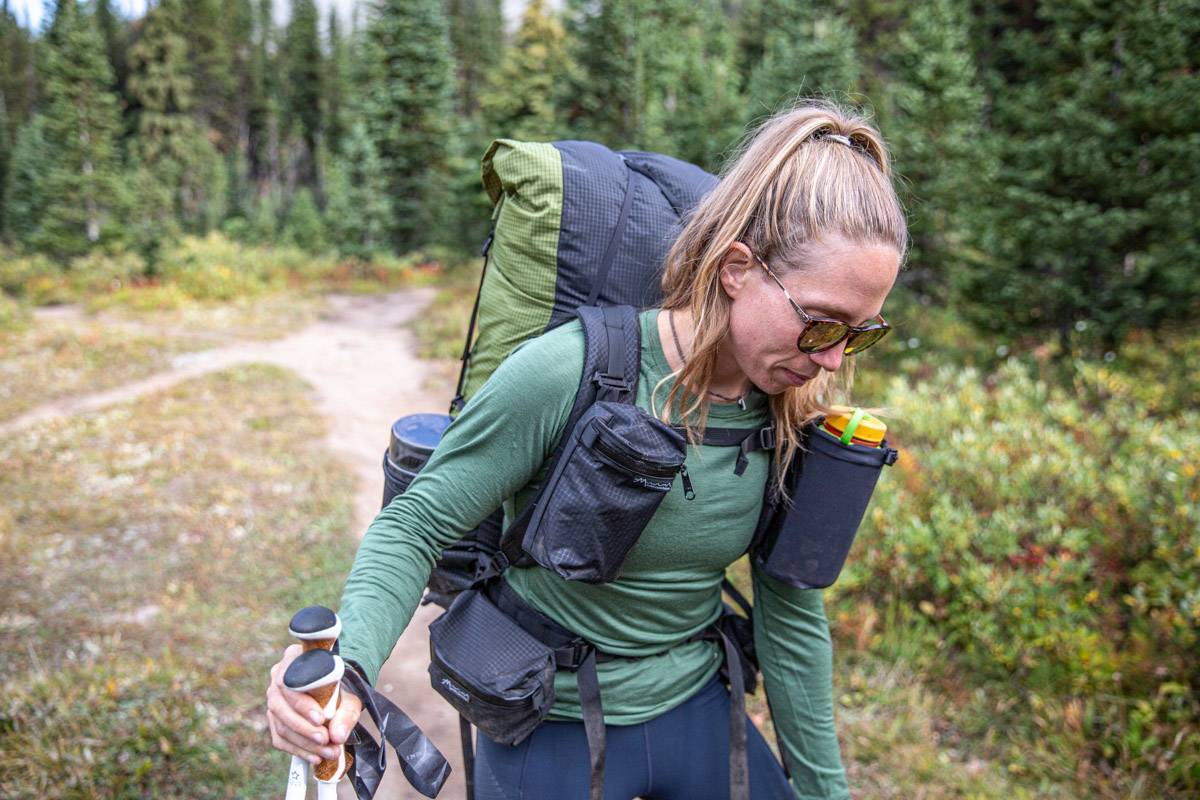
Merino wool is our favorite baselayer material for many reasons: it’s soft and comfortable, provides incredible warmth for the weight, and effectively wicks moisture away from your skin. Smartwool’s popular Classic All-Season is a shining example, combining all the performance benefits of wool in a well-built and good-looking package. This 3-season layer falls on the thinner side, making it a great choice for shoulder-season hiking and trail running. We tested this layer on a late-August backpacking trip in Alberta’s Kananaskis wilderness and found that it breathed well on steep sections of trail, but provided plenty of warmth and comfort at camp. We also weren’t in a rush to take it off when we got back to town: The trim fit and classy color choices transition seamlessly between the trail and dinner. Plus, wool is naturally odor-resistant, so you don’t have to worry about your post-hike stink. The cherry on top for the All-Season is price, which is among the cheapest merino options on this list.
The downside of opting for such a thin baselayer is durability. While Smartwool does include a dose of nylon to increase the life of this shirt, the merino is likely to break down over time in high-wear areas, such as the cuffs and shoulders. To be fair, ours has held up well so far with just minor pilling, and we’re careful to properly launder it to extend its life. And those looking for a baselayer to wear in truly cold conditions may want to consider heavier baselayers like the Classic Thermal below. We’ve had luck layering the All-Season under a midlayer or thicker insulated jacket, but a thicker baselayer is great for low-output winter activities like resort skiing. But if you’re looking for a baselayer that can do a little bit of everything, the Classic All-Season is tough to beat.
Read more: Smartwool Classic All-Season Merino review
See the Smartwool Classic All-Season Merino
Category: Mid/heavyweight
Material: 100% merino wool
Weight: 250g/m²
What we like: Extremely warm, soft, and resistant to stink.
What we don’t: Too thick for high-output activity.
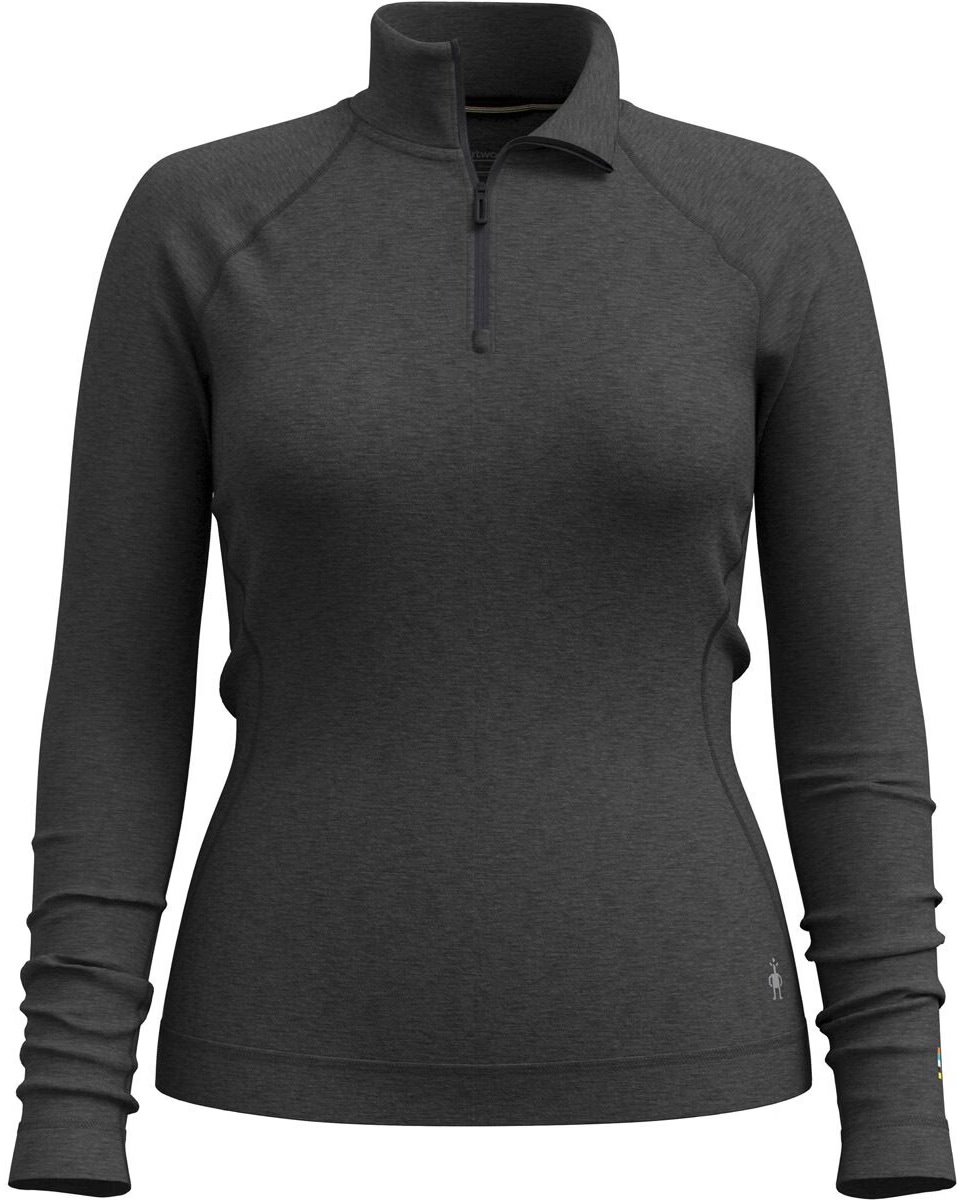
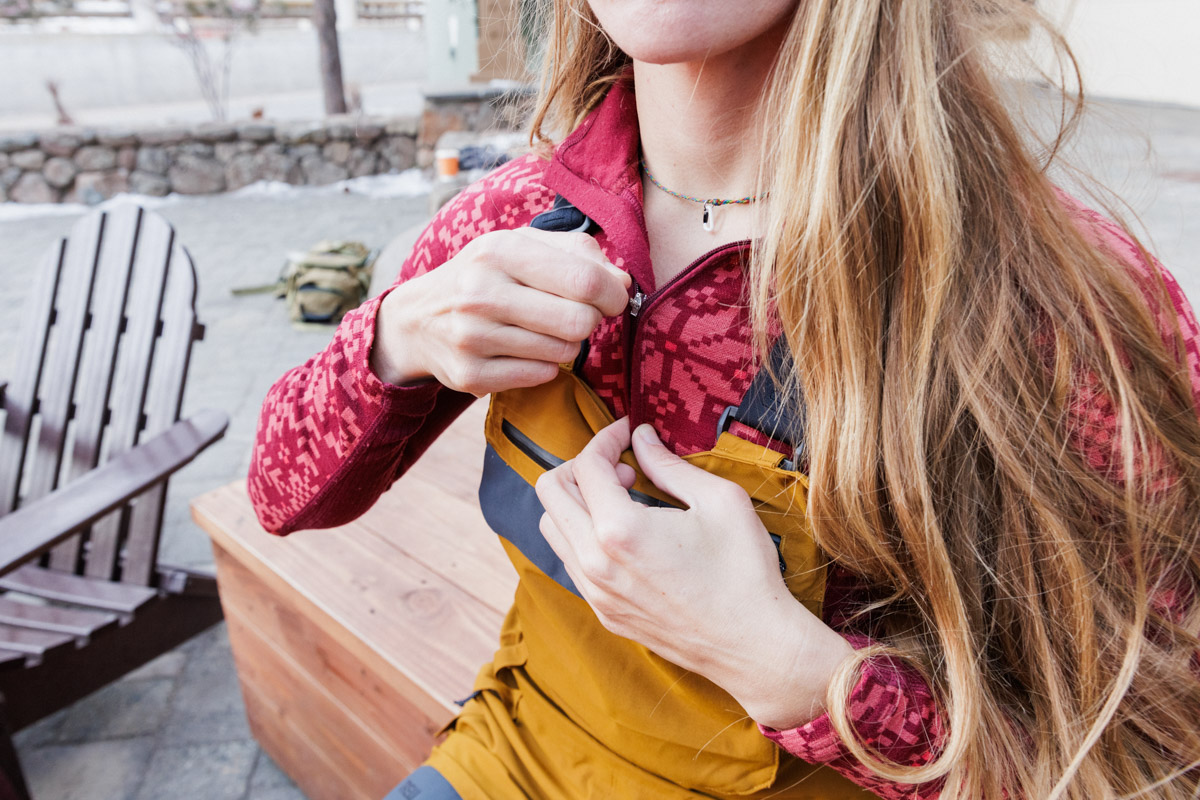
For staying warm in dead-winter temps, heavier baselayers like Smartwool’s Classic Thermal are our go-to. This fully merino layer (250g/m²) is a great choice for activities like resort skiing and snowshoeing, but is cozy enough to wear around the house on snow days, too. Fit-wise, the women's version is fairly snug, but the added give in the fabric means it effectively breathes and wicks sweat without feeling restrictive. And for active use or warmer days, we really appreciate the ability to dump excess heat via the 8-inch zipper at the top (which also allows the layer to slide on nicely over a ski helmet).
All that said, the Classic Thermal does have its downsides. First and foremost, the merino doesn’t come cheap, and the Classic Thermal is one of the pricier options on this list. If you’re on a tight budget and don’t mind compromising in areas like comfort and odor resistance, you can save considerably with one of the polyester options below, including Patagonia’s popular Capilene. Polyester is also inherently more durable than merino and wicks moisture more effectively, making it a better choice for sweat-inducing activities. But for resort skiing, mellow snowshoeing, and casual days around town, the comfort and warmth of wool are well worth its inherent trade-offs. If you like the warmth and construction of the Classic Thermal but prefer a lower-profile collar, it’s also sold in a Crew Top for a bit less, as well as matching bottoms.
See the Smartwool Classic Thermal Merino 1/4 Zip
.jpg)

Category: Midweight
Material: 100% polyester
Weight: 147g/m²
What we like: Polyester is more affordable, durable, and breathable than wool.
What we don’t: Less soft and doesn’t resist odor as well as a merino baselayer.
As we touched on above, polyester baselayers are generally more affordable and durable than their merino counterparts, and are better suited for intense activity. Our top synthetic pick this year is Patagonia’s Capilene Midweight Crew, which has been one of our go-tos for high-intensity activities like trail running and ski touring. In addition to improved moisture-wicking, the Capilene feels smooth against the skin, features thoughtful touches like low-profile thumb loops and underarm gussets, and is made with 100%-recycled materials. Long-term durability is a real come-up—we have Capilene tops that are multiple years old and showing minimal wear despite heavy use.
What do you sacrifice by opting for a synthetic baselayer? While the Capilene is comfortable for a polyester design, it’s still a tangible step down in softness compared to the merino competition. Further, despite Patagonia’s HeiQ Pure anti-odor treatment, it builds stink more readily and will require fairly frequent washing. And unrelated to the construction, the Capilene is dubbed a “slim fit” by Patagonia, which may not work for some body shapes (it’s noticeably trim around the chest in particular). But maintenance is a breeze (you can throw it in the dryer with other clothes), and not everyone wants to spend $100 or more on a baselayer, which is why we love Patagonia’s Capilene collection. And for a similar performance in a different (softer) package, check out The North Face’s Summit Series Pro 120 Crew.
Read more: Patagonia Capilene Midweight Crewneck review
See the Patagonia Capilene Midweight Crew
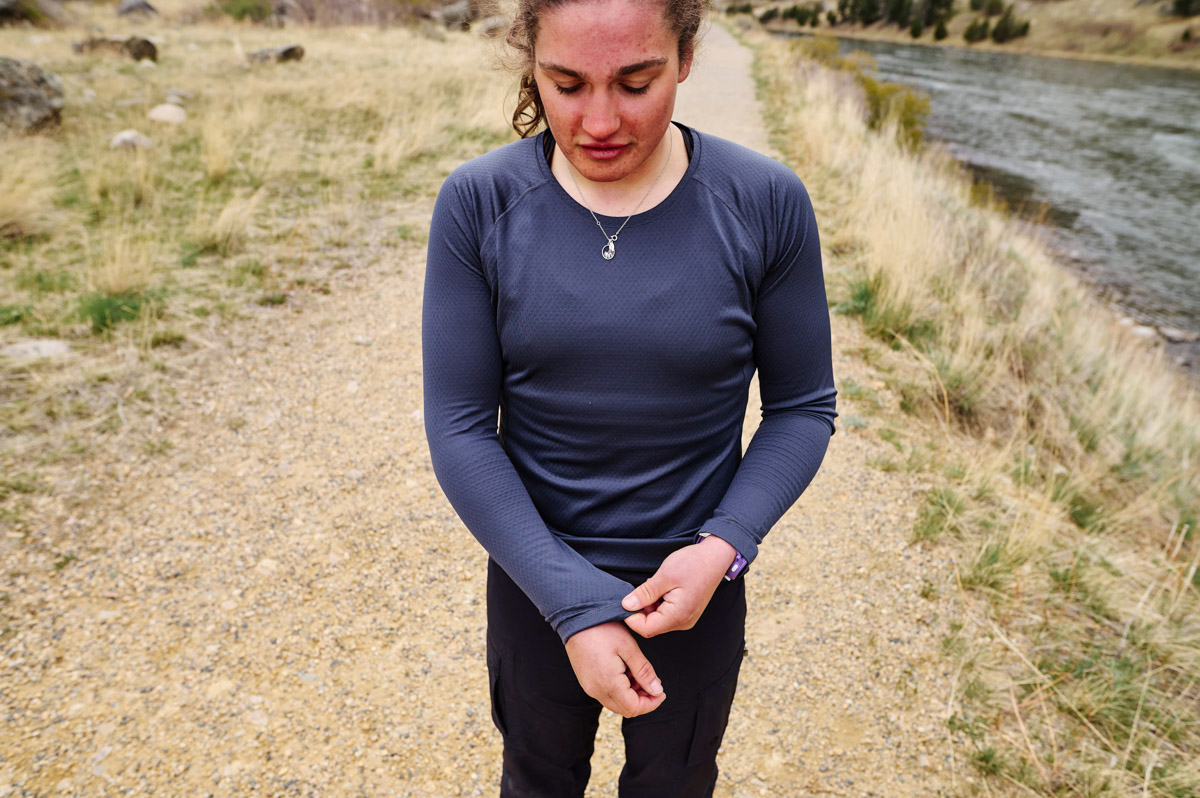
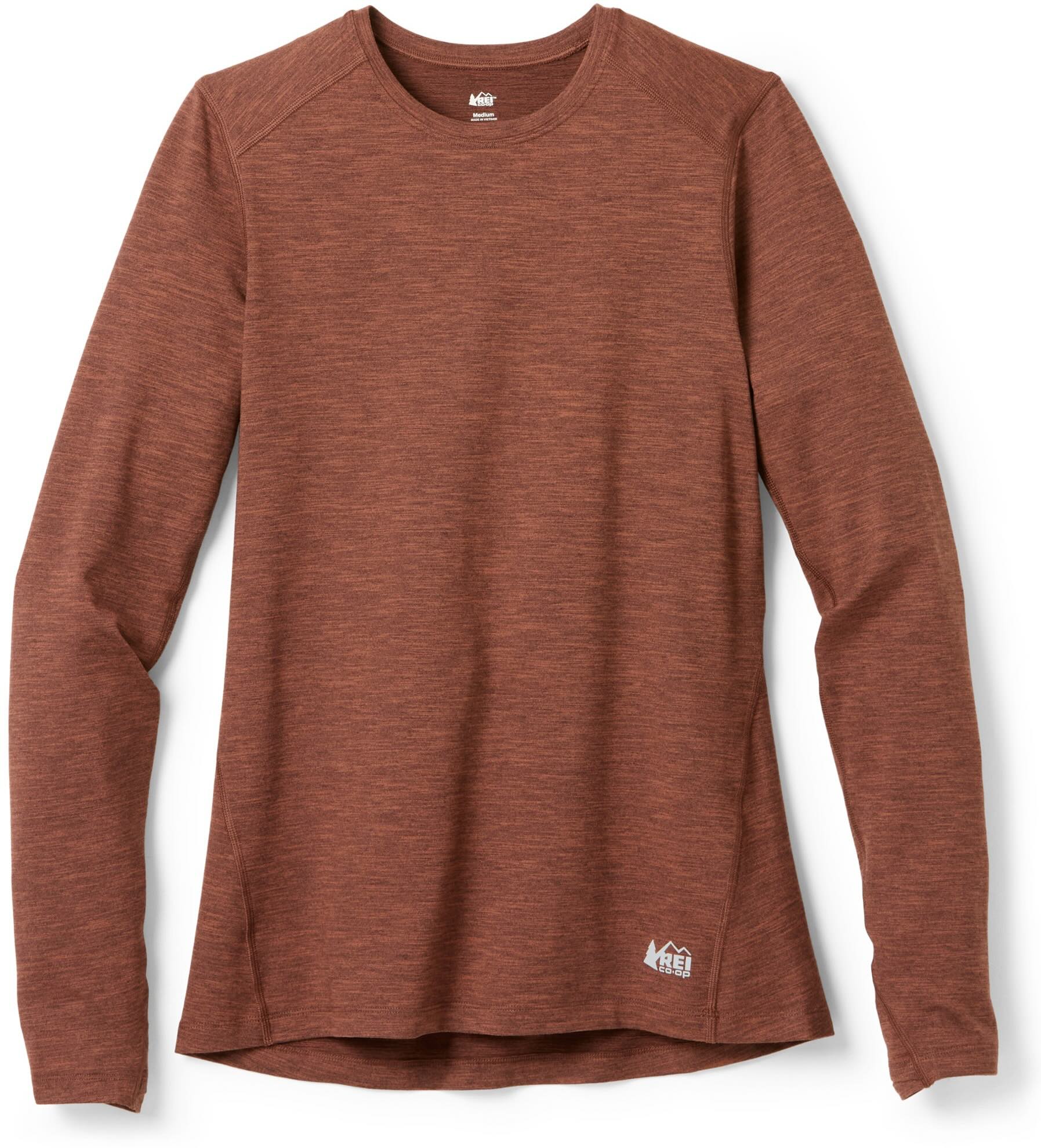
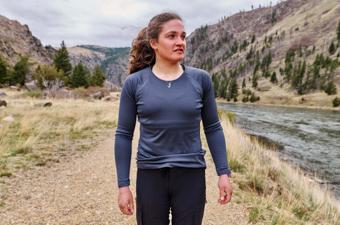
Category: Midweight
Materials: 92% polyester, 8% spandex
Weight: 220g/m²
What we like: Very warm, soft, and won’t break the bank.
What we don’t: Not a standout in odor resistance and runs small.
Assembling a winter layering system from scratch can be expensive, but the good news is that there are several affordable, well-built baselayers available on the market. REI Co-op’s Midweight Long-Sleeve Base Layer Top is a crowd favorite: For a relatively low price (even for a synthetic baselayer), the REI is warm, regulates temperature well, and has helpful touches like flat seams and four-way stretch to minimize bulk and maximize mobility (respectively). As we’ve come to expect from REI, the Midweight Long-Sleeve also comes in a nice variety of sizes and color options. And if you want more control over temperature or a different style, it’s also offered in a half-zip option for a bit more.
REI’s Midweight is an undeniably enticing value, especially considering the long-term durability advantage over merino wool. That said, although the Co-op’s fabric is comfortably silky, it can’t compete with some of the more premium merino options on this list. It’s also more prone to holding in body odor, which means you’ll probably find yourself putting it through the wash more often. All that said, we keep coming back to value: The REI Midweight is an unquestionably well-built baselayer for the price, earning it our endorsement this season. If you're looking for a thinner synthetic baselayer for high-output activities, check out Helly Hansen's Lifa Stripe below.
See the REI Midweight Long-Sleeve
_0.jpg)

Category: Midweight
Materials: 84% merino, 16% nylon
Weight: 180g/m²
What we like: Fun styling, great fit and finish, and Goldilocks level of warmth.
What we don’t: The high neck style doesn’t ventilate well.
Merino doesn’t often come cheap, but Ridge Merino’s Aspect High Neck is among the less expensive options on this list. And it does so without sacrificing much to achieve the low price tag: Its 180-gram weight is just the right thickness for mild conditions or high-output activities, and it’s so soft and cozy that we can’t help but wear it around the house, too. What’s more, the turtleneck is a refreshing change from standard crew and quarter-zip styles and is long enough to extend over the face for added coverage.
Similar to other lightweight merino offerings (like the Smartwool Classic All-Season above), Ridge added 16% nylon to help strengthen the Aspect’s thin merino wool build. They’ve also done a great job paying attention to the finer details: The Aspect High Neck features well-designed thumb loops that disappear into the cuffs, a very discreet headphones port (though we question the utility of this addition), and a long cut that doesn’t ride up. Added up, we’re very impressed with the Aspect: For mild conditions or high-intensity activities in colder temperatures, it’s one of our favorite designs on the market (you can also opt for a quarter-zip version for better temperature regulation). It's also worth mentioning Ridge Merino’s heavyweight Inversion, which features a thick (270g/m²) construction made from 100% merino wool.
See the Ridge Merino Aspect Merino High Neck

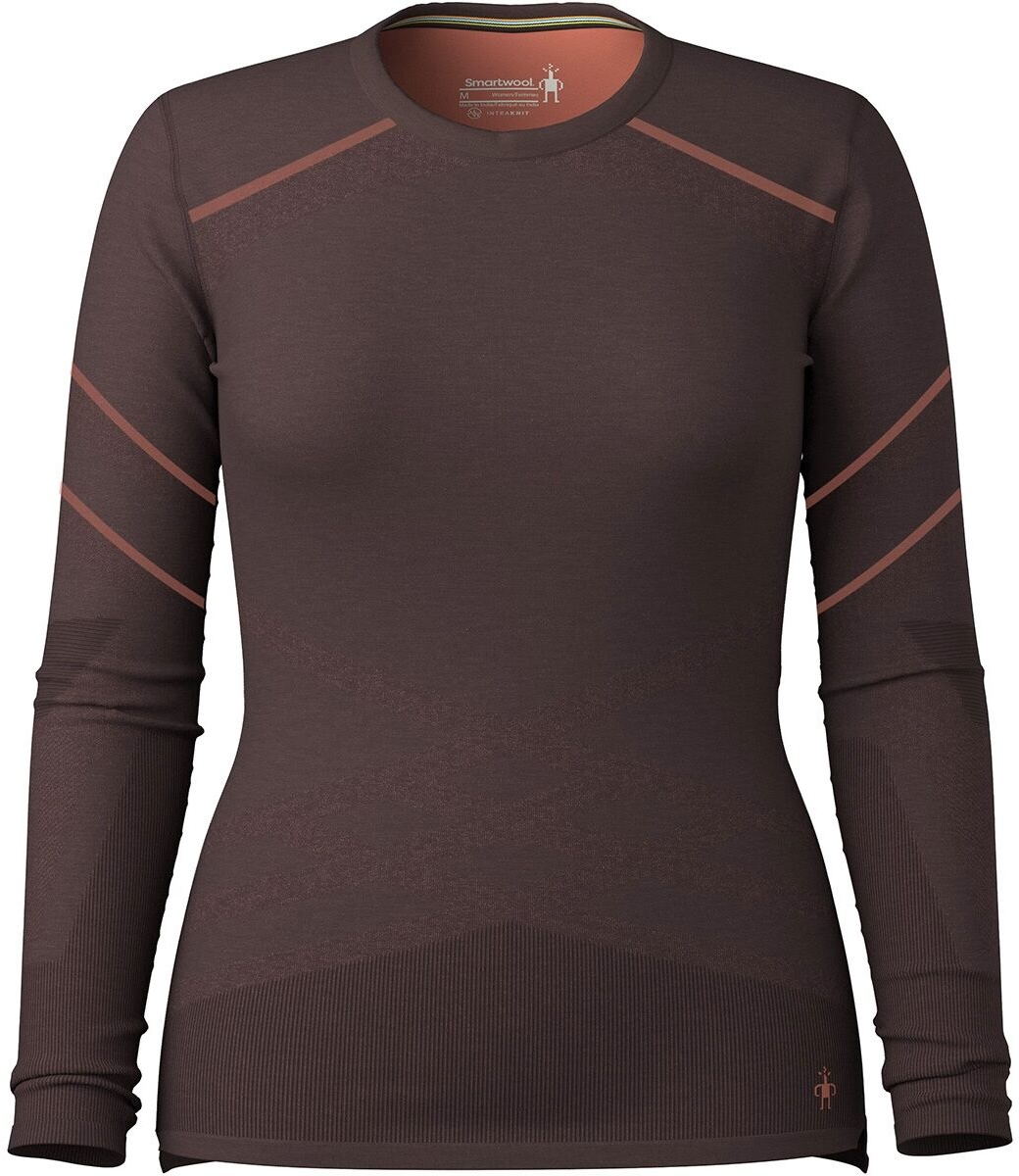
Category: Midweight
Materials: 53% merino wool, 45% polyester, 2% elastane
Weight: 200g/m²
What we like: A merino baselayer that’s purpose-built for high-output activities.
What we don’t: Trim fit and technical appearance limit overall appeal.
Smartwool’s Intraknit thermal is tailor-made to keep you comfortable when working up a sweat in cool to cold conditions. This layer features a healthy amount of polyester (45%) and includes mesh ventilation zones in heat-prone areas, such as the upper back and core. Not only does that boost its breathability, but the polyester keeps the layer from breaking down as quickly as all-merino alternatives. We’ve worn the Intraknit for all sorts of cardio-intensive winter pursuits—from Nordic skiing to breaking trail in waist-deep powder—and found the balance of warmth and breathability hard to beat. Plus, you still get all the benefits of merino, including solid odor resistance and a soft, next-to-skin feel.
In deciding which Smartwool baselayer is right for you, the main consideration is end use. If you’re looking for a more casual piece to wear both on the slopes and to après, the Classic Thermal’s more generous fit and less technical appearance will likely give it the edge (we also wear it a lot as an outer layer while hiking or backpacking). On the flip side, the trim-fitting Intraknit is more ideal as a next-to-skin piece for active pursuits and will dump heat much more effectively (our go-to combination is the Intraknit and a windbreaker jacket). Finally, it’s worth noting that Smartwool also makes the Intraknit Active, a thinner variation that’s well-suited for mild conditions. We’ve also been getting a lot of use out of our Artilect Flatirons 185 Quarter Zip, which also has mesh ventilation but has a thinner (185g/m²) and more premium merino construction. But the midweight Intraknit here is our go-to for working up a sweat in the heart of winter.
Read more: Smartwool Intraknit Thermal Merino Crew review
See the Smartwool Intraknit Thermal Merino Crew
.jpg)
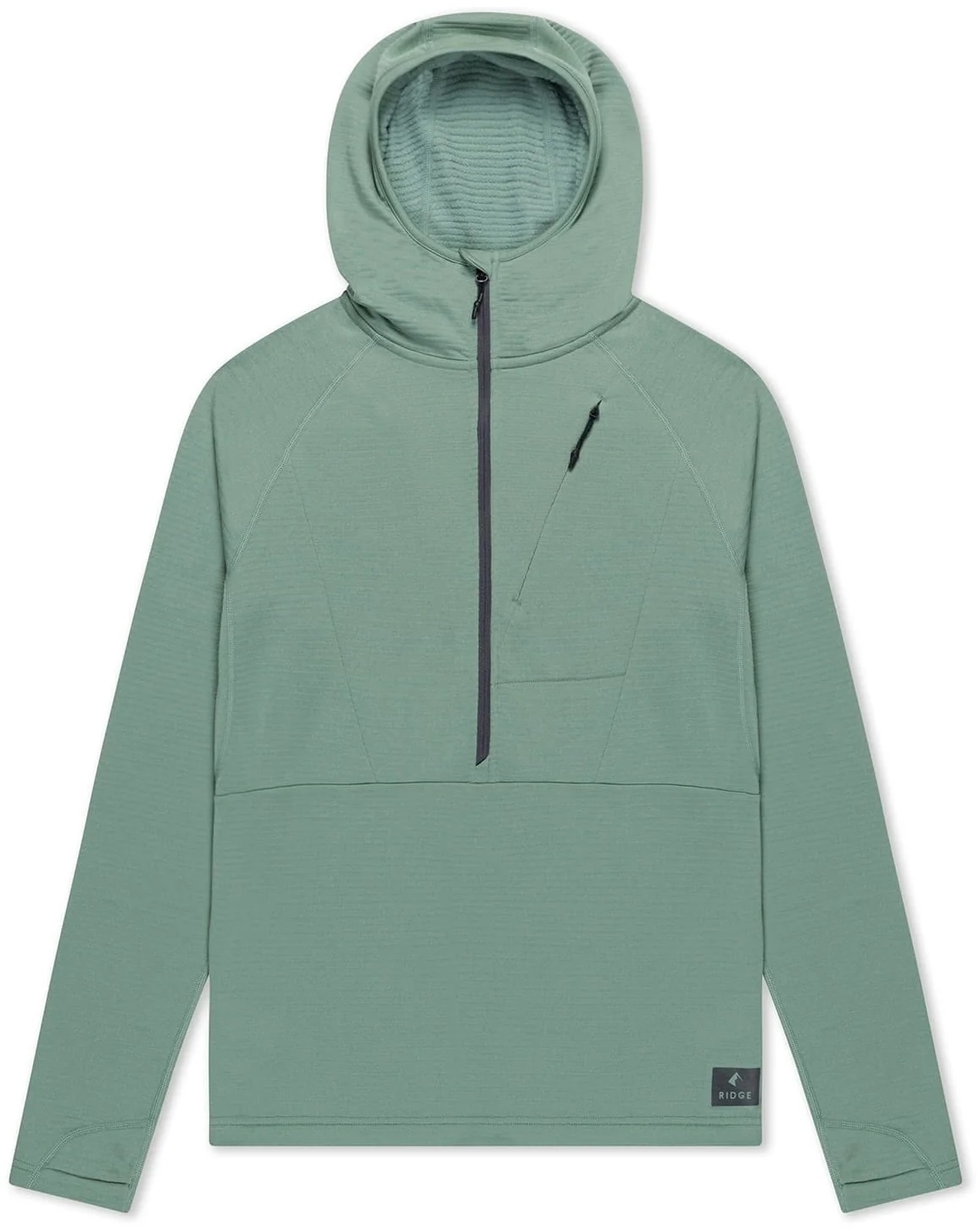
Category: Light/midweight
Materials: 51% polyester, 42% merino wool, 7% spandex
Weight: 155g/m²
What we like: One of the coziest baselayers we've ever worn—great for everyday and casual wear.
What we don’t: Expensive and lacking in performance appeal.
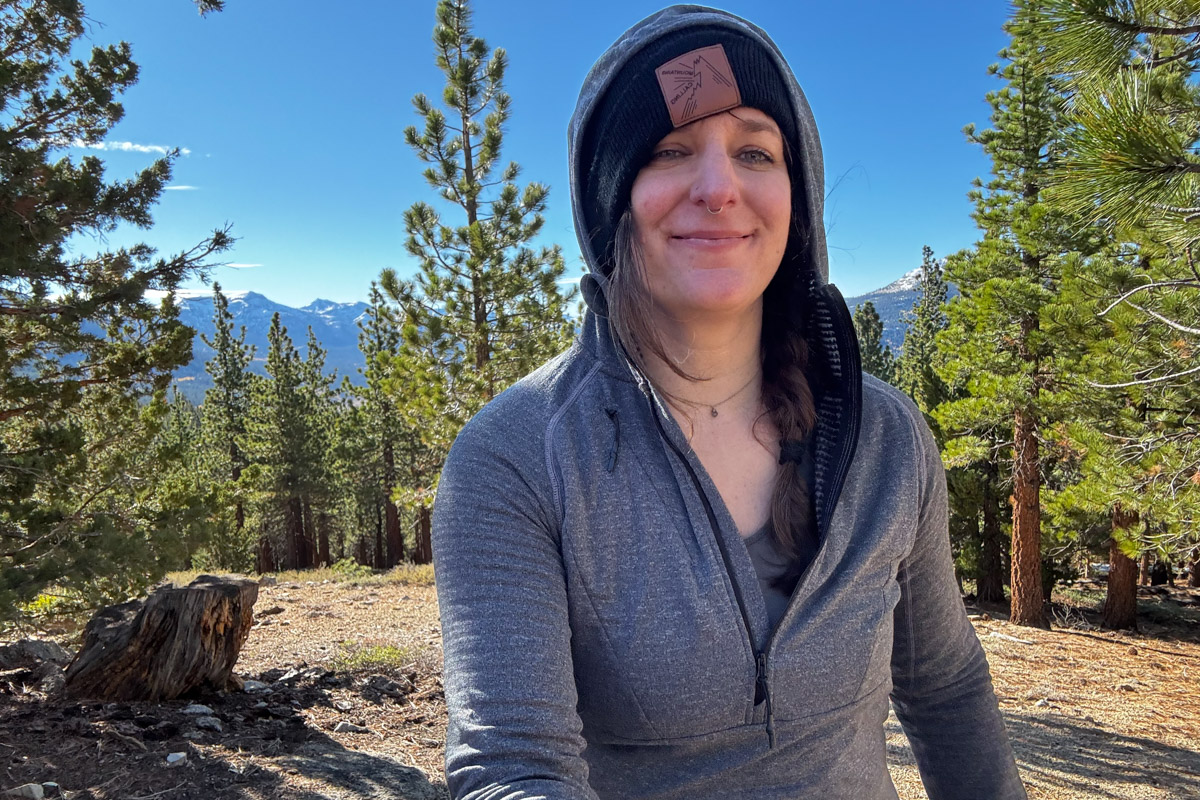
A family-run operation based out of California’s eastern Sierra, Ridge Merino offers a small collection of high-quality merino wool baselayers. Among them, the Convict Canyon Hoodie quickly earned a spot in our daily rotation, proving itself on mellow hikes, resort days, and—perhaps most of all—at home during chores or downtime. In fact, our Tahoe-based tester has hardly taken the hoody off since receiving it, thanks to its buttery-soft feel and excellent fit. The layer checks almost every box: long sleeves with cozy thumbholes, a front zipper for venting, a roomy hood, and just the right amount of stretch for freedom of movement and layering. What’s more, its healthy dose of merino (42%) helps ward off stink, which means less time in the washer and more time on your body.
Despite our praise, the Convict Canyon Hoodie won't be mistaken for a performance-ready piece like the Smartwool Intraknit Thermal above. It’s a little too thick for intense backcountry use, and the hood—while cozy—adds a good deal of bulk when layering under other garments (like a ski jacket or hardshell). We also have some concerns about long-term durability: Like other merino layers, the Convict Canyon is more prone to wear over time (the 51% polyester does help), and ours has accrued some underarm stains over the last year. Finally, the Convict Canyon is among the more expensive options here, but overall build quality aligns with the price, and you'd be hard-pressed to find a cozier baselayer for casual wear.
See the Ridge Merino Convict Canyon Hoodie
Category: Heavyweight
Material: 100% merino wool
Weight: 240g/m²
What we like: Supremely soft and warm with fun styling.
What we don’t: Too thick for shoulder-season use.
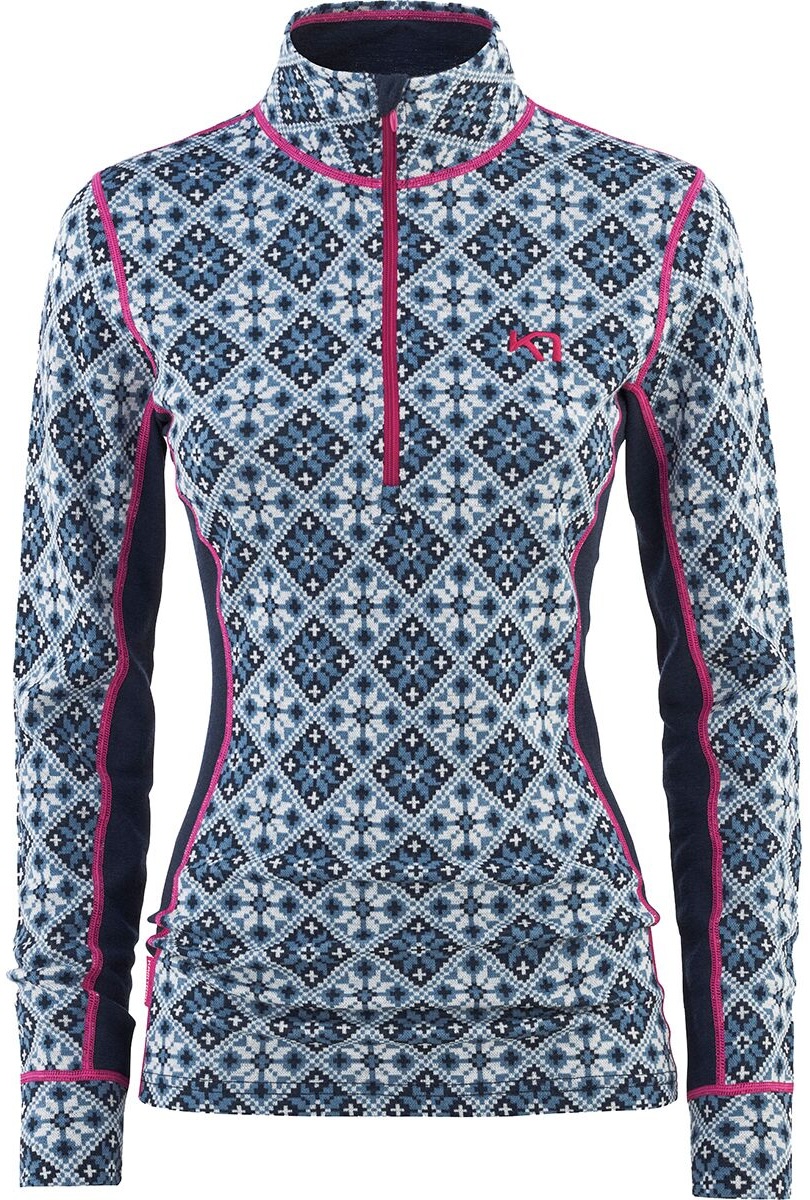
For those who run especially cold, heavyweight baselayers are a great choice for chilly-weather activities. In our opinion, Norwegian brand Kari Traa does this best with their Rose Half Zip. The Rose is one of their most popular offerings and is rife with thoughtful features and details, including a form-fitting design, tall collar with a ventilating front zip and chin guard, high-quality cuffs, and flat seams. The styling is also hard to beat: the vibrant snowflake pattern and contrasting underarm panels give the piece a decidedly modern and elegant look that we really like. Additionally, despite what the specs say, the Rose feels a good deal thicker and warmer than the Smartwool Classic Thermal above.
Kari Traa's whole lineup of high-performance outerwear is designed by women, for women. Nothing is boxy or bland; it's all well-intentioned and thoughtfully tailored. Kari Traa, the Olympic freestyle skier who founded her namesake company, places a high priority on fun color schemes and flattering shapes. In short, the brand represents the intersection of technical performance and feminine styling that the market has long needed. We really like the Rose for this reason, but it’s worth noting that it will be overkill for mild conditions or active use. We also found it particularly snug-fitting, so those looking for a bit more mobility might want to size up. Gripes aside, the Rose is a very flattering and warm piece that’s right at home on both the groomers and at après.
See the Kari Traa Rose Half Zip
Category: Lightweight
Materials: 60% merino, 25% bamboo, 15% nylon
Weight: 125g/m²
What we like: One of the softest merino layers we’ve ever worn; three-season versatility.
What we don’t: Very expensive and thin.
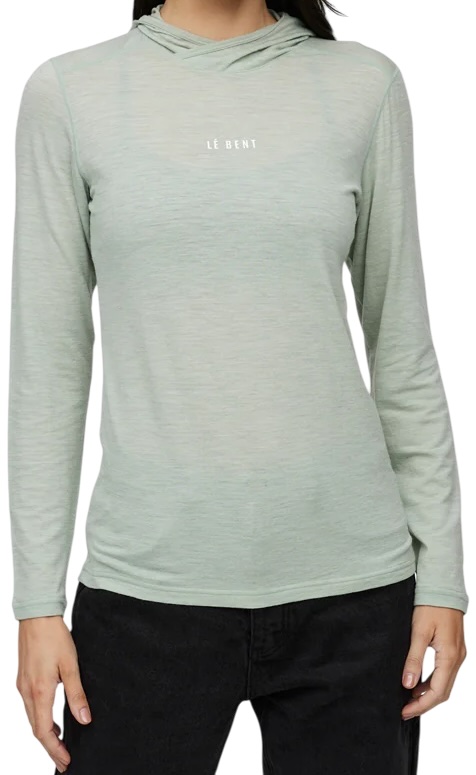
If you have extra cash to spend and are looking for the utmost in performance and next-to-skin softness, look no further than Lé Bent’s Featherweight Hooded Crew. Famous freerider Cody Townsend agrees, calling the Featherweight the “best baselayer I’ve ever worn, by far.” The secret sauce is the blend of bamboo and merino, which is incredibly soft, odor-resistant, and breathable. And to compensate for the natural delicateness of both of these materials, Lé Bent opted for Nuyarn spun wool fibers, which are drafted (rather than twisted) around nylon or other synthetic filaments. The result is an incredibly thin yet durable baselayer that’s ideal for high-sweat activities like spring ski mountaineering and trail running. And despite its almost see-through thinness, the Featherweight does a decent job of trapping heat when needed and is UPF50+ sun protectant.
The Featherweight is undeniably expensive, and truth be told, we’re still a bit skeptical about its long-term durability. We’ve been wearing ours for hikes, backpacking trips, and trail runs over the last few months, and it has only light pilling to show for it, but we’re curious how it will hold up to more rigorous use on this skin track this winter. The thinness also limits this layer to 3-season or high-output use, so those looking for a resort baselayer will want to look for something warmer (such as their Midweight Crew). And if we were to nitpick, we’re not big fans of the front-and-center logo, which has started to peel. There are also plenty of other high-end merino brands to consider if this one doesn’t quite meet your needs, such as Ibex and Artilect (we’re big fans of the Ibex Springbok Sun Hoodie, which is similarly thin). But in our experience, Lé Bent has found a pretty ideal combination of materials for performance and comfort.
See the Lé Bent Featherweight Hooded LS Crew
Category: Midweight
Materials: 84% polyester, 16% elastane
Weight: 190g/m²
What we like: A great-looking synthetic baselayer for high-output activities.
What we don’t: Expensive for a synthetic; too warm for shoulder-season use.
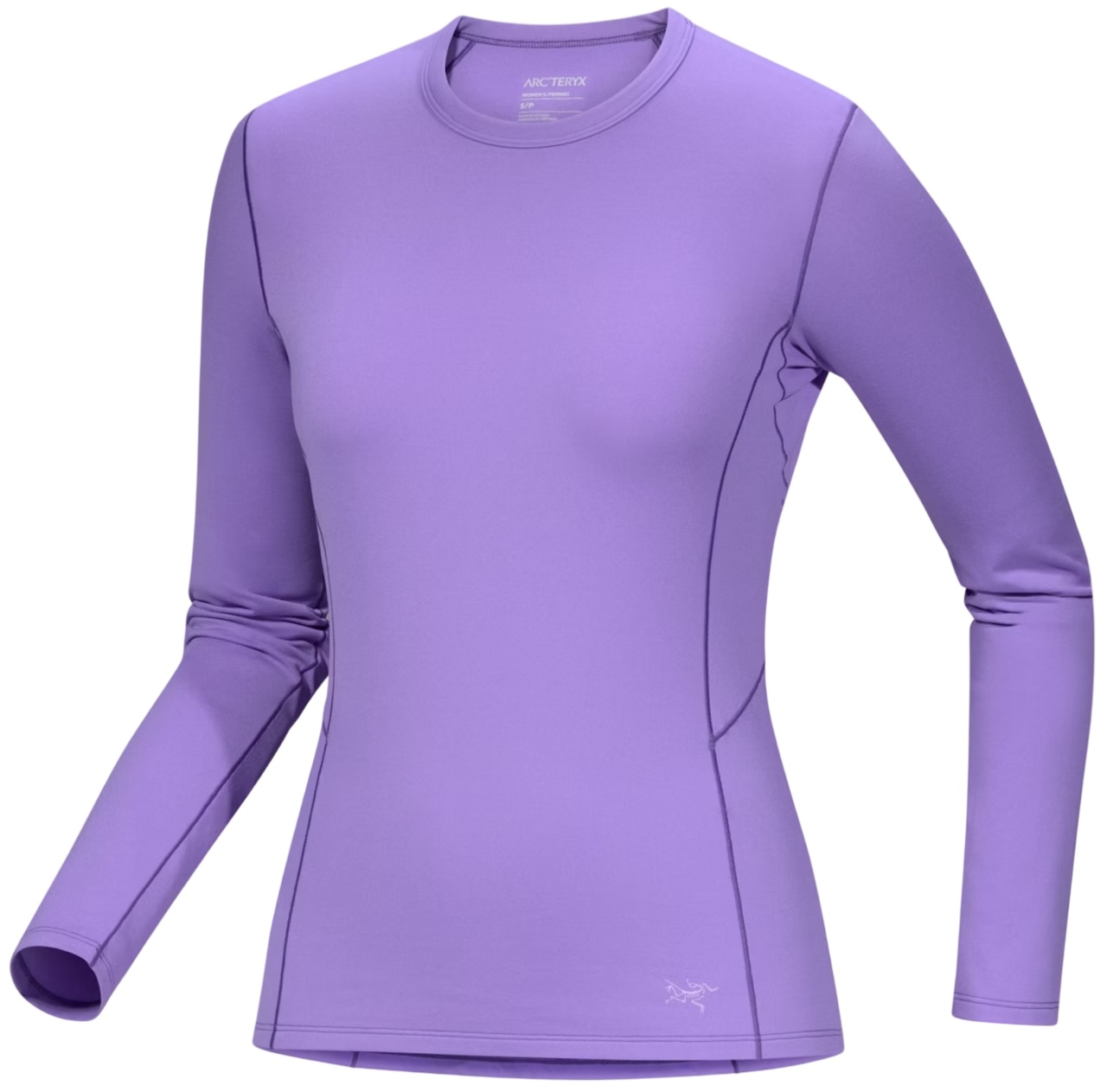
Arc’teryx places a premium on high performance, which shows in their baselayer collection. Their Rho Crew Neck Long Sleeve is tailor-made for regulating body temperature in cold weather, whether you’re moving or standing still. The key here is Arc’teryx’s 190-gram Torrent material, which is a step up from most polyester/elastane blends: It doesn’t stretch out of shape or retain odor, is perfectly supple and stretchy, and features a cozy brushed liner for excellent comfort and moisture management. What’s more, the fit is particularly flattering (not too tight, not too loose, and just the right amount of tapering). More than once, we’ve received compliments when wearing this shirt casually.
Arc’teryx recommends the Rho Crew Neck for low-output activities in cool temperatures, but we’ve found it to be a surprisingly good breather for its warmth and weight. In fact, it was one of our go-to baselayers last winter for outdoor training, including road running and Nordic skiing (we usually paired it with a lightweight softshell or windbreaker). But it’s not the best shoulder-season piece: As temperatures rose above freezing, we started to reach for thinner alternatives. As with most Arc’teryx products, the Rho Crew Neck doesn’t come cheap (especially for a synthetic), but it pulls off a non-merino build better than most. And if you're looking for something heavier, check out the Kyanite Baselayer Crew Neck, which has a similarly soft brushed interior but tacks on a nylon face fabric for a bit more protection.
See the Arc'teryx Rho Crew Neck LS
.jpg) Category: Lightweight
Category: Lightweight
Material: 100% polypropylene
Weight: 125g/m²
What we like: A lightweight performance synthetic at a great price.
What we don’t: Limited warmth and tight fit.
Helly Hansen’s Lifa Stripe Crew goes head-to-head with the REI Midweight above as our favorite budget option, but it has a stronger performance slant. The lightweight build is a step down in warmth and thickness from the midweight REI, but excels as a performance piece for athletes. The headliner is the Lifa fabric, a polypropylene-based material that excels at wicking moisture away from the skin (in our experience, it outperforms polyester). Tack on a snug, athletic fit, and the Lifa Stripe is a great next-to-skin layer for high-output activities like backcountry skiing and hiking. And for its price and weight (4.2 oz.), Helly Hansen managed to pack in an impressive amount of performance.
What gives the REI Midweight the edge over the Helly Hansen Lifa Stripe in our rankings? The biggest factor is warmth: The polypro build isn’t as warm as polyester, meaning you'll want to pair it with a solid midlayer or insulated shell in cold conditions. What's more, the Helly Hansen can't match merino wool when it comes to next-to-skin feel, and the extra-tight fit will be polarizing for some. The Lifa may be worth the trade-offs for high-output use, but if you value warmth over breathability, we think it’s worth opting for one of REI’s budget-oriented polyester options (including the Midweight above). Alternatively, Helly Hansen offers the midweight Lifa Merino Crew, which features a merino wool exterior and polypropylene lining, but it's quite a bit more expensive.
See the Helly Hansen Lifa Stripe Crew

Category: Midweight
Material: 100% merino wool
Weight: 185g/m²
What we like: Proven merino performance, fun styling, and nice sustainability slant.
What we don’t: A little pricey, and we have concerns about long-term durability.
Quality wool baselayers are a dime a dozen, but Ortovox’s 185 Rock'N'Wool Long Sleeve stands out for one important reason: We just can’t get enough of its styling. If you want a merino baselayer with some flair, the multi-colored designs really pop in the conservative and largely bland baselayer market. And like the Smartwool Classic Thermal above, the Rock’N’Wool is made with 100% merino, which means you get uncompromised odor resistance, great temperature regulation, and a cozy, soft touch. For a versatile and breathable next-to-skin layer that can take you straight from skin track to après, the Ortovox 185 is an eye-catching but still very capable choice.
At 185g/m², the Rock'N'Wool Long Sleeve is lighter than the Smartwool Classic Thermal, meaning it’s more suitable for shoulder-season and high-output activities. That said, the thin fabric, paired with the fact that it’s not blended with synthetic material, does raise concerns about the Ortovox’s long-term durability. Ortovox offers their 230 Competition Long Sleeve, which is a step up in warmth with 240g/m² wool (the product name is a little misleading) and adds polyamide (41%) and elastane (2%) for a considerable boost in tear resistance. Another in-house alternative is the 120 Comp Light Long Sleeve, a seamless, high-performance design that's great for high-octane efforts. All are excellent performance pieces, and a final decision will come down to how you prioritize warmth, breathability, and durability.
See the Ortovox Rock'N'Wool Long Sleeve
After careful consideration, we removed the Icebreaker 200 Oasis Crew from this list because it didn't stand out in testing compared to other merino options. When compared to the Smartwool Classic Thermal, it doesn't breathe as well and starts to feel muggy when working up a sweat.
We also removed Paka's Thermal Crew baselayer because of its high price and tendency to stretch over time. We have also found the merino options on this list to feel softer next to skin (the Thermal Crew is made of alpaca wool).
The Arc'teryx Hallam Merino Wool Hoody didn't make it this round either, as we found its gridded exterior to be susceptible to wind and snags. In our opinion, we expect a more hard-wearing baselayer at such a high price.
Lastly, we removed The North Face's Summit Series Pro 120 Crew. In choosing between the Summit Series and the Patagonia Capilene Midweight—both of which have a very similar price and performance—the Capilene came out slightly ahead due to its build quality.
| Baselayer | Price | Category | Materials | G/M² | Weight |
|---|---|---|---|---|---|
| Smartwool Classic All-Season | $90 | Lightweight | 88% merino wool, 12% nylon | 150 | 4.5 oz. |
| Smartwool Classic Thermal 1/4 Zip | $120 | Mid/heavyweight | 100% merino wool | 250 | 8.3 oz. |
| Patagonia Capilene Midweight Crew | $89 | Midweight | 100% polyester | 147 | 5.4 oz. |
| REI Co-op Midweight Long-Sleeve | $55 | Midweight | 92% polyester, 8% spandex | 220 | 7.6 oz. |
| Ridge Merino Aspect High Neck | $85 | Midweight | 84% merino, 16% nylon | 180 | 6.7 oz. |
| Smartwool Intraknit Thermal Crew | $130 | Midweight | 53% merino, 45% polyester, 2% elastane | 200 | 6.4 oz. |
| Ridge Merino Convict Canyon | $135 | Midweight | 51% polyester, 42% merino, 7% spandex | 155 | 8.6 oz. |
| Kari Traa Rose Half Zip | $140 | Heavyweight | 100% merino wool | 240 | 7.5 oz. |
| Lé Bent Featherweight Hooded | $170 | Lightweight | 60% merino, 25% bamboo, 15% nylon | 125 | 5.2 oz. |
| Arc’teryx Rho Crew Neck LS | $100 | Midweight | 84% polyester, 16% elastane | 190 | 5.5 oz. |
| Helly Hansen Lifa Stripe Crew | $45 | Lightweight | 100% polypropylene | 125 | 4.2 oz. |
| Ortovox 185 Rock'N'Wool LS | $110 | Midweight | 100% merino wool | 185 | 5.7 oz. |
Baselayers are a key part of the layering equation, whether you’re hiking deep into the backcountry or earning a few turns before work. To supplement our unisex baselayers round-up, which covers both men’s and women’s designs, managing editor Sarah Nelson put together our initial list of 16 women’s-specific picks in 2022. An avid climber, hiker, backpacker, and downhill skier, Sarah has used and abused dozens of baselayers over the years, from lightweight and breathable synthetics for high-output use to thick wool designs for cold-weather pursuits. Editor Maddie Downie currently manages this round-up, ensuring that only the best of the best make it onto our list. Based in Washington state, Maddie spends her winters backcountry skiing in the North Cascades and always has a need for a warm-yet-breathable baselayer that holds up well to frequent outdoor use.
Our list of 12 picks above reflects our experiences from ongoing testing, along with feedback from our female contributors and the wider hiking and skiing communities. When we test baselayers, we pay close attention to characteristics like warmth, breathability, comfort, and fit. We also take note of how long each baselayer fends off stink between washes, as well as how it holds up over time—pilling, tears, and snags are all signs we look for when evaluating long-term durability. Finally, we know that the women’s baselayer market is constantly changing and evolving. As a result, we continue to test new designs as they hit the market, adding any standouts (and removing any that fall short) to the list above.
.jpg)
When searching for the right baselayer, one of the most important considerations is warmth. Do you need thin and breathable insulation for shoulder season running, or a cozy and thick long-sleeve for deep-winter resort skiing? To help with your search, we've broken down our picks into three categories—lightweight, midweight, and heavyweight. When assigning these categories, we consider the baselayers' materials and fabric weight, as well as our own testing experience.
Lightweight
Logically, lightweight baselayers are the best breathers but do the least toward keeping you warm, making them ideal for spring skiing, bluebird days, and high-output activities such as Nordic skiing and cold-weather running. That said, even thin merino wool baselayers can be very warm for their weight, so you’ll want to keep this in mind depending on your use (we found the 180-g Ridge Merino Aspect to be much too warm for ski touring). What’s more, the thinner the merino, the less durable it becomes; for this reason, most lightweight baselayers are made of polyester. One of our favorite lightweight offerings is the Lé Bent Featherweight Hooded, which we’ll even wear as a sun protection shirt during the summer months. If you’re looking for mid-winter warmth, it’s worth bumping up to a midweight baselayer.
.jpg)
Midweight
For the widest variety of conditions, a midweight baselayer is the most sensible choice. It will provide the warmth you need yet still breathe well enough for physical exertion, especially when made with high-quality merino or polyester. Midweight baselayers are the most popular choice for downhill skiers: They’re plenty warm for the lift ride up but won’t cause you to overheat on the descent. They are less popular than lightweight baselayers for hiking or ski touring in moderate conditions, as the extra warmth comes at the cost of a drop in the fabric’s ability to regulate temperature (even midweight merino can become too hot in warm temperatures). But in cool spring and fall conditions, a midweight baselayer can perform great as an outer layer and is the ideal next-to-skin piece for resort skiing on cold days.
.jpg)
Heavyweight
Heavyweight baselayers are purpose-built for use in cold temperatures or if you’ll be relatively sedentary. The extra thickness inhibits breathability, and it’s easy to work up a sweat even on short walks. Keep in mind that you don’t need all of your insulation from a single article of clothing, and as a result, you can always add warmer layers on top of a light or midweight baselayer. But for deep-winter resort skiing, extreme cold, or low-output activities around camp, a heavyweight baselayer can be the height of coziness. If you do go this route, we love designs like the Smartwool Classic Thermal and Kari Traa Rose Half Zip.
Merino Wool
Merino wool is our favorite baselayer material for winter use: In addition to being incredibly soft and warm for the weight, it offers great temperature regulation and resists odor much better than synthetic fabrics. That said, merino wool falls short of the synthetic competition in terms of durability, especially for thin varieties and those not blended with other materials like polyester or nylon (for example, the Smartwool Classic All-Season is 88% merino wool and 12% nylon). Many merino baselayers are also too warm for mild conditions or heart-pumping activities like backcountry touring, running, or Nordic skiing, and they absorb sweat more readily than synthetics (which isn’t great news once you cool down). But for mellow days out or if you simply prefer the feel of natural material, merino has a lot to offer. For more information about its pros and cons, check out our article: Merino Wool: Is It Worth It?
.jpg)
Synthetics
Synthetic materials like nylon and polyester are a cost-effective alternative to merino and excel in terms of moisture wicking and durability. For shoulder-season conditions, high-output activities, or use as an outer layer, they’re our first choice. The largest downside to synthetics is stink build-up; despite efforts from manufacturers, odor-resistant polyesters and nylons still can’t compete with the natural benefits of merino (although they are improving). In addition, synthetics don’t provide as much warmth for the weight, and as such are not our first choice in truly frigid conditions or for low-intensity activities. It’s also worth noting that they range a great deal in terms of quality: The Arc’teryx Rho Crew Neck LS uses a really high-end polyester material, while the Patagonia Capilene series is more prone to pilling and snagging.
.jpg)
Blends
It’s not quite as simple as deciding between an all-merino or all-synthetic baselayer. Some brands use blends that aim to offer the comfort and performance of merino wool alongside the durability and moisture-wicking of polyester/nylon. We often see this in lightweight varieties: NuYarn (as seen in the Lé Bent Featherweight) wraps merino fibers around a nylon core, and then weaves this manufactured thread together with polyester. It’s worth being cautious with 100% merino—unless the fabric weight is around 200g/m² (or more), pure merino wool will form holes fairly quickly.

Alpaca Wool
Alpaca wool—as seen in options like Paka's Thermal Crew—shares many of the same benefits and drawbacks as merino wool: It's similarly soft against the skin, naturally odor resistant, and good at wicking moisture, but it's not as durable as synthetic layers and often pricier than both synthetics and merino. While there are subtle differences between alpaca and merino fibers, we’ve found that variations in baselayer performance are more often the result of manufacturing methods than the material itself. For comparison purposes below, we've lumped alpaca in with merino, but we found this article from Cotton Creek Farms helpful in describing the differences.
Manufacturers list the weight of a baselayer's fabric in terms of grams per square meter (g/m², or GSM), which provides a good indication of the warmth the baselayer will provide. From our picks above, these weights range from 125g/m² for the Helly Hansen Lifa Stripe Crew and Lé Bent Featherweight to 250g/m² for the Smartwool Classic Thermal 1/4 Zip (keep in mind that not every manufacturer reports this spec). On the low end, the Lifa Stripe and Featherweight are great pairings for mild conditions and high-output activities, while offerings like the Classic Thermal will be overkill for everything but deep winter. It's important to note that fabric weight does not always perfectly align with warmth, due to variations in fit and material (1g of merino wool generally offers more warmth than 1g of polyester). For example, we've found the 240-gram Kari Traa Rose to be much warmer than the 250-gram Smartwool Classic Thermal.
.jpg)
The breathability of a baselayer is dependent on a number of factors, including the type and quality of the fabric, thickness, and openness of the weave. In general, lightweight merino wool and synthetic baselayers (like the Smartwool Classic All-Season) offer better breathability than heavier-weight offerings. However, between the two materials, synthetics are by far the more breathable choice. While merino does a great job of pulling moisture away from your skin, it has a tendency to hold onto it. We’ve also found that merino is simply too warm for most intense activities. As a result, synthetic baselayers are our go-to for mild conditions or when we anticipate building a sweat (think ski touring, Nordic skiing, and running). And it’s worth mentioning that there are a few merino offerings that we’ve found to be serviceable, particularly those with mesh panels in high-heat areas (like the Smartwool Intraknit Active).
Polyester: Excellent
Blends: Very good
Merino: Good

Merino wool excels at pulling moisture away from your skin, and less sweat buildup means less stink. If you’re taking an extended backcountry trip and don’t want to carry multiple baselayers or rinse them each night, merino is the way to go. Some synthetics do fine at fending off odor, provided you aren’t working up a huge sweat. For example, we’ve hiked for extended periods in Patagonia’s Capilene Midweight in cool weather and have been impressed with its odor resistance. But nothing beats merino in keeping you dry and stink-free.
Merino: Very good
Blends: Good
Synthetics: Not good
.jpg)
Here is where the tide changes: Merino is extremely soft but prone to developing small holes over time, which eventually hamper the product's performance, whereas synthetics are designed to last for multiple seasons. To put this in perspective, we usually get a season or two out of a standard lightweight merino baselayer, even from the top brands and by following their washing instructions (cold water and line dry). Admittedly, these shirts get a lot of use, but that’s still a very short lifespan. But with synthetics, one or two seasons would be on the short end of the spectrum, and we would hope for three or four.
Some companies are blending wool and synthetics to increase the strength of the baselayer without compromising next-to-skin comfort, and overall results have been positive. We haven’t noticed much of a drop in terms of comfort or performance, but merino/synthetic blends are a step up in durability. Even so, if we’re wearing a baselayer without anything over it, we’ll always opt for a fully synthetic piece such as the Arc'teryx Rho LS and REI Midweight Crew.
Synthetics: Excellent
Blends: Very good
Merino: Not good
.jpg)
Nearly every baselayer on the market is offered in several styles, including long-sleeve crew and half/quarter-length zippered shirts. Many women opt for a crewneck style to minimize bulk, but there are several reasons to consider a zippered shirt. One upside is the ability to adapt to changing weather conditions: You can zip up for added warmth at the start of the day and unzip as you work up a sweat. And if you want to remove the shirt altogether, it’s nice not having to take off your helmet to do so. Additionally, the extra coverage you get with the raised collar is a nice boost in warmth, and we’ve even found that many quarter or half-zip long sleeves wear decently well around town, too. The downside is that the collar can flop around if you unzip the shirt while running, and having a zipper on your next-to-skin layer isn’t as comfortable as the cleaner crew style (especially when adding multiple layers over the top).
.jpg)
For optimal performance, baselayers need to have a snug fit. This helps the fabrics draw moisture away from your skin most efficiently. Some women prefer wearing their baselayers for casual use, and that’s when dedicated performance designs, such as the Smartwool Intraknit Thermal and Helly Hansen Lifa Stripe, are less useful. These shirts conform to your body like performance pieces should, but are far too tight to wear anywhere else. Ridge Merino's Convict Canyon Hoodie is on the opposite end of the spectrum, with a roomier fit (especially around the torso) that sacrifices a little in moisture wicking and breathability but has added casual appeal. Ultimately, your decision is a personal one, and we recommend considering fit based on your intended use and personal style preferences.

Baselayers can range from simple, featureless crew tops, like the Patagonia Capilene Midweight Crew, to hooded half-zips with a chest pocket. If you know you’ll be layering a mid or outer layer over your baselayer, the simpler the better. However, those who wear their baselayer as an outer layer will appreciate zip pockets and thumb loops. And climbers and skiers will benefit from a tight hood or tall collar (like that on the Ridge Merino Aspect, which doubles as a neck gaiter). Some baselayers even have the capability of blocking sun rays (measured by the UPF rating). As usual, it will help to identify what you’ll be using your baselayer for before determining what features you need.
.jpg)
Caring properly for your baselayers can significantly extend their lifespan, especially if you opt for an all-merino design. As with most wool products, we recommend washing merino baselayers in cold water and line drying. Directions vary by manufacturer—some may claim that merino can be machine-dried, but we’ve found this can result in premature pilling and unwanted shrinkage. Another consideration is thickness: Thinner baselayers like the Smartwool Classic All-Season tend to break down more quickly than thicker designs like their Classic Thermal, especially in high-wear areas like the cuffs and shoulders. Lastly, synthetics typically require less maintenance—just throw them in with your other laundry—but we’ve never felt overburdened by taking a little more care with our merino layers.
.jpg)
The focus on sustainability has been increasing in the outdoor industry over the past several years, and baselayers are no exception. In this category, there are currently two key trends: the responsible sourcing of wool and the use of recycled synthetic materials. The former indicates that sheep were treated humanely and in accordance with strict animal welfare and environmental standards (there are a number of certifications, including the Responsible Wool Standard and ZQ-certified wool). We’ve also begun to see more companies utilizing recycled materials, which cuts down on fossil fuel consumption and reduces the overall amount of plastics being produced (Patagonia's Capilene Midweight is made from 100% recycled polyester). All in all, we appreciate these efforts and look forward to seeing more brands join the initiative.
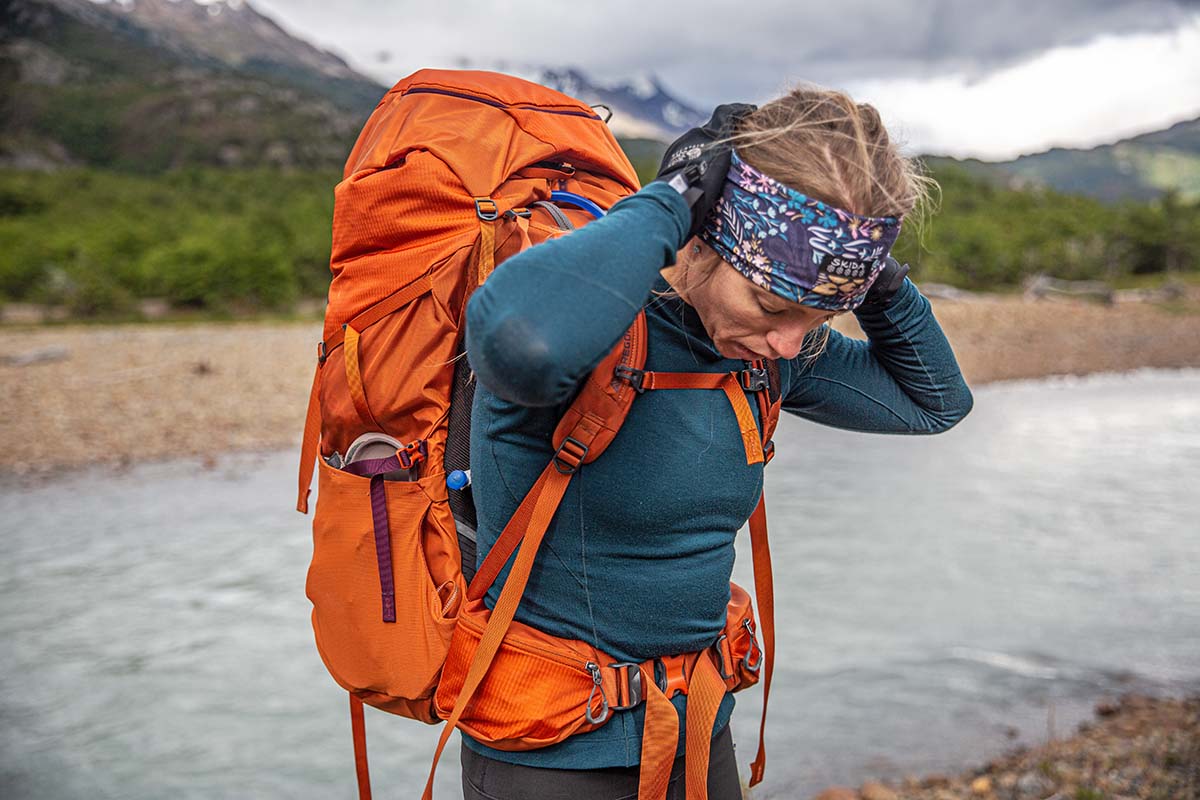
Baselayer T-Shirts and Tank Tops
Our list above comprises long-sleeve baselayers, but many of these designs are also available in T-shirt and/or tank top variations for warm-weather activities such as backpacking and hiking. Apart from the inherent differences in warmth and coverage, T-shirts and tanks are generally cheaper since they utilize less material: The Smartwool Classic All-Season T-Shirt costs less than the Long Sleeve, for example.
In the end, a final decision will come down to personal preferences regarding warmth, coverage, and styling. The consensus among our female editorial staff is that short sleeves and tanks are the preferred option in the summer and shoulder seasons, especially for movement-dependent activities like running and climbing. If the temperature drops, you can simply add a light layer over the top. Long sleeves are a nice alternative for those who want added sun protection and coverage, but the boost in warmth can be a downside on truly hot and exposed days, even if you opt for a thinner design.
.jpg)
Baselayer Bottoms
Most baselayers on this list have matching bottoms with the same construction that are available at a similar or identical price point. For brevity’s sake, we list the tops here as they are more popular, but the bottoms are readily available and share the same pros and cons. However, generally speaking, maintaining a warm core will do much more for your entire body’s comfort than keeping your legs warm. But given that there’s no need to choose—and provided that almost nothing is cozier than a pair of long johns—we’re huge proponents of quality baselayer bottoms as well.
.jpg)
To get the most out of your technical clothing, it’s important to think of everything as a system. Each piece relies on the layers around it to perform well. As an example, if you have a baselayer that wicks moisture well but are wearing a fully rubber mid or outer layer, it won’t matter how nice of a merino fabric you have: You’ll still be wet and miserable. As such, take the time to put together mid and outer layers that are as high-performing as the baselayers listed above.
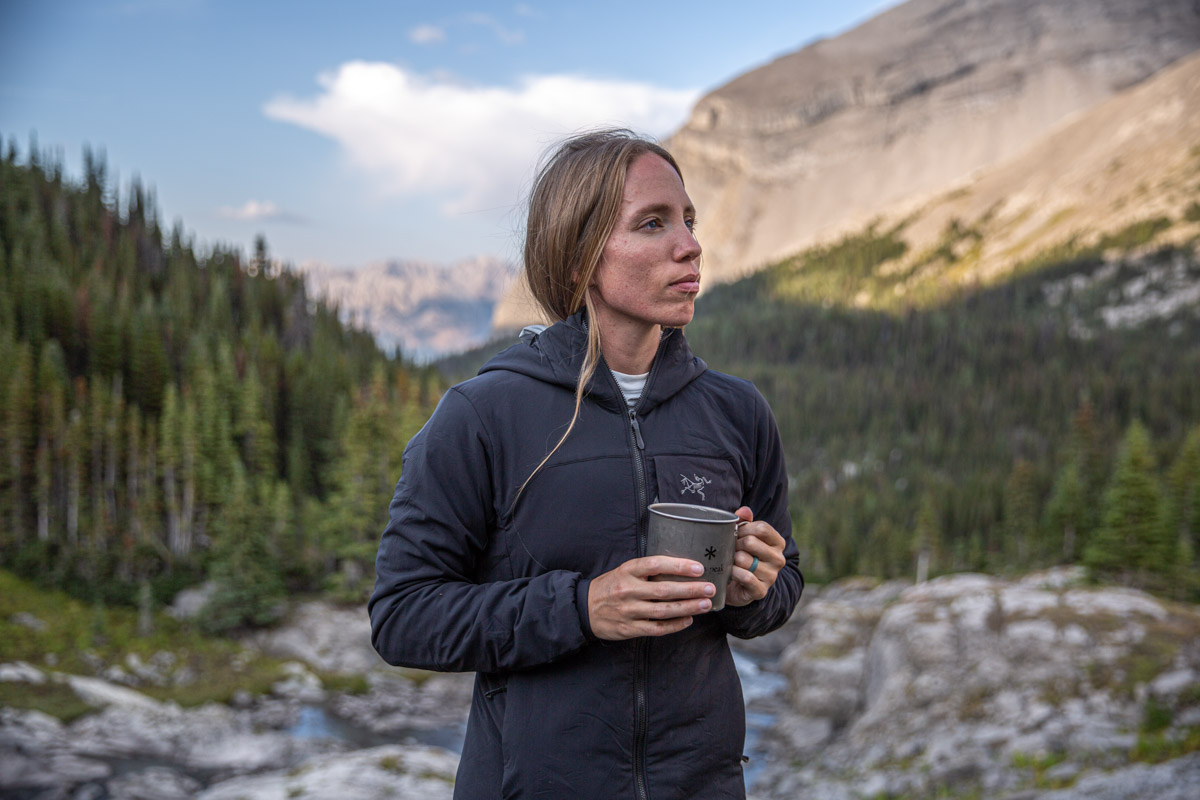
Baselayers
Baselayers serve two primary purposes: To keep you warm and to wick moisture. Whether constructed with wool, synthetic material, or a blend, a baselayer is made to retain your body’s heat while moving moisture (i.e., sweat) away from the skin. And it’s important to note that these functions work together—keeping your body dry will, in turn, lead to more warmth. They can be worn underneath a midlayer or shell during the winter months or as an outer layer during the fall and spring for activities like hiking, biking, and climbing. The thickness and material of your baselayer will heavily impact warmth and breathability, so make sure to keep this in mind when making a purchase. If you’re still on the fence about which option is best for you, we’ve broken down all of the key considerations in our article: How to Choose Baselayers.
.jpg)
Midlayers
For high-output activities like hiking, backpacking, and climbing, breathability is top priority. We recommend a fleece jacket or synthetic jacket for balancing warmth and ventilation. High performers include the Arc’teryx Atom and the R line of fleeces from Patagonia (including the R1 Air Zip-Neck). If you only plan to grab your insulating layer during downtimes, such as hanging around camp after the sun goes down, consider a warm and super packable down jacket. Skiing is a similar story, and conditions will dictate the best midlayer for you. Options can range from a puffy down jacket to a light fleece.
.jpg)
Outer Layers
Outer layers are the most specialized part of the system, and their complex designs can get quite pricey. A waterproof, breathable, and packable rain jacket is needed for activities like climbing and hiking/backpacking. Winter conditions are much harsher, so durability takes precedence for ski jackets. These designs offer more pockets for storing gear or personal belongings and a longer fit to protect you from snow sneaking through. There are also hardshell jackets that blur the lines, mixing the weight of a rain jacket with the performance (and extra cost) of a ski jacket.
Back to Our Top Women's Baselayer Picks Back to Our Baselayer Comparison Table

bcdc.jpg?h=fbc67360&itok=wmPMXiEZ)
8dec.jpg?h=fbc67360&itok=4xWnaoWg)
e13b.jpg?h=fbc67360&itok=roLTspKI)

f40a.jpg?h=fbc67360&itok=Mng_sIOz)
ec55.jpg?h=fbc67360&itok=0_jtrRCF)
jpg209a.jpg?h=fbc67360&itok=rCRkeZ6s)
14ab.jpg?h=fbc67360&itok=1n06ZZey)