.jpg)
.jpg)
Photo Credit
It’s that time of year! Time to find the perfect present for our adventurous loved ones. For that person in your life who loves all things cold weather, check out our gift guide for skiers and snowboarders. For ideas tailored to other pursuits, we also have more editor-recommended gift guides to explore. Happy gift giving!
It's time to ditch your belts and powder skirts: Bibs offer confidence-inspiring protection against wayward snow, cold drafts, and sagging waistlines. They also provide a considerable bump up in storage compared to standard ski pants, allowing you to carry more supplies or ditch your jacket on a warm day. And they’re trendy, too, with a combination of laid-back and technical styling that's become increasingly popular on the slopes. Below we break down the best ski bibs for the 2025/26 season, including designs for both resort and backcountry skiers, with the men's Flylow Gear Baker Bib and women's Trew Gear Chariot Bib Primo landing at the top of our competitive list. For more information, see our buying advice and comparison tables below the picks. Of note: This article includes options for both men and women, but we’ve also written a dedicated round-up on the best women’s ski bibs and best men's ski bibs.
Editor's note: We updated this guide on November 15, 2025, to replace the Trew Gear Chariot Bib Classic with the Chariot Bib Primo as our best overall women's bib. Trew Gear didn't renew the Classic this season, and plans on sticking with just the Primo line in the future. We've had great experiences with the Chariot Primo, however, and feel it's a great overall pick.

Best for: Resort/backcountry
Waterproofing: 3L Surface
Insulated: No
What we like: Dependable weather protection and durability coupled with a stylish freeride vibe.
What we don’t: Too heavy and warm for dedicated backcountry use.
Colorado-based Flylow Gear has been churning out high-performing and high-styling ski apparel for about two decades, and their Baker Bib has been among our favorites for years. This bib is seriously burly: Its 3-layer construction handles rough and rowdy conditions well, and the thick exterior with 1,000-denier (D) reinforcements on the cuff and knee give this bib a bombproof feel. The relaxed fit hits a happy medium between baggy and athletic, and there is plentiful storage (seven pockets, to be exact) and side vents for dumping heat on warm spring days or on the odd backcountry mission. Put together, the Baker Bib checks most of our boxes for a well-rounded resort bib, securing its spot at the top of our list.
While we’ve had luck taking the Baker Bib out on some mild backcountry outings, its thick and relatively unbreathable fabric and hefty 2-pound weight don’t make it the best option for dedicated touring. The side vents and the softshell backpanel do help with airflow, but there are better options (read: lighter, trimmer, and more breathable) on this list. The Baker Bib is also one of the pricier options here. But, in our opinion, the stalwart protection makes them worth the investment—especially on bottomless powder days—and they’re sure to last you for many seasons to come. Of note: Flylow released a Gore-Tex-equipped version of the Baker Bib this year that costs significantly more than the regular version. We haven’t had a chance to put this model to the test, but we will be sure to report back when we do.
Read more: Flylow Gear Baker Bib review
See the Men's Flylow Gear Baker Bib
.jpg)

Best for: Resort/backcountry
Waterproofing: 3L PNW Primo
Insulated: No
What we like: Weather-resistant and comfortable bib with women's-specific styling.
What we don’t: Too bulky and warm for dedicated backcountry use; expensive
Trew Gear’s Chariot Bib Primo is our favorite women’s all-around bib for its premium protection, durable finish, and great vibe. The 3-layer PNW Primo construction—complete with fully taped seams and water-resistant zippers—has proved tenacious in a range of wet and windy winter conditions. Plus, we love Trew Gear’s attention to the needs of female skiers: The Chariot Bib has a wide drop seat that makes bathroom breaks a breeze, and the bib is available in six sizes and three inseam lengths, allowing you to fine-tune your ideal fit. We’ve also come to love the freeride aesthetic that comes in several flattering colors that make it easy to style your kit. Overall, the Chariot Bib hits the trifecta of protective, comfortable, and stylish.
Like most jack-of-all-trades designs, the Chariot Bib Primo isn't the master of all types of skiing. Most notably, it's a bit too much bib for dedicated backcountry use. Sure, the shell fabric is breathable for most mild ski tours (with the help of a ventilating full front zipper), but the maximalist feature set adds bulk and the freeride cut can get in the way on the skin track. This bib is also on the pricey end. We originally had the cheaper Chariot Bib Classic ranked here, which was slightly less breathable and waterproof but still very reliable for most environments. Going forward, however, the Chariot Bib will only be offered in the Primo version (you can still find last season's Classic at a discount while supplies last). Another cheaper alternative is Flylow's Foxy Bib below. The Foxy has a more crossover appeal with an athletic cut and stretchy fabric, but we hesitate to rank it as our best bib for women because we've had issues with its too-trim fit in the past. At the end of the day, it doesn't get much better than the Chariot Primo, and so long as the price isn't a concern, we think its a great choice for those looking for a bib that can do a little bit of everything.
Read more: Trew Gear Chariot Bib Primo review
See the Women's Trew Gear Chariot Bib Primo

 Best for: Resort
Waterproofing: 2L Peak
Insulated: Yes (40g polyester)
What we like: Warm and comfortable resort bib with a budget price tag.
What we don’t: Not a performance bib; lacks the fit and finish of a pricier design.
Casual resort riders don’t need to spend their whole paycheck on a high-performing bib to stay dry, comfortable, and happy on chairlift rides and groomers. REI Co-op’s Powderbound is a fantastic choice for weekend warriors and beginners: For a competitively low price, you get a durable 2-layer construction that handles snow and wind with ease, as well as 40 grams of synthetic insulation for a touch of warmth—ideal for waiting in line or riding the lift. For a budget model, the features are thoughtfully designed, and you get inner thigh vents, a long side zip and removable suspenders for easy entry and bathroom breaks, articulated knees, a soft-to-the-touch polyester lining, boot gaiters, and several zippered hand pockets. Added up, the Powderbound offers a whole lot of bang for your buck.
While the Powderbound works for the casual crowd, performance skiers will likely want to spend up for better weather-resistance and fit. REI’s 2L Peak membrane doesn’t stand much of a chance in truly stormy conditions, and its critical seam taping doesn’t help with keeping dry in sustained snow. The hanging liner also adds bulk and limits breathability. And while we like that this bib is offered in a variety of sizes, the fit is pretty uninspired. Lastly, know that REI keeps things pretty similar between the gendered models with the only differences being inseam lengths, weight, colorway options, and the addition of a fly on the men’s model.
See the Men's REI Co-op Powderbound Bib See the Women's REI Co-op Powderbound Bib
.jpg)
 Best for: Resort
Waterproofing: 2L DryVent
Insulated: No
What we like: An uninsulated budget bib with fully-taped seams and great features.
What we don’t: Prone to wetting out and doesn't have the same premium feel as pricier options.
The North Face Freedom Bibs are another one of our budget favorites, and for the same price as the Powderbound above, they have several important upgrades. Most notable is their fully-taped seams, which is a huge benefit for staying warm and dry on stormy days, and the bibs are also offered in more sizes and a few more color options. The waterproofing and 140-denier (D) recycled nylon fabric holds up well to rough resort use, and the relaxed fit is right at home on the groomers. Tack on inner thigh vents, boot gaiters, scuff guards, and an assortment of pockets, and the Freedom Bib is impressively well-rounded for its price point.
Like REI’s waterproofing, TNF’s is best suited for drier environments—these bibs are prone to wetting out in sustained stormy conditions. And unsurprisingly, the Freedom bib doesn’t have quite the same premium feel as pricer options here, specifically in its features and fit. Nonetheless, it’s a nice option for those starting out, and we do generally prefer an uninsulated bib over an insulated option for more control over our temperature (which will be limited with the Powderbound above). There are very few differences between the men’s and women’s bibs—besides minimal discrepancies in weight, colorway, and sizing options (the women’s has a 3XL size while the men’s only goes up to 2XL), the gendered options are the same.
See the Men's TNF Freedom Bibs See the Women's TNF Freedom Bibs
 Best for: Resort
Waterproofing: 2L Stark/2LFinish
Insulated: Yes (40g Spaceloft/Greenloft)
What we like: High-quality insulated bib with thoughtful features and fit.
What we don’t: 2-layer construction isn't as bombproof or breathable as 3-layer; Sphynx isn't as well-featured as Snowman.
We often reach for bibs over ski pants for their full-coverage protection for stormy weather, but you can go a step further by opting for an insulated design, like Flylow’s Snowman and Sphynx here. With 40 grams of synthetic insulation, these bibs offer a nice dose of warmth but aren't overly bulky. And when the sun’s out, a softshell backpanel and inner and outer thigh vents (the Sphynx just has outer thigh vents) effectively dump heat for temperature regulation. And as we’ve come to expect from Flylow, the Snowman and Sphynx have clean styling with plenty of features such as six well-organized pockets, 500D cuffs, and long side zips.
While the durable 120D face fabric and Flylow’s waterproof membranes are certainly a step up in quality from the REI's above in terms of weather resistance and durability, they still can’t match Gore-Tex or 3-layer constructions. Versatility is also limited when going with an insulated design—we prefer wearing a baselayer under an uninsulated shell for more control over our warmth. There are also some features that were lost in translation between the men’s Snowman and women’s Sphynx, including the aforementioned lack of inner thigh vent, and we wish that the Sphynx had the Snowman’s adjustable waist strap and extra pockets. But if you can look past these gripes, these bibs are sure to stand out in high and dry resorts like those in Colorado and Utah, and we like that the reasonable cost keeps them accessible for comfort-first and beginner resort skiers.
See the Men's Flylow Gear Snowman Bib See the Women's Flylow Gear Sphynx Bib

Best for: Backcountry/resort
Waterproofing: 3L Gore-Tex ePE
Insulated: No
What we like: Gore-Tex construction is weatherproof, lightweight, and breathable.
What we don’t: Sentinel and Sabre are the most expensive bibs on this list; fit runs small.
Few in-house waterproofing constructions can rival Gore-Tex’s indomitable reputation, and when paired with Arc’teryx’s premium fit and finish, the result is a high-quality and dependable bib. The men's Sabre and women's Sentinel are hard-wearing and stylish offerings for serious skiers who spend a lot of time on the mountain. Despite their tough and trustworthy shell, the Sabre and Sentinel remain relatively lightweight and breathable, making them a great backcountry companion. Generous side vents, top-notch zippers and storage, and stretchy boot gaiters and cuffs only add to the appeal of these bibs. And while a full-on hardshell isn’t normally a winner in the comfort category, we found the C-Knit liner soft and supple against the skin.
The main downside here is price. The Sentinel and Sabre are far and away the most expensive options on this list. It’s hard to justify the investment when Trew Gear and Flylow offer similarly high-performing bibs for hundreds of dollars less. The Gore protection can be overkill in some drier environments, and we often prefer a shell with integrated stretch for skin track mobility—something that the Arc’teryx bibs lack. For fast and light missions, we’ll stick to the SnowDrifter below for its breathable and limber construction. We've also had some issues with the overly tight fit of the Sentinel and Sabre in the past—it helps that Arc'teryx has updated the Sentinel's fit offerings to include three inseam lengths, but the Sabre is still only available in one.
Read more: Arc'teryx Sentinel Bib Pant review
See the Men's Arc'teryx Sabre Bib Pant See the Women's Arc'teryx Sentinel Bib Pant


Best for: Backcountry
Waterproofing: 3L H2No
Insulated: No
What we like: Highly breathable, stretchy, and lightweight backcountry bib.
What we don’t: Trim-fitting and chilly.
An ideal backcountry ski bib is lightweight, breathable, easy to move in, and tough—within this category, Patagonia’s SnowDrifter is a standout. The SnowDrifter’s use of protective hardshell and stretchy softshell fabric is the key ingredient: A softshell upper provides breathability and ease of movement, while a stretchy hardshell fabric on the waist down offers weather protection and durability. The trim, technical fit feels a bit out of place at the resort, but it keeps things efficient on the skin track. This bib also features side ventilation that excels at dumping heat and a minimal number of pockets that provide just enough storage for a beacon, AIARE handbook, and snacks. Overall, this is the ideal bib for volcano skiing and yo-yoing in the backcountry.
That said, the SnowDrifter is not without its downsides. To start, we found the trim fit restrictive at times, especially when trying to access the hardly-gusseted thigh pockets. The thinner (50D) hardshell fabric doesn’t offer much warmth (the trim fit also doesn’t accommodate more than a light baselayer) and won’t hold up as long to repeated chairlift rides or tough use. That is the sacrifice you generally make in opting for a backcountry bib, but the SnowDrifter makes up for it with its skintrack performance and lightweight, efficient feel. Lastly, note that the men’s and women’s versions differ only in fit and color options.
Read more: Patagonia SnowDrifter Bibs review (women's version)
See the Men's Patagonia SnowDrifter Bibs See the Women's Patagonia SnowDrifter Bibs
 Best for: Resort/backcountry
Waterproofing: 3L PNW
Insulated: No
What we like: Another bomber resort bib with slightly more backcountry appeal than the Baker Bib.
What we don’t: A fully-featured and high-styling bib.
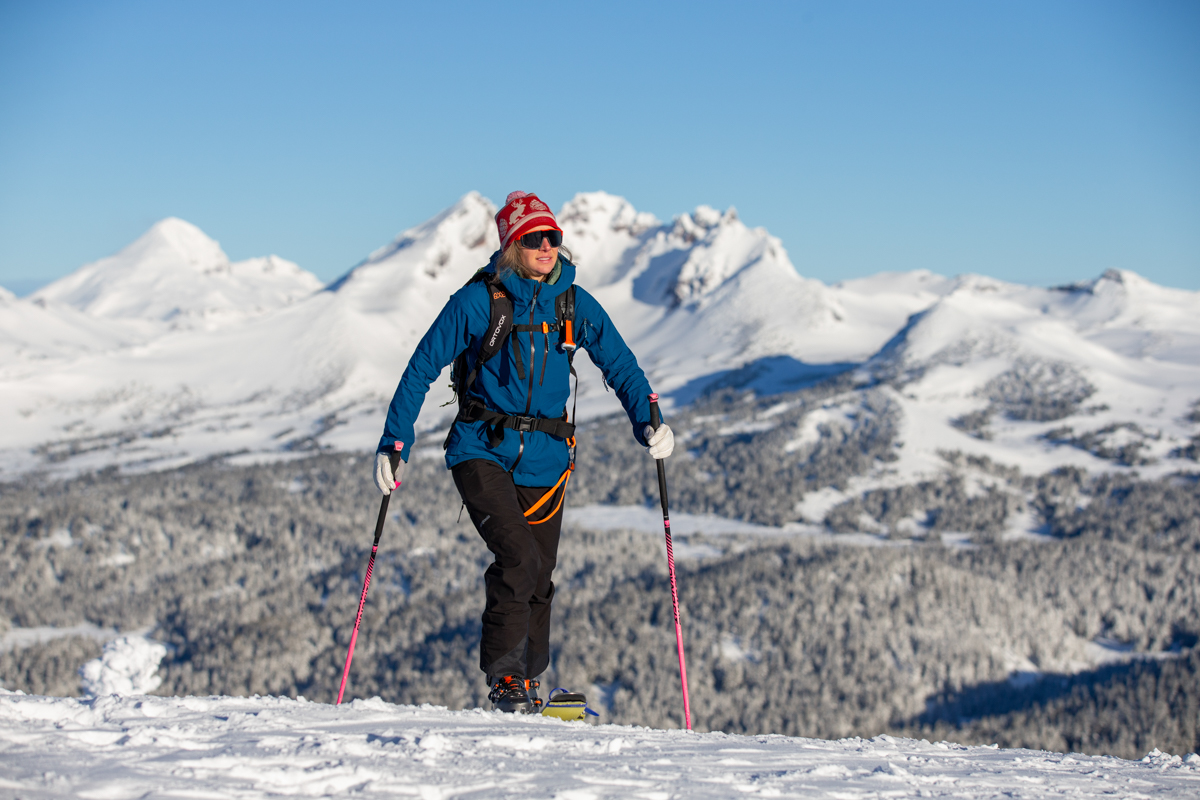
If we’re looking for style, we’re generally headed first to Trew Gear’s offerings, and we’d be remiss not to mention their flagship Trewth Bib Primo here for this reason. Not only does the Trewth bib feature a burly 3-layer construction and proven waterproofing—complete with fully taped seams and water-resistant zippers—but it also boasts a unique style that doesn't compromise on storage. To be specific, the Trewth Bib has a total of seven pockets: three on the chest, two on the thighs, and two handwarmer pockets along the hip. Creative color-blocking and a well-fitting freeride style make the Trewth one of the most stylish bibs on this list (in our opinion, of course).
That said, the Trewth Bib doesn’t have the most crossover appeal. For one, the fabric is bulky and thick, and the sheer number of pockets adds weight that most dedicated ski tourers would gawk at. To be sure, you can get away with the odd tour and plenty of sidecountry adventuring, but demanding tours demand lighter weight and more breathable designs. The Trewth Bib is also quite pricey, though it still undercuts the Arc’teryx above by a wide berth. A final note: At the time of publishing, the Trewth Bib Primo is available online with limited availability (but at a steep discount!) We expect regular stock to return sometime in November.
See the Men's Trew Gear Trewth Bib Primo
 Best for: Resort/backcountry
Waterproofing: 3L Tactic
Insulated: No
What we like: A sleek crossover bib that has everything you need and nothing you don't.
What we don’t: Integrated stretch fabric limits water resistance; no beacon clip; runs trim.
Flylow Gear’s Foxy is one of our favorite crossover options thanks to its stretch-infused 3-layer construction. This bib is more comfortable and quieter than most other hardshell fabrics, making it a great choice for the skin track. In many ways, we prefer it to the Chariot Bib above for backcountry use, especially considering its significantly lighter weight. To achieve that, the features are comparatively utilitarian: It has both inner and outer thigh vents, scuff guards, gaiters, and a bulk-less pocket layout. We think these bibs have a flattering fit, too, especially compared to more athletic backcountry-focused designs like the SnowDrifter above, and they’re offered in three inseam lengths (though, unfortunately, curvier ladies may be out of luck since sizing stops at a 14 and the fit runs quite trim).
In our opinion, however, the Chariot is a better all-around bib due to its waterproofing. The Foxy bibs compromise weather resistance slightly by adding stretch to the fabric, and although the 100-denier shell and fully taped seams still offer the protection we look for in a hardshell design, the Chariot has proven more confidence-inspiring on wet chairlifts and in deep powder. The Foxy is also missing a few features, such as a beacon clip and drop seat (it does have a long side zip, however, which allows pretty complete access), and these are things we’ve come to rely on when touring. As mentioned, we've also had some issues with the trim fit in the past, specifically around the thighs and midsection. Gripes aside, if you’re looking for a quiver-of-one bib that leans a bit more backcountry than the Chariot above, the Foxy fits the bill.
Read more: Flylow Gear Foxy Bib review
See the Women's Flylow Gear Foxy Bib

Best for: Resort/backcountry
Waterproofing: 3L Pertex Shield
Insulated: No
What we like: The most affordable 3-layer design on this list.
What we don’t: Neither a true budget nor a true performance piece; lacks some fit and finish details.
Serious skiers who need a high-performing bib but don’t want to spend up for a premium 3-layer bib should consider Outdoor Research’s Carbide Bibs, which drastically undercuts the price of the other 3-layer bibs on this list. This hardshell is coupled with outer thigh vents, reinforced scuff guards, a stretch-mesh gaiter, and plentiful pockets complete with a beacon clip (the men’s is in the chest pocket, and the women’s is in the leg pocket), making the Carbide far from budget-quality. And, in our experience, OR’s Pertex Shield waterproofing performs admirably in most wet and windy conditions. Together, this bib is an economical, high-performing, and versatile option for those looking to level up from a cheaper resort-focused bib.
That said, the Carbide Bib falls into an awkward middle ground between true budget and true performance. Resort skiers really looking for a deal will be better off sticking with a 2-layer design, and performance-seekers are better off spending up for a more premium design with proven waterproofing. The Carbide also sacrifices in a few ways: the 40D fabric is noticeably thin and vulnerable for resort use, and the design lacks fit and finish details such as waterproof zippers, thin and stretchy suspenders, and chest ventilation (the wrap-around hardshell fabric isn’t breathable). But overall, we can’t be too critical—at the end of the day, we admire OR’s efforts to create an accessible 3-layer bib.
See the Men's Outdoor Research Carbide Bibs See the Women's Outdoor Research Carbide Bibs

Best for: Resort
Waterproofing: 2L Gore-Tex ePE
Insulated: No
What we like: The cheapest Gore-Tex bib on this list.
What we don’t: 2-layer design is cheap and low-rise style is less protective than a full-length bib.
The pricey Arc’teryx and Patagonia models here aren’t the only Gore-Tex options on the market; you can save hundreds of dollars by going with REI’s First Chair Bib here. While its 2-layer build limits its backcountry appeal, resort riders will benefit from the First Chair’s premium weather resistance on soggy chairlift rides or deep powder days. REI also incorporated some stretch into the fabric, which offers a nice touch of mobility for sidecountry hikes and when adjusting your boots and bindings. And the softshell patch on the lower back, long side vents, and low-rise fit help with breathability and temperature regulation. The features on this bib are relatively modest—three pockets, boot gaiters, and a scuff guard—but are more than enough for most days on the mountain.
The First Chair is certainly a step up from the Powderbound and TNF Freedom above at a slightly higher cost. But if you’re willing to spend a touch more, OR’s Carbide above has a more premium 3-layer build and higher-quality fit. And while REI consistently knocks it out of the park in terms of inclusive sizing, the colorway choices are limited, and the low-rise style is less protective than full-coverage designs. Gripes aside, the First Chair is a great choice for budget-seeking resort riders in rowdy and wet conditions, such as those found in the PNW.
Read more: REI Co-op First Chair GTX Bibs review (men's version)
See the Men's REI Co-op First Chair GTX See the Women's REI Co-op First Chair GTX
 Best for: Resort
Waterproofing: 2L PNW
Insulated: No
What we like: An affordable and stylish resort bib with proven waterproofing and durability.
What we don’t: Noticeably hefty and lacks the breathability of a 3-layer bib.
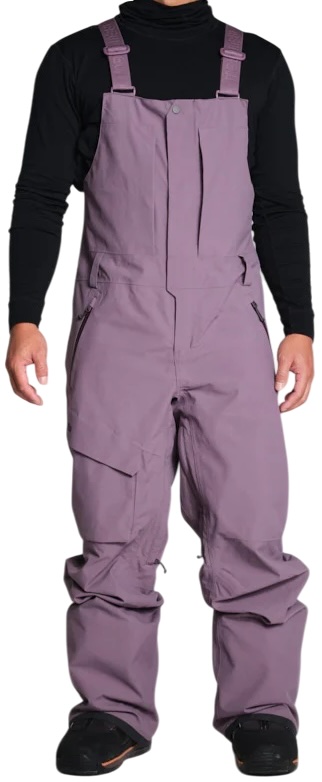
If you’re finding yourself wanting a stylish and high-performing resort bib, but don’t want to break the bank with one of the 3-layer models above, Trew Gear’s Jefferson and Astoria strike an ideal middle ground. Like the other Trew Gear models above, the Jefferson and Astoria are equipped with Trew’s proven waterproofing, but both feature a 2-layer construction that keeps these bibs economical (though at the sacrifice of weight and breathability). That said, they aren’t budget-quality: With a durable 200D by 320D shell, the Jefferson and Astoria are purpose-built for everything from chairlift rides to being tossed in the back of the car. And after testing the Astoria through a full season of groomer laps in the Lake Tahoe area, where conditions ranged from warm and sunny to full-on snowstorm, we came away impressed with the weatherproofing and all-day comfort. The freeride aesthetic is nicely complemented by plentiful storage options (six pockets), reliable boot gaiters, and long side vents.
However, we do have some minor gripes worth mentioning. First, the heft of these bibs is definitely noticeable, and while it didn’t affect their mobility on the ski hill, it made them tough to pack down in a duffel bag when traveling. We also thought the storage layout could use some refining (the back pocket went unused), and we’d like to see Trew Gear update their sizing to include multiple inseam lengths in future updates. And while not overly concerning, we’ll note that our pair accumulated some snags and loose threads along the cuffs during testing. Lastly, the most notable difference between the Jefferson and Astoria is storage: The Jefferson has horizontal chest pockets while the Astoria has overlapping kangaroo pockets (which don’t carry heavy objects well, in our experience). Otherwise, the gendered versions are largely the same—they’re even offered in the same colorways, which isn’t common among other brands.
Read more: Trew Gear Astoria Bib review
See the Men's Trew Gear Jefferson Bib See the Women's Trew Gear Astoria Bib

Best for: Backcountry
Waterproofing: 3L Gore-Tex ePE
Insulated: No
What we like: Highly weatherproof and breathable backcountry bib.
What we don’t: Limited storage and resort appeal; pricey.
We think Patagonia hit the mark with their Untracked bibs, specifically in the backcountry sphere. While the Sabre and Sentinel above have proven themselves as heavy-hitting and premium bibs for serious skiers, they lack the breathability that we look for in a dedicated backcountry shell. And although the Untracked features a similarly thick and weatherproof 80D Gore-Tex ePE construction, it boasts superior breathability and weight savings. The minimalist upper is the highlight—over a full-coverage design, the open chest of the Untracked prevents heat from getting trapped around the torso. Stretch-mesh panels at the side also benefit airflow while offering a touch of mobility as well. And while its feature set is relatively limited, the Untracked has the essentials: side zips and drop seat, boot gaiters, belt loops, and two thigh pockets.
Unless you’re a backcountry-only skier, the Sabre and Sentinel might offer more bang for your buck as a better resort-crossover design. To be sure, you can wear the Patagonia Untracked in the resort, but it won’t earn you the style points or the warmth of a full-coverage bib. And there’s also the matter of storage—with just two thigh pockets (and a lack of a beacon clip), you’ll have to be smart about your organization. When it comes to backcountry options, we think the Patagonia SnowDrifter wins out with its stretchy, breathable fabric (plus, it's a lot cheaper), but there’s no denying the Gore-Tex edge on weather resistance. No-holds-barred backcountry skiers who get out regardless of the conditions will find a lot to like about the Untracked, earning it a spot among our favorites.
Read more: Patagonia Untracked Bibs review (men's version)
See the Men's Patagonia Untracked Bibs See the Women's Patagonia Untracked Bibs
 Best for: Backcountry
Waterproofing: 3L TourTech
Insulated: No
What we like: A spring skimo skier’s dream.
What we don’t: Neither versatile nor storm-proof.
Raide’s TourTech bibs are newcomers to the market, but they’ve quickly become one of our go-tos for heart-pumping spring ski tours. The bib’s softshell/hardshell hybrid construction is nothing innovative, but the amount of each is what initially caught our attention. Unlike most bibs that keep the softshell materials only on the protected upper, the TourTech Bibs extend it down the backside to the knees, and everything below is hardshell fabric. What does this add up to? Mobility, breathability, and comfort. The trim fit and mesh upper add to the bib’s backcountry niche, and three pockets offer enough storage for a beacon, snacks, and sunglasses.
The TourTech’s niche use case is its biggest drawback: It prioritizes breathability over warmth, and the softshell backside simply won’t cut it for wet chairlift rides. The trim cut is decidedly athletic (which is very helpful for moving fast on the skin track), but doesn’t allow much room for a thicker baselayer. As Raide’s first foray into the ski apparel market, the TourTech also comes with a few fit and finish issues: Our tester had a hard time finding the right size (they fit large, in his experience) and found the suspenders uncomfortable under a pack when fully tightened. The men’s version also has a particularly small fly, which makes bathroom breaks tricky. However, in our opinion, these are worthwhile compromises for achieving the ultimate in spring ski touring performance.
See the Men's Raide TourTech Bib See the Women's TourTech Bib
| Ski Bib | Price | Best for | Waterproofing | Insulated | Weight |
|---|---|---|---|---|---|
| Flylow Gear Baker Bib | $440 | Resort/backcountry | 3L Intuitive | No | 2 lb. 1.6 oz. |
| REI Powderbound Insulated | $219 | Resort | 2L Peak | Yes | 1 lb. 15.0 oz. |
| TNF Freedom Bibs | $220 | Resort | 2L DryVent | No | 1 lb. 8.6 oz. |
| Flylow Gear Snowman Bib | $330 | Resort | 2L Stark | Yes | 1 lb. 13.6 oz. |
| Arc’teryx Sabre Bib Pant | $700 | Backcountry/resort | 3L Gore-Tex ePE | No | 1 lb. 9.6 oz. |
| Patagonia SnowDrifter Bibs | $399 | Backcountry/resort | 3L AscentShell | No | 1 lb. 6.9 oz. |
| Trew Gear Trewth Bib Primo | $459 | Resort/backcountry | 3L PNW | No | 1 lb. 14.7 oz. |
| Outdoor Research Carbide Bibs | $329 | Resort/backcountry | 3L Pertex Shield | No | 1 lb. 8.6 oz. |
| REI Co-op First Chair GTX Bibs | $269 | Resort | 2L Gore-Tex ePE | No | 1 lb. 12.9 oz. |
| Trew Gear Jefferson Bib | $329 | Resort | 2L PNW | No | 1 lb. 15.0 oz. |
| Patagonia Untracked Bibs | $649 | Backcountry | 3L Gore-Tex ePE | No | 1 lb. 6.9 oz. |
| Raide TourTech Bib | $449 | Backcountry | 3L TourTech | No | 1 lb. 6.2 oz. |
| Ski Bib | Price | Best for | Waterproofing | Insulated | Weight |
|---|---|---|---|---|---|
| Trew Gear Chariot Bib Primo | $599 | Resort/backcountry | 3L PNW Primo | No | 1 lb. 15.5 oz. |
| REI Powderbound Insulated | $219 | Resort | 2L Peak | Yes | 1 lb. 11.5 oz. |
| TNF Freedom Bibs | $229 | Resort | 2L DryVent | No | 1 lb. 5.7 oz. |
| Flylow Gear Sphynx Bib | $330 | Resort | 2L Finish | Yes | 1 lb. 9.6 oz. |
| Arc’teryx Sentinel Bib Pant | $700 | Backcountry/resort | 3L Gore-Tex ePE | No | 1 lb. 6.4 oz. |
| Patagonia SnowDrifter | $399 | Backcountry/resort | 3L H2No | No | 1 lb. 5.2 oz. |
| Flylow Foxy Bibs | $440 | Resort/backcountry | 3L Tactic | No | 1 lb. 5.6 oz. |
| Outdoor Research Carbide Bibs | $329 | Backcountry/resort | 3L Pertex Shield | No | 1 lb. 5.8 oz. |
| REI Co-op First Chair GTX Bibs | $269 | Resort | 2L Gore-Tex ePE | No | 1 lb. 9.4 oz. |
| Trew Gear Astoria Bib | $329 | Resort | 2L PNW | No | 1 lb. 12.0 oz. |
| Patagonia Untracked Bibs | $649 | Backcountry | 3L Gore-Tex ePE | No | 1 lb. 5.5 oz. |
| Raide TourTech Bib | $449 | Backcountry | 3l TourTech | No | 1 lb. 2.9 oz. |
 About Our Testing Process
The Switchback Travel team loves a good ski day, and whether we're earning our turns on the skin track or hitting our local resort for a few laps before work, we rely on quality ski apparel to keep us cozy and dry throughout the day. While some of our editors prefer ski pants, many turn to higher-riding bibs for their improved storage and added protection (especially on stormy days). Former editors John Ellings and Jenny Abegg teamed up in 2022 to put together our initial list of 16 carefully considered bibs. Both residents of Washington state, John and Jenny are avid skiers and snowboarders (respectively) and no strangers to wet and rowdy conditions. Editor Maddie Downie took over the guide in 2024, contributing her notes from backcountry skiing in the North Cascades.
Our lineup of 14 ski bibs above is the result of extensive on-snow testing, countless hours of research, and feedback from trusted contributors and the online ski community. We consider several factors when putting new designs to the test, including how well they withstand precipitation and wind, how effectively they breathe when we're working up a sweat, and how well they hold up over time. For insulated designs, we evaluate warmth while also taking heft and bulk into account. Finally, we pay attention to the smaller details like fit adjustments, pockets, zippers, scuff guards, and other features, along with how many sizes and inseams are available for accommodating different body types. Our list above changes from time to time as we test new bibs, so be sure to check back regularly for our current favorites.
.jpg)
When hitting the slopes, you'll likely choose between ski pants and bibs. While personal preference plays a big role, there are key factors to consider when deciding between the two. The main advantage of ski bibs is their superior coverage. Unlike pants, bibs extend over the waist, eliminating the need for a belt or powder skirt while effectively keeping snow and cold drafts out. This added protection is beneficial in harsh mountain conditions and for beginners who want extra coverage when falling. Additionally, bibs offer ample storage, with chest and leg pockets that come in handy when skiing without a jacket—especially for stashing essentials like a phone, snacks, or an avalanche beacon. Finally, bibs have surged in popularity, offering style points both on and off the slopes.
.jpg)
However, there are drawbacks. Bibs are generally more expensive than ski pants, and the extra fabric also means added bulk, which can be a factor for those looking to keep their backcountry kit as streamlined as possible. Breathability and freedom of movement are slightly reduced compared to pants, though softshell uppers, torso vents, and stretch panels help mitigate these concerns. The biggest challenge for many skiers—especially women—is the inconvenience of using the bathroom. Fortunately, many designs now include rear or side zips for quick access. Overall, the extra protection and storage often outweighs the minor inconveniences, making bibs a solid choice.

While many ski bibs work well for both resort and backcountry skiing, some are tailored to one environment over the other. To help with decision-making, we’ve specified the ideal use case for each bib in our product descriptions and comparison tables above. For resort skiing, bibs are built with durability in mind. They feature thick and rigid hardshell fabrics that withstand chairlift wear and tear, fully waterproof and windproof constructions, and roomy fits for layering (a great example of this is Trew Gear's Jefferson and Astoria bibs, which are thick, waterproof, and have a looser freestyle fit). Some resort bibs also include insulation, making them ideal for skiers who frequently face cold conditions. However, the trade-off for all this protection is increased bulk, which isn’t a major concern for inbounds skiing but can be restrictive for backcountry travel.
.jpg)
In contrast, backcountry-specific bibs prioritize mobility and breathability. These designs often incorporate stretch fabrics—either in the form of softshell or mechanically stretchy hardshell materials—and have an athletic fit for easier movement. Backcountry bibs also emphasize ventilation, featuring thinner fabrics, zippered side vents, and breathable back panels to prevent overheating. While some models sacrifice weather protection for increased airflow, the right choice depends on your local climate and terrain. Additionally, durability can be a concern with lightweight designs, especially if you frequently navigate dense forests or rugged terrain. Storage is also a consideration, with most backcountry bibs including a chest or thigh pocket with a dedicated clip for an avalanche beacon.
.jpg)
Most ski bibs are constructed from hardshell fabric for waterproofing, but there are key differences in fabric composition. The three main types include rigid hardshell, stretch-infused hardshell, and softshell fabrics. Below we break down the three material types.
Hardshell
For resort skiing and extreme weather conditions, rigid hardshell bibs offer unmatched protection. These waterproof and windproof designs keep moisture and frigid gusts at bay, making them ideal for long chairlift rides. High-end hardshells also boast impressive longevity. The downside is that they tend to be stiff and less breathable, though most models include side vents to help with temperature regulation. A great example is the Flylow Gear Baker Bibs, which features a bombproof 3-layer construction, a rugged 150-denier face fabric, and generous side vents.
.jpg)
Hardshell with Stretch
For resort skiers who push the limits, sidecountry riders, and most backcountry enthusiasts, stretch-infused hardshells provide a great blend of protection and mobility. Models like the Patagonia SnowDrifter feature a waterproof yet flexible shell that eliminates the stiff, crinkly feel of traditional hardshells. These bibs prioritize freedom of movement and breathability but sacrifice some all-out protection—stretch fabrics are more air-permeable and can absorb water after prolonged exposure. Still, given the growing popularity of stretch-infused hardshells, it's no surprise that more options hit the market each year.
.jpg)
Softshell
Softshell fabrics provide excellent stretch, air permeability, and comfort compared to hardshells. They also offer a bit more insulation. However, softshells are only water-resistant (not fully waterproof) which means they absorb moisture more readily and typically lack waterproof membranes. While some ski pants designed for spring conditions use softshell exclusively, bibs usually reserve this fabric for the upper torso portion. The Patagonia SnowDrifter is one example, featuring a softshell bib that enhances mobility and breathability while maintaining a waterproof hardshell lower portion, and Raide's TourTech extends the softshell down to the knee. Pairing softshell bibs with a high-quality ski jacket ensures sufficient protection in wet or snowy conditions.
.jpg)
Most high-end ski bibs feature a 3-layer (3L) construction, consisting of an outer shell, a waterproof and breathable membrane, and an inner liner bonded together. This results in a streamlined, less bulky design with improved breathability and next-to-skin comfort. As a result, 3-layer bibs are the go-to choice for serious skiers, whether in the backcountry or resort. Prices for 3-layer designs vary, but usually start around $300 (like the Outdoor Research Carbide) and can be as pricey as $700 (like the Arc'teryx Sabre).

Budget and mid-range bibs often use 2-layer (2L) construction, which is less breathable but still offers solid protection. These designs incorporate a separate mesh or fleece liner, making them bulkier than 3-layer models. However, 2-layer bibs are perfectly suited for resort skiing, where ventilation is less of a priority. This construction is also much more affordable, with prices ranging from around $200 to $300 (the REI Co-op Powderbound Insulated Bib and the Flylow Gear Snowman Bib, for instance).
.jpg)
Since ski bibs prioritize full-body protection, waterproofing is a crucial factor. For top-tier moisture defense, rigid hardshell bibs with a Gore-Tex membrane are the gold standard. Mid-range and entry-level bibs use in-house laminates (like Trew Gear’s PNW or REI’s Peak membranes), which still offer reliable waterproofing but may not be as breathable or durable over time. Features like seam taping and durable water repellent (DWR) coatings further enhance water resistance, and products like Nikwax can help restore DWR performance over time.
.jpg)
For backcountry skiers, waterproofing needs differ from those of resort skiers. Since they spend less time sitting on chairlifts and more time skinning uphill, many opt for bibs that balance waterproofing with breathability. All of the backcountry-focused bibs on our list feature waterproof legs, but many integrate stretch-infused hardshells that are more air-permeable and slightly less water-resistant than rigid hardshells. Some designs also include softshell fabric in the bib portion for added comfort and breathability, though these should be paired with a waterproof ski jacket in wet conditions.
.jpg)
As with ski pants, breathability requirements depend on your skiing style. Resort skiers—particularly those sticking to groomed runs—don’t need highly breathable bibs, and most standard 2-layer designs provide sufficient ventilation. Side vents help release excess heat, with options located on the outer and inner thighs and back of the legs.
For those venturing into the backcountry, breathability becomes a top priority. Among waterproof models, lightweight 3-layer constructions offer the best ventilation, with standout options like Flylow's Foxy Bib. Many backcountry bibs also include ventilated back panels or softshell inserts for increased airflow. If maximum breathability is your main concern, ski pants may be a better choice than bibs.
.jpg)
Unlike ski pants, which are fairly evenly split between insulated and uninsulated options, most ski bibs are uninsulated. This is primarily due to their inherent warmth—bibs already provide extra coverage and draft protection, reducing the need for built-in insulation. Additionally, bibs are especially popular among backcountry skiers, who prioritize breathability and tend to avoid insulated designs. That said, a few insulated bibs are available, catering to resort skiers who run cold or frequently ski in frigid climates like the Mountain West or Northeast.

The majority of insulated ski bibs utilize synthetic insulation due to its affordability and ability to retain warmth even when wet (unlike down). Most models feature between 40g and 60g of synthetic fill, with the ideal amount depending on local conditions, skiing intensity, and individual warmth preferences. A bib with 40g insulation is a safe bet, allowing for layering adjustments, and vented designs help prevent overheating. Our top picks for insulated bibs are the Flylow Gear Snowman and Sphynx, featuring streamlined 40g of synthetic insulation, outer thigh vents, and a softshell back panel for enhanced breathability.
Even among uninsulated bibs, warmth levels vary, particularly in windy conditions. Factors like fabric thickness and air permeability play a significant role. For instance, the Flylow Baker's robust 150D hardshell resists wind and retains heat effectively, whereas the Patagonia SnowDrifter's 75D H2No Performance Standard fabric allows for more airflow, making it less protective against drafts. For resort skiers looking for maximum protection, we recommend a thick, rigid hardshell without built-in stretch.
.jpg)
Ski bibs endure a lot of wear, from boot buckles and ski edges to chairlifts and tree branches, so durability is an important consideration. Fabric denier (D), which measures thread thickness, is a good indicator of toughness. Resort-focused bibs tend to use high-denier fabrics, like the Flylow Baker (150D), for maximum durability. At the other end of the spectrum, touring-oriented bibs such as the Outdoor Research Carbide (40D) prioritize weight savings and mobility over ruggedness. Landing in the middle is The North Face Freedom Bib (75D) which does an excellent job balancing weight-savings and durability.
.jpg)
The outdoor apparel industry has made significant strides in sustainability, and ski bibs are no exception. Two major focus areas include the use of recycled materials and PFAS-free waterproofing (eliminating harmful per- and polyfluoroalkyl substances, often referred to as "forever chemicals"). Many bibs now feature Bluesign-approved fabrics, which are produced with minimal environmental impact, and Fair Trade certifications that ensure ethical labor practices. Additionally, many brands are upgrading the Gore-Tex in their designs to Gore-Tex ePE, which, along with being PFAS-free, also often boasts a reduced carbon footprint and the inclusion of recycled and solution or undyed materials.
.jpg)
Transparency has improved, with many brands clearly stating their sustainability measures. Patagonia generally leads the charge with their use of recycled materials, PFAS-free membranes, and Fair Trade certification. While there’s still work to be done, the momentum toward more sustainable ski apparel is encouraging. A final way to shop sustainably is by investing in high-quality gear that lasts and repairing old items rather than frequently replacing them.
Bib Upper
The bib upper refers to the fabric that extends over the torso and is secured with suspenders. While most bibs provide full chest coverage, some streamlined designs—such as the Raide TourTech and REI First Chair GTX—feature a lower-profile upper for reduced bulk while still offering core protection. Most bibs use the same material for both the upper and lower sections, though some incorporate more breathable panels to improve comfort and mobility. Backcountry-specific models, like the Patagonia SnowDrifter take this a step further with fully softshell uppers for enhanced airflow and flexibility.
.jpg)
Suspenders
Ski bibs use elastic suspenders to hold the upper portion in place, and adjustability is crucial for dialing in the right fit—especially since many bibs don’t offer multiple inseam lengths. Quick-release buckles or clasps at the front are convenient, allowing for easy on and off. If you plan to wear a backpack, opt for streamlined suspenders to prevent pressure points. For example, the Outdoor Research Carbide has bulky chest buckles that can cause discomfort under ski backpack straps, whereas the Arc'teryx Sentinel and Sabre offer a more low-profile, backpack-friendly design.
.jpg)
Pockets
One major advantage of bibs over pants is their additional storage. This is particularly useful on warmer days when you might not need a jacket. Most bibs feature one or two chest pockets and thigh pockets, with backcountry-oriented designs often including a dedicated avalanche beacon pocket with a built-in clip. If you prefer a low-profile bib, note that some models, like the Patagonia Untracked, eliminate chest pockets entirely to reduce bulk.

Ventilation
Due to their extensive coverage, bibs can trap heat, making ventilation features essential. Most models include zippered vents similar to pit zips on jackets. These are typically located along the inner or outer thighs—both are effective, though inner thigh vents can add bulk and impact comfort. Many backcountry bibs, like the Flylow's Foxy Bib, feature vents on both sides for optimal cross-ventilation. Additional breathability features come in the form of softshell or stretch-mesh panels, often placed at the lower back. Since the core generates significant heat, these features can greatly improve airflow. Conversely, bibs with fully hardshell uppers tend to trap heat, which may be uncomfortable for those who sweat easily.
.jpg)
Drop Seat and Fly
One challenge with bibs is bathroom convenience. Most designs here include a drop seat (a zippered flap at the lower back extending down the legs) or a swing hatch that opens fully on one side. These features are often integrated into the vent system to minimize bulk. If you prefer to pee standing up, look for a bib with a front fly, which may extend from the chest down or simply be a waist-level zipper.
.jpg)
Recco
Some mid-range and high-end ski bibs include a built-in Recco reflector, which allows search-and-rescue teams to locate skiers using Recco detectors. While not a substitute for an avalanche beacon, this passive safety feature provides an extra layer of security for those venturing into off-trail areas. More details about the technology can be found on the Recco System website.

Scuff Guards & Gaiters
At the base of the bib, scuff guards (or kick patches) reinforce the cuffs against abrasion from ski boots, edges, and poles. For example, the Flylow Baker features Cordura reinforcements with an ultra-durable 1,000D fabric for superior protection. Gaiters are located on the interior of the pant cuffs and typically include an elastic band that secures around the boot to help seal out snow. If you plan to bootpack frequently in the backcountry, ensure your gaiters fit securely to prevent them from riding up.
.jpg)
Finding the right fit for a ski bib can be challenging since it needs to accommodate both your torso and legs comfortably. We appreciate brands that offer a broad range of sizes, including plus/extended options and multiple inseam lengths. Notable bibs with inclusive sizing include the Trew Gear Trewth, Outdoor Research Carbide, REI Co-op First Chair GTX Bib, and The North Face Freedom. If you have a particularly tall or short frame, choosing one of these models can help ensure a better fit.
Beyond pant length, the bib upper also plays a crucial role in comfort. We prefer designs with Velcro waist adjustments or a stretchy softshell panel on the back, which help minimize excess fabric and prevent a baggy feel above the waist. A poorly fitting bib can be cumbersome, so we strongly recommend trying one on before purchasing. The good news is that many ski retailers, including REI and specialty shops, carry a wide selection of bibs, and online stores like Evo and Patagonia offer generous return policies.
.jpg)
Overall, there are few consistent differences between men's and women's ski bibs. Women's models typically feature a more contoured fit, with a wider hip and a tapered waist, along with distinct sizing (including smaller inseams and sizes). Additionally, it's more common to find a drop seat on a women's-specific bib (like the Trew Gear Chariot Primo), while men's versions more commonly have a front fly. Other minor variations—such as pocket layouts—differ by brand. We've called out any notable differences in the gendered models in the writeups above. However, at the end of the day, we recommend prioritizing comfort over gender-specific design when choosing a ski bib.
.jpg)
While layering under your ski bibs might not receive as much attention as upper-body layering, it remains an important factor for comfort and performance. In nearly all conditions—whether skiing inbounds or in the backcountry—it’s a good idea to wear at least a thin pair of long underwear. This extra layer provides insulation, wicks moisture away from your skin, and offers protection from cold chairlift seats and snow exposure. Additionally, ski bib interiors tend to be minimalistic, often featuring exposed mesh, zippers, and liners that can feel less comfortable as the day progresses.
.jpg)
When selecting a baselayer, opt for a soft, close-fitting design to maximize warmth and moisture-wicking efficiency. The best materials are either synthetic or wool—avoid cotton, as it loses insulation properties when wet. Synthetic options are more affordable and wick moisture effectively, but merino wool is our top choice due to its excellent warmth-to-weight ratio and natural odor resistance. Baselayers come in various thicknesses: lightweight for warm or high-output days, midweight for all-around versatility, and heavyweight for particularly cold conditions at the resort. For extreme cold, doubling up on baselayers can add extra warmth without sacrificing breathability.
Back to Our Top Ski Bib Picks Back to Our Ski Bib Comparison Tables


_01074.jpg?h=fbc67360&itok=LZfjph4c)
14ab.jpg?h=fbc67360&itok=1n06ZZey)
0ec1.jpg?h=fbc67360&itok=oGaifWVw)

e5f1.jpg?h=fbc67360&itok=vxewJsot)
c6b1.jpg?h=fbc67360&itok=_TaYDqd-)
f5af.jpg?h=fbc67360&itok=7dJe0eVp)
90ed.jpg?h=fbc67360&itok=5fkKemHt)