B.jpg)
M.jpg)
Photo Credit
It can be tough to sift through all the snow gear options, with new and improved products cropping up each season. The ski bib market is flush with variety—from streamlined and stretch-infused backcountry designs to burly and stylish resort models. So how do you know what's right for your riding style? Below, we break down the best men’s ski bibs for the 2025/26 season, including premium designs for performance seekers to budget designs for beginners and weekend warriors, with the Flylow Gear Baker Bib landing on top. Over the years, we've tested these models at ski resorts and on backcountry missions all over the world: from PNW powder to Patagonia's high peaks. For more information, see our buying advice and comparison table below the picks, along with details about our testing process. And for a wider look at the market, check out our round-ups of the best ski bibs (which covers both men's and women's styles) and the best men's ski pants.
Editor's note: We updated this guide on October 16, 2025, to hone our list down to a smaller group of standout models. This involved critically assessing testing experiences, evaluating use cases, and comparing similar models. We added a few new bibs to the guide, including Patagonia's SnowDrifter (our best backcountry bib), Trew Gear's Jefferson Bib, and Raide's TourTech Bib. And lastly, we ensured all other information was up to date at the time of publishing.
 Best for: Resort
Waterproofing: 3L Surface
Insulated: No
What we like: Top-notch durability and protection; great freeriding style.
What we don’t: Heavy; overkill for mild conditions and high-output use.
Among the many—and growing—bib options on the market, the Flylow Gear Baker is a true standout. The Baker has a long track record of waterproof performance from its 3-layer build and DWR coating, is super tough with tightly woven 150-denier (D) face fabric and 1,000D Cordura reinforcements at the knees and cuffs, and has a plethora of pockets secured by water-resistant zippers. And although the Baker’s burly build and roomy, freeride style aren't ideal for the backcountry, you do get massive side vents (one of which extends to the top of the bib for bathroom breaks) and zippered openings along the inner thigh, which allow you to dump heat on spring days or during the odd bootpack to access sidecountry terrain.
There are many highly protective 3-layer bibs on the market, but few can match the hard-wearing construction and laid-back style of the Flylow Baker, making it our favorite design for resort-goers. On the other hand, the Baker will be too much bib for most backcountry skiers: At over 2 pounds, you’ll feel its heft on the skin track (for reference, many touring-friendly designs check in closer to 1 lb.), and the thick hardshell fabric isn’t great for breathability (the softshell patch at the lower back does help a bit). Additionally, the Flylow’s baggy fit and lack of stretch can inhibit range of motion for skinning uphill (for a trimmer and lighter backcountry option from Flylow, see their Smythe Bib). But the Baker is a perfect match for its namesake hill: It’s built to handle anything from wet, unruly conditions to bottomless powder days. Note: Flylow introduced a new version of the Baker Bib this year that’s equipped with Gore-Tex waterproofing. We have yet to pitch this model against the old one, but will report back with notes when we do.
Read more: Flylow Gear Baker Bib review
See the Flylow Gear Baker Bib
.jpg)
 Best for: Resort
Waterproofing: 2L Peak
Insulated: Yes (40g polyester)
What we like: A great value and available in a range of sizes and inseam lengths.
What we don’t: Style and performance fall well short of more premium designs.
For weekend warriors and those who don’t want to spend a ton on ski gear, no bib gets the job done better than REI Co-op’s Powderbound. We love the value here: For a price that severely undercuts the competition, you get a thick 2-layer construction that’s super durable and blocks out wind and snow effectively, along with 40-gram insulation to cut the chill on particularly cold days. The fit is easy to dial in, with adjustable elastic suspenders and belt loops at the waist, and the bib is offered in six sizes (S to XXXL) and three inseam lengths. To be clear, the Powderbound is a noticeable step down in quality and durability from our top pick, but it covers the bases for resort skiers at a very reasonable price.
Keep in mind that although the Powderbound bib will suffice for skiing laps and long chairlift rides, performance-minded skiers will likely be left wanting more. To start, the fit is pretty generic—there isn’t any stretch built into the fabric (just a small panel at the lower back), and the no-frills design misses the mark for both laid-back style (like the Baker above) and more technically minded skiers (like the Arc’teryx and Patagonia options below). Moreover, REI's 2-layer membrane won’t resist moisture nearly as well as more premium waterproofing (like Gore-Tex), and only the critical seams are taped. But we keep coming back to value: The Powderbound Insulated bibs are a proven choice with a surprisingly long lifespan and undercut most of the competition by a sizable margin. If you're looking for a non-insulated budget bib, check out The North Face's Freedom bib below.
See the REI Co-op Powderbound Insulated Bib
.jpg)
 Best for: Resort
Waterproofing: 2L DryVent
Insulated: No
What we like: More versatile than an insulated ski bib and still comes in at a great price.
What we don’t: Cheap-feeling fit and finishes; will wet out in sustained moisture.
The North Face’s Freedom pants and bibs are some of the most popular on the slopes, and for good reason. These bottoms nail the trifecta of price, performance, and style. The uninsulated Freedom Bibs feature a 2-layer waterproof build, fully taped seams, and a robust 160D x 140D recycled nylon face fabric that withstands season after season of hard use. Tack on a thoughtful set of ski-specific features—including inner thigh vents, boot gaiters and scuff guards, and an assortment of functional pockets—and it’s a high-value option for resort skiers.
The Freedom is a nice non-insulated alternative to the Powderbound above with a similar price point, but there are a few other reasons we prefer it. Not only does the Freedom offer more versatility in regards to temperature regulation (you can always add warmth with thicker baselayers), it's also fully seam-taped, offering more wet-weather assurance over the REI, which is only critically taped. The Freedom Bibs also come in a couple more colorways than the Powderbound. Neither design is ideal for wet conditions or high-output use, and the fit and finishes are undeniably budget, but the TNF Freedom is nevertheless a nice step up in the entry-level category.
See the The North Face Freedom Bibs
 Best for: Resort
Waterproofing: 2L Stark
Insulated: Yes (40g PrimaLoft Black)
What we like: Warmth meets style for the coldest of resort days.
What we don’t: Not as versatile as an uninsulated bib; lacks reinforcements at the knees and cuffs.
With above-the-waist coverage and increased protection from cold drafts and snow, bibs naturally offer a step up in warmth compared to ski pants. But for the coldest days in climates like the Northeast or the Mountain West, you can add even more warmth with an insulated design. Among the myriad options, Flylow Gear’s Snowman is a standout pick: You get a thin layer of 40-gram synthetic insulation throughout (enough to add some warmth but not so much that you'll look like the Michelin Man), a softshell back, and vents along the inner and outer thighs to dump heat when the mercury rises, and Flylow’s popular clean styling. Tack on durable 120D face fabric with a waterproof membrane and soft jersey backer, and the result is a resort-specific ski bib that can handle brutal mountain weather, season after season.
Tthe Snowman is one of the most affordable bibs in Flylow’s collection, and the insulated design is especially ideal for those who tend to run cold. However, the materials are a notable step down from what you get with the Baker above: The 2-layer membrane can’t match the waterproofing and breathability of the Baker’s 3-layer Surface, and the bib forgoes Cordura reinforcements at the knees. It’s true that you won’t need top-of-the-line waterproofing on cold days, but in the end, we think that most skiers will be better off opting for a thicker baselayer rather than an insulated bib. Finally, it's worth noting that you can save a lot by opting for the Powderbound Insulated above, although you’ll make a number of sacrifices in terms of fit, finishes, and style.
See the Flylow Gear Snowman Bib

Best for: Resort/backcountry
Waterproofing: 3L Gore-Tex ePE
Insulated: No
What we like: A premium freeride bib that’s lightweight yet durable and protective.
What we don’t: Lacks the breathability and mobility of other touring bibs; very expensive.
Arc’teryx’s Sabre series is designed for those who refuse to compromise on material quality, waterproofing, and style. The Bib here is styled for freeriders and built for both resort and backcountry use, with burly 80D nylon fabric, a waterproof membrane, and soft-touch interior. The end result is an impressively protective yet lightweight (1 lb. 9.6 oz.) bib that’s prepared to handle the most harsh and unrelenting mountain weather. And in typical Arc’teryx form, the Sabre exudes perfection from the cuffs to suspenders, including watertight zippers, durable Cordura gaiters and burly insteps, three simple pockets, and side vents (one of which extends all the way to the top of the torso for barn-door access).
In terms of wet-weather protection, the Sabre is a class leader. As a backcountry or fair-weather piece, however, it does come with some downsides. Most notably, the waterproofing extends all the way up the torso, which impacts both breathability and mobility (we’d love to see softshell fabric or a stretchy vent at the lower back). We’ve also had some issues with the fit in the past (a short inseam and a baggy torso). As a tough yet reasonably light quiver-of-one bib for those who spend a fair amount of time at the resort—or in big-mountain terrain—the Sabre will earn its keep (as long as it fits you). For a different style with similar performance, check out Nørrona's Tamok Gore-Tex Performance bib. And if you'd rather have the pant version of the Sabre, it will save you a bit of cash.
Read more: Arc'teryx Sabre review (pant version)
See the Arc'teryx Sabre Bib Pant

Best for: Backcountry/backcountry
Waterproofing: 3L H2No
Insulated: No
What we like: Versatile, comfortable, and well made; side zips for easy venting and removal.
What we don’t: So-so storage; side zippers make the fabric bunch up when squatting and sitting.
Patagonia’s SnowDrifter Bibs meet much of the criteria we look for in a backcountry bib. The main event is the stretchy yet protective 3-layer construction, which provides ample mobility for the skin track, and the waterproof membrane keeps the wet at bay. What’s more, the thin shell fabric along the lower part of the bib and the softshell upper offer plenty of breathability for steep hillside climbing. Patagonia keeps features to a minimum in an effort to keep weight low, but the SnowDrifter has enough storage between a large front pocket and two thigh pockets to store a beacon, snacks, and whatever else you might need in the backcountry. Weighing in at just about a pound and a half on average, the SnowDrifter is a great choice for weight-conscious missions, such as springtime volcano tours in the PNW.
Unsurprisingly, the SnowDrifter’s thin fabric (50D) does have its downsides. Specifically, we found the bib a bit cold, especially in windy weather. It’s possible to layer a thin baselayer under these bibs, but the decidedly trim fit limits anything too thick. We also had some issues accessing the thigh pockets due to the tight fit, though that likely won’t be an issue for everyone. We do hesitate to recommend this bib for crossover use: You’ll be able to get a few days’ worth of chairlift rides out of it in a pinch, but the thin fabric is more prone to wear and tear than the thicker options above. Additionally, the waterproofing may not withstand wet seats. But if you’re looking for a dedicated backcountry companion, the SnowDrifter is tough to beat. If you’re looking for something even lighter (at the expense of durability and versatility), check out Raide’s TourTech Bib below.
See the Patagonia SnowDrifter Bibs

Best for: Resort/backcountry
Waterproofing: 3L PNW
Insulated: No
What we like: Pockets, pockets, pockets, and protection to boot.
What we don’t: Runs too warm in the torso for backcountry use.
Although a relatively small company, Trew Gear has really broken through in the ski and snowboard markets thanks to their high-quality and clean-looking outerwear designs. Their flagship Trewth Bib Primo is one of their best all-arounders: The 3-layer construction is burly and highly waterproof, and you get full seam taping with reinforcements, smooth-operating water-resistant zippers, and bomber coverage that keeps even the wettest of snow at bay. The Trewth Bib also stands out for its styling. Most notable is the storage, which is the most plentiful on this list, consisting of three chest pockets, two thigh pockets, and two hand pockets. The freeride vibe is complete with fun and stylish color options.
Praise aside, we hesitate to agree with Trew Gear’s claim that this is a crossover bib. Sure, the generous side vents and beacon-specific pocket on the chest are great touches for the odd backcountry tour, but the bib’s overbuilt and over-featured design is too warm and too heavy for dedicated backcountry missions. In our opinion, the more streamlined Baker Bib above is a better crossover choice, and it comes in at a lower cost. Still, Trew Gear’s combination of styling, build quality, and performance is tough to beat, and we think they landed on a real winner with the Trewth Bib. Note: At the time of publishing, the Trewth Bib Primo is available through Trew’s Outlet with limited availability. We expect stock to improve in November.
See the Trew Gear Trewth Bib Primo
 Best for: Resort
Waterproofing: 2L Gore-Tex ePE
Insulated: No
What we like: Gore-Tex protection at an excellent value.
What we don’t: Performance is sacrificed to cheaper build quality.
REI Co-op’s First Chair is proof that you don’t have to blow your budget for a quality ski bib. For a competitive price, you get great coverage, a durable and waterproof 2-layer Gore-Tex build (making this the cheapest Gore-equipped bib on this list), and functional organization with zippered chest storage and two thigh pockets along the front. REI also incorporated some mechanical stretch into the face fabric, which is a nice touch for everything from sidecountry hikes to getting on and off the lift, and we think they nailed the styling with a clean and modern look. It doesn’t hurt that you also get REI’s excellent warranty to back up the purchase.
The First Chair GTX is a nice budget alternative to the Flylow Baker above. Both offer good waterproofing overall and have a moderately loose, freeride-inspired fit that’s easy to layer underneath. But the Baker’s 3-layer construction is a better breather, and it’s easier to dump heat with vents on both the outside and inside of the thighs (the REI's are only at the back). You also get more fit customization with the Baker to maximize protection and comfort on the move—the REI lacks both belt loops and torso adjustments. As a result, we think serious skiers will be better off with the proven Flylow, and those dabbling in the backcountry might want to spend up for the more mobile SnowDrifter. But for weekend resort-goers, there’s a lot to like with REI’s First Chair.
Read more: REI Co-op First Chair GTX Bibs review
See the REI Co-op First Chair GTX Bibs
 Best for: Backcountry/resort
Waterproofing: 3L Pertex Shield
Insulated: No
What we like: The most affordable 3-layer bib here.
What we don’t: Jack of all trades, master of none; thin fabric.
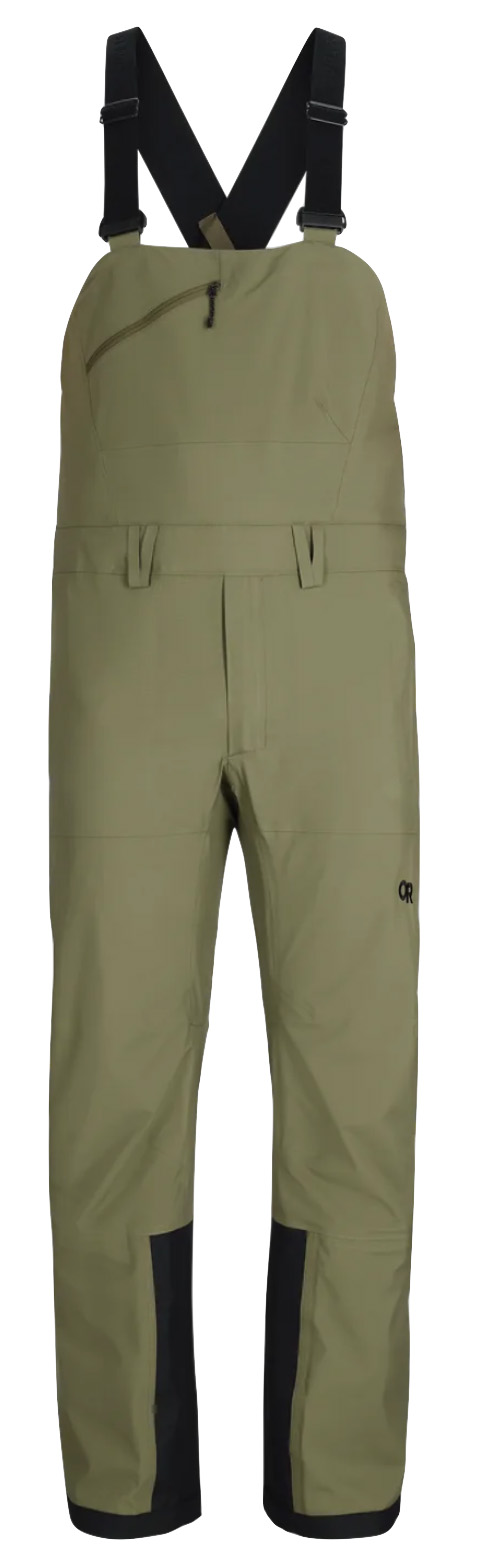
For deal-seekers who don’t want to compromise too much in the way of performance, look no further than the Outdoor Research Carbide Bibs. Importantly, the Carbide is the cheapest 3-layer design here: For a relatively low cost, the bibs breathe better than the 2-layer competition (such as the TNF Freedom and REI First Chair above) and feature lighter and more premium-feeling construction. On top of that, you get all the features we look for in both resort and backcountry designs, with dual side zips for venting (one extends from the torso to the knee for bathroom breaks), reinforced scuff guards, a beacon pocket with a clip at the chest, and a stretch-mesh gaiter with an integrated PowerStrap slot. It all adds up to a capable, versatile, and high-value bib for new skiers and dedicated weekend warriors alike.
But there are some inherent trade-offs with the low price tag. First off, OR saved some money with the waterproofing, which is competitive with Gore-Tex but lacks a foolproof reputation. Second—and arguably more importantly—the material is noticeably thin at just 40D (for reference, the Baker above is 150D). And finally, the finishes don’t feel as high-end as some of the pricier bibs above: The Carbide has zipper flaps rather than water-resistant zips and wrap-around hardshell fabric on the torso (meaning: no venting or breathable softshell fabric). This budget-minded bib is undeniably high on value, but the versatile build means it's a master-of-none: Most resort-goers can save with a thicker 2-layer design, and we recommend backcountry skiers spend up for the added stretch and breathability of the SnowDrifter above.
See the Outdoor Research Carbide Bibs

Best for: Resort
Waterproofing: 2L PNW
Insulated: No
What we like: A well-rounded resort bib with great styling and protection.
What we don’t: Limited to the resort; not as premium as 3-layer bibs.
If you find yourself torn between the premium 3-layer designs and budget offerings above, Trew Gear’s Jefferson Bib offers a nice middle ground for resort riders who prioritize both styling and performance. The Jefferson’s 2-layer construction is reinforced with a storm-ready waterproofing that held up well to testing in the Lake Tahoe area. The Bib also has a baggy-ish freeride style that’s complete with a number of low-profile pockets, inner thigh vents, and a full-length front zipper. It has all the other essentials, too, including a boot gaiter and reinforced cuffs. Put together, the Jefferson has everything a style-conscious resort rider needs and nothing they don’t.
While the Jefferson’s quality is a clear step up from budget options like the TNF Freedom above (without breaking the bank), be aware that you’ll be sacrificing some breathability and durability in opting for the 2-layer construction over the 3-layer options above. It's also worth mentioning that we noticed some light wear and tear (including some seam unraveling) when testing the Astoria, the women's counterpart to the Jefferson. That said, the Jefferson has held up fine to a full season of use, and so long as you’re sticking in bounds, breathability shouldn’t be too much of an issue.
See the Trew Gear Jefferson Bib

Best for: Backcountry
Waterproofing: 3L Gore-Tex ePE
Insulated: No
What we like: Highly protective; minimalist bib upper and stretch-mesh panels boost mobility and breathability.
What we don’t: Expensive; only available in one inseam length.
For backcountry skiing and deep powder in particular, the Patagonia Untracked Bib offers premium protection in a lightweight package. First, you get a top-quality Gore-Tex shell, which is impressively breathable yet still top-notch in brutal conditions. Combined with a minimalist upper (the Untracked is essentially a high-waisted pant with suspenders), a burly 80D nylon face fabric, and a soft flannel backer, the result is a highly durable yet comfortable bib. Patagonia rounds out the build with two thigh pockets, stretch-mesh panels at the sides, side zips, gaiters, belt loops, and a Recco reflector.
The Untracked goes up against heavy hitters like the Sabre above: Both bibs feature premium 3-layer Gore-Tex construction, a similar fabric weight, and check in at just about one and a half pounds. Where they differ is in their bib style: With a minimalist upper, the Untracked is a great option for skiers who want the added assurance of a bib without any extra fabric around the torso; if you don't mind the lack of storage, this can be a best-of-both-worlds design. With a bulkier and less breathable build, the Sabre has less of a backcountry slant compared to the Untracked, but on the other hand, it's a better quiver-of-one bib for those who split their time between in and out of bounds. Either way, both are high-end bibs for serious skiers, and your final decision might come down to where you want the venting the most.
Read more: Patagonia Untracked Bibs review
See the Patagonia Untracked Bibs
 Best for: Backcountry
Waterproofing: 3L TourTech
Insulated: No
What we like: A lightweight backcountry bib with a generous amount of softshell in the upper.
What we don’t: Niche use and sizing proved somewhat challenging.
If your ideal ski day looks like alpine starts, steep mountain climbing, and sweet corn skiing in mild spring temps, you’ll want a bib that prioritizes weight and breathability. Raide’s TourTech Bib is purpose-built for the dedicated spring skimo enthusiast, featuring a half-hardshell, half-softshell construction and a low-cut mesh upper. And we’re not exaggerating here: Unlike the SnowDrifter above that keeps the softshell to just the upper, the TourTech’s softshell extends all the way down to the knee. The result is a highly breathable and incredibly mobile bib. The trim silhouette and modest feature set—including two leg pockets and an integrated belt—round out the design nicely without adding undue weight.
Our tester put the TourTech through its paces on multiple sprints up Mount Baker last season, and it quickly became his go-to for mild-weather spring ski tours. That said, the TourTech’s generous amount of softshell fabric does limit its weather resistance. Simply put, this isn’t one you’ll want for soggy chairlift rides, as the softshell backside won’t offer much protection. The stretchy fabric and low cut also don’t provide much warmth. Lastly, our tester noted a few fit and finish issues: He found his regular size too big and sized down by a full size. Still, the suspenders had a habit of falling off his shoulders, and the strap adjusters sat awkwardly under his backpack shoulder straps when tightened all the way. He also found the fly far too small for on-the-go bathroom breaks. Given this is Raide’s first foray into the apparel market, we’ll grant them some grace and hold out hope for improvement in future iterations. In the end, we’ve found these compromises were worth it for the TourTech’s stellar performance in spring touring conditions.
See the Raide TourTech Bib
| Ski Bib | Price | Best for | Waterproofing | Insulated | Weight |
|---|---|---|---|---|---|
| Flylow Gear Baker Bibs | $440 | Resort | 3L Surface | No | 2 lb. 1.6 oz. |
| REI Powderbound Insulated | $219 | Resort | 2L Peak | Yes | 1 lb. 15.0 oz. |
| TNF Freedom Bibs | $220 | Resort | 2L DryVent | No | 1 lb. 8.6 oz. |
| Flylow Gear Snowman Bib | $330 | Resort | 2L Stark | Yes | 1 lb. 13.6 oz. |
| Arc’teryx Sabre Bib Pant | $700 | Resort/backcountry | 3L Gore-Tex ePE | No | 1 lb. 9.6 oz. |
| Patagonia SnowDrifter Bibs | $399 | Backcountry | 3L H2No | No | 1 lb. 6.9 oz. |
| Trew Gear Trewth Bibs Primo | $519 | Resort/backcountry | 3L PNW Primo | No | 1 lb. 15.6 oz. |
| REI First Chair GTX Bibs | $269 | Resort | 2L Gore-Tex ePE | No | 1 lb. 12.9 oz. |
| Outdoor Research Carbide Bibs | $329 | Backcountry/resort | 3L Pertex Shield | No | 1 lb. 8.6 oz. |
| Trew Gear Jefferson Bib | $349 | Resort | 2L PNW | No | 1 lb. 15.0 oz. |
| Patagonia Untracked Bibs | $649 | Backcountry | 3L Gore-Tex ePE | No | 1 lb. 9.6 oz. |
| Raide TourTech Bib | $449 | Backcountry | 3L TourTech | No | 1 lb. 6.2 oz. |
There are plenty of reasons to pick a bib over a pair of ski pants, such as added storage, increased protection, and comfort—in our opinion, few things are worse than a saggy pair of ski pants. The Switchback Travel team has spent their fair share of ski days in both, whether we’re skinning up untouched backcountry powder or enjoying groomed laps at the resort. We first launched our unisex ski bib guide in 2022, utilizing the collective in- and out-of-bounds experience of our diverse team to pick the best of the best. Then, with the help of contributing testers such as Brian McCurdy, editor Maddie Downie split the guides in 2025, creating this dedicated list of the best men’s ski bibs to complement our unisex lineup of both men's and women's options. Based in Bellingham, Washington, Mount Baker is practically in Maddie’s backyard, making it easy to hit the slopes to test snow gear all season long.
Our current lineup of 12 bibs is the result of hands-on testing in the field. When evaluating new models, we consider their overall performance on the slopes, including how well they protect against and withstand wet and windy conditions, as well as how effectively they breathe. We can assess their material quality and durability as we continue to use them throughout the seasons. Comfort is also important, and we’re sure to take note of the fit, material stretch, and quality of comfort details such as insulation, drop seats, and suspenders. All smaller features—zippers, buckles, scuff guards, vents—are put through their paces as well. The snow gear market continues to evolve every season, and we closely monitor any new models for testing. We’ve also slotted this guide into regular updates to ensure the list above accurately reflects the best options available.
.jpg)
If you’re hitting the slopes this winter, there’s a pretty good chance you’ll be doing so wearing either ski pants or bibs. Your final decision will come down to a matter of personal preference, but there are a number of factors to consider when choosing between the two.
The most obvious reason to opt for a ski bib is the significant boost in coverage compared to pants. Forget the powder skirt and lose the belt—with the secure over-the-waist design, bibs excel at keeping out snow and drafts of cold air. This all-out protection is good news whether you’re headed into gnarly mountain conditions or a new skier wanting to stay covered in the event of a fall. As a result of their added coverage, ski bibs also offer a large amount of storage, with pockets typically located both on the chest and on the legs. Especially if you plan to go sans ski jacket (for example, on a warm day on the skin track), it’s nice to have the extra storage for anything from a phone and snacks to your avalanche beacon. And finally, it’s hard to deny the style points you get with bibs, which are becoming increasingly popular both on- and off-piste.
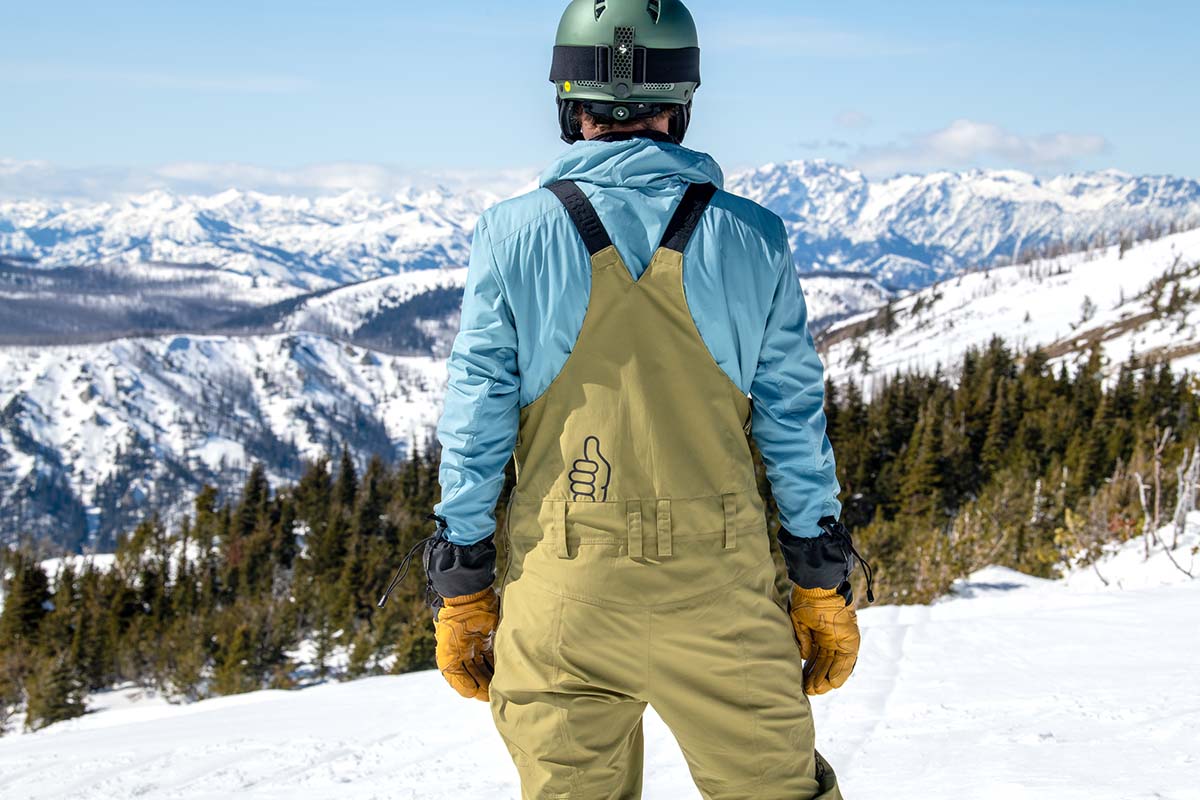
But there are a few downsides to keep in mind. Most bibs are pricier than their pant counterparts (for example, The North Face’s Freedom Pants cost less than the Freedom Bibs), and the additional material results in a lot more bulk overall, which is worth keeping in mind if you’re trying to streamline your backcountry kit. Bibs also offer a bit less breathability and freedom of movement than pants, although designs with softshell uppers, torso venting, and built-in stretch go a long way toward addressing this issue. And perhaps our biggest gripe about bibs is the hassle of going to the bathroom. That said, a lot of designs feature easy-to-use rear or side zips that get your bibs quickly out of the way when nature calls. For many (us included), the added coverage and storage will be well worth the minor inconveniences.
.jpg)
Many ski bibs can get the job done in both the front and backcountry, but some are designed specifically for one environment or the other. To help with your research, we’ve included a “best for” specification in our product descriptions and table above. Starting with inbounds skiing, these bibs are built tough—you typically get thick and rigid hardshell fabrics that can handle the wear and tear of the chairlift, fully waterproof and windproof constructions, and generous fits for layering. What’s more, some resort bibs are insulated, which can be a great choice for those who consistently ski in frigid temperatures. As a result of all this tech, these bibs can be on the bulkier side (read: heavy and possibly restrictive), which isn’t a big deal for resort skiing but is not our first choice for backcountry missions.
.jpg)
On the other hand, bibs designed specifically for the backcountry prioritize mobility and freedom of movement, with some form of built-in stretch (by way of softshell fabric or stretchy hardshell fabric) and an athletic fit. Additionally, breathability is essential—the materials are thinner, and it’s common to see ventilated back panels and large zippered side vents for staying cool. All-out weather protection can sometimes be compromised in the quest to keep you from overheating (stretchy hardshell fabrics are inherently more air-permeable than rigid hardshells), and durability often takes a hit with thinner, lighter-weight fabrics. Whether or not this is a good idea for you will depend on your local weather and snow conditions, in addition to your style of touring (for example, you’ll want a fairly durable pant for bushwacking through PNW forests in the spring). Finally, storage can vary in all of these models, but backcountry bibs, in particular, prioritize a large pocket at the chest or thigh (and sometimes both) with a clip for an avalanche beacon.
.jpg)
Hardshell fabric is the name of the game with ski bibs thanks to its waterproof protection. That said, it’s worth calling out the distinction between various types of hardshell materials: namely, rigid hardshell and hardshell with some mechanical stretch. The type of fabric you opt for will depend on where you're skiing (we favor rigid hardshells for resort use) and how much mobility you need (stretchy designs are great for mogul skiers and uphill enthusiasts). And while all of the bibs above feature hardshell pants, some use supple and stretchy softshell fabric in the bib. Below we break down the three material types.
Hardshell
For resort days and extreme mountain weather, it’s hard to beat the protection of a rigid hardshell (Gore-Tex is a popular example of this). Backed by a waterproof membrane, hardshells provide a reliable barrier against wet snow and harsh winds (great for long chairlift rides), and pricier options can have impressively long lifespans. Due to their burly constructions, hardshells aren't particularly breathable, and you'll have to put up with their more rigid feel. But resort skiers generally don’t need an especially breathable or supple bib, and the good news is that most hardshells here have side vents to dump heat on warmer days. The Flylow Gear Baker is a standout example, with bombproof 3-layer protection, a substantial 150-denier face fabric, and long side vents.
.jpg)
Hardshell with Stretch
Hard-charging resort skiers, sidecountry enthusiasts, and most backcountry skiers will want a waterproof bib, but a little extra stretch is an appreciated feature. Designs like the Patagonia SnowDrifter Bibs feature a hardshell construction with built-in stretch, which is a lot more supple than a standard hardshell—you don’t get that rigid and crinkly feel—and places a premium on freedom of movement and breathability. However, you do compromise a bit in the way of all-out protection: stretchy fabrics allow more air to flow than a hardshell, so they’re less impervious to strong gusts. Additionally, they’re more prone to wetting out after extended exposure. But it doesn’t get much better for most backcountry skiers, and it’s for good reason that we see more stretch-infused hardshell pants hitting the market each year.
.jpg)
Softshell
Softshell material is stretchy, air-permeable, very comfortable (especially compared to a hardshell), and offers slightly more insulation than hardshell fabric. But while it’s water resistant, a softshell is not waterproof: It absorbs moisture more readily than a hardshell and, in most cases, does not feature a waterproof membrane. Some ski pants—namely, those for spring backcountry skiing—are made exclusively with softshell material, but we see a lot less of this fabric in bibs (which makes sense, given that bibs place a premium on protection). That said, some designs, like the Raide TourTech, do feature generous amounts of softshell fabric (in the case of the TourTech, down to the knees). The added mobility and breathability are a boon for backcountry use and compromise little when paired with a jacket, but you do miss out on the all-out protection of a hardshell design.

Most premium ski bibs utilize a 3-layer construction, which incorporates three separate pieces of fabric: an outer shell, the actual waterproof and breathable membrane, and an inner lining. This construction is less bulky than a 2-layer design (these require a separate, hanging mesh liner along the interior), and also improves breathability and next-to-skin comfort. As a result, 3-layer bibs are more expensive than 2-layer models (3L designs above range from the cheap Outdoor Research Carbide to the pricey Arc'teryx Sabre) and often involve big names like Gore-Tex and AscentShell. But for serious downhill and backcountry skiers, you won’t find a better combination of waterproofing and breathability in a streamlined design.
.jpg)
Many mid-range and budget ski bibs have a 2-layer construction. These are less breathable than 3-layer designs, although the simple designs often use thick fabrics that are quite durable. We’ve found that 2-layer bibs are perfectly suitable for resort use where ventilation and mobility aren't as important (those skiing moguls or prone to overheating are exceptions). Further, you can save a lot by going this route: The 2-layer bibs on our list range from the cheap REI Co-op Powderbound Insulated to the slightly pricier Trew Gear Jefferson.
Given that ski bibs prioritize all-out protection from the elements, quality water resistance is an absolute must. For ultimate waterproofing, look for a rigid (read: not stretchy) hardshell bib with a Gore-Tex membrane, which leads the charge in terms of premium moisture protection. Mid-range and entry-level bibs will utilize the manufacturer’s in-house laminates (Trew Gear's PNW and REI’s Peak membranes, for example), which are still waterproof but generally not as breathable or long-lasting as Gore-Tex. Seam taping and a durable water repellent (DWR) coating are also important for hard chargers to keep moisture from sneaking through, and you can revive your bibs’ DWR with a simple spray or wash cycle with products from Nikwax). In terms of waterproofing, spending a little more does get you a nice upgrade in quality and longevity.
.jpg)
Backcountry skiers spend less time sitting on a chairlift and more time on the skin track, so many of their favorite bibs prioritize breathability and mobility alongside waterproofing. All of the backcountry bibs above feature waterproofing in the legs, but in this category it’s common to see hardshell material with built-in stretch. Although they’re waterproof, these fabrics tend to be more air-permeable and a bit more prone to soaking up water than rigid hardshell, but the trade-off is worth it for most backcountry skiers (especially for those venturing out in cold and dry conditions).
Further, we’ve started to see more and more designs (both for the backcountry and the resort) with softshell fabric patterned throughout the bib portion, which adds a nice dose of comfort, mobility, and breathability. Softshell is water-resistant but not waterproof, so you’ll want to keep these fabrics covered by a hardshell jacket or high-quality ski jacket in snowy or wet conditions.
.jpg)
As we touched on above, breathability needs are closely aligned with your intended use(s). Resort riders, and especially those who plan to stay on groomed runs, don’t require a light and airy design. Most standard 2-layer constructions will offer sufficient breathability, and you can always select one with large zippered vents to dump a little excess heat as needed (we prefer vents on the outside or back of the legs).
If you venture into the sidecountry, however, plan to mix in some touring days, or are a backcountry enthusiast, breathability then becomes an important consideration. Among waterproof builds, lightweight and stretchy 3-layer constructions are the best ventilators (such as the Patagonia SnowDrifter), and it’s a good idea to look for ventilated or softshell panels in the bib upper. Finally, if breathability is your top priority, it can be worth considering a ski pant over a bib.
.jpg)
Unlike ski pants, which are close to 50/50 in terms of insulated and uninsulated models, most ski bibs are uninsulated. This is for a few reasons: Bibs are already a bit bulky to begin with, and they naturally provide a lot of warmth by way of core coverage and draft protection. They’re also quite popular among backcountry skiers, who prioritize breathability and generally stay away from insulated designs. That said, we do feature a few insulated bibs above, which might be worth it for resort skiers who run cold or who ski in particularly frigid areas like the Mountain West or Northeast.
.jpg)
The vast majority of insulated ski bibs use synthetic fill due to its affordability and its ability to insulate even when wet (unlike goose or duck down). The amount of warmth offered doesn’t vary too widely, and most bibs use somewhere between 40- and 60-gram fill. The ideal amount for you will depend on your local conditions, skiing style (aggressive or casual), and if you’re prone to running hot or cold. Opting for a bib with 40-gram synthetic is a safe bet—you can always add a warmer baselayer pant—and you’ll want to make sure to get a vented design. The Flylow Gear Snowman is our favorite insulated bib of the year, with streamlined 40-gram synthetic insulation, outer thigh vents, and a softshell backpanel for added ventilation.
It's also worth noting that even among non-insulated bibs, warmth can vary, especially in windy conditions. This is due to variations in fabric thickness and air permeability. For example, the Flylow Baker's rigid 150-denier hardshell resists wind and traps a good deal of warmth, while the Patagonia SnowDrifter's more air-permeable fabric (50D) will let in a lot more drafts. If you're really trying to batten down the hatches (as is common for resort skiers), we recommend a thicker hardshell design with no built-in stretch.
.jpg)
Ski bibs see a lot of rough use—everything from boot buckles, metal edges, chair lifts, and pesky branches can wreak havoc on the materials. As a result, they’re a tough bunch overall. The most common way of determining ski bib durability is the fabric denier (D), which measures the thickness of the threads used for the shell material. Most resort-oriented designs are pretty substantial, headlined on our list by the Flylow Baker (150D). On the other end of the spectrum, touring-focused pants like the Outdoor Research Carbide (40D) and SnowDrifer (50D) make the most compromises in durability to maximize weight savings and comfort. Landing in the middle is The North Face's Freedom Bib (75D), which does an excellent job balancing weight savings and durability.
.jpg)
The outdoor apparel industry has seen a significant increase in the adoption of sustainable practices in recent years, and ski bibs are no exception. Two key measures include recycled materials and PFAS-free waterproofing, including both membranes and DWR finishes (traditional water-repellent materials use per- and polyfluoroalkyl substances —"forever chemicals" known to be harmful to the environment). Bluesign-approved fabrics are also becoming more common, indicating that the materials have been sourced and produced to minimize their overall impact on the environment. Finally, many companies make products with a Fair Trade certification, which helps ensure the fair and ethical treatment of workers.
.jpg)
The good news is that most sustainability-conscious brands are transparent about these practices and clearly indicate which (if any) measures each product uses. Patagonia is a clear leader in this realm: Within their line, they use recycled materials, Bluesign-approved textiles, and are Fair Trade certified. There’s still a long way to go in the industry, but the current trajectory and momentum from many of the key players are encouraging. And, of course, a final way to shop sustainably is to purchase quality products that will last and repair old gear rather than buy cheap items that will need to be replaced in a season or two.
Bib Upper
On a ski bib, the bib upper refers to the fabric that wraps around your core and over your shoulders with suspenders. Most bibs extend to cover the chest, but some more streamlined designs (like the Patagonia Untracked and REI First Chair GTX) feature only a small portion of fabric above the waist, which offers additional coverage without as much added bulk. The majority of bib uppers are built with the same fabric as the pant legs, but some feature patches of more air-permeable material throughout—this has a number of benefits, including additional breathability (the core is where your body generates the most heat), a better fit, and more comfort and mobility overall. Some backcountry-specific bibs, like the Patagonia SnowDrifer, take it to the next level with full softshell uppers.
Suspenders
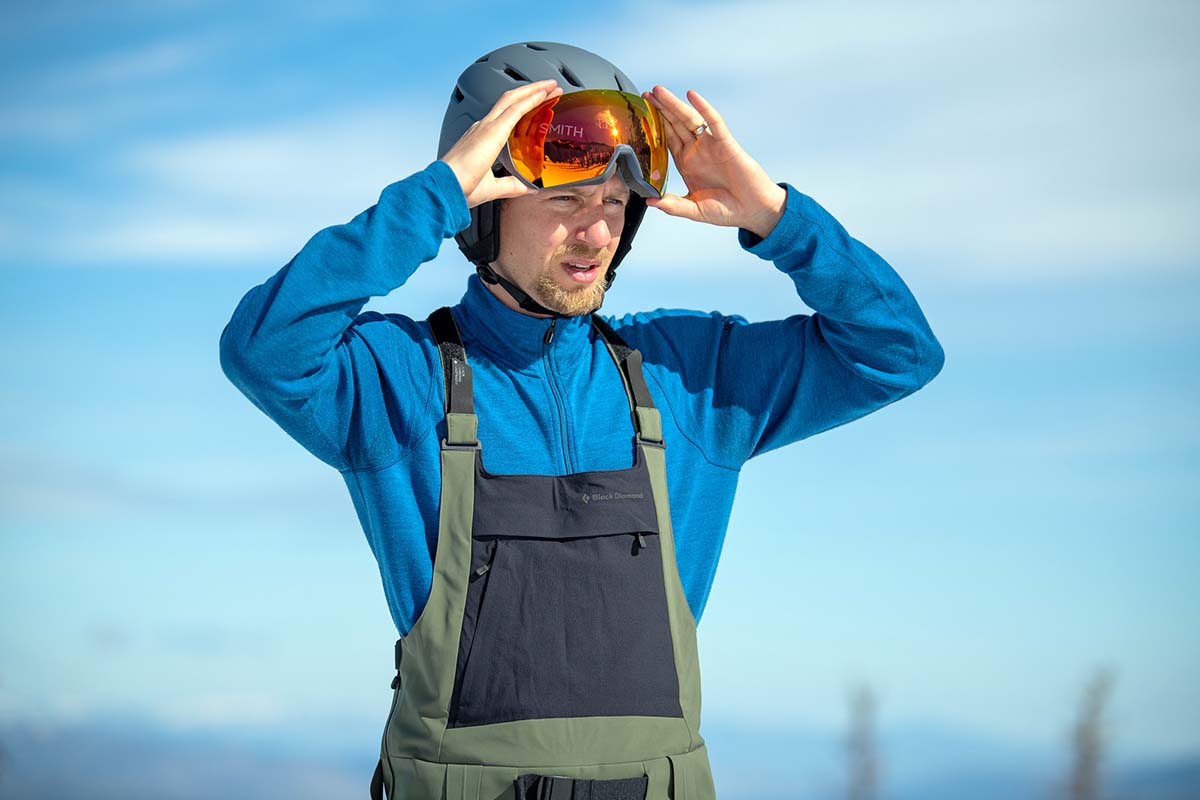
By design, ski bibs use stretchy suspenders to secure the bib upper around your torso. It’s important that these suspenders are highly adjustable—especially when you don’t get the option of various inseam lengths—and we appreciate designs that easily detach at the front via a buckle or metal clasp. If you plan to wear a backpack, you’ll want to prioritize fairly streamlined suspenders: Bibs like the Outdoor Research Carbide have thick patches at the back and bulky buckles at the chest that can cause pressure points underneath a ski backpack. On the other hand, a bib like the Arc'teryx Sabre has a low profile that’s purpose-built to pair with a backpack.
.jpg)
Pockets
Storage is one of the primary ways that ski bibs differ from ski pants, which is especially helpful on warm spring days when you might not need a jacket. Generally, bibs will feature one or two pockets at the chest and a pocket on each thigh—on backcountry-ready bibs, at least one of these comes with a built-in clip for an avalanche beacon (we only recommend storing your beacon in your bib pocket if there’s a clip—otherwise you’ll want to carry it in its included harness). Trew Gear's Trewth Bib is a standout when it comes to storage, boasting an impressive seven pockets (three just on the upper). Keep in mind that bibs with low-profile uppers offer less storage—the Raide TourTech has no above-the-waist pockets, for example—but the benefit is less bulk.
.jpg)
Ventilation
Ski bibs can run hot due to their generous coverage, so to aid in breathability, most offer a zippered ventilation system that amounts to pit zips for your legs. The most common locations for the zippered panels are along the inside of your upper legs or on the outside of your thighs. Either style will help dump a lot of heat, although the former design adds unwanted bulk and can occasionally impact comfort—backcountry-specific bibs often place the zippers on the outside of the legs in part for this reason. Flylow's Baker Bib has vents on both sides of the leg, which provides excellent cross ventilation.
Bibs often also add ventilation by way of softshell or stretch-mesh panels, which are generally placed at the lower back. Because the core is one of the main areas your body generates heat, we think these are a really nice feature to look for on a bib. On the other hand, bibs with fully hardshell uppers can grow very swampy across the stomach and lower back, especially for those who tend to sweat a lot.
.jpg)
Drop Seat and Fly
Given their above-the-waist design, bibs can cause a bit of a hassle when nature calls. Most models on our list feature either full drop seats (essentially a flap that unzips at the lower back and extends down the outside of each leg) or a swing hatch that opens fully on one side and partially on the other. In most cases, these are built into the vent design, which is great for minimizing bulk and weight. For peeing while standing up, you’ll also want to look for a front fly—sometimes this extends all the way from the top of the chest, while other times it’s just a simple fly at the waist.
.jpg)
Recco
You may run into Recco listed as a feature on some mid-range and high-end ski bibs. This built-in reflector is a passive unit that doesn’t require batteries and can be picked up by Recco detectors often carried by resort search and rescue. Recco reflectors are a great addition for skiers who make their way out of bounds or into areas where they may experience avalanche dangers, but they’re no substitute for an avalanche beacon in the backcountry, as they lack the technology and strong signal of a dedicated search and rescue beacon. We've found the Recco System website helpful if you want more information about the technology.

Scuff Guards & Gaiters
Moving all the way down to the bottom of the bib, we see scuff guards (also called kick patches) on most designs, which pattern thick fabric around the cuff (often just on the instep side) for added durability around sharp objects like ski boots, ski edges, and poles. For example, the Flylow Baker's Cordura reinforcements are a ridiculously thick 1,000-denier and offer incredible abrasion resistance. On the inside of the pant cuff, gaiters extend down from the liner, and generally feature an elastic cuff at the bottom to ride securely around your boot (many also have slits so you can adjust your ski boots' power strap without having to adjust the gaiter). Especially for backcountry skiers who plan to spend some time bootpacking, you'll want to make sure to prioritize secure gaiters that don't ride up.
.jpg)
Sizing your bibs can be tricky, as they need to fit well in both your torso and legs. We’re big fans of bibs that come in a wide range of sizes (including plus/extended sizes) and are offered in multiple inseam lengths. These bibs include the Trew Gear Trewth and Jefferson bibs, Outdoor Research Carbide, REI Co-op First Chair GTX Bib, and The North Face’s Freedom. If you have a particularly tall or short frame, you’ll definitely want to consider one of these options. And once you nail the fit of the pants, there’s the bib upper to consider: We like designs with Velcro tabs at the waist or a stretchy softshell patch on the back, which help reduce bulk and bagginess above the waist. An ill-fitting bib is an awkward beast, so we do recommend trying on before you buy. The good news is that you can find a wide selection of ski bibs in your local ski shop or REI, and many online retailers (including Evo and Patagonia) offer generous return policies.
.jpg)
The layers you wear under your ski bibs don’t get as much attention as those warming your core, but they remain an important consideration nevertheless. To start, it’s almost always a good idea to throw on at least a thin pair of long underwear both for resort and backcountry skiing. The extra layer not only provides insulation and protection from cold snow and freezing chairlift seats, but it also wicks moisture away from your skin. Further, the interiors of ski bibs are often not very plush, with exposed mesh, zippers, and minimalist liners that become less comfortable as the day wears on.
.jpg)
In choosing a baselayer, it’s worth getting a soft and close-fitting design to maximize warmth. The best models are made with either synthetic or wool—cotton doesn’t insulate when wet, so it’s a bad idea even on a resort day. Synthetics are the cheaper option and efficiently wick moisture, but merino wool is our favorite. It’s very warm for its weight and naturally resists odor better than a polyester alternative. Baselayers are offered in a range of thicknesses, including lightweight designs for warm days or backcountry use, and mid- and heavyweight options for cold days at the resort. And in particularly frigid conditions, you can always double up your baselayers to increase warmth.
Back to Our Top Men's Ski Bibs Picks Back to Our Men's Ski Bibs Comparison Table

bcdc.jpg?h=fbc67360&itok=wmPMXiEZ)
d2fe.jpg?h=fbc67360&itok=9OxKROqi)

3f84.jpg?h=fbc67360&itok=uuKzUKrM)
_01074.jpg?h=fbc67360&itok=LZfjph4c)
9d09.jpg?h=fbc67360&itok=krYHMzB9)
Sb257.jpg?h=fbc67360&itok=UxuqzBpk)
0ec1.jpg?h=fbc67360&itok=oGaifWVw)