Photo Credit
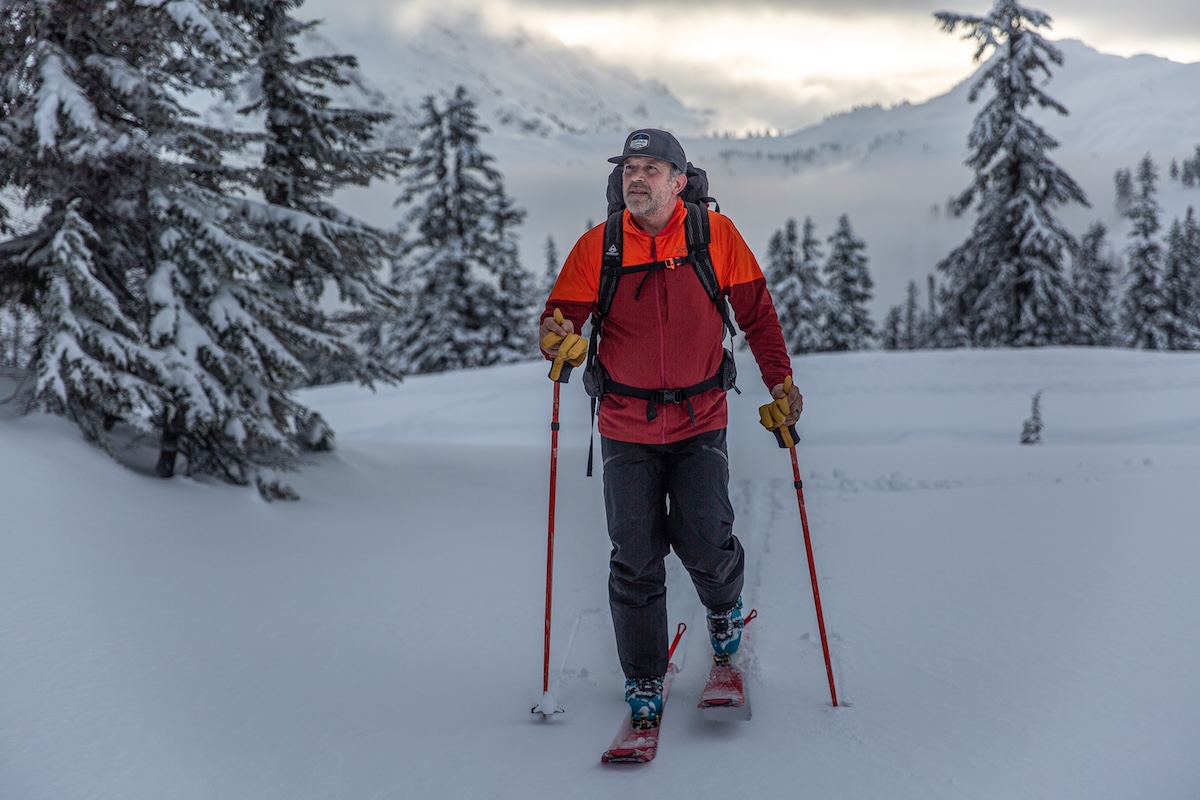
Ski pants are an essential layer for staying warm, dry, and comfortable on the mountain, with options to suit every type of skier and budget. While resort riders often favor insulated designs to keep cozy on long chairlift rides, backcountry enthusiasts prioritize breathability and freedom of movement with thin or stretch-infused shells. For those who like to do a little of both, there are versatile hybrid models that strike a nice balance between protection and ventilation. Below, we highlight the best men’s ski pants for the 2025 season, from budget-friendly options to high-end designs for committed riders, with the Trew Gear Eagle Pant Primo taking our top spot. For more background information, see our comparison table and buying advice below the picks, along with details about our testing process. And for a wider look at the market, we've also put together round-ups of the best ski pants (a unisex guide that covers both men's and women's styles) and the best men's ski bibs.
Editor's note: We updated this guide on October 24, 2025, to narrow our list of favorites down to a select few based on testing experiences and use cases. We also introduced new designs, such as the 686 Dojo Gore-Tex Pant, and added a few new awards, including a pick for the best premium option and the best budget shell ski pant. Lastly, we swept the guide to ensure all other information was up to date at the time of publishing.
 Best for: Resort/backcountry
Waterproofing: 3L PNW Primo
Insulated: No
What we like: Fantastic quality, protection, and attention to detail.
What we don’t: Relaxed fit and extensive feature set won’t appeal to weight-conscious backcountry riders.
Still a relatively young brand, Oregon-based Trew Gear has done a great job breaking into the snow apparel market with their high-quality and clean-looking designs. The Eagle Pant Primo is one of their best all-rounders: The proprietary 3-layer construction has a very premium look and feel, and it’s a similar story with all of the smaller details, from the smooth-operating water-resistant zippers to the well-executed storage layout—including zippered hand pockets with beacon clip— and generous venting (both outside and inside the thigh). We’re also big fans of the internal Velcro waist adjustment that forgoes the need for a belt (though Trew did tack on belt loops for good measure). Tack on burly scuff guards and full seam taping, and the Eagle is the full package for resort-goers who like to earn their turns on occasion.
The Eagle goes head-to-head with premium pants like the Arc’teryx Sabre below. Both designs feature weather-worthy 3-layer builds and are viable crossover options for those who like to split their time between the resort and backcountry. The Arc’teryx’s sleeker design translates to less heft, bulk, and restriction to movement, but the Eagle Pant is no slouch and has greater freeride appeal with its relaxed fit and built-in stretch. The Eagle also gets the clear edge in price, which is what ultimately bumped it to the top of our list. It’s also worth noting that users have reported a large fit in the past, so it might be worth sizing down. Luckily, Trew Gear offers the pant in three inseam lengths as well as six sizes from XS to XXL, which will make it easier to dial in your fit.
See the Trew Gear Eagle Pant Primo
 Best for: Resort
Waterproofing: 2L Peak
Insulated: Yes (40g polyester)
What we like: Well-rounded performance for the price.
What we don’t: Wallet-friendly build falls short in protection—for truly wet conditions, we recommend spending up.
REI Co-op’s line of in-house gear continually catches our attention for its enticing balance of price and performance, and the Powderbound Insulated Pants are a case in point. The design features REI’s 2-layer membrane that we’ve found to be fairly reliable, along with 40-gram polyester insulation for warmth on cold days and frigid chairlift rides. Vents along the inner thigh make it easy to dump excess heat when you’re moving quickly or venturing into the sidecountry. And all of the requisite features are there, including Velcro pull tabs for cinching the waist, tough gaiters and scuff guards, and a plethora of pockets for stashing the essentials. Plus, you'd be hard-pressed to find a more well-rounded ski pant for less.
However, cutting costs almost always comes with drawbacks, and in this case, the Powderbound is a little underbuilt for truly wet conditions. The 2-layer membrane simply doesn’t hold up as well in inclement weather as more premium 3-layer designs, and the Powderbound is only critically seam-taped. To be fair, it’s a nice match for areas like the Mountain West that experience dry snow, but those living in particularly wet areas, such as the Pacific Northwest, will likely want to upgrade to a more protective option. Also note that while insulated designs offer a nice dose of warmth on chilly chairlifts, they don’t offer much versatility. We prefer a non-insulated shell for more freedom in our layering system, like TNF’s Freedom pant below. But as a value piece, the Powderbound is tough to beat, and it doesn’t sacrifice too much to achieve it. If you want a slight upgrade—when it comes to fit and durability, to be specific—see Obermeyer’s more expensive Force Pant.
See the REI Powderbound Insulated Pants
.jpg)
 Best for: Resort
Type: Hardshell
Insulated: No (available)
What we like: A proven and tough resort design at a great price.
What we don’t: Baggy fit, subpar breathability, and prone to wetting out in heavy or extended moisture.
The North Face’s Freedom Pants are a classic choice for casual resort skiers, and you’re likely to see them while standing in line for the lift. Don’t be fooled by their approachable price point—they’re not overly compromised in any way. In fact, we came away very impressed by their robust 2-layer construction that effectively fends off snags, strong winds, and moderate moisture. Comfort is another area where the pants exceeded our expectations, with a surprisingly soft exterior and smooth lining that are reminiscent of much pricier designs. And we appreciate that the pants are offered in a nice selection of sizes (from XXS to XXL) and inseam lengths (short, regular, and long). And unlike the REI Powderbound above, the uninsulated Freedom pants give you versatility in your layering system.
All that said, performance-savvy skiers will want to be wary of the Freedom’s generic fit and cheaper waterproofing. Despite featuring mesh-lined inner thigh vents and gaiter panels, these pants run notably warm, and the 2-layer membrane won’t hold up to bouts of heavy or extended moisture. In addition, all of the pocket and vent openings rely on fabric flaps for sealing out water—higher-end models often boast more protective and reliable coated zippers—so it’s best not to store valuables here. But for casual resort-goers who don’t need anything fancy, the Freedom handily outperforms its price tag. And if you’re willing to spend up for a bit more breathability and stretch, check out Patagonia’s uninsulated Powder Town Pant.
Read more: The North Face Freedom Insulated Pants review
See the The North Face Freedom Pants


Best for: Resort
Waterproofing: 2L H2no
Insulated: Yes (60g Thermogreen)
What we like: Healthy dose of warmth for frigid resort days and those who run cold; comfortable and not too pricey.
What we don’t: Insulated pants lack versatility.
Patagonia’s snow gear is a consistent presence in our guides, and for good reason. Their gear is high-quality, comfortable, and usually has a strong performance slant. Their Insulated Powder Town Pants are among our favorites for this reason. This pant features a healthy dose (60g) of synthetic insulation in a weather-ready package, complete with proven waterproof membrane, boot gaiters, water-resistant zippers, and powder skirt compatibility. A soft interior lining makes these pants a joy to wear on chilly chairlifts, and the not-tight, not-baggy fit accommodates layers and allows for great freedom of movement. Build quality is top-notch, and the pant is available in a range of sizes to help you dial in the ideal fit.
As mentioned, insulated pants have their limitations. In most cases, we prefer an uninsulated pant for the freedom to layer as warranted for the conditions. The outer thigh vents do help with some breathability, but the Powder Town won’t be the best choice for super sunny conditions or those who run on the hot side. And if we were to nitpick, we found the Velcro waist adjustments prone to snagging on baselayers and roughing up the skin. But for the price and the performance, we really can’t complain. That said, if you’re looking to go cheaper, check out Helly Hansen’s Legendary Insulated pants, which sacrifice a bit of long-term durability and build quality, but still have a good amount of insulation and a comfortable fit.
See the Patagonia Insulated Powder Town Pants

Best for: Resort and backcountry
Waterproofing: 3L Gore-Tex ePE
Insulated: No (thin flannel backer)
What we like: A truly do-it-all ski pant with a top-notch fit and finish.
What we don’t: Expensive; we’ve had some fit issues with the last couple of iterations.
Arc’teryx’s Sabre Pant has earned a consistent spot in our closet over the years for its ability to excel in almost any conditions while looking and feeling great in the process. It’s no surprise that the Gore-Tex waterproofing provides stalwart protection against the elements, while the 80-denier (D) face fabric holds up well to all manner of wear and tear—whether you’re lapping groomers at the resort or dipping through tight glades in the backcountry. Despite its burly construction, the Sabre is competitively lightweight at 1 pound 5 ounces, making it a capable crossover piece for those who like to split their time between in- and out-of-bounds riding. Plus, the pants offer great freedom of movement and generous side vents for dumping heat on the skin track. Rounding out the design is a healthy storage layout, a thin flannel backer for comfort and a modest dose of warmth, and quality components that hold up well over time.
For the casual skier, the Sabre’s high price tag might be hard to justify. In our opinion, the Eagle Primo above is a great alternative for those sticking to a stricter budget, and those who ski exclusively inside the ropes can save a ton of cash with a downgraded 2-layer design. It’s also worth noting that we experienced some fit intricacies with the Sabre: In addition to running small, the athletic cut was a bit restrictive around our tester’s thighs and hips. But as always, your mileage may vary, and we appreciate that Arc'teryx also offers the pants in a roomier Relaxed version that has more of a freeride aesthetic. No matter which option you go with, the Sabre’s top-notch quality and versatility are hard to beat.
Read more: Arc'teryx Sabre Pant review (prior version)
See the Arc'teryx Sabre Pant
.jpg)

Best for: Backcountry
Waterproofing: 3L H2No
Insulated: No
What we like: Excellent mobility, breathability, and comfort for long days in the backcountry.
What we don’t: Pricey; slim fit and streamlined build have some downsides.
A dependable pair of backcountry ski pants must be lightweight and breathable while still offering enough protection to fend off moisture and wind. The Patagonia Stormstride Pants check all three boxes emphatically. With a thin (40D) shell fabric and reliable 3-layer construction that utilizes Patagonia’s proven waterproofing, the Stormstride puts up a worthy defense while maintaining an easy-moving, flexible feel. Comfort is excellent, too, thanks to built-in stretch and a knit backer lining the interior. And the streamlined build doesn’t skimp on backcountry-ready features, including large vents at the outer thigh that do a better job dumping heat than inner thigh vents, a streamlined but serviceable storage layout, and snap adjustments for tweaking the aperture of the cuffs.
No ski pants are perfect, however. Not everyone will love the athletic fit of the Stormstride, which we found especially trim around the thighs, leading to some resistance for our tester, despite the stretchy material (for reference, he’s 5’9”, weighs 145 lb., and opted for a size small). Some of the features are also overly streamlined, including small hand pockets and hard-to-grab zipper pulls. Finally, the Stormstride’s thin shell fabric makes it more susceptible to wear and tear than burly options like the Sabre above, making it less appealing for resort use. But as committed backcountry enthusiasts know, there are always trade-offs to consider, and we think the Stormstride balances its priorities quite well.
Read more: Patagonia Stormstride Pants review (prior version)
See the Patagonia Stormstride Pants
.jpg)
 Best for: Resort and backcountry
Waterproofing: 3L Surface
Insulated: No
What we like: Full-coverage protection for deep conditions; tough and nicely appointed.
What we don’t: Not our favorite backcountry option due to its heft, bulk, and middling breathability (the vents help).
There’s a lot to like about ski bibs: Beyond the obvious style points, they offer unmatched protection in deep snow and an integrated fit that many find more comfortable than pants. Flylow Gear’s Baker Bib is our favorite in this category for several reasons. For starters, the 3-layer construction is well equipped to handle rough and rowdy conditions—like those often found on the bibs’ namesake volcano. It’s also very robust, with a thick exterior and 1,000D reinforcements at the cuff and knee to fend off abrasion. And we’d be remiss not to touch on the relaxed fit, which is comfortable and flattering without being overly baggy. Storage and fit customization are two final highlights, including seven total pockets, adjustable suspenders, belt loops, and availability in six sizes and three inseam lengths (plus lots of colorways).
The Baker Bib is best suited for resort use due to its burly construction, but it’s not totally out of place in the backcountry thanks to vents at both the outside and inside of the leg. It wouldn’t be our first choice for multi-day tours, but it’s adequately breathable for short day trips and hikes into the sidecountry (especially when it’s cold). For some, the bigger issue will be the Baker Bib’s weight (2 lb. 1.6 oz.) and bulk (the baggy fit detracts a bit from mobility on the skin track). But for primarily resort riders who like to venture past the ropes or into the backcountry on occasion, the Baker Bib is tough to beat.
Read more: Flylow Gear Baker Bib review
See the Flylow Gear Baker Bib
.jpg)

Best for: Resort
Waterproofing: 2L Gore-Tex ePE
Insulated: No (available)
What we like: The most premium 2-layer option on our list.
What we don’t: Expensive for a 2-layer design; a couple fit and finish issues.
Most 2-layer ski pants are of the budget variety, but Patagonia’s Storm Shift bucks that trend with a premium construction and clear attention to detail. In addition to a proven Gore-Tex membrane, the pants feature a beefy 150D shell fabric that’s at the top of the pack when it comes to thickness and durability. You also get high-end touches like a tricot mesh lining for next-to-skin comfort and a light dose of warmth, generous outer thigh vents to regulate temperature, fleece-lined hand pockets, waterproof zippers, and compatibility with any of Patagonia’s snow jackets. The cherry on top is the pants’ versatile fit, which allows for easy layering and great all-around mobility without feeling (or looking) overly baggy.
Praise aside, Patagonia gear often comes at a premium, and the Storm Shift is expensive for a 2-layer design. We also came away with a couple of fit and finish issues in testing, including Velcro waist tabs that felt harsh against bare skin and snug thigh pockets that could only fit lower-profile items like a wallet. Further, the pants are heavy at 1 pound 10.2 ounces and tend to sag throughout the day, especially if the pockets are full. But for aggressive riders who often wear through their gear quickly, the Storm Shift is a highly durable option from one of the best—and most environmentally conscious—brands in the business.
Read more: Patagonia Storm Shift Pants review
See the Patagonia Storm Shift Pants
 Best for: Resort/backcountry
Waterproofing: 3L Surface
Insulated: No
What we like: A do-it-all 3-layer pant at a reasonable price.
What we don’t: Thick build is best suited for inbounds use; less premium than most direct competitors.
Flylow Gear might lack the name recognition of big players like Arc’teryx and Patagonia, but their snow apparel lineup is nothing to scoff at. The Chemical Pant here does a good job highlighting the brand’s focus on performance and value. In addition to a quality 3-layer membrane that offers better breathability and less bulk than 2-layer competitors, you get beefy reinforcements in high-wear areas along with full seam taping and waterproof zippers. Flylow also equipped the pants with both outer and inner thigh vents for quickly regulating temperature—especially important given the Chemical’s thick and hardwearing fabrics.
The Chemical is the most affordable 3-layer design to make our list, which gives it a ton of appeal. However, we’d urge committed riders to consider spending up for the Trew Gear Eagle Primo above. Both pants feature a relaxed fit that will appeal to the freeride crowd and are offered in a nice selection of sizes and inseam lengths, but the Eagle wins out in storage (it has five pockets compared to the Flylow’s three), and its mesh-lined vents do a better job keeping out flying snow. Not to mention, we've had better experiences with Trew Gear's waterproofing. But all things considered, the Chemical Pant is a solid deal and a notable step up in performance from most 2-layer alternatives.
See the Flylow Gear Chemical Pant
 Best for: Backcountry
Waterproofing: 3L Ventia
Insulated: No
What we like: Hybrid construction combines the comfort, mobility, and breathability of a softshell with the protection of a hardshell.
What we don’t: Lack of waterproofing along the seat and upper thighs limits overall appeal.
There are several stretch-infused hardshells on our list, but Outdoor Research’s Trailbreaker Tour kicks things up a notch with its hybrid construction. Starting at the top, the waist and thighs feature a stretchy softshell fabric that offers excellent comfort and mobility, while a 3-layer hardshell material protects the knees and lower legs. The net result is waterproof protection where you need it (for the most part) and excellent breathability everywhere else—a great recipe for skimo-ers and spring ski tours. And unlike many traditional softshell pants, the OR comes fully equipped with outer thigh vents, plenty of storage (including a dedicated pocket for an avalanche beacon), internal gaiters, and cuffs that feature both zippers and snaps for accommodating different boots.
All that said, there are a number of trade-offs to consider when opting for such a trimmed-down pant. First, the lack of waterproofing at the seat makes the Trailbreaker Tour less than ideal for taking trailside breaks or lounging in a backcountry snow kitchen. We also don’t recommend these pants for deep powder or particularly wet days out, as the softshell fabric along the upper thighs will eventually soak through. And finally, the fairly snug fit doesn’t allow for much more than a thin baselayer underneath, which means you’ll need to keep moving in frigid temperatures. But for softshell fanatics who want a little extra protection, the aptly named Trailbreaker Tour is a purpose-built option and a solid value.
See the OR Trailbreaker Tour Pants
 Best for: Resort
Waterproofing: 3L Gore-Tex
Insulated: No
What we like: Baggy shell pant with major park vibes.
What we don’t: Not a backcountry pant, despite what 686 claims.
While perhaps better known in the snowboarding world, 686 has been dishing out high-performing and high-styling snow apparel since the ‘90s. The Dojo Gore-Tex Pant is case in point, and these pants practically achieve the impossible: combining a performance-first 3-layer Gore-Tex construction with a park-ready sweatpant vibe. They’re outfitted with plenty of ski-specific features, such as inner thigh vents, zippered hand pockets, reinforced cuffs, and boot gaiters. The baggy fit is comfortable, stylish, and sure to earn you points on the rope tow. And lastly, the Gore-Tex waterproofing and fully-taped seams offer plenty of confidence for wet powder and chairlifts.
686 bills the Dojo Pant as a resort and backcountry pant, but we hesitate to agree. Sure, they can probably get the job done, but we’ll turn to less bulky, lighter and more streamlined designs for dedicated (and efficient) backcountry use. That said, they’re probably perfectly serviceable for the odd sidecountry boot pack. We also have a few small gripes: For one, the integrated belt is pretty long and not removable, so you can’t replace it with one you prefer. And we also wish that 686 offered the Dojo in more than two neutral color options. These are petty complaints in the grand scheme of things, however, and we ultimately think the brand landed on a winner with this design, especially for the park crowd.
See the Dojo Gore-Tex Pant
| Pant | Price | Best for | Waterproofing | Insulated | Weight |
|---|---|---|---|---|---|
| Trew Gear Eagle Primo | $499 | Resort/backcountry | 3L PNW Primo | No | 1 lb. 13.4 oz. |
| REI Powderbound Ins. | $159 | Resort | 2L Peak | Yes | 1 lb. 9.4 oz. |
| The North Face Freedom | $170 | Resort | 2L DryVent | No | 1 lb. 3.4 oz. |
| Patagonia Ins. Powder Town | $269 | Resort | 2L H2No | Yes | 1 lb. 8.8 oz. |
| Arc'teryx Sabre Pant | $600 | Resort/backcountry | 3L Gore-Tex ePE | No (flannel) | 1 lb. 5.0 oz. |
| Patagonia Stormstride | $449 | Backcountry | 3L H2No | No | 1 lb. 4.1 oz. |
| Flylow Gear Baker Bib | $440 | Resort/backcountry | 3L Surface | No | 2 lb. 1.6 oz. |
| Patagonia Storm Shift | $399 | Resort | 3L Gore-Tex ePE | No (avail.) | 1 lb. 10.2 oz. |
| Flylow Chemical Pant | $380 | Resort/backcountry | 3L Surface | No | 1 lb. 11.2 oz. |
| OR Trailbreaker Tour | $249 | Backcountry | 3L Ventia | No | 1 lb. 7.9 oz. |
| 686 Dojo Gore-Tex Pant | $380 | Resort | 3L Gore-Tex | No | 1 lb. 10.9 oz. |
Ski pants are an essential part of your snow kit, whether you’re lapping groomers at your local resort or skinning deep into the backcountry in search of untracked powder. The Switchback Travel team has been testing ski pants for years, and this guide is the result of many seasons and countless laps both in and out of bounds. Our staff kicked off our first unisex ski pant round-up back in 2015 with seven pairs of pants. For backcountry expertise, we turned to B.C.-based Brian McCurdy, who has been testing gear for Switchback for the majority of the last decade and spends his winters touring throughout Canada. Editor Maddie Downie oversees the bulk of our ski pant coverage (which now includes the original unisex guide plus dedicated men's and women's round-ups for both pants and bibs), leveraging an extensive freelancer network to fill in any gaps. Based in Washington state, Maddie enjoys volcano romps and is willing to endure a bushwhack or three to access fresh snow.
Our current lineup of 11 men’s pants above reflects years of hands-on experience and extensive testing throughout the U.S. and beyond. When we test ski pants and bibs, we’re sure to evaluate their performance in different conditions and environments. We pay close attention to how well each design holds up in wet and windy weather, how warm it keeps us while sitting on cold chairlifts, and how well it breathes and moves with us while skinning or hiking into the sidecountry. Durability and material quality are also always top of mind, and we’re sure to note how well each pant holds up over the long term—from the shell fabric to the DWR coating and smaller components like zippers, buttons, and seams. We recognize that the ski pant market is ever-evolving, so we keep a close eye on new and noteworthy models as they become available, adding and removing options as our editors and testers see fit.
.jpg)
Ski pants are designed for use at the resort, deep in the backcountry, or a mix of the two, so we’ve included a “best for” specification in our product descriptions and table above. Starting with inbounds skiing, these pants are built tough—you typically get strong face fabrics, fully waterproof and windproof constructions, and generous fits for layering. If you consistently ski in frigid temperatures, it may be worth considering an insulated design, although we sometimes prefer the flexibility of a thick, non-insulated shell for season-long use.
.jpg)
Traveling uphill while breaking trail or on the skin track has an impact on your pant needs. First off, mobility and freedom of movement are very important for backcountry use, so you’ll often find some form of stretch built into the fabric and an athletic fit. Additionally, breathability is essential—the materials on pants optimized for the backcountry are thinner, and you get large zippered side vents for staying cool. Finally, all-out weather protection can sometimes be compromised in the quest to keep you from overheating (whether or not this is a good idea for you will depend on your local weather and snow conditions). For those seeking a single pant for mixed use, we still recommend a substantial waterproof design, such as the Arc'teryx Sabre and Trew Gear Eagle Primo.
.jpg)
In general, modern ski pants are built with one of three types of shell fabric: hardshell, hardshell with mechanical stretch, or softshell. The type of fabric you opt for will depend on where you're skiing (we favor hardshells for resort use) and how much mobility you need (stretchy designs are great for mogul skiers and uphill enthusiasts). The vast majority of skiers will opt for a pant that uses hardshell or hardshell with integrated stretch, but we've also included a softshell hybrid model (the Outdoor Research Trailbreaker Tour) on our list above.
Hardshell
For most resort days, it’s hard to beat a traditional hardshell pant. Hardshells provide a reliable barrier against wet snow and harsh winds (great for long chairlift rides), and pricier options can have impressively long lifespans. Due to their burly constructions, hardshells aren't particularly breathable, and you'll have to put up with their more rigid feel. But resort skiers generally don’t need an especially breathable or supple pant, and the good news is that most hardshells here have side vents to dump heat on warmer days. The Flylow Chemical Pant is a standout example, with bombproof 3-layer protection, a substantial 150D face fabric, and generous vents on both the inside and the outside of the legs.
.jpg)
Hardshell with Stretch
Hard-charging resort skiers, sidecountry enthusiasts, and most backcountry skiers will want a waterproof pant, but a little extra stretch is an appreciated feature. Designs like the Patagonia Stormstride feature a hardshell construction with built-in stretch, which is a lot more supple than a standard hardshell—you don’t get that rigid and crinkly feel—and places a premium on freedom of movement and breathability. However, you do compromise a bit in the way of all-out protection: Stretchy fabrics allow more air to flow than a hardshell, so they feel less impervious in strong gusts. Additionally, they’re more prone to wetting out after extended exposure. But it doesn’t get much better for most backcountry skiers, and it’s for good reason that we see more stretch-infused hardshell pants hitting the market each year.
.jpg)
Softshell
On the far end of the spectrum are pants that feature a softshell construction, such as the Outdoor Research Trailbreaker Tour, which has softshell fabric above the knees. This material is stretchy, air-permeable, and soft against the skin, which makes it great for high-output pursuits. On the flip side, softshells absorb moisture much more readily than hardshells, and many options lack a waterproof membrane. As a result, a softshell pant is a bad pairing in wet weather—even sitting on snow for an extended period can be a problem—so we don't recommend them for particularly soggy days or resort use.
.jpg)
In terms of warmth, ski pants fall into two basic categories: models with built-in synthetic fill and uninsulated shells. Resort skiers, and especially those who stick to groomed runs, will be best off with an insulated model. The boost in warmth is useful to fend off the chill, and the thicker construction provides an additional barrier between you and a frigid chairlift seat (or when sitting on snow). As mentioned above, the vast majority of insulated ski pants use synthetic fill due to its affordability and the fact that it continues to insulate even when wet (unlike goose or duck down). The amount of warmth offered doesn’t vary too widely, and most use somewhere between 40- and 80-gram fill. The ideal amount for you will depend on your local conditions, skiing style (aggressive or casual), and if you’re prone to running hot or cold. Opting for a pant with 60-gram synthetic is a safe bet, and a design like the Patagonia Powder Town is often the sweet spot for many skiers.
.jpg)
That being said, an uninsulated pant makes a lot of sense for hard chargers or those who plan to ski the side- and backcountry. A shell pant won’t be as prone to overheating if you’re a mogul rider, spend a lot of time off-trail in soft snow, or if you do any extended hiking. And if you’ll be ski touring, a shell pant is a must-have to stay as cool as possible. A final benefit of foregoing insulation is that you can tailor your baselayer to suit the conditions: For springtime or active use, you can opt for a lightweight model, while mid- or heavyweight baselayers are ideal in cold conditions. Again, those planning to lap the resort will most likely prefer the extra isolation and comfort of an insulated design, but there are several situations where a shell is the preferred option.
Most premium ski pants have a 3-layer construction, which incorporates three separate pieces of fabric: an outer shell, the actual waterproof and breathable membrane, and an inner lining. This makes it less bulky compared to a 2-layer design (these require a separate, hanging mesh liner along the interior) and also improves breathability and next-to-skin comfort. 3-layer pants are more expensive than 2-layer models and often involve big names like Gore-Tex and AscentShell. As a result of their strengths, 3-layer pants are popular among serious downhill and backcountry skiers.
.jpg)
Many mid-range and budget ski pants have a 2-layer construction. These are less breathable than 3-layer designs, although the simple designs often use thick fabrics that are quite durable. We’ve found that 2-layer pants are perfectly suitable for resort use where ventilation and mobility aren't as important (those skiing moguls or prone to overheating are exceptions). You can save quite a bit of cash by going this route, as some 2-layer ski pants run around $150 (REI's Powderbound, for example). For comparison, the cheapest 3-layer waterproof pant on our list is the Flylow Chemical Pant.
.jpg)
Quality water resistance in a ski pant is an absolute must. They come in contact with snow on nearly every run and really put the membrane and outer fabric to the test. For ultimate waterproof protection, look for a burly hardshell pant made with Gore-Tex, like 686's Dojo Gore-Tex. Mid-range and entry-level options utilize the manufacturer’s in-house laminates that are still fully waterproof but most likely won’t have as long a lifespan. Seam taping and a DWR coating are also important for hard chargers to keep moisture from sneaking through. In terms of waterproofing, spending a little more does get you a nice upgrade in quality and longevity.
.jpg)
Backcountry skiers have a different set of priorities, so they do not always require full waterproofing. Less time sitting on a chair and more time on the skin track means that some backcountry skiers only need waterproofing in specific areas or a very water-resistant construction (especially for riders in regions known for dry snow like the Rocky Mountains). Your needs will vary, but don't automatically discount a partially waterproof or non-waterproof pant—including the Outdoor Research Trailbreaker Tour from our list above—for backcountry use.
.jpg)
As we touched on above, breathability needs are closely aligned with your intended use(s). Resort riders, and especially those who plan to stay on groomed runs, don’t require a light and airy design. Most standard 2-layer constructions will offer sufficient breathability, and you can always select one with zippered vents to dump a little excess heat as needed. If you venture into the sidecountry, however, plan to mix in some touring days, or are a backcountry enthusiast, breathability then becomes an important consideration. Among waterproof builds, lightweight 3-layer constructions are the best ventilators (including the Patagonia Stormstride), and many softshell-inspired designs are even more impressive. You make compromises in all-out protection in harsh wind and wet snow, but air-permeable options like the Outdoor Research Trailbreaker Tour are great performers when working hard.
_0.jpg)
Ski pants see a lot of rough use—everything from boot buckles to metal edges and chair lifts can wreak havoc on the materials. As a result, they are a tough bunch overall. The most common way of determining ski pant durability is the fabric denier (D), which measures the thickness of the threads used for the shell material. Most resort-oriented designs are pretty substantial, including the Patagonia Storm Shift (150D) and The North Face Freedom (140D x 160D). On the other end of the spectrum, touring-focused pants like the Patagonia Stormstride (40D) make the most compromises in durability to maximize comfort, mobility, and performance on the go. Our top-rated pant, the Arc’teryx Sabre, does an excellent job of balancing needs for both activities with its high-quality 80D shell. It’s worth noting that many pants include a reinforced patch along the inside of the cuff (sometimes referred to as a scuff guard) for additional protection from ski edges.
.jpg)
Another “either/or” decision when choosing ski pants is whether to opt for regular ski pants or a bib. Pants are the traditional choice and what most folks are familiar with. They’re completely capable of resort or backcountry skiing and are much easier to slip on and off. The primary downside is felt when cold air or moisture finds its way up your back on the chairlift or after taking a fall.
Bibs are the remedy for these maladies as they offer better protection from the snow, wind, and wet. They also run a little warmer thanks to the extra layering that covers part of your upper body. While you don’t have to worry about any discomfort from a waistband, the straps that run over your shoulders can take some getting used to (and you’ll need to dial in the fit to keep them from moving around excessively or interfering with your backpack's shoulder straps). But deep powder explorers or those who are prone to good falls may prefer bib-style pants. The Flylow Gear Baker (included above), Trew Gear Chariot Primo, Outdoor Research Hemispheres II, and Patagonia SnowDrifter are a few of our favorite bib designs.
.jpg)
Pockets
Typically, your jacket or backpack will be your primary place to store personal items, but it’s still worth checking the pocket situation on a pair of ski pants you’re eyeing. We recommend looking for a couple of zippered pockets that can fit snacks or personal effects. Unless you really need the extra capacity, we’re not huge fans of cargo pockets for resort skiing—filling them with larger items feels ungainly on the mountain. Backcountry-specific pants like the Patagonia Stormstride and Outdoor Research Trailbreaker Tour put a greater emphasis on storage with dedicated pockets for items like an avalanche beacon.
.jpg)
Ventilation
To aid in breathability, most ski pants offer a zippered ventilation system that amounts to pit zips for your legs. The most common locations for the zippered panels are along the inside of your upper legs or on the outside of your thighs. Either style will help dump a lot of heat, although the former design adds unwanted bulk and can occasionally impact comfort. Backcountry-specific pants often place the zippers on the outside of the legs in part for this reason. The Flylow Chemical Pant and the Trew Gear Eagle have vents on both sides of the leg, which provide excellent cross ventilation.
.jpg)
Recco
You may run into Recco listed as a feature on some mid-range and high-end ski pants. These are for skiers who make their way out of bounds or into areas where they may experience avalanche dangers. The Recco reflector built into your ski jacket or pant is a passive unit that doesn’t require batteries and can be picked up by the Recco detectors often carried by resort search and rescue personnel. They lack the technology and strong signal of a dedicated search and rescue beacon, but they do provide an additional safety measure should you venture off-trail. We've found the Recco System website helpful if you want more information about the technology.
.jpg)
The best fit, no matter the type of skier or boarder you are, will come down to personal preference. There are, however, some helpful generalizations to be made. Most beginner and intermediate downhill skiers opt for a comfortable fit that is neither too tight nor too baggy. Backcountry touring types lean towards a slimmer cut for easier uphill hiking, and those who spend time in the park are inclined to choose a loose, relaxed fit. In the end, the most important thing is to find a fit that’s comfortable for you. Our preference is a bit of a more tailored cut as long as it doesn't negatively affect mobility. And it needs to have enough room to comfortably throw on a light or midweight baselayer underneath.

In recent years, there’s been a noticeable shift in sustainable practices within the ski apparel market. Led by brands like Patagonia and REI Co-op, we’re seeing a greater use of recycled materials, particularly in the shell and lining fabrics. Further, a growing number of products, including Patagonia’s Storm Shift and Powder Town collections, are using DWR coatings that are PFAS-free (short for perfluorocarbons, which are non-biodegradable "forever chemicals"). Many brands also utilize the Bluesign system for sourcing materials responsibly and have Fair Trade Certified-sewn gear, which helps ensure the fair and ethical treatment of workers. One final way to purchase sustainably is to select quality products and repair old gear rather than buy cheap items that don’t last. Patagonia is a leader here as well, with an excellent repair program that’s managed both online and in their brick-and-mortar stores.
.jpg)
The layers you wear under your ski pants don’t get as much attention as those warming your core, but they remain an important consideration nevertheless. To start, it’s almost always a good idea to throw on at least a thin pair of long underwear, both for resort and backcountry skiing. The extra layer not only provides insulation and protection from cold snow and freezing chairlift seats, but it also wicks moisture away from your skin. Further, the interiors of ski pants are often not very plush, with exposed mesh, zippers, and minimalist liners that become less comfortable as the day wears on.
.jpg)
In choosing a baselayer, it’s worth getting a soft and close-fitting design to maximize warmth. The best models are made with either synthetic or wool; cotton doesn’t insulate when wet, so it’s a bad idea even on a resort day. Synthetics are the cheaper option and efficiently wick moisture, but merino wool is our favorite. It’s very warm for its weight and naturally resists odor better than polyester alternatives. Baselayers are offered in a range of thicknesses, from lightweight designs for warm days or backcountry use to mid- and heavyweight options for cold days at the resort. And in particularly frigid conditions, you can always double up your baselayers to increase warmth.
Back to Our Top Men's Ski Pant Picks Back to Our Men's Ski Pant Comparison Table

S4cf4.jpg?h=fbc67360&itok=bZjf2J0b)
bcdc.jpg?h=fbc67360&itok=wmPMXiEZ)

af14.jpg?h=fbc67360&itok=4vA2Ldxe)
_01074.jpg?h=fbc67360&itok=LZfjph4c)
ec55.jpg?h=fbc67360&itok=0_jtrRCF)
5386.jpg?h=fbc67360&itok=D8LE_dCS)
b5ce.jpg?h=fbc67360&itok=gLg3-J2E)
3f84.jpg?h=fbc67360&itok=uuKzUKrM)