

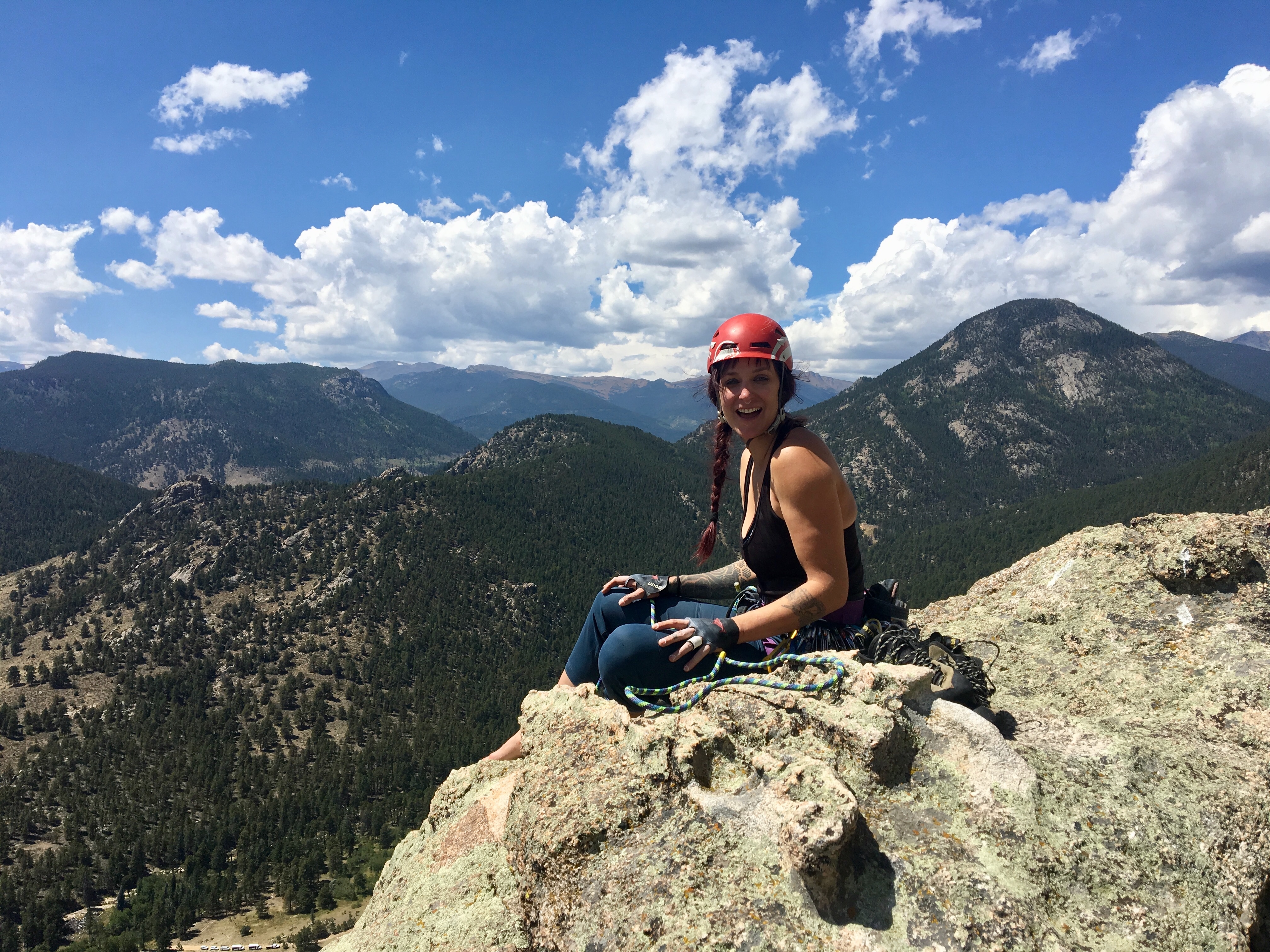
Photo Credit
It’s that time of year… time to find the perfect present for our adventurous loved ones. For fun, functional, and thoughtful gift ideas, browse our gift guides for hikers, travelers, backpackers, campers, runners, and snow sports enthusiasts.
For high-output activities where you want range of motion, breathability, and protection, it’s hard to beat a softshell jacket. Their breathable, stretchy fabrics offer fantastic performance and a comfortable fit that moves with you, making them ideal for layering. As long as you don’t take your softshell out in a serious rainstorm, most of these durable shells can withstand light wind and precipitation—you'll be hard-pressed to find a more versatile option for most outdoor activities. After nearly 10 years of testing a wide variety of softshell jackets, we are confident in recommending any of the 13 standout models below, though the Arc’teryx Gamma Hoody is our current favorite overall. Our picks range from casual jackets for daily use to performance pieces for backcountry skiing and ice climbing. For more background, take a look at our comparison table and buying advice below the picks, as well as more information about our testing approach.
Editor's note: We updated this guide on December 17, 2025, to add the Arc'teryx Gamma Hoody as our top pick and the Sitka Jetstream as our recommendation for the most durable option. We also removed several currently unavailable and discontinued models, and ensured that all prices, links, and colorways were up-to-date at the time of publication.

Category: Performance/casual
Weight: 1 lb. 0.4 oz. (men’s), 15 oz. (women’s)
What we like: Arc’teryx fit, quality, and performance in a versatile package.
What we don’t: Expensive; elastic cuffs make sleeve layering tricky; water-resistance could be better.
The Gamma Hoody is Arc'teryx's midrange offering in their popular Gamma line, and landed as our top pick for the season. This jacket has (almost) everything we love in a softshell: an abrasion-resistant face fabric, a lightly lined interior that doesn't sacrifice breathability, and a versatile look and fit for everything from in-town evenings to rock climbing and travel. Equipped with the brand's StormHood (a favorite of ours) for helmet-compatible weather protection and a tall collar to keep out drafts, this jacket has proven highly wind-resistant and provides a hit of protective warmth thanks to the combination of a tightly woven 220gsm polyester face fabric with a soft-knit backer for insulation and comfort next to the skin. The Gamma technically has a trim fit, but we've had good luck with different layering systems underneath, depending on the weather.
There isn't a lot to complain about with this classic mid-weight softshell, other than the price point. The pocket placement feels intuitive, and you can fully unzip the mesh-lined hand pockets to vent during higher output activities. The lining means the Gamma isn't the most breathable active layer, but for the level of protection this jacket provides, we've found it works well for moderate-output activities in cold weather. That said, while we were mostly impressed with the overall water-repellency and weather protection of the Gamma (it's not fully waterproof and will wet-out with extended exposure to moisture), the Gamma MX below offers a boost in terms of warmth and protection if you're specifically looking for something for colder weather. Additionally, the cuffs on the Gamma are small and non-adjustable, which will inhibit your ability to wear gloves under the sleeves. But overall, we're sold on the combination of fit, function, and durability in this versatile jacket.
See the Men's Arc'teryx Gamma Hoody See the Women's Arc'teyrx Gamma Hoody

 Category: Performance
Weight: 9.6 oz. (men's), 8.8 oz. (women's)
What we like: A high-quality lightweight softshell at an affordable price.
What we don’t: A bit heavier than the BD Alpine Start below; won't provide much warmth in cold temps.
We’ve been blown away by the performance chops of lightweight softshells like the Black Diamond Alpine Start below, and Rab offers an impeccably priced, quality option in their longstanding Borealis. Clocking in at just 9.6 ounces (8.8 oz. for the women's), the Borealis was designed to protect you from the wind while providing excellent mobility and breathability. True to its climbing intentions, it features two harness-compatible hand pockets (one of which doubles as a stuff sack), elasticized cuffs, and a sleek fitted hood that fits easily under a helmet. A simple hem adjustment rounds out this jacket’s minimalist build, and the most current iteration now features a recycled Matrix stretch fabric.
The Rab Borealis is a bit heavier than BD’s Alpine Start below, which translates to a boost in both durability and weather protection. Whereas the Alpine Start is still at home amongst windbreaker jackets, the Borealis is undeniably a softshell, which makes it a more suitable option for spring ski touring and rock climbing. On the other hand, we’d be more likely to wear the Alpine Start while winter running or climbing in milder temps, thanks to its stepped-up breathability and streamlined design (it also features an over-the-helmet-compatible hood). However, for significantly less money, the Borealis has a lot going for it and is a viable alternative for those seeking a minimalist (yet fully mountain-ready) softshell.
See the Men's Rab Borealis See the Women's Rab Borealis


Category: Performance
Weight: 7.3 oz. (men's), 6.4 oz. (women's)
What we like: Lightweight, packable, and versatile softshell.
What we don’t: Thin fabric offers little in the way of insulation.
The Black Diamond Alpine Start Hoody is one of the lightest softshells on our list and arguably the most versatile. Whereas heavier jackets like the Arc’teryx Gamma MX can only be worn when temperatures drop, the Alpine Start is a year-round layer. It’s easy to wear over anything from a t-shirt to a lightweight down jacket, depending on conditions. Made with thin stretch-woven nylon coated with a PFAS-free durable water repellent (DWR) finish, the Alpine Start is designed to keep out wind and rain without compromising ventilation. It delivers on all fronts: during an all-day drizzle on a trek in Patagonia, the Alpine Start’s shell beaded water and kept us dry while our hiking partners were forced to wear their less breathable rain jackets. The jacket is inherently flexible with excellent range of motion for unrestricted movement.
The Alpine Start blurs the line between a softshell and windbreaker jacket, a trend that has become increasingly prevalent as demand for lighter, more breathable, and versatile layers has grown. Don’t expect any insulation from the Alpine Start’s thin fabric though, and the stretch knit at the cuffs and hem will also limit how much you can layer underneath. But for runners, backcountry skiers, and climbers wanting a light, weather-resistant, breathable softshell that packs down super small (into its chest pocket), the Alpine Start is our favorite ultralight offering. It's worth noting that the jacket runs fairly large, so those on the fence may want to size down.
Read more: Black Diamond Alpine Start review (women's version)
See the Men's Black Diamond Alpine Start Hoody See the Women's BD Alpine Start Hoody


Category: Performance
Weight: 14.1 oz. (men's), 12.3 oz. (women's)
What we like: Lightweight, packable breathability that retains good wind resistance.
What we don’t: Cuffs could fit better; on the pricier side.
Engineered for high-output ski tours, the Nylon Flexlite material of the Dynafit Ridge Dynastretch keeps in all the warmth you want while still allowing moisture to escape. Acting as a crossover between a wind shirt and a softshell, the Ridge excels as a companion for high-intensity winter activities, with its PFAS-free DWR water-repellent coating keeping you dry even during drizzly weather. The generously-sized torso pockets offer excellent storage if you're taking laps and need to stow your climbing skins or other equipment during transitions. And speaking of storage, the Ridge is also highly packable, taking up a fourth of the space in our packs compared to some of the other softshells we've tested on ski tours. Dynafit is known as a skimo brand, emphasizing packability, function, and weight, and the Ridge series hits the mark perfectly.
While the Ridge Dynastretch jacket wins our pick as the best for backcountry skiing, it's important to note that it's kind of a one-trick pony. If you’re looking to wear a softshell around town or stay warm on casual walks or hikes, this jacket is not for you. It excels in what it was designed for—high cardio-output activities—but it’s not meant for less technical settings. In terms of fit, we didn’t love how the sleeve cuffs were tapered but not adjustable, making it hard to get the right fit around differently shaped gloves. However, the stretchy material allows this jacket to work with many types of layers underneath, and it was flattering with all of them. Looking for an uphill companion for the skintrack? You’ve found it.
See the Men's Dynafit Ridge Dynastretch See the Women's Dynafit Ridge Dynastretch

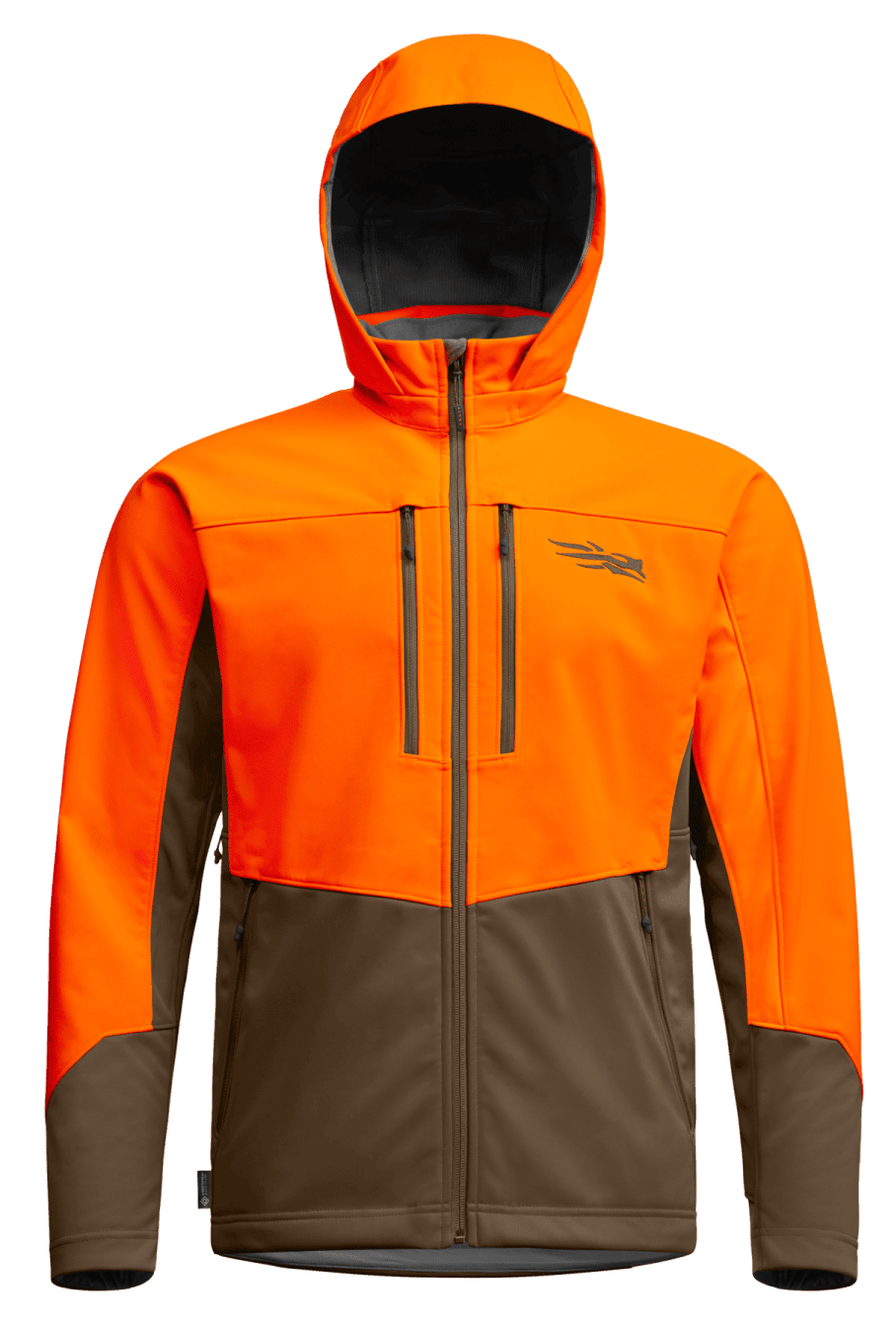
Category: Performance
Weight: 1 lb. 11.2 oz. (men's), 1 lb. 6 oz. (women's)
What we like: A highly wind-resistant, water-resistant layer with incredible longevity.
What we don’t: Heavy; updated model has a more technical look than the previous version; expensive.
The Sitka Jetstream is incredibly durable, highly protective, and can handle almost any weather you might encounter. It also layers easily with everything from a T-shirt to a slim down jacket. This is one of Sitka's flagship weatherproof layers, built with a Gore-Tex Windstopper membrane that, although not technically waterproof, offers some of the best water resistance we've ever seen in a softshell. Both the women's and men's models feature articulated shoulders and underarm gussets for freedom of movement, and the micro-grid backer provides warmth while still allowing airflow through the membrane and face fabric.
Yes, the Jetstream is expensive. No, you will not have to purchase more than one for what we can assume is the rest of your life. Our editor wrecked a dirt bike on asphalt while wearing this jacket and ended up with only the most minor abrasion on the sleeve, saving both the jacket and her right arm. We've also had the original men's model for more than 6 years of heavy wear, and our updated jacket looks good as new after 2 years of almost year-round wear. The Sitka comes in several proprietary OptiFade camouflage patterns, as well as more town-ready solids. The black colorway looks sharp as a travel jacket too, and the combination of hard-wearing materials, sleek looks, and versatile protection makes this a go-to athletic and travel jacket.
See the Men's Sitka Jetstream See the Women's Sitka Jetstream


Category: Casual
Weight: 1 lb. 8.7 oz. (men's), 1 lb. 6.3 oz. (women's)
What we like: A good-looking softshell with everyday appeal.
What we don’t: Not a great choice for anything overly active; less availability for women's versions.
Softshells offer great water resistance and breathability for fall and winter outdoor activities, but their hard-wearing nature also holds up well to everyday use. The North Face’s Apex Bionic 3 is a nice casual alternative to many of the more technical jackets in our lineup, with a clean appearance that includes three external pockets and a collar in lieu of a hood, though If you'd prefer having a hood, the Apex Bionic 3 Hoodie is available for men for $30 more, (there's currenlty no hooded version for women sadly). The fabric of the Apex Bionic is supple, and many of the colors have a classy heathered look. For everything from walking the dog in chilly or wet weather to light adventuring in the cold, this is a good-looking softshell option.
Keep in mind that The North Face Apex Bionic was designed for casual wear first and performance use second, and it’s far from our first choice for high-output activities. This classic jacket was given a cleaner, more streamlined design the last time it was updated, but it’s still boxier than most performance-oriented softshells, and the bulky fabric won’t pack away or stretch as well as the lightweight offerings on this list that are geared toward mobility. That said, the relaxed fit works well for layering, and the jacket does deliver in terms of wind and water protection. This is also a warmer and more durable option than many of the thinner, more technical options here. For everything from wet-weather commuting to short hikes, the Bionic remains one of our favorite casual softshells year after year.
See the Men's North Face Apex Bionic 3 See the Women's North Face Apex Bionic 3
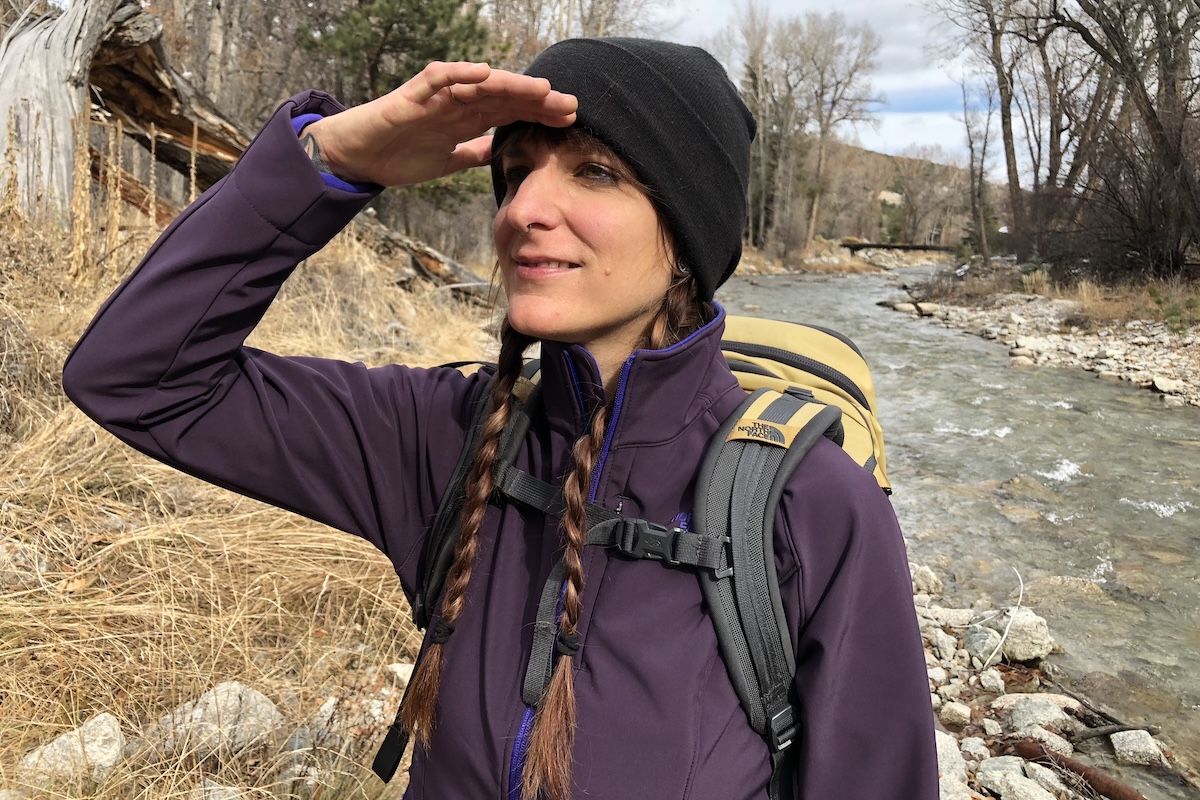

Category: Performance/casual
Weight: 1 lb. 4.6 oz. (men's), 1 lb. 2 oz. (women's)
What we like: Tougher, warmer, and more weatherproof than the Gamma Hoody above.
What we don’t: Quite a bit more expensive; women's version only has one chest pocket.
The Arc’teryx Gamma MX has been on the market for years, with plenty of summits and deep backcountry days to its name. It performs and is priced like a serious adventure softshell: You get bomber outer fabric, plenty of storage, and that glorious Arc’teryx fit that mountain guides and the hardcore crowd love. But unlike many performance pieces, the clean styling of the MX (which stands for "mixed weather") means you can more easily get away with wearing it off the mountain, too. And with a recent update, this time-tested classic has become even better, featuring a PFAS-free DWR treatment and a roomier "regular" fit (as opposed to a slim athletic fit) to facilitate easier layering underneath.
The Gamma MX is warmer than our top-listed Gamma Hoody, with a heavier fleece lining and added weather resistance. This can be a good thing or a bad thing, depending on your use, but the lining is quite comfortable and ideal for cold days. We appreciate the versatility of the lighter Gamma Hoody, but the more significant reason for the MX ranking lower is price: there simply aren't enough extras on the MX to justify the additional $100, though we will vouch for its incredible durability—one of our editor's has been wearing this jacket for close to 10 years and it still looks almost brand new. The Gamma MX has been around for years for a reason, and its popularity is practically legendary in the alpine community.
Read more: Arc'teryx Gamma MX review (women's version)
See the Men's Arc'teryx Gamma MX Hoody See the Women's Arc'teryx Gamma MX Hoody

Category: Casual/performance
Weight: 14.2 oz. (men's TechFace), 10.5 oz. (women's CrossStrata)
What we like: The comfort and breathability of fleece with a protective softshell exterior.
What we don’t: You get more versatility by layering a baselayer with a dedicated lightweight softshell or windbreaker.
Patagonia’s R1 TechFace Hoody and the women's R1 CrossStrata are a unique take on the traditional softshell jacket. You still get a stretch-woven face fabric, but with the addition of a soft fleece backer in the form of Patagonia’s microgrid R1. The result is the comfort and breathability of a fleece with the durability and weather protection of a softshell—all in a reasonably light package. And as we’ve come to expect from Patagonia, the R1 TechFace and CrossStrata are good-looking, too, proving their chops as highly versatile pieces that you can wear both on the trail and around town.
In many ways, these R1s are an all-in-one answer to a popular layering choice for backcountry skiing, hiking, and cold-weather climbing: a thick baselayer and light shell. Often, we prefer the versatility of two layers instead of one, but there’s no denying the convenience here. However, compared to more traditional softshells, the TechFace and CrossStrata offer slightly less protection due to their thinner shell and slightly more warmth thanks to the thicker liner, which isn’t the best combination for high-output winter activities. But as long as you keep these differences in mind, this is a great piece to reach for in the right conditions. And while Patagonia no longer makes the women's R1 TechFace, the R1 CrossStrata is a very similar layer—it features an additional drop-in pocket with a snap closure, an under-the-helmet hood instead of an over-the-helmet design, and a non-adjustable hem.
Read more: Patagonia R1 TechFace review
See the Men's Patagonia R1 TechFace Hoody See the Women's Patagonia R1 CrossStrata Hoody

Category: Performance
Weight: 13.9 oz. (men's), 12.6 oz. (women's)
What we like: Thin, light, breathable, and a solid price.
What we don’t: Lightweight build means less warmth and weather resistance.
The Outdoor Research Ferrosi is a far cry from the bulky, boxy design that typified softshell jackets of the past. At $149 and only 13.9 ounces for the men's version (12.6 oz. for the women's), it’s an affordably priced, thin, and lightweight shell that won’t weigh you down and excels at most high-output activities, including hiking, biking, climbing, and skiing. The Ferrosi is impressively tough and abrasion-resistant, will block out a good amount of the elements, and has excellent stretch and breathability. All in all, it’s a versatile jacket you can wear over a T-shirt in mild weather or over a puffy in the winter. And the cherry on top: the Ferrosi packs down small for a softshell, stuffing into its own hand pocket.
There are very few downsides to the Ferrosi; it's one we've known and loved for a decade. The older version had drawstrings on the front of the hood, which we somewhat miss, although removing them in lieu of a rear adjustment does make the jacket more suitable for technical use. However, on the other hand, the hand pockets are not positioned high enough to be compatible with a harness or hip belt, though this makes them more convenient for regular, daily use. And if you want your softshell to provide some warmth from a fleece lining, the Ferrosi will leave you chilly. These nitpicks aside, this classic jacket is a superb value, versatile for a range of activities, and a great crossover pick for both casual and performance use. Members of our team have worn every iteration of the Ferrosi over the years, and it's been a hard-wearing and extremely useful layer to own.
See the Men's Outdoor Research Ferrosi See the Women's Outdoor Research Ferrosi
 Category: Performance
Weight: 11.8 oz. (men's), 10.2 oz. (women's)
What we like: A minimalist yet waterproof softshell.
What we don’t: Trim fitting; waterproof membrane impacts breathability.
U.K.-based Rab specializes in technical outerwear for alpine endeavors, and their Kinetic 2.0 is a high-performance softshell built for backcountry skiing, climbing, and other high-output activities in cold and wet weather. This jacket inches closer to a hardshell than your standard softshell, combining a waterproof membrane with a stretchy knit face fabric. The end result is the softness and mobility of a softshell, along with the protection of a hardshell, which is a winning combination for working hard in winter conditions. Rab rounds out the streamlined and lightweight design with an under-the-helmet hood, two harness or hipbelt-compatible handwarmer pockets, velcro cuff adjustments, and a single-end hem cinch.
Manufacturers have been toying with the hybrid hardshell/softshell concept for a while, but the Kinetic 2.0 got our attention with its impressively lightweight build. For considerably less than the Gamma MX, the Rab will also keep you drier when the skies unleash. You give up some breathability with the waterproof membrane, and the Kinetic’s trim fit doesn’t allow much room for layering, but overall, this is an excellent layer to consider if you live somewhere with a lot of rain and like to get out in drippy weather.
See the Men's Rab Kinetic 2.0 See the Women's Rab Kinetic 2.0

Category: Performance
Weight: 1 lb. 0.6 oz. (men's), 15.3 oz. (women's)
What we like: A cozy softshell hybrid with functional ski-specific features.
What we don’t: Too warm for moderate days.
Similar to the R1 TechFace, the Odin Pro Shield combines a hefty, durable softshell exterior with a fleece liner, balancing the warm protection of fleece with a hefty, weather-resistant shell. For active days in variable winter conditions, it’s a thoughtfully made and purpose-built option from a trusted mountain brand. This jacket is part of Helly Hansen's ski touring-specific Odin collection, tailor-made for high-output winter activities that require both flexibility and protection in a durable, wicking shell.
The latest version of the Odin dropped nearly 5 ounces from the previous men's version and streamlined the materials for similar protection with less bulk. The new version retains the over-the-helmet hood, as well as the drawcord adjustment at the hem, and adds a built-in RECCO reflector. The women's zippered chest pockets are positioned lower on the jacket, around the midsection, while the men's sit at the chest, but for both, the updated version is more compatible with a hip belt and harness than the previous version. Overall, the Odin is an excellent hybrid design, but not our favorite for mild conditions or those pushing particularly hard up the skin track. But for sub-freezing aerobic activity or slow uphill travel, this is a fully serviceable choice.
See the Men's HH Odin Pro Shield See the Women's HH Odin Pro Shield
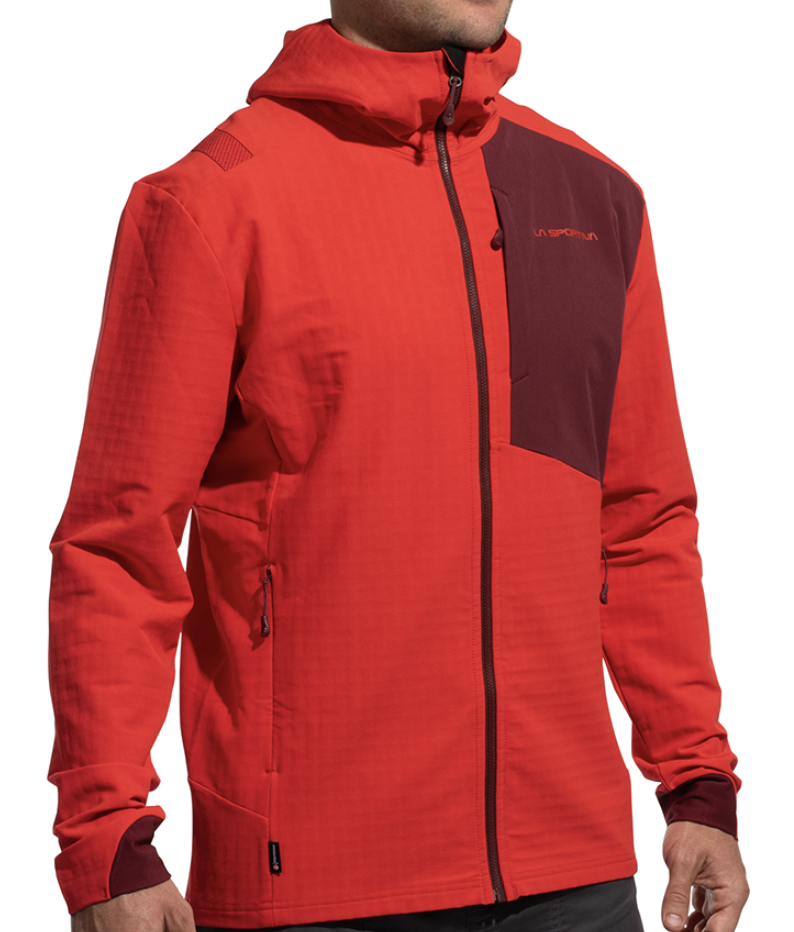
Category: Performance
Weight: 15.6 oz. (men's), 13.5 oz. (women's)
What we like: A reasonably priced, fleece-lined softshell that stands up to more expensive competitors.
What we don’t: Trim European fit; women's version has one less pocket.
La Sportiva's Descender Storm is a high-performance softshell hoody that prioritizes both performance and sustainable design. Like many modern hybrids on this list, it features windproof softshell fabric on the exterior and a soft fleece interior. We especially love this combination for high-output activities when you might just be layering a t-shirt underneath—the brushed lining feels great next to the skin, deftly wicks away moisture, and traps heat when you’re at rest.
We love the Descender Storm's clean styling, sleek hood, and articulated, performance-oriented fit, and the elastic patches at the cuffs lend a very secure and high-end feel. The women's model is similar, but leaves out the zippered chest pocket. All told, this is a solid alternative to the R1 TechFace and CrossStrata above, and you'll also save money. Additionally, the Descender Storm incorporates some notable sustainability measures, including recycled materials, a PFC-free DWR, and fleece material specifically designed to reduce microplastic shedding. Lastly, as with many La Sportiva layers, the Descender Storm is fairly trim-fitting, so you might want to consider sizing up for more mobility.
See the Men's La Sportiva Descender Storm See the Women's La Sportiva Descender Storm
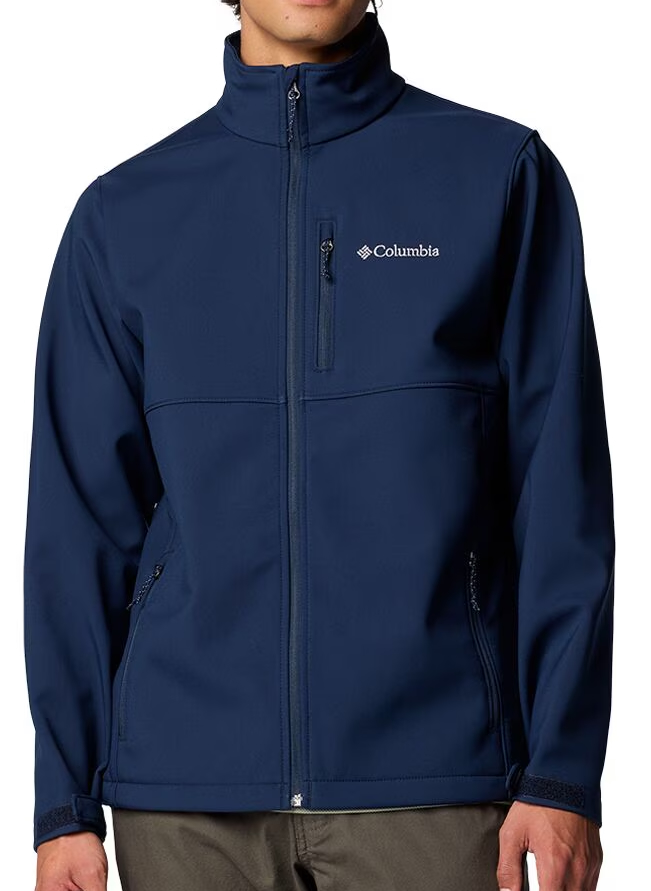 Category: Casual
Weight: 1 lb. 7 oz. (men's Ascender), 1 lb. 3.9 oz. (women's Kruser)
What we like: Works great for daily wear.
What we don’t: Generic fit; not a performance piece; no chest pocket or wrist adjustments on women's version.
Like The North Face Apex Bionic 3 above, the Columbia Ascender (and women's Kruser Ridge III) is geared toward everyday use and not necessarily for summiting mountains. If you want a softshell for daily wear from fall through spring or quick jaunts in the snow, the Ascender and Kruser are just about ideal. They are priced right and match up well with the Apex Bionic in durability and warmth, with a sturdy shell and fleece-lined interior.
What are you giving up at this budget-friendly price? The fit on these Columbia pieces is pretty generic, but you can squeeze a midlayer underneath or wear it over a dress shirt or blouse to and from the office. Don't expect technical prowess out of this jacket (and the women's version forgoes some of the features of the men's, such as a chest pocket and adjustable cuffs), but you probably already knew that by checking the price. On the topic of price, we often see the Ascender and Kruser at a significant discount (sometimes half off or more), making them an even better value.
See the Men's Columbia Ascender See the Women's Columbia Kruser Ridge III
| Jacket (men's/women's) | Price (M/W) | Weight (M/W) | Category | Helmet-Compatible Hood? | Pockets |
|---|---|---|---|---|---|
| Men's Arc’teryx Gamma Hoody Women's Arc'teryx Gamma Hoody | $300 | 1 lb. 0.4 oz./ 15 oz. | Performance/casual | Yes, climbing & ski | 4 |
| Men's Rab Borealis Women's Rab Borealis | $120 | 9.6 oz./ 8.8 oz. | Performance | Yes, under-helmet | 2 |
| Men's BD Alpine Start Hoody Women's BD Alpine Start Hoody | $199 | 7.3 oz./ 6.4 oz. | Performance | Yes, climbing | 1 |
| Men's Dynafit Ridge Dynastretch Women's Dynafit Ridge Dynastretch | $250 | 14.1 oz/ 12.3 oz. | Performance | Yes, climbing & ski | 2 |
| Men's Sitka Jetstream Women's Sitka Jetstream | $375 | 1 lb. 11.2 oz./ 1 lb. 6 oz. | Performance | No | 4 |
| Men's TNF Apex Bionic 3 Women's TNF Apex Bionic 3 | $160 | 1 lb. 8.7 oz./ 1 lb. 6.3 oz. | Casual | No | 3 |
| Men's Arc’teryx Gamma MX Women's Arc’teryx Gamma MX | $400 | 1 lb. 4.6 oz./ 1 lb. 2 oz. | Performance/casual | Yes, climbing & ski | 5 |
| Men's Patagonia R1 TechFace Women's R1 CrossStrata Hoody | $219/ $189 | 14.2 oz./ 10.5 oz. | Performance/casual | Yes, under-helmet | 2 |
| Men's OR Ferrosi Hoodie Women's OR Ferrosi Hoodie | $149 | 13.9 oz./ 12.6 oz. | Performance | Yes, climbing | 3 |
| Men's Rab Kinetic 2.0 Women's Rab Kinetic 2.0 | $240 | 11.8 oz./ 10.2 oz. | Performance | Yes, under-helmet | 2 |
| Men's HH Odin Pro Shield Women's HH Odin Pro Shield | $245 | 1 lb. 0.6 oz./ 15.3 oz. | Performance | Yes, climbing & ski | 3 |
| Men's La Sportiva Descender Storm Women's LS Descender Storm | $169 | 15.6 oz./ 13.5 oz. | Performance | Yes, climbing | 3 |
| Columbia Ascender Jacket Women's Columbia Kruser Ridge | $125/ $80 | 1 lb. 7.0 oz./ 1 lb. 3.9 oz. | Casual | No | 3 |
The utility of softshells is often overshadowed by hardshells, insulated jackets, and traditional rain jackets, but the more time we spend with these versatile layers, the more we have come to love them. From granite crack to skin track—and everything in between—a softshell is something of a "missing link" layer for the dedicated adventurer. The Switchback Travel team can regularly be seen testing these unique jackets while dangling off of tiny crimps hundreds of feet in the air, ripping down a snow-strewn peak, or simply bopping around town on a rest day. This guide was originally compiled in 2016 with 12 picks, and almost a decade later, our 12 picks all offer something unique for the entire spectrum of outdoor activities. Editor-in-Chief Penney Garrett currently leads the charge on this lineup, along with input from Contributing Editor Maggie Slepian, the Switchback staff, and the community. The team researches and tests softshell jackets as they explore mountaintops from Patagonia to Lake Tahoe to Vancouver Island.
Softshell jackets vary widely and are designed for a broad range of purposes and activities. We try to put each jacket through the wringer in the conditions and environments it is designed for and keep an eye out for key metrics when determining its worth. Wind and water resistance, breathability, weight, fit, mobility, and comfort are all important considerations. Finally, we recognize that the softshell jacket market is competitive and constantly evolving—there are more hybrid and crossover pieces in this realm than in almost any other. As a result, we strive to stay informed about new products as they emerge, adding standouts to our list along the way and ensuring that our existing reviews remain up-to-date.
.jpg)
As the name suggests, a softshell is a flexible outer layer that serves as an alternative to a traditional hardshell jacket. A fairly wide range of products fall under this jacket type, but all softshells are made with a woven nylon or polyester that gives them their signature stretchy feel. The face fabric is smooth and quite durable, while the interior is typically made of some form of brushed polyester or fleece grid, which provides varying levels of warmth. Softshell jackets are not designed to be impervious to the elements; instead, they’re meant to balance water and wind resistance with performance characteristics like breathability and mobility. We’ve found them to be the ideal choice in cool weather and when you’re working hard. For an even deeper dive into this topic, we’ve written a dedicated article answering the question: What is a Softshell Jacket?
.jpg)
Much like rain jackets, the softshell market is large (and growing), but it can be broken into two general categories: casual and performance. Casual softshells feature a generous fit and a basic set of features, making them ideal for use as an outer layer from fall through spring. They excel as a daily piece because their stretchy fabrics are far more comfortable and breathe better than a rain jacket. Even through a Seattle winter, we’ll still reach for our softshell jacket so long as there isn’t heavy precipitation in the forecast. Our favorite casual softshell is The North Face Apex Bionic 3. With a slick appearance and simple feature set, it looks great around town but has just enough performance chops for light adventuring should the mountains call, and it is a stellar value.

Performance softshells are intended for activities like climbing, mountaineering, and ski touring and leverage the two primary benefits of a softshell: breathability and mobility. Furthermore, these jackets feature outdoor-specific design elements, including helmet-compatible hoods, high-pockets that accommodate a hipbelt or harness, and a tailored fit. Relative to other performance outerwear, cost doesn’t increase substantially between the casual and performance options, in part because the technology is largely the same across the board. Two notable exceptions are the Arc’teryx Gamma MX and Rab Kinetic 2.0, which offer beefed-up weather protection for serious outdoor pursuits.
.jpg)
One of the reasons people hesitate to buy a softshell is that it lacks the security you get from a rain jacket or hardshell in terms of waterproofing. However, with a durable water repellent coating (DWR) that beads up and sheds water, and a tough outer fabric, most softshells can handle light rain showers or wind gusts just fine. Sustained moisture will make its way through most jackets, however, because they lack seam taping and a waterproof membrane. In the end, we don’t recommend a softshell for prolonged exposure to precipitation—hardshell jackets still are the best in that type of weather. At lower elevations, if you need an emergency waterproof jacket, a light and packable rain shell serves as an excellent backup.

Recently, we’ve seen an increase in hybrid hardshell/softshell designs, with jackets like the Rab Kinetic 2.0 leading the charge. With a 3-layer waterproof construction, seam taping, and a water-tight front zip, the Kinetic fits the definition of a hardshell, but a stretchy face fabric adds the mobility and breathability of a softshell. However, as we’ve come to expect with do-all jackets, the Rab makes compromises in both departments—with a streamlined build, it's less protective than most hardshells, and the thin fabric doesn't offer the same level of windproofing or insulation as most of the softshell competition. On the other hand, the Kinetic 2.0 is a great jacket for those looking for something in between.
.jpg)
Along with stretchiness, the breathability of a softshell is one of the category's best attributes. Softshells outperform waterproof hardshells in high-exertion activities like climbing or backcountry skiing, but the breathability of each model varies. The most breathable softshells are thinner designs that forego the tightly woven, tough outer layer. For maximum breathability, air permeability is your friend, as it allows more air to flow in and out of the shell. On the other hand, too much airflow compromises weather resistance and warmth. It’s always a balance, but most softshells offer very good breathability for an outer layer, with standouts including the Rab Borealis and Black Diamond Alpine Start.
.jpg)
Softshells can vary dramatically in thickness and warmth, ranging from thin shells that offer no insulation to thick, fleece-lined jackets. For use in the dead of winter, activities like ice climbing, or even over a puffy around town, heavier softshells like the Arc'teryx Gamma MX or Sitka Jetstream are great options. We often prefer the versatility of a lighter-weight jacket though, which can be worn over insulating layers and offers better breathability and the option for use in milder temperatures. Jackets like the Arc’teryx Gamma Hoody are more versatile—just as ready for a backcountry ski trip as they are for a spring hike.
It’s also important to note that uninsulated softshell jackets will not be warm enough on their own in subfreezing temperatures. Even if you’re working hard, you’ll need a good system of base and midlayers to stay comfortable. For recommendations on other insulated pieces, check out our articles on the best down jackets, synthetic jackets, and fleece jackets.
.jpg)
In general, softshell jackets are one of the heavier and least packable outer layer options, losing out to both hardshells and rain jackets in this regard. The weave of the stretchy fabric and fleece linings adds both bulk and weight, so it follows that the worst offenders are the warmest and most feature-rich softshells.
However, minimalist gear is gaining popularity, with softshells following suit. There are now several lighter options that weigh under 1 pound, including the Outdoor Research Ferrosi and the 9.6-ounce Rab Borealis. Beyond that, we’ve begun to see a whole new style emerging, merging the ultralight intentions of a windbreaker with the stretchy and breathable fabric of a softshell. For more, see our section on windbreaker jackets. The Black Diamond Alpine Start weighs just 7.3 ounces and packs into its own pocket, making it an excellent option for weight-conscious activities like running or climbing when you need a protective jacket that still vents heat.
.jpg)
While there aren’t exact parameters stating what is or isn’t a softshell jacket, one defining feature is the stretchiness of the shell fabric. In contrast to a rigid and sometimes confining hardshell or rain jacket, a softshell jacket flexes and moves with you. This stretchiness is helpful for demanding activities like climbing or fast-paced aerobic activities such as hiking or cross-country skiing. The extra give in the fabric also means you can be quite comfortable with a trim fit, which makes them better for high-output activities.

The fit of a softshell will most often correlate with its category, with casual jackets having a more generous, relaxed cut than tailored performance pieces. The fact that these jackets have extra stretch means that, in most circumstances, it’s still easy to slip a puffy underneath. If you’ll be taking the jackets to high elevations or need the added warmth of a winter-weight insulated jacket, you may need a more generous fit (or consider sizing up). Our ideal softshell features an athletic cut, allowing you to fully enjoy the stretchy and mobile characteristics of this jacket type.
Comfort is another area of strength for softshells, particularly the next-to-skin feel. The soft-touch fleece liners on many of these jackets make them quite comfortable, even when worn over a short-sleeved shirt. And as with fit, their stretchy nature is a boon for daylong enjoyment. The drawback to this is added weight. A minimalist softshell like the Black Diamond Alpine Start Hoody saves weight and packs down small, but has a crinkly next-to-skin feel. Conversely, a beefier jacket like Helly Hansen's Odin Pro Shield or the Sitka Jetstream offers greater warmth and comfort with cozy fleece liners and more protective shells, but runs on the heavy side and is too bulky for ultralight adventurers.

A good number of softshells are sold in both hooded and non-hooded styles. Generally, those who choose a performance softshell will opt for the hooded version for enhanced protection. Even if the hood isn’t waterproof, it can provide relief from light rain and wind, keep snow from entering your jacket, and offer additional warmth. But if you’ll be using your softshell as a midlayer or around town, a non-hooded version may be your better option.
Finally, if you’re using a helmet, make sure the softshell has a helmet-compatible hood. Because helmet sizes can differ (ski helmets are generally quite a bit bulkier than climbing helmets), you'll want to pay attention to what sort of helmet the hood is sized for. To help, we've provided a breakdown in our comparison table.
.jpg)
Pockets are a great place to start if you’re wondering about a jacket’s true intentions. You’ll find a range of storage options among softshells, from the single chest pocket on a minimalist jacket like the Black Diamond Alpine Start to the five-pocket design of some other models. In a casual jacket, we look for two standard-height handwarmer pockets near the hip, and one or two zippered chest pockets for storing valuables. Performance-oriented softshells are more of a mixed bag, and you’ll have to decide whether you want to prioritize weight savings (fewer pockets) or convenience and organization (more pockets). When it comes to softshells in our performance category, look for torso-height handwarmer pockets for easy access when wearing a harness or hipbelt, interior drop pockets for storing goggles or skins, or streamlined pockets that double as an integrated stuff sack for the jacket.
.jpg)
In recent years, one of the primary ways manufacturers have innovated is through the use of more sustainable materials. In terms of softshells, this means using recycled fabrics, adopting more responsible production practices (including the elimination of harmful chemicals from water repellent finishes, as seen in PFAS-free DWR coatings), and an emphasis on the ethical treatment of workers. Many companies also utilize the Bluesign system for sourcing materials responsibly. Patagonia is a clear leader in the sustainability movement, but brands like Outdoor Research, REI, Arc’teryx, and Black Diamond have also made a sizable effort to reduce their footprint. And while we encourage you to shop sustainably, we’re also big advocates of lowering consumption by reusing old gear. Many brands offer repair programs and used marketplaces for their offerings (such as Patagonia's Worn Wear and REI's Re/Supply), and local gear consignment stores can be treasure troves for like-new items.
.jpg)
Outdoor gear is becoming increasingly streamlined by the year, and windbreaker jackets are at the forefront of this movement. These jackets are exceptionally lightweight, generally weighing between 2 and 7 ounces, and often compress down to about the size of a coffee mug. And they’re small but mighty—made with breathable and water/wind-resistant nylon, they provide valuable warmth and weather protection. Climbers often bring a windbreaker jacket in lieu of an insulating baselayer, as it can easily be attached to their harness with a carabiner. They’re also popular with weight-conscious bikers, runners, backcountry skiers, and thru-hikers.

We certainly wouldn’t classify all windbreaker jackets as softshells. Some, like the Patagonia Houdini, do not stretch and are significantly lacking in breathability. That said, we see a trend towards wind layers becoming more and more stretchy and breathable—in other words, taking on the properties of a softshell. This results in a best-of-both-worlds hybrid layer that’s light and packable, breathable and pliable, and still impressively weather-resistant. We’ve included a few windbreaker-hybrids in our article—including the Black Diamond Alpine Start and Rab Borealis—but expect to see more and more of these hybrids pop up on our list as we continue testing them.
.jpg)
Softshells are a relatively new category, and early versions were simply fleece jackets with a tougher, more weather-resistant face fabric. They’ve quickly grown in popularity and technology and are now a realistic competitor to a hardshell for a number of alpine sports. Where softshells excel is in breathability, range of motion, and comfort. On the other hand, hardshells prevail in harsh conditions due to their waterproof and windproof exteriors, as well as their lighter weights. There is some crossover between categories, including jackets like the Rab Kinetic 2.0, which includes mechanical stretch in its waterproof design. That said, it’s not quite as stretchy as a softshell, and its fully waterproof design does result in slightly compromised breathability.
.jpg)
Both jacket types are completely viable options for activities like mountaineering, climbing, hiking, and skiing, among others. Your priorities should push you in one direction or the other, and realistically, those who spend a lot of time in the outdoors have at least one of each type. From our experience, the more familiar we’ve become with our gear and the conditions we’ll be heading out into, the more willing we are to reach for our softshell. It may not have that extra security blanket that comes with all the “proofing” of a hardshell, but its breathable and very comfortable nature makes it a lot more enjoyable to wear the entire day. For a deeper dive into the topic, see our article on Hardshell vs. Softshell Jackets.
Back to Our Top Softshell Jacket Picks Back to Our Softshell Jacket Comparison Table

_167e0.jpg?h=fbc67360&itok=EULcgpQI)
4887.jpg?h=fbc67360&itok=0-PrNtr4)
bcdc.jpg?h=fbc67360&itok=wmPMXiEZ)
9f2a.jpg?h=fbc67360&itok=fQSWoBqk)
d931.jpg?h=fbc67360&itok=IxEWTM0q)
_00c07.jpg?h=fbc67360&itok=ktluQoJu)
f40a.jpg?h=fbc67360&itok=Mng_sIOz)

90ed.jpg?h=fbc67360&itok=5fkKemHt)