
Photo Credit
Hardshell jackets are designed for the mountains: They're highly windproof, waterproof, breathable, and durable. This is the outer layer you turn to for ultimate protection while backcountry and resort skiing, mountaineering, alpine climbing, and 4-season trekking. We've tested these stalwart jackets all over the world, from notoriously windy southern Patagonia to the consistently wet Pacific Northwest. Below, we break down our 13 favorites for 2025, from minimalist models for those who want to move fast and light to burly models made to withstand harsh conditions. Yet again, the Arc’teryx Beta AR snagged our top award. For more information, see our comparison table and buying advice below the picks, along with details about our testing process. And for lighter-weight and more compressible jackets for everyday use and hiking, check out our article on the best rain jackets.
Editor's note: We updated this guide on December 11, 2025, to add the Mountain Hardwear Premonition UL Jacket as our top pick for an ultralight and packable hardshell, remove the unavailable Rab Kinetic Alpine 2.0 and Fjallraven Keb Eco-Shell, include photos from recent testing trips, and ensure all other information was current at the time of publishing. We also included a tested and dismissed section below our picks.

Category: All-around
Weight: 1 lb. 0.2 oz. (men's), 13.9 oz. (women's)
Waterproofing: Gore-Tex Pro ePE
Denier: 80D & 100D
What we like: Excels in just about every category.
What we don’t: Expensive and not ideal for fast-and-light trips.
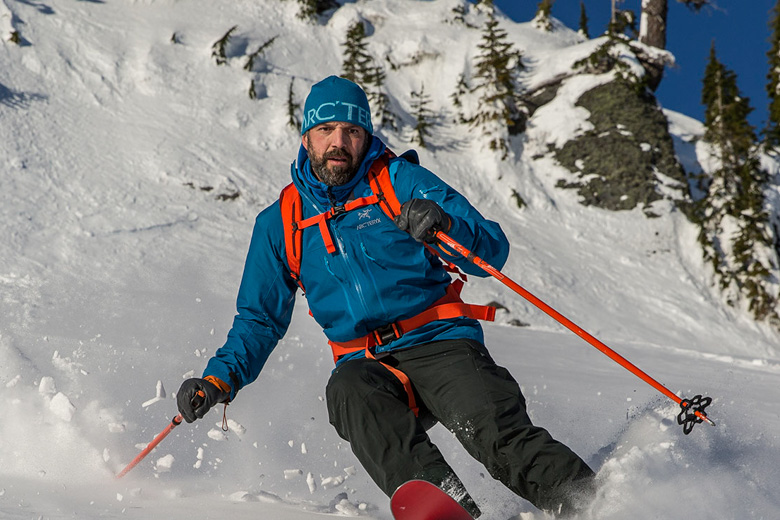
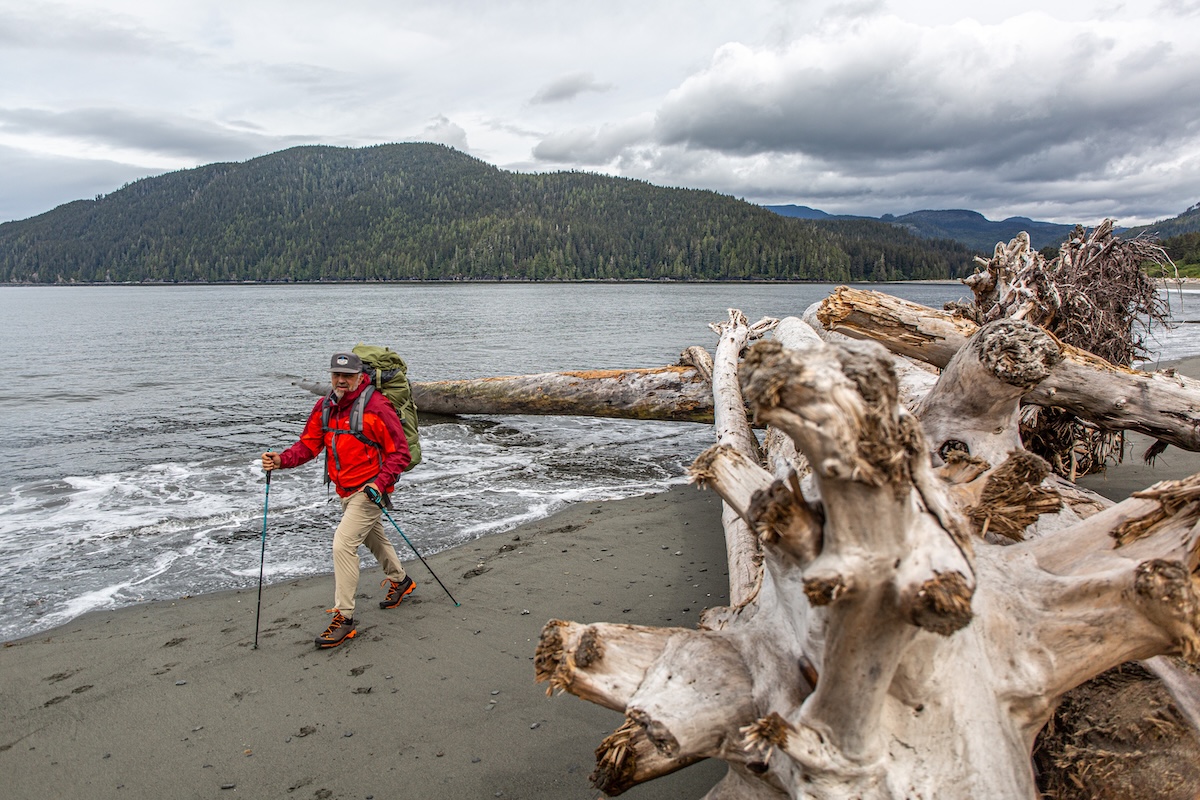
Hands down, Arc’teryx makes our favorite hardshell jackets. You pay a premium over the competition, but nothing else on the market matches the combination of performance, fit, and craftsmanship. Among the many pieces in their lineup, the Beta AR remains the quintessential do-all hardshell. The design is impressively tough for alpine use—with 80D 3L Gore-Tex Pro ePE on the body and reinforced with 100D 3L Gore-Tex Pro ePE on the yoke and upper arms—yet still breathable and comfortable enough for everything from ski hut trips to backpacking. Our tester wore the Beta AR as her only shell for months of mixed weather in the Dolomites, along Vancouver Island’s wet and rugged west coast, and throughout the Canadian Rockies, consistently praising its reliable waterproofing, wind protection, and versatility. Arc’teryx also refined the jacket through several iterations, adding a Recco reflector for rescue scenarios and adjusting the hood and collar to enhance overall fit.
The Beta AR’s top-end Gore-Tex Pro construction delivers outstanding protection, but it’s the detailing that sets it apart. The tall collar and highly adjustable DropHood kept our tester dry during hours of drizzle, and all zippers—including the WaterTight Vislon main zip—kept moisture out. Pit zips proved helpful on steep climbs, and while the jacket doesn’t include a two-way main zipper for dumping heat, breathability remained solid during moderate exertion. Durability has also been excellent: despite repeated contact with rock on via ferratas and tight descents, the shell shows no signs of abrasion, and all adjusters and zippers continue to operate smoothly. Fit hits the sweet spot for layering and mobility, with enough room for lofty midlayers like the OR Helium Down Hoodie. The Beta AR isn’t the lightest option, and the Alpha SV below is burlier, but for all-around backcountry use, nothing matches its blend of ruggedness, weather protection, and all-season capability. The only real downside, as always, is the price.
Read more: Arc'teryx Beta AR review (men's version)
See the Men's Arc'teryx Beta AR See the Women's Arc'teryx Beta AR
 Category: Minimalist
Weight: 10.9 oz. (men's), 9.9 oz. (women's)
Waterproofing: H2No Performance Standard
Denier: 30D
What we like: Alpine-centric build and 3-layer protection in a minimalist package and affordable design.
What we don’t: No hand pockets or pit zips.
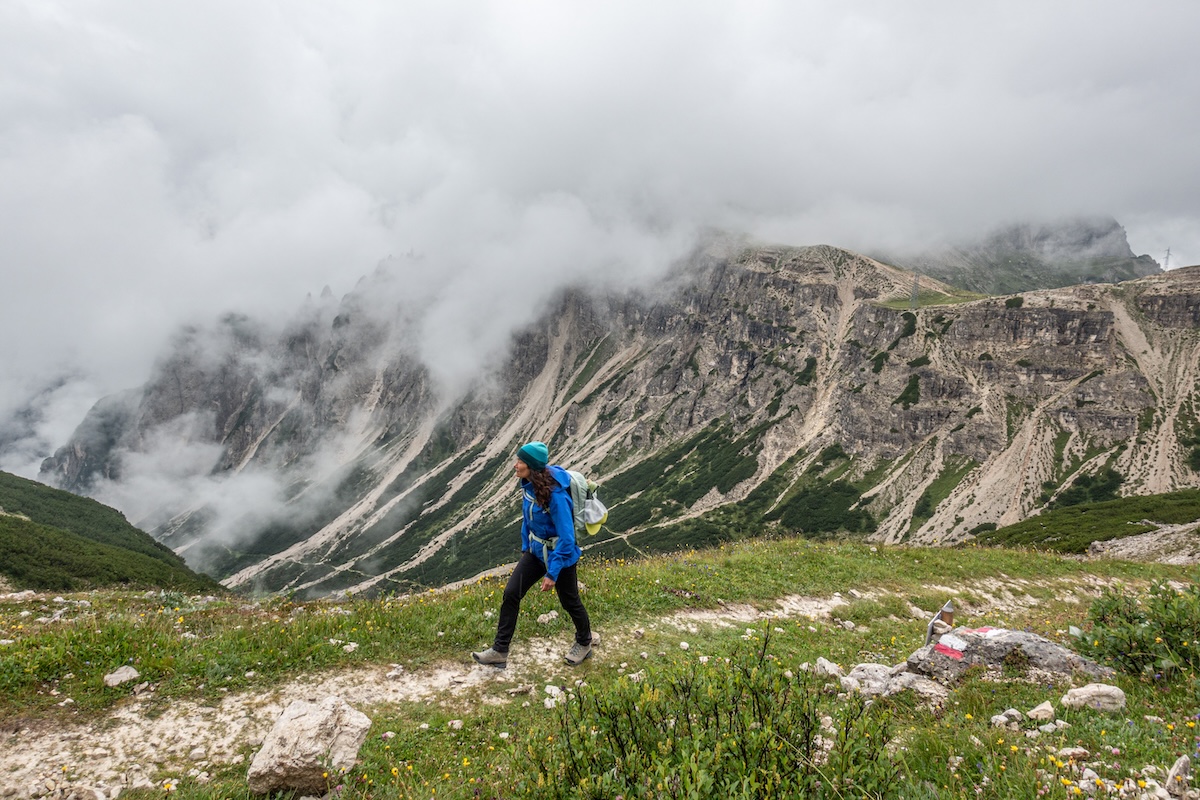
It's nice to have the all-out security of a jacket like the Alpha SV or Beta AR, but for more budget-minded adventurers and weight-conscious missions like backpacking and alpine climbing, you can get away with a lot less. Patagonia's M10 Storm Jacket—the successor to the beloved Storm10—is a minimalist hardshell at its finest, packing 3-layer waterproof and breathable protection into a 10.9-ounce design that stows away in its chest pocket. Further, Patagonia didn't totally eschew creature comforts: You get a supple knit backer for next-to-skin comfort, three drawcords for dialing in the fit of the hood, two large chest pockets that are easy to access underneath a backpack hipbelt or climbing harness, and hook-and-loop cuffs with a grippy lining to keep them in place when reaching overhead. For fast-and-light or multi-day objectives when space is at a premium, it doesn't get much better.
Of course, there are some compromises to opting for such a streamlined, affordable jacket. While Patagonia opted for a thicker (30D) shell fabric than we’re used to seeing on ultralight pieces, the M10 Storm forgoes hand pockets entirely and omits pit zips for dumping excess heat. Further, the jacket fits on the trimmer end, although we found it to be a nice match for the intended use: The M10 is streamlined enough to stay out of the way on technical objectives but not so tight that it’s uncomfortable to wear while performing camp chores or relaxing after a long day out. Overall, we think Patagonia did a great job with the revamp, making the M10 Storm an excellent option for those seeking reliable technical performance in a featherweight package. The men's and women's models are largely similar, but the chest pockets of the women's jacket sit a bit lower than the men's. For an even lighter-weight (and cheaper) option from Patagonia, their running-focused Storm Racer checks in at a scant 7.2 ounces but is even more compromised in terms of features.
Read more: Patagonia M10 Storm review (women's version)
See the Men's Patagonia M10 Storm See the Women's Patagonia M10 Storm
.jpg)
 Category: Alpine
Weight: 1 lb. 1.4 oz. (men's), 14.8 oz. (women's)
Waterproofing: Gore-Tex Pro ePE
Denier: 100D
What we like: Bombproof shell with fantastic detail work.
What we don’t: Very expensive.
For the toughest alpine conditions—think piercing wind, driving rain, sleet, and snow—you won't find a tougher shell than the Arc'teryx Alpha SV. This jacket sits at the very top of the Arc'teryx lineup in terms of both weather resistance (the SV means "severe weather") and price, and its performance while ski touring and mountaineering does not disappoint. This classic has undergone several updates in the last few years—the switch to a PFAS-free Gore-Tex Pro ePE construction being the most recent—and the face fabric is made with fully recycled materials. Given the strong 100D build, it's impressive that the Alpha SV is just over an ounce heavier than the Beta AR above and only slightly less packable. It's also not lacking in features: You get pit zips, plenty of interior and exterior pockets, and trustworthy zippers.
There is literally nothing negative we can say about the Alpha SV's weather protection or durability, but this jacket is realistically overkill for a lot of folks. The high price tag is eye-wateringly steep, and for the average backcountry explorer, the jacket's tank-like construction is more than you'll ever need. Moreover, you do lose out on hand pockets with the alpine-focused design like this. In the end, you can certainly save money and a smidge of weight with an alternative like the Beta AR, but if you're looking for an iconic mountain hardshell that can handle some of the world's worst weather, this is it.
Read more: Arc'teryx Alpha SV review (prior men's version)
See the Men's Arc'teryx Alpha SV See the Women's Arc'teryx Alpha SV
.jpg)
Category: Minimalist
Weight: 11.2 oz. (men's), 9.9 oz. (women's)
Waterproofing: 3L Pertex Shield
Denier: 20D
What we like: Minimalist, lightweight design with great durability.
What we don’t: Snap pit vents aren't for everyone; fabric has an interesting lingering smell.
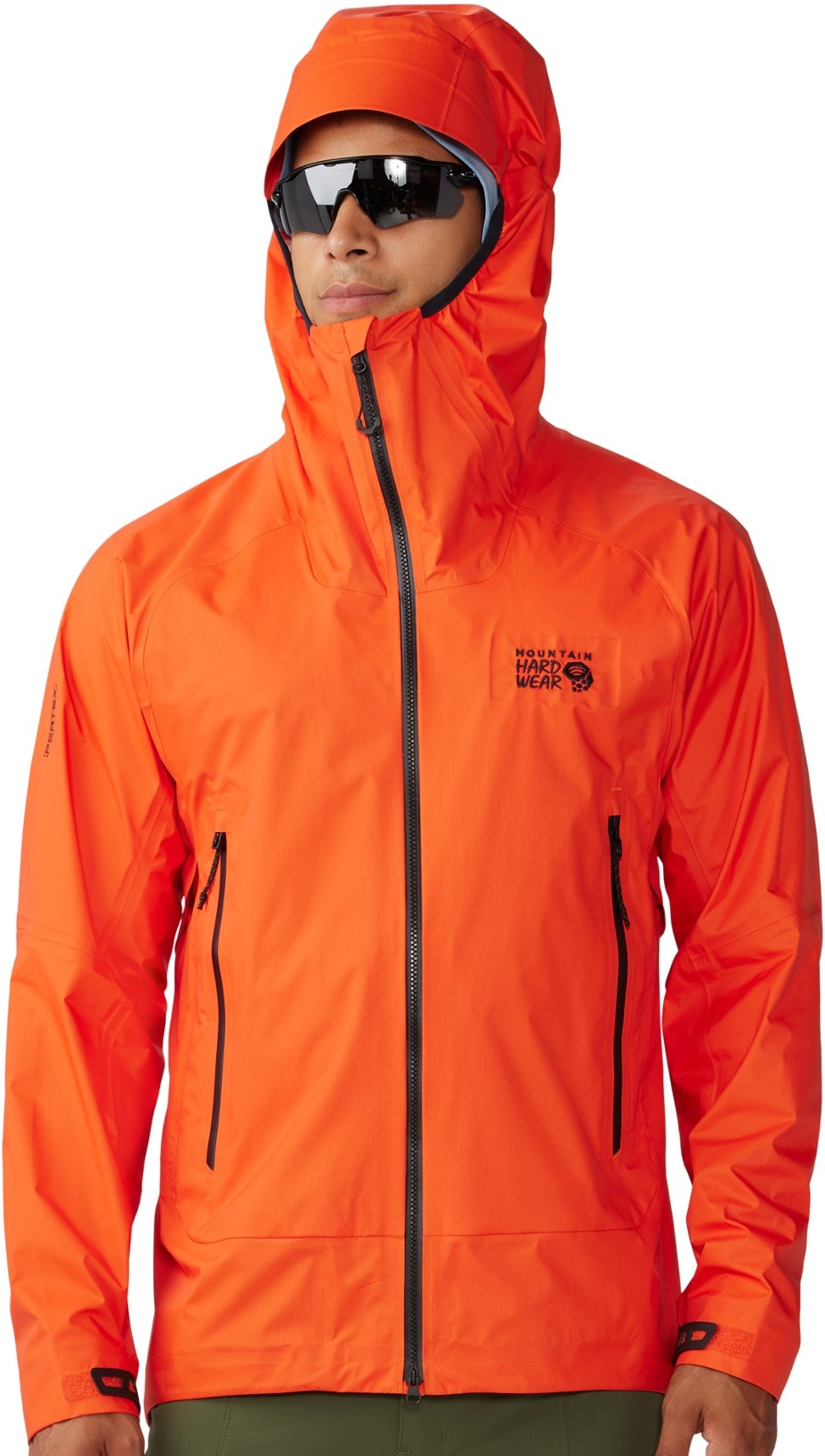
We generally don't see the words "hardshell" and "ultralight" in the same sentence, but that's how the Mountain Hardwear Premonition UL Jacket was pitched to us, and the brand isn't wrong. Delivering hardshell-like performance and durability in a shockingly light and packable silhouette, this thing punches well above its weight. While the budget-friendly Patagonia M10 above features a slightly lower weight, we feel like the Premonition is far and above the more versatile, ultralight pick due to its durability (despite having a 20D shell) and feature set (we much prefer the pocket layout on the Premonition, and the snap-closure pit vents). We also prefer Pertex Shield over Patagonia's proprietary H2No fabric. Comparisons aside, the Premonition is in a class of its own in the hardshell realm—durable enough for nail-biting alpine ascents, but light enough for demanding backpacking trips with some light off-trail bush-bashing. A true quiver of one. We've battled through brambles, shoved our way up granite chimneys, and trekked countless miles in the Premonition, and it just keeps on ticking. Also, to shave off even more weight, it is offered in an Anorak version (a plus when wearing a harness or backpack hipbelt).
It's difficult to find any significant drawbacks with this jacket, but some concessions were made to achieve such a lightweight design. It has just the essential feature set, and some may prefer zippered pit vents instead of buttons (which are used to save weight overall). Additionally, we noticed an interesting chemical smell when we first put on the jacket, which has not diminished significantly over time. It's not overbearing, but something to consider. All told, in an increasingly competitive market, the Premonition offers something unique for alpine climbers and backpackers alike.
See the Men's Mountain Hardwear Premonition UL See the Women's Premonition UL Jacket

Category: All-around
Weight: 15.2 oz. (men's), 13.2 (women's)
Waterproofing: Gore-Tex ePE
Denier: 40D & 70D x 160D
What we like: Reliable, sturdy Gore-Tex construction in a light and compressible design.
What we don’t: No hand pockets and especially long cut.
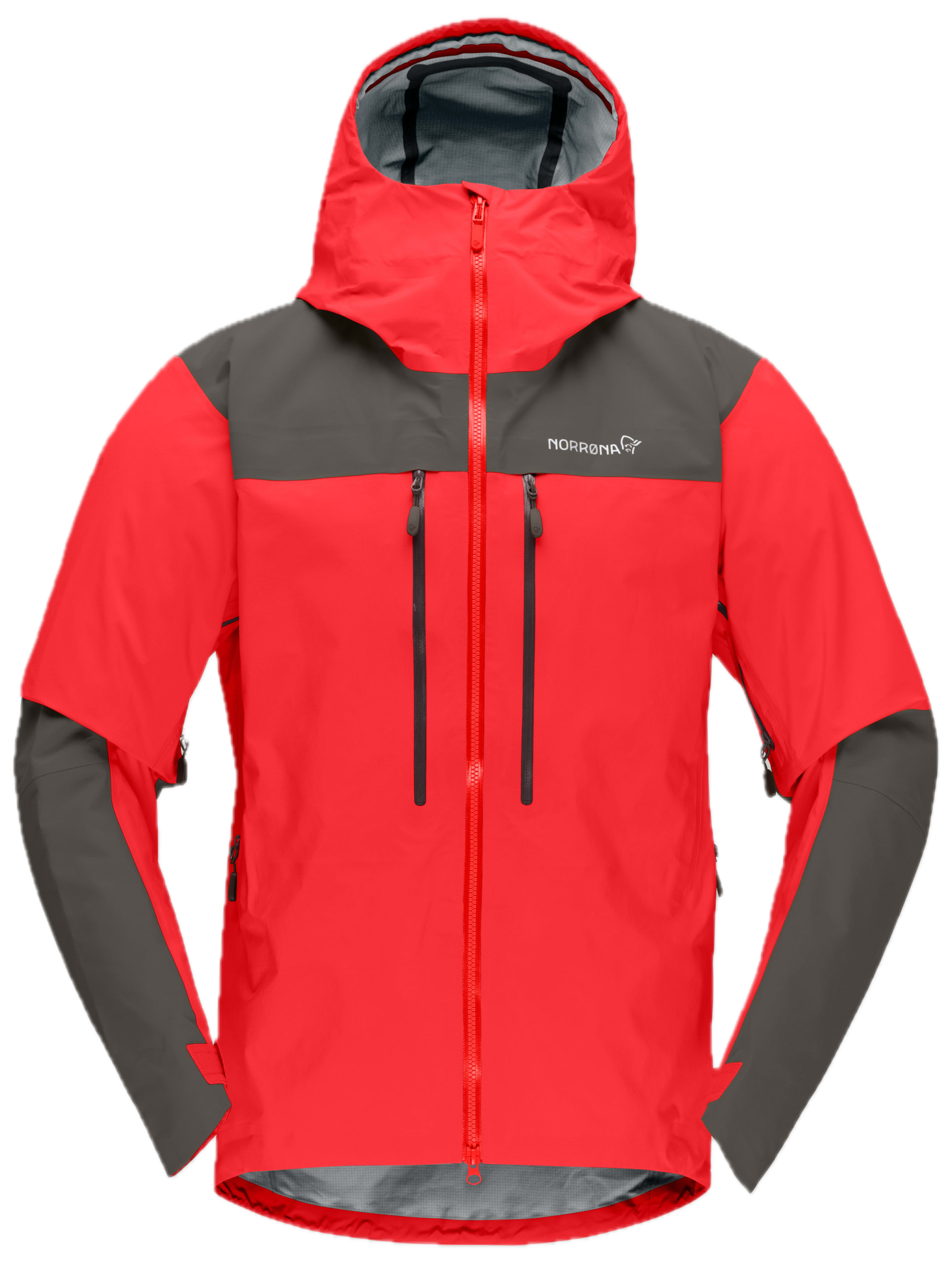
Norrøna may not be on everyone’s radar, but the Norway-based outdoor company has a serious lineup of quality hardshells. From their flagship Trollveggen series is the Gore-Tex Pro Light, which goes head-to-head with top-end designs like the Arc’teryx Beta AR above. Recently updated with Gore's sustainably minded ePE membrane, the shell remains a standout for high-alpine adventures with a long cut, 40D face fabric, and burly 70D by 160D reinforcements, a helmet-compatible hood, and a tall collar. But Norrøna still kept the weight intentionally low, which gives it versatility for weight-conscious activities like hiking and backpacking. And with large pit zips and a two-way main zipper, you can customize airflow for all manner of activities and conditions.
Where does the Trollveggen Light come up short? As mentioned above, the alpine-focused build means the jacket doesn't have hand pockets—instead, you get just two external chest pockets and one internal zippered stash. What’s more, the jacket features a very long cut, which is great for coverage but slightly polarizing if you'd like to crossover into casual use. In contrast, the Beta AR has a more standard length and convenient hand pockets, which are situated high enough to still be accessible under a hipbelt or harness. Both are exceptionally built and highly protective shells, but the Beta AR’s more versatile design (and lower price) might be the deciding factor for many. Finally, the Trollveggen’s sizing runs a little small, and we wound up going up a size.
Read more: Norrøna Trollveggen GTX Pro Light review (prior men's version)
See the Norrøna Trollveggen GTX Pro Light See the Women's Trollveggen GTX Pro Light
 Category: All-around
Weight: 1 lb. 2.0 oz. (men's), 1 lb. 1.6 oz. (women's)
Waterproofing: Gore-Tex
Denier: 75D
What we like: A solid and trustworthy Gore-Tex shell at a reasonable price.
What we don’t: Fairly heavy; fits and feels a little too much like a ski jacket.
It's easy to get excited about all the fun tech working its way into the hardshell world, but there's something to be said for a simple 3-layer Gore-Tex jacket. Patagonia's Triolet is just that, and it offers a lot in its no-nonsense package. The jacket's 75D face fabric and proven Gore-Tex build are plenty burly for alpine use, four exterior zippered pockets (plus a drop-in interior pocket) offer great organization, and two-way pit zips dump heat in a hurry. Plus, the Triolet excels as a ski jacket thanks to its extended cut and regular fit that easily accommodates a midlayer underneath, embedded Recco reflector, and glove-friendly adjustments. All in all, that's a lot of features and versatility for under $500.
The Triolet features Gore's PFAS-free membrane, which is both lighter and thinner than their standard ePTFE membrane. This means that the jacket requires fewer materials—thus, fewer pollutants—to produce, resulting in a drop in weight. However, we still feel that the Triolet falls short for high-output activities or fast-and-light missions: The thick shell can’t match the breathability of thinner alternatives or more advanced waterproof membranes (like Gore-Tex Pro), and its 1-pound-2-ounce weight can be a burden to carry for extended periods. Further, the Triolet’s substantial build and regular cut have a negative impact on mobility (it feels more like a ski jacket than alternatives like the Beta AR above). Despite its shortcomings, the Triolet’s trustworthy design makes it a go-to hardshell option for a wide range of winter sports at a good price.
Read more: Patagonia Triolet review (men's version)
See the Men's Patagonia Triolet See the Women's Patagonia Triolet
 Category: All-around/minimalist
Weight: 12.0 oz. (men's), 10.6 oz. (women's)
Waterproofing: Gore-Tex ePE
Denier: 40D x 70D
What we like: A streamlined version of the Beta AR above for less money.
What we don’t: Less winter-ready than the AR.
British Columbia-based Arc’teryx knows a thing or two about harsh mountain environments, and their Beta collection is well equipped to handle rough and rowdy weather. A streamlined addition to the line is the Beta SL, which we most recently brought on a three-day backpacking trip in Wyoming’s Wind River Range. Despite frequent downpours, the Beta SL kept our tester dry and cozy thanks to its proven Gore-Tex membrane and nice array of protective features, including an adjustable hood that boasts excellent coverage, Velcro cuffs that extend past the wrists, dual hem drawcords, and pit zips for dumping excess heat. Arc’teryx also tacked on Gore’s C-Knit backer, which adds a nice dose of next-to-skin comfort and helps avoid the crinkly and stiff feel common among traditional hardshells. And at just 12 ounces (10.6 oz. for the women's version), the Beta SL manages to pack it all in for less weight than the Beta AR and Alpha SV above.
Apart from the high price tag, which is actually on the cheaper end for a 3-layer shell from Arc’teryx, the Beta SL is a bit limited in storage with just three zippered pockets. Additionally, while the “fitted” cut is great for performance use, those who are in between sizes or prefer to layer heavily underneath should consider sizing up. And there are other signs of shaving weight: the cuff adjustments are fairly thin, there’s no two-way main zipper to prevent bunching or accomodate a belay device, and the 40D by 70D shell fabric—while trustworthy—lacks the truly bombproof feel of thicker alternatives like the Beta AR and Alpha SV above (it's less ski-ready than both of those options). However, overall, we feel the Beta SL strikes a good balance of its priorities, and the fact that it undercuts the AR in price is certainly a selling point.
Read more: Arc'teryx Beta SL review (women's version)
See the Men's Arc'teryx Beta SL See the Women's Arc'teryx Beta SL
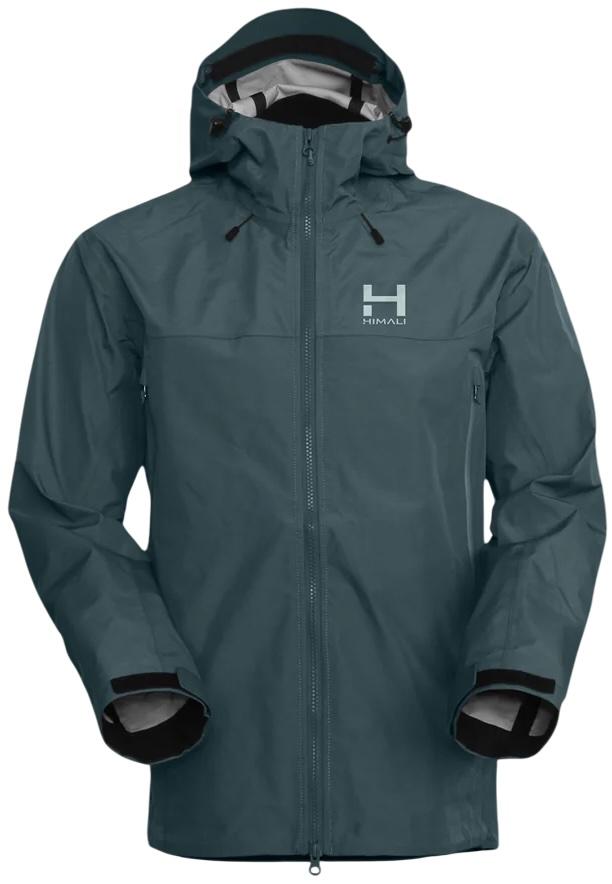 Category: All-around
Weight: 15.4 oz. (men's), 14.2 oz. (women's)
Waterproofing: Toray
Denier: 50D
What we like: Premium all-around performance for less than the competition.
What we don’t: We had a couple small fit and finish issues during testing; not as widely available as many competitors.
Colorado-based Himali specializes in premium mountaineering apparel built to withstand seriously harsh conditions—the brand was founded by an 18-time Everest summiter, and their gear reflects that pedigree. We’ve now taken their all-rounder Monsoon hardshell from Chilean Patagonia to the Canadian Rockies and the storm-lashed coast of Vancouver Island, and it continues to punch well above its price. The Toray Dermizax 20K/20K 3-layer membrane has proven impressively waterproof against heavy rain, dense coastal mist, and blustery alpine winds, and the supple, quiet fabric offers a soft next-to-skin feel reminiscent of C-Knit. Himali also nails the details, including smooth YKK zippers, fleece at the collar and cuffs, hipbelt-friendly pockets, and a helmet-compatible hood with excellent range of motion. With a modest weight and packing down to roughly the size of a Nalgene bottle, the Monsoon feels well-positioned as a true four-season shell.
The main downsides are subtle but worth noting. Himali recently bumped the price, and while the Monsoon still undercuts options from Arc’teryx, the value gap is narrower than before. Fit was another mixed bag: Himali advertises a roomy cut, but both of our testers found it a bit snug—particularly around the waist—and the sleeves on the women’s model ran short for our 5’6” tester. We also missed having internal dump pockets, and the rubberized logos have already started peeling from pack abrasion (purely cosmetic, but still a bummer). Availability can sometimes be hit or miss, too. But for those prioritizing weather protection, comfort, and thoughtful features at a lower cost than the marquee brands, the Monsoon deserves a spot high on your list.
See the Men's Himali Monsoon See the Women's Himali Monsoon

Category: All-around/minimalist
Weight: 12.6 oz. (men's), 11.5 oz. (women's)
Waterproofing: Gore-Tex ePE
Denier: 40D
What we like: A boost in coverage and comfort compared to the other options here.
What we don’t: Pricey and lacks the crossover appeal of Arc’teryx shells.
Jackets in Norrøna’s Trollveggen collection offer uncompromising protection for serious alpine missions, while the Falketind lineup tones things down with lightweight yet durable shells built for four-season versatility. After extended testing in both the Canadian Rockies and along Vancouver Island’s misty Juan de Fuca coastline, the Falketind Gore-Tex Jacket has become a go-to layer for us for fast-and-light objectives. At just 12.6 ounces (11.5 oz. for women), it rivals featherweight options but offers a longer, narrower Scandinavian cut that many will appreciate for added arm and hem coverage. The 3-layer ePE Gore-Tex membrane has reliably fended off light rain, coastal mist, and punishing winds, while thoughtful touches like articulated elbows, smooth YKK water-resistant zippers, a soft brushed chin guard, and a highly protective helmet-compatible hood round out its technical appeal. And for frequent travelers or minimalist packers, the jacket stuffs neatly into its own hood to roughly the size of a Nalgene bottle.
As with most Norrøna pieces, the fit may be the biggest consideration: The brand consistently runs long and slim, and our tester once again preferred to size up for better freedom of movement and easier layering. The narrower cut also limits how bulky a midlayer you can fit underneath, and the cuffs have wide openings that almost always require cinching. And like any lightweight Gore-Tex shell, breathability still has its limits, even with pit zips to help dump heat during high-output climbs. But overall, the Falketind stands out as a highly technical, well-built shell that punches above its weight for everything from hiking and backpacking to ski touring, offering a compelling alternative for those who want more coverage and winter friendliness without a major bump in weight.
See the Men's Norrøna Falketind Gore-Tex See the Women's Norrøna Falketind Gore-Tex
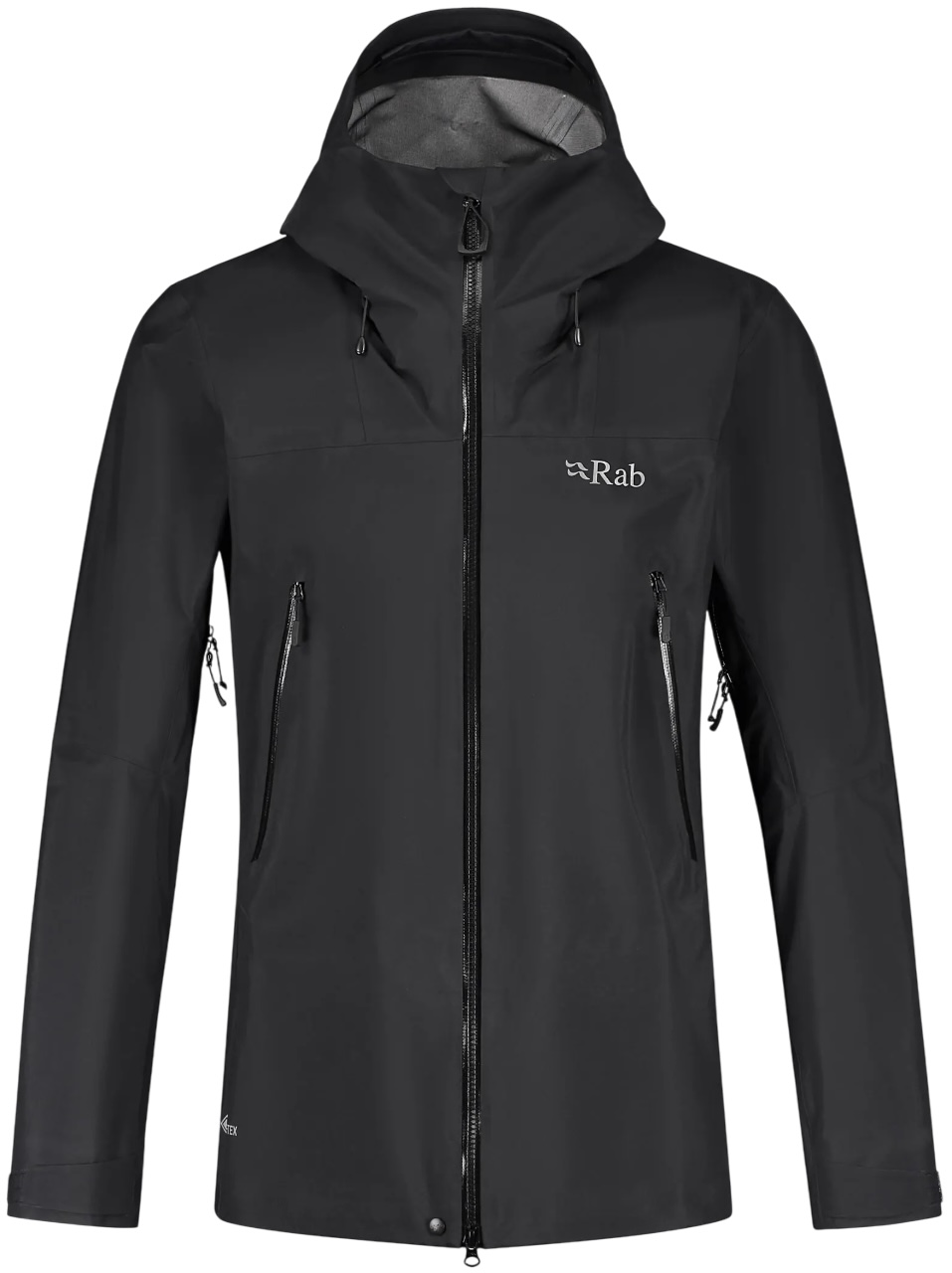 Category: All-around
Weight: 1 lb. 2.5 oz. (men's), 13.8 oz. (women's)
Waterproofing: Gore-Tex
Denier: 70D
What we like: A well-priced and versatile Gore-Tex hardshell for backcountry use.
What we don’t: Main zipper is not water-resistant; length is a bit overkill for backpacking and hiking.
U.K.-based Rab is no stranger to variable alpine conditions, offering a full lineup of hardshells for everything from winter mountaineering to fast-and-light missions. And good news for value seekers: their outerwear is often priced for considerably less than the competition without any real drop in quality. The popular Kangri GTX is no exception: For a relatively low price, it’s fully prepared for bad weather, with a Gore-Tex membrane and burly, 70D nylon shell. You also get a full suite of features that hold little back, including a two-way center front zip, glove-friendly zipper pulls, large harness-compatible hand pockets, and two-way pit zips. We appreciated the Kangri’s protection while backpacking in Patagonia’s always inclement weather, but it’s also a well-rounded choice for backcountry skiing, mountaineering, winter alpinism, and even urban use.
The Kangri is far from minimalist, and Rab shows a clear prioritization of price over weight with the choice of an internal storm flap behind the front zip rather than a water-resistant zipper. What's more, the generous coverage struck us as a bit overkill for hiking and backpacking—it actually hindered mobility when bending over to tie boots, filter water, and so on. However, compared to other jackets with similar construction (such as the Patagonia Triolet above and the Helly Hansen Odin 9 Worlds below), the Kangri feels significantly less like a ski jacket and weighs in at about an ounce less, too. In the end, we think it's best suited for backcountry activities in the cold, whether you're a casual snowshoer or a serious peak-bagger.
See the Men's Rab Kangri GTX See the Women's Rab Kangri GTX

Category: All-around
Weight: 1 lb. 1.8 oz. (men's), 15.6 oz. (women's)
Waterproofing: Gore-Tex ePE
What we like: A confidence-inspiring hardshell outfitted with OR's bicep-to-hem underarm vents.
What we don’t: The Triolet above is a bit cheaper and more refined.
Seattle-based Outdoor Research knows a thing or two about wet, rugged conditions, and that expertise shines through in their Headwall Gore-Tex 3L Jacket. We put the Headwall through the wringer in the Pacific Northwest and found it to be a reliably protective layer for everything from tough backcountry ski missions to mild, rainy hikes with the dog. Its 75D shell has held up well to rough use, including countless chairlift rides, bushwhacking, and being tossed in the back of the car. In addition, the boxier fit allows for easy layering, and OR’s exceptionally long TorsoFlo vents—which extend from the bicep to the hem at each side—offer class-leading breathability (at the expense of some style points). And while OR jackets can be hit or miss in terms of attention to detail, the Headwall is a truly nice-feeling piece, featuring smooth-operating YKK zippers, easy-to-adjust Velcro cuffs, and glove-friendly toggles at the hood and hem.
Despite its solid all-around performance, the Headwall faces stiff competition. Jackets like the Patagonia Triolet offer similar 75D Gore-Tex ePE builds at lower prices, and the cut adds appeal for resort skiing. None of these options are particularly light or packable, but we think the TorsoFlo system is enough of a standout feature to warrant including the Headwall on our list.
See the Men's OR Headwall Gore-Tex 3L See the Women's OR Headwall Gore-Tex 3L
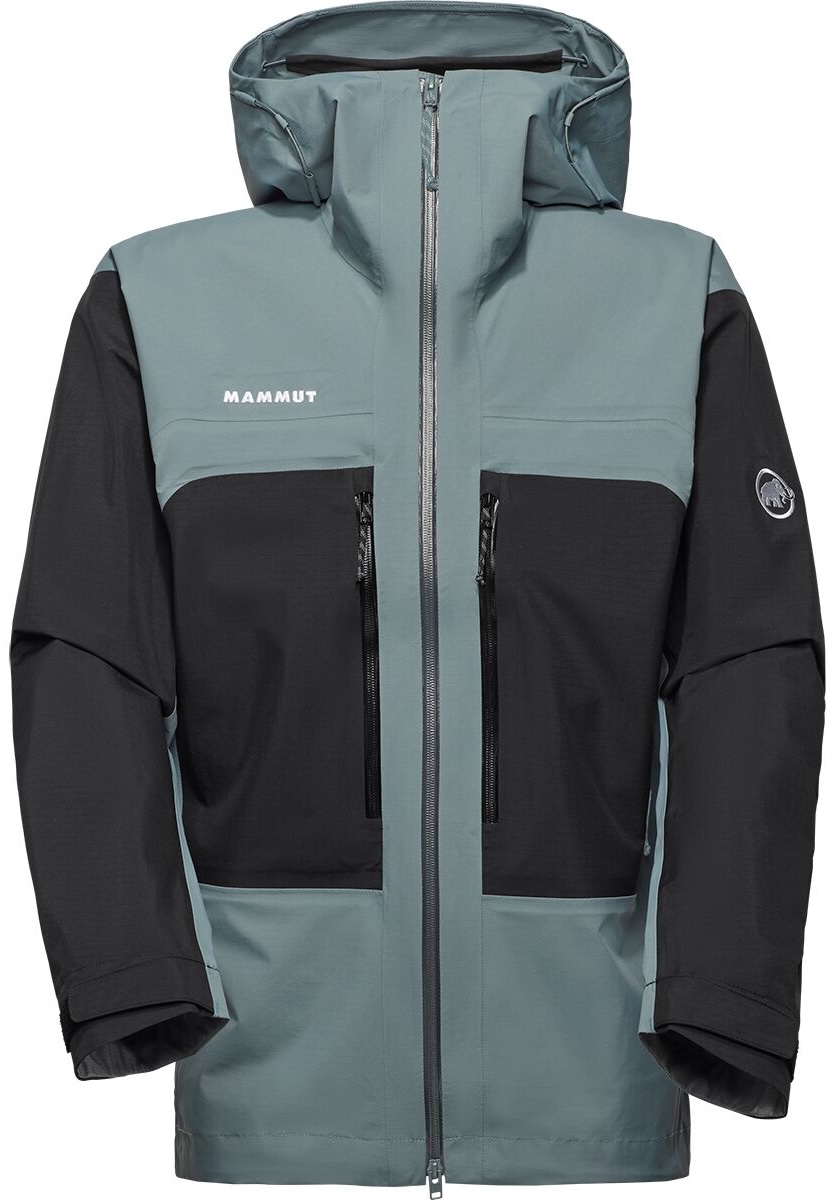
Category: All-around/minimalist
Weight: 15.9 oz. (men's), 13.8 oz. (women's)
Waterproofing: Mammut Dry Expedition
Denier: 30D x 30D
What we like: An affordable and lightweight hardshell from a trusted brand.
What we don’t: In-house membrane may not be as reliable as Gore-Tex.
Not many outdoor brands have been in the business for as long as Mammut, which got its start making climbing ropes back in 1862. Over a century and a half later, the Swiss company remains committed to crafting durable outerwear and gear for serious mountain adventures. We've long been a fan of their climbing ropes, harnesses, and ski backpacks, but have only recently started to see Mammut apparel hit the shelves this side of the Atlantic with regularity (they're one of the biggest brands in Europe). Their Taiss HS got our attention last year: With a versatile all-rounder design and one of the lowest price tags here, it's well deserving of a closer look.
The Taiss goes head-to-head with a design like the Norrøna Falketind above. Both jackets are ideal pairings for fast-and-light travel or springtime conditions, with lightweight builds, relatively thin and supple shells (the Falketind is slightly beefier), and pit zips. But while the Falketind features a premium Gore-Tex membrane with a soft liner, the Taiss cuts costs by using an in-house waterproof membrane. It's certainly a less premium option, but Mammut has a strong track record for quality, and it's hard to find Gore-Tex at this price point.
See the Men's Mammut Taiss HS See the Women's Mammut Taiss HS
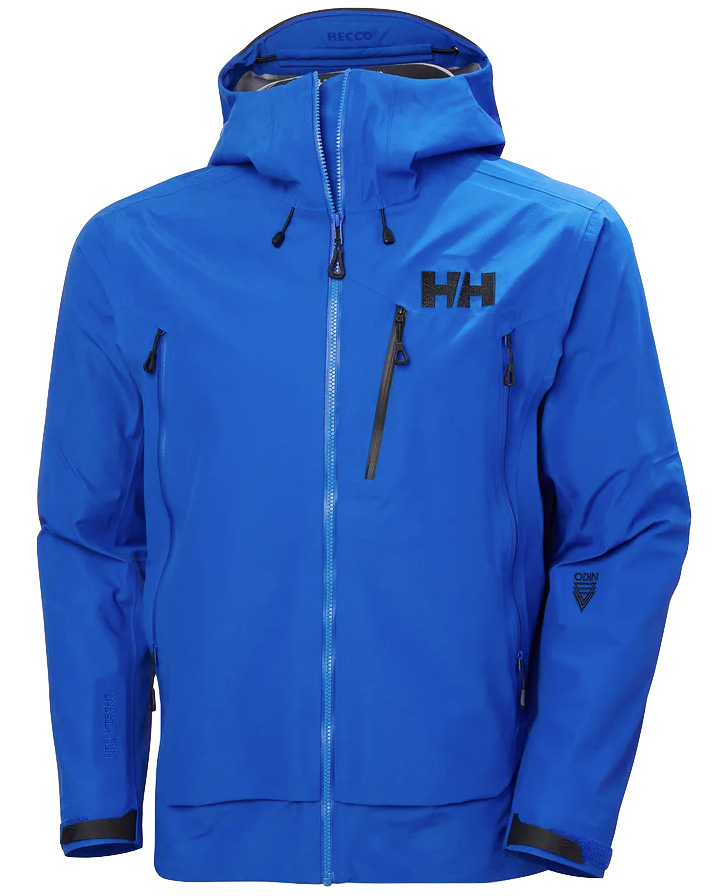 Category: All-around
Weight: 1 lb. 5.9 oz. (men's), 1 lb. 5.2 oz. (women's)
Waterproofing: Helly Tech Professional
Denier: 70D
What we like: Sustainably built; long front pockets offer ample storage.
What we don’t: Too heavy and thick for most backpackers; trim fit isn’t ideal for layering.
Helly Hansen might not have the flashy branding of names like Patagonia and Arc'teryx, but the Norwegian company is an outerwear stalwart. Their best-selling hardshell is the Odin 9 Worlds 3.0, which features a clean silhouette and keeps prices relatively low through the use of an in-house Helly Tech Professional waterproof, breathable membrane. A robust, 70D face fabric serves as a great defense against wind and rain, and underarm vents keep air circulating during high-output activities. You also get large front pockets that extend almost from the armpit to the waist, and they utilize two-way zippers, allowing you to access one end without opening the entire length (particularly helpful when wearing a backpack or harness).
However, at 1 pound 4.1 ounces, the Odin stands out as an extremely heavy jacket and is far too thick for summer backpacking or fast-and-light adventures (it's even heavier than the Alpha SV above). But with thick 70D nylon and features like a Recco reflector, large front pockets, and a helmet-compatible hood, it's a great choice for backcountry skiing or other winter endeavors, particularly if you prefer a burly, durable jacket. Keep in mind that the Helly Hansen does run on the trim side, so those who wear a lot of layers might want to size up. Within this category, we rank the Patagonia Triolet higher thanks to its premium Gore-Tex membrane. But the Odin is nevertheless a high-quality design for those in the market for a heavy-duty hardshell for 4-season use.
Read more: Helly Hansen Odin 9 Worlds review (men's version)
See the Men's Helly Hansen Odin 9 Worlds 3.0 See the Women's HH Odin 9 Worlds 3.0
Beyond the hardshell jackets highlighted above, we’ve put a broad selection of excellent designs through their paces that ultimately didn’t make the final cut. Our aim is to showcase true standouts—pieces that deliver top-notch value, performance, and long-term durability. Every model we recommend has been vetted over multiple seasons, so you can count on its reliability. Still, we think it’s useful to discuss the other contenders we’ve tested along the way, providing a more comprehensive view of the broader landscape.
The popular Rab Kinetic Alpine 2.0 lived on this list for a while but has recently been difficult to find. Stock is low to nonexistent on the web, but if you can find one in your size, it's still a worthy hardshell offering. It used to be our best budget pick, thanks to its low price, lightweight design, and stellar performance from one of the most reputable brands in the industry.
The Fjallraven Keb Eco-Shell is in a similar boat to the Kinetic Alpine above, though the women's still has great stock. This bomber shell is on the heavy side, but is popular for powder days at the resort or even winter bushwhacks where a bump in durability is needed. If you can find your size, it's worth a look.
| Jacket (Men's/Women's) | Price | Category | Weight (M/W) | Waterproofing | Denier |
|---|---|---|---|---|---|
| Men's Arc'teryx Beta AR Women's Arc'teryx Beta AR | $650 | All-around | 1 lb. 0.2 oz./ 13.9 oz. | Gore-Tex Pro ePE | 40D & 80D |
| Men's Patagonia M10 Storm Women's Patagonia M10 Storm | $379 | Minimalist | 10.9 oz./ 9.9 oz. | H2No Performance | 30D |
| Men's Arc’teryx Alpha SV Women's Arc'teryx Alpha SV | $900 | Alpine | 1 lb. 1.1 oz./ 14.8 oz. | Gore-Tex Pro ePE | 100D |
| Men's MH Premonition UL Women's MH Premonition UL | $430 | Minimalist | 11.2 oz./ 9.9 oz. | 3L Pertex Shield | 20D |
| Men's Trollveggen Light Women's Trollveggen Light | $699 | All-around | 15.2 oz./ 13.2 oz. | Gore-Tex ePE | 40D & 70D x 160D |
| Men's Patagonia Triolet Women's Patagonia Triolet | $449 | All-around | 1 lb. 2.0 oz./ 1 lb. 1.6 oz. | Gore-Tex | 75D |
| Men's Arc'teryx Beta SL Women's Arc'teryx Beta SL | $500 | All-around / minimalist | 12.0 oz./ 10.6 oz. | Gore-Tex ePE | 40D x 70D |
| Men's Himali Monsoon Women's Himali Monsoon | $460 | All-around | 15.4 oz./ 14.2 oz. | Toray | 50D |
| Men's Norrøna Falketind Women's Norrøna Falketind | $549 | All-around / minimalist | 12.6 oz./ 11.5 oz. | Gore-Tex ePE | 40D |
| Men's Rab Kangri GTX Women's Kangri GTX | $425 | All-around | 1 lb. 2.5 oz./ 13.8 oz. | Gore-Tex | 70D |
| Men's OR Headwall 3L Women's OR Headwall 3L | $469 | All-around | 1 lb. 1.7 oz./ 15.6 oz. | Gore-Tex ePE | 75D |
| Men's Mammut Taiss HS Women's Mammut Taiss HS | $389 | All-around / minimalist | 15.3 oz./ 13.8 oz. | Dry Expedition | 30D x 30D |
| Men's HH Odin 9 Worlds Women's HH Odin 9 Worlds | $450 | All-around | 1 lb. 4.1 oz./ 1 lb. 5.2 oz. | Helly Tech Pro | 70D |
The Switchback Travel team spends a lot of time outside, and as a result, many of us have been caught outside countless times in ripping winds, pouring rain, and pelting sleet and snow. We first put this guide together back in 2017 with 15 picks. Many of those jackets are long gone, but others—most notably the Arc'teryx Beta AR and Alpha SV—are still in our lineup all these years later. We now have 13 jackets featured, all with something unique to offer depending on what you love to do in the great outdoors. Senior editor Chris Carter leads the charge on our lineup, researching and testing hardshell jackets as he explores mountaintops from the southern U.S. to Africa to Nepal. Other members of our team pitch in and love grabbing the right shell for everything from backpacking to backcountry skiing.
A hardshell jacket is one of the most useful layers you can own—these water- and windproof pieces will protect you from the elements while also allowing you to layer underneath however the weather and your objective dictate. They're also typically more breathable than 2- and 2.5-layer rain jackets, so an essential part of our testing involves working up a sweat in serious weather. We also take a detailed look at weight, tailoring, features, and overall comfort. While not for everyone (a rain jacket or softshell could be the better choice depending on your intended use), for those pushing into high altitudes or deep snow, a hardshell will be an essential part of your kit.
.jpg)
To be clear, there isn’t a perfect and universally accepted definition of a hardshell, but there are a number of common features that define this non-insulated jacket type. The most important is weather resistance: hardshell jackets offer high levels of waterproofing and windproofing for sustained exposure in harsh conditions. In addition, hardshells share a common 3-layer construction type that bonds an interior liner and exterior face fabric to a waterproof and breathable membrane. This differentiates them from rain jackets, which commonly use 2 or 2.5 layers as a way to cut costs and weight.
.jpg)
The combination of durability, weather protection, and breathability makes hardshell jackets popular for downhill and backcountry skiing, mountaineering, alpine and ice climbing, and 4-season hiking. The construction doesn’t come cheap. You can easily spend upwards of $800 (or more) on a quality shell. But these jackets are made to last and are the kind of apparel you rely on when Mother Nature gives you her worst.
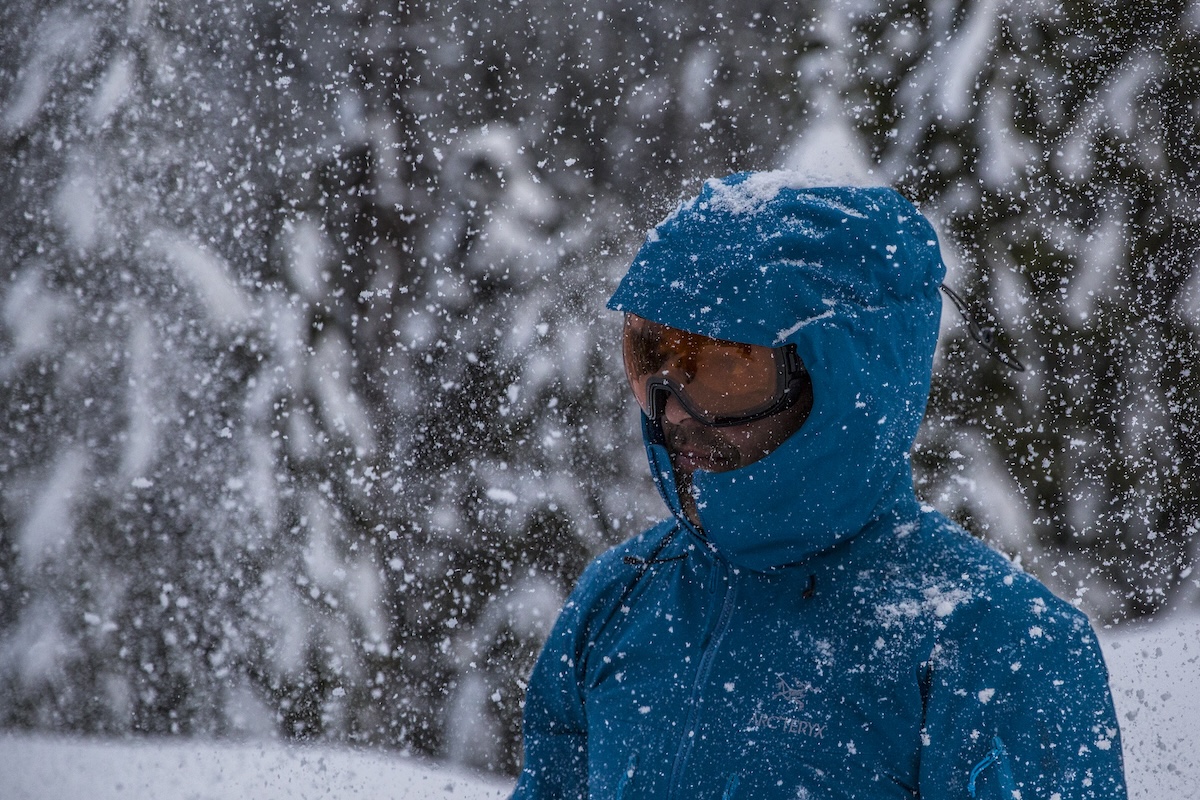
All hardshells share a basic design and construction, but we’ve separated them into three general categories: alpine, all-around, and minimalist. Moving from alpine to minimalist, the jackets drop weight, features, and weather protection. Cost can vary—lightweight yet protective materials are often very pricey, meaning that many minimalist shells (like the pricey Arc’teryx Beta SL) will be more expensive than standard models. Most people will go with an all-around shell, but our alpine and minimalist categories fill in the gaps for those with more specific needs.

Alpine
Alpine shells are built for the extremes. Currently, both of the designs in our alpine category feature Gore-Tex's most premium "Pro" membrane, which is just about as protective as it gets. They're also built with heavy-duty fabrics (from 40D to 100D) and feature protective hoods for withstanding brutal high-mountain conditions. Finally, these shells are very specialized and very expensive as a result—the Norrøna Trollveggen Light costs $699, while Arc'teryx's Alpha SV is a whopping $900.
.jpg)
All-Around
If we were to pick a single shell for all backcountry outings, we would go with an all-around jacket. These designs have a wide range of uses, from hiking to ski mountaineering, and generally slide in between alpine and minimalist shells in terms of weight, fabric thickness, features, and cost. In addition, most of the all-around designs on our list feature a full array of pockets and a regular fit that's great for both mountain and around-town use (alpine and minimalist shells are often trim-fitting). The Arc'teryx Beta AR (featuring premium Gore-Tex Pro) has been our favorite all-around hardshell for years, but you can save a lot of money with a standard Gore-Tex model like the Patagonia Triolet.
Minimalist
At the lightweight end of the spectrum, minimalist hardshells are designed with the goal of minimizing both weight and packed size. They are generally trim-fitting, feature thin shell fabrics, and have very few bells and whistles (often omitting pit zips and hand pockets). Minimalist shells are a great choice for shoulder-season activities like backpacking or climbing, and also serve as a great emergency layer. However, with thin fabrics, they don't measure up to the rest of the hardshell competition in terms of durability and weather protection—we particularly don't recommend minimalist shells for true winter weather. Within this category, the Patagonia M10 Storm is the lightest on our list at 10.9 ounces, while designs like the Norrøna Falketind GTX (12.6 oz.) are a bit more well-rounded.
.jpg)
The quality and performance of a hardshell’s waterproof laminate is this jacket type’s defining feature. Gore-Tex still dominates the market—it’s no coincidence that you’ll see their name on most of the jackets that made our list. For top-of-the-line performance, Gore’s “Pro” laminate is the class leader. It balances high-mountain durability with waterproofing and breathability better than anything on the market, but comes with a significant price increase. Gore’s standard shell isn’t as hardwearing as the “Pro,” but it can be used with much lighter fabrics, resulting in more minimalist pieces that are great for fast-and-light endeavors.
.jpg)
We’ve found that Outdoor Research’s AscentShell, Patagonia's H2No Performance, and eVent are all formidable competitors to Gore-Tex. eVent was one of the first to really break through with their direct venting design, and these other technologies follow suit with air-permeable 3-layer builds to encourage airflow. Further, AscentShell (along with certain types of Patagonia's H2No) comes with the added bonus of a stretchy, softshell-like construction. Overall, while there aren’t as many options on the market that utilize these waterproofing designs, they are all worth considering if breathability is a priority.
In addition to the 3-layer waterproof construction, another key piece of a hardshell’s protection and breathability is its durable water-repellent finish (commonly referred to as DWR). This coating is applied to the exterior of every jacket that made our list above to prevent moisture from absorbing into the face fabric by beading up the droplets. A fresh DWR is an impressive thing as it can offer sufficient protection and maximize a membrane’s ability to ventilate in light to moderate conditions. That said, heavy and sustained rain and snowfall will eventually overwhelm the coating, which is where the waterproof membrane and seam sealing come into play. Over time, the DWR finish will wear down, although you can keep it fresh by washing and drying the shell or reapplying a new coating (Nikwax’s TX.Direct Wash-In is our personal favorite).
.jpg)
There are several factors that impact a jacket’s durability, but denier is a helpful indicator of its strength. Denier is a measurement of fabric thickness, and the higher the number, the thicker the thread. Most all-around jackets for alpine climbing and skiing fall in the 30D to 80D range. Low-denier jackets usually weigh less and are slightly less durable, while high-denier shells won’t pack down as small but can handle more abuse. Jackets that fall outside of the range above are more specialized: The 20D Mountain Hardwear Premonition UL is best for lightweight hiking and backpacking, while the 100D Arc’teryx Alpha SV is absolutely bomber but comes with a very high price tag.
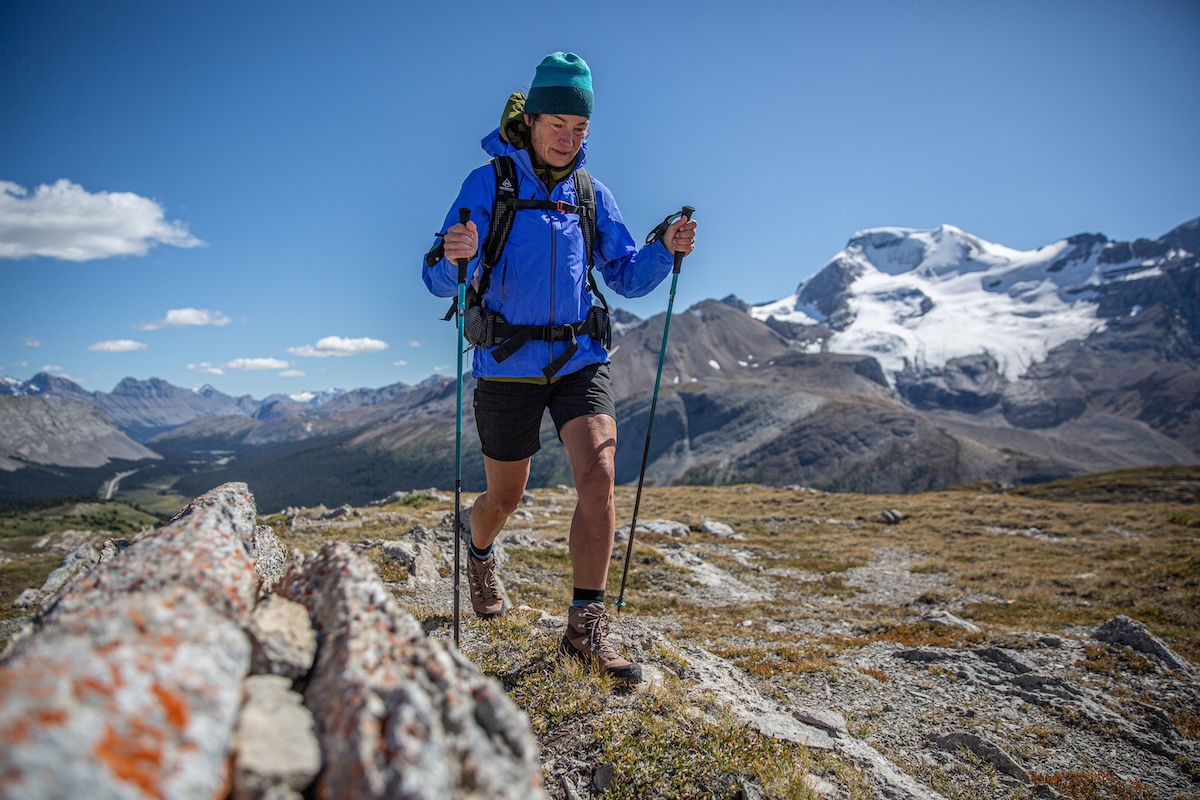
Depending on how a hardshell will be used, weight and packed size may or may not be a priority. In most cases, we’re willing to carry a little extra weight into the alpine for an added sense of security. As an example, there have been very few instances where we’ve regretted packing our 1-pound-1.1-ounce Alpha SV on a trip. On the other hand, for multi-day tours or if you’re traveling in mild conditions, it's best to leave a heavyweight like the 1-pound-4.1-ounce Helly Hansen Odin 9 Worlds 3.0 at home and instead bring a trimmed-down hardshell like the Mountain Hardwear Premonition UL. The lightest and most compressible option from the list above is the Patagonia M10 Storm Jacket, weighing in at a scant 10.9 ounces. Its simplistic design and relatively thin materials make it as packable as a rain jacket, although you make concessions in features (there are no hand pockets or pit zips) and durability. However, we prefer the Premonition for ultralight missions where a hardshell is warranted over a true ultralight rain jacket (our current favorite for ultralight adventures, such as backpacking, is the Rab Phantom, which weighs in at a minuscule 4.1 ounces). An option that better balances weight, features, and toughness is Arc'teryx's 12-ounce Beta SL.
.jpg)
A jacket's fit often reveals a great deal about its intentions. Most hardshells in our all-around category have a "regular" fit, allowing ample room for layering while providing great coverage and a stylish look that looks great on the mountain and in town. Oftentimes, minimalist and alpine jackets will be more trim-fitting, which saves weight and minimizes bulk but isn't as versatile for casual use. Within the hardshell landscape, Arc’teryx consistently has our favorite fit—the time and effort that’s gone into the design and tailoring of their shells is immediately apparent when you slip them on. They’re comfortable with or without a midlayer jacket and fit a lot of body types very well. This is a primary reason that many professional mountain guides and serious outdoorspeople are willing to spend up for Arc’teryx. But it’s not a one-horse race, and brands like Norrøna, Rab, and Mammut are similarly impressive.
.jpg)
Some of the biggest complaints about hardshell jackets are their rigid feel and crinkly sound. And the criticisms are typically warranted—the tough face fabric (up to 100D) isn’t as flexible as thinner blends and can be pretty noisy for activities with a lot of movement like skinning, belaying, or hiking. Not only are they loud, but rigid hardshells can also impede movement, making them an onerous choice for high-mobility activities like alpine climbing and backcountry skiing. However, it’s a compromise many are willing to accept for the all-out weather protection that these robust shells provide.
That said, we've begun to see more and more stretchy hardshells hit the market, which address both issues mentioned above. Fjallraven's Keb Eco-Shell is a great example of this style, featuring a softshell-like face fabric alongside a thick, 3-layer construction typical of a hardshell. We've worn the Keb Eco-Shell while backpacking and skiing, and it has proven to be both quiet and highly mobile, even when reaching high overhead. Other stretch-infused jackets include the Patagonia Upstride and the Outdoor Research Skytour, which are purpose-built for backcountry skiing.
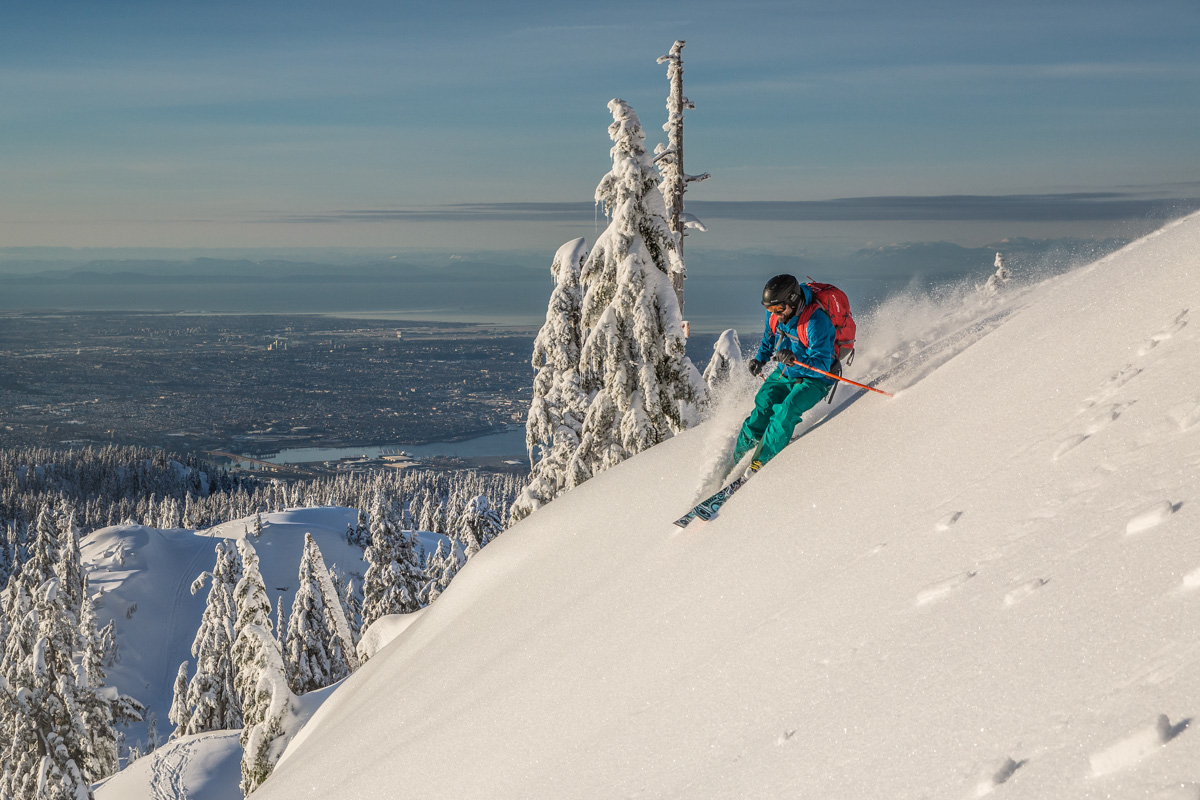
A hood that can fit over your helmet is a prerequisite for alpine use. When the wind is really blowing, throwing on a hood is your best form of protection. Almost all of the jackets on the list above include a hood that can fit over a climbing helmet. If you’ll be skiing with the jacket, you’ll need a hood that’s even larger to fit the bulkier shape of a ski helmet. Most manufacturers list the jackets only as being “helmet-compatible,” so we try to call out hoods that run a little small in our write-ups above. Our favorite hoods consistently come from Arc’teryx: They're highly adjustable, easy to use, and don’t feel ungainly when you’re not wearing a helmet.
.jpg)
If you’re prone to running hot or need a waterproof shell for high-output activities, we recommend choosing a jacket with pit zips. Even the best waterproof breathable membrane will make you overheat in mild temperatures on the skin track, and we value the ability to quickly dump heat. We also prefer pit zips to ventilated chest pockets, because the location under the arms is better protected from falling rain or snow. There are some cases where you may want to pass on the feature—such as for fast and light trips—but we’re usually quite willing to accept the extra ounces and slightly larger packed size.
.jpg)
Most hardshell jackets have hand pockets placed midway up the torso to accommodate a backpack hipbelt or climbing harness. The high placement means you can open and close the pocket without needing to pull up on the jacket or unclip the belt. The end result is that the pockets are slightly less comfortable—the location isn’t as natural of a resting place for your hands—but it’s something we’re willing to tolerate to make the pockets usable. At the extreme end of the spectrum are designs like the alpine-focused Arc'teryx Alpha SV, which foregoes hand pockets altogether and instead boasts dual chest pockets. You lose a little storage and don’t have a place to put your hands going this route, but many weight-conscious backcountry adventurers are happy to make the trade.
.jpg)
One of the primary ways we see manufacturers innovating is through the use of more sustainable materials. In terms of hardshells, this means recycled face fabrics, more responsible production practices (including the elimination of harmful chemicals from water-repellent finishes—aka PFAS-free DWR), and an emphasis on the ethical treatment of workers. Many companies also utilize the Bluesign system for sourcing materials responsibly. Patagonia is a clear leader in the sustainability movement, but brands like Outdoor Research, REI, Arc’teryx, and Black Diamond have also made a sizable effort to reduce their footprint. And while we encourage you to shop sustainably, we’re also big advocates of lowering consumption by reusing old gear. Many brands offer repair programs and used marketplaces for their offerings, and gear consignment stores can be treasure troves for like-new items.
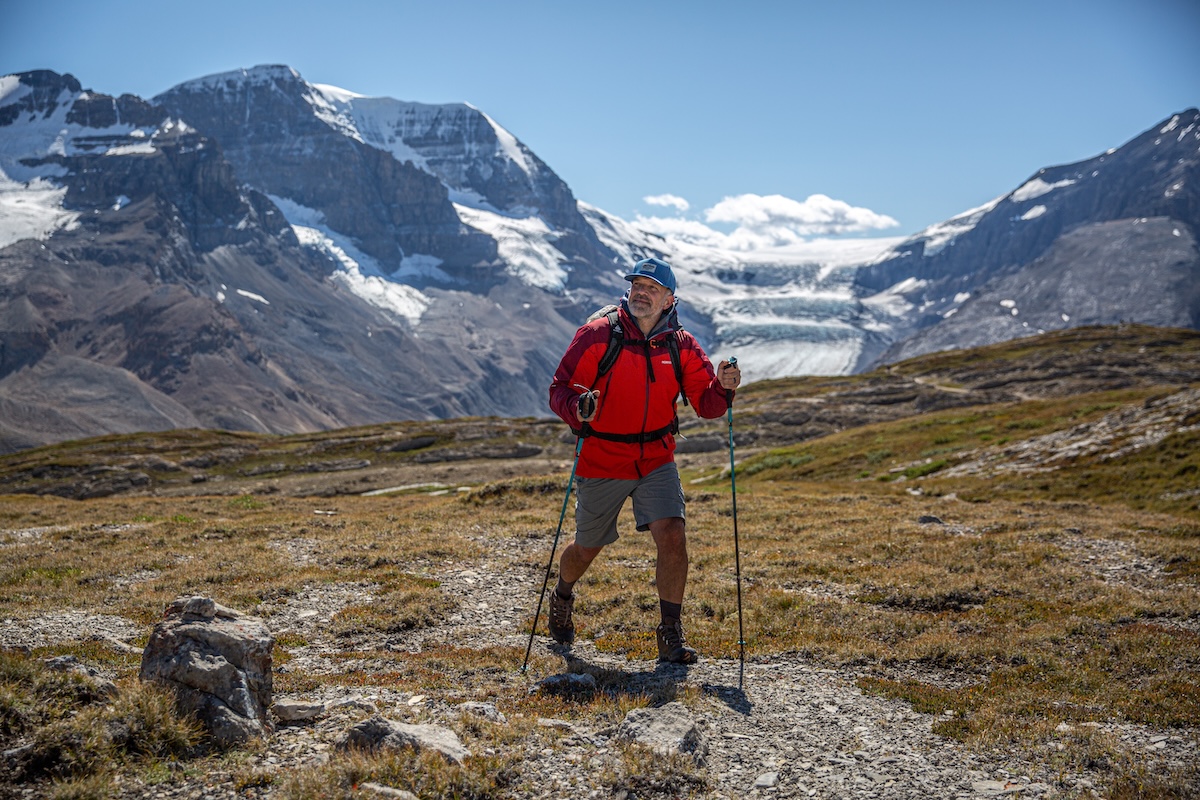
There are three general options for an outer layer: rain jackets, softshells, and hardshells. As the name indicates, rain jackets provide good water and wind protection. Compared with a hardshell, rain jackets are less durable and won’t breathe as well, but are quite a bit cheaper (prices range from approximately $150 to $350), lighter-weight, and compress smaller for packing. We prefer rain jackets for daily wear, on summer backpacking trips, or as emergency shells when bad weather isn’t in the forecast. But if you’re headed to the alpine or are out in winter conditions, we turn to a hardshell.
.jpg)
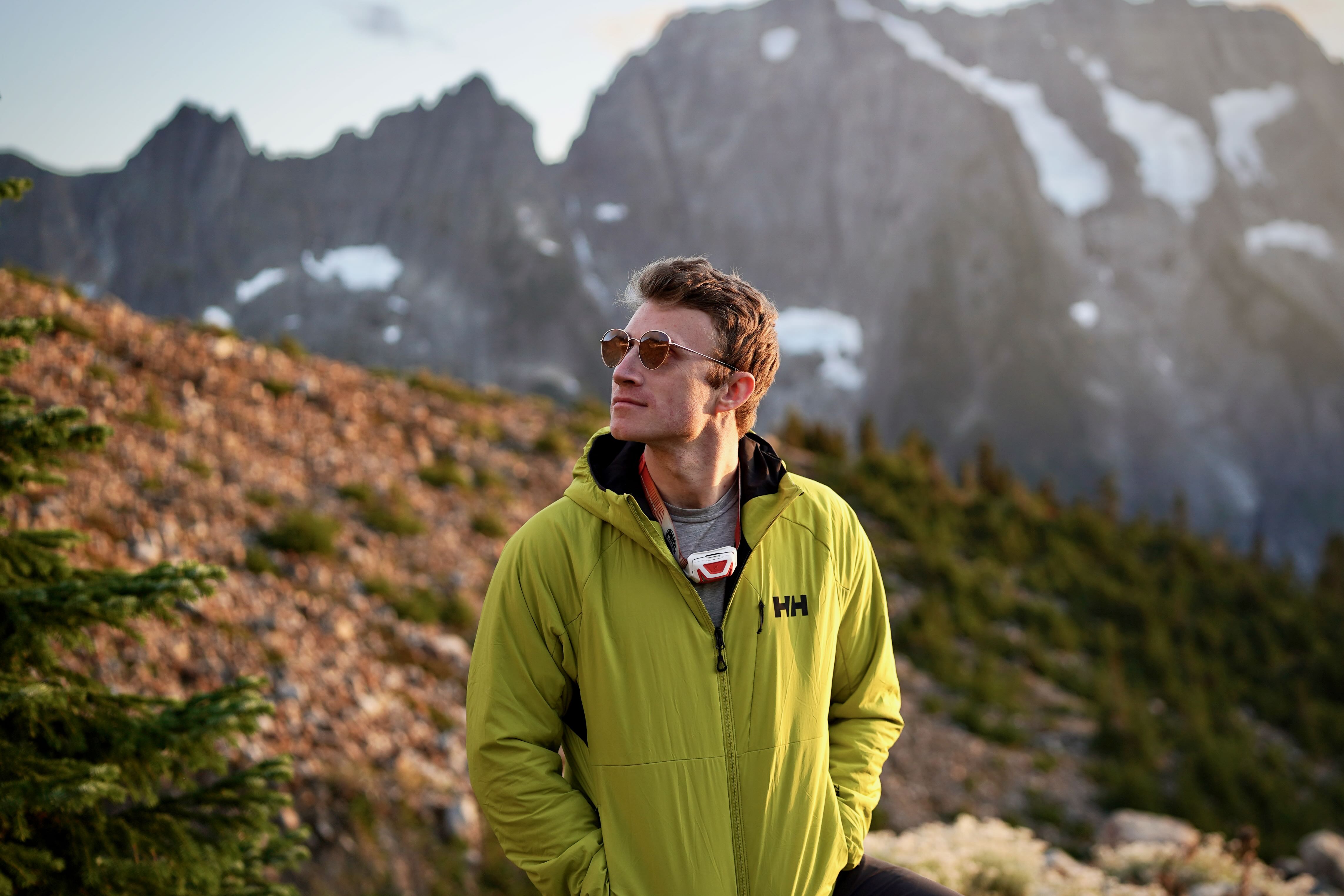
As the names indicate, softshell and hardshell jackets are differentiated by the type and feel of their face fabrics. Softshell jackets are pliable, stretchy, and soft to the touch (especially on the interior), while hardshells are smooth and more rigid. In terms of weather resistance, it isn’t even close—even waterproof softshell jackets don’t offer nearly the same level of protection. Many softshells are only water- and wind-resistant instead of waterproof, instead focusing on breathability for working hard in mild conditions. We prefer a softshell in good conditions or on the climb up at lower elevations, but if weather really moves in, there’s no replacement for a quality hardshell.
Back to Our Top Hardshell Jacket Picks Back to Our Hardshell Jacket Comparison Table

_09e25.jpg?h=fbc67360&itok=gGpmh2UP)
51e0.jpg?h=fbc67360&itok=dkRs76Ki)
-%20sac4b.jpg?h=d4c92dd0&itok=KMSwcfQl)
e13b.jpg?h=fbc67360&itok=roLTspKI)
_01074.jpg?h=fbc67360&itok=LZfjph4c)
7208.jpg?h=fbc67360&itok=DyvnCt02 "Hiking with the Arc’teryx Beta LT in The Winds")
%20t_01e56.jpg?h=fbc67360&itok=d3wX90wJ)
26ba.jpg?h=fbc67360&itok=w0s5sN6g)
832e.jpg?h=fbc67360&itok=ofljNFTS)