.jpg)
.jpg)
Photo Credit
It’s that time of year… time to find the perfect present for our adventurous loved ones. For fun, functional, and thoughtful gift ideas, browse our gift guides for hikers, travelers, backpackers, campers, runners, and snow sports enthusiasts.
In the typical three-layer clothing system, the midlayer is given the all-important insulating duties. If you're looking for a midlayer that can work for almost any situation, we think the men's Patagonia R1 Air Full-Zip Hoody and the women's Patagonia R1 Air Zip Hoody will serve you well. Of course, there are as many midlayers as there are outdoor conditions: Is it bristling cold and dry? Grab your down jacket. Are temperatures mild, or are you traveling at a breakneck pace? Then a lightweight fleece might do the trick. All types of midlayers have their place, so for more information, we've highlighted more than 13 picks for men and women. To learn more about our research, refer to our comparison table and buying advice, which can be found below the product picks, along with details about our testing process.
Editor's note: We updated this guide on October 23, 2025, to refine our list of picks and revise the layout to make it a true unisex guide. This involved adding links and specs for all women's-specific picks and including a comparison table at the end specifically for women's midlayers. Lastly, we swept the guide to ensure all other information was up to date at the time of publishing.

Insulation: Fleece
Weight: 13.0 oz. men’s, 11 oz. women’s
What we like: Excellent breathability and temperature regulation; easy to layer.
What we don’t: Not the most weather-resistant.
The term “midlayer” is a bit of a catch-all term for fleece, down, and synthetic insulated jackets that fit easily under more protective layers (hardshells, for example). As such, narrowing down the best overall midlayer is tricky. We’re looking for something that can keep up in the backcountry, but pull double-duty around town. And something hard-wearing, of course, but that won’t break the bank. After careful consideration, Patagonia’s R1 Air Full-Zip Hoody checks most of our boxes. This unique layer excels in temperature regulation: The R1 hollow fiber yarn and zig-zagging pattern work together to both trap warmth and dump heat. In our experience, it translates effortlessly between steep stints on the skin track and lunch breaks. What’s more, the fleece will continue to keep you warm even if it gets damp, and while more prone to pilling than other insulators, the layer is made with premium materials and has held up well to rough use. And though we hesitate to call the R1 “cheap,” it does undercut the prices of many of the other options on this list.
You’ve likely seen this fleece (or iterations of it) if you spend time on trails, skin tracks, or hanging around mountain towns, and it’s popular for a good reason. But it’s far from a perfect layer. To start, the gaps between the fleece don’t offer much in the way of wind protection, and you’ll want a hardshell for protection in super wet conditions. We also opt for synthetic or down jackets for their lighter weight and greater packability. To complicate matters, the R1 Air Full-Zip comes with a hood, which isn't always ideal for midlayer use, but you can also step down to the non-hooded Zip-Neck or Crewneck Pullover versions for less bulk under a shell. Finally, in our opinion, it doesn’t quite cut it as a casual crossover piece, but the R1 Thermal Jacket has a sleeker face fabric that looks great around town (at the expense of some breathability). Gripes aside, the R1 is an incredibly versatile midlayer that’s quickly become one of our go-tos for all kinds of backcountry adventures.
Read more: Patagonia R1 Air Full-Zip review (women's hooded version)
See the Men's Patagonia R1 Air Full-Zip See the Women's Patagonia R1 Air Full-Zip
.jpg)

Insulation: Fleece
Weight: 14.4 oz. men’s, 14.0 oz. women’s
What we like: Inexpensive and comfortable.
What we don’t: Limited warmth and questionable durability.
Sure, you can spend $300 or more on a midlayer and get some of the fluffiest down or the most tech-savvy synthetic insulation available, but that doesn't mean you have to. For days at the resort that aren't super cold, you can often get away with a simple fleece like the tried-and-true Columbia Steens Mountain 2.0 and women's Benton Springs. These no-frills midlayers are incredibly soft and slide easily over a baselayer and under a rainshell. They're available in a wide range of colors and sizes (up to XXL for both men and women), making it easy to find the right choice. While not the most backcountry-ready layer, they're great for warding off an “urban chill” (as our tester puts it).
What are the shortcomings of going so cheap? The materials on the Steens Mountain 2.0 and Benton Springs are very basic, and the jackets have few notable features. They also won't last as long as the higher-end fleece options on this list—the material is soft and prone to pilling. Finally, the Steens and Benton layers are cozy but fall somewhere in the light to midweight category, meaning that the warmth they provide will be limited. If you’re looking for something more technical that will breathe while you work hard, check out the Mountain Equipment Lumiko below. But overall, for mild conditions and spring skiing with a baselayer underneath, the Steens Mountain 2.0 and Benton Springs check the boxes without breaking the bank.
See the Men's Columbia Steens Mountain 2.0 See the Women's Columbia Benton Springs


Insulation: Synthetic
Weight: 11.8 oz. men’s, 9.4 oz. women’s
What we like: Great mix of mobility, warmth, and comfort.
What we don’t: Pricey and not as breathable as other synthetic and fleece options.
Synthetic jackets are a popular midlayer choice for good reason. Like fleece, they continue to insulate when wet, and they generally breathe better than down jackets. Our favorite in this category is Arc'teryx's Atom Jacket, one of the brand's top sellers. Simply put, this is a top-notch midlayer that nails the essentials. You get an excellent balance of breathability and warmth, great mobility, and a just-right cut that fits most folks really well. The 60-gram synthetic fill offers just enough insulation to cut the cold without looking overly puffy, and stretchy fleece side panels boost ventilation and freedom of movement. And unlike many midlayers here, the Atom also works great as a standalone jacket with a decently tough and weather-resistant shell. We also love its sleek and modern styling, which looks great around town, too. And if you’re looking to up the style game, it’s also available as a hoodie (and for women) for just a bit more.
The Atom sits in the middle ground when it comes to technical performance: It’s lightweight, but doesn’t breathe quite as well as the fleece options here. It’s not quite as warm as down-insulated jackets. But our main gripe is price, which is definitely on the high end. For a slightly cheaper alternative, consider Outdoor Research's Vesper Hoodie (also available for women), which offers less insulation (45g) but has performed better in recent testing during high-output pursuits. However, in our experience, OR's build quality doesn't compare to Arc'teryx's—our Atom has withstood years of regular use and abuse. Whether you're cruising laps at the ski resort, commuting in the city, or backpacking in the shoulder seasons, the Atom gets the job done.
Read more: Arc'teryx Atom review (men's hooded version)
See the Men's Arc'teryx Atom Jacket See the Women's Arc'teryx Atom Jacket
.jpg)
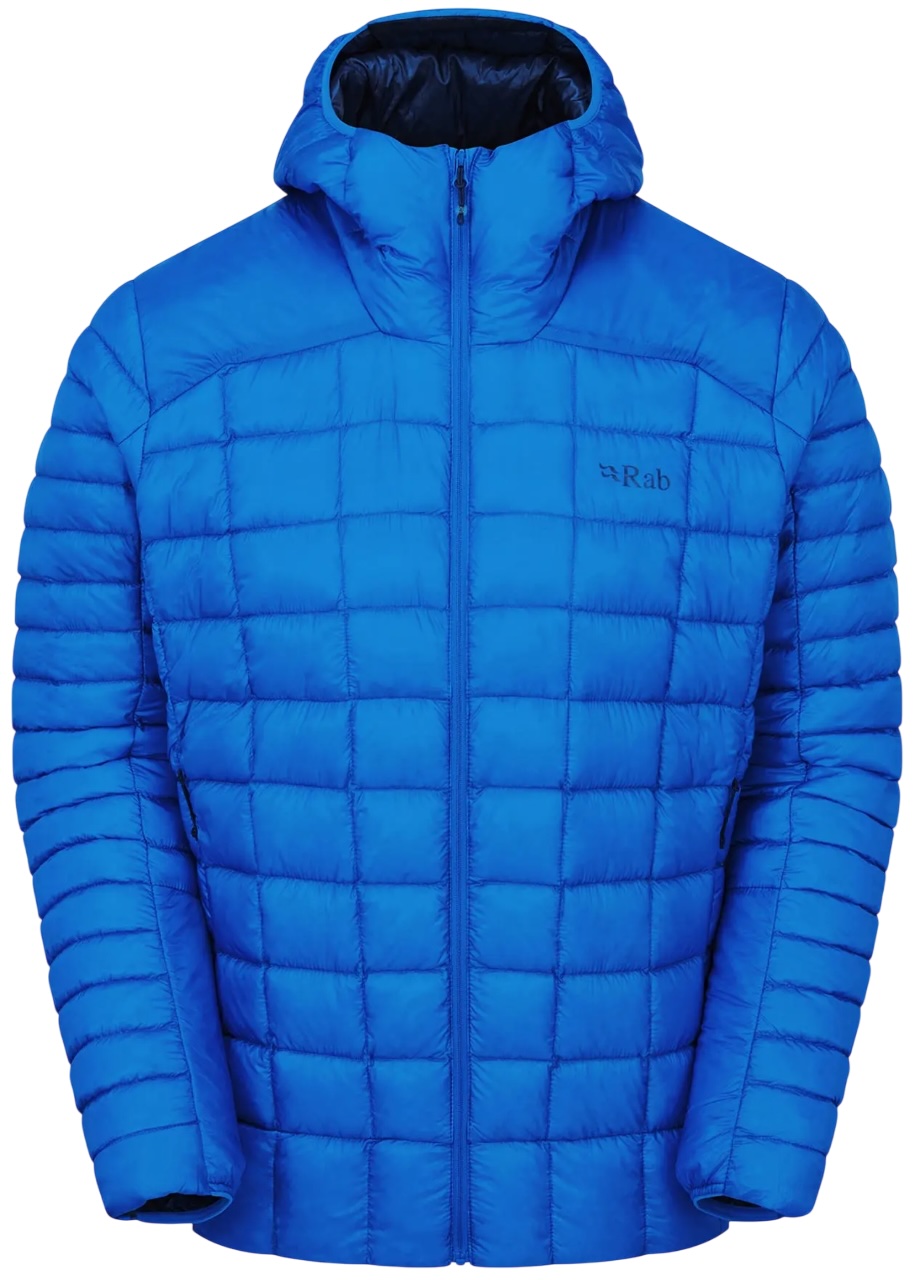
Insulation: Down and synthetic
Weight: 8.8 oz. men’s, 8.0 oz. women’s
What we like: It's super warm for its weight and offers added wet-weather protection.
What we don’t: Pretty pricey and won’t breathe as well as a fully synthetic jacket.
In most cases, we recommend synthetic-insulated or fleece jackets for mid-layer use. However, in dry conditions or for low-output activities like resort skiing, belaying, or hanging around camp, a down mid-layer can be a great choice. Not only is down extremely lofty and cozy, but it's also very lightweight and packable compared to the alternatives. Among the options, Rab’s Mythic Alpine Light is our favorite, thanks to its minimalist 8.8-ounce build (8.0 oz. for women), premium 900-fill down, and trim, performance-oriented fit. We're also big fans of the hybrid design, which features synthetic insulation in areas most prone to moisture (the collar, shoulders, underarms, and cuffs) for a bit of wet-weather assurance. Additionally, we believe the baffles have a classy appearance, and the materials are of premium quality, lending this layer a strong casual crossover appeal.
The main downsides to opting for a down layer is wet-weather protection and price—especially considering you’ll very much want a hardshell jacket to toss over the Mythic Alpine when storms roll in. It’s also worth mentioning Arc’teryx Cerium Jacket (available in women's) as an alternative to the Mythic: If you have some extra cash to spend, the Cerium has a thicker face fabric, a slightly beefier (read: warmer) build, and a similar hybrid construction. That said, the Mythic Alpine has the Cerium beat in terms of weight, and we prefer the longer cut, which provides better protection to the backside than the Cerium. Put together, the Mythic Alpine is an incredibly well-rounded down jacket, making it a great choice for weight-conscious missions in dry areas.
See the Men's Mythic Alpine Light Down See the Women's Mythic Alpine Light Down


Insulation: Fleece
Weight: 9.9 oz. men’s, 8.6 oz. women’s
What we like: Lightweight and incredibly breathable.
What we don’t: Pricey and the thin materials lack durability.
Norway-based Norrøna competes with leading mountain brands like Arc'teryx and Rab, and we've been extremely impressed by everything from their technical hardshells to their down jackets and midlayers. Their Falketind Alpha 120 Zip Hood fleece is no exception, combining premium materials and a performance-ready feature set in a thoughtfully designed package. Touted as the brand's most breathable and quick-drying midlayer, the Alpha120 features a mix of fuzzy and lightweight Polartec Alpha (120g) and sleek Power Grid (139g) fleece fabrics—the former concentrated around the core for warmth and the latter offering stretch along the underarms, sides, and hood. Add integrated hand gaiters, harness- and hipbelt-friendly pockets, and a trim, body-hugging fit, and you have a high-quality, cozy technical piece for heart-pumping winter adventures.
The Falketind Alpha120 is decidedly thin—heck, you can even see through the Alpha insulation when you hold it up to the light—but we’ve found that it provides an impressive amount of warmth, even at camp or during trailside breaks. What’s more, it packs up smaller than most fleeces, and at just 9.9 ounces (8.6 for the women’s), it's a lot lighter than offerings like the Patagonia R1 Air above and Arc’teryx Kyanite below. It’s true that the Power Grid fabric is more prone to pilling and staining than more robust fleece varieties (like Patagonia’s R1), and the Alpha fabric is notably lacking in wind resistance. However, as a lightweight insulator that’s trimmer-fitting and more breathable than down, the Falketind Alpha120 is worth considering.
Read more: Norrøna Falketind Alpha120 Zip Hood review (women's version)
See the Men's Norrøna Falketind Alpha120 See the Women's Norrøna Falketind Alpha 120


Insulation: Synthetic
Weight: 10.4 oz. men's, 8.9 oz. women's
What we like: The lightweight and packability of down in a synthetic jacket that insulates even when wet.
What we don’t: Not breathable or stretchy.
Synthetic jackets tout a lot of backcountry appeal, thanks to their reliability in inclement conditions. If you're an ounce-counter looking for something minimalist, the Patagonia Micro Puff should be on your radar. This jacket combines an extremely thin (10D) face fabric with Patagonia's light and lofty insulation for a super cozy jacket that stuffs into its left pocket. We’ve found its insulation does a better job at mimicking down plumage, providing similar warmth in a low-weight package. And while the face fabric might be thin, it does an admirable job at blocking wind, and the durable water repellent (DWR) coating holds up to light precipitation. The result is a high-performance midlayer, ideal for weight-conscious pursuits such as backcountry skiing and climbing.
Despite its technical prowess, it's important to note that the Micro Puff is not for everyone. Unlike the Patagonia R1 Air above, it does not excel in the breathability department, nor does it offer the stretchy and supple feel that makes many synthetic midlayers so easy to wear. If weight is not an issue—or if you plan to keep your jacket on all day—we'd stick with a midlayer more intended for active insulation, like the Arc’teryx Atom or R1 above. Outdoor Research's SuperStrand LT is also a worthy alternative: It's more breathable, just about as lightweight, and cheaper, though it does come with some sacrifices in durability and warmth (read our in-depth review of the OR SuperStrand LT Hoody). But for the best-in-class in terms of weight and performance, it's really tough to beat the Micro Puff.
Read more: Patagonia Micro Puff review (women's hooded version)
See the Men's Patagonia Micro Puff See the Women's Patagonia Micro Puff
.jpg)

Insulation: Synthetic and fleece
Weight: 10.5 oz. men’s, 8.9 oz. women’s
What we like: A high-performance combination of synthetic insulation and fleece.
What we don’t: Not as warm as most jackets here.
It's no secret at this point that synthetic fill and fleece are our two favorite midlayer insulators—they're breathable, sleek, and (unlike down) still provide warmth when damp. We're usually forced to choose between one or the other, but Patagonia's unique Nano-Air Light Hybrid offers the best of both worlds with an intelligent combination of lightweight synthetic fill (40g) at the front and cozy fleece (similar to that of the R1 Air above) at the back, sides, and underarms. Protecting the synthetic fill is a 100%-recycled, soft yet durable, and impressively air-permeable face fabric borrowed from Patagonia's beloved Nano-Air Jacket. The net result is a high-performance midlayer (or great standalone piece), ideal for shoulder-season climbing, backpacking, ski touring, and more.
The Nano-Air Light Hybrid isn't as insulative as most jackets here—the 40-gram is thinner than the more standard 60-gram fill, and the panels of fleece don't do much to keep out the wind—but this is a good example of less is more. This design is ideal for when jackets like the Arc'teryx Atom or Rab Mythic Alpine Light Down above are just too much (think mild shoulder-season conditions or high-output activities). We're big fans of the breathable back when adventuring with a backpack. Keep in mind that the Nano-Air Light Hybrid is designed to fit particularly snugly, although the sizing is ideal for midlayer use. For a bit more jacket, check out the classic Nano-Air Hoody, which features 60-gram FullRange insulation throughout.
See the Men's Patagonia Nano-Air Light Hybrid See the Women's Nano-Air Light Hybrid

Insulation: Fleece
Weight: 13.9 oz. men’s, 10.0 oz. women’s
What we like: Premium fleece fabric offers great comfort, range of motion, and breathability.
What we don’t: A bit heavy and not as warm as a synthetic jacket.
For a serious performance fleece, we again turn to Arc’teryx and the versatile Kyanite Jacket. This jacket does it all: The midweight fleece build works well as an active midlayer for backcountry skiing, but is thick enough to wear as a standalone piece on the uphill or for shoulder-season climbing. We also appreciate the stretch of the fabric, which offers a solid range of motion, and the trim fit means you won’t have much in the way of bunching under a shell. Finally, the interior is super soft, and the entire design boasts the excellent build quality and long-term durability we've come to expect from Arc'teryx.
The Kyanite is a great alternative to the R1 Air above, especially if you’re looking for something that can pull double-duty around town. But for demanding high-output pursuits, we still recommend the R1 Air. The R1 Air is more breathable and lighter, and it also features a hood (the Kyanite is available in a hooded version for a slightly higher price). Plus, the Kynaite doesn’t solve all of the R1’s shortcomings: Its durable nylon shell still doesn’t cut wind or hold up to precipitation enough to be an outer layer. At the end of the day, the choice between the two comes down to your intended use. But for a wildly comfortable and premium fleece that’s one of our go-to jackets for both skiing and casual use, we’re big fans of the Kyanite.
Read more: Arc'teryx Kyanite review (women's hooded version)
See the Men's Arc'teryx Kyanite Jacket See the Women's Arc'teryx Kyanite Jacket
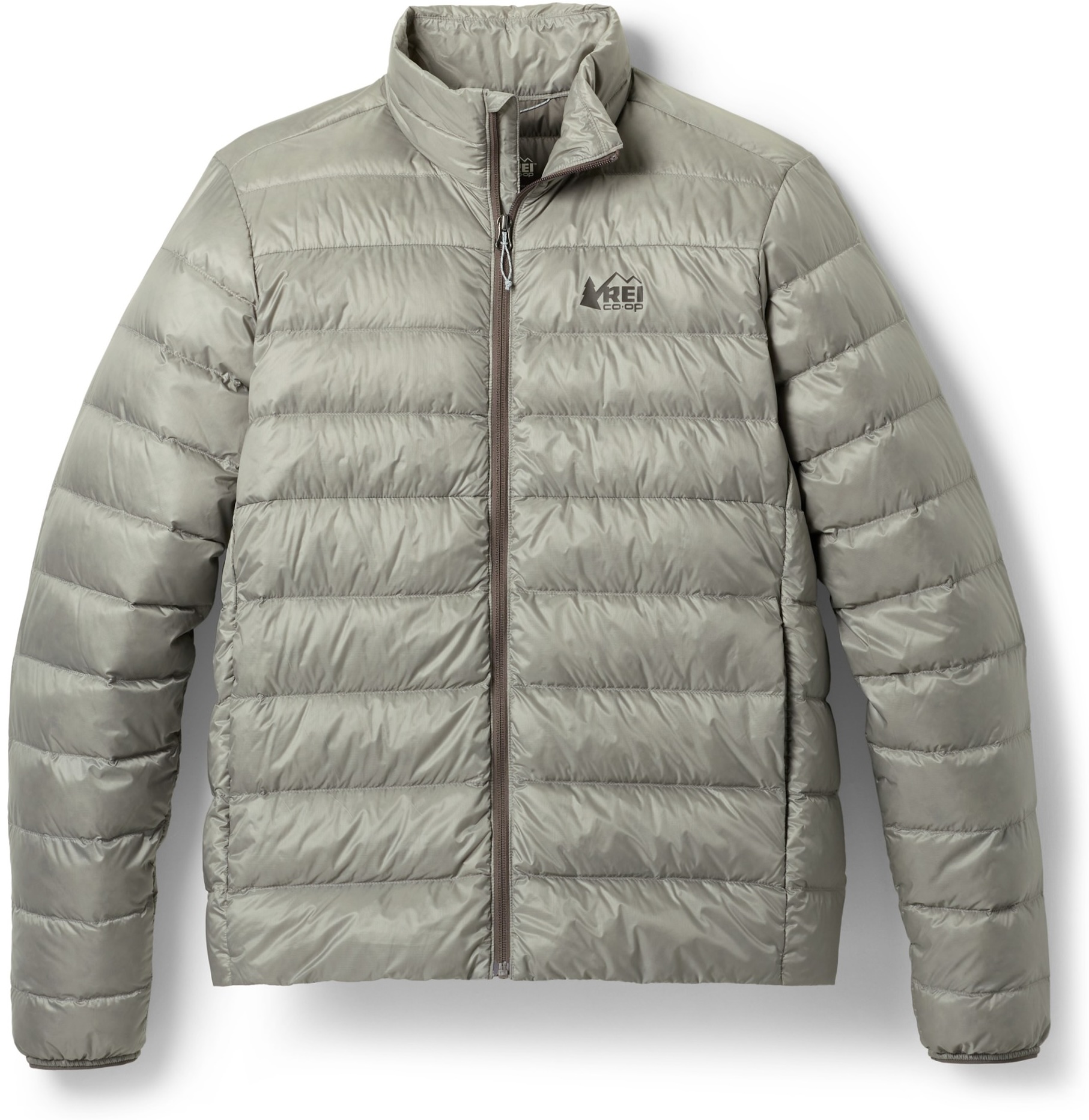
Insulation: Down
Weight: 10.9 oz. men’s, 10.2 oz. women’s
What we like: Great value for a down jacket.
What we don’t: Less of a performance option.
For those seeking a budget-friendly down jacket, we love what REI Co-op has to offer. Their 650 Down Jacket is reasonably light, weighing 10.9 ounces (10.2 ounces for the women’s version), and provides solid warmth with over 4 ounces of 650-fill-power down. It features a windproof and water-resistant shell. REI also refined the design with the latest version, adding a hem adjustment, a more durable ripstop nylon shell, and traditional horizontal baffles (the previous version featured box baffles). The price did go up a bit, but the jacket is still easily undercuts most competitors by hundreds. For daily use, travel, light adventuring, and as a midlayer for resort skiing, you simply won’t find a better deal.
Budget-oriented products almost always come with compromises, and REI's down jacket does fall short for serious performance use. The 650-fill down isn't quite as warm or compressible as the 900-fill of the Mythic Light above, and the most recent version no longer packs into its hand pocket (nor does it include a stuff sack). What's more, the fit is fairly roomy, which is great for standalone use but less ideal for sliding under a trim-fitting hardshell. But circling back to value, the 650 Down Jacket's combination of warmth, build quality, and price is simply unmatched, making it an easy "yes" for those on a budget. REI leads the outdoor industry in inclusive sizing, too: The men's jacket comes in 10 sizes, including four "Tall" sizes, while the women's version is available in eight sizes from XS to 3X.
Read more: REI Co-op 650 Down review (men's version)
See the Men's REI 650 Down Jacket See the Women's REI 650 Down Jacket

Insulation: Fleece
Weight: 8.1 oz. men's, 6.7 oz. women’s
What we like: Effective balance of weight, warmth, and breathability—at a very palatable price point to boot.
What we don’t: Limited weather resistance, no hand pockets, and a couple of fit and finish issues.
U.K.-based Mountain Equipment may not have the name recognition of brands like Patagonia or Arc’teryx, but we’ve been thoroughly impressed by their climbing and ski apparel. The Lumiko Zip T is one of our ski editor’s go-to midlayers, securing a spot as her “put it on and forget about it” backcountry layer. At just 8.1 ounces (6.7 oz. for the women’s), the Lumiko offers an impressive amount of warmth for its weight with a gridded fleece construction that traps heat while remaining breathable during high-output activities (similar to the R1 Air above). The performance fit makes it easy to layer underneath a hardshell or heavyweight insulator, and the half zip allows for even more temperature regulation when the going gets hot. The cherry on top is the price tag, which undercuts the similarly intentioned R1 Air above by a considerable amount, and even gives the Columbia Steens a run for its money.
That said, like the R1 Air, the Lumiko has its limitations as a standalone layer. While the breathable fabric is quick to dry, the jacket offers minimal protection against wind and water. Additionally, the Lumiko omits hand pockets, which helps keep weight down but limits the jacket’s casual appeal (although the chest pocket is large enough to swallow a smartphone). We also have a couple of gripes about the interior: It’s not as soft as the R1 Air or Arc’teryx Kyanite above, and it tends to cling to baselayers, which can result in an awkward fit. It’s also not immune to wear and tear—ours has worn down considerably after several seasons of rough backcountry use. But we can’t really complain considering the Lumiko’s impressive cost-to-performance ratio, making it a great companion for high-output efforts like backcountry skiing and alpine climbing.
See the Men's ME Lumiko Zip T See the Women's ME Lumiko Zip T

Insulation: Down
Weight: 13.0 oz. men’s, 10.3 oz. women’s
What we like: Versatile, well-built, and cozy warmth.
What we don’t: Not a weight and packability leader.
Few jackets have stood the test of time like the Patagonia Down Sweater. Iconic both for its classic styling and lofty warmth, the Down Sweater is a versatile down jacket that’s equally at home in town as it is on the slopes. You get 5 ounces of premium 800-fill down , a durable shell made from recycled fishing nets, and drop-in internal pockets for additional storage. Given that Patagonia’s high-end build should last many seasons of skiing and casual use, the Down Sweater is decently priced and significantly cheaper than the Rab Mythic Alpine above.
Unlike the Mythic Alpine Jacket, which utilizes synthetic insulation in high-exposure areas, the Down Sweater features 100% down insulation. As a result, you'll need to be especially careful to stay dry in wet conditions and should plan to pair it with a waterproof hardshell or ski jacket. The rest of the jacket follows suit with less of a performance focus overall—the fit is roomy enough to accommodate casual layers underneath (like a flannel), weight is a bit hefty at 13 ounces (10.3 for the women’s), and the 800-fill down is slightly less premium than the Rab’s 900-fill (although you do get considerably more of it). However, for a versatile midlayer suitable for a wide range of people and uses, the Down Sweater is well worth considering. It's also available in a hooded version (for women, too), but that upgrade will increase the price.
Read more: Patagonia Down Sweater review (men's hooded version)
See the Men's Patagonia Down Sweater See the Women's Patagonia Down Sweater
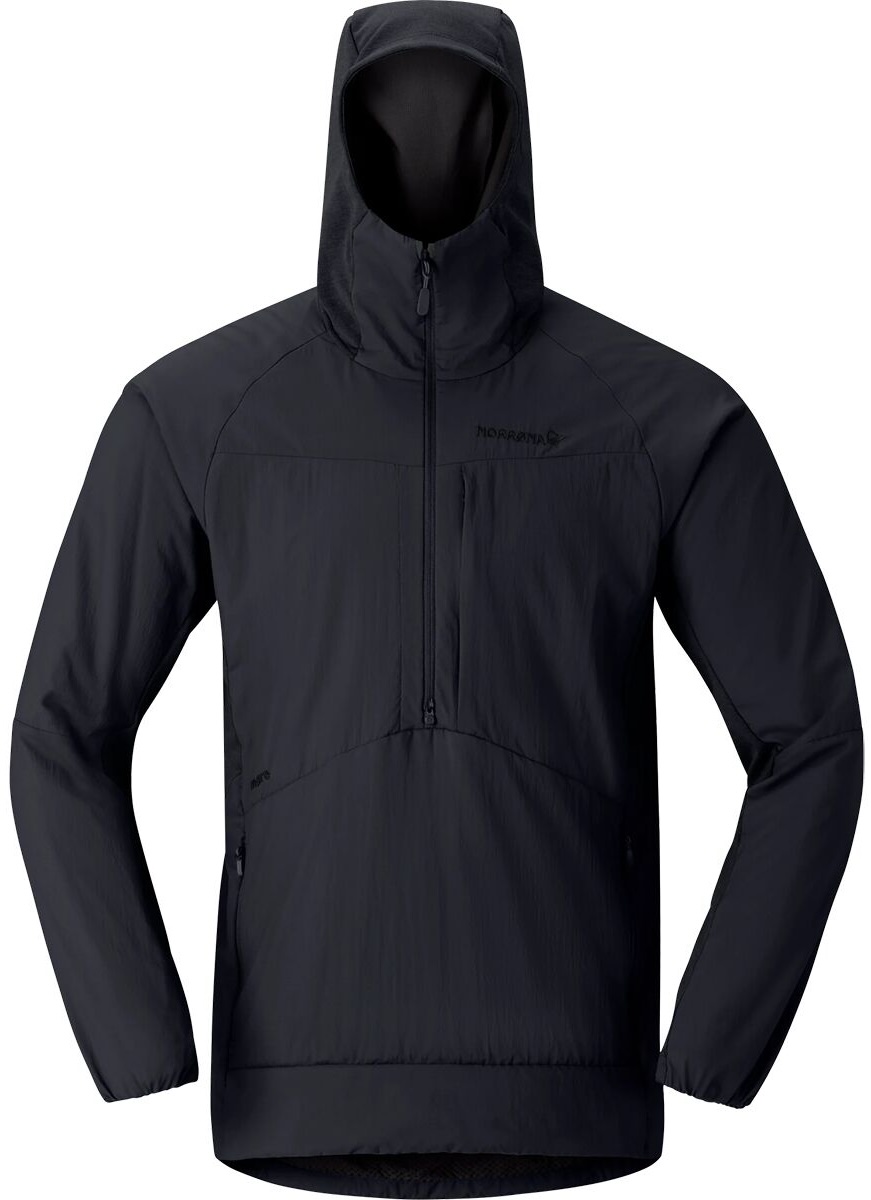
Insulation: Synthetic and fleece
Weight: 12.7 oz. men’s, 10.7 women’s
What we like: Hybrid insulation and wind-resistant fabric nicely balance warmth, breathability, and protection.
What we don’t like: Anorak style is tough to pull on and expensive.
Designed with backcountry travel in mind, Norrøna’s Møre Octa Zip hybrid fleece stands out for its smart balance of comfort and performance. For insulation, Norrøna opted for a functional mix of 105-gram Octa synthetic fill along the front and top of the arms, while thicker (168g) Warm1 fleece covers the sides, hood, back, and underarms. Rounding out the construction, Norrøna incorporated a wind-resistant fabric at the front and shoulders. The net result is an excellent balance of warmth, breathability, and wind resistance for heart-pumping activities in the cold. And importantly, all the smaller details are well sorted, including a versatile fit that’s trim enough for performance use but can accommodate a mid- to heavyweight baselayer underneath, a two-way zipper for regulating temperature, and a snug-fitting hood that stays in place even in blustery weather.
All that said, not everyone will love the Møre’s anorak style. Most notably, the pullover design isn’t easy to put on when wearing a helmet, and the lack of stretch at the front results in some restriction when trying to slip it on (versus the anorak Lumiko above, which is incredibly stretchy). Additionally, while the front kangaroo pocket is generously sized and very soft against bare skin, it tends to sag if weighted down too much. Finally, the jacket’s warmth is limited for casual and low-output uses—you’ll likely need to add another layer when belaying or hanging around camp, for example. But the Møre has quickly become a go-to for everything from hiking and skiing to biking in cooler temperatures, and its flattering fit has earned us many compliments on the trail and around town.
See the Men's Norrøna Møre Octa Zip Hood See the Women's Norrøna Møre Octa Zip Hood

Insulation: Synthetic
Weight: 8.3 oz. men’s, 7.3 oz. women’s
What we like: Warmth where you need it most.
What we don’t: Less versatile as an outer layer.
For big efforts or mild conditions, there are a lot of reasons to opt for a vest over a jacket. Built to keep you warm in the core and minimize bulk and weight elsewhere, they're a minimalist choice that promotes airflow better than most jackets. Vests also keep your arms free and unencumbered, which is great news for climbers, cross-country skiers, and even daily wearers. Within this category, the Patagonia Nano Puff Vest is one of our favorite designs, clocking in at just about 8 ounces with a lightweight shell (20D) and 60-gram synthetic insulation.
The Nano Puff is Patagonia’s most affordable synthetic insulated vest, but there are some benefits to opting for the vest version of the Nano-Air. For just a bit more, it’s the better design for high-output uses like cross-country skiing and winter running, with more breathable construction and a soft, body-hugging feel. On the other hand, we do prefer the more durable shell of the Nano Puff for casual use, especially when worn as an outer layer. And finally, keep in mind that Patagonia also offers a number of fleece vest options for considerably less, but these lack the weather protection and sleek look of the aforementioned synthetic designs.
See the Men's Patagonia Nano Puff Vest See the Women's Patagonia Nano Puff Vest
| Jacket | Price | Type | Insulation | Weight | Packable |
|---|---|---|---|---|---|
| Patagonia R1 Air Full-Zip Hoody | $189 | Fleece | Jacquard fleece | 13.0 oz. | No |
| Columbia Steens Mountain 2.0 | $65 | Fleece | Polyester fleece | 14.4 oz. | No |
| Arc’teryx Atom Jacket | $280 | Synthetic | 60g Coreloft Compact | 11.8 oz. | No |
| Rab Mythic Alpine Light Down | $330 | Down/synthetic | 900-fill down | 10.6 oz. | Yes |
| Norrøna Falketind Alpha120 | $219 | Fleece | 120 & 139g Polartec | 9.9 oz. | No |
| Patagonia Micro Puff | $279 | Synthetic | 65g PlumaFill | 10.4 oz. | Yes |
| Patagonia Nano-Air Light Hybrid | $249 | Synthetic/fleece | 40g FullRange; R1 Air fleece | 10.5 oz. | No |
| Arc'teryx Kyanite Jacket | $180 | Fleece | Polartec Power Stretch Pro | 13.9 oz. | No |
| REI Co-op 650 Down Jacket | $129 | Down | 650-fill down | 10.9 oz. | No |
| Mountain Equipment Lumiko | $59 | Fleece | Lumiko stretch fleece | 8.1 oz. | No |
| Patagonia Down Sweater | $279 | Down | 800-fill down | 13.0 oz. | Yes |
| Norrøna Møre Octa Zip Hood | $249 | Synthetic/fleece | 105g Octa; 168g Warm1 | 12.7 oz. | No |
| Patagonia Nano Puff Vest | $189 | Synthetic | 60g PrimaLoft Gold Eco | 8.3 oz. | Yes |
| Jacket | Price | Type | Insulation | Weight | Packable |
|---|---|---|---|---|---|
| Patagonia R1 Air Full-Zip Hoody | $189 | Fleece | Jacquard fleece | 11.0 oz. | No |
| Columbia Benton Springs | $65 | Fleece | Polyester fleece | 14.0 | No |
| Arc’teryx Atom Jacket | $280 | Synthetic | 60g Coreloft Compact | 9.4 oz. | No |
| Rab Mythic Alpine Light Down | $330 | Down/synthetic | 850-fill down; Coreloft | 8.0 oz. | Yes |
| Norrøna Falketind Alpha120 | $219 | Fleece | 120 & 139g Polartec | 8.6 oz. | No |
| Patagonia Micro Puff | $279 | Synthetic | 65g PlumaFill | 8.9 oz. | Yes |
| Patagonia Nano-Air Light Hybrid | $249 | Synthetic/fleece | 40g FullRange; R1 Air fleece | 8.9 oz. | No |
| Arc'teryx Kyanite Jacket | $180 | Fleece | Polartec Power Stretch Pro | 10.0 oz. | No |
| REI Co-op 650 Down Jacket | $129 | Down | 650-fill down | 10.2 oz. | No |
| Mountain Equipment Lumiko | $59 | Fleece | Lumiko stretch fleece | 6.7 oz. | No |
| Patagonia Down Sweater | $279 | Down | 800-fill down | 10.3 oz. | Yes |
| Norrøna Møre Octa Zip Hood | $249 | Synthetic/fleece | 105g Octa; 168g Warm1 | 10.7 oz. | No |
| Patagonia Nano Puff Vest | $189 | Synthetic | 60g PrimaLoft Gold Eco | 7.3 oz. | Yes |
Midlayers are often the unsung heroes of a dialed-in layering system. Feature-rich or blissfully simple, they come in many styles, cuts, and materials, and some can also serve as your outer layer, depending on the weather and your chosen activity. This guide was created in 2015 by former editor-in-chief John Ellings, and current editor-in-chief Penney Garrett and editor Maddie Downie took over in 2024. We now spotlight 13 options, spanning everything from vests to hooded jackets. John, Penney, and Maddie love to play outside in all kinds of weather and for various activities. From backpacking to skiing to climbing, midlayers almost always play a role in a proper adventure.
The vests, jackets, and hoodies outlined in this guide were selected after careful consideration and input from numerous experts and community members. When we take these layers out into the field for testing, we assess everything from the type of insulation to the specificities of the cut. We consider additional features such as breathability, water-resistant treatments, craftsmanship, and overall weight and heft. How easily can the piece be layered over or under? If there's a hood, is it helpful or does it just get in the way? Thanks to the broad usefulness of midlayers, we test them year-round and will amend this guide as we try out new (and new-to-us) pieces and find our favorites.
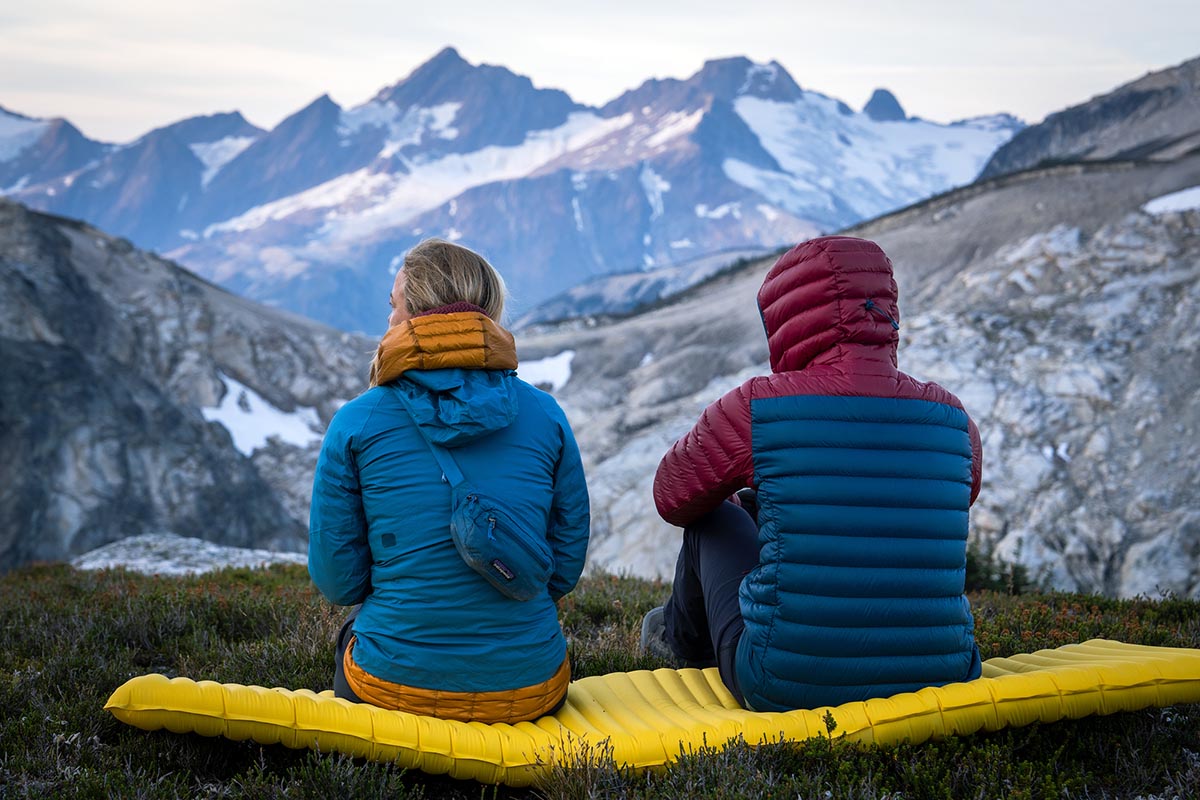
Fleece
A skiing midlayer classic, the fleece jacket is a comfortable and affordable way to stay warm. Despite what the name may suggest, fleece is a wholly man-made synthetic material composed of petroleum products. Many new models are made of plastics such as recycled bottles, and through a rather impressive process, the outcome is a cozy and soft fleece. These jackets are wonderful as a midlayer for skiing, thanks to their ability to resist absorbing moisture and their quick drying time. Additionally, cost is a significant reason for choosing a fleece, even though they tend to pill over time.
As far as warmth is concerned, fleece jackets are typically measured in terms of their fleece weight. A lightweight fleece—such as Patagonia's R1 Air—is a thin and relatively packable option that breathes very well but isn’t as warm. These are great for mild-weather skiing or high-exertion activities, such as backcountry skiing and climbing. Midweight fleeces are the most popular style due to their versatile warmth, and include models like the Black Diamond Coefficient Hoody and Arc'teryx Kyanite. These jackets are insulating enough for most cold days, but they don’t compromise much in terms of breathability. Finally, heavyweight fleeces are the bulkiest and warmest in their class, which limits their use to casual environments or truly cold days on the slopes.
.jpg)
Synthetic Insulation
Opting for a synthetic jacket will most often involve a slight step up in cost from a fleece, but it comes with reduced bulk and often a more weather-resistant shell. And as an upgrade from down fill, synthetics are more breathable and continue insulating when wet. PrimaLoft was the first big name in synthetic insulation, but in recent years, we’ve seen a variety of new blends come to market with a range of intentions. Outdoor Research's VerticalX SuperStrand and Patagonia’s PlumaFill, for example, seek to mimic the weight and compressibility of down, while other insulations prioritize breathability (like the impressive FullRange insulation used in Patagonia's Nano-Air Light Hybrid Jacket). Depending on your needs, there’s likely a synthetically insulated jacket ideal for the job, and we particularly like highly breathable options for active resort or backcountry skiers.
Synthetic insulation is measured in grams, which is how much insulation a 1 x 1 meter section of the fiber weighs. Lightweight synthetics will have approximately 40 to 60 grams of insulation, and midweights are closer to 100 grams. Once you reach the midweight category, you are dealing with a very bulky jacket, which is why the 60-gram choice is so popular. It’s light and easy to move in, making it perfect as an all-around ski midlayer.
.jpg)
Down Insulation
Despite impressive innovation in synthetic materials, there’s still no match for the warmth, lightweight, and packability of natural goose or duck plumage. There is simply no better way to stay warm than a down jacket, as long as you avoid heavy moisture—down will clump up and stop insulating when wet. If you really make an effort to stay dry with a bombproof shell, or for dry and cold conditions found in areas like Utah, Colorado, or parts of the East Coast, a down jacket is a perfect fit. On positively frigid days, an option like the venerable Arc’teryx Cerium Jacket or Rab Mythic Alpine Light remains a go-to choice.
In comparing down jackets, the two most important specifications are down fill power and fill weight. These are two independent measurements, but taken together, they will give you an indication of how warm the jacket will be. To start, fill power is a measurement of the quality of the down clusters. Because down relies on loft to trap heat against your body, a jacket that requires fewer clusters to achieve the same amount of loft will be equally as warm but weigh less. As a result, you pay more for a higher fill power. Mid-range fill power falls within the 550 to 650 range, and high-end jackets typically have 700+ fill power, reaching as high as 1,000 for some brands, such as Montbell. Fill weight is the next metric, which is simply the total amount of down in the jacket, expressed in ounces. Now, remember that weight isn’t the only indicator and should be considered alongside fill power, but it remains a very helpful number in determining jacket warmth.
.jpg)
Wool
Many of our favorite baselayers are made with merino wool, due to its comfort, warmth, and superior ability to resist odor compared to synthetic materials. And while this natural alternative isn’t often seen in midlayers, it can compete with synthetics in terms of warmth (even when wet) and temperature regulation. But this all-natural insulator does have its downsides: Wool can be more of a hassle when it comes time to do the laundry, and it lacks the warmth-to-weight ratio of down. As a result, we most often see it mixed in with a hybrid insulation design, like the wool blends seen in the Black Diamond First Light 1.0 Stretch.
Warmth
Your preferences for warmth will depend on several factors, including where you ski and the conditions you’re willing to endure, as well as considerations such as whether you use an insulated ski jacket or just a shell. Warmth will vary no matter the choice, but the most efficient heater is the down jacket. The clusters of feathers provide unmatched warmth, considering the garment's weight. Choosing a higher fill-power option will result in the best warmth-to-weight ratio.

Another natural insulator, wool offers cozy warmth and comes with the benefit of resisting odors better than other materials. However, wool’s warmth-to-weight ratio is less impressive, and it’s often on the expensive end of the spectrum. Next in line is synthetic insulation, which is sometimes referred to as synthetic down because it was designed to emulate the heat-capturing abilities of the duck or goose clusters. While not as efficient in heating for the weight (some designs like the Patagonia Micro Puff and Outdoor Research SuperStrand LT are getting close), synthetic jackets are still a great choice for skiing in typical resort conditions.
A fleece jacket may be at the bottom of our warmth list, but that's not to say you can’t find a very warm fleece coat. It just takes a lot of fleece to get you there. And for many skiers (us included), a bulky jacket can interfere with the fun, which puts fleece at the bottom of our warmth scale.
Down: Excellent
Synthetic: Very good
Wool: Good
Fleece: Not good
.jpg)
Snow and Wet-Weather Protection
This category is where the down jacket struggles in relation to the other three. If your down jacket is poking out the bottom of your shell and you plant yourself in some wet snow (the Pacific Northwest variety comes to mind), the jacket’s ability to insulate will be compromised. One of the appeals of moving to synthetic, fleece, or wool insulation is that they retain some insulating properties when wet (as a downside, wool can become very heavy when saturated). Fleece is top of the class in terms of warmth when wet (due in part to the naturally hydrophobic nature of the polyester construction) and can also dry faster than synthetic fibers. However, many synthetic jackets will add a DWR coating to their shell to bead water (such as Norrøna's Møre Octa Zip Hood), making them a far more suitable outer layer option than fleece.
Synthetic: Very good
Fleece: Good
Wool: Good
Down: Not good (even hydrophobic down falls short)

Breathability
Breathability is another strong suit of fleece, synthetic, and wool insulation. Overall, we give the edge to fleeces, which are naturally porous, and models like the Norrøna Falketind Alpha120 or Mountain Equipment Lumiko open up even more avenues for hot air to escape. Wool comes in a close second—this natural insulator excels at temperature regulation and, as a bonus, minimizes odor retention. Synthetic jackets, such as Arc’teryx's Atom Jacket, offer great breathability for active use, but the category as a whole can be hit or miss (we often overheat in the Patagonia Micro Puff, for example). Unfortunately, down jackets are on the outside looking in here. Their supreme warmth retention doesn’t breathe nearly as well as the other options (and working up a sweat can lead to the insulation getting wet and losing its ability to keep you warm).
Fleece: Excellent
Synthetic: Very good to excellent
Wool: Good
Down: Not good
.jpg)
Weight and Compressibility
For the backcountry explorer who needs to pack a warm layer to stay comfortable at mealtimes, the down jacket remains the best choice. An 800-fill-power down jacket with a thin shell is capable of compressing down to the size of a grapefruit (although over-compressing for long periods can damage the feathers, so don’t go too crazy). Synthetics and wools (often wool-synthetic blends) vary significantly in compressibility. Lighter-weight options, such as the Patagonia Micro Puff, are impressively compressible and can match the compressibility of a down piece, while others fall behind. Fleece jackets aren’t really all that compressible, and throwing a mid or heavyweight fleece into a pack can make for a challenging endeavor.
Down: Excellent
Synthetic: Good to excellent
Wool: Good
Fleece: Not good
.jpg)
Durability
Insulated synthetic, down, and wool jackets vary from super-thin ultralight shells that are vulnerable to tears to tough jackets that you can throw on and forget about. In terms of the insulation itself, down and wool have long lifespans (and will continue to provide warmth as long as the shell of the jacket is intact), whereas synthetic materials tend to pack out. The durability of a fleece, on the other hand, is usually quite good. They’ll pill up over time, and it’s possible to put a hole in a fleece by snagging it on a sharp object or catching a wayward campfire spark, but they’re typically abrasion-resistant and long-lasting in general.
In addition to the insulation, it’s important to consider the durability of your jacket’s shell fabric. The near-constant friction between your midlayer and outer shell jacket can cause abrasions and potential tears should a zipper catch the outer shell of your midlayer. In our opinion, because a couple of extra ounces of weight are rarely a cause for concern while resort skiing, it’s worth it to get a more durable jacket. For insulated jackets, this means a tear-resistant fabric that is 20 denier (denier is a measurement of fabric thickness) or thicker. For example, a jacket like the Patagonia Down Sweater has a great combination of sufficient toughness (20D) and minimal bulk, while the Micro Puff’s 10-denier shell is too fragile for heavy use.
Fleece: Very good
Down, Synthetic, & Wool: Varies, but can be good
.jpg)
Fit plays a very large role in an effective midlayer. Too much extra fabric will result in bunching and general discomfort underneath your shell, while a jacket that’s too trim will restrict your mobility. It’s best to find that middle ground where you have complete freedom of movement without the jacket riding up, and no excess bulk. We prefer a jacket that has a non-boxy cut that allows us to wear a similarly athletic-fitting outer layer over the top. Arc'teryx, in particular, seems to consistently make jackets with this type of fit. As you're trying on midlayers, be aware of the normal pinch areas: around the waist, in the shoulders, and under the armpits.
.jpg)
Deciding whether or not to opt for the hooded or non-hooded version of a midlayer might seem like a relatively inconsequential decision, but it’s actually deserving of some thought. For the most part, we prefer a non-hooded midlayer, particularly when we know we’ll be layering it under a hardshell or ski jacket. A hood is prone to bunching up behind the neck under an outer layer, and it can be cumbersome to wear both midlayer and shell hoods simultaneously. Furthermore, if you’re like us and participate in activities that require wearing a helmet (such as skiing, climbing, or biking), keep in mind that most midlayer hoods are not helmet-compatible.
.jpg)
But there are a few scenarios where we love a hooded midlayer. For one, if we are wearing a helmet, a svelte hood worn underneath can provide a good deal of warmth for both the head and neck, and will prevent snow from entering the jacket at the collar. Second, if we think we’ll be wearing our midlayer as an outer layer (which we often do with jackets like the Arc’teryx Atom or Patagonia Down Sweater), we love the extra warmth and protection of a hood. In the end, the decision between a hood and no hood will come down to personal preference, and it’s essential to consider how you’ll be using your midlayer when determining your needs.
.jpg)
Midlayers are fairly simple pieces, especially considering they’re meant to hide under your weatherproof outer layer. Feature sets are often limited to pockets, thumbholes, and hoods (which we discussed above). It’s true that most folks don’t use the pockets of their insulating layers on the slopes or in the backcountry all that often—it’s a pain to have to unzip a couple layers. However, midlayers are a classic choice for daily use, so don’t dismiss pockets completely. And if you’re eying a very technical piece that goes without pockets and you plan to use it around town, you may want to reconsider. Case in point: A more versatile choice may be the REI Co-op 650 Down (which features four total pockets) compared to the lightweight Mountain Equipment Lumiko, which has only one chest pocket.
.jpg)
Performance midlayers occasionally will have thumbholes built into the sleeves. While serving as an opening for cold air to sneak in when not in use, the openings work well for keeping the sleeves in place during high-effort activities or when taking on and off layers. User tip: If you’re eyeing a jacket with this feature, we recommend checking to ensure the fabric around the thumbhole has some stretch, so it doesn’t feel like your thumbs are being yanked around every time you extend your arms.
.jpg)
In 2025, many consumers are factoring sustainability into their purchasing, and there are a lot of considerations to be made when selecting a midlayer. Among down, synthetic, fleece, and wool options, none are without blame. However, there are steps that outdoor companies are taking to reduce their environmental impact and make positive changes for the planet.
When it comes to down and wool, look for certifications such as the Responsible Down Standard and the Responsible Wool Standard, which ensure that ducks, geese, and sheep are treated humanely and in accordance with strict animal welfare and environmental standards. Synthetic insulation and fleece, on the other hand, are petroleum-based and can contribute to greenhouse gas emissions, as well as potentially unsafe work environments. Therefore, we encourage shoppers to look for recycled—and recyclable—materials. PFAS-free water-repellent coatings are also becoming more common, as they forgo the use of harmful per- and polyfluoroalkyl substances, known as "forever chemicals," due to their inability to break down over time. Whether you choose a midlayer made with synthetic or natural fibers, you can also do your part by following the three R’s: Reduce your consumption, reuse what you have, and purchase products made with recycled materials. Finally, when you can, seek out used options rather than buying new.
.jpg)
If you’re like most folks, you spend a lot of time picking out the perfect shell, then move to your insulating options, and finally just grab a baselayer willy-nilly. Trust us, this is a poor methodology. As the layer next to the skin, a baselayer is at the core of moisture wicking, temperature regulation, and several other essentials. If you have a crummy baselayer, your mid and outer layers will be nearly worthless. Top materials include merino wool for its excellent temperature regulation and odor prevention, while synthetics are quite effective at drawing moisture away from the skin. Check out our top baselayer picks to see which ones stand out as best.
Back to Our Top Midlayer Picks Back to Our Midlayer Comparison Table


bcdc.jpg?h=fbc67360&itok=wmPMXiEZ)

ec55.jpg?h=fbc67360&itok=0_jtrRCF)

_00e68.jpg?h=fbc67360&itok=K3-gn47Q)

-tfe3e.jpg?h=fbc67360&itok=tQQ0SQx9)
_01074.jpg?h=fbc67360&itok=LZfjph4c)