.jpg)
.jpg)
Photo Credit
It’s that time of year! Time to find the perfect present for our adventurous loved ones. For that person in your life who loves all things cold weather, check out our gift guide for skiers and snowboarders. For ideas tailored to other pursuits, we also have more editor-recommended gift guides to explore. Happy gift giving!
Nothing spells cozy quite like a winter mitten, which by definition prioritizes warmth over dexterity. It’s true that you’ll most often catch us wearing gloves, but we do prefer mittens for particularly frigid environments and wind-generating activities like snowboarding, cross-country skiing, and bike commuting. Below we break down our top winter mittens for the 2025-2026 season, including leather work mitts, ski- and snowboard-specific designs, premium insulators for expedition use, and more. Our top pick for everyday use is Patagonia’s Nano Puff Mitts. For more background information, see our winter mitten comparison table and buying advice below the picks.
Editor's note: We updated this guide on December 9, 2025, to narrow down our list of favorite winter mittens after reevaluating test notes and use cases (see our list of tested and dismissed winter mittens below). We also added the REI Campwell Down Mitten to the list after putting them through some early winter testing. Lastly, we reviewed the guide to ensure all information was up to date at the time of publication and refreshed the imagery with new photos from recent testing.

Category: Casual/performance
Shell: Polyester
Waterproof: No
What we like: Your favorite puffy jacket—for your hands.
What we don’t: Not particularly durable or water-resistant.
Patagonia’s Nano Puff Mitts might look fairly unassuming, but don’t be fooled: Just like the Nano Puff jacket (Patagonia’s best-selling jacket—ever), these mittens pack a serious punch. On the outside, you get a thin 20-denier (D) polyester shell with a durable water-repellent finish, while the inside features 60 grams of synthetic insulation and a cozy tricot liner that traps warmth with minimal bulk. Taken together, the Nano Puff Mitts are lightweight, extremely dextrous (for a mitten, at least), easy to put on and take off thanks to a large pull tab, and just as versatile as your favorite puffy. Come winter, they’re our mittens of choice for daily use, cross-country skiing, backcountry ski touring, and more.
Of course, the Nano Puff Mitts can’t hold a candle to designs like the Black Diamond Mercury and Outdoor Research Alti II in terms of waterproofing, durability, and warmth. But what they do have going for them is a lightweight, dextrous build that traps a hefty dose of body heat and deftly grips ski poles, shovel handles, and steering wheels with ease. They’re right beside our door for short winter errands, always at the bottom of our pack for technical routes and ski tours, and easy to throw in an overnight kit for casual weekends, too. For everything from daily warmth to a lightweight and packable backcountry savior, the Nano Puff Mitt is our top pick.
See the Patagonia Nano Puff Mitts
 Category: Casual/work
Shell: Polyester
Waterproof: Yes
What we like: A reasonably hardwearing waterproof mitt for a reasonable price.
What we don’t: Unrefined fit and compromised breathability.
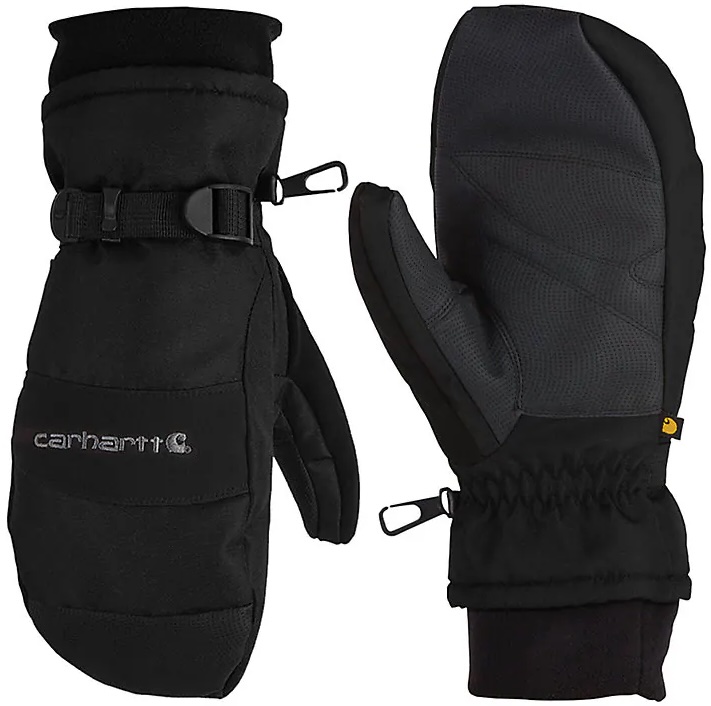
Not everyone wants to spend upwards of $100 (or more) on a winter mitten, nor do they need to. For a budget mitten that can get the job done for short outdoor chores, walks around the block, or the odd day at the ski area, check out the Carhartt Waterproof Insulated Mitt. This relatively inexpensive mitten keeps moisture out, is insulated for mildly cold temperatures (most hands will be cozy down to about 20 degrees Fahrenheit), and offers a nice set of performance features, including a wrist cinch, a nose wipe, and a soft, moisture-wicking fleece-lined interior. Carhartt is known for its hardwearing gear, built to withstand real-world use, and their budget mitt is no exception.
What do you give up with a budget mitten like the Carhartt? Fit and dexterity certainly suffer: We’ve found that the Waterproof Insulated Mitt has a fair share of extra material around (and beyond) the fingers, which can make gripping objects a bit tricky. Waterproofing also falls short, which may not be a concern for temperatures well below freezing. However, the main downside to the budget membrane is its lack of breathability—this is especially significant for high-output activities or those prone to sweaty hands. But for the price, the Carhartt Waterproof Insulated Mitt is nevertheless a superb value for occasional or emergency use. For a budget leather design, check out the Flylow Oven Mitt below.
See the Carhartt Waterproof Insulated Mitt
 Category: Performance
Shell: Synthetic/leather
Waterproof: Yes (BD.dry)
What we like: Proven warmth at a decently low cost.
What we don’t: Black Diamond’s in-house waterproofing isn’t as premium as Gore-Tex.
If winter gets cold in your neck of the woods—or if you venture into frigid temperatures by choice—check out Black Diamond’s Mercury Mitt. Designed to keep your hands warm in temperatures as low as -25 degrees Fahrenheit, the Mercury features a waterproof shell, a generous gauntlet, and a removable liner mitt packed with synthetic insulation (133g & 170g) and lined with fleece for next-level coziness. And despite its bulk, the Mercury is decently dextrous (thanks to a four-way stretch shell, thinner insulation at the palm, and a nice grip between the insulation and liner) and designed to take a beating, too, whether you're handling ropes, snow shovels, or chairlifts.
The Mercury’s warmth will be sufficient for most who live and adventure in the Lower 48, and the price is competitive, too. It's worth noting that the Mercury features BD’s in-house waterproof membrane rather than the more premium and reliable Gore-Tex—but we’ve found the waterproofing to be fully sufficient for temperatures below freezing. If you’re looking for more insulation (say, for a trip to the Arctic, life in Alaska, or climbing in the greater ranges), check out the Outdoor Research Alti II Mitts below or Black Diamond's own Absolutes Mitts, which are rated to -40 degrees Fahrenheit. All told, there’s a lot to like about the Black Diamond Mercury, making it our mitten of choice for cold hands and cold climates alike.
Read more: Black Diamond Mercury Mitt review (women's version)
See the Men's BD Mercury Mitts See the Women's BD Mercury Mitts

 Category: Performance
Shell: Polyamide/leather
Waterproof: No
What we like: A supple and soft ski glove with a premium fit and finish.
What we don’t: Expensive; requires care to maintain waterproofing.
For the best ski mitten, we turn to Sweden-based Hestra, a brand that’s spent almost a century defining the premium handwear market. The Heli is their most popular ski-specific model, and it’s the full package for us, too: The shell design combines a waterproof synthetic material on the back of the hand with a supple leather grip, while the removable liner features synthetic fill and a soft fleece interior. With sleek seams and no unnecessary materials, the Heli Mitt is nearly as breathable and dexterous as possible without compromising on warmth and weather protection. In short, Hestra’s mitten exudes premium quality from tip to gauntlet and is an easy pick for our favorite ski-specific design this year.
We appreciate the Heli’s fairly simple feature set, which includes a Velcro wrist strap (a large buckle makes this easy to adjust with mittens on) and mid-length gauntlet with a one-handed cinch. Notably missing is a nose wipe, but the inner liner does the job in a pinch and is relatively easy to remove (and reattach to) the outer mitt. But, you’re definitely paying for the premium fit and finish. Also noteworthy: The leather does require aftermarket treatment to be fully waterproof—you’ll want to apply some of Hestra’s leather balm (or a similar Nikwax product) before you hit the slopes. Lastly, if you’re interested in a more snowboard-specific style, we love the Outdoor Research Mt. Baker II GTX, a fully waterproof mitten with a long gauntlet and removable glove liner.
See the Men's Hestra Army Leather Heli Mitt See the Women's Hestra Heli Mitt
.jpg)

Category: Performance
Shell: Softshell
Waterproof: No
What we like: A near-ideal mix of warmth, breathability, and windproofing for winter running and cross-country skiing.
What we don’t: Not warm enough for slower-paced activities in cold weather.
If your winter routine involves activities like cross-country skiing or running, you’ll want a mitten like the Arc’teryx Venta. The Venta features just enough insulation to cut the chill of a frosty morning (you get a light fleece at the front of the hand and warmer synthetic at the back), along with a breathable softshell face that sheds the heat you’ll inevitably build up. And while it’s not entirely waterproof, the shell fabric is fully windproof and provides a reliable defense against most rain and snow. To top it off, the Venta offers excellent dexterity and grip (great for holding your ski pole), and the touchscreen patches actually work—a rarity among mittens.
We’ve worn a number of different gloves and mittens while winter running and cross-country skiing and generally have one of two gripes: Either our hands get cold, or they get clammy. The Venta mittens are truly the best solution we’ve found for this cold-weather conundrum. But they are a ‘tweener mitt: We often drop down to a liner glove as temperatures creep toward 40 degrees, and for lower-output activities (even hiking or snowshoeing) in sub-freezing conditions, you’ll certainly want more mitten. It’s also worth mentioning the Outdoor Research Deviator Mitts, a similarly intentioned design that tacks on a goat leather palm.
See the Arc'teryx Venta Mitten
 Category: Work
Shell: Leather
Waterproof: No (water-resistant)
What we like: An affordable and supple leather mitten.
What we don’t: No waterproof membrane means you’ll have to keep up with the leather treatment.
There are a lot of great insulated leather work mittens out there, but Flylow Gear’s Oven Mitt is by far our favorite. Like many modern leather designs, the Oven Mitt features a supple pigskin leather shell and soft polyester lining, with synthetic fill placed in between (100g at the palm and 200g at the back of the hand). The Oven Mitt is also quick to break in, developing good dexterity after just a few wears (for comparison, it wears in noticeably quicker than the also budget-friendly Kincos). Finally, the price tag is a steal of a deal, undercutting premium competitors like the Hestra Fall Line below by over $100.
The Oven Mitts are a consistent favorite among lifties, farmhands, and anyone else in need of a durable, grippy, and dextrous winter mitten. However, unlike prior versions, the latest Oven Mitt doesn't come pre-baked with Sno-Seal wax, resulting in a noticeable drop in wet-weather protection. To be fair, you still get a DWR finish for fending off light moisture, and it's easy to apply a waterproofing treatment on your own, but we nevertheless appreciated the time and cost savings. If you're looking for reliable waterproofing out of the box, Give'r offers a high-quality option in their Frontier, but you’ll spend up for the brand cachet. Ultimately, the Oven Mitt is still a fantastic value, earning it a respectable finish on our list this season. A final note: Flylow’s sizing runs particularly small, so you’ll want to consider sizing up.
See the Flylow Gear Oven Mitt

 Category: Performance
Shell: Leather
Waterproof: Yes
What we like: Serious warmth for those who suffer from cold hands; longer-lasting, warmer, and less bulky than competing heated mittens.
What we don’t: Expensive.
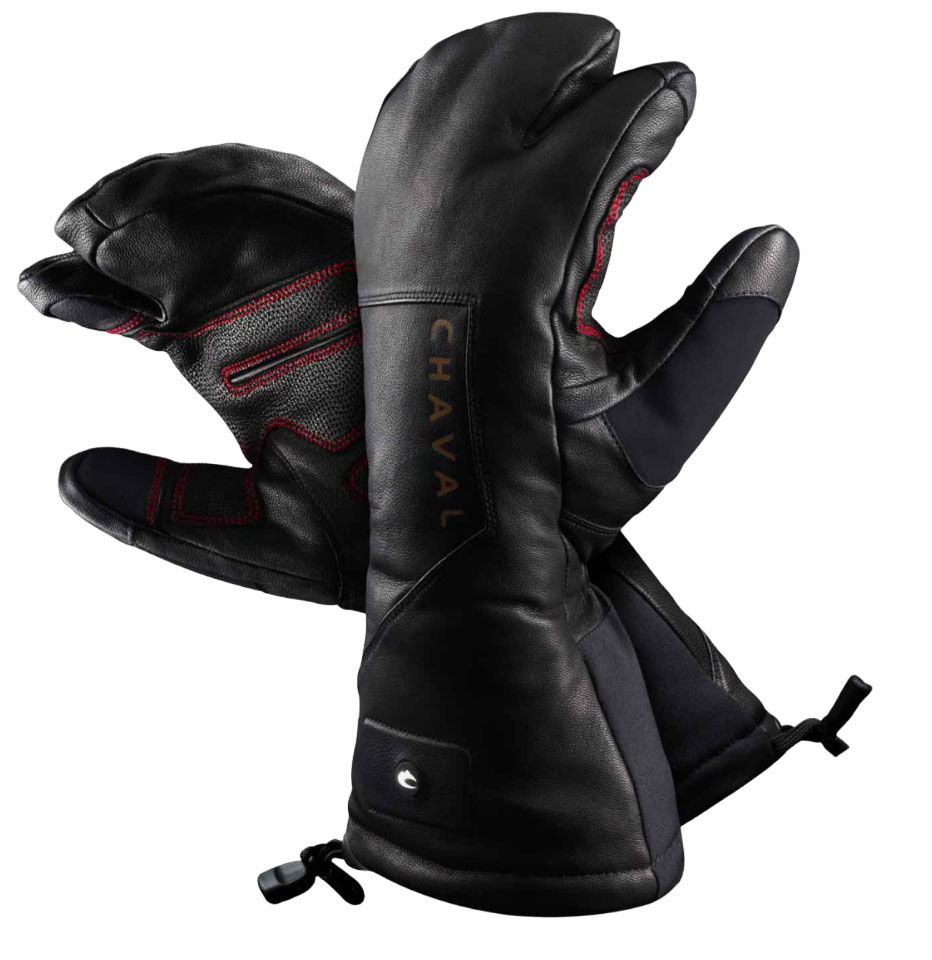
If you struggle with persistently cold hands or simply want to maximize warmth, a heated mitten can make a world of difference, and our favorite is Chaval’s SuperNova Heated Mitt. Based on an island off the coast of Seattle, Chaval specializes in heated gloves and mittens, and their SuperNova Heated Mitt offers a premium feel and performance that you just don’t get from other brands. Chaval’s Alphaheat technology has climate control that responds to the temperature of your hands—no need to toggle it on or off, up or down—works in sub-zero (Fahrenheit) temperatures, and lasts for significantly longer than other brands (4 to 6 hrs compared to the OR Prevail’s 2.5 hrs on high, for example).
The SuperNova Mitts are also easy to recharge: Unlike other brands, they don’t require you to remove any batteries from the cuff—simply disengage the plug inside and insert it into the charger. They’re also a bit more dexterous than other heated mitts thanks to heating tech that uses a thin polymer film rather than wires, and the mitten has a handy half-trigger finger that’s surprisingly useful. Of course, the biggest impediment of a heated glove is cost: The SuperNova Mitt is far and away the most expensive design to make our list. But if you’re sick of constantly churning through disposable handwarmers and want the best heated mitten money can buy, look no further than Chaval.
See the Chaval SuperNova Heated Mitt
 Category: Performance/casual
Shell: Leather
Waterproof: No (water-resistant)
What we like: Incredible build quality; great comfort and dexterity.
What we don’t: Expensive and not fully waterproof.
The Hestra Fall Line Mitt is a true work of art. This versatile leather design is equal parts ski mitten and everyday workhorse: It offers sufficient insulation and cushioning on the back of the hand for most winter sports (the glove version earned a spot on our list of the best ski gloves), but is dexterous enough to use while driving, shoveling snow, and simply walking around town. And the Fall Line is made to last—our well-worn pair has softened and conformed to our hand, giving it a custom feel that still performs like new (consistent maintenance has helped here).
We were tempted to rank the Fall Line in our number one spot—it’s just that supple, cozy, durable, and versatile—but many will find it difficult to justify the price tag. And like most leather gloves (which also don’t include a built-in waterproof membrane), it does require routine treatments with a waterproofing wax or spray. Compared to the Flylow Oven Mitt above, the Hestra is noticeably warmer (thanks to the removable glove liner) and adds features like back-of-hand padding, a Velcro cuff adjustment, and a leash. It’s also over three times the investment. But for a classy leather mitten that’s at home both on the mountain and around town, the Fall Line may be worth it depending on your needs and priorities.
See the Men's Hestra Fall Line Mitt See the Women's Hestra Fall Line Mitt
Category: Performance
Shell: Synthetic/leather
Waterproof: Yes (Gore-Tex)
What we like: A warm, waterproof, dextrous, and durable ski mitten; more affordable than the competition.
What we don’t: No removable liner.
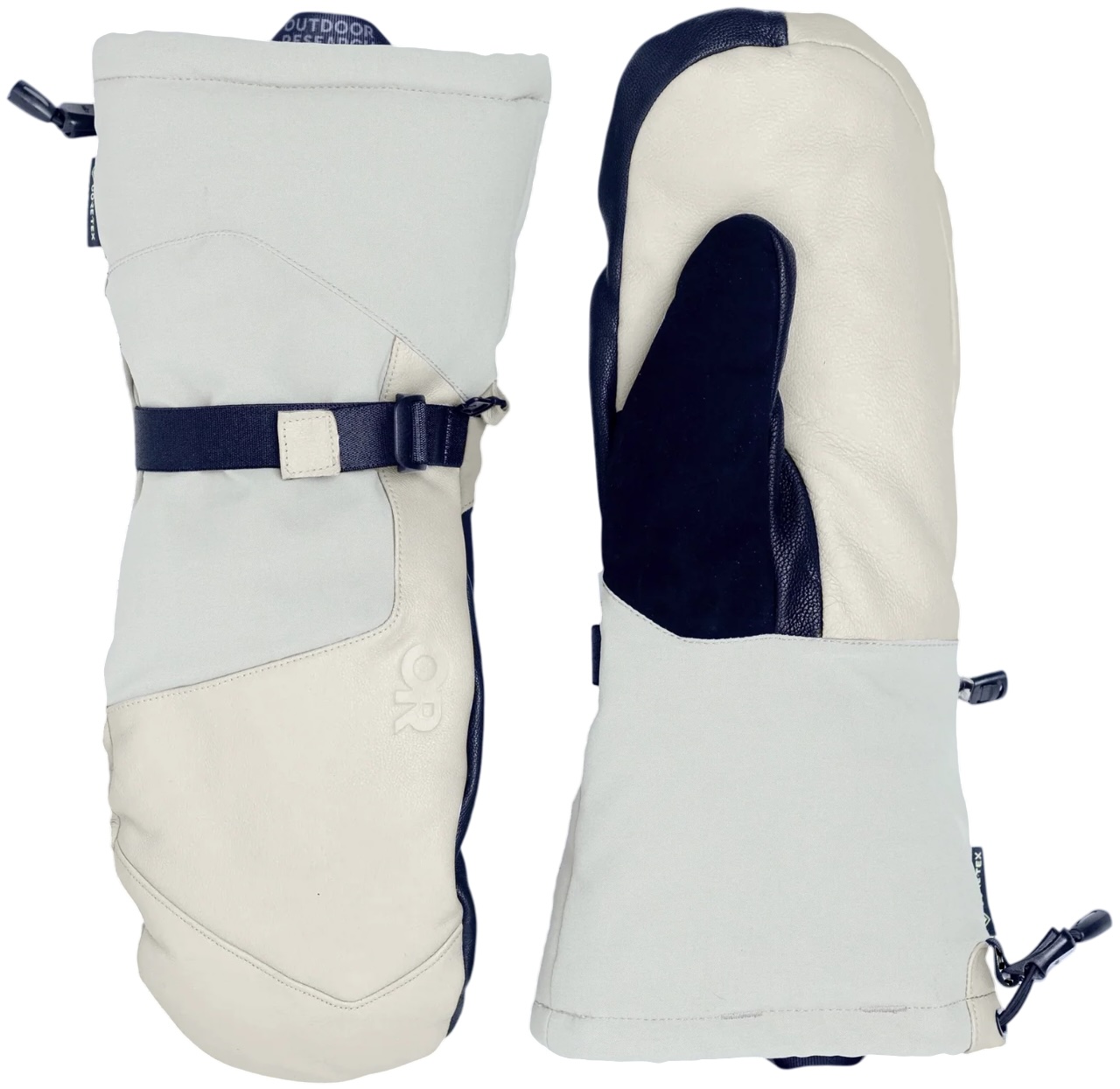
Seattle-based Outdoor Research is known for delivering thoughtful and premium designs at a lower price point than most, and their Carbide Sensor Mitts are a prime example. The ski-oriented Carbide goes head to head with a mitten like the Hestra Heli above, from the premium leather grip to the waterproof membrane, generous gauntlet, and easy-to-toggle wrist cinch. With 130 grams of synthetic insulation on the palm and 200 grams on the back of the hand, these mittens are well-equipped for some serious cold. Just one issue: Although OR markets the Carbide as a touchscreen-compatible "Sensor" mitt, the technology will be fairly disappointing in a mitten of this bulk.
The key distinction between the Hestra Heli and the Carbide is the liner—while the former features a removable liner mitten, the latter’s is built-in. We have a slight preference for removable liners: They’re quicker to dry between days on the slopes, and they can also be replaced, which can go a long way toward extending the lifespan of your mitten. On the flip side, the Heli's removable liners are a bit clunky (they attach via a strip of Velcro), can impact dexterity, and are just one more moving part to manage (or lose). And in the Carbide's favor, its waterproof membrane provides comprehensive protection, while the Heli's is only present on the back of the hand. All told, for less than the Hestra, the OR certainly has a lot going for it.
See the OR Carbide Sensor Mitts
.jpg) Category: Performance
Category: Performance
Shell: Synthetic
Waterproof: Yes
What we like: A versatile waterproof overmitt with endless applications.
What we don’t: Overbuilt for 3-season adventures.
It’s hard to beat the versatility of a waterproof overmitt, which easily slides right over the liner glove of your choice. And these little numbers pack quite the punch: They’re lightweight, packable, and offer complete water and wind protection. As a result, we love them for everything from bike commuting to backcountry skiing, winter hiking, and mountaineering—they might not be the most purpose-built design, but their applications are endless. Among similar options, Black Diamond’s Waterproof Overmitts are our top pick, with a stretchy 3-layer waterproof shell, long gauntlet, and textured palms for grip.
If you’re putting together a versatile handwear collection, the BD Waterproof Overmitts could be a key component: Pair them with a heavily insulated mitten for resort skiing, a sleek liner glove for snowshoeing, or just stash them at the bottom of your pack for emergency use. They’re admittedly not the lightest option—Black Diamond’s UL Overmitts are a more minimalist design for 3-season adventures, but they lack the protective gauntlet and bombproof weatherproofness of the Waterproof Overmitts. If you’re looking for simple, winter-ready protection, the Waterproof Overmitts are our top recommendation.
See the Black Diamond Waterproof Overmitts
.jpg) Category: Performance
Category: Performance
Shell: Nylon/leather
Waterproof: Yes (Gore-Tex)
What we like: Premium warmth and waterproofing for the world’s worst weather.
What we don’t: Expensive; heavy insulation results in limited range of movement.
Outdoor Research’s Alti II Mitts are another compelling design for those with cold hands or those venturing into extreme conditions. Touted as an expedition mitten for high mountain environments, this is performance design through and through. And for many conditions, it’s a great 3-in-1 combo: You get a burly nylon shell with a Gore-Tex membrane and insulation, along with an easily removable synthetically-insulated liner mitt. Wear the two together in the coldest temps, or either component on its own, depending on activity level and conditions. The mitt also features several benefits ideal for technical endeavors, including a removable leash, durable leather palm, and an extended gauntlet design.
If you’re predominantly adventuring in the Lower 48, you’ll want to think twice before opting for the Alti. The heavy insulation and removable liner have a noticeable impact on fine motor movements (we can’t grip a ski pole securely with them), and the warmth is overkill for high-output activities. What’s more, it's a solid investment, especially given that options like the Black Diamond Mercury Mitt above or OR’s lighter-weight Mt. Baker II Gore-Tex Mitts will get the job done for most. But for uncompromised warmth for winter camping or expeditions in the greater ranges, the Alti is truly hard to beat.
See the Men's OR Alti II GTX Mitts See the Women's OR Alti II GTX Mitts
 Category: Performance
Shell: Leather
Waterproof: Yes (Gore-Tex)
What we like: Premium build and excellent dexterity.
What we don’t: Split-finger design can’t match the warmth of a mitten.
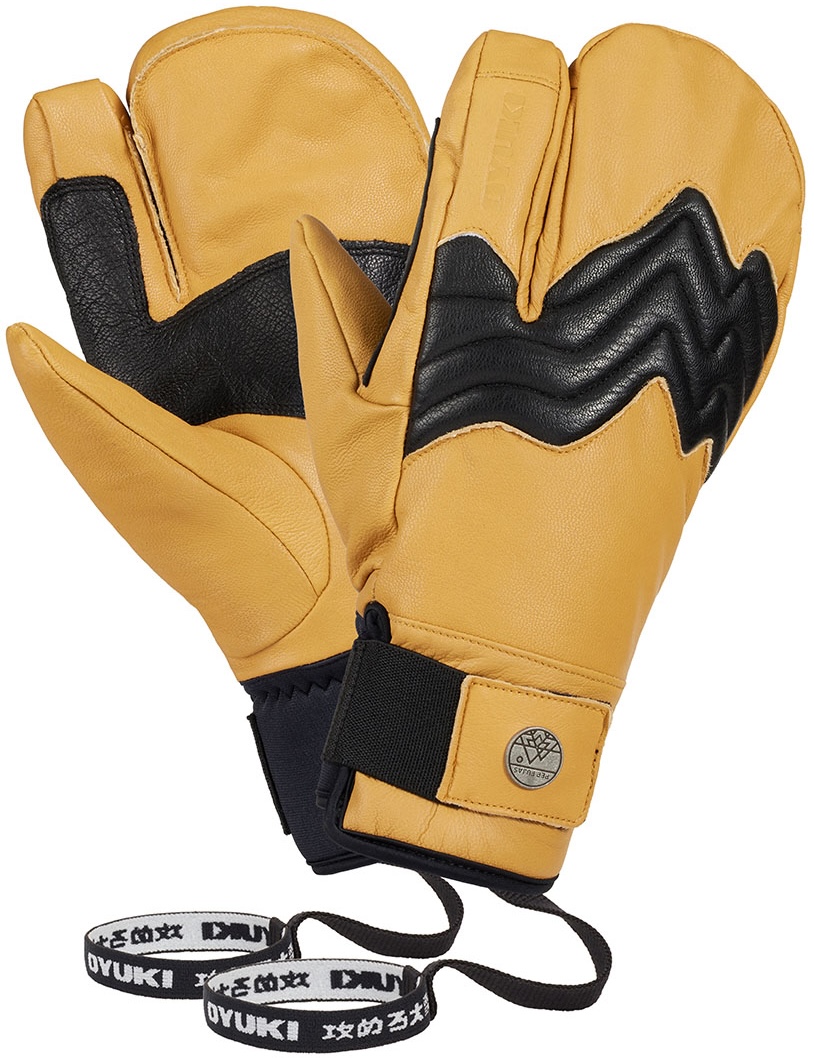
Trigger mitts, like Oyuki’s Pep and women’s Chika, offer the best of both worlds: By combining a mitten with a dedicated slot for your pointer finger, you get most of the warmth of a mitten plus the dexterity to grab a zipper or adjust ski boots. And we really like what Hokkaido-based Oyuki put together for the Pep and Chika. These mitts are made of a premium goat leather that seems to get better with age. The sleek undercuff design is both comfortable and secure, featuring a hook-and-loop cinch. They also boast reliable Gore-Tex waterproofing and a nice dose of insulation (200g on the back of hand and 133g on the palm), as well a soft fleece lining.
The downside to opting for a 3-finger mitt is obvious: The pointer finger ends up being just as cold as it would be in a glove. You also shouldn’t expect the same dexterity you’d get in a regular five-finger glove. And the Pep and Chika are also quite expensive (the Chika is less expensive, though there’s no serious difference between the two), and you can save money by opting for a less premium 3-finger glove like the 686 Hawkeye Trigger Mitt. It’s also worth noting that many of our favorite mittens and gloves come in a 3-finger version, like the Hestra Army Leather Heli. But we’ve tried a few 3-finger designs over the years, and we keep coming back to the Pep and Chika for their aesthetics and reliable performance.
See the Men's Oyuki Pep GTX Trigger See the Women's Oyuki Chika GTX Trigger
Category: Casual
Shell: Nylon
Waterproof: No (water-resistant)
What we like: A cozy down glove at a good price.
What we don’t: Won’t hold up to wet weather.
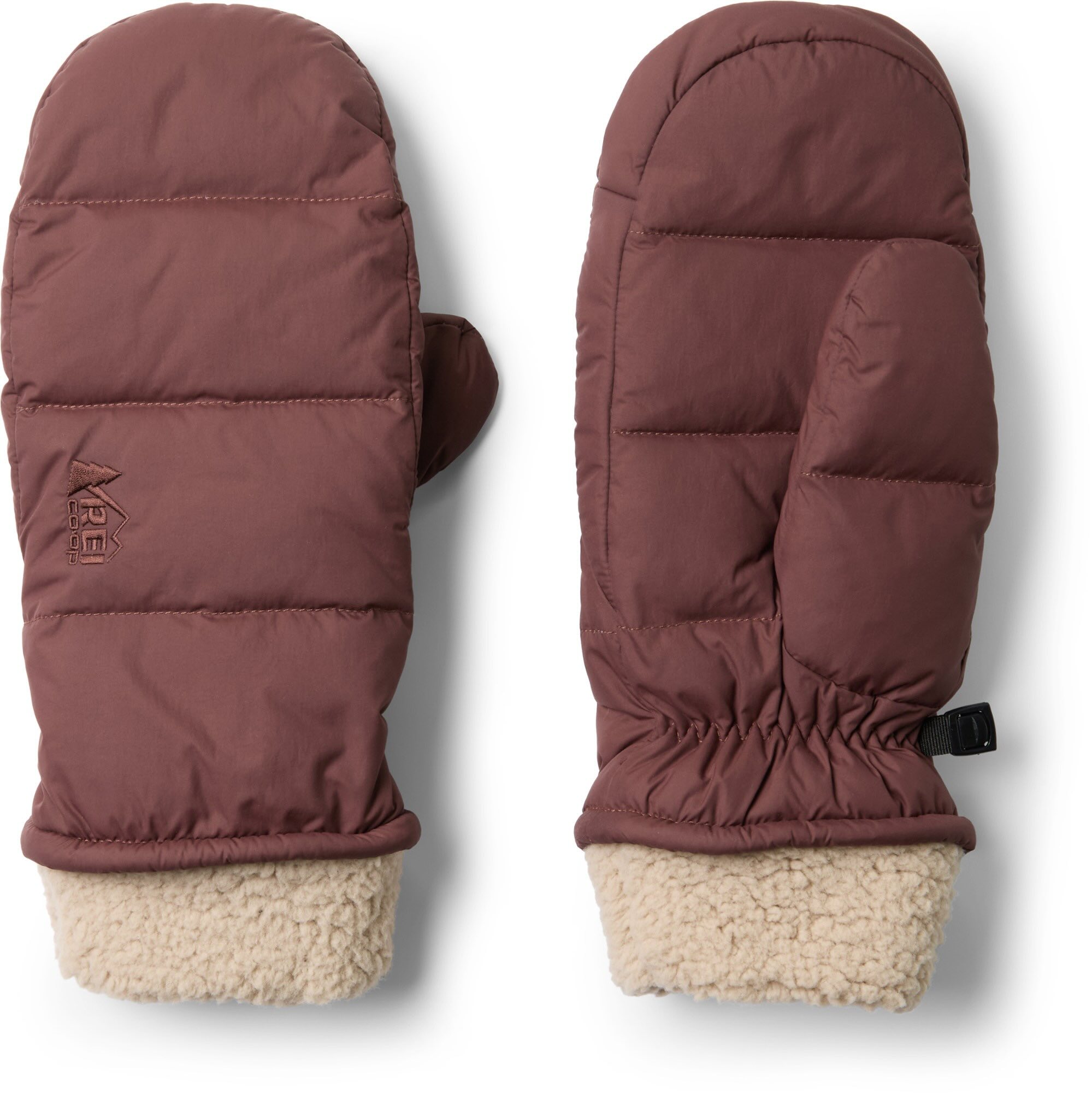
REI’s in-house line is a great one-stop shop for value, and we like what they’ve come up with in the Campwell Down Mitten. But what sets the Campwell apart from the other gloves on this list isn’t just its price, but its down insulation. To be specific, the Campwell is equipped with 700-fill-power duck down, which makes for a lofty, warm, and cozy mitt. The interior fleece also offers a great deal of comfort and wicks moisture well if you work up a sweat. While we don’t recommend these for performance use like skiing or mountaineering, they’re a great choice for casual use—think winter walks and mellow hikes.
However, there is a reason the other mitts on this list use synthetic insulation: synthetic materials continue to insulate when wet, whereas down does not. REI did include a DWR coating, but without any proper waterproofing, the Campwell is limited to casual use in dry areas. It’s a main reason we don’t recommend them to skiers: Even if you recreate in dry climates, gloves are usually the first things to get wet thanks to chairlifts and spraying snow. But so long as you keep your expectations reasonable, the Campwell is far from a bad mitt, and we think it makes a great accessory for a casual down jacket, such as REI’s own Campwell Parka.
See the REI Co-op Campwell Down Mittens
It's no surprise that the winter mitten market is flush with options, but it can be tough to narrow down the best of the bunch. We're testing winter mittens throughout the cold months, assessing their warmth, waterproofing, and durability, and not every model meets our high standards. However, we understand that you might be interested in the mittens we've recently tested and the reasons we decided to dismiss them.
To start, we decided to remove the Kincos Lined Heavy Duty Ski Mitt from our list because we found it pretty cold and stiff in testing. For nearly the same price, the Flylow Oven Mitt offers a nice dose of insulation and was much easier to break in.
We also cut Give'r's Frontier Mittens. There's no denying that these gloves are well-made and very warm, but we found their use case to be fairly limited. The high amount of insulation made them too warm for any outdoor work or activity, and the lack of dexterity was a tough sell for the ski slope.
We also decided to remove the L.L. Bean Buckskin Chopper Mitt in this update. For the price, we found them lacking in real-world performance. They aren't waterproof, and the wool liner takes a long time to dry and only offers a bit of warmth. It's a classic design but overshadowed by the modern options on this list.

| Winter Mitten (Men's/ Women's) | Price (M/W) | Shell | Insulation Type | Waterproof? | Removable Liner? |
|---|---|---|---|---|---|
| Patagonia Nano Puff Mitts | $79 | Polyester | PrimaLoft Gold (60g) | No | No |
| Carhartt Waterproof Mitt | $33 | Polyester | Synthetic | Yes | No |
| Men's BD Mercury Mitts/ Women's BD Mercury Mitts | $140 | Synthetic/leather | PrimaLoft Gold (133g & 170g) | Yes (BD.dry) | Yes (mitten) |
| Men's Hestra Leather Heli/ Women's Hestra Leather Heli | $185 | Polyamide/leather | G-Loft & fleece | No | Yes (mitten) |
| Arc’teryx Venta Mitten | $80 | Softshell | Octa Loft | No | No |
| Flylow Gear Oven Mitt | $55 | Leather | Greenloft (200g & 100g) | No | No |
| Chaval SuperNova Heated | $425 | Leather | Wool lining | Yes | No |
| Men's Hestra Fall Line/ Women's Hestra Fall Line | $190 | Leather | Fleece & foam | No | Yes (glove) |
| OR Carbide Sensor | $130 | Synthetic/leather | VerticalX Eco (200g) | Yes (GTX) | No |
| BD Waterproof Overmitts | $100 | Synthetic | N/A | Yes | No |
| Men's OR Alti II GTX Mitts/ Women's OR Alti II GTX | $209 | Nylon/leather | PrimaLoft Gold (170g & 340g) | Yes (GTX) | Yes (mitten) |
| Men's Oyuki Pep GTX/ Women's Oyuki Chika GTX | $170/ $160 | Leather | PrimaLoft Gold (200g & 133g) | Yes (GTX) | No |
| REI Co-op Campwell Down | $55 | Nylon | 700-fill duck down | No | No |
No matter how you choose to get outside in the winter—be it hitting the ski slopes or embarking on a frosty hike—keeping your hands comfortable and protected in freezing temperatures is a must. Many staff members at Switchback Travel call cold climates home, making a quality pair of mittens or gloves a key part of our cold-weather kit. Washington-based former senior editor Jenny Abegg kicked off this guide in 2023 with 15 of her favorite mittens. A year-round backcountry enthusiast who isn't deterred by plummeting temps and falling snow, Jenny is acutely aware of risks like frostbite and hypothermia and does everything she can to maximize heat retention. Editor Maddie Downie now manages the guide. Also based in the Pacific Northwest, Maddie is an avid backcountry skier who spends a considerable amount of time exploring the North Cascades, giving her a keen eye for winter-ready warmth, solid waterproofing, and high-quality materials and components that can withstand rough use.
In pinpointing our 13 favorite mittens this season, we relied primarily on firsthand experiences in the field. We've tested countless gloves and mittens over the years, taking them on chilly hikes, powder days at the ski resort and in the backcountry, and even ice climbing in Canada. In gauging performance, we pay close attention to how well each mitten fends off precipitation and wind, the degree to which it keeps our hands warm (and for how long) in varying temperatures, and how quickly we overheat during high-output uses like skinning and cross-country skiing. Although inherently less dextrous than gloves, we also ensure that each mitten on our list offers enough mobility to grip ski poles, tweak boots and bindings, and so on. As the market evolves, we'll continue updating our list above to reflect our current favorites.
_0.jpg)
For the chilliest of conditions or those who suffer from habitually cold hands, mittens are a great choice. By keeping the fingers together rather than isolating them as gloves do, mittens offer a notable increase in protection and warmth. Throughout our time outside in cold conditions, we’ve noticed that mittens are especially ideal for wind-generating activities or sports that put your hands out in front of your body, such as biking, Nordic skiing, and resort skiing. Of course, the largest downside to mittens is their lack of dexterity: Depending on the activity, you may end up removing them enough times that your hands would have stayed warmer in gloves (if you prefer this style, check out our article on the best winter gloves). But for the occasions when you don’t need nimble hands, nothing beats the warmth of mittens.

Performance
Performance mittens are designed for sustained use in demanding winter conditions and are the best tool for the job for activities such as mountaineering, skiing, snowboarding, Nordic skiing, and winter bike commuting. Obviously, mittens designed for high-output activities, such as cross-country skiing, will have vastly different traits than those for an arctic expedition, so this is a broad category. However, consistent features include wind- and waterproof materials, high-quality insulation, good dexterity (as good as it gets with a mitten), grippy palms, snug-fitting cuffs, and often an expensive price tag. Leading options include the Black Diamond Mercury Mitts, Hestra Army Leather Heli, and Arc'teryx Venta.
.jpg)
Casual
Casual mittens are our top picks for day-to-day activities such as walking the dog, driving to work, or short winter hikes. Some of these mittens are designed with full functionality in mind, while others prioritize styling and warmth. All casual mitts are designed to keep your hands protected for brief periods in the cold, but many won’t withstand precipitation well. In this category, look for undercuff designs, reinforced palms, and cozy wool or plush synthetic materials. Because they’re not intended for high-end performance, casual mittens are typically more affordable, such as Patagonia's Nano Puff Mitts and REI's Campwell Down Mittens.
Work
Mittens in our work category put a premium on durability. For uses like chopping wood or operating a ski lift, a tough leather mitten is hard to beat—it’s no coincidence that all our work mittens above are made primarily with leather. Also look for simple feature sets, reinforced palms, and short undercuff designs. Most winter-ready work mittens are fleece-lined or synthetically insulated for added warmth, but you can always double up with a liner (at the cost of some dexterity). Our current favorite in this category is Flylow's Oven Mitt, but Kinco's Lined Heavy Duty Ski Mitt is also a popular choice.
.jpg)
In general, work mittens are not made for extremely cold and nasty conditions, although there are some notable exceptions. The Give’r Frontier, for example, transitions into the performance category with a well-insulated design (490g synthetic at the back of the hand) that strikes a balance between weather protection, durability, and warmth. We know many winter enthusiasts who routinely wear models like these for skiing and snowboarding, rather than performance-oriented mittens like the Black Diamond Mercury or Hestra Heli. However, take note: Although work mittens have their appeal, they lack the long, sealable gauntlet of many performance synthetic mittens, which results in some compromised weather protection.

Warmth is a defining feature of a winter mitten, yet the amount of insulation provided varies widely between styles. On the very warm end of the spectrum are the Outdoor Research Alti II GTX and Black Diamond Mercury Mitts, which have thick synthetic fill, insulated liner gloves, and wind- and waterproof shells for keeping you protected in extreme conditions. On the other end is an uninsulated overmitt like the Black Diamond Waterproof Overmitts, which offer warmth only by trapping your body heat and keeping out wind and water. Many designs fall in between, like the Flylow Gear Oven Mitt: The premium leather build is dexterous for daily use, while the moderate level of insulation has kept us comfortable on mild-weather ski days and while shoveling snow. In the end, your ideal level of warmth will depend on the temperature and conditions, level of activity, and whether you’re prone to running hot or cold.
.jpg)
Synthetic
For a seriously warm mitten, synthetic fill is our preferred form of insulation. It has all the right properties: It insulates when wet, is a lightweight yet effective insulator, is reasonably durable and resists packing out, and is cheaper than down. As a result, most of the top performance mitts on our list use synthetic insulation, including the Outdoor Research Carbide Sensor and Alti II. It’s worth noting that the quality of the synthetic fibers is important—mittens that use name-brand fill, such as PrimaLoft and Thinsulate, are warmer for their weight and longer-lasting than cheaper options that use generic polyester fill. That said, the amount of insulation (measured in g/m²) is still a decent indicator of warmth, and we’ve included the listed total for each mitten, if provided by the manufacturer, in the table above.

Fleece
Synthetically insulated mittens may dominate the performance category, but fleece is a popular insulator as well. Often used as the next-to-skin layer or in the liner, fleece is cozy, heat-trapping yet still breathable, and generally more affordable than synthetic fill. But because fleece doesn’t pack in quite as much warmth for the weight and bulk as synthetic fill, it’s generally used in addition to synthetic insulation, not as a replacement; for example, both the Hestra Army Leather Heli and Fall Line have liners that incorporate both fleece and synthetic G-Loft fill.

Wool
Wool, and the merino variety in particular, is our favorite material for next-to-skin baselayers and socks, but it isn’t as popular among winter mittens. It’s true that some mittens use wool—including the L.L. Bean Buckskin Chopper Mitt and the snowboard-specific Dakine Phoenix (not listed)—but it has its fair share of drawbacks. Wool generally has a shorter lifespan than fleece and synthetic materials, doesn’t dry as quickly, and can be a bit heavier and bulkier. But there’s no denying its warmth—we like wool for a lightweight liner (worn under a mitten) or for casual use in dry conditions.
.jpg)
Down
Among insulation options, down is the one you’ll see the least. The main reason is that down must be lofty in order to insulate (read: less dexterity), and natural goose or duck plumage loses its ability to insulate when wet. You can mitigate this issue with a burly, waterproof shell, but even the sweat from your hands can compromise the down fill. As such, you’ll run across the occasional casual down piece like the REI Co-op Campwell Down Mittens, but synthetic mittens are far more practical (and affordable) for wet and snowy conditions.
.jpg)
Like rain jackets and hardshells, waterproof mittens feature a waterproof/breathable membrane that prohibits outside moisture (rain and snow) from penetrating while allowing inside moisture (sweat) to escape. Gore-Tex membranes (seen in designs like the Outdoor Research Alti II GTX and Oyuki Pep GTX Trigger Mitt) are by far the best performing, while in-house efforts (like those used in the Give’r Frontier) can be hit or miss in terms of waterproofing, breathability, or both. For winter—i.e., below-freezing—use, off-brand membranes generally get the job done; but for mild conditions (temperatures around 30 degrees F and above) and serious activities like mountaineering, ice climbing, and backcountry skiing, we recommend a reliable waterproof mitten.
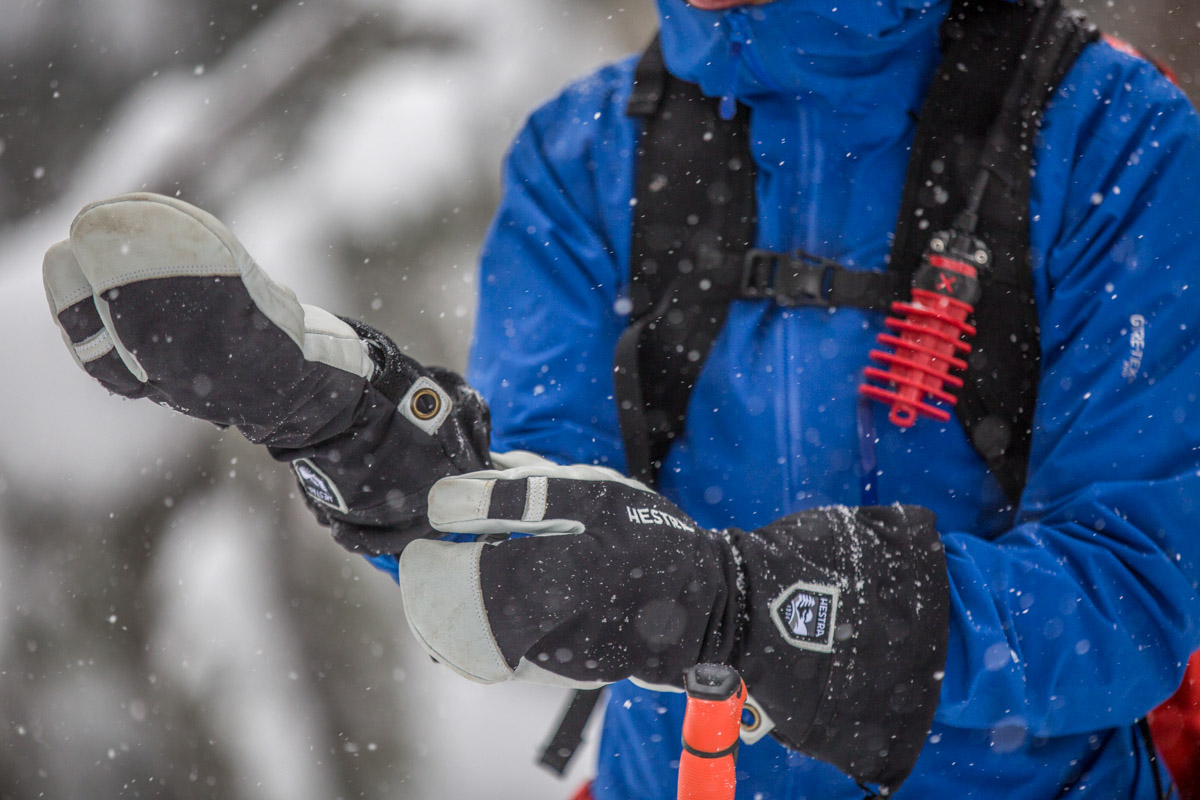
Leather provides the best alternative to a waterproof membrane. It’s naturally water-resistant—not waterproof—but can become fairly impenetrable to moisture with the application of hydrophobic wax (like those from Sno-Seal or Nikwax). That said, if you’re using your mittens a lot in wet conditions, you’ll really need to stay on top of maintenance—without routine wax application, leather will absorb moisture (and if you’ve ever dealt with a wet-then-frozen leather mitten, you know this is a recipe for disaster). But in dry climates like the Rockies, leather can make a lot of sense: Not only is it water-resistant and breathable, but it’s also more durable and dexterous than most synthetic materials.
.jpg)
As we just mentioned, leather mittens require occasional treatment to maintain moisture resistance. Some models come pre-treated, while others are DIY after purchase. The most common and effective leather coating is Sno-Seal, a beeswax-based solution that requires a fair amount of effort, including baking the glove in the oven. However, it’s a proven formula that’s popular among skiers in wet climates. A simpler and less involved alternative is Nikwax’s Waterproofing Wax, which doesn't require heat to activate. Depending on how often you wear your mittens and in what kind of conditions, you may need to re-treat the leather one or more times a winter—it’ll be clear when you need to reapply because the mittens will stop shedding moisture.
.jpg)
Durability should not be overlooked when selecting the right mitten. After all, what gets more use than our hands? Leather mittens are generally the most durable choice, and adding a waterproofing treatment like Nikwax Waterproofing Wax or Sno-Seal can also help extend their lifespan. The majority of mittens with nylon shells are impressively durable, too, and particularly burly and well-made performance designs like the Outdoor Research Alti II Mitts. Generally, insulated designs that aren’t waterproof, such as the Patagonia Nano Puff Mitts, are the most prone to developing holes and tears.
_0.jpg)
Quite obviously, mittens do not excel in terms of dexterity, and are far from our first choice for activities where we need the use of our fingers. But don’t count them out completely: Many models are perfectly serviceable for gripping items, whether it’s a snow shovel, ski pole, steering wheel, or chairlift. If this sort of dexterity is a priority for you, you’ll want to look for a mitten with light to medium insulation, and trust that leather varieties will grow nicely supple over time. The construction also plays a role—mittens with sleek and thoughtfully placed seams make fine motor movements easier. And keep in mind that dexterity doesn’t need to be the top consideration for everyone—thick or bulky mittens can still be useful in many situations, including staying warm at basecamp or walking in extreme cold.

Gauntlet
Gauntlet mittens, like the Hestra Heli or Black Diamond Waterproof Overmitts, extend over the cuff of a jacket (rather than under) and seal with an elastic cinch. When done right, this effectively keeps out cold air and virtually eliminates the possibility for snow to enter. Gauntlet mittens are also easy to get on and off, with large openings and one-handed drawcords that tighten and release. On the flipside, they are often heavier, bulkier, less agile, and less ventilated than other styles, but worth it if you really want to batten down the hatches. We like the gauntlet style best as high-performance mittens for winter sports and expeditions.

Undercuff
Undercuff mittens—typically featuring a cuff made from stretchy wool or synthetic material—sit under the winter jacket sleeve and keep the mitten close to the wrist. The cuff provides both a barrier from the elements and keeps the glove from slipping off the hand. While an undercuff mitten is less bulky, lighter weight, and better at ventilating than a gauntlet style, it can’t compete in terms of weather protection. Even if you tighten your jacket sleeves snugly over the top, there’s a chance they’ll ride up during activity. But for outdoor work or everyday use, the simplicity of an undercuff design is very appealing, such as that on the Carhartt Waterproof Insulated Mitt.
.jpg)
Many mittens—especially those in our performance category—come with either a built-in or removable liner. This liner is generally made from fleece and or sleek synthetic insulation and serves to add warmth and wick moisture away from the skin. We like removable (rather than built-in) liners for their added versatility—you can wear the liner or shell separately, or combine them for maximum warmth—and they’re simple to dry or launder between activities, too. Some cheaper varieties can be fairly clunky in practice—most attach to the shell with strips of Velcro, which makes them more difficult to separate than you’d assume—but premium designs like those of Hestra's Fall Line Mitt are incredibly simple to slip in and out. Liner mittens are the warmest option (and you can even pair them with a separate liner glove), but we do appreciate the dexterity of a liner glove.
By nature of their design, most mittens are completely useless for operating a smartphone. Outdoor Research advertises their Carbide Sensor Mitts as touchscreen-compatible, but we have yet to have our phone screen respond to any part of the mitten. On the other hand, the Arc’teryx Venta—one of the thinnest designs here—does offer decent performance, although accuracy is limited. The best solution for a mitten is to incorporate a touchscreen-compatible liner glove, which can perform decently well. We’re surprised we don’t see this more: Not one mitten on our list above features a liner glove with touchscreen-compatible tips—not even the premium Hestras. In short, if you’re looking for handwear that you can use to operate your phone, you’ll want a glove.
.jpg)
Winter mittens can range from simple leather designs to fully featured models with wrist cinches, nose wipes, zippered pockets, and carabiner loops for carrying on a harness. These features generally increase with performance—everyday and work gloves are usually the simplest, while winter sports gloves often include all the bells and whistles. Some gloves even come with a battery-powered heat pack for particularly cold environments—or particularly cold hands (the Chaval SuperNova Heated Mitt being our favorite).

Mittens are far and away the warmest handwear choice, but their lack of dexterity can be a dealbreaker for many. You’ll have to ask yourself what’s worse: the diminished warmth of a glove or exposing your hands to the cold when your mitten is too clunky to get the job done, whether it’s adjusting a ski boot, unzipping a pocket, or fine-tuning your ski backpack. The good news is, many modern gloves provide ample warmth for most environments, and keeping your body heat high (and staying hydrated) can go a long way towards ensuring warm hands. But in extreme environments like northern Canada, Alaska, the Arctic, and Antarctica, there’s no substitute for a warm winter mitten.
.jpg)
There are a few ‘tweener styles that might offer a best-of-both-worlds scenario for some. First are trigger mitts, also known as lobster or 3-finger mittens (the Oyuki Pep GTX Trigger Mitt is one of our favorites). These mittens separate the thumb and forefinger and group the latter three fingers together, offering most of the warmth of a mitten without the drop in dexterity. Second are gloves with mitten flaps, which can come in the form of a high-performance offering like the Black Diamond Cirque, or the age-old, wool glommit design. The partial flap will not suffice to keep your hands dry in snow or rain, but in dry climates, these designs serve to offer convenience, dexterity, and warmth all in one.
Back to Our Top Winter Mitten Picks Back to Our Winter Mitten Comparison Table


77b1.jpg?h=fbc67360&itok=WqLUcpaD)
_0bc58.jpg?h=fbc67360&itok=y-RAM9m9)


3f56.jpg?h=fbc67360&itok=McVYCRci)
8857.jpg?h=fbc67360&itok=2LUFcwl7)
-tfe3e.jpg?h=fbc67360&itok=tQQ0SQx9)