
Photo Credit
It’s that time of year! Time to find the perfect present for our adventurous loved ones. For that person in your life who loves all things cold weather, check out our gift guide for skiers and snowboarders. For ideas tailored to other pursuits, we also have more editor-recommended gift guides to explore. Happy gift giving!
When the days get shorter and the mercury drops, it’s time to reach for a winter jacket to guard against the cold. Lightweight puffies have their place for three-season use, but you'll want a well-insulated, serious piece for truly frigid conditions. The women's jackets and parkas that follow are among the warmest available, utilizing various high-quality and innovative insulation materials and tightly woven shell fabrics to trap warmth and resist howling winds. Below are our top picks for 2025, including everything from casual mid-thigh parkas to performance-oriented puffies and expedition-grade jackets. For more background information, see our comparison table and buying advice below the picks, along with details about our testing process.
Editor's note: We updated this guide on November 15, 2025, to replace the outgoing REI Co-op Norseland Parka with the new Campwell Parka as our favorite budget pick. We also streamlined our list and added a new tested and dismissed section to provide transparency about some of the products we've tested and decided not to include.
 Fill: 8.5 oz. of recycled 600-fill-power down
Center back length: 39.3 in.
Waterproof?: No
What we like: Patagonia's performance and quality in a cozy and stylish parka.
What we don’t: Average-quality down and bulky packed size.
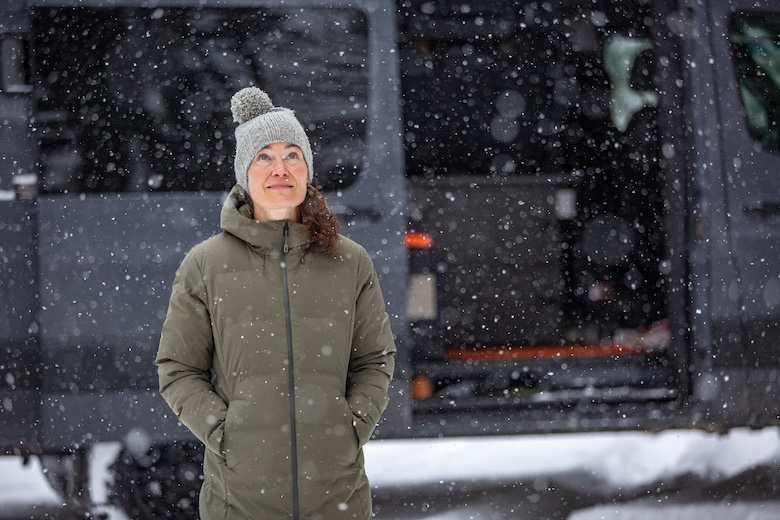
For everyday activities like running errands, dropping the kids off at school, or taking a walk around the block, it’s hard to beat the warmth and styling of a down parka. Patagonia’s Down With It Parka stands out for its combination of premium build quality, attractive colorways and finishes, and thoughtful feature set, including a two-way front zip (vital for a parka if you'll be riding a bike or sitting) and a removable hood. For insulation, you get a generous 8.5 ounces of 100%-recycled 600-fill down—enough warmth for all but the most frigid winter conditions—and an extra-long (39.3-in.) center back length. All told, it’s no secret why the Down With It Parka has become one of the most well-loved winter jackets year after year.
Our favorite part of the Down With It is how comfortable it is. The interior is silky smooth, and the parka has a barely-there feel that’s a far cry from designs with thick, canvas-like exteriors (like The North Face's Arctic Parka or Fjallraven's Nuuk below). We also love the flattering fit, which offers just enough tapering at the waist to create shape. On the flip side, the 600-fill down doesn’t offer as much warmth for weight as jackets with higher-quality fill (the higher the fill number, the loftier the down), but this should be of little concern to most casual users (and helps keep the price down). Second, while the PFAS-free durable water-repellent (DWR) finish resists light moisture, the Down With It is by no means a waterproof jacket like Patagonia's own Tres 3-in-1 below. But for dry or sub-freezing conditions, the Down With It provides all you need, and Patagonia’s polished fit and finish are hard to beat. For those who don’t need the below-the-waist coverage, the Down With It also comes in a hip-length version for $229.
Read more: Patagonia Down With It Parka review (prior version)
See the Patagonia Down With It Parka
.jpg)

Fill: 650-fill-power down; 120g synthetic
Center back length: 36.5 in.
Waterproof?: No
What we like: A warm and stylish down parka at a great price.
What we don’t: Boxier than more tailored parkas, sleeves run a bit short.
REI Co-op is known for making quality gear that considerably undercuts the competition, and their winter-ready Campwell Down Parka follows suit. At just $229, this down parka saves you around $100 (or more) compared to similar jackets without sacrificing much in the way of performance. In terms of specs, you get mid-range 650-fill down (slightly loftier than the insulation in our top-ranked Down With It), a DWR-coated shell, and additional features like a fleece-lined hood, stylish knit cuffs, and an insulated storm flap over the front zipper. REI even included synthetic insulation along the lower body and hood opening, which provides a nice dose of added assurance in wet weather (unlike down, synthetic fill will continue to insulate when wet).
This parka has a bit of a boxy cut compared to the more flattering, tailored fits you get with jackets like the Down With It above or Marmot Montreal below, but it’s still a good-looking everyday piece (and a drawcord is available to help dial in the fit around the waist). We also love that the Campwell has side zips, which extend up each side to allow for better freedom of movement while sitting, walking, or biking (they also provide venting should you work up a sweat). The sleeves on the Campwell are also on the short side, so if you have long arms, take note. Overall, this is a competitive option for value seekers and those who prefer a roomier shape.
See the REI Co-op Campwell Down Parka
 Fill: 5.6 oz. of recycled 700-fill-power down
Center back length: 35.5 in.
Waterproof?: Yes
What we like: Waterproof protection and the option to add or subtract warmth.
What we don’t: Expensive.
Not everyone needs a waterproof winter jacket, especially in regions where winter weather is particularly dry or cold. But for mild and wet conditions (we’re looking at you, PNW), a waterproof shell can make a world of difference in staying comfortable all season long. Within this category, we’re big fans of the 3-in-1 style: Wear the insulated layer on cold and dry days, don the waterproof shell in rain, and pair both for protection against the most wintery of weather. Patagonia’s Tres 3-in-1 is a runaway favorite, with a 2-layer waterproof shell and a moderately insulated down jacket that zips inside the shell. Tack on Patagonia’s typical good looks and top-notch build quality, and the Tres is a well-made and attractive design for moderate winter temperatures and drippy conditions.
What are the downsides of the Patagonia Tres? First and foremost, it’s pricey at $699, even considering the versatility of the 3-in-1 design. In addition, the liner isn’t particularly warm on its own, with just 5.6 ounces of 700-fill down. However, when both layers are worn, the Tres is perfectly suitable for temperatures dipping below freezing. And last but not least, fit can be tricky with parkas—and particularly with 3-in-1 designs, given all the moving parts—although the regular fit is classy and well-tailored. All told, we love the package deal and the option to easily adjust your layering depending on conditions, which is why the 3-in-1 remains a staple in our closets year after year.
Read more: Patagonia Tres 3-in-1 review
See the Patagonia Tres 3-in-1 Parka
.jpg)

Fill: 6.4 oz. of 800-fill-power down
Center back length: 28.3 in.
Waterproof?: No
What we like: Lots of premium down for the price.
What we don’t: Fairly technical look and feature set.
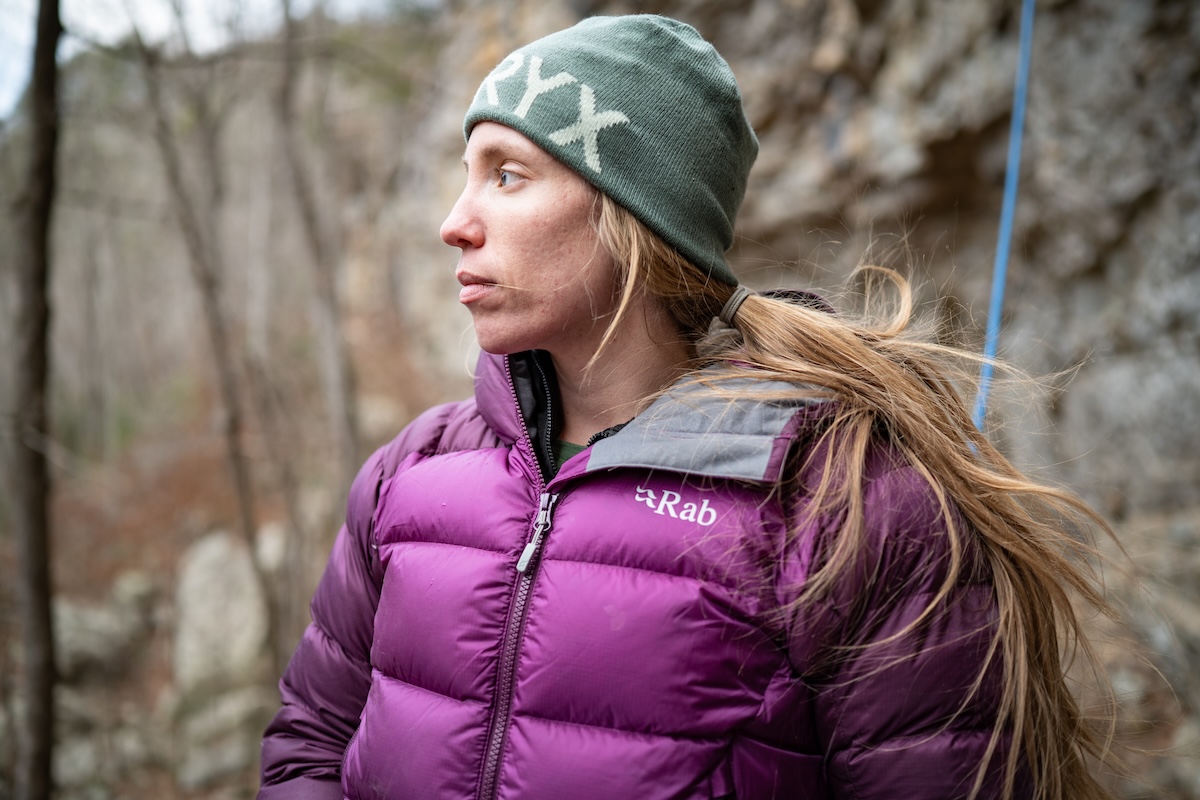
The picks above are great for casual and around-town wear, but for more demanding backcountry pursuits or winter camping, you'll want to consider something a bit more technical. Taking warmth, features, and value into consideration, our favorite option is Rab's Neutrino Pro. First and foremost, you get a healthy dose of 6.4 ounces of 800-fill hydrophobic down, which is considerably more bang for your buck than many other popular down jackets. The Neutrino also features a water-resistant Pertex Quantum Pro shell with a DWR finish, which offers far better wet-weather protection than most down puffies, along with functional extras like a wire-brimmed hood and adjustments at the hood, hem, and cuffs.
All that said, the Neutrino Pro isn't for everyone. The jacket has a distinctly technical look, although the clean design does contribute to its overall appeal. Second, the 20-denier (D) shell fabric is respectable in the performance category and keeps weight low, but the jacket is still more fragile than the casual options on this list (as with any down jacket, you’ll have to be careful about snags and tears). Finally, Rab is a U.K.-based company, so Americans will have to get used to the European-style left-hand zipper. These small things aside, we love the warmth, feature set, and reasonable price point, which is why the Neutrino Pro remains a favorite year after year.
See the Rab Neutrino Pro

Fill: 130g & 110g Pakafill (alpaca fiber)
Waterproof?: Yes
What we like: Incredibly soft exterior, decently lightweight, stylish, and practical features—all at a great price.
What we don’t: Limited color selection and fewer technical features compared to the shorter Apu Parka.
Year over year, there generally aren't huge changes in the winter jacket market, but the Paka Apu Parka (the shorter jacket version of the Long Parka here) made a well-deserved splash when it was released last year. One of our only critiques with that version was that it was a bit short for casual, daily use (though it's great for more active pursuits)—so the release of the Apu Long Parka is a welcome addition to Paka's growing lineup. While the Long Parka doesn't have pit zips or a helmet-compatible hood like the regular Apu Parka, it offers the same soft waterproof material and features a sherpa-lined, removable hood. Paka won an ISPO award for their fully traceable "Pakafill" insulation sourced from free-roaming alpacas in Peru, so if you cringe at the idea of down but also don't love the resources that go into synthetics, Paka's apparel should be at the top of your list.
The Pakafill insulation used in the Apu line offers some of the perks of a synthetic design: namely, reduced volume and the ability to insulate even when wet. That said, the overall build of both Apu Parkas won't compress as dramatically as a down puffy can. Still, at only 1 pound 14.6 ounces for the Long Parka (and 1 pound 10.1 ounces for the shorter version), both Apus are notably lighter than they look at first glance. And while the Long Parka doesn't provide the technical feature set of the regular Apu Parka, it's a more well-rounded choice for everyday use around town. Both versions are stylish and offer warmth that belies their weight. Overall, we've really enjoyed wearing everything we've tested from Paka and love the direction the brand is taking. Another great offering that we've been wearing for the fall is the Apu Lightweight Puffer, which weighs in at only 14.1 ounces and is perfect for everything from hikes with the dogs to serving as a midlayer under your hardshell at the ski resort.
See the Paka Apu Long Parka See the Paka Apu Parka
 Fill: 600-fill-power recycled down
Center back length: 35.3 in.
Waterproof?: Yes
What we like: The warmth of down alongside a fully waterproof shell.
What we don’t: Heavy and has a boxy fit.
For affordable protection in whatever Mother Nature throws your way, we love the Arctic Parka from The North Face. This jacket is both nicely insulated and weather-ready, with 600-fill-power down (an upgrade from the previous version's 550-fill) wrapped in a 2-layer, waterproof DryVent shell that’s seam-sealed for added protection. The above-the-knee cut extends coverage down the legs without being too restrictive, and a removable faux-fur brim adds warmth and style. Added up, the Arctic is a nice value at $350, and we appreciate the use of recycled polyester and down—a nice reflection of TNF’s ongoing sustainability efforts.
But while the Arctic Parka is great for everyday use, it’s not a standout for versatility. It's considerably heavier than most of the options above, and the lack of side zips makes it slightly more restrictive. And, despite its name, we don't recommend the Arctic for temperatures much below freezing. Lastly, in terms of fit, we’ve found this parka to be slightly boxy from the waist down and recommend sizing up if you have broad shoulders. Still, these gripes aside, the Arctic Parka is a nice option for those who need a waterproof jacket, love the idea of a removable fur-brim, and are looking to keep costs relatively low.
See The North Face Arctic Parka
Fill: 850-fill down; 180g & 80g synthetic
Center back length: 28.3 in.
Waterproof?: Yes
What we like: Great warmth and weather protection at an affordable price; more inclusive size range than many other brands.
What we don’t: Not as warm or packable as performance options like the Neutrino Pro above.
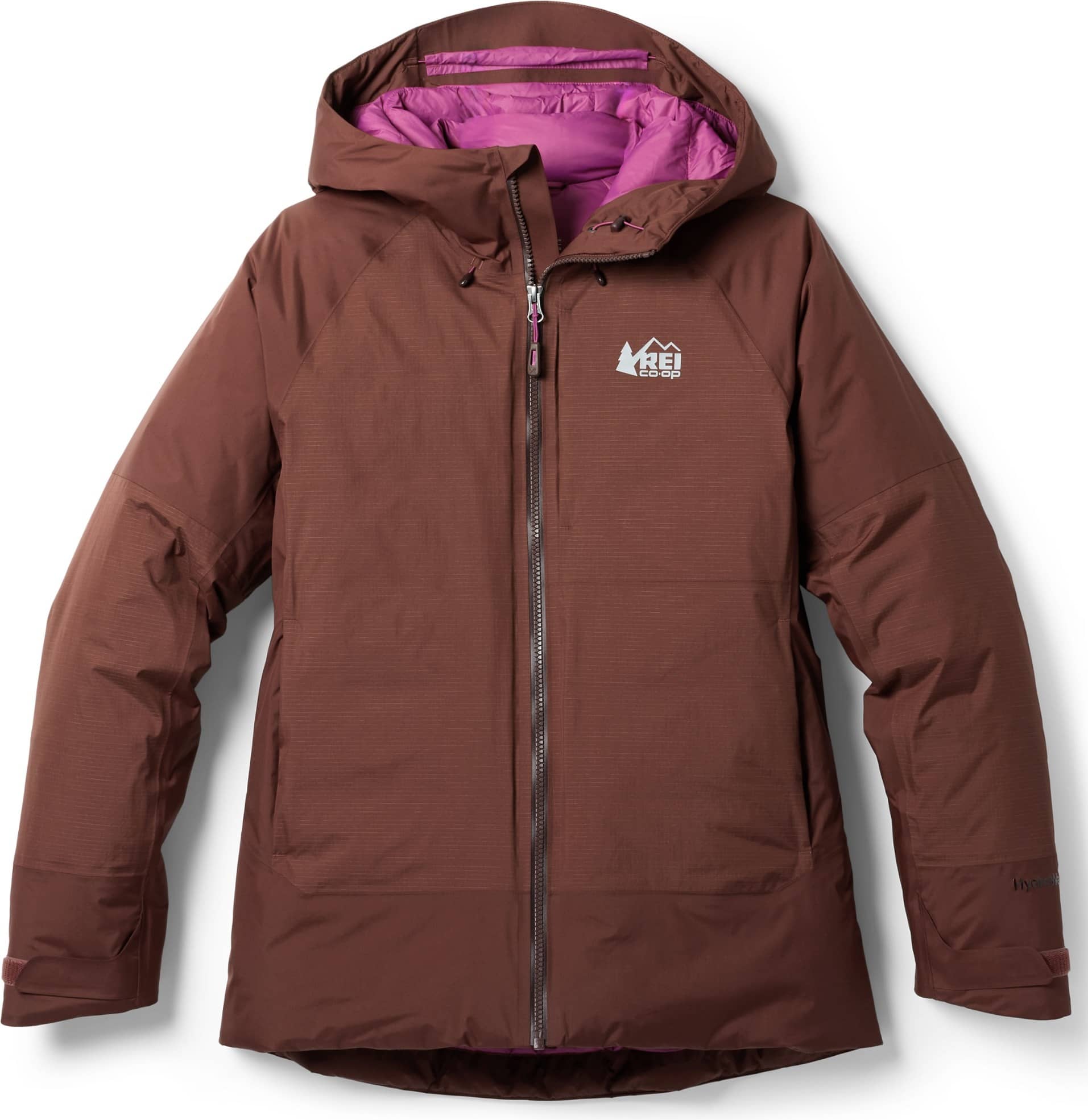
Parkas have great casual appeal, and their warmth is unmatched, but we love the versatility and mobility of a standard-length winter jacket. More than most, the REI Stormhenge strikes a great balance between everyday and performance use, combining clean lines and classy colorways with a comprehensive list of technical features. In terms of warmth and weather protection, you get body-mapped 850-fill goose down, recycled synthetic insulation in areas prone to moisture and sweat, and a 2-layer waterproof shell. The Stormhenge also features a fully adjustable hood with a draft collar, Velcro cuffs, and pit zips to help vent if you start to overheat. The result is an insulating jacket that does a decent job keeping out inclement weather and is ideal for drippy and cold conditions, even while on the move.
The Stormhenge received a sizable revamp a couple of winters back, including a longer cut (by over 2 in.), more sustainably produced fabrics, two additional internal pockets (including a drop-in pocket for stashing gloves or climbing skins), and the aforementioned synthetic insulation. REI still doesn’t provide a fill-weight spec, but we’ve found the jacket to be warm into the low 20s Fahrenheit with only a light baselayer underneath. Of course, it’s important to have reasonable expectations when shopping from REI’s in-house collection, but the Stormhenge is overall impressively high-quality and well-designed for the price. If you’re on the lookout for a jacket that can deliver equal parts weather protection and warmth, it’s well worth a look. Finally, REI also offers the Stormhenge in a parka-length version with a 36.5-inch center back length for just $20 more.
See the REI Stormhenge 850 Down Hybrid Jacket
 Fill: 12.0 oz. of 700-fill-power down
Center back length: 35.4 in.
Waterproof?: No
What we like: Great attention to detail, impressive warmth, and sustainably built.
What we don’t: A bit bulky and could be overkill for mild winter conditions.
Rab’s Neutrino Pro above is our top pick for activities like winter camping and ice climbing, but for everyday and around-town use, their Deep Cover Parka is a less technical and more stylish option. Packing in 12 ounces of 700-fill-power down (in a size large), the Deep Cover is built to handle true winter temperatures, whether you live in a mountain town or the heart of New York City. A 50D Pertex Quantum shell with a DWR finish and hydrophobic down provides an extra layer of protection from moisture, and the hood is detachable and features faux-fur trim for added style and warmth. Taken together, the Deep Cover is an excellent value, considering the level of protection and coverage it offers.
The Deep Cover was lightly updated several seasons ago, which included switching to fully recycled materials and slightly higher-quality down. We love the classy leather zipper pull and badge on the right arm, and the chevron baffles on each side contribute to the flattering shape. And like many thigh-length parkas here, the Rab features a two-way zipper to provide extra mobility and comfort when sitting down or high-stepping. Compared to the Outdoor Research Coze below, the Deep Cover packs about 4 ounces more insulation into a 7-inch-shorter jacket, which translates to noticeably more warmth. As a result, the Deep Cover may be overkill for mild winters, but if you consistently face below-freezing temperatures—think January in places like Fairbanks, Fargo, or Edmonton—it’s a solid pick at a great price.
See the Rab Deep Cover Parka
 Fill: 5.6 oz. of 700-fill down; 150g VerticalX Eco
Center back length: 29.5 in.
Waterproof?: No
What we like: Comfortable, versatile, and affordably priced for what you get.
What we don’t: Not a standout in warmth or coverage.
Like REI, Outdoor Research is known for providing a lot of bang for your buck, and their Coldfront Down Hoodie does just that. The hip-length Coldfront offers a competitive mix of protection and warmth with weather-ready VerticalX Eco synthetic insulation at the shoulders and cuffs and quality 700-fill-power RDS (responsibly sourced) down everywhere else. In trying on the jacket for the first time, we were struck by the soft yet rugged shell and thoughtful touches like fleece lining in the hand pockets and snug-fitting cuff gaiters with thumb loops. All told, it’s a well-rounded choice for everyday use and outdoor adventuring in moderate winter conditions.
That said, it’s important to note that the Coldfront contains less down than some of our other picks above, including the Down With It Jacket and performance-ready Neutrino Pro. It’s not exactly an apples-to-apples comparison given the differences in fill power, and the Coldfront certainly looks the part with its puffy build, but don’t expect Antarctic-ready warmth. Also, keep in mind that despite the generous hip-length style (the back length is 29.5 in.), there’s no below-the-butt coverage, which detracts from overall protection and won’t keep your legs warm like the longer parkas on our list. With the right layering, however, or if you plan to mix in hiking or snowshoeing, the Coldfront is a perfectly serviceable option with attractive styling that boosts its all-around appeal.
See the Outdoor Research Coldfront Down Hoodie
 Fill: 250g Supreme Microloft synthetic
Center back length: 33.9 in.
Waterproof?: Yes
What we like: Good looks and excellent build quality.
What we don’t: Decidedly casual and pricey for a synthetic piece.
Fjallraven makes good-looking outdoor gear that strikes a nice balance between casual and performance (at least casual levels of performance). The Nuuk Parka is a durable piece that offers excellent warmth and weather resistance, thanks to its thick (250g) Supreme Microloft synthetic insulation, a water- and windproof outer shell, and clean lines representative of the company’s Scandinavian heritage. You also get a well-rounded assortment of storage and features, including a fleece-lined and fur-brimmed detachable hood, a whopping 11 total pockets, and ribbed knitting at the neck to seal out drafts. All in all, this is a refined, weather-ready winter parka with a high attention to detail.
If you like Fjallraven’s styling (we do) and don’t need the low weight or packability of down insulation, the Nuuk Parka is a fine option. That said, it’s heavy and bulky for travel and lacks the lofty, cozy feel of down-stuffed alternatives like the Patagonia Down With It above. And for $500, the Nuuk doesn’t strike us as a particularly great value, costing considerably more than most other synthetic options (their Kiruna Padded Parka is cheaper at $350 but isn't nearly as warm or feature-rich). That said, the fashionable build and well-appointed design set the Nuuk apart from the rest of the market, and it definitely earned its chops in some serious weather during our testing.
Read more: Fjallraven Nuuk Parka review
See the Fjallraven Nuuk Parka
 Fill: 10.1 oz. of 650-fill down & synthetic
Center back length: 40 in.
Waterproof?: No
What we like: Great mobility, especially for the length; warm and fairly priced.
What we don’t: Sewn-through baffles detract from wind resistance, no interior storage, and fairly thin shell fabric.
The Kühl Crossfire is a reasonably priced parka with a lot to offer. It provides an excellent combination of length and warmth without feeling restrictive like many other long jackets, and the thoughtful tailoring keeps style high while still allowing for layering underneath. But what was most striking to us about the Crossfire is that, despite its 40-inch length (the second longest on our list, after the Coze, below), it never felt restrictive, even when sitting or driving. It has a two-way front zipper (a pretty essential feature for a long parka), yet we never found ourselves needing to use it for basic around-town activities. The cuffs feature internal gaskets that are several inches long for added coverage, which—on top of the generous 10.1 ounces of 650-fill down and synthetic insulation—help seal out the cold, as do the tall collar and plush hood.
On the flip side, the Crossfire's warmth seems to come more from the amount of insulation than the quality. We tested this jacket in temperatures as low as -15 degrees Fahrenheit during a Montana winter, and it can't quite handle that level of cold. The sewn-through baffles allow frigid drafts to penetrate, and the thin (20D) face fabric seems an odd choice for a long parka that likely won't be accompanying you on trips where weight and packability are primary concerns. Overall, we wish Kühl had used a thicker and more windproof construction, but the Crossfire has a lot going for it, and we've found ourselves reaching for it more often than expected.
Read more: Kühl Crossfire Parka review
See the Kühl Crossfire Parka
 Fill: 700-fill-power down
Center back length: 33 in.
Waterproof?: No
What we like: Attractive and versatile styling; shell fabric is stretchy and durable.
What we don’t: A bit shorter and boxier than most parkas.
Upon first glance, it’s easy to see that the Stretchdown Parka looks a little different from your standard down jacket. Instead of the typical shiny fabric and horizontal baffles, Mountain Hardwear uses welded seams and a stretchy material (hence the “Stretchdown”) that’s almost softshell-like in nature. The net result is comfortable down insulation that moves with you, is remarkably durable, and doesn’t leave you looking like the Michelin Man. The Stretchdown collection features a range of styles, and the Parka here delivers decent coverage and excellent warmth for true winter weather.
After wearing the Stretchdown Parka for a full winter, we’re strong proponents of the jacket with a few small caveats. First is the shape: Compared to most parkas, it’s a bit short at just 33 inches and has no taper in the waist (though there is a Stretchdown Long Parka available for just $20 more that is an impressive 44 inches long). This no-frills fit makes the Stretchdown slightly more versatile for performance use (with a two-way front zip, it functions great over a climbing harness as a belay jacket) but will limit its street appeal for some. Second, it doesn’t offer quite as much warmth as heavyweight pieces like the Rab Deep Cover above. But we’re big fans of the versatile design, and it’s hard to beat the durability and hand feel of the soft and stretchy shell.
See the Mountain Hardwear Stretchdown Parka

Fill: 5.0 oz. 750-fill down; 80g & 140g Coreloft
Center back length: 26.8 in.
Waterproof?: No
What we like: A versatile down puffy with Arc’teryx’s high-end build quality.
What we don’t: Expensive and not as warm or protective as the Rab Neutrino Pro above.
We’re a sucker for a cozy down puffy, and Arc’teryx’s Thorium Hoody is just about as good as it gets. Built for everyday winter use, the Thorium prioritizes durability over weight-savings with a relatively thick 30D shell that resists abrasion a lot better than more performance-oriented designs. The 750-fill-power down is more than sufficient for casual use (you simply don’t need any more packability), and the 26.8-inch hem offers a nice amount of below-the-waist coverage without being a full-fledged parka. Tack on wide, stylish baffles and a generous collar topped with Arc’teryx’s classic StormHood, and you’ve got one seriously nice midweight down jacket.
The Thorium is on the pricey side for a down jacket, especially considering that the OR Coldfront above offers similar warmth and protection for over $200 less. We also really dislike that the women's version of this jacket doesn't have the chest pocket and second internal dump pocket of the men's (why, Arc'teryx?). Still, it's hard to beat Arc’teryx’s premium build quality, and the Thorium has a more feathery, lofty feel than the Coldfront (and is over 5 oz. lighter). It’s also a Swiss Army Knife of a jacket: While we love the Arc’teryx for daily wear, features like an adjustable and helmet-compatible hood, internal dump pocket, and the added assurance of Coreloft synthetic insulation in exposed areas make it perfect for activities like backcountry skiing and winter climbing. All told, if you’re looking for a warm down jacket that can toe the line between the frontcountry and backcountry, the Thorium is a great choice
Read more: Arc'teryx Thorium Hoody review
See the Arc'teryx Thorium Hoody

Fill: 8.3 oz. 700-fill-power down
Center back length: 43 in.
Waterproof?: No
What we like: A true knee-length parka with a durable woven shell.
What we don’t: Expensive and sizing can be tricky.
We often turn to Outdoor Research for reasonably priced technical outerwear, but the Seattle-based company has gone fully casual with the Coze Down Parka here. And we like what they’ve done, combining high-quality materials with an elegant urban style. The knee-length Coze is by far the longest parka on this list, touting a 43-inch center back length that’s a full 10 inches longer than the Mountain Hardwear Stretchdown above. On top of that, you get a soft and durable 70D by 90D woven shell—great for withstanding the rigors of city use—and side zips that make it easy to sit, bike, or drive.
There are a lot of reasons you might want the extra coverage of the Coze, especially in particularly frigid winter climates. For one, the length eliminates the need for insulated pants on quick jaunts around the block. You're also ensured insulation under you when sitting, which you don’t always get, even with a "parka-length" jacket. That said, sizing can be tricky (though most people have found it runs true to size), and unlike many parkas, you don’t get a cinch at the waist, which equates to a less tailored and stylish look. Lastly, the price jumped up almost $50 for the Coze this year, which is a bit hard to justify. Still, for top-notch coverage from a trusted brand, the Coze is an attractive option.
See the Outdoor Research Coze Down Parka
 Fill: 700-fill-power down
Center back length: 34 in.
Waterproof?: No
What we like: Attractive styling, great mobility and comfort.
What we don’t: Warmth falls short of many of the longer down parkas above.
Winter jackets come in a range of styles and vary considerably in terms of warmth, but the Marmot Montreal Coat strikes a nice middle ground for most winter environments. Reasonably priced at $300, you get a healthy dose of 700-fill-power down and a mid-thigh cut that keeps you covered without limiting mobility. Unlike most puffy jackets here, the Marmot is lined with a soft and supple fleece along the torso, cuffs, and hand pockets, and a removable faux-fur liner around the hood keeps cold air out and tacks on an extra dose of style. Add in a DWR finish, and the Montreal is a nice everyday defense against the cold and occasional precipitation.
We love the cut of the Marmot, which hovers about mid-thigh and offers a more mobile and playful feel than longer jackets like the Down With It above (34 vs. 39.3-in. center back length). This style is great for activities like riding a bike and shoveling the driveway, but you do give up some coverage and warmth. Furthermore, the parka’s overall build quality is somewhat less impressive than that of the aforementioned Patagonia, with a thinner shell that may not hold up as well over time. All gripes aside, we’ve found the Montreal to be sufficient for temperatures above 20 degrees Fahrenheit, which is a good match for the majority of winter conditions in most of the U.S. And like many casual parkas, it does have a trim fit, so consider sizing up if you plan to layer underneath.
Read more: Marmot Montreal Coat review (prior version)
See the Marmot Montreal Coat

Fill: Synthetic
Center back length: 34 in.
Waterproof?: No
What we like: A great value and clean overall design.
What we don’t: Not as warm or soft as a down jacket.
Winter jackets are an expensive category, but budget-oriented brand Columbia offers some intriguing alternatives that can save you a significant amount of money. Our favorite is the Heavenly Long Hooded Jacket, which checks many of the boxes we look for in a cold-weather piece while coming in at a very reasonable $160 price point. For warmth, you get a healthy amount of Columbia's in-house polyester fill (although we don't know how much, because a fill weight isn't provided), along with a shiny Omni-Heat reflective lining, a water-resistant shell, a comfortable hood, and a surprisingly good fit and design for the price. Despite the name, the Heavenly certainly isn’t as pillowy-soft as down, but it’s a good-looking jacket and one heckuva value.
What are the downsides of a jacket like the Columbia Heavenly? It won’t pack away into a suitcase nearly as small as a comparable down jacket (synthetic insulation is much less compressible), and you don’t get the same warmth for the weight, either. The jacket does earn reasonably high marks for being cozy in cold conditions, but you will likely want to layer up when the temperatures get truly frigid. These issues aside, the Heavenly looks the part for both an outdoor hike or urban use, comes in a variety of classy colorways, and won't break the bank, making it popular year after year.
See the Columbia Heavenly Long Hooded Jacket
Beyond the list you see above, we've tested many jackets that are fantastic, but didn't make the final cut. We try to prioritize standout pieces that have a lot to offer and expertly balance price and performance. The picks above are vetted over time, season after season, so you can trust you're getting a quality product with any one of them. That said, we also like to provide a peek behind the curtains and be transparent about what other jackets have crossed our paths.
For many years, we highlighted the Canada Goose Expedition Parka in our lineup as a great pick for extreme temperatures. While this is true, with a price tag of $1,675, we simply can't justify keeping it on our list. It's wild to us that the Expedition Parka uses a lower-quality 625-fill down at this price point. To be sure, Canada Goose makes high-quality products, but much of what you're paying for is brand recognition. Additionally, most folks just don't need a jacket this warm. If you're heading to Antarctica or on a mountaineering trip, there are both cheaper and more technically-minded options on the market.
We also used to feature the Patagonia Jackson Glacier Parka, but for $499, it doesn't stand out enough next to other offerings here. Quite a few other options above are lighter while still providing considerably more warmth for substantially less, though most of them do forgo a waterproof shell. Don't get us wrong, the Jackson Glacier is a very nice jacket that we think anyone would be happy to own, but in a tight race, it simply wasn't competitive enough.
Next, we nixed the Arc'teryx Beta Down Parka. This is a fantastic coat with high-quality 850-fill down and a Gore-Tex ePE laminate for full stormproofing. But for $900, it's out of reach for most folks and overkill for many climates. If you want the assurance of a waterproof shell, we prefer the versatility of the Patagonia Tres 3-in-1 or the dramatically lower price points of options like the Paka Apu Long Parka. The Beta Down is unarguably tough, and the low-profile, almost rain jacket-like look is appealing, but unless you live somewhere that's exceedingly wet and truly require this level of technical protection, we think you're better off buying two other jackets that fill your needs instead of this one.
Lastly, we removed the Patagonia DAS Parka from this list, though it's a top-ranked choice for weather resistance in our synthetic jacket review if you'd like to read more about it. We love the DAS, but it's a decidedly technical piece with a very thin (10D), no-frills shell. And while there’s no denying that the warmth is impressive for the weight, especially for a synthetic jacket, the cost is high at $449 (synthetics generally save you some money, but not in this case). In short, the DAS has limited daily appeal, which is more of our focus with this particular lineup of winter jackets.

| Jacket | Price | Insulation | Length | Weight | Waterproof? |
|---|---|---|---|---|---|
| Patagonia Down With It Parka | $349 | 8.5 oz. of 600-fill | 39.3 in. | 2 lb. 5.0 oz. | No |
| REI Campwell Down Parka | $229 | 650-fill down & synthetic | 36.5 in. | 2 lb. 2.9 oz. | No |
| Patagonia Tres 3-in-1 Parka | $699 | 5.6 oz. of 700-fill | 35.5 in. | 3 lb. 3.0 oz. | Yes |
| Rab Neutrino Pro | $425 | 6.4 oz. of 800-fill | 28.3 in. | 1 lb. 2.3 oz. | No |
| Paka Apu Long Parka | $379 | 130g & 110g Pakafill | Unavail. | 1 lb. 14.6 oz. | Yes |
| The North Face Arctic Parka | $350 | 600-fill down | 35.3 in. | 2 lb. 10 oz. | Yes |
| REI Co-op Stormhenge 850 Down | $279 | 850-fill & synthetic | 28.3 in. | 1 lb. 6.9 oz. | Yes |
| Rab Deep Cover Parka | $325 | 12 oz. of 700-fill | 35.4 in. | 1 lb. 13.1 oz. | No |
| Outdoor Research Coldfront | $279 | 5.6 oz. of 700-fill & synthetic | 29.5 in. | 1 lb. 5.2 oz. | No |
| Fjallraven Nuuk Parka | $500 | Synthetic (250g) | 33.9 in. | 3 lb. 13.1 oz. | Yes |
| Kühl Crossfire Parka | $369 | 10.1 oz. of 650-fill & synthetic | 40 in. | 1 lb. 8.0 oz. | No |
| MH Stretchdown Parka | $380 | 700-fill down | 33 in. | 1 lb. 8.6 oz. | No |
| Arc’teryx Thorium Hoody | $500 | 5 oz. of 750-fill & synthetic | 26.8 in. | 1 lb. 0 oz. | No |
| Outdoor Research Coze Parka | $445 | 8.3 oz. of 700-fill | 43 in. | 2 lb. 3.5 oz. | No |
| Marmot Montreal Coat | $300 | 700-fill down | 34 in. | 2 lb. 0 oz. | No |
| Columbia Heavenly Long | $160 | Synthetic | 34 in. | 1 lb. 10 oz. | No |
For most of the staff at Switchback Travel, winter involves spending a lot of time outside in the cold—on skis, snowshoes, a snowboard, or with winter traction devices attached to our boots. To help stay warm and cozy, a quality winter jacket is a staple in our winter wardrobes. To supplement our unisex winter jacket round-up, which covers both men's and women's styles, former editors put together our initial list of 20 women's-specific picks in 2021, drawing from years of experience braving cold and wet weather throughout the Pacific Northwest. Editor-in-chief Penney Garrett took over the guide in 2024 from her home base in Lake Tahoe, where unpredictable weather and long winters are par for the course. Testing is rounded out by other women on the Switchback team, all of whom love being outside and know the importance of staying cozy and protected in driving winds, sustained precipitation, and plummeting temperatures.
In landing on our current selection of 16 women's winter jackets above, we took several factors into account. Warmth is an obvious consideration for most, but your climate will also play a big role in how much insulation you need, so we made sure to include a range of designs—from affordable synthetics to premium down-filled pieces and cutting-edge hybrid designs. Since cost is also a deciding factor, we prioritized designs that strike a good balance between price and performance. Other characteristics we evaluate include length, fit, weight, and packability, although the importance of these is largely dependent on your personal preferences and objectives. Whether you're looking for a casual everyday parka or a heavyweight down jacket for backcountry adventures, we've got you covered with our comprehensive lineup, which we update regularly to keep options fresh and relevant.
When deciding on a winter jacket, the single most important factor will be its intended use. Casual winter jackets are designed for everyday wear around town and are characterized by their urban styling, excellent coverage, and typically heavy builds. Thigh- and knee-length parkas, like the Patagonia Down With It Parka, fall into this category and are very popular for their warmth and classy looks. Performance jackets, on the other hand, are more technical in nature, built to handle cold, wet mountain weather, and are often made with higher-loft down and lighter shell materials. These lightweight models are designed for activities such as mountaineering, climbing, and other cold-weather backcountry pursuits.
.jpg)
The good news is that opting for a casual coat generally saves you a significant amount of money. Two of our top casual picks, The North Face Arctic Parka and the Patagonia Down With It Parka, are around $350 yet offer ample warmth and weather protection. The compromises come in weight, packability, and range of movement, which matter if you’re climbing mountains but not so much for the morning commute. And for casual users drawn to the look of jackets in the performance category, keep in mind that these are generally less durable and won’t hold up as well to everyday wear. We include a smattering of performance options above, but for a more in-depth look, check out our articles on the best women's down jackets and best women's synthetic insulated jackets.
Most jackets on this list have down fill, which is known for its warmth, light weight, and compressibility. A few jackets, including the Columbia Heavenly Long, are made exclusively with synthetic insulation, which is heavier and not quite as lofty but does a superior job at insulating when wet. Synthetics are also cheaper than down, which is why you'll find them in budget-oriented designs. However, each year, we see more and more down/synthetic hybrids that incorporate synthetic insulation in high-exposure areas for added weather protection or under the arms for breathability. And the market continues to innovate: For example, the Paka Apu Long Parka uses Pakafill, an insulation that's made with traceable alpaca fiber from Peru. Paka claims that Pakafill has half the volume of down while being water-resistant like a synthetic. We have been impressed with the warmth and light weight of the stylish Apu Parka, and are excited to see a new sustainable insulation option.

On that note, the ethical debate of down vs. synthetic insulation is an important one, but not as cut-and-dry as some might wish. Down is easy to scrutinize, with concerns surrounding the sourcing of feathers and the humane treatment of animals. On the other hand, most synthetic fills are petroleum-based, which results in greenhouse gas emissions and potentially hazardous work environments. Furthermore, they can release microplastics into the water during each wash. Programs like the Responsible Down Standard ensure the use of ethically sourced down, which makes it a much easier sell for us. Additionally, down generally has a longer lifespan than synthetic insulation. As mentioned above, we're excited to see a new player from Paka in the form of Pakafill. Paka claims this sustainable alpaca fiber is warmer than synthetics, while still compressible, and can stay warm while wet (unlike down). Paka won an ISPO award for their Apu Parka, so it's pretty clear they're onto something.

Warmth is a function of many variables, including insulation type and weight, shell fabrics, wind, layering, level of exertion, and how warm or cold you run personally. But all other factors being equal, the two most important specs to look at when determining the warmth of your jacket are fill power and fill weight.
Fill Power
Fill power is the most heavily marketed spec among winter jackets and parkas, and it specifically refers to down. The higher the number (600-fill, 700-fill, 800-fill, etc.), the more loft and warmth the down will provide, and the better it will compress when packing the jacket away. Premium down is the most expensive, which is why you’ll see this number loosely correlate with price. Performance winter jackets typically have a fill power of 800-fill or higher, while casual pieces range from 600-fill to 750-fill.
.jpg)
Fill Weight
Fill weight is often overlooked, but it is just as relevant as fill power. Instead of measuring the quality of the down, fill weight indicates the total weight of the down inside the jacket. For example, the Rab Deep Cover Parka has a whopping 12 ounces of 700-fill-power down, while the Outdoor Research Coze Parka has 8.3 ounces of 700-fill down, which represents a sizable difference in warmth. The calculation becomes more difficult the greater the gap in fill powers: Comparing 850-fill down to 500-fill down is like comparing apples to oranges, so it’s most helpful when the fill powers are at least similar. Unfortunately, fill weight isn’t always provided by manufacturers, particularly for casual pieces. We do everything within our power to acquire that number—including spending time on hold and explaining to customer service reps that fill weight is different than fill power—and include it in our comparison table when available.
.jpg)
Winter jackets don’t have a uniform method of measuring warmth like the EN system for sleeping bag temperature ratings, but there are some good clues. As discussed above, make sure to take both fill power and fill weight into account. In addition, the shell of the jacket matters, as do the layers underneath. Based on our best estimation and personal testing, the majority of the jackets on our list are designed to withstand temperatures well below freezing for use during the winter months in cold climates. Some jackets are capable of even more extreme conditions, while others are less insulated and designed for milder conditions. Remember to layer well and don’t take any chances, but this article presents some of the warmest jackets that we've tested. For more lightweight and midweight jacket options, see our articles on the best women's down jackets and best women's synthetic insulated jackets.
The jackets on our list above come in a variety of lengths, ranging from 26.8 inches for the Arc'teryx Thorium Hoody to 43 inches for the Outdoor Research Coze Down Parka. In the majority of cases, this measurement is taken down the center of the back, where a jacket is at its longest (some hems are uniform all the way around, while others feature a drop-tail). Hip-length jackets check in anywhere from 26 to about 30 inches, below-the-butt parkas are around 33 inches, and mid-thigh to knee-length parkas range from about 35 to 43+ inches in length. The center back length can be an important consideration when shopping for a jacket, as it has a big impact on style, warmth, and coverage. Keep in mind that if you opt for a longer jacket, you'll want to look for features like slits (these can be in the front, back, or at the sides) and two-way zippers, which help with range of motion.
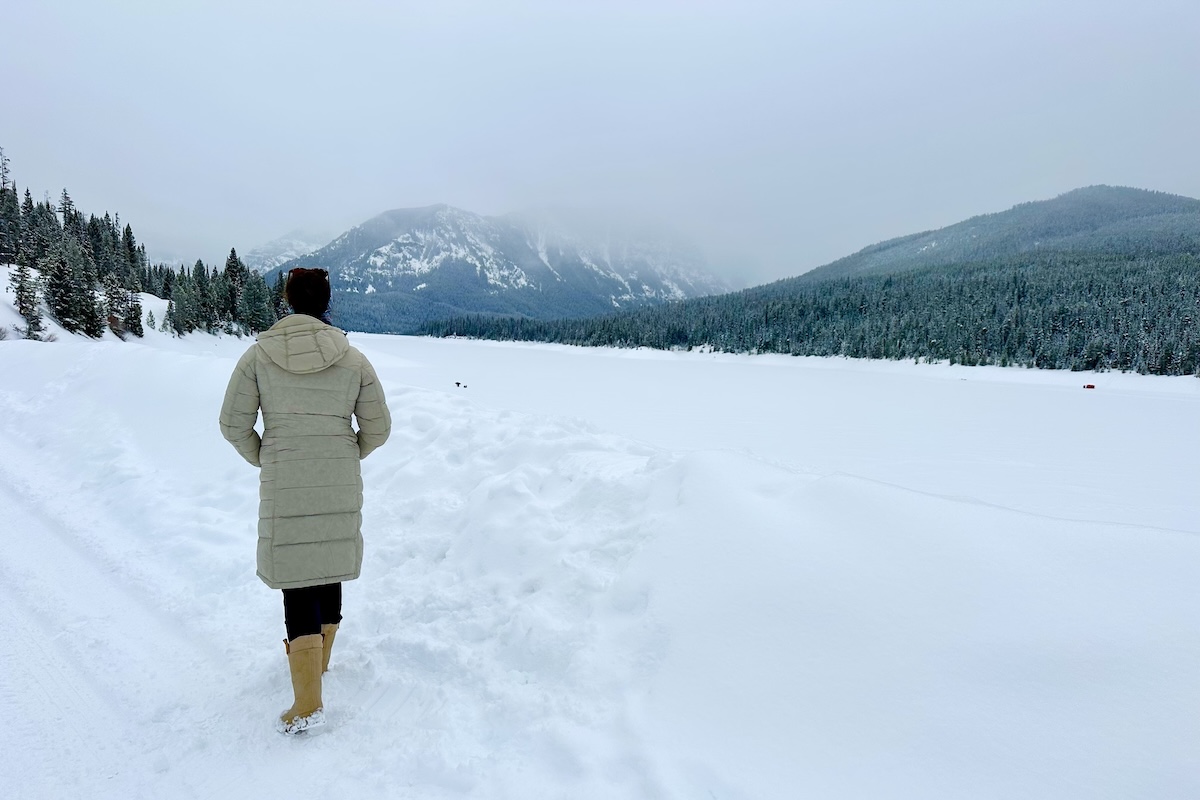
Winter jacket styling can be all over the place. Some, like the Marmot Montreal, are fairly trim, while others, particularly performance jackets like the Rab Neutrino Pro, provide ample space for freedom of movement and layering. It’s a strong generalization, but expect casual pieces to run a bit small (we’ve often found the need to size up) and performance pieces to be roomier. When applicable, we’ve called out sizing discrepancies in the write-ups above, but there’s no substitute for visiting your local gear shop and trying on jackets in person to get a sense of how various brands approach their sizing.
Parkas come in a variety of lengths, ranging from just below the butt (as seen with the Mountain Hardwear Stretchdown and Marmot Montreal) to knee-length designs like the Outdoor Research Coze. While parkas are the clear winners in terms of warmth and coverage (and arguably style), it’s important to understand where these designs fall short. In general, the longer the hem, the more restrictive a parka will be—we’ve had to pull up jackets around our waist while biking—and many of these designs tend to bunch up on your lap while sitting or driving. Slits, such as those on the REI Co-op Campwell Down Parka (side) or Kühl Crossfire Parka (front), go a long way in solving this problem, and you'll want to ensure the design features a two-way zipper.
.jpg)
A major contributor to warmth is what layers (or lack thereof) you wear underneath your jacket. Due to the hefty amount of insulation inside most of the jackets above, a simple baselayer will do the trick in moderately cold weather. When the temperature drops to well below freezing, you may want to add a lightweight down or synthetic jacket as a midlayer. This adds up to be a lot of insulation, and it depends on the parka, but it’s an easy adjustment to make, so long as your top jacket has room for layering underneath. Warmth is largely a matter of personal preference and the specifics of the activity and conditions, but it’s always a good idea to carry an extra layer or two in case you get cold or the conditions change.
.jpg)
The importance of weight in your buying decision depends largely on intended use. For those looking in the performance category (mountaineers, climbers, winter explorers, etc.), jackets with large amounts of premium down will be the warmest, lightest, and most packable. Our top pick in this category is the Rab Neutrino Pro, which checks in at 1 pound 2.3 ounces, though we also really love the stylish 1-pound-14.6-ounce Paka Apu Long Parka. For those buying at the casual end of the market, weight matters much less—you most likely won’t be carrying your down jacket in a backpack and don’t care as much about shaving ounces. Many casual winter jackets and parkas push the 3-pound mark (or more) and won’t pack down as small with lower-fill-power down.
.jpg)
A jacket’s weight and packability often go hand in hand, so taking a look at the weight spec should give you a fairly accurate idea of how compressible each jacket is. Like weight, packability is paramount for performance use but won’t matter too much for most casual users—although it does have implications for stuffing in a duffel when traveling. A packable jacket (like the Outdoor Research Coldfront) will be much easier to stuff away in a checked bag or overhead bin, whereas a hefty parka like the Patagonia Tres 3-in-1 will fill up most of a carry-on suitcase. If packability matters, we recommend opting for a hip-length jacket or a simple down parka with thin shell fabric like the Marmot Montreal. And as we mentioned, down is much more packable than synthetic insulation.
In addition to the type and amount of insulation, a jacket’s shell fabric has a big influence on its weight and packability. Performance jackets often utilize technical fabrics that are lightweight and thin, whereas casual pieces employ more durable and heavier shells that add weight. On the upside, the thicker shells are much better at avoiding tears and small abrasions and therefore should last longer. Lightweight down jackets require quite a bit of care and attention and are not our first choice for everyday use (unless you don’t mind the odd patch here and there).
.jpg)
Down loses its ability to insulate when wet, and therefore all jacket materials on this list offer some protection against precipitation. Most of the shells are water-resistant or water-repellant, meaning they feature a tightly woven face fabric and a durable water-repellent (DWR) coating that beads up and sheds light moisture. If you combine that with treated or hydrophobic down—a treatment added to the down itself that reduces water absorption and helps it dry faster—you have a pretty effective system even in wet and heavy snow.
.jpg)
Jackets with water-resistant shells like the Patagonia Down With It Parka offer plenty of protection in freezing, snowy conditions. If you do need complete waterproofing, however, there are plenty of options on the market, including The North Face Arctic, REI Stormhenge, Fjallraven Nuuk, and multiple offerings from Arc'teryx and Patagonia. The Arc'teryx Beta Down Parka features a 3-layer waterproof Gore-Tex ePE shell, ensuring dryness even in conditions as severe as 34 degrees and pouring rain.
Exposure to wind can make an otherwise freezing winter day even more unbearable. In terms of the wind resistance of a winter jacket, a number of factors come into play, including the type and thickness of the shell, the amount and distribution of the insulation, and the liner fabric. The shell itself matters most: On performance jackets, you’ll see names like Gore Infinium or Pertex for excellent wind resistance at low weights, and casual coats often block the wind by the sheer thickness of the face fabric. In the end, all of these jackets do a respectable job at keeping the wind and other elements at bay. Midweight and lightweight jackets are much less substantial, and you run the risk of catching a cold breeze through the jacket itself, but this list is composed of heavyweights that all should be considered highly wind-resistant.
.jpg)
Perhaps more than any other type of jacket, the hood matters a lot with a winter coat. First, the hood will almost always have the same type of insulation as the rest of the jacket, so premium down in the body of the coat means excellent warmth for the weight in the hood. Second, a good cold-weather hood can be adjusted and tightened around the head so that wind doesn’t enter or blow it off your head (many casual jackets will have an additional fur brim—often removable—for sealing in warmth, while technical models often have storm flaps around the collar). Finally, many performance-oriented jackets have helmet-compatible hoods, which are necessary for mountaineering and climbing. Helmet compatibility makes the hood larger and slightly less desirable for wearing without a helmet, but it isn’t a dealbreaker as long as the hood cinches down evenly.

For use on mild-weather days, some prefer the option to remove the hood from their winter coat altogether. These hoods are bulky and can be annoying if they’re just sitting along the back of your head. Most designs have a zipper located just below the collar to make it easy to remove and put back on. The feature does add weight and bulk, so you’ll typically find it on casual winter jackets (like the Fjallraven Nuuk Parka). Whether this is a priority will come down to personal preference, but it could be a difference-maker in the jacket you select.
The outdoor apparel industry has seen a significant increase in the adoption of sustainable practices over the past few years, and winter jackets are no exception. Key measures include the use of recycled materials, ethically sourced down (or alpaca, as seen from the company Paka), and an industry-wide move to PFAS-free DWR coatings. Companies are seeking better solutions for water- and stain-resistant finishes, which we've loved to see (you can read more about Patagonia’s take on the issue here). Bluesign approval has also become one of the gold standards in this realm, indicating that materials have been sourced and produced in ways that mitigate harmful impact on the environment. Finally, many companies are now Fair Trade Certified, which ensures the fair and ethical treatment of workers.

The good news is that most brands call out these practices, making it easy to shop with an eye for sustainability. Patagonia is a clear leader: Their Down With It Parka, for example, uses a 100%-recycled face fabric with a PFAS-free DWR, 100%-recycled down, and is both bluesign-approved and Fair Trade Certified. They go as far as detailing the sustainable steps they’ve made at the bottom of their product pages. A number of other brands have followed suit, including REI Co-op, Outdoor Research, Marmot, Paka, and more. There’s still a long way to go in the industry, but the current trajectory and momentum from many of the key players is encouraging.
Back to Our Women's Winter Jacket Picks Back to Our Women's Winter Jacket Comparison Table

_0bc58.jpg?h=fbc67360&itok=y-RAM9m9)

_0f523.jpg?h=fbc67360&itok=Y_CF_sgL)
cef9.jpg?h=fbc67360&itok=qyeBWUTt)
jpg209a.jpg?h=fbc67360&itok=rCRkeZ6s)

5bff.jpg?h=fbc67360&itok=QQ41aAEU)
bcdc.jpg?h=fbc67360&itok=wmPMXiEZ)
