
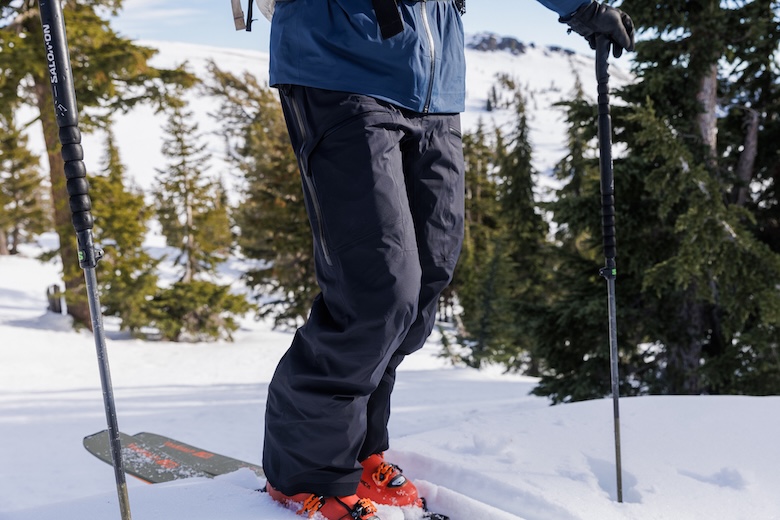
Photo Credit
It’s that time of year! Time to find the perfect present for our adventurous loved ones. For that person in your life who loves all things cold weather, check out our gift guide for skiers and snowboarders. For ideas tailored to other pursuits, we also have more editor-recommended gift guides to explore. Happy gift giving!
Ski pants are a critical barrier between you and the elements, and there’s a pair to fit every type of skier and budget. Resort-goers typically opt for a classic hardshell design with some light insulation to stay warm on the lift rides up. Backcountry riders can choose from plenty of softshell and stretch-infused options for an improved range of motion and breathability. Of course, some of our recommended ski pants toe the line for those who like to do a little of both. Below are the best ski pants for the 2025 season, with the men's Trew Gear Eagle Pant Primo and women's Helly Hansen Sogn Shell landing at the top of our ranks. For more background information, also see our comparison tables and buying advice below the picks, along with details about our testing process. Of note: This article includes options for both men and women, but we’ve also written dedicated round-ups on the best women’s ski pants and best men's ski pants.
Editor’s note: We updated this guide on October 23, 2025, to refine our picks down to a smaller selection of our favorites. This involved carefully considering the experiences we had during testing and comparing similar models head-to-head. We added a few new pants to the list, including the Trew Gear Chariot Classic, Helly Hansen Sogn Shell, Outdoor Research Trailbreaker Tour, Roxy Rising High, Burton Reserve 2L, and 686 Dojo Gore-Tex. Lastly, we double-checked to ensure all other information was up to date at the time of publishing.
 Best for: Resort/backcountry
Waterproofing: 3L PNW Primo
Insulated: No
What we like: Top-notch quality and protection in a versatile design.
What we don’t: Dedicated backcountry riders will want something trimmer and lighter.
Trew Gear is an Oregon-based brand that has been serving up some of our favorite ski bibs, jackets, and pants lately, and we think they've landed on a real winner with the Eagle Pant Primo here. The Eagle’s 3-layer construction is outfitted with the brand’s proven waterproofing (aptly named PNW Primo), water-resistant zippers, and fully-taped seams. On top of that, the pant has proven plenty breathable for most moderate backcountry tours, especially given the venting along both the outer and inner thigh. It has all of the features we look for in a well-rounded pant, including well-sorted storage (one hand pocket includes a beacon clip), internal Velcro waist adjustment, and burly scuff guards, all in a high-quality, freeride-styling package.
It’s likely that serious backcountry skiers will want a pant that’s a little more streamlined and less bulky, like the Stormstride below. The Eagle is a fine choice for those who dabble in a bit of backcountry, but the baggier legs and thicker construction aren’t the most efficient on the skin track. The other note to consider is sizing: Users have reported that the Eagle fits on the larger side, so it might be worth sizing down if you find yourself between sizes (luckily, Trew Gear offers the pant in three inseam lengths and six sizes). Overall, the Eagle has proved a fantastic choice for dedicated resort riders who are backcountry-curious and don’t want to sacrifice style points in the name of versatility.
See the Men's Trew Gear Eagle Pant Primo
 Best for: Resort/backcountry
Waterproofing: 3L Helly Tech Professional
Insulated: No
What we like: Comfortable, flattering, and protective.
What we don’t: Not quite what dedicated backcountry skiers are looking for.
One of our ski editors stumbled upon the Helly Hansen Sogn Shell in a pinch last season when desperately searching for a replacement for a pair of bibs that simply didn’t fit her, and she’s pretty sure it was fate that brought them together. Not only did the Sogn prove to be comfortable with a flattering fit—we especially like the high and adjustable waist—but the pant was also protective against the volatile conditions of the Lake Tahoe area. This 3-layer pant is backed with Helly’s proven waterproofing and comes complete with waterproof zippers and fully-taped seams. A modest yet functional feature set rounds out the design, including generously-sized thigh pockets, outer thigh vents, boot gaiters, and scuff guards.
The price of the Sogn Shell is one of our favorite parts—it undercuts our favorite overall pick for men by a decent amount (the Sogn Shell is available as a bib for men, but not a pant), which doesn’t often happen for such versatile and well-made pants. But like the Eagle pant above, the Sogn Shell isn’t the best choice for dedicated backcountry skiers, and a stretchier and more breathable shell will likely be a better choice for those who like to earn their turns. We’ve had plenty of luck wearing the Sogn on shorter and less-demanding tours, however, and obviously love them for resort days and après.
See the Women's Helly Hansen Sogn Shell

 Best for: Resort
Waterproofing: 2L Peak
Insulated: Yes (40g polyester)
What we like: Strong value for a well-rounded resort design.
What we don’t: Underbuilt for particularly wet conditions.
REI’s in-house outerwear continually impresses us when it comes to bang for your buck, and their Powderbound Insulated Pants are no exception. Overall, we think they’ve put together a solid resort companion: The 2-layer waterproof membrane holds up well in most winter weather, and the moderate dose of synthetic insulation (40g) adds a nice barrier on cold chairlift rides without looking too bulky. Tack on a thoughtful set of ski-specific features—including internal gaiters, tough scuff guards, Velcro waist adjustments, and tricot-lined hand pockets—and the Powderbound stands out as a complete and very well-built option for the price.
Like most ski pants in this price range, the Powderbound is only critically seam-sealed, which helps keep costs low but results in less assurance when skiing in sustained, heavy snow (or even worse—rain). If you’re an avid resort rider who often finds themselves skiing in wet conditions, we recommend spending up for a more trustworthy 3-layer design. The pockets and vents on the Powderbound also feature fabric flaps rather than water-resistant zippers, resulting in added bulk. Additionally, we often prefer an uninsulated ski pant for more control over our warmth (see the TNF Freedom below), but for casual skiers who get out in mostly cold and dry weather, the Powderbound is largely uncompromised and a truly solid value.
See the Men's REI Powderbound Insulated See the Women's REI Powderbound Insulated
.jpg)
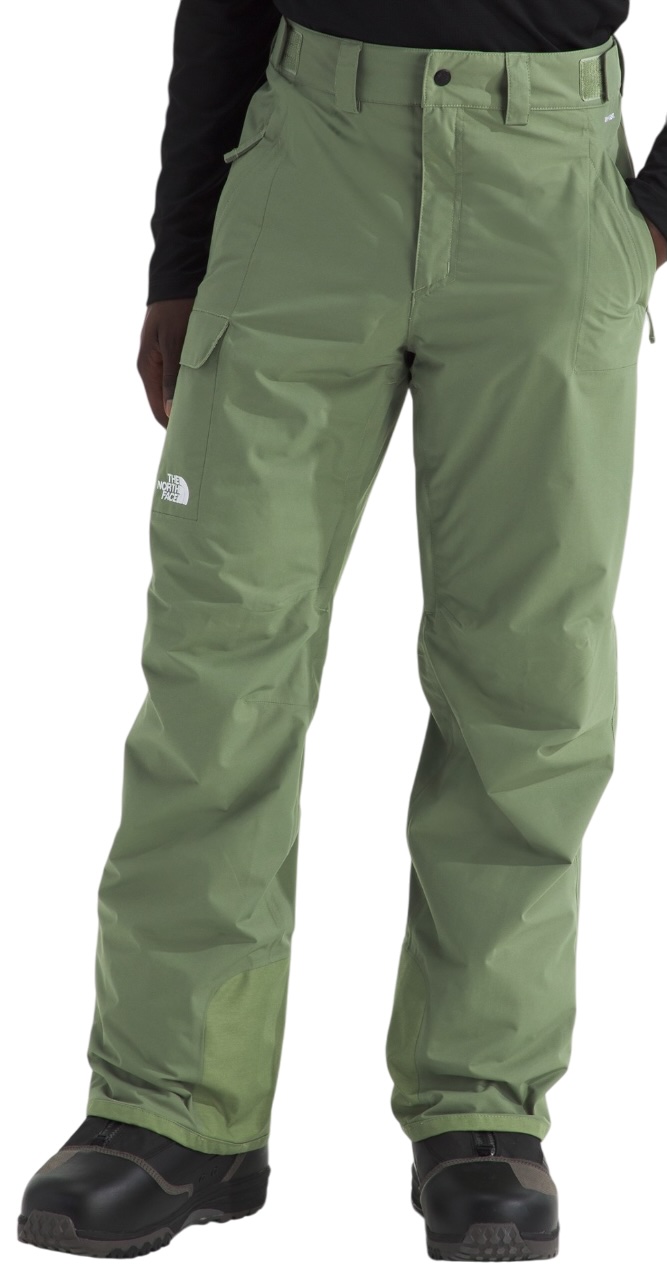 Best for: Resort
Waterproofing: 2L DryVent
Insulated: No (available)
What we like: Proven and tough resort design; available in a good range of sizes and colors.
What we don’t: Baggy fit isn’t for everyone; design decisions aren't as considered.
For weekend warriors and those who don’t want to spend a ton on ski gear, no pants are more popular at the resort than The North Face Freedom. It’s a classic choice featuring a thick 2-layer construction that is super durable and blocks out wind and snow effectively. The venting system is surprisingly good for a cheaper pant, and Velcro adjusters at the sides of the waist are a simple but effective tool for dialing in fit. Another plus is that the pants are offered in a decently wide range of sizes (from XXS to XXL) and three different inseam lengths. And unlike the Powderbound Insulated above, the Freedom offers more freedom (pun intended) in layering, meaning you can adjust your baselayer thickness for the conditions.
Keep in mind that although the Freedom pants will do the trick for skiing laps and long chairlift rides, performance-minded skiers likely will be left wanting more. To start, the fit is pretty generic—there isn’t any stretch built into the fabric, and they’re quite baggy around the thighs and lower legs. Moreover, it’s fairly easy to overheat with the cheap waterproofing technology, and while we like the zippered vents, their placement along the inner thigh creates extra bulk. All that said, this is a great choice for the casual user who gets out in mild conditions. Of note: For those who prefer insulated pants, there’s the Freedom Insulated that’ll run you a bit more. On the women's side, TNF only offers an insulated or a stretch version, both of which cost more than the standard version here.
Read more: The North Face Freedom Insulated Pants review (men's version)
See the Men's TNF Freedom Pants


Best for: Resort
Waterproofing: 2L DryRide
Insulated: No
What we like: A high-styling ski pant at a great price; wide range of sizes available.
What we don’t: Has some budget-quality features.
In the current market, most budget options for women are insulated, which is a bummer for those looking for versatility in their layering. But we’re excited to see Burton pull through with their Reserve 2L Pants here, which do a great job at balancing performance and cost. In fact, Burton manages to tack on some premium features that aren’t commonplace among most budget options, such as fully-taped seams, YKK zippers, a soft microfleece liner, an interior Velcro waist adjustment, and mesh-lined inner thigh vents. We also really like the styling, which is flattering around the waist but leaves plenty of room for layering a baselayer underneath (the Reserve is also offered in a relaxed fit, which is even roomier). Plus, they’re offered in eight sizes (XXS to XXXL) and three inseam lengths, which helps to dial in a perfect fit.
To be sure, Burton does take a few cost-cutting measures. Like the TNF and REI options above, the Reserve is a 2-layer pant, which isn’t as breathable or lightweight as the pricier 3-layer designs here. In our experience, Burton’s waterproofing is reliable, but can’t compare to Gore-Tex in all-out storm-proofness (you can get the Reserve with Gore-Tex waterproofing, but it’s a lot pricier). Burton also cuts a few corners by opting for Velcro flaps on the back and leg pockets, which don’t seal out water as well as waterproof zippers. But for resort riders who stick to bluebird days, the Reserve pant is plenty. And if you really like Burton’s styling, you can complete your kit with a matching Reserve 2L Jacket, which connects to the pants to keep deep snow from getting inside.
See the Women's Burton Reserve 2L Pants

Best for: Resort
Waterproofing: 2L H2No
Insulated: Yes (60g Thermogreen)
What we like: Cozy and reliably weatherproof without breaking the bank.
What we don’t: Insulated pants aren't for everyone; we don't love the Velcro waist adjustments.
Patagonia is a consistent leader in the ski apparel market, and their Insulated Powder Town Pants were quick to win over one of our ski testers. Protection is the first thing that stood out to us: The pants are very reliable thanks to a quality waterproof membrane and a nice assortment of weather-ready features, including built-in gaiters, water-resistant zippers, and powder skirt compatibility. Additionally, the 60-gram synthetic insulation is enough to take the edge off while keeping bulk to a minimum, and the soft taffeta lining and accommodating fit translate to great all-day comfort and mobility. Finally, we appreciate that the pants are built with Patagonia’s typical eye toward sustainability and come in a whopping seven sizes and two inseam lengths.
As we mentioned above, insulated ski pants have some inherent limitations. Most of the time, we prefer opting for a non-insulated pant and tweaking our layers underneath depending on the conditions. The Powder Town does come with outer thigh vents, which we found to be surprisingly effective at dumping excess heat, but the pants are lacking in breathability for anything more than the occasional sidecountry jaunt. We also found the Velcro waist adjustments prone to snagging on baselayers and scratching against bare skin. But for skiers who are sold on insulated pants, the Powder Town puts it all together better than most—in a pretty cheap package to boot. If you want to go even cheaper, check out Helly Hansen’s Legendary Insulated (available in women’s, too), which also has 60g of insulation and a flattering fit, but makes some sacrifices in terms of durability to achieve an even lower price tag.
Read more: Patagonia Insulated Powder Town review (women's version)
See the Men's Insulated Powder Town Pants See the Women's Insulated Powder Town Pants
.jpg)
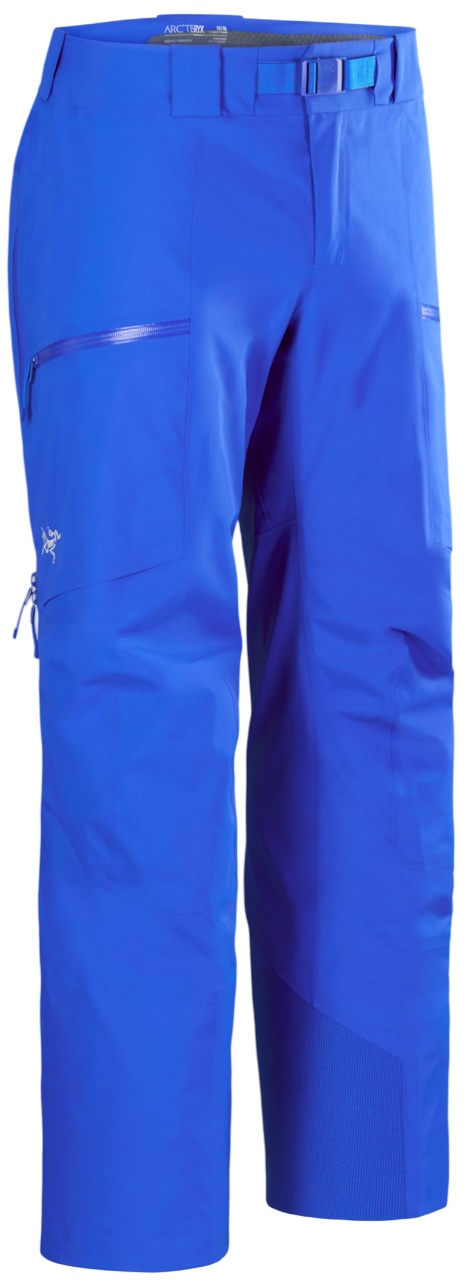
Best for: Resort/backcountry
Waterproofing: 3L Gore-Tex ePE
Insulated: No (thin flannel backer)
What we like: Fantastic build quality, weather protection, and versatility.
What we don’t: Expensive; fit intricacies with the last couple of versions.
If we were to pick one ski pant for anywhere on the mountain, for conditions from bluebird to overcast and wet, it would be the Arc’teryx Sabre for men and Sentinel for women. These pants nearly have it all: 80-denier (D), 3-layer Gore-Tex for bomber protection from the elements, a lightweight flannel backer for comfort and a touch of warmth, and a solid feature set with plenty of storage. Attention to detail is also a hallmark, and the light-yet-burly constructions are a nice break from the overly heavy and bulky feel that you get with most ski pants. As with most Arc’teryx gear, price is the biggest obstacle, and this is a significant investment if you don’t plan to get out a lot (one of the budget options above may be better for those who only ski occasionally).
The Sabre and Sentinel are excellent choices for active resort skiers and those who like to venture beyond the ropes into the sidecountry. These pants won’t be out of place during trips in the backcountry either, with fantastic range of motion, along with big side vents for dumping heat. But in our opinion, they are a bit much for the average skier. Most skiers—be that resort or backcountry-focused—can get away with the cheaper options in this list. It’s also worth noting that we’ve run into some fit issues with both the Sabre and Sentinel in the past, but the most updated versions have a revised “regular” fit, and you can get the Sabre in a relaxed fit (at the time of publishing, the women's is only available in regular), which have more of a freeride vibe. In the end, it’s hard to knock Arc’teryx’s level of quality—it certainly comes at a price, but there’s no denying the Sentinel and Sabre’s top-notch craftsmanship and all-around performance.
Read more: Arc'teryx Sabre Pant review (prior version)
See the Men's Arc'teryx Sabre Pant See the Women's Arc'teryx Sentinel Pant
.jpg)

Best for: Backcountry
Waterproofing: 3L H2No
Insulated: No
What we like: Thin and stretchy 3-layer fabric balances comfort, breathability, and waterproofing.
What we don’t: Expensive and slim-fitting; nitpicks with some features.
Not only does backcountry skiing require a distinct skill set from resort skiing, it’s also best done with a completely different set of gear. Balancing uphill and downhill performance, backcountry ski pants generally feature a slim fit (read: less fabric getting in the way when climbing the skin track); thin, breathable, and stretchy materials; and features like large vents and a beacon-compatible pocket. The Patagonia Stormstride is one of the most purpose-built pants out there, getting the job done with a stretchy 40D nylon shell and reliable 3-layer waterproofing.
We love the sleek and streamlined look and feel of the Stormstride, which checks in significantly lighter than most alternatives here. And after over a season of rigorous backcountry use, our pair has shown impressively few signs of wear or deterioration. However, Patagonia hasn’t landed on the perfect design: Notably, the slim fit is restrictive in areas, and some features are simply too pared-down, including the small pockets and non-glove-friendly zipper pulls. And the thin shell fabric is no match for a burlier resort pant (for comparison's sake, Patagonia's own Storm Shift below uses 150D nylon)—it'll get the job done in light to moderate moisture but will become overwhelmed in stormy conditions. But the Stormstride nevertheless nails the backcountry pant archetype better than most with a great mix of comfort, mobility, breathability, and waterproofing.
See the Men's Patagonia Stormstride Pants See the Women's Patagonia Stormstride Pants
.jpg)

Best for: Backcountry
Waterproofing: 3L BD.dry
Insulated: No
What we like: A breathable and protective pant that moves easily on the skin track.
What we don’t: Falls short of the Arc'teryx above in terms of materials and fit; less impervious than non-stretchy hardshells.
Black Diamond’s Recon Stretch is a well-rounded design for days that take you deep into the mountains. As its name implies, this 3-layer hardshell pant is stretch-infused to provide softshell-like mobility for easy transitions and hoofing it up the skin track. All the requisite features are also present, including two deep thigh pockets, outer thigh vents for regulating temperature, and an adjustable Velcro waistband for a customized fit. What's more, the most recent version has updated articulation in the knees and seat for even more mobility on the skin track. Rounding out the design, you get Black Diamond’s in-house BD.dry membrane that we’ve found to be largely effective in wet and windy weather, and a competitively low weight of 1 pound 4.4 ounces.
Though considerably cheaper than the Arc’teryx Sentinel above, the Recon Stretch is certainly less premium. For one, we prefer the Sentinel’s fit, which is more flattering and athletic. In testing, we also found the Sentinel fared better in rough and rowdy weather, which is due to Arc’teryx’s upgraded Gore-Tex construction and the lack of stretch in the fabric (stretchy materials are more porous, therefore more permeable to moisture). To be fair, the Recon is no slouch and will get the job done in most conditions, and there’s no doubt that it’s a better value. If you’re willing to sacrifice a bit of protection in the name of mobility and cost savings, the Recon Stretch is a great option to have on your radar.
See the Women's BD Recon Stretch Pants See the Men's BD Recon Stretch Pants
 Best for: Resort/backcountry
Waterproofing: 3L Surface
Insulated: No
What we like: Bomber protection in wet and deep snow.
What we don’t: Burly build is overkill for mild conditions and high-output use.
For maximum protection when skiing in wet snow and deep powder, it’s hard to beat a ski bib. And among the many options on the market, Flylow Gear’s Baker is a standout. It boasts a long track record of waterproof performance due to its 3-layer build and DWR coating, is extremely tough with reinforced Cordura panels, and features an easily adjustable fit with Velcro tabs on the sides. The Baker also performs well for sidecountry hikes and backcountry tours with a ventilation system that features both massive side vents and zippered openings along the inner thigh.
What do you give up with the Baker’s bib design? The extra waterproof layer around the stomach and lower back makes it run hotter and heavier than a comparable pant, and it’s overkill on mild-weather days. Additionally, the Flylow’s substantial construction and moderately baggy fit can inhibit range of motion for skinning uphill. But the Baker is a perfect match for its namesake mountain: It's built to handle anything from wet, unruly conditions to bottomless powder days. Interestingly, Flylow doesn’t offer an equivalent female version, although their women’s Foxy Bib is a favorite of ours and boasts similar coverage, organization, and build quality. The key difference is its construction, which is stretchier, lighter, and thinner than the Baker’s build (both are 3L designs).
Read more: Flylow Gear Baker Bib review
See the Men's Flylow Gear Baker Bib
.jpg)
 Best for: Resort/backcountry
Waterproofing: 3L PNW
Insulated: No
What we like: Stylish with high-quality materials and features, reliable weatherproofing, and a handy drop seat.
What we don’t: Too thick and heavy for dedicated backcountry use (though it’s fine for short tours).
Along with obvious advantages in coverage and protection, there’s no denying the style points you get with opting for a ski bib over pants. Trew Gear’s women’s-specific Chariot Bib Classic is one of the most flattering options out there, combining a high-quality construction with an attractive freeride aesthetic that’s sure to stand out. Beyond the classy styling, the Chariot checks many important performance boxes: Trew Gear’s in-house waterproof membrane is reminiscent of Gore-Tex in both look and feel, and you get full seam taping and water-resistant zippers for added assurance when the skies open up. We also came away pleased by the Chariot’s generous storage layout and half-moon drop seat. Taken together, it’s an excellent quiver-of-one option for resort-goers who embark on the occasional tour.
No design is perfect, however, and the Chariot Bib Classic did fall short in a few areas during our testing. First and foremost, the bib is on the heavy end at just over a pound and a half, making it best suited for lift-accessed terrain and short tours when weight isn’t a huge consideration. Additionally, the thick fabrics and high-riding upper result in subpar breathability, and the relaxed fit isn’t our favorite for mobility-dependent activities (in these cases, we much prefer a trim-fitting design that more closely mirrors our movements). A final nitpick is that the vertical chest pockets aren’t the most secure, so they wouldn’t be our first choice for stashing valuables. But overall, we think Trew put together a pretty well-rounded design in the Chariot Bib Classic, especially when it comes to protection, styling, and overall build quality. And if you're willing to spend up for something a bit more burly and waterproof (at the expense of cost and weight), see Trew's Chariot Primo.
Read more: Trew Gear Chariot Bib review (Primo version)
See the Women's Trew Gear Chariot Bib Classic
.jpg)

Best for: Resort
Waterproofing: 3L Gore-Tex
Insulated: No (available)
What we like: Good looks, durable materials, and impressive sustainability measures.
What we don’t: Fit is a little big; expensive for a 2-layer design.
The Storm Shift is one of Patagonia’s premium resort pants and a big step up from most of the 2-layer offerings here. First, you get solid weatherproofing by way of a Gore-Tex membrane and a robust 150D shell fabric with a DWR finish. Vents on the outside of the thigh effectively dump heat (we’ve found outer thigh vents to be better performing than those on the inner thigh), and a brushed tricot liner adds a high-end feel that slides on nicely over baselayer bottoms. Fit-wise, the Storm Shift falls slightly on the big and baggy end, and it’s only offered in a single 32-inch inseam length, but the articulated cut and waist adjustments should keep many skiers happy.
Like a lot of Patagonia gear, the Storm Shift is rather pricey. It’s also not a backcountry-specific piece with its heavy 2-layer build and hanging mesh/polyester lining (although the vents along the outer leg do a decent job at dumping heat). But it’s hard to beat the design’s sustainability chops: The Gore-Tex construction is completely PFAS-free (including the membrane, DWR finish, and fabric), recycled materials are used throughout, and it’s Fair Trade Certified sewn. And comparing the men’s and women’s versions, we appreciate that Patagonia kept things mostly consistent between the two: The women’s model has a slightly more tailored cut and is available in different colorway options, but otherwise, you can expect very similar (read: excellent) overall performance.
Read more: Patagonia Storm Shift Pants review (men's version)
See the Men's Patagonia Storm Shift See the Women's Patagonia Storm Shift
 Best for: Resort/backcountry
Waterproofing: 3L Surface
Insulated: No
What we like: A bomber pant that does just about everything well.
What we don’t: Fit is still a little baggy for our tastes; not the most well-rounded crossover choice.
Flylow Gear flies a little under the radar compared to some of the bigger outdoor brands, but their men's-specific Chemical Pant is a solid offering. Like Flylow's own Baker Bib above, the Chemical is a super tough design with a 3-layer build, Cordura patches in high-wear areas like the knees and cuffs, and waterproof zippers. Given the impressive level of protection, the pants ventilate well, and you can release hot air in four places: two zippered vents along the inner thighs and two large vents along the outside of your legs. Tack on availability in six sizes, three inseam lengths, and a nice assortment of colorways, and it's easy to see why the Chemical Pant has garnered a loyal following over the years.
The Chemical is the most affordable 3-layer pant here. However, like many other crossover options on our list, the Chemical is a bit heavy for backcountry use and has a relatively baggy fit that can get in the way when skinning. On the bright side, you do get handy features like inner and outer thigh vents and a clip for securing a beacon, making the Chemical a nice choice for those who primarily ski inbounds but like to earn their turns on occasion (Flylow puts the split at 80/20, which we think is a good estimate). But all things considered, the Chemical Pant is a solid deal and a notable step up in performance from most 2-layer alternatives. Note: We don’t include the women’s version (the Donna Pant) here because we found it restrictive and ill-fitting in testing, especially around the thighs, and the faux back pockets added unnecessary bulk and weren’t comfortable on long chairlift rides.
See the Men's Flylow Gear Chemical Pant
 Best for: Backcountry
Waterproofing: 3L Ventia
Insulated: No
What we like: Hardshell and softshell construction excel on spring ski tours and heart-pumping climbs.
What we don’t: Not entirely weather resistant and too cold for the resort.
Spring ski tourers and ski mountaineers are often willing to sacrifice weather resistance and warmth for a breathable and highly mobile pant, like Outdoor Research’s Trailbreaker Tour here. The pants' main attraction is its hybrid construction that consists of softshell on the top half (the waist and tops of thighs) and hardshell on the bottom, where waterproofing is most needed. The result is a very mobile, stretchy, and breathable pant for warm-weather touring and hoofing it up big mountains (think volcano touring in the PNW in spring). Unlike most softshell pants, the Trailbreaker has a number of ski-specific features, including plentiful storage (including a beacon-specific pocket), gaiters, reinforced cuffs, and side ventilation. We’re also big fans of the Velcro waist adjusters.
The Trailbreaker Tour is much cheaper than the Patagonia Stormstride and Black Diamond Recon Stretch above, but as mentioned before, you do sacrifice some weather resistance in opting for them. The softshell material isn’t waterproof and will wet out in stormy conditions or on soggy chairlifts. They also aren’t the warmest pants out there, and you won’t be able to layer much more than a thin baselayer under the athletic cut. At the end of the day, the Trailbreakers are a bit niche, but they’re also a top-performer in their use case, which easily earns them a place on this list.
See the Men's Outdoor Research Trailbreaker Tour See the Women's OR Trailbreaker Tour
 Best for: Resort
Waterproofing: Softshell (DryFlight)
Insulated: Yes (WarmFlight)
What we like: A very flattering and stretchy ski pant ready for apres.
What we don’t: Not weatherproof and doesn’t have vents.
Women who are looking for a ski pant with a timeless, form-fitting design should look no further than Roxy’s Rising High pant. This stretchy softshell pant has a classy high waist, trim cut, and flared bottoms. But it’s not without performance touchpoints, such as a waterproof membrane, boot gaiters, and a modest amount of synthetic insulation for cutting the cold on mid-winter days. Put together, the Rising High pant is a great choice for snow bunnies and the casual rider who spends as much time at the lodge as they do on the ski hill.
It comes as little surprise that the Rising High is far from a performance-first pant. For one, the softshell construction can’t hold up to hardshell pants in terms of weather resistance (plus, it’s only critically seam taped). And while softshell is generally more breathable, the Rising High doesn’t have any side vents, and the insulation makes it tough to layer appropriately for the conditions. But if you’re only getting out on bluebird days, the Rising High is a fine choice, and the classy styling is sure to turn heads.
See the Women's Roxy Rising High
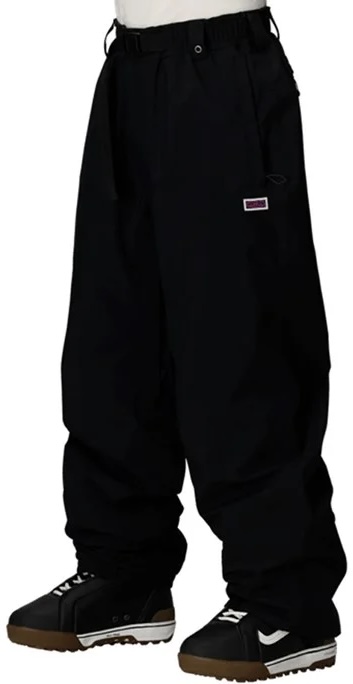 Best for: Resort
Waterproofing: 3L Gore-Tex
Insulated: No
What we like: Sweatpant-like fit is comfortable and stylish.
What we don’t: Not a backcountry pant and technically a men’s fit (though, we don’t see why women can’t wear them too).
686’s outerwear has earned many spots in our snowboarding pants guide, but skiers shouldn’t turn a blind eye to the brand, especially those who spend most of their time in the park. Their Dojo Gore-Tex pant deftly combines performance and comfort in a stylish, sweatpant-like bottom. While it may not look like it, the Dojo is a 3-layer pant that features several ski-specific elements, including inner thigh vents, reinforced cuffs, and gaiters. And the Gore-Tex waterproofing (complete with fully taped seams) is ready for anything that winter throws at you. The baggy fit won’t be for everyone, but for skiers trying their hand at rails and boxes, the Dojo will ensure you fit right in with the rest of the park crowd.
Despite what 686 says, we can’t see the Dojo pant being a true resort/backcountry crossover pant. The heavy and bulky build doesn’t translate to efficiency on the skin track, though it’s perfectly fine for rope-ducking and sidecountry missions. The Dojo is also listed as a men’s-specific pant, and 686 doesn’t offer a clear women’s alternative. The Outline Shell Pant is the closest we’ve been able to find, but its 2-layer construction doesn’t come close to the quality of the Dojo’s 3-layer. That said, we don’t see why women can’t wear the Dojo—686 even published a few photos of women doing exactly that on their site. In our opinion, so long as it fits and you feel comfortable in it, you can wear whatever you want to on the ski hill.
See the 686 Dojo Gore-Tex Pant
| Pant | Price | Best for | Waterproofing | Insulated | Weight |
|---|---|---|---|---|---|
| Trew Gear Eagle Pant Primo | $459 | Resort/backcountry | 3L PNW Primo | No | 1 lb. 13.4 oz. |
| REI Powderbound Insulated | $159 | Resort | 2L Peak | Yes | 1 lb. 9.4 oz. |
| The North Face Freedom | $170 | Resort | 2L DryVent | No | 1 lb. 3.4 oz. |
| Patagonia Ins. Powder Town | $269 | Resort | 2L H2No | Yes | 1 lb. 8.8 oz. |
| Arc'teryx Sabre Pant | $600 | Resort/backcountry | 3L Gore-Tex | No (flannel) | 1 lb. 5.0 oz. |
| Patagonia Stormstride | $449 | Backcountry | 3L H2No | No | 1 lb. 4.1 oz. |
| Flylow Gear Baker Bib | $440 | Resort/backcountry | 3L Surface | No | 2 lb. 1.6 oz. |
| Patagonia Storm Shift | $399 | Resort | 2L Gore-Tex | No | 1 lb. 10.2 oz. |
| Flylow Chemical Pant | $380 | Resort/backcountry | 3L Surface | No | 1 lb. 11.2 oz. |
| OR Trailbreaker Tour | $249 | Backcountry | 3L Ventia | No | 1 lb. 7.9 oz. |
| 686 Dojo Gore-Tex Pant | $380 | Resort | 3L Gore-Tex | No | 1 lb. 10.9 oz. |
| Pant | Price | Best for | Waterproofing | Insulated | Weight |
|---|---|---|---|---|---|
| Helly Hansen Sogn Shell | $335 | Resort/backcountry | 3L Helly Tech Pro. | No | 1 lb. 6.9 oz. |
| REI Powderbound Insulated | $159 | Resort | 2L Peak | Yes | 1 lb. 6.6 oz. |
| Burton Reserve 2L Pants | $210 | Resort | 2L DryRide | No | 1 lb. 8.0 oz. |
| Patagonia Ins. Powder Town | $269 | Resort | 2L H2No | Yes | 1 lb. 8.0 oz. |
| Arc'teryx Sentinel | $600 | Resort/backcountry | 3L Gore-Tex | No (flannel) | 1 lb. 2.0 oz. |
| BD Recon Stretch | $449 | Backcountry | 3L BD.Dry | No | 1 lb. 4.4 oz. |
| Trew Gear Chariot Bib | $459 | Resort/backcountry | 3L PNW | No | 1 lb. 11.0 oz. |
| Patagonia Storm Shift | $399 | Resort | 2L Gore-Tex | No | 1 lb. 8.3 oz. |
| OR Trailbreaker Tour | $249 | Backcountry | 3L Ventia | No | 1 lb. 6.4 oz. |
| Roxy Rising High | $220 | Resort | Softshell (WarmFlight) | Yes | Unavailable |
| 686 Dojo Gore-Tex Pant | $380 | Resort | 3L Gore-Tex | No | 1 lb. 10.9 oz. |
As snow begins to fall and you're gearing up to hit the slopes, you'll obviously want the right skis or snowboard, but having the proper apparel is also crucial for your overall comfort and enjoyment. The Switchback Travel crew has been testing ski pants since 2015, when lifelong skiers on our staff first established this guide with seven high-quality designs. Some of those classics remain on our list to this day, including staples like The North Face Freedom and Flylow Chemical Pant. We also enlisted the help of longtime contributors and avid backcountry skiers Brian McCurdy and Sasha Brown, who are based in Canada and very familiar with wet, challenging conditions. Editor Maddie Downie currently manages our ski pant coverage, drawing from years of resort skiing in Colorado and touring in Washington's rugged North Cascades.
Our current lineup of ski pants reflects years of hands-on testing and feedback from our extensive freelancer network, trusted friends, and the online ski community. When we test ski pants and bibs, we evaluate performance by looking closely at metrics like protection and breathability, taking each pant into variable weather to see how it holds up in inclement conditions, and venturing outside the ropes to gauge how well it dumps excess heat. We also pay attention to how each pant fares over the long term, noting any snags, tears, or broken components. We know that every skier is different, so we make an effort to ensure our list is well-rounded with options for both resort and backcountry use that range in price from budget to premium. Since the market is ever-evolving, we revisit this guide frequently to ensure that it stays up-to-date with current offerings that score high marks in our testing. Notably, we have also compiled dedicated lists of the best men's ski pants and the best women's ski pants, featuring selections tailored to each gender.
.jpg)
Depending on the design, ski pants can be best suited for the resort, backcountry, or a mix of the two, so we’ve indicated the best use case for each pair in our product descriptions and comparison table. For inbounds skiing, durability is key, and these pants feature tough outer fabrics, fully waterproof and windproof materials, and roomier fits to accommodate layering. If you frequently ski in extremely cold conditions, insulated designs can provide extra warmth, though a well-layered, non-insulated shell offers greater versatility for season-long wear.

Your needs shift when traveling uphill on the skin track. Mobility is crucial, so backcountry-oriented pants often incorporate stretchy fabrics and an athletic cut for ease of movement. Breathability is also essential, with thinner materials and large zippered vents to help regulate temperature. Full weather protection is sometimes sacrificed to improve airflow, though whether this trade-off makes sense depends on your local climate and snow conditions. If you want a do-it-all pant, we recommend a fully waterproof model, such as the Arc'teryx Sabre and women's Sentinel, Trew Gear Eagle Pant Primo, or Helly Hansen Sogn Shell.
.jpg)
Ski pants typically fall into one of three categories: hardshell, hardshell with mechanical stretch, or softshell. Your choice should align with where and how you ski: Hardshells are best for resort skiing, while stretchy fabrics are great for mogul skiing and uphill travel. The majority of skiers opt for a hardshell pant or hardshell with integrated stretch, but we also touch on softshell options below.
Hardshell
For most resort days, a traditional hardshell pant is the best choice. These provide excellent protection against wet snow and strong winds—ideal for extended chairlift rides—and premium models have impressive longevity. However, hardshells aren't particularly breathable and can have a relatively stiff and rigid feel. Fortunately, most modern designs include side vents to help release heat when necessary. The Flylow Chemical Pant is a standout, offering rugged 3-layer construction, a tough 150D face fabric, and generous venting on both the inner and outer legs.
.jpg)
Hardshell with Stretch
For aggressive resort skiers, sidecountry riders, and most backcountry enthusiasts, a waterproof pant with some added flexibility is a great middle ground. Options like the Patagonia Stormstride and Black Diamond Recon Stretch utilize a hardshell construction that integrates stretch into the fabric, providing a softer, less rigid feel with enhanced freedom of movement and breathability. However, there are trade-offs: Stretchy fabrics allow more airflow, making them less windproof, and they are more prone to wetting out with prolonged exposure. Still, for many backcountry skiers, stretch-infused hardshells offer the best balance of protection and comfort, which explains their growing popularity.
.jpg)
Softshell
For the utmost in breathability, we turn to softshell ski pants like the Outdoor Research Trailbreaker Tour, which features a softshell fabric above the knees. Softshells prioritize flexibility, air permeability, and next-to-skin comfort, making them ideal for high-output activities. However, they absorb moisture more readily than hardshells and often lack waterproof membranes. This makes them a poor choice for wet conditions—even prolonged contact with snow can lead to saturation—so they aren’t recommended for resort skiing or damp environments.
.jpg)
Ski pants generally fall into one of two categories: insulated models with built-in synthetic fill and uninsulated shell designs. Resort skiers, especially those sticking to groomed runs, can benefit from insulated pants, which provide extra warmth and act as a barrier against cold chairlift seats or snowy surfaces. Most insulated ski pants use synthetic fill, which is cost-effective and retains warmth even when wet (unlike goose or duck down). Insulation levels typically range from 40g to 80g of fill, with 60g being a safe middle ground—pants like the Patagonia Powder Town and Roxy Rising High strike a good balance for most skiers.
.jpg)
On the other hand, shell pants are better suited for aggressive skiers or those who frequent the backcountry. Without insulation, they’re less likely to cause overheating for mogul skiers, off-piste riders, or those hiking to find fresh snow. For ski touring, a shell pant is essential to help regulate body temperature. Another advantage of an uninsulated pant is the ability to customize warmth with different baselayers—choose a lightweight option for spring and active use or go with a mid- or heavyweight design when temperatures plummet. While most resort skiers will prefer the coziness of insulation, shell pants offer unmatched versatility for shifting conditions, varying levels of exertion, and season-long use.

High-end ski pants typically feature a 3-layer construction, which consists of an outer shell, a waterproof/breathable membrane, and an inner liner bonded together. This setup reduces bulk compared to 2-layer designs, which require a separate hanging mesh liner. Additionally, 3-layer pants offer superior breathability and a more comfortable next-to-skin feel. Given these benefits, 3-layer models are the go-to choice for dedicated downhill and backcountry skiers.
.jpg)
More budget-friendly ski pants often use a 2-layer construction, which is less breathable but still quite durable. These are well-suited for resort skiing, where ventilation is less of a priority (though mogul skiers or those who overheat easily may prefer a 3-layer design). A major advantage of 2-layer pants is affordability—some models start as low as $100 to $150, such as The North Face Freedom Pant. More premium 2-layer pants (that have better waterproofing and material quality) usually come in around $100 more, like Burton's Reserve 2L Pants. By comparison, the least expensive 3-layer pant we recommend, Flylow's Chemical Pant, costs a few hundred more.
.jpg "Softshell pants can be an option in dry snow and mild weather conditions")
Dependable water resistance is crucial for ski pants, as they frequently come into contact with snow. For the best protection, look for a hardshell model featuring Gore-Tex, like 686's Dojo Gore-Tex, but we also like eVent or NeoShell. Mid-range and budget-friendly pants use in-house waterproofing technologies, which are still effective but may not be as durable. Additionally, features like seam taping and a DWR coating help prevent moisture from seeping in. Investing in a higher-quality pant often translates to better long-term performance and longevity.
.jpg)
Backcountry skiers have different requirements and may not need full waterproofing. Since they spend less time sitting on chairlifts and more time actively moving, some prefer pants with only partial waterproofing or a highly water-resistant design. This is especially true in areas with drier snow, such as the Rocky Mountains. Consider your typical conditions before ruling out a pant with moderate water resistance.
.jpg)
The ideal level of breathability will depend on your skiing style. Resort skiers, particularly those staying on groomed runs, don’t require ultra-breathable pants—most standard 2-layer designs will suffice, and zippered vents can help release excess heat when needed. For those skiing primarily in the backcountry, breathability becomes much more critical. Among waterproof options, lightweight 3-layer constructions offer the best ventilation, with top choices including the Patagonia Stormstride and Black Diamond Recon Stretch. Some softshell-inspired designs offer even better airflow but sacrifice protection in harsh conditions. While this means a trade-off in wind and wet-weather resistance, breathable pants like the Stormstride and Recon Stretch are excellent for high-output activities.
.jpg)
Ski pants endure significant wear and tear, from boot buckles to ski edges and chairlifts, so durability is a key factor. The best way to gauge a pant’s toughness is by looking at the shell denier (D), which is a measurement of fabric thickness. Resort-focused pants tend to have high-denier fabrics, like the Patagonia Storm Shift (150D) and The North Face Freedom (140D x 160D), providing excellent durability. On the other hand, lightweight touring pants like the Patagonia Stormstride (40D) sacrifice some durability for increased mobility and comfort. Our top-rated pants, the Arc’teryx Sabre and women's Sentinel, strike a great balance with premium 80D shells. Many designs also include reinforced scuff guards along the inner cuff to protect against ski edges and general abrasion.
.jpg)
Another decision you'll have to make is whether to opt for traditional ski pants or higher-coverage ski bibs. Traditional pants are what most skiers are familiar with—they’re easy to put on and take off and perform well in both resort and backcountry settings. However, they don’t offer the same level of protection, as cold air and snow can creep in at the waist, particularly after a fall or on a windy chairlift ride.
Bibs solve these issues by providing better coverage against snow, wind, and moisture. They also offer additional warmth thanks to the extra fabric extending over your torso. Plus, they eliminate the discomfort of a waistband digging in, though the shoulder straps can take some getting used to, especially when paired with a backpack. For deep powder skiers or those prone to frequent tumbles, bibs can be a game-changer. Some of our favorite bibs include the Flylow Gear Baker and Trew Gear Chariot Classic.
.jpg)
Pockets
Your ski jacket or backpack will likely be your main storage solution, but it’s still useful to check a pant’s pocket layout. We recommend opting for at least a couple of zippered pockets to stash small essentials like snacks or a ski pass. For resort skiing, we’re not big fans of bulky cargo pockets, as they can feel cumbersome while riding. Backcountry-oriented pants like the Patagonia Stormstride and Black Diamond Recon Stretch often feature specialized pockets designed for an avalanche beacon.
.jpg)
Ventilation
To enhance breathability, most ski pants feature zippered vents similar to pit zips found on jackets. These vents are typically positioned along the inner or outer thighs. Both styles help dump excess heat, though inner thigh vents can add bulk and sometimes reduce comfort. Many backcountry-specific pants favor outer thigh vents for better mobility. Some models, like the Flylow Gear Chemical, include vents on both sides of the leg for optimal cross-ventilation.
.jpg)
Recco
Some mid-range and high-end ski pants come equipped with a built-in Recco reflector, which is an added safety feature for those venturing into avalanche-prone terrain. Recco reflectors are passive units (no batteries required) that can be detected by Recco-equipped search-and-rescue teams. While not a replacement for an avalanche beacon, they provide an additional layer of security. If you want to learn more about the technology, the Recco System website offers helpful information.
.jpg "Recco reflectors are a common feature on mid-range and high-end pants")
The best fit ultimately comes down to personal preference, but there are a few general points to consider. Beginner and intermediate downhill skiers tend to prefer a comfortable, relaxed fit that's neither too tight nor too baggy. Backcountry skiers often opt for a more streamlined, athletic cut for better uphill efficiency, while park skiers favor a looser fit for unrestricted movement. Our preference leans toward a slightly tailored design that maintains full mobility and leaves enough room for layering underneath.

The ski apparel industry has seen notable inroads on the sustainability front in recent years, with brands like Patagonia and REI Co-op leading the charge. More ski pants now incorporate recycled materials, especially in shell and liner fabrics. Additionally, an increasing number of models, such as Patagonia’s Storm Shift and Powder Town collections, feature PFAS-free DWR coatings, reducing the environmental impact of harmful chemicals. Many brands also adhere to the Bluesign system for responsible material sourcing and offer Fair Trade Certified-sewn products to ensure ethical labor practices. Another way to shop sustainably is by investing in high-quality gear built to last and taking advantage of repair programs rather than frequently replacing worn-out items. Patagonia, for instance, has a well-established repair program available both online and in stores.
.jpg)
While baselayers for your upper body get the most attention, what you wear under your ski pants is just as important. Wearing a thin pair of long underwear is almost always a good idea, whether skiing in the resort or backcountry. This extra layer provides insulation, wicks moisture away from your skin, and protects against cold chairlift seats and snowy falls. Additionally, many ski pant interiors have exposed mesh, zippers, or minimalist liners that can feel uncomfortable throughout a long day.
.jpg)
When selecting a baselayer, we recommend opting for a soft, snug-fitting design to maximize warmth and moisture management. The best options are made from synthetic materials or merino wool—avoid cotton, as it absorbs moisture and loses insulating properties when wet. Synthetics are the more affordable choice and excel at wicking sweat, but merino wool offers superior warmth and natural odor resistance. Baselayers come in different thicknesses: Lightweight options work well for warm spring days or high-output activities, while mid- and heavyweight models are best for colder conditions. On particularly frigid days, layering two baselayers can provide extra warmth.
Back to Our Top Ski Pant Picks Back to Our Ski Pant Comparison Table


bcdc.jpg?h=fbc67360&itok=wmPMXiEZ)

6de5.jpg?h=fbc67360&itok=VO_H7uGS)

5386.jpg?h=fbc67360&itok=D8LE_dCS)
_01074.jpg?h=fbc67360&itok=LZfjph4c)
14ab.jpg?h=fbc67360&itok=1n06ZZey)
af14.jpg?h=fbc67360&itok=4vA2Ldxe)
d2fe.jpg?h=fbc67360&itok=9OxKROqi)