Photo Credit
Price: $140
Length: 22 in. (6-in. tails optional)
Weight per pair: 3 lbs. 9 oz.
What we like: Great traction and versatility in a range of snow conditions for under $150.
What we don’t: Fairly basic plastic decking can be noisy on packed snow and lacks flexibility.
See the MSR Evo Trail
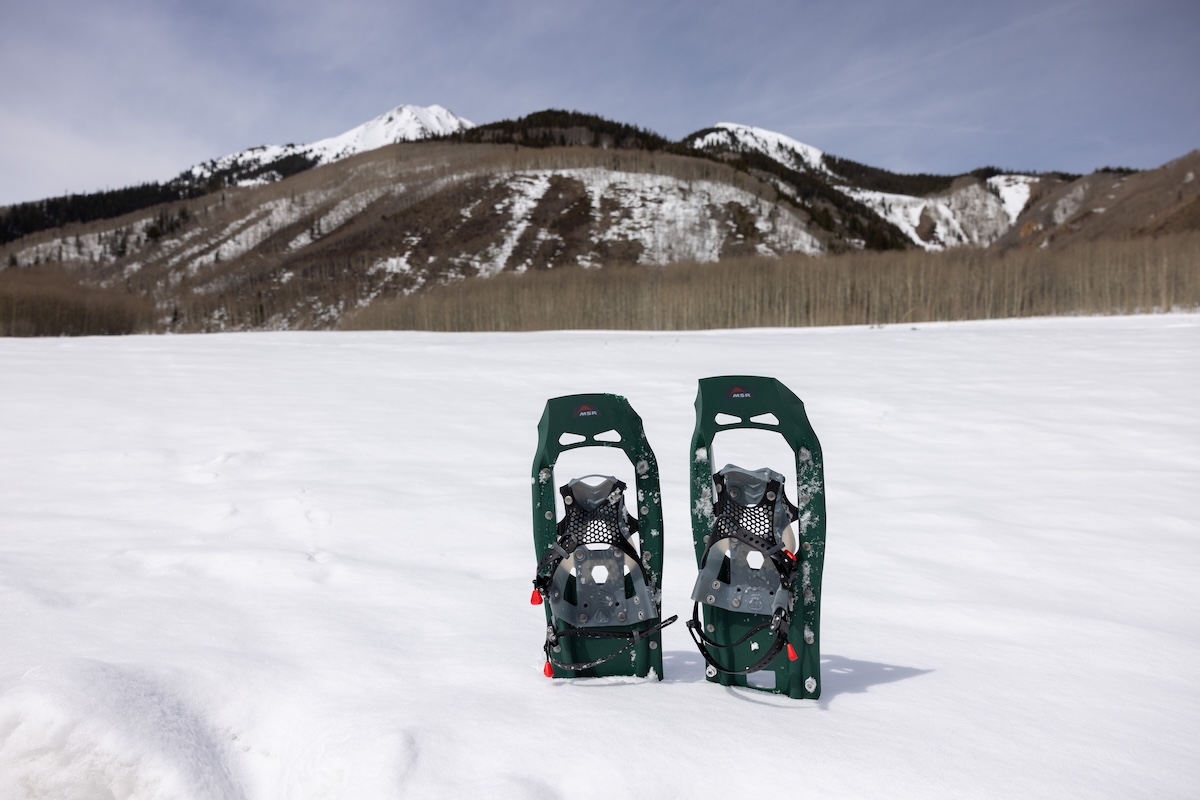
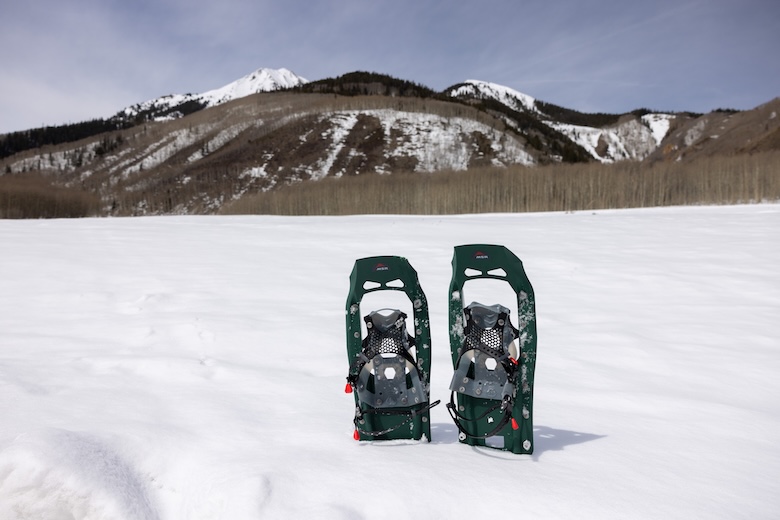
MSR is well-regarded in the world of snowshoes, and their budget-friendly Evo Trail remains a favorite year after year. I tested the Evo Trail on a range of hikes in the Colorado Front Range, tackling everything from established hard-pack trails to icy and steep snowmobile tracks and fresh off-trail snow. I came away impressed with their traction, stability, and comfort, as well as their ability to withstand consistent use. Although I did experience some issues with flotation in super-soft snow, I feel the Evo Trail remains a well-rounded design for casual users who don't plan on straying too far off the beaten path. Below, I break down my experiences with the Evo Trail. To see how it stacks up to the competition, see our article on the best snowshoes.
Editor's note: We fully updated this review on November 24, 2025, after retesting the most current version of the Evo Trail, which now features a stretchy mesh binding that encapsulates the front of the foot, replacing the straps and buckles of the older version.
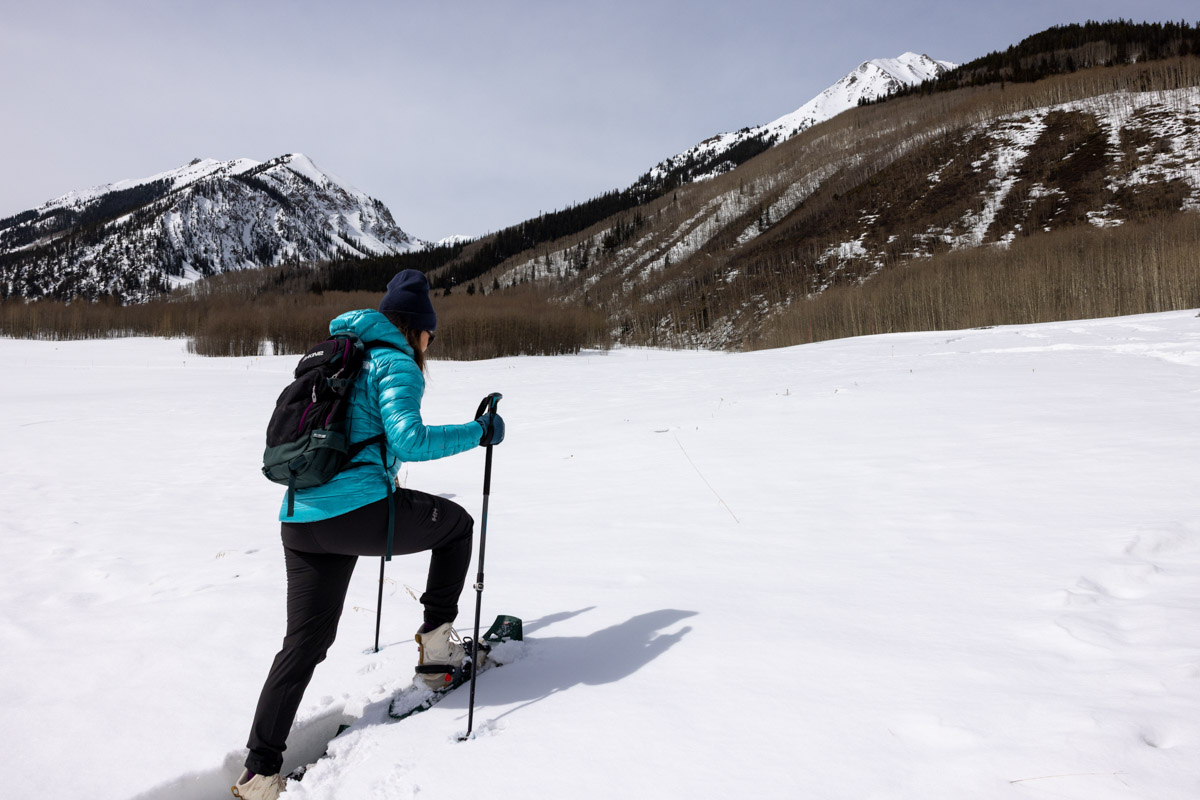
Flotation is often the most crucial consideration for snowshoers, and we’re happy to report that the MSR Evo Trail is a good overall performer. At first glance, the plastic deck looks flimsy, but the two steel rails that run the length of the deck on the bottom of the shoe provide great reinforcement. They're only available in one length (22 in.), but I found them plenty long for my weight (145 lb.). When testing these snowshoes on a trail system near the Thompson Divide in Colorado, they did a great job at keeping me afloat (though they were pretty noisy when striking the snow). The trail was moderately packed down and had slight undulations, and I had no difficulties hiking it. To be fair, the snowshoes did feel clunky and inflexible at times, but they were never cumbersome, and I didn't have to worry about a long tail catching on debris.
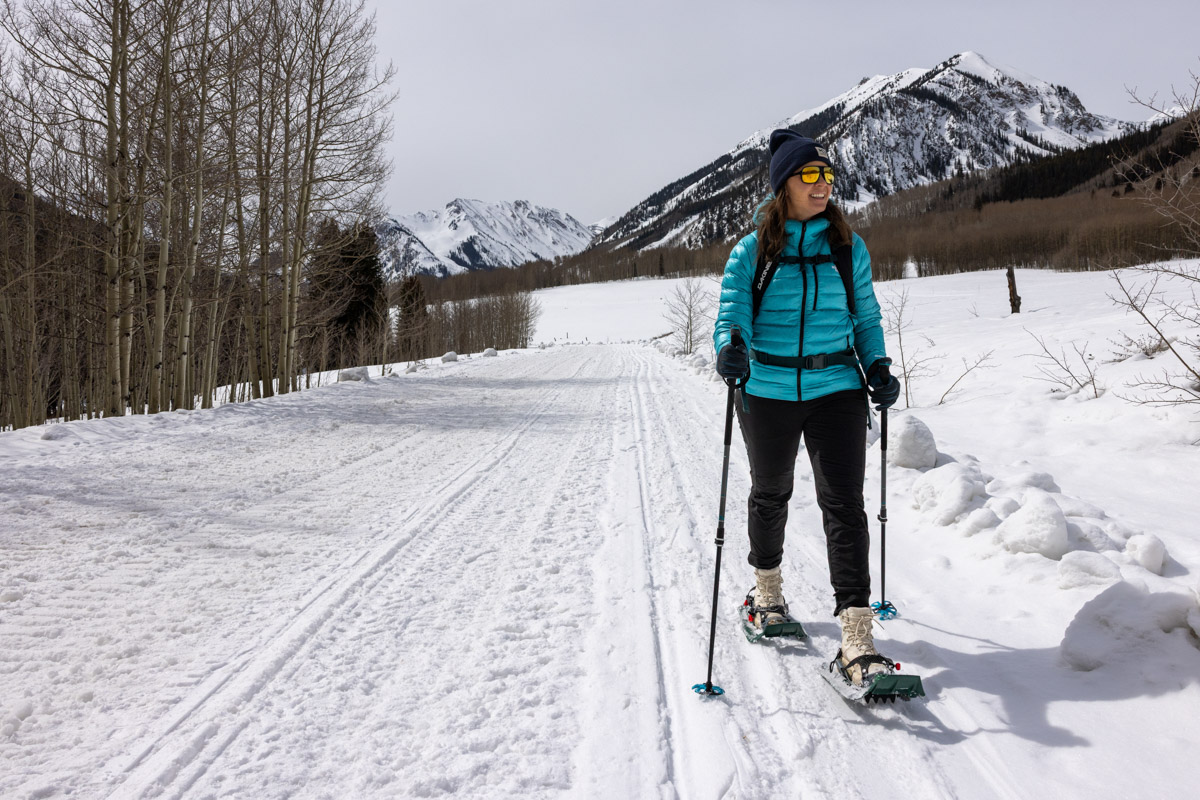
However, I had more difficulty testing these snowshoes in super soft snow. When hiking near Grand Mesa in powder, the Evo Trails struggled to stay afloat. I've successfully hiked in other MSR snowshoes in similar conditions, so I don't think this is a reflection of the build quality, but rather the length of the snowshoe. I recommend investing in the 6-inch tail extensions if you plan on hiking through soft snow or carrying a heavy load. But those sticking to established trails should have little issue with the standard length.
Unlike what I've come to expect from snowshoes at this price, the MSR's traction was very reliable. The two steel rails that run the length of the snowshoe have multi-directional teeth that easily dig into hardpack terrain, and a claw-like row of spikes at my toe provides even more grip. When hiking on rolling terrain, I needed the front crampons to bite confidently into the snow to avoid sliding backwards down hills, and they delivered. I even explored an off-trail snowmobile track that was icy and steep, and the Evo Trails didn't struggle. The stiff rails provided enough support to sidehill as well. At no point did I feel unstable in these snowshoes. For more extreme mountaineering escapades, it might be worth spending up for a more capable design, like the MSR's own Lightning Ascent. But I found the Evo Trail perfectly capable of tackling most terrain in the Front Range.
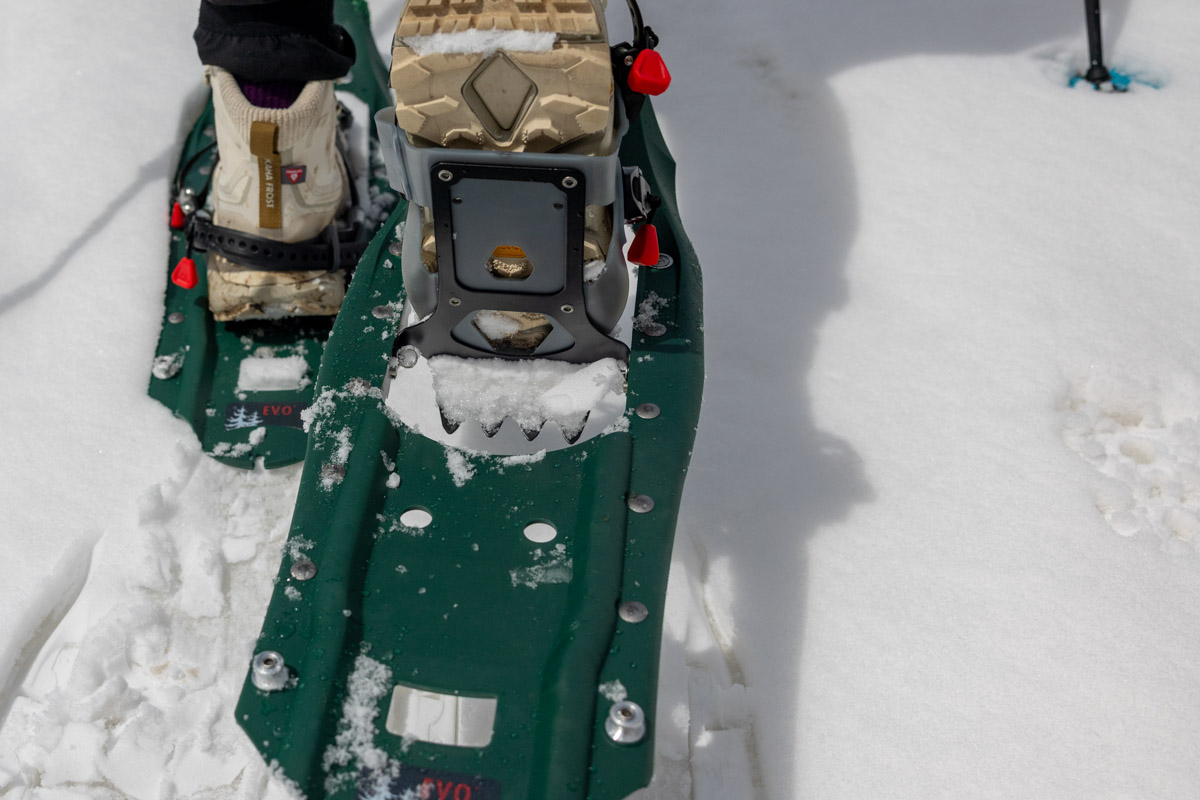
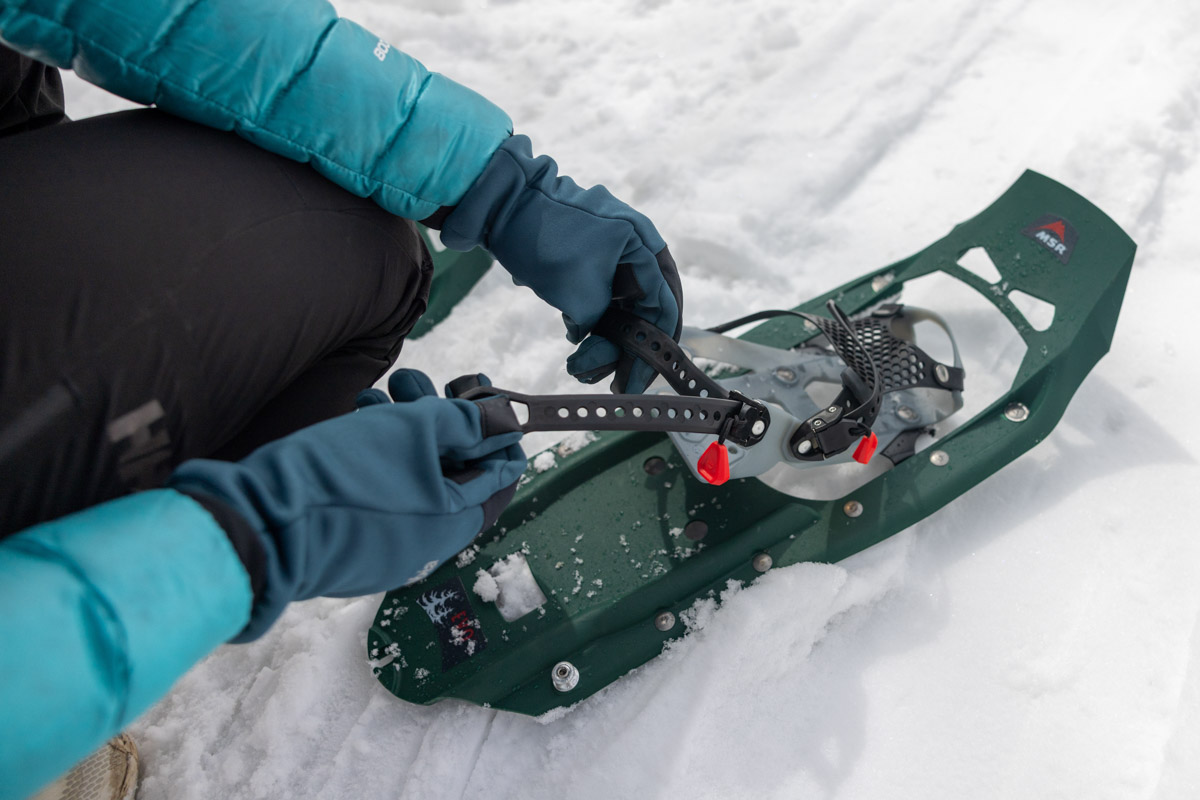
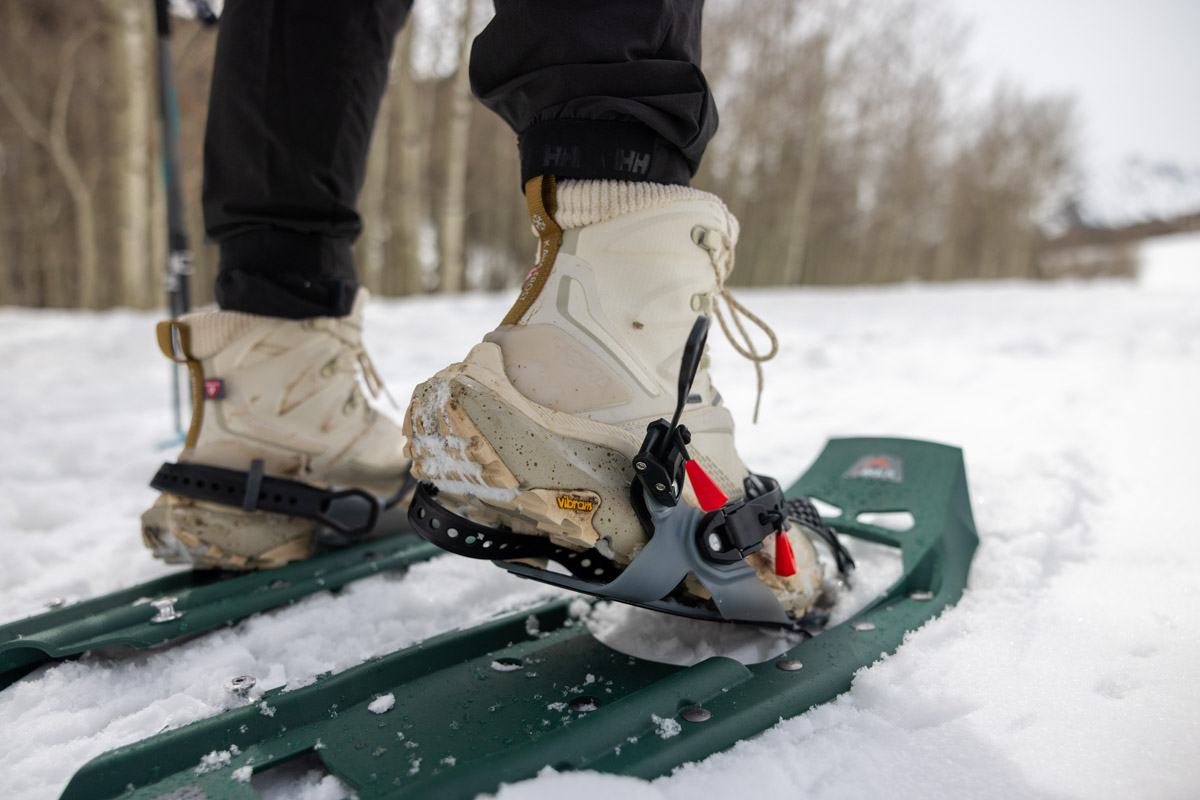
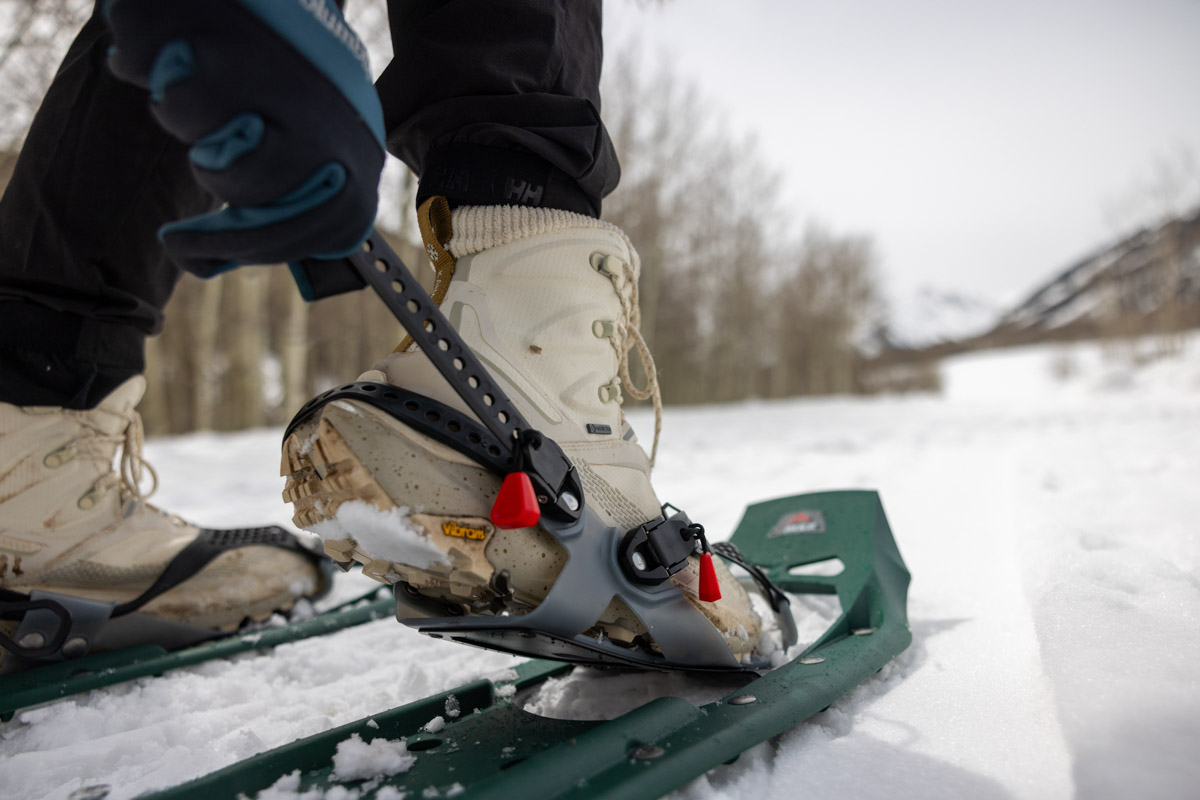
In the world of snowshoes, price often corresponds closely with the quality of the binding. In the case of the $170 MSR Evo Trail, the bindings aren’t deficient in any particular way, but they are somewhat basic. The Evo has a simple two-strap system: A stretch mesh material hugs the front of the foot (and is secured with a strap to the base of the shoe), and a more basic strap system tightens down the back of the foot. It can't compete with fancier designs, like Tubbs' Panoramic snowshoe, which has a BOA closure, but I didn't have any issues using it either. The straps are easy to adjust, even with mittens on. To release my foot, I found it easiest to loosen the back strap and wiggle my foot out.
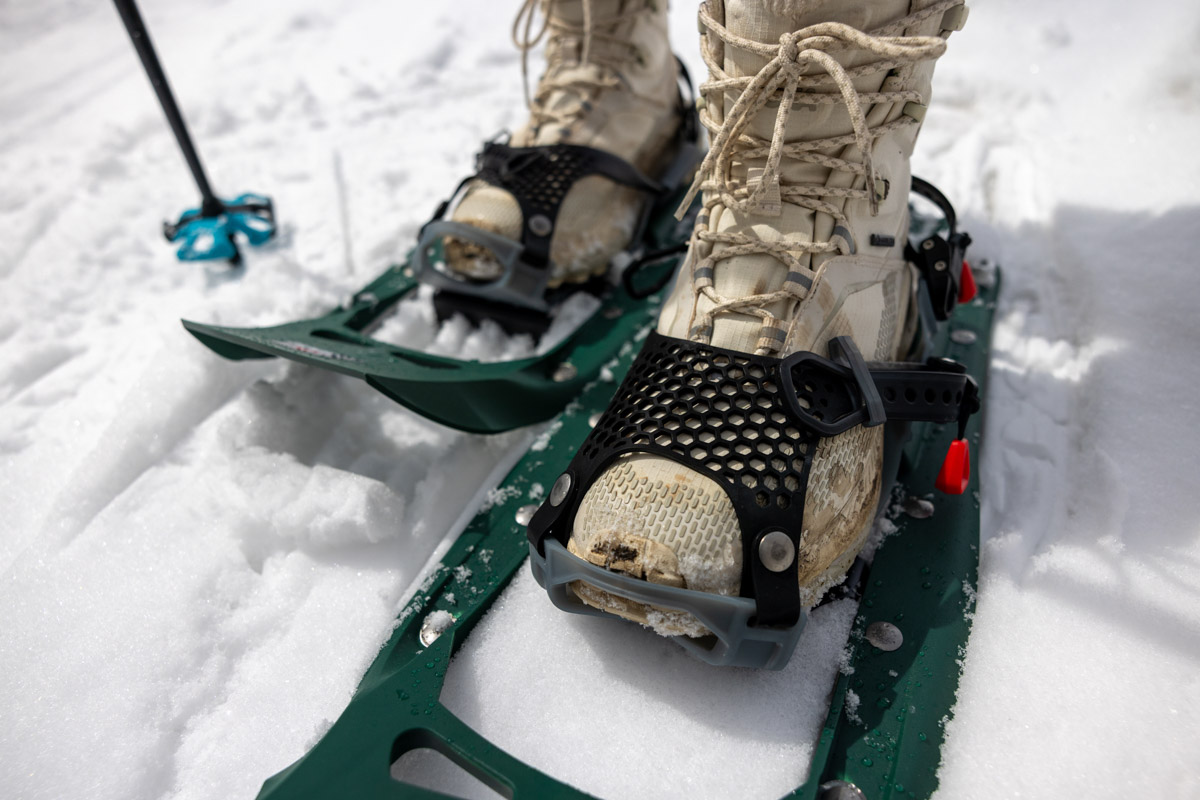
The rubber mesh material at the front of the foot is very comfortable. Unlike traditional strap designs, which can feel like a tourniquet when over-tightened, the net disperses pressure evenly over the foot. I didn't experience any hotspots while hiking, even when wearing a softer pair of synthetic hiking boots. As a final plus, the straps stayed secure when hiking through deep snow. I was initially worried about how they would hold up, but at no point when slogging through the powder in Grand Mesa did the straps come undone.
As I mentioned above, the MSR Evo Trail snowshoes are only offered in a single 22-inch length. At 5'5" and 145 pounds, this length proved manageable on most established terrain, even when wearing a daypack. For reference, MSR lists the weight limit at 180 pounds. Larger hikers or those who want to carry heavy loads should consider purchasing the 6-inch tail extensions, which increases the weight limit to 250 pounds. You can also spend more for a longer snowshoe for off-trail exploring, like the aforementioned Lightning Ascent, which has a length of 35 inches. But in my opinion, the Evo Trail offers plenty for most weekend snowshoers who plan on sticking to just a few miles of exploring. Plus, one of the perks of the shorter snowshoe is packability. I found it pretty easy to strap the Evo Trails to the outside of my backpack when I didn't need them. They also don't take up too much room when stored at my house.
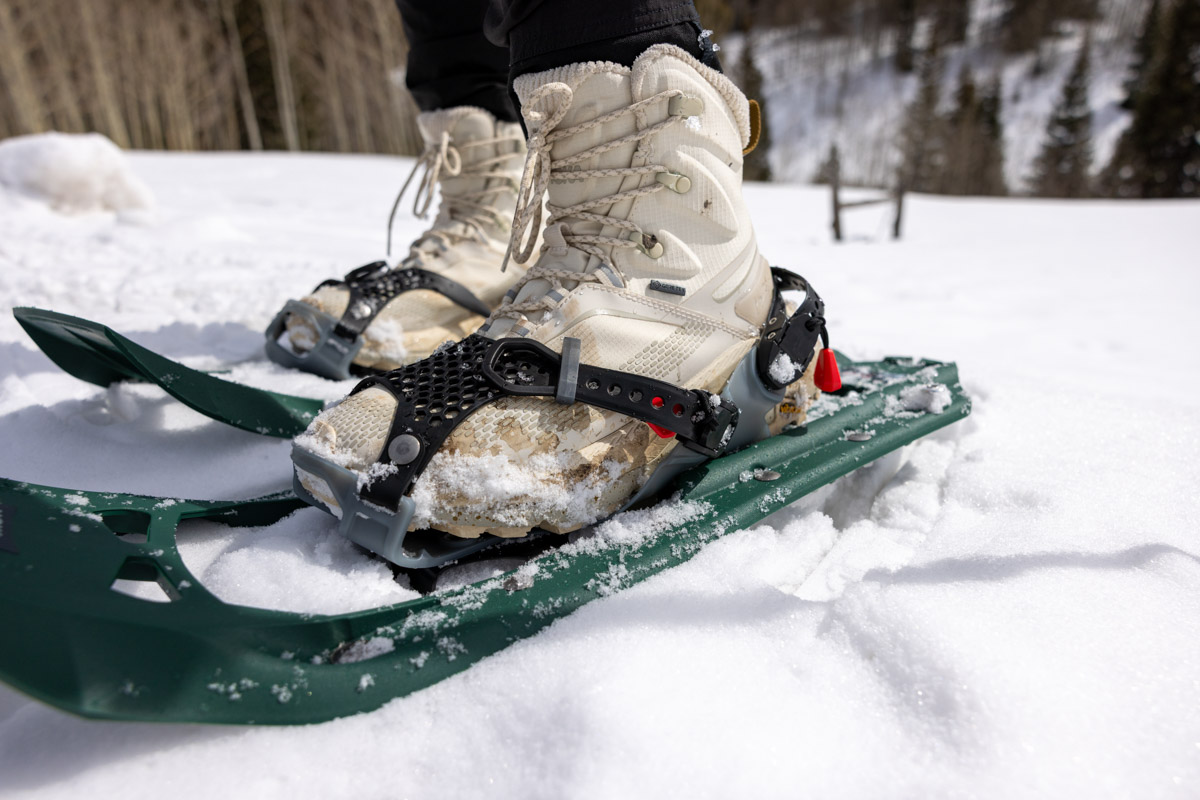
Despite how clunky the Evo Trail sounds on the snow, it's relatively lightweight at 3 pounds 10 ounces for the pair. This puts them in the same ballpark as other plastic snowshoes. For instance, the Atlas Helium Trail snowshoe checks in a little lighter at 3 pounds 7 ounces, which is likely a result of the cutout gills in the molded plastic design (there’s less material at the back of the snowshoe). The foam Crescent Moon EVA also weighs slightly less than the Evo Trail, at 3 pounds 8 ounces, and many comparable models with nylon decking weigh around 4 pounds.
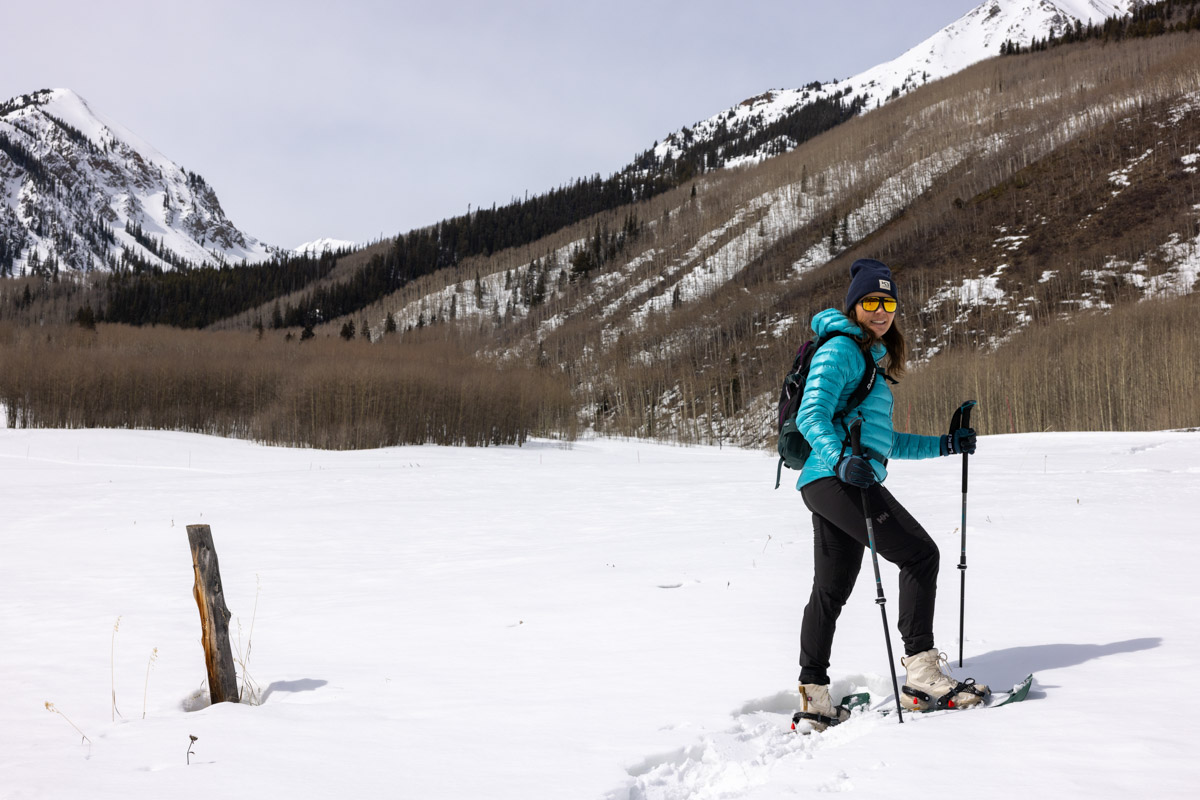
For casual snowshoeing and shorter trips, weight is not a major consideration. The truth is that many snowshoes in this category weigh around the same, and most users won’t notice much of a difference. Weight and heft start to matter a lot more as you get into backcountry snowshoeing and spending long days on the trail, but at that point, you’ll need the additional flotation and improved traction and bindings of a burlier model anyway. For example, the Tubbs Mountaineer weighs 5 pounds for the 36-inch version, but the added float and improved grip are crucial for more demanding outings and especially deep days.
After years of testing outdoor gear, we can confidently say that MSR products are generally very well-made and stand the test of time, and the Evo Trail snowshoes are no exception. The plastic decking is thin but durable, the steel crampons are burly and impressive for the price, and the buckles are made with quality components. That said, I do have durability concerns with plastic deckings in general. These snowshoes have withstood many blows from crawling over logs and stepping on rocks, with little more than a scratch to show for it. However, my pair did suffer some major damage from my puppy, who broke into my office and decided to use them as a chew toy. That feels like an unfair assessment of their overall durability, however. The only other weak point I can foresee is the rubber netting on the toe box, although it has held up well so far to consistent use (and puppy teeth).
In addition to the Evo Trail tested here, MSR also offers the Evo Ascent. You have to spend up for the Ascent, but you get notable upgrades, including a 3-strap system on the forefoot for extra security on uneven terrain and a more customizable fit, slightly deeper crampons for added bite, and heel lifts for steep sections of trail. Weight goes up to 3 pounds 15 ounces per pair, but the Ascent is a better match for technical terrain. Rounding out the collection, MSR sells both the Trail and Ascent models in kits, which contain all you need to head out on the trail: snowshoes, poles, and a functional storage sack that doubles as a daypack.
| Snowshoe | Price | Length(s) | Weight | Decking | Crampon | Heel Lift |
|---|---|---|---|---|---|---|
| MSR Evo Trail | $170 | 22 in. | 3 lbs. 10 oz. | Plastic | Steel | No |
| MSR Lightning Ascent | $390 | 22, 25, 30 in. | 4 lbs. 5 oz. | Nylon | Steel | Yes |
| Atlas Helium Trail | $150 | 23, 26, 30 in. | 3 lbs. 5 oz. | Composite | Steel | Yes |
| Crescent Moon EVA | $150 | 24 in. | 3 lbs. 8 oz. | Foam | Steel spikes | No |
MSR’s Evo Trail is one of our favorite snowshoes for its great all-around performance at a reasonable price point. Another popular model is MSR’s own Lightning Ascent (also available in a women's-specific version), which offers several notable upgrades. For starters, you get a longer length for better flotation in powder (up to 30 in. without tails), premium nylon decking that isn’t as loud as plastic, some of the best traction on the market, and a heel lift for especially steep slopes. And in contrast to the more casual-focused Evo Trail, the Lightning Ascent is built for all types of terrain, including steep, icy climbs and backcountry powder. The downside is price, which is more than double that of the Evo, and the Lightning Ascent is overkill for shorter outings and easier conditions. The Evo Trail wins out in value and should be more than enough snowshoe for most users.
Atlas's Helium Trail is extremely similar to the Evo Trail. To start, both cost about the same and have very similar hard plastic decking, binding systems, and steel crampons running along the bottom of the shoe. In parsing out the differences, the Helium-Trail is offered in 23- and 26-inch versions (but does not have optional tails), whereas the Evo is one size (though adding tails can bring it to 28 in.). Weight is also similar between the two, with the Atlas coming in a bit less, which is likely due to the “gills” in the decking. Lastly, the Helium Trail comes with a heel lift, which won’t be necessary on moderate terrain but is a nice inclusion for especially steep slopes. In the end, we think that the Evo Trail offers greater flotation (the cutouts at the back of the Atlas don't help with this) and we prefer their multi-directional crampon teeth for grip.
For casual snowshoeing, the Crescent Moon EVA is an interesting alternative to the Evo Trail. Made with foam and featuring steel spikes for traction, this snowshoe is certainly less hardcore than the Evo Trail, but it has its merits. For starters, the Crescent Moon is extremely easy to put on, not as loud or clunky-feeling as the MSR, and features an additional 2 inches of length for enhanced flotation. And importantly, the EVA foam has proven to be surprisingly tough and durable. All things considered, our take is that the EVA is a fun and capable choice for easier terrain and if you want to dabble in some snowshoe running. But over icy conditions and more challenging ground, the Evo Trail offers far better traction and stability.
Back to the MSR Evo Trail Review See our Best Snowshoes Guide

3f56.jpg?h=fbc67360&itok=McVYCRci)
cf3a.jpg?h=fbc67360&itok=H_noUcFU)
_0bc58.jpg?h=fbc67360&itok=y-RAM9m9)

_0a391.jpg?h=fbc67360&itok=CC_Mcn0-)
ec55.jpg?h=fbc67360&itok=0_jtrRCF)
6045.jpg?h=fbc67360&itok=HLds9oe4)
