

Photo Credit
Price: $800
Gear capacity: 11 cu. ft.
Weight: 42 lb.
What we like: Streamlined design is aerodynamic, quiet, and classy; easy to install and remove; easily stores multiple skis and snowboards at one time.
What we don’t: Low height limits capacity, especially for bulky items; plastic lid is a bit flimsy
See the Inno Wedge 660
Inno flies a little under the radar, but this Japanese brand gives bigger names in the rooftop cargo space a run for their money. Our current favorite is their Wedge 660, a streamlined and classy-looking roof box that prioritizes clearance and efficiency. While some interior capacity is sacrificed in opting for such a low-profile box, we’ve had no issue storing multiple skis and snowboards at one time, as well as car camping supplies (with some creativity). The box also has a refined, user-friendly feature set including dual-side access, a safety lock system, and a memory mounting system that allows the Wedge to be removed without undoing the mounts. Together, this is a great option for those who need complementary storage for their car but don’t want to deal with the bulk and heft of a large cargo box. Below, I detail my experiences with the Inno Wedge 660. For a wider view of the market, see our article on the best rooftop cargo boxes.
While it’s true that the Inno Wedge 660’s streamlined shape sacrifices interior storage in an effort to remain low-profile, I was pleasantly surprised by how much gear it can still hold. Snow sports enthusiasts will appreciate how easily it swallows skis and snowboards (Inno claims it can hold between 6 to 8 skis and 4 snowboards), and I've had luck storing multiple of each at the same time. I found it easiest to store the snowboards with the bindings collapsed and facing down (and between skis, if possible) as their bulk can prevent the box from closing all the way. At times, it took some creative rearranging to store my gear along with all of my friends'—especially when trying to shove ski boots and other gear in at the end of the day—but the efforts were well worth keeping sharp and wet gear out of the interior of my car.
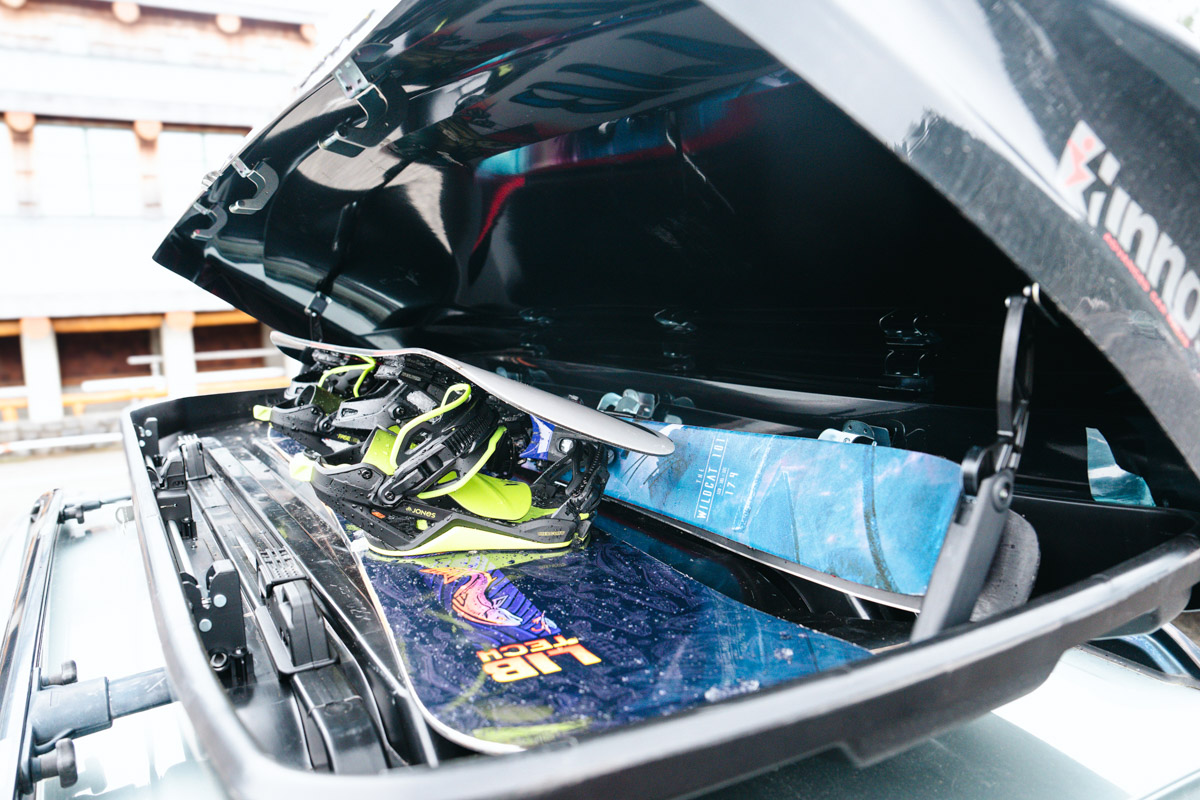
That said, camping gear and other supplies are a bit trickier to store in the Wedge. The 9.2-inch interior height makes it tough to store large duffel bags or hard-sided storage boxes. When car camping, it was easiest to store gear loosely rather than packed together in bulky storage containers. Soft-sided containers storing soft goods—such as blankets and layers—are easy to compress down when the box closes, however. While I don't have many gripes with the Wedge's capacity, I think it’s good to keep expectations reasonable here. In my experience, it's best used as complementary storage to the car, but it likely won't be able to store all of the gear you need for spending a few days glamping at a campground. As a minimalist camper myself, the Wedge is plenty big for my quick overnight kit, but those looking for maximum storage should look elsewhere.
The interior dimensions of the Wedge 660 are 72 x 25.6 x 9.2 inches, and the exterior dimensions are 80 x 33 x 11 inches (L x W x H). Personally, I’m a big fan of the low-profile design (the box itself sits just 11 in. off the crossbars), especially when taking my car on long stints on the interstate and when trying to squeeze under deadfall on unmaintained forest roads. I don’t spend much time car camping, so I haven’t been too irked by the short interior. As mentioned above, it often takes some creative packing when trying to store multiple skis and snowboards or bulky camping gear, but I haven’t found this to be a dealbreaker. To be fair, I can easily store extra gear inside my Rav4, so those with smaller cars might find this more of an issue. The narrower exterior also makes it possible to share space on top of the car: a bike rack, kayak, or other storage system can squeeze in next to the Wedge 660 if needed.

While Inno doesn’t publish a weight capacity for the box itself, it’s important to keep in mind the weight capacity of your crossbars and your vehicle's roof load capacity when packing the Wedge 660. The box itself weighs just 42 pounds, and I’d trust it to be able to hold fairly heavy loads. I've had luck carrying the box on my own once it's off the car, but I relied on help for hoisting it on and off the car due to its long shape.
Despite the box’s trimmed-down shape, the Wedge 660 is easy to access and pack. The lid opens wide (but not out of reach), which keeps it out of the way when hoisting in skis, snowboards, or other heavy gear. I also appreciate that the box can be opened from either side—a nice touch in case someone parks too close to you at the ski resort. The box opens from either side in the same way: Insert and turn the key, then press the small button to release the lock, and you're free to lift the lid. The lid takes a little elbow grease to get open, but I've come to learn the exact amount of effort needed.
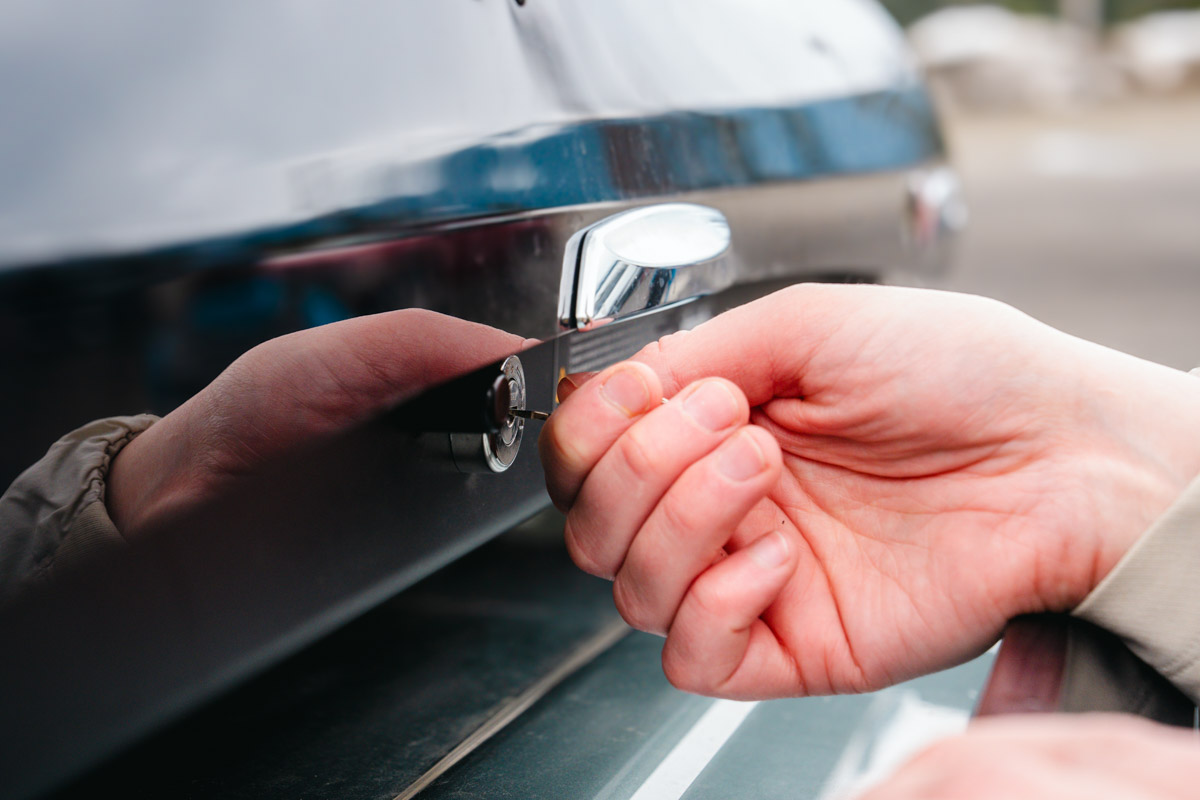
Closing the Inno Wedge, on the other hand, can be a struggle. The box won’t lock if it can’t be shut all the way, and I learned the hard way that you have to be meticulous in pressing both ends of the box down until you hear a click (I wasted about a half an hour rearranging gear in the box before learning that I needed to do this). The key can’t be removed until the box is fully closed, which is a nice security measure. I keep the key for my Wedge 660 on a keychain with my car keys, so I can’t turn on my car until the roof box is fully closed.
The Wedge 660 has proved to be very weather-resistant, and I’ve put it to the ultimate test over the last year in the Pacific Northwest. It sheds snow easily, but I’m more impressed with its ability to keep rain out. After backcountry skiing near Hurricane Ridge in the Olympic Peninsula, my partner and I car camped at a campground on the coast. It poured the whole night, and in order to leave room for our sleeping pads in the back of the car, we stored our skis, ski backpacks, ski boots, poles, and other gear inside the Wedge, along with some of our dirty clothes and layers. Despite the storm, our gear remained completely dry inside the box (aside from a bit of dampness from the previous day’s ski touring). The only concern I have with this box is its color: The black box will soak up the sun, so I recommend not leaving heat-sensitive gear inside the box on sunny days. The Wedge is also sold in white if this is a major concern for your area.

I opted for the Wedge 660 because I wanted a roofbox that was quiet and aerodynamic, and so far, I have yet to be disappointed with my decision. Most of the time, I forget it’s even up there. The low-profile build cuts through the air efficiently, and I haven’t noticed any severe effects on my gas mileage since installing it. In fact, I keep it on top of my car even when not using it. It isn’t even noticeable when driving at high speeds or with aggressive crosswinds. Inno does include a couple of cargo straps that can be used to hold down gear inside the box, but I have yet to put these to use: I haven’t heard any rattling or other noises emanating from the box at any point, whether from gear or the box itself. In my experience, the Wedge 660 is one of the best “set it and forget it” roof box options available.

At first, I did have some concerns about the durability of the Wedge. When initially unpacking it, I thought the plastic shell felt quite flimsy, especially in the lid. And whenever I open the box, the lid flexes a good amount. That said, after about 8 months of pretty consistent use (I haven't taken it off my daily driver yet!), it hasn't shown any signs of damage. It's weathered the tail end of a PNW winter and a full spring and summer. To be fair, my coastal town doesn't see hail as often as other parts of the country, so I can't say how it holds up to a sustained ice barrage. But it has survived fluctuating temperatures, snow, rain (lots of it), and hundreds of miles on interstates, city streets, and old logging roads. Most recently, I took it on a road trip over 1,000 miles from Bellingham, Washington, to Calgary and back, and it remains scot-free, despite taking on shooting rocks and lots of dirt road driving. All hinges, buttons, and latches still operate as they did when the Wedge was new, and I have no reason to believe they'll fail anytime soon. The plastic is also easy to clean: I simply take my car in for a self-wash at the nearest car wash and give it a scrub and a rinse.

Mounting the Wedge 660 was fairly painless, especially after consulting the included installation manual. The memory mounts take a bit of time to get just right on the crossbars, as you have to manually adjust the tension of each one so that they securely grip your crossbars, but they aren't impossible to lock down. From there, the box is secured onto the mounts via flexible weather strips on the bottom of the box. The weather strips are more secure than they sound (I promise), and this system makes it really easy to remove the box when needed. So long as you don't mind driving around with the mounts on your crossbars, the box can simply be lifted off the mounts and stored until needed again.

Inno claims that the Wedge 660 is compatible with any crossbars, and I had no issue installing it on the factory crossbars of my 2007 Rav4. That said, it's never a bad idea to measure your crossbars ahead of time to make sure the mounts will fit. According to the installation manual, the mounts can fit cross bars between 1 inch and 3.5 inches wide, .75 to 1.38 inches tall, and require at least 2 inches of clearance between the bars and the roof of the car. It's also worth considering the height of your car's back door in relation to where you mount the Wedge. According to Inno, the Wedge has a 12-inch hatch clearance, though I didn't get to test this claim as my car's back door opens horizontally.

As mentioned earlier, the Wedge 660 is available in two colors: black and white. However, if you’re looking for a similar design with a bit more storage, they also offer the Wedge Plus (BRM865MBK on their website). The two boxes share many of the same features—including dual-side opening, memory mounts, and the safety lock system—but the Plus is bigger than the 660. Inno doesn’t publish the exact dimensions of the Plus on their site, but they do say it has 13 cubic feet of capacity (the 660 has 11 cu. ft.) and can fit 4 to 6 snowboards or 6 to 8 skis. From what I can tell from product photos, the Plus appears to be taller than the 660, which may affect its aerodynamics in comparison, but it doesn’t seem to be significantly wider or longer.


| Rooftop Cargo Box | Price | External Dimensions | Capacities | Access | Skis | Weight |
|---|---|---|---|---|---|---|
| Inno Wedge 660 | $800 | 80 x 33 x 11 | 11, 13 cu. ft. | Dual | Up to 190cm | 42 lb. |
| Thule Motion 3 XL Low | $1,080 | 84.8 x 35 x 14 in. | 14, 16, 18, 21 cu. ft. | Dual | Up to 200cm | 52.9 lb. |
| Thule Alpine | $660 | 88.5 x 25.5 x 12.5 in. | 11 cu. ft. | One | Up to 210cm | 30 lb. |
| Yakima GrandTour Lo | $1099 | 91 x 37 x 10 in. | 15 cu. ft. | Dual | Up to 215cm | 62.5 lb. |
| Yakima SkyBox NX XL | $799 | 84x 36 x 16.5 in. | 12, 16, 18, 22 cu. ft. | Dual | Up to 195cm | 53 lb. |
Between its price, ease of setup, and low-profile shape, it’s easy to see why the Inno Wedge 660 ranks so high in our list of favorite rooftop cargo boxes. But the market is full of options to consider. Thule is a popular name in the roofbox market, and their Motion 3 XL Low and Alpine are viable alternatives to the Wedge. The Motion 3 XL Low is an all-around upgrade from the Wedge: It also has a sleek, low-profile build, but offers more interior space, especially in its interior height, which is 4.5 inches taller than the Wedge. The biggest downside of opting for the Motion is its price, which is significantly higher than that of the Wedge. If cost is a concern, Thule’s Alpine is worth a look. This streamlined box has a lot in common with the Wedge, but it's a bit taller (12.5 in.), can accommodate slightly longer skis, is lighter weight, and has a lower price tag. However, unlike the Wedge or Motion 3, the Alpine can’t be opened from both sides, which is a feature we really enjoy having.

Yakima is another big player in this space, and their GrandTour Lo and SkyBox NX XL are worth considering. To start, the GrandTour Lo is only one inch taller than the Wedge, but boasts 4 more cubic feet of cargo space. Like the Thule Motion 3, the GrandTour is sophisticated-looking and sleek, but it also comes at a hefty price. The cheaper of Yakima’s offerings includes the SkyBox NX XL, which is a little taller and bulkier than the Wedge, but has a larger capacity (18 cu. ft.). In practice, it’s not as quiet and efficient on the road, but it strikes a nice middle ground between capacity and performance for a lower price tag than the GrandTour. Though, in our opinion, the Inno Wedge easily takes the cake for its streamlined build and relatively low price tag, which is what pushes it near the top of our list.
Back to the Inno Wedge 660 Review See Our Best Rooftop Cargo Boxes Guide


5620.jpg?h=fbc67360&itok=nkMPYNFp)


08de.jpg?h=fbc67360&itok=fLyGTSKt)
14ab.jpg?h=fbc67360&itok=1n06ZZey)
Sa729.jpg?h=fbc67360&itok=GoMK-yl_)
6045.jpg?h=fbc67360&itok=HLds9oe4)
832e.jpg?h=fbc67360&itok=ofljNFTS)
9d09.jpg?h=fbc67360&itok=krYHMzB9)