.jpg)
.jpg)
Photo Credit
If there's one piece of gear that will keep first-timers from sticking with the sport, it’s an uncomfortable ski boot. An ill-fitting, cheap boot can pinch and freeze toes, turning what could be fun into complete misery. Thankfully, there are quality options even in the entry-level market. This is thanks to the fact that most beginner boots are based on more expensive models but with a roomier fit and a softer forward flex. Our top picks for the 2025/26 season cover boots for true beginners up to progressing intermediates that require greater stiffness and performance. Our favorite overall beginner boot is Tecnica's Mach Sport HV 80 for men and Mach Sport HV 65 for women. For more information, see our comparison table and buying advice below the picks. And to complete your ski gear setup, see our article on the best skis for beginners.
Editor’s note: We updated this guide on November 25, 2025, to reassess our list and ensure that our recommendations represent the best value and performance in the current market. We achieved this by re-examining testing notes and assessing use cases (you can see which boots we dismissed below). And in an effort to make this a truly unisex guide, we have included specifications and information about the women's models throughout the guide and added a section on the differences between the gendered versions in the buying advice. Lastly, we swept the guide to ensure all other information was up to date at the time of publishing, and added some new photos from recent testing.
 Last: 103mm
Flex: 80, 75W
What we like: Nice mix of price, comfort, and performance for beginners.
What we don’t: Too wide for narrow feet and fast learners will want a little more stiffness.
Beginning skiers look for comfort, ease of use, and warmth for their first pair of boots, and the Tecnica Mach Sport HV 80 provides all of those in spades. Coming from one of the most respected brands in the business—their Mach1 is one of our favorite top-end downhill models—this popular design includes nice touches like high-quality aluminum buckles, cozy liner, GripWalk soles, and a smooth and reliable flex. You also get a medium/wide last and accommodating shape in general, which limits pinch points to maximize warmth and comfort for most foot types (plus, the shell can be easily customized by a bootfitter). And the Mach Sport is priced right for the moderate 80-flex and women's 65-flex versions.
Its 103-millimeter last isn’t the widest on the market, but the fit is pretty generous all around, which can be a problem for those with narrow calves and feet. If you’re on the hunt for a narrower boot, check out Nordica’s Speedmachine 3 80 (and women’s 65), which has a similar performance to the Mach Sport, but a narrower 102 millimeter last. Moreover, we think fast learners should invest in a boot with a stiffer flex (Tecnica does offer the Mach Sport in a 90 flex for men and an 85 flex for women, although the price increases). Overall, despite a couple of nitpicks, we think the Mach Sport HV is a good value and a fantastic starter boot.
See the Men's Mach Sport HV 80 See the Women's Mach Sport HV 65

Last: 104mm
Flex: 70, 50W
What we like: Good price for a well-rounded option for true beginners.
What we don’t: Pretty basic liner and only three buckles.
The Rossignol Evo 70 HV+ for men and Kelio 50 for women are the entry-level offerings from the venerable ski brand, featuring their softest flex, widest last, and lowest price. The setups mirror those of most other beginner boots in terms of specs, but nearly all of the extras have been stripped away. You don’t get a heat-moldable liner (not a huge loss) or a second buckle at the top (a downside for dialing in the fit), but Rossi got the basics right with a forgiving flex, a nicely shaped shell (a softer plastic at the front helps make it easier to take on and off), and reliable metal buckles and a power strap.
The Rossignol Evo and Kelia are solid options for those seeking a reliable starter boot. However, the plastic shell is quite basic, and the same can be said of the fairly generic liner, which is enough to keep these boots from overtaking the more well-rounded and capable Tecnica above. It’s also likely that dedicated learners will outgrow the super soft flex fairly quickly. In our opinion, opting for an 80 flex provides a bit more performance while still remaining forgiving for learners. But overall, we think the Evo and the Kelia are great matches for first-timers who want to avoid rentals or a lightweight, advancing beginner—perhaps a teenager who hasn’t experienced that major growth spurt—or for those who really just want to keep costs low.
See the Men's Rossignol Evo 70 HV+ See the Women's Rossignol Kelia 50
 Last: 103mm
Flex: 80, 75W
What we like: A great boot for hard-to-fit feet.
What we don’t: High-volume fit won't be for everyone.
If you love to ski but balk at the pain of wearing your boots all day, the K2 BFC 80 and women's BFC 75 (BFC stands for “built for comfort”) could be a good solution. Their 103-millimeter lasts, high-volume shapes, heat-moldable shells, and extra-cushy liners add up to an impressively premium and plush feel. The entry-level 80-flex version (and women's 75) is reasonably priced and lines up nicely for beginners, but stepping up to the BFC 90 (or women’s BFC 85) gets you a slightly higher performance threshold. All told, if you’re a novice skier who hates ski boots, the K2 BFC collection is certainly worth a look.
That being said, the K2 BFC line does have some limitations. First, the cushy liner that makes the boot so comfortable does impact power transfer and precision, so it’s not a great option for those with carving ambitions (the Mach Sport above wins out in this regard). We’re also disappointed that K2 didn't include a walk mode, which can make it much easier to hike, trudge across the parking lot, or climb stairs at the lodge. Wide-footed skiers who put a premium on comfort likely won’t mind these trade-offs, but they are potential drawbacks for those quickly advancing their skills.
See the Men's K2 BFC 80 See the Women's K2 BFC 75

Last: 102mm
Flex: 90, 75W
What we like: Lange quality and a lower-volume fit.
What we don’t: Too stiff for the average beginner.
Typically, we wouldn’t recommend a boot with a 90-flex rating (75 for women) for a beginner, but not all first-timers progress in a slow and steady manner. If you think you’ll be carving on your edges in short order, then the Concept 9 for men and Concept 7.5 for women is where we’ll lead you. Lange doesn’t dabble much with introductory models—these are their softest-flexing on-piste boots—and as such, you don’t see the typical entry-level features. Most notable is the “Suspension Blade” bar at the back of the boot, which connects the shell to the cuff for improved power transfer (the same technology can be found on their hard-charging Shadow 130 LV). But Lange also added plenty of comfort-first features for beginners, such as a wide 103 millimeter last, hinges on the lower shell for easy exit and entry, a cord along the front buckle for equalizing pressure along the forefoot, and premium GripWalk soles that provide plenty of grip in icy parking lots.
The extra stiffness may be intimidating coming from soft rental boots, but we think stronger beginners or those moving up to an intermediate level will find the Concept to be a good pairing. It’s also worth pointing out that Lange offers the Concept in stiffer 100- and 85-flex versions for men and women, respectively, but we think the 90 and 75-flex versions here are the better choice for fast-learning beginners (intermediates might want to consider the stiffer versions). If we were to nitpick, we’d prefer that Lange add on a hike mode for easier walkability to and from the car, but for the price, that might be getting a little greedy. Overall, the boot is very well-made and is sure to last for at least a few seasons.
See the Men's Lange Concept 9 See the Women's Lange Concept 7.5

Last: 100mm
Flex: 90, 80W
What we like: A highly customizable boot for ambitious beginners.
What we don’t: Expensive and on the stiff end.
If you want to get the most comfort and performance out of your ski boot, it’s not a bad idea to take it to a bootfitter to get it fitted. You’ll be able to do this with most of the options on this list, but Salomon makes it easy and precise with the S/Pro Supra series. The Supra features Salomon’s “Custom Shell HD,” which is essentially a thinner shell that’s easy to heat mold and provides a more precise fit. The second buckle is also positioned in a way that locks the heel into the boot without creating pressure on the instep (the arched part of your foot between the toe and the ankle). The boot has a great all-around performance with a smooth flex, and the high material quality is exactly what we expect from the venerable French brand.
Like the stiffer Lange Concept above, the S/Pro Supra 90 and women’s 80 aren’t the best choices for true beginners who need a softer and more forgiving flex. You also have to ask yourself if all the bells and whistles are worth it. Generally, we recommend that beginners stick with a cheaper and simpler boot, such as the Mach Sport above, as they will likely outgrow it in a season or two. Plus, beginners might not even notice the finer details of a more premium boot. And you have to consider the cost of getting this boot customized, if that’s the convincing factor. Sometimes ski shops offer bootfitting discounts if you purchase in-store, but you should expect to pay another $50-$100 to get these boots heat-molded. But if you’re unwilling to settle for anything less than premium, the S/Pro Supra is worth checking out.
See the Men's Salomon S/Pro Supra 90 See the Women's Salomon S/Pro Supra 80

Last: 104mm
Flex: 90, 70W
What we like: High performer with a handy walk mode.
What we don’t: Not flexible enough for true beginners; men’s costs more than women’s.
For most beginners, learning to ski is only half the battle. The other half is learning to walk around the parking lot and ski lodge in stiff plastic clunkers. You can mitigate this learning curve and increase comfort by opting for a ski boot with a walk mode lever, which essentially disconnects the ski boot shell from the cuff, allowing your ankle greater freedom of movement. Rossignol’s Track 90 HV+ and women’s Track 70 are one of our favorite boots with this feature. You also get plenty of on-piste performance with a relatively stiff flex and a low-weight shell that’s easy to control. The 104 last is very generous, and both the men’s and women’s come with a cushioned liner (and the women’s has a stylish faux fur top).
There are a few things to consider before jumping on the Track. First is the flex, which is too stiff for true beginners. Those who are really fresh to the sport can save a lot of money and get a more forgiving boot with Rossignol’s Evo and Kelia above. And speaking of cost, the men’s Track is one of the priciest boots on this list (the women’s Track is much less expensive but seems to have a nearly identical build, minus the flex). If cost isn’t much of a worry, you can spend up for the Rossi Alltrack 90 (and women’s 80), which tacks on a Boa closure and is more performance-oriented for those who like to adventure into the sidecountry. But most beginners will be sticking to the groomers to gain their confidence, making the Track a better value pick.
See the Men's Rossignol Track 90 HV+ See the Women's Rossignol Track 70
While the beginner ski boot market may not always be as dynamic as the advanced and expert markets, we strive to stay on top of the latest and most interesting designs each season. We have high standards for our top picks in this category, striving to recommend the most comfortable, reliable, and cost-effective options out there. As such, there are often boots that we test and decide not to include in this guide.
First, we opted to remove the Nordica Sportmachine 3 80 (and women's 65) from this list because it didn't quite surpass the Tecnica Mach Sport in terms of performance. The narrower last isn't the most accommodating or comfortable, and it lacks GripWalk soles, which is a bummer considering the higher price tag. As an option for those with smaller feet, the Sportmachine is a great choice, but we recommend the Mach Sport in most cases.
We also cut Nordica's Cruise 80 (and women's 65) because, despite what the high price would suggest, it didn't outperform our top pick or many of the cheaper options on our list. Testing wasn't a bad experience, but it didn't impress us either.
.jpg)
| Boot (Men's/Women's) | Price (M/W) | Last | Flex (M/W) | Other Flexes | Buckles |
|---|---|---|---|---|---|
| Tecnica Mach Sport HV 80/ Tecnica Mach Sport HV 65 | $330 | 103mm | 80 / 65 | 75W, 70, 85W, 90, 100 | 4 w/35mm strap |
| Rossignol Evo 70 HV+/ Rossignol Kelia 50 | $250 | 104mm | 70 / 50 | None | 3 w/35mm strap |
| K2 BFC 80/ K2 BFC 75 | $400 | 103mm | 80 / 75 | 85W, 95W, 90, 100, 110 105W, 120, 130 | 4 w/30mm strap |
| Lange Concept 9/ Lange Concept 7.5 | $400 | 102mm | 90 / 75 | 85W, 90, 95W, 100, 105W, 110, 120 | 4 w/35mm strap |
| Salomon S/Pro Supra 90/ Salomon S/Pro Supra 80 | $419 | 100mm | 90 / 80 | 85W, 95W, 105W, 100, 110, 115W, 120, 130 | 4 w/35mm strap |
| Rossignol Track 90 HV+/ Rossignol Track 70 | $450/ $350 | 104mm | 90 / 70 | 70W, 110, 120, 130 | 4 w/40mm strap |
Most staff members at Switchback Travel love skiing, whether that means honing our technique on easier terrain at our local resort or skinning deep into the backcountry in search of untouched powder. No matter our preference, we all started as beginners and dealt with the expected pain points, including ill-fitting and uncomfortable boots. To help you avoid the same pitfalls, we kicked off this guide in 2015 with six boots hand-picked by former editor-in-chief John Ellings. A longtime skier who taught his two young daughters, John knows the importance of finding a comfortable and high-quality boot to learn the basics. Editor Maddie Downie took over the guide in 2025. Although she technically learned to ski as a child, Maddie relearned as an adult after a long hiatus, and she understands what it means to be a beginner.
Our current selection of nine beginner-friendly ski boots is the result of ongoing testing, feedback from our trusted contributors, and extensive market research. To make our list, each boot had to stand out in one or more areas, with many striking an effective balance between price and performance. Comfort and long-term durability are also top priorities for us when testing and reviewing boots, especially those aimed at first-timers who are likely still honing their technique and getting accustomed to the feel of ski boots in general. Since every skier is different, we've included a relatively wide variety of options above, ranging from stiffer designs for quick learners and those with several days of experience to more affordable, entry-level models that are softer and more forgiving. As the market continues to evolve, we'll be sure to keep the list updated with our current favorites. To complete your setup, we took a similar approach with our roundup of the best skis for beginners.
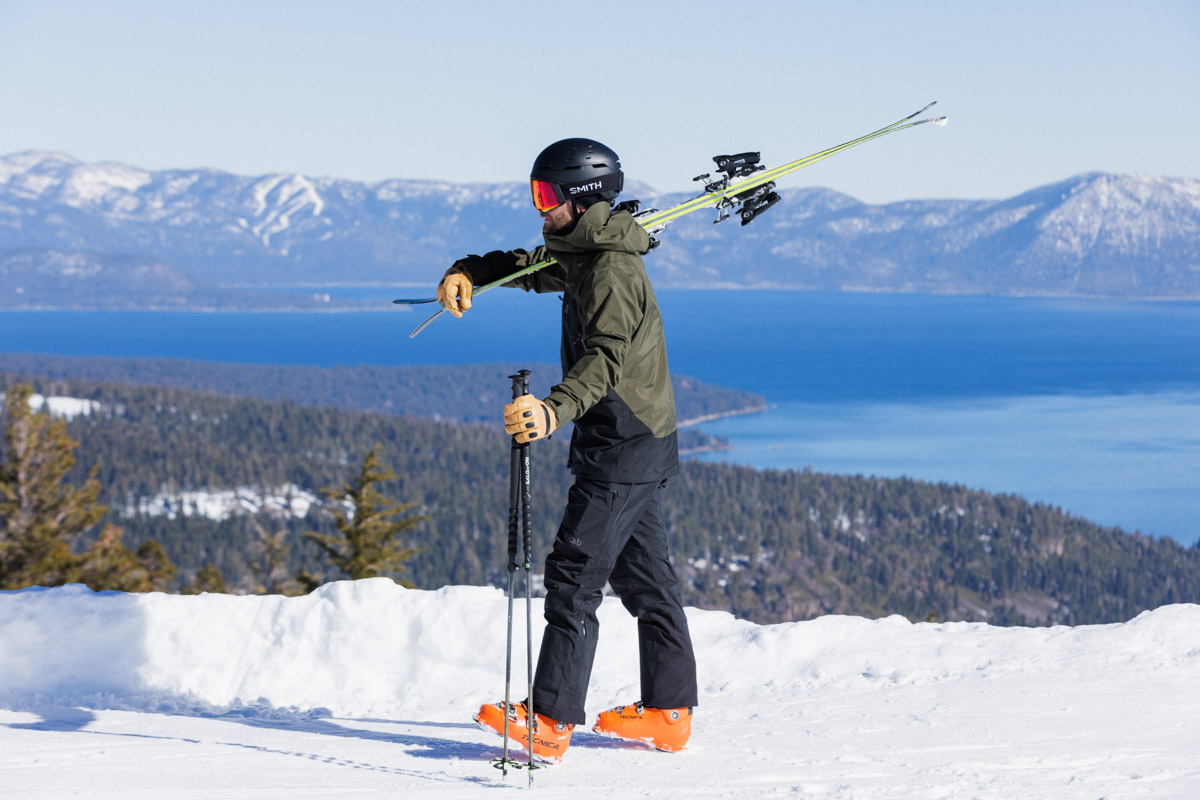
While there isn’t a comprehensive definition in the market of a beginner boot, the picks above do share a number of common characteristics. To start, these boots are more value-oriented (but good ones aren’t the cheapest around), packing fewer features and a more basic liner than high-end options. They also offer the most flex and the roomiest fit, unlike performance boots, which are stiff and low-volume to help transmit as much power as possible to the skis. Given their more generous fit, they’re also the most comfortable to slide into, the warmest since they don’t create as many pinch points, and the least likely to cause foot or shin pain after a day on the slopes.
.jpg)
Of note: The limited performance potential of a beginner boot does mean it's best for the intermediate or advancing skier to avoid them altogether. Those skiers should instead read our article on the best downhill ski boots.
Because of the focus on the beginning skier, the best terrain for these boots is cruising your green circle (beginner) or blue square (intermediate) runs at the resort. The boots on this list are often the detuned and softer version of dedicated downhill boots, and this is reflected in their performance. Steep and technical terrain requires fast inputs and changes of direction—both things that a soft and flexible boot will not provide. As a result, boots like our top-rated Tecnica Mach Sport HV 80 perform best on groomed runs and at a more subdued pace. Stepping up to a boot like the Lange Concept 9 gets you more all-mountain versatility and stiffness.
.jpg)
In many ways, a beginner boot is defined by its flex rating. Every downhill boot on the market is given a flex index number ranging from approximately 50 to 130. Lower numbers are softer, have more give, and are more comfortable, making them ideal for beginner skiers. Moving up in stiffness to intermediate and advanced models yields a boot that isn't as cushy but transfers your inputs to the bindings and skis more efficiently. Determining whether to upgrade to a high-end boot right off the bat is one of the key considerations you need to make. Are you anticipating advancing quickly? If so, it may be worth getting a boot like the Salomon S/Pro Supra 90, rather than purchasing new boots after only a season of use. A preferred stiffness also correlates with your body weight and ankle flexibility, so lighter skiers are often better off with a lower flex rating relative to performance. Below are general recommendations; there are ranges within these ranges that we explore later. Please note that these guidelines do not apply to backcountry ski boots.
Beginner: 50-90
Intermediate: 90-110
Advanced: 100-120
Expert: 120+
Within the beginner category, there can be a further breakdown of what’s considered a “true beginner” with a super-soft flex. This falls into the 50 to 70 flex range, and lightweight skiers desiring the cushiest setup should find a suitable boot here (such as the Rossignol Evo 70 HV+). Heavier skiers will benefit from a boot that is more substantial for improved support. Something with a flex of 80 to 90 is a great starting point. This second category is also suitable for lighter-weight advancing beginners or intermediates.

Both men’s and women’s ski boots are listed in unisex Mondo (or Mondopoint) sizing: the length of your foot measured in centimeters. You can measure your foot by tracing its outline on a piece of paper or marking the bottom of the heel and top of the toes. If your foot measures 30 centimeters in length, your Mondo size is 30. Getting measured in a ski shop is preferred, but this is a rough way to do it at home.
Every manufacturer or retailer provides a sizing chart that matches shoe sizes to ski boot sizes (here's Evo's chart), but your actual Mondo size may be a size or two smaller than what you see on the chart. This is because a tight fit is recommended with ski boots. Ski boot liners are made of foam and will pack out and mold to your feet over time, so it’s best to start with a relatively snug fit and wear them in.

After the flex rating, the most common specification listed for ski boots is last. This measurement is based on the width of the forefoot and is listed in millimeters. Most manufacturers make ski boots with varying lasts to accommodate those with narrow, average, and wide feet. Additionally, the last is an indicator of performance, as a lower-volume fit serves as a responsive conduit between you and your skis. On the casual end, boots are going to fall in an average to wide width, which should fit all but the narrowest feet just fine.
Narrow: 96-98mm
Average: 99-102mm
Wide: 103mm+
.jpg "Most entry-level boots come with either an average width or wide last")
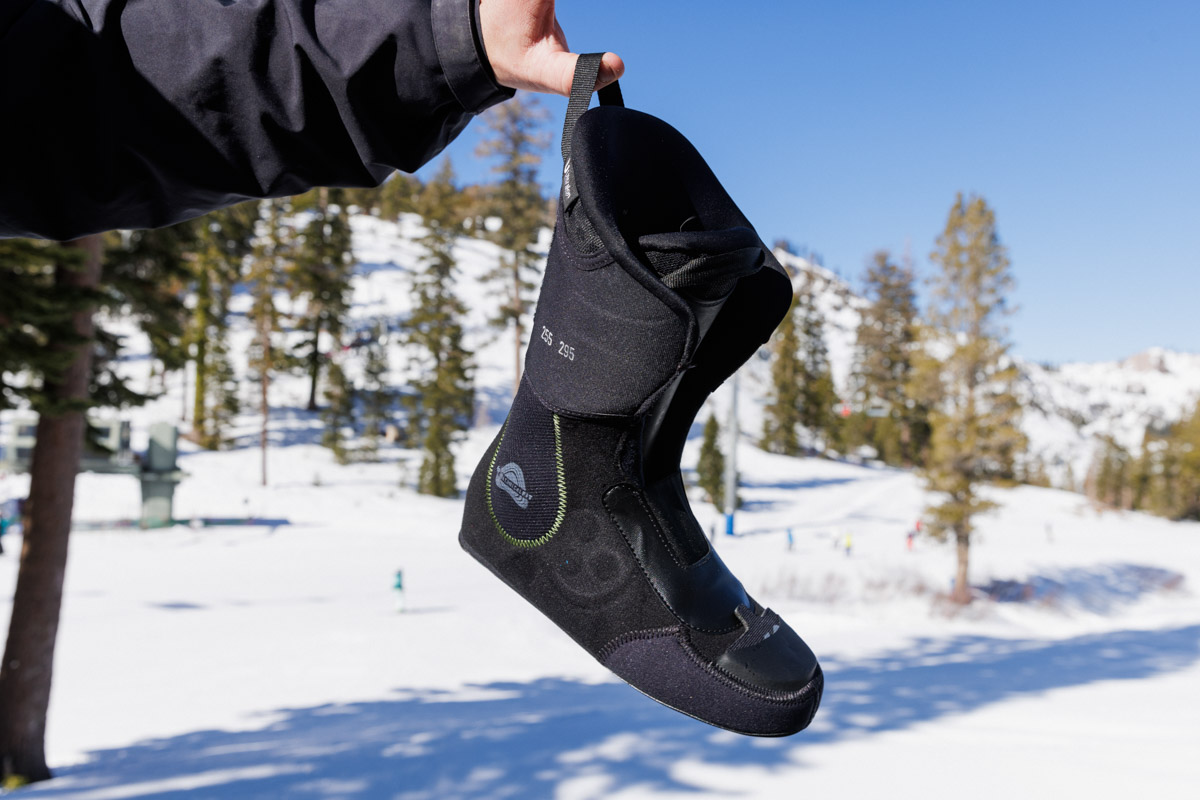
Most beginner ski boots are made up of two independent pieces: a hard plastic outer shell that provides structure and strength, and a removable liner that delivers comfort, support, and insulation. The liner is filled with varying amounts of foam, depending on the type of skiing the boot is intended for. Within the entry-level category, these liners prioritize cushion over performance, resulting in a soft and inviting feel. Intermediate and advanced models will be firmer, which brings the added benefit of improved energy transfer to your skis. The liner should be comfortable but reasonably tight around your foot. Your liner will conform to your feet, so don’t be too concerned if it feels snug at first. However, you’ll need to size up if your toes are pressing against the hard-sided shell.
Heat-moldable liners are found on several of our favorite beginner boots, including the K2 BFC 80, and can be custom-fitted to your feet in a ski shop equipped with the necessary equipment. This is a nice way to get the liner to fit your feet right out of the box, but it isn’t mandatory for most folks. You can get much of the same fitting accomplished just by wearing the liners around the house or on a few early-season ski days.
To start, it’s helpful to know that there aren’t many revolutionary buckle and strap designs in the beginner-to-intermediate category. The most noticeable difference is the number of buckles used. Some use the classic four-piece, which offers improved adjustability but is slightly more difficult to put on and take off. Others opt for two or three buckles for greater simplicity. Either option can work well for a beginner, and we’ve had success with both designs. We always recommend looking for buckles made mostly with aluminum for greater durability (plastic is cheaper but more prone to breaking). Boa closures are also becoming increasingly popular in downhill ski boots of late, but not many true beginner ski boots incorporate them. The tech also generally comes with a large price bump, so we generally don't recommend them for those who will upgrade to stiffer models after a season or two of learning.
The strap at the top of the boot, near the cuff, is another important element of the design. Sometimes referred to as the power strap, it keeps that top portion nicely locked into place to help bring out the full performance potential of your boots—and at a lower weight and with more comfort than adding another buckle. Having a full complement of buckles, as well as a quality power strap, also helps in really dialing in the fit, which can make accommodating varying leg and calf sizes that much easier.

Within the beginner ski boot category, you’ll see two different styles of boot soles: ISO 5355 models and GripWalk-equipped designs (ISO 23223). Starting with the former, ISO 5355-compatible boots are mostly flat underfoot and sized to fit and release from the toe piece on a standard alpine binding. The main downside is the lack of comfort for walking and hiking: Their shape and simple outsoles lead to an awkward gait and can be quite slippery on anything from hard-packed snow and ice to slick bathroom floors.
Enter the newer GripWalk sole, which has a rockered shape for a more natural stride and softer plastic/rubber compound for improved traction. These are commonly found on higher-end boots, like the Salomon S/Pro Supra 90, although there have been trickle-down signs of late. Our top-rated Tecnica Mach Sport 80, for example, added GW soles fairly recently. If you do opt for a GripWalk boot, you’ll want to make sure your ski bindings are compatible. A growing number of GW-ready designs are available, especially among mid-range and high-end models, but many entry-level bindings are not. Our Ski Boot and Binding Compatibility Guide can help you navigate this somewhat complex topic.

As evidenced from the list above, most boot manufacturers have a women’s-specific counterpart to their men’s or unisex boots. The most obvious difference between the two is flex: Most of the women’s models above are softer than the men’s versions, as is the case with the Tecnica Mach Sport 65 (versus the men's 80). The reason for that most closely correlates with weight, as we mentioned above. However, women’s boots also take into consideration the female anatomy, opting for lower cuffs that accommodate shorter and wider calves. And in most cases, women's ski boots are offered in smaller Mondo sizes.
At the end of the day, we don’t think you should get too hung up on the gendered differences. You should choose flex based on your weight and ability level, not your gender. And the same goes for fit: If a boot is comfortable, then nothing else really matters (especially for beginners). If you want to learn more about the women's-specific versions out there, see our round-up of the best women's ski boots.

A proper ski system is just that: a system that has all pieces working in concert. This is just as important for a hard-charging expert as it is for a beginner. As such, it’s best to pair your softer-flexing boots with binding and skis that are equally as forgiving. Entry-level skis and bindings often come as a single, integrated system, and we break down the best options in our article on the best skis for beginners.
Back to Our Top Beginner Boot Picks Back to Our Beginner Boot Comparison Table


bcdc.jpg?h=fbc67360&itok=wmPMXiEZ)

_1fe93.jpg?h=fbc67360&itok=vwdi5atz)
c8ee.jpg?h=fbc67360&itok=qF2arFUM)
832e.jpg?h=fbc67360&itok=ofljNFTS)
_0183c.jpg?h=fbc67360&itok=1DYb7NL0)
0ec1.jpg?h=fbc67360&itok=oGaifWVw)
9cbf.jpg?h=fbc67360&itok=YeTx1usk)
