.jpg)
.jpg)
Photo Credit
Skiing can be a blast, whether you’re lapping groomers at a local resort or seeking out big lines in the backcountry. It can also be uncomfortable, making the need for a quality ski jacket a no-brainer. We’ve tested the full gamut of styles over the years, from backcountry-ready shells to insulated resort pieces and 3-in-1 designs, and have whittled our favorites down to 12 options below, with the Flylow Gear Malone Jacket landing as our favorite overall. Whether you need an ultra-protective jacket for combating unrelenting moisture—we’re looking at you, Pacific Northwest—or a breathable option for long days on the skin track, we’ve got you covered (pun intended). For more background information, see our comparison table and buying advice below the picks, along with details about our testing process. And for a wider look at the market, check out our round-up of the best ski jackets, which covers both men’s and women’s styles.
Editor's note: We updated this guide on October 11, 2025, to narrow down our picks to a more streamlined list of standout options, which involved carefully considering testing notes and use cases. We moved a few jackets up the list to join our award winners, such as the Flylow Gear Malone Jacket, the Trew Gear Cosmic Jacket Primo, and the Patagonia SnowDrifter Jacket. We also added a few new jackets to the list, including Outdoor Research's Carbide, Rab's Khroma Converge Gore-Tex, and Oyuki's Myoko NetPlus 3L Anorak. Finally, we ensured all existing information was up to date at the time of publishing.
 Best for: Backcountry/resort
Type: Shell
Waterproofing: 3L Tactic
What we like: Softshell-like comfort and stretch in a protective, 3-layer design.
What we don’t: Not the most weatherproof option.
It seems like each season we see more and more Flylow Gear on the slopes, and for good reason. This Colorado-based brand is churning out high-performing gear with modern styling at competitive prices. Their Malone Jacket is a case in point: With a stretchy 3-layer construction, in-house waterproofing and durable water repellent (DWR), stylish color blocking, and a relatively reasonable price tag, the Malone has a strong do-it-all slant. With features like a removable powder skirt, pass pocket, and helmet-compatible hood, the Malone is right at home at the resort, but its supple and surprisingly breathable fabric (the pit zips also help) can keep up in the backcountry, too. To be sure, dedicated backcountry skiers can save a lot of weight by opting for the thinner Patagonia SnowDrifter below, but the Malone works great for the odd tour and frequent sidecountry foray.
That said, the Malone doesn’t have the same bombproof feel as thicker shells on this list. The comfortable and stretchy fabric isn’t as well-equipped to handle truly wet conditions. PNW skiers who don’t shy away from a nasty forecast will have better luck with Arc’teryx’s Sabre, but can save a lot by opting for Trew Gear’s Cosmic Primo Jacket below, which has a burly shell and impressive waterproofing (aptly named PNW Primo). But the Malone still comes out on top when it comes to versatility—both the Cosmic Primo and Sabre are thicker and warmer than the Malone, which limits their backcountry appeal.
See the Flylow Gear Malone
Best for: Resort/backcountry
Type: Shell
Waterproofing: 3L PNW Primo
What we like: Tough and protective yet very comfortable; feature-rich with lots of storage.
What we don’t: Too heavy and bulky for dedicated backcountry travel; pricey.
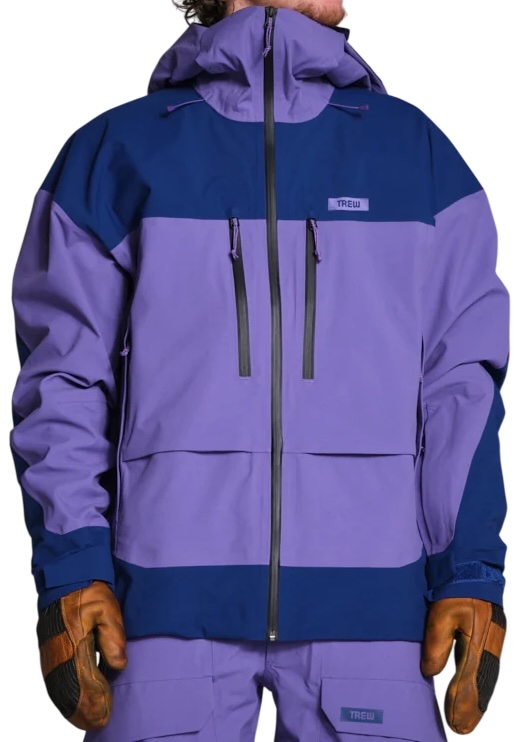
If you’re looking for something a little more stalwart that can keep up when the weather turns, look no further than the Trew Gear Cosmic Jacket Primo. The Oregon-based brand hit the mark with their PNW Primo waterproofing, which, in our experience, has a Gore-Tex-level of reliability in truly inclement conditions. The jacket’s woven shell is thick and hardwearing and boasts excellent coverage with the long cut and tall collar. It’s also far from short on features with a removable powder skirt, helmet-compatible hood, hem cinch, and pockets galore (seven, to be exact). And last but not least, the Cosmic has a laid-back freeride vibe and unique color blocking that’s sure to catch eyes on the slopes (if you want a more athletic fit, we had luck sizing down).
Why does the Malone take the top spot over the Cosmic? For our best overall pick, we looked for versatility, and the Malone proved a better crossover jacket for in- and out-of-bounds skiing. Don’t get us wrong, the Cosmic’s built-in stretch makes it fully capable of tackling sidecountry exploring, but its feature-rich and weather-ready build is a bit bulky and warm for dedicated backcountry use—we’d categorize it as a 90/10 resort and backcountry piece. But so long as that isn’t a deal breaker, the Cosmic Primo is sure to impress, and it’s a no-brainer choice for skiers who are determined to get out despite the conditions.
Read more: Trew Gear Cosmic Primo review
See the Trew Gear Cosmic Jacket Primo
 Best for: Resort
Type: Insulated (80g & 60g polyester)
Waterproofing: 2L Peak
What we like: Great value for resort riding.
What we don’t: Step down in material quality; only critically seam-sealed.
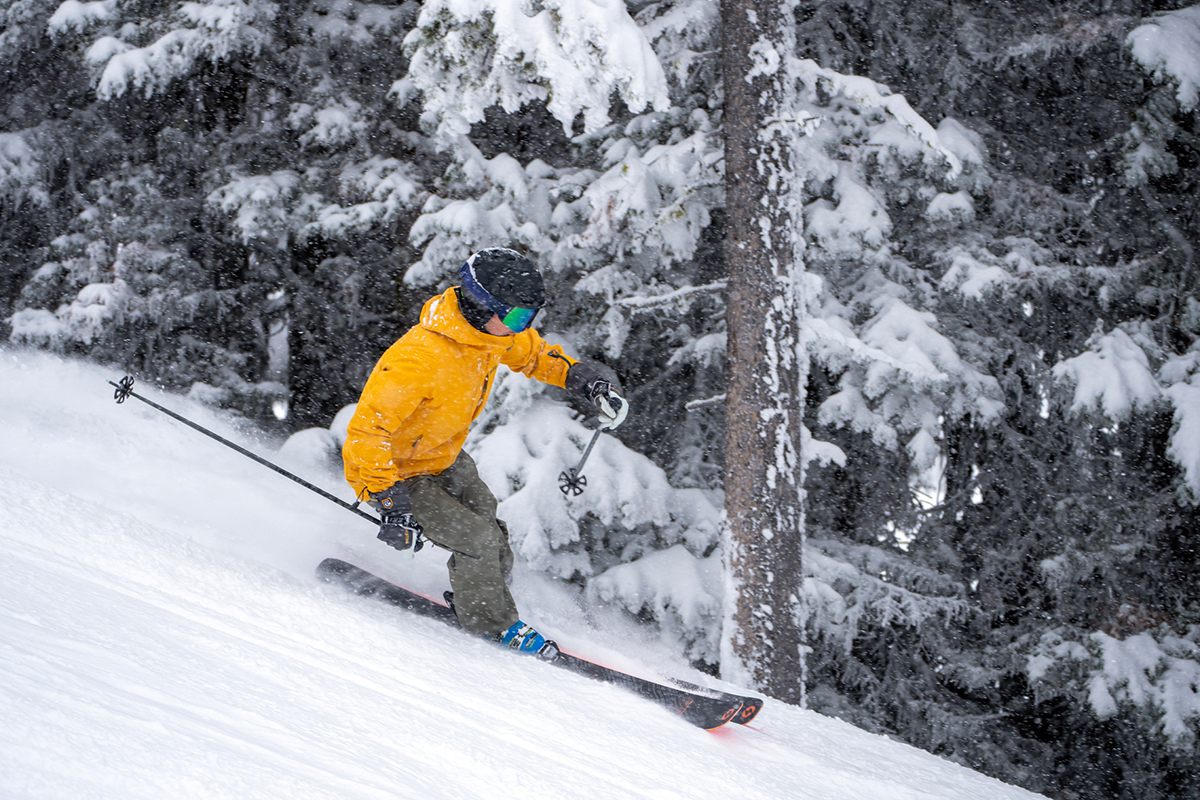
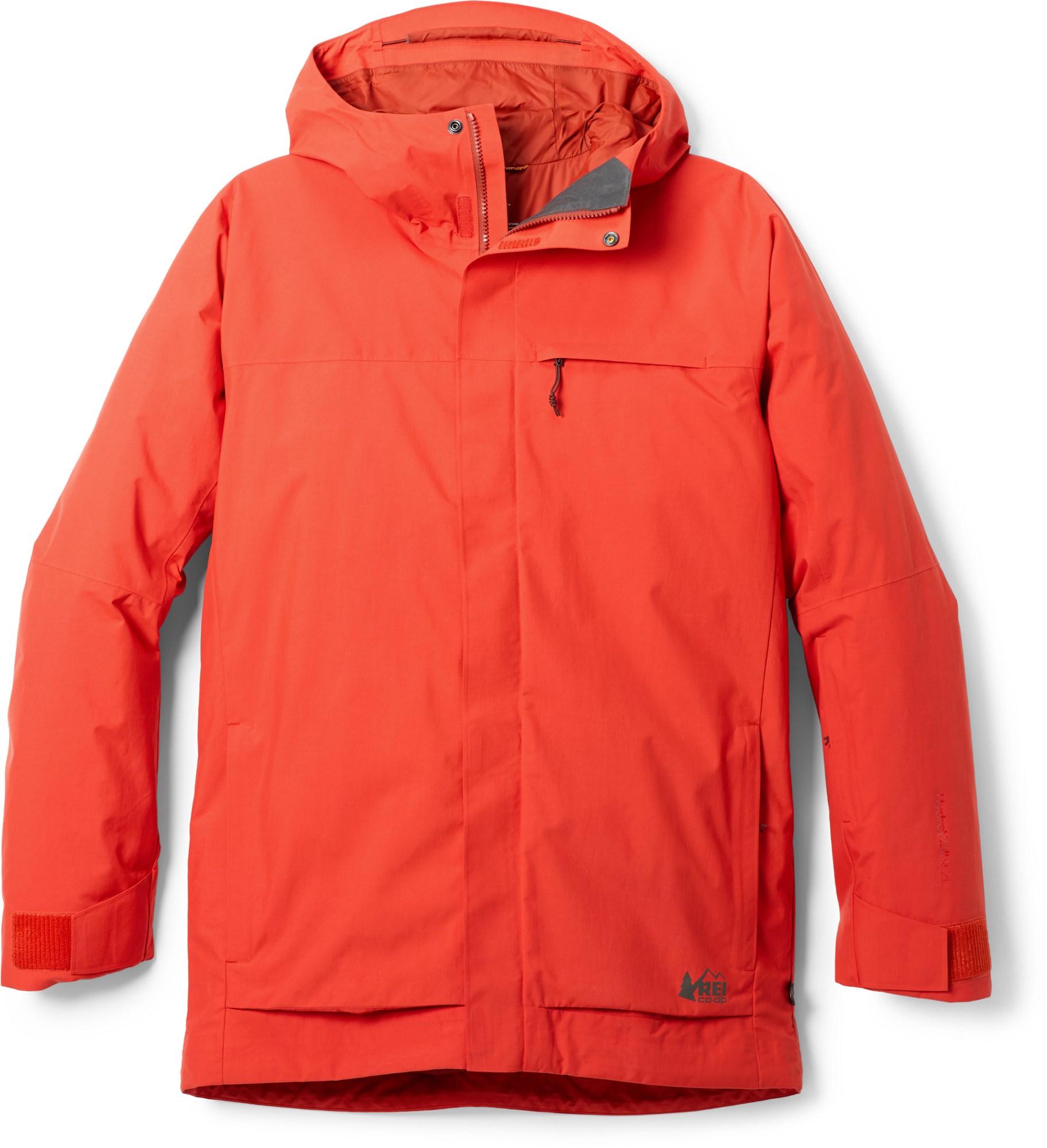
Ski jackets can get very expensive—as evidenced by our premium pick below—but that doesn’t mean you need to spend big to get a quality product. For resort skiers looking for a warm and well-built jacket, the REI Co-op Powderbound is a nice choice. At a very palatable price, you get a waterproof build with 80-gram synthetic insulation around the core (lighter 60g is used in the sleeves), great organization both outside and inside the shell, and useful features like a powder skirt and pit zips. We even like the simple design and minimalist branding, which means that the Powderbound can be worn both for skiing and everyday winter use.
What are the shortcomings of REI’s entry-level ski jacket? The fit lands on the larger and boxier end of the spectrum, and the more budget-oriented construction gives it a fairly bulky feel (especially when compared with a sleek insulated option like the Helly Hansen Alpha 4.0 above). And as with any jacket at this price point, REI’s proprietary waterproofing tech isn’t up to the standards of more premium models—the shell is only critically seam-sealed. You also shouldn’t expect Patagonia or Arc’teryx’s build quality or comfort. The Powderbound also has lighter insulation overall, so you may want to layer up underneath for especially cold areas. That said, we can’t help but love the value here: The Powderbound is everything most people need in a resort jacket and nothing they don’t.
See the REI Co-op Powderbound Insulated
 Best for: Resort
Type: Insulated (80g & 60g PrimaLoft Black Eco)
Waterproofing: 2L Helly Tech Professional
What we like: Premium, insulated build; fantastic fit and feel from the stretchy fabric.
What we don't: Runs warm for active use.
Helly Hansen's Alpha 4.0 has all the features we look for in a capable resort-ready design. First, you get a moderate level of insulation (80g & 60g) in the body and sleeves for a nice boost in warmth compared with a non-insulated hardshell. It’s enough to take the sting out of a chilly ride up the chairlift, but won’t overwhelm you on the way down. Second, the jacket offers fantastic comfort and mobility with a four-way stretch fabric—a noticeable upgrade from the mechanical stretch found in many alternatives—along with a plush interior and no-nonsense athletic fit. Finally, we love the styling of the Alpha 4.0, which is super clean, works well for riders of all ages, and is offered in a nice variety of colorways.
Helly Hansen recently updated the design with a focus on sustainability. There is now recycled polyester along the shell and inner lining, and they’ve incorporated OceanBound recycled material, which turns used fishing gear into synthetic yarns. Importantly, there are no performance drawbacks to the changes, and the rest of the winning design remains largely unchanged—including the useful insulated phone pocket, tall collar, and quality zippers. For downsides, breathability lags behind the uninsulated shells on this list as a result of the 2-layer build and emphasis on warmth (the pit zips and venting along the back of the lining do help, however). The Alpha is also far from the cheapest insulated ski jacket you can find—REI’s Powderbound above is proof. We’ve also had great luck with Patagonia’s Insulated Powder Town Jacket, which has slightly lighter insulation (80g & 40g), a high-quality 2-layer build, and a more approachable price tag. That said, we still turn to the Alpha for the best in warmth, durability, and comfort.
Read more: Helly Hansen Alpha 4.0 review
See the Helly Hansen Alpha 4.0
.jpg)

Best for: Resort/backcountry
Type: Shell (flannel backer)
Waterproofing: 3L Gore-Tex ePE
What we like: Premium build quality, fit, and performance.
What we don’t: A bit heavy for serious backcountry use; overkill in price and performance for casual riders.
Arc’teryx dominates the high-end jacket market, and their Sabre is an all-time favorite for those who ski both the resort and backcountry. Its premium 3-layer Gore-Tex construction is burly and offers phenomenal weather protection, while a thin flannel backer adds a little extra warmth and boosts mobility and comfort. Arc’teryx also nailed the features with easy-to-use pit zips, a highly adjustable and helmet-compatible hood, and six smartly designed pockets. Additionally, the fit is great for active use: generous enough for layering but without extra bulk. All told, the Sabre is an extraordinarily well-rounded ski jacket that’s ready to handle anything from Arctic blasts of wind and snow on the lift to quick tours.
Aside from the gasp-worth price, the Sabre comes up short in one other area: backcountry appeal. At about 1.5 pounds, it’s fairly heavy and doesn’t compress very small to throw in a pack, and the liner inhibits breathability a bit, even with the pit zips opened up. Those who tour exclusively will likely want a more backcountry-specific piece like Patagonia’s SnowDrifter below. That said, the Sabre delivers an unbeatable combination of comfort, build quality, weather resistance, and mobility. The collection also includes a looser-fitting, half-zip anorak version and a “severe weather” variation called the Sabre SV, the latter of which features burlier fabrics and an extended length.
Read more: Arc’teryx Sabre Jacket review (prior version)
See the Arc'teryx Sabre Jacket
_0.jpg)

Best for: Backcountry
Type: Shell
Waterproofing: 3L H2No
What we like: Stretchy shell is breathable and comfortable to move in.
What we don’t: Can’t beat a rigid shell when it comes to weather protection.
Dedicated backcountry skiers have a different set of standards when it comes to outer layers: They’re willing to forego a bit of weather protection for the benefit of weight, mobility, and breathability. In a perfect world, our top backcountry pick would have a little bit of both, but the SnowDrifter Jacket comes close. The ‘Drifter’s 3-layer construction is more akin to a stretchy softshell, putting emphasis on comfort and mobility without sacrificing too much weather protection. The breathable fabric—plus moisture-wicking liner and pit zips—do a lot to prevent sweating-out when climbing the skin track. The rest of the features are decidedly utilitarian, including two hand pockets, two internal dump pockets, a removable powder skirt, and an embedded Recco reflector. Put together, the SnowDrifter weighs 1 lb. 5.9 ounces, which beats most of the jackets on this list.
It goes without saying that the SnowDrifter can’t compete with the burlier and more stalwart jackets on this list when it comes to true wet-weather protection. If you’re touring in areas like the PNW and aren’t willing to sacrifice protection in the case of an emergency, you can still cut weight by opting for a non-ski-specific hardshell jacket, which generally has fewer pockets, no powder skirts, and a more streamlined build. The SnowDrifter also doesn’t strike us as the most durable jacket—the fabric is noticeably thin—though we haven’t had any specific issues to date. And if we were to nitpick, we’d like it if Patagonia would add an additional interior dump pocket for goggles and climbing skins. Gripes aside, we think the SnowDrifter balances its priorities well without creating deal-breakers, which earns it our top spot for a backcountry jacket.
See the Patagonia SnowDrifter Jacket
Best for: Resort
Type: 3-in-1 (11 g/sq. ft. ThermoBall & 60g Heatseeker Eco)
Waterproofing: 2L DryVent
What we like: 3-in-1 versatility and quality insulation.
What we don’t: Extra zippers add weight and bulk.
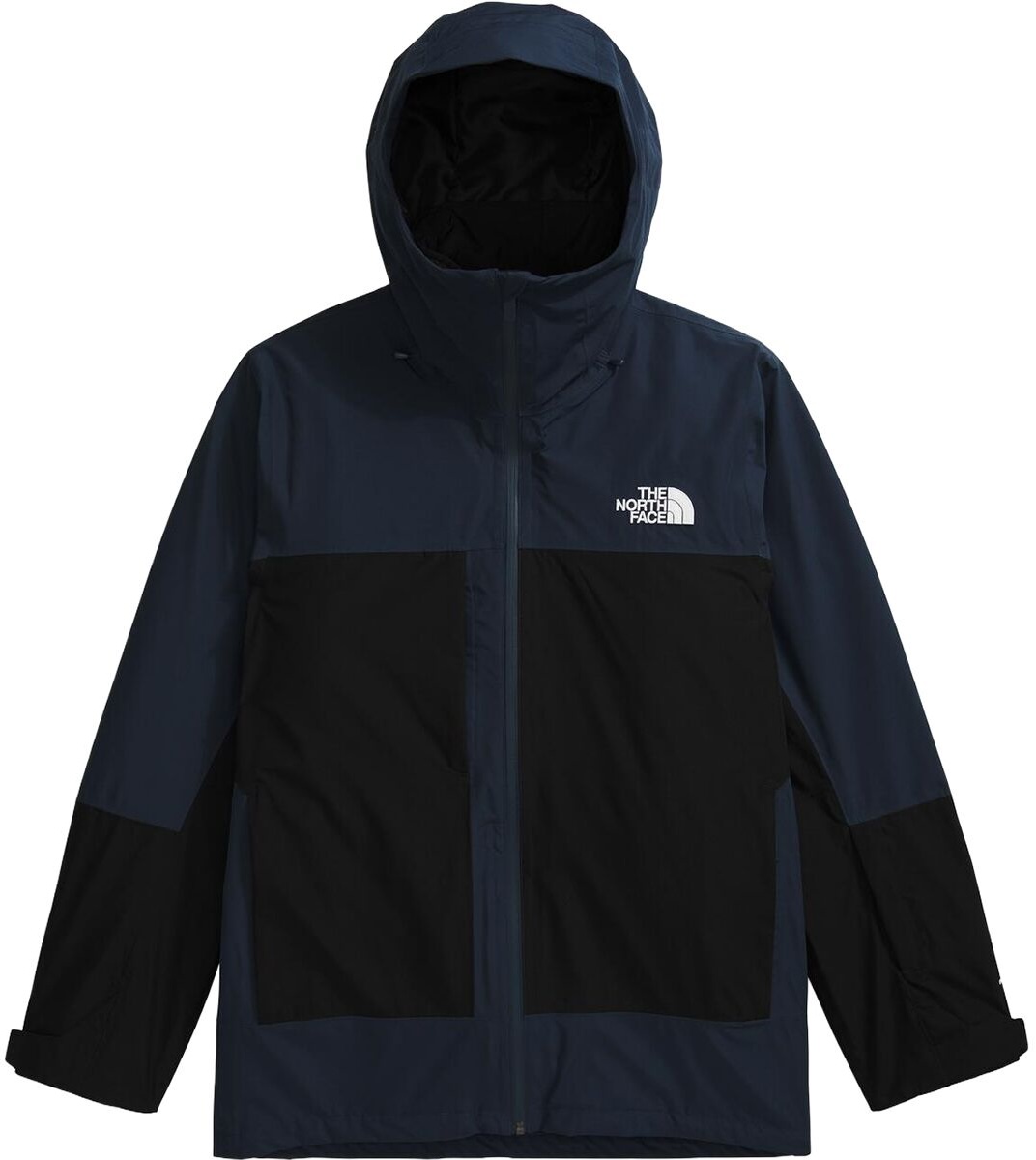
For those looking to save, turning to a 3-in-1 ski jacket can be a good option. With a single purchase, you get both a waterproof shell and an insulating midlayer that can be either zipped in on cold days or left at home in spring conditions (you can even wear the insulated jacket on its own around town). Many 3-in-1s are of the budget variety, but we think upgrading to the The North Face ThermoBall Snow is worth the investment. The jacket has a nice fit, offers decent exterior storage, and includes upgrades like pit zips and exposed, water-resistant zippers. Its standout feature, however, is the ThermoBall zip-out jacket, which we've found does a pretty good impression of a lofty down piece—all while continuing to insulate when wet.
If you’re set on the 3-in-1 design, the ThermoBall Snow Triclimate is our favorite option on the market, but we typically prefer the versatility of separating our jackets and midlayers. The extra zippers and heft that come with this kind of outer layer make them not as comfortable and they provide less freedom of movement. Further, 3-in-1s are more prone to feeling drafty, plus the connected midlayer limits access to your interior pockets. That said, the ThermoBall Snow Triclimate provides two well-built jackets with relatively few compromises, making it a solid buy for resort skiers. And if you’re looking for something a bit cheaper, check out Columbia’s Bugaboo III Fleece Interchange, which is almost half the price of the ThermoBall and opts for a soft fleece midlayer over a synthetic.
See the TNF ThermoBall Snow Triclimate

Best for: Resort
Type: Shell (fleece liner)
Waterproofing: 2L Gore-Tex ePE
What we like: Durable materials, soft interior lining, and impressive sustainability measures.
What we don’t: Expensive for a 2-layer design.
If you’re the type of resort skier who counts your ski days each season (we don’t judge; get your pass’s worth!), then you’ll need a jacket you can rely on—one that will hold up well to chair lift rides and provide enough protection for soggy days. For a performance resort jacket, we look at Patagonia's 2-layer Storm Shift. This jacket provides solid waterproofing by way of a premium Gore-Tex ePE membrane (it’s kept us bone-dry in wet PNW conditions), along with a 150-denier (D) shell that holds up to all manner of resort abuse. We’ve found the Storm Shift to be surprisingly supple despite its thicker fabric, and the cozy, zigzag fleece lining is a really nice touch that makes the jacket comfortable to wear and adds a bit of breathable warmth, too. Tack on a full suite of features—including fleece-lined hand pockets, a large interior dump pocket, a snow skirt, pit zips, and more—and the Storm Shift has quickly become one of our favorite all-mountain jackets for resort use.
Patagonia is known for their sustainable materials and design, and the Storm Shift is the epitome of this ethos. Recycled materials are used throughout, plus the jacket is certified to the Fair Trade standard. That said, we're disappointed to find that the DWR coating soaks through faster than most non-PFAS-free treatments (thankfully, the Gore-Tex puts up a strong defense, and the material can be retreated as needed). It’s also worth noting the Storm Shift’s decidedly sporty aesthetic, which rejects the freerider aesthetic that’s more popular of late. For another 2-layer jacket with modern styling and a more palatable price tag (at the expense of breathability and protection), check out Trew Gear’s Jefferson Jacket. But in the end, these are relatively minor nitpicks about a jacket that we love. If you’re willing to pay the price, the Storm Shift is one of the most well-rounded resort shells here.
Read more: Patagonia Storm Shift Jacket review
See the Patagonia Storm Shift Jacket
 Best for: Backcountry/resort
Type: Shell
Waterproofing: 3L Pertex Shield
What we like: No-frills 3-layer ski shell at a reasonable price.
What we don’t: Not the warmest for dedicated resort use; decidedly sporty.
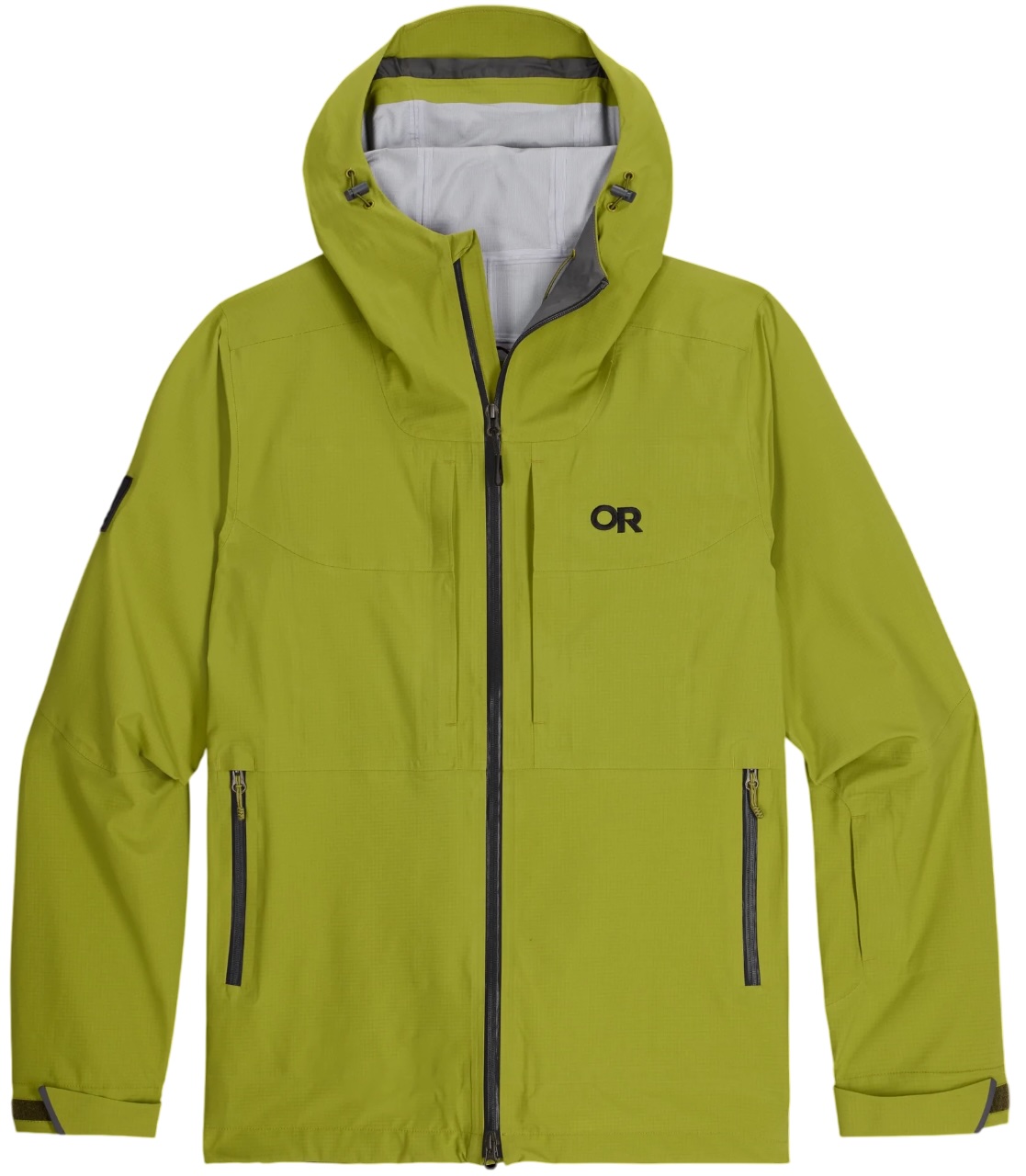
Thrifty shoppers searching for a 3-layer shell might gawk at the prices of the jackets above, but Outdoor Research offers a high-performing and cost-effective solution in their Carbide Jacket. Though the Carbide is the cheapest 3-layer jacket to make this list, it’s far from budget-quality. To be sure, it makes some sacrifices in fabric thickness and waterproofing, but the 40D Pertex Shield shell should be plenty durable and stormproof for weekend warriors and fair-weather skiers. The Carbide is also quite breathable—thanks to the thin fabric and pit zips—which makes it a more cost-effective alternative to the SnowDrifter above. OR was also sure to include all of the ski-specific features we look for, including a forearm pass pocket, interior stash pocket and zippered hand pockets, powder skirt, and ski helmet-compatible hood.
For the skier that gets out a few times every season—and splits their time between the resort and backcountry—the Carbide is a great option. But we’d hesitate to recommend it to our diehard resort buddies. The thin fabric doesn’t cut the cold as effectively as thicker or insulated designs, and we’re a bit skeptical of how it’ll hold up to repeated chairlift rides. And it might be subjective, but we don’t quite think the sporty styling is up to modern resort standards, which leans freeride these days. Our reason for ranking it below the SnowDrifter simply comes down to build quality: The SnowDrifter is stretchier, slightly thicker, and more premium-feeling. But if price is your ultimate deciding factor, the Carbide has a lot of appeal.
See the Outdoor Research Carbide Jacket
 Best for: Resort
Type: Shell
Waterproofing: 2L Gore-Tex ePE
What we like: Reliable Gore-Tex waterproofing at a good price; tall and extended sizes offered.
What we don’t: Lacking in breathability for backcountry use and not the most refined piece.
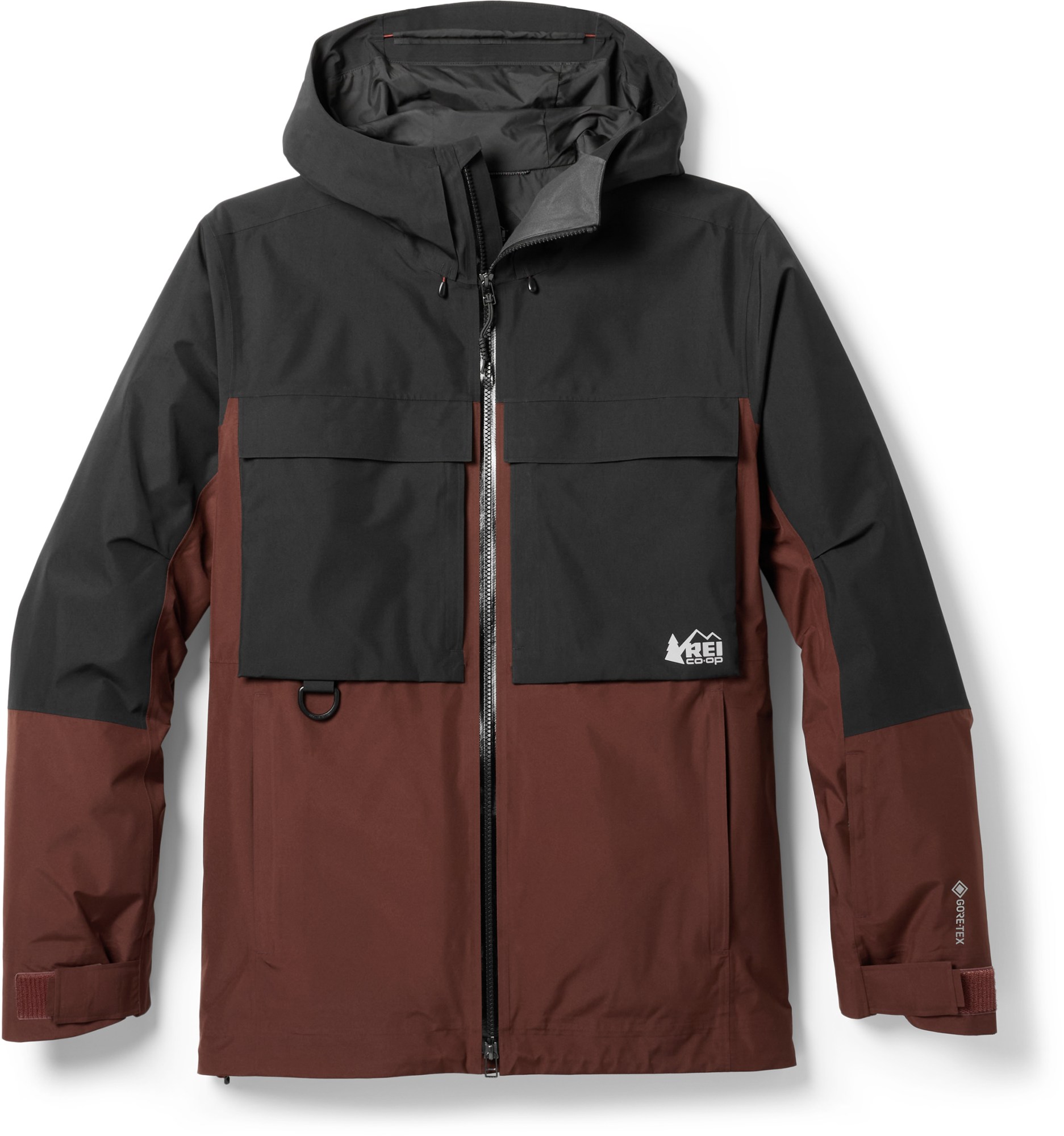
REI jumped into the ski outerwear market a few seasons ago with a small collection of resort-focused pieces, and their current top-flight jacket is the First Chair GTX. As expected from the Seattle-based brand, this non-insulated shell is high on value: For a relatively low cost, you get Gore-Tex ePE waterproofing, a smooth interior, and valuable features like a powder skirt, pit zips, and nine well-distributed pockets. Another nice touch is the emphasis on sustainability, with a recycled polyester shell and lining, bluesign-approved materials, and Fair Trade certification. Available in a nice range of colors and sizes—including tall for men—the First Chair is a solid all-around option, particularly for resort riders.
As expected for the price, the First Chair isn’t as well-suited for active use. Gore’s 2-layer construction isn’t a standout in terms of breathability, and the extra lining covering the interior adds both weight and bulk. To keep costs low, REI incorporated cheaper fabric flaps over the zippers on the pockets and pit zips for waterproof protection (the center zipper is coated, however). In addition, the hood is a bit shallow, and a truly cold, biting wind will cut through more than with the premium options on this list. The First Chair also has a generic fit, lacks the quality feel on touch points like the zipper pulls and hood cinches, and isn’t as soft along the interior. But if you prioritize Gore-Tex waterproofing, storage, and value—an admittedly great combo—the First Chair is well worth checking out.
Read more: REI Co-op First Chair GTX review
See the REI Co-op First Chair GTX

Best for: Resort/backcountry
Type: Shell
Waterproofing: 3L Gore-Tex ePE
What we like: Well-built all-arounder with a competitive price tag.
What we don’t: Doesn’t quite beat our premium pick and is still pretty pricey.
Competition is tough in the all-around category, but there’s one more do-it-all shell that we think is worth putting on your radar: The Rab Khroma Converge. This Gore-Tex-equipped hardshell delivers protection similar to that of the Sabre above, but at a significantly cheaper price. It has a top-notch build quality, too, including a burly 80D shell, well-assorted pockets (our tester claimed storage was among the best he’s tested so far), and ski-specific features like a powder skirt, helmet-compatible hood, and soft stretch cuffs, which offer great hand protection in the biting cold. The Khroma won us over during testing last season in the Tahoe area, and we believe it has a lot of potential for the crowd that splits their time between the resort and backcountry.
Rab definitely had the Sabre in their crosshairs when designing the Khroma Converge, but, in our opinion, it doesn’t quite match the Sabre’s premium quality. The devil is in the details, and the Khroma lacks some of the Sabre’s finer touch points, like plastic zipper pulls and long pit zips. We also prefer the Sabre’s StormHood over the Khroma’s, which offers great mobility and protection. When it comes to fit, the Khroma is a bit trimmer, and we prefer the Sabre’s looser, freeride design. And lastly, it’s worth pointing out that the Khroma is still one of the priciest jackets here. If you’re willing to forego a bit of breathability, the Trew Gear Cosmic Primo above is a bit cheaper and still offers great waterproofing. But when it comes to all-around use, we think the Khroma has a lot of appeal, even if it cuts a few corners to get there.
See the Rab Khroma Converge Gore-Tex
 Best for: Resort
Type: Shell
Waterproofing: 3L NetPlus
What we like: A 3-layer anorak jacket with major park vibes.
What we don’t: Anorak design is limiting; pricey.
For those who haven’t been introduced, Oyuki (which translates to “big snow”) is a Japanese brand serving up stylish and functional ski gear that gives Trew Gear and Flylow a run for their money. Their Myoko NetPlus Anorak is easily the most unique-looking jacket to make this list, thanks to its long cut, oversized hood, and anorak style. It’s reminiscent of the baggy sweatshirts we see the kids wearing while hitting rails and jumps at the park. But unlike a sweatshirt, the Myoko has a lot of technical appeal, including a 3-layer construction, DWR coating, and underarm zips (one is full length). The front of the jacket features the iconic anorak kangaroo pocket, which is ideal for warming your hands on the chairlift or while waiting your turn at the top of the rope tow. There is also a sleeve pass pocket and two chest pockets for storing snacks, a phone, and any other gear you might need for the day. Finally, we appreciate Oyuki’s dedication to sustainability with the NetPlus build, which is made of recycled fishing nets.
Japan is well-known for its deep powder and world-class resorts, and we have no doubt the Myoko is suited for those conditions. Though, despite what Oyuki claims, we hesitate to call this a crossover design. Most notably, the anorak build simply doesn’t breathe as effectively as full front-zip jackets, and while we haven’t had a chance to test this one on the skin track yet (we’ll report back when we do), we can already predict a sweaty midsection. The generous underarm ventilation will likely be enough for sidecountry missions and short backcountry jaunts, but we’ll turn to the Malone above for true crossover capability. This style also comes at a hefty cost, ranking the Myoko among the most expensive jackets here, but sometimes that’s the price you pay for high styling.
See the Oyuki Myoko NetPlus 3L Anorak
| Jacket | Price | Best For | Type | Insulation | Waterproof | Weight |
|---|---|---|---|---|---|---|
| Flylow Gear Malone Jacket | $420 | Backcountry/resort | Shell | None | 3L Tactic | 1 lb. 8.0 oz. |
| Trew Gear Cosmic Primo | $599 | Resort/backcountry | Shell | None | 3L PNW Primo | 1 lb. 14.1 oz. |
| REI Co-op Powderbound | $229 | Resort | Insulated | 80g / 60g | 2L Peak | 1 lb. 14.3 oz. |
| Helly Hansen Alpha 4.0 | $485 | Resort | Insulated | 80g / 60g | 2L Helly Tech | 2 lb. 7.5 oz. |
| Arc'teryx Sabre Jacket | $750 | Resort/backcountry | Shell | None | 3L Gore-Tex ePE | 1 lb. 8.9 oz. |
| Patagonia SnowDrifter | $449 | Backcountry/resort | Shell | None | 3L H2No | 1 lb. 5.9 oz. |
| TNF ThermoBall Triclimate | $400 | Resort | 3-in-1 | 11 g / sqft | 2L DryVent | 2 lb. 8.8 oz. |
| Patagonia Storm Shift | $499 | Resort | Shell | None | 2L Gore-Tex | 1 lb. 12.8 oz. |
| Outdoor Research Carbide | $329 | Backcountry/resort | Shell | None | 3L Pertex Shield | 1 lb. 5.5 oz. |
| REI Co-op First Chair GTX | $319 | Resort | Shell | None | 2L Gore-Tex ePE | 1 lb. 10.5 oz. |
| Rab Khroma Converge | $575 | Resort/backcountry | Shell | None | 3L Gore-Tex ePE | 1 lb. 8.6 oz. |
| Oyuki Myoko Anorak | $525 | Resort | Shell | None | 3L NetPlus | 2 lb. 2.4 oz. |
Most of the Switchback Travel staff live in an area that experiences snow in the winter, meaning skiing is a big part of our outdoor repertoire. Former editor-in-chief and lifelong skier John Ellings kicked off our initial list of the best ski jackets in 2015, drawing from years of experience throughout the Pacific Northwest. Former managing editor Sarah Nelson contributed to the site’s ski coverage since 2020, and she split off this list of men’s-specific picks in early 2025. Based in the Lake Tahoe area, Sarah spends most of her time inbounds but also can’t say no to a good sufferfest. To dial in this list, she solicited feedback from several male gear testers and longtime contributors, including British Columbia-based Brian McCurdy, who has been writing for Switchback for nearly a decade and is no stranger to epic powder days and long missions into the backcountry. Editor Maddie Downie is the most recent inheritor of the list, and she spends her long PNW winters backcountry skiing in the North Cascades with her husband and enjoying deep days at Mount Baker Ski Resort.
Our current selection of 12 jackets reflects ongoing testing across the country, firsthand info from contributors and gear-savvy friends, and feedback from the online skiing community. When we test ski jackets, we evaluate performance in as many conditions as possible, braving wind, snow, and even rain to gauge each jacket’s ability to fend off the elements. We also look closely at characteristics like breathability, hoofing it up the skin track or into the sidecountry to pinpoint ventilation, as well as long-term durability and features, ensuring that design elements like hoods, pockets, and powder skirts are functional and intuitive. As the market continues to evolve, we’ll be sure to keep our eye out for new and noteworthy designs, adding any standouts to our list above.
.jpg)
Ski jackets often are designed for a specific purpose—resort, backcountry, or a mix—so we’ve included a “best for” listing in our specifications and table above. Most riders spend at least some time on a chairlift throughout the season, and, as a result, most ski jackets are designed to meet this focus. Specifically, a resort shell should be highly wind- and waterproof, durable, have functional pocket organization, a powder skirt, and be tailored to accommodate layers of varying sizes underneath, depending on the outside temperature and conditions. Insulation is optional for resort-goers and usually not preferable for most backcountry uses.
.jpg)
For ski touring, ski mountaineering, or sidecountry hikes, a non-insulated and lightweight design takes precedence. The fabrics need to be thin and packable, which impacts durability, and there is a high priority on mobility and staying cool. Breathable softshell jackets lead the pack in comfort for fair-weather days, but in heavy wind and moisture, a premium hardshell is still best (we cover the various shell constructions in more detail below). Fit does vary by use—freeride shells are roomy while touring-specific models fit more snugly—but all designs focus on maximizing range of motion. The jackets that toe the line of backcountry and resort use—including our top-rated Flylow Gear Malone and premium pick Arc'teryx Sabre—have a great fit, reliable construction, and fabrics that balance wind- and wet-weather protection with breathability.
.jpg)
Closely tied to the “best uses” above is a ski jacket’s construction type. Here, the market can be broken into three main categories: shell, insulated, and 3-in-1. Choosing the right model depends largely on your skiing style and budget. The most popular is the shell, which is a versatile choice for everyone from casual resort skiers to backcountry adventurers in harsh, wet environments. Insulated jackets are ideal for inbounds skiing in deep winter, while 3-in-1 jackets are a good choice for budget-seekers and those just building their kit. Below is a quick breakdown, and for a deeper dive, check out our article on ski jacket types.
.jpg)
Shell (Non-Insulated) Jackets
Shell jackets offer sturdy protection from wind and moisture and can be suitable for both backcountry and resort use. Made with multiple layers of fabric laminated together, they are typically waterproof, windproof, and at least modestly breathable. By our definition, these jackets are not insulated, so you’ll want to pair them with a baselayer (and usually midlayer, too) for warmth.
High-end shell jackets like the Rab Khroma Converge and Oyuki Myoko NetPlus Anorak have premium waterproof/breathable membranes (Gore-Tex, Patagonia’s H2No, and Outdoor Research’s AscentShell are three of our favorites) and a tailored fit for excellent range of motion. Some feature rigid and crinkly hardshells, while many modern backcountry designs incorporate a stretchy face fabric or panels of softshell, which provide great mobility and breathability but less bombproof protection (for more, see our description of hybrid hard/softshells below). Basic shells use thicker fabrics and cheaper waterproofing that doesn't breathe as well. Beginning and occasional skiers will be fine with an entry-level shell jacket, but we do recommend spending up for active and aggressive skiers or those who get out a lot.
.jpg)
Insulated Jackets
Jackets in this category combine a weather-protective shell with built-in insulation, resulting in a great defense against both moisture and cold. We love these designs for resort-goers, who will benefit from the added warmth during cold chairlift rides and frigid downhill laps. Most insulated ski jackets feature synthetic fill—compared to down, it's cheaper, more breathable, and insulates even when wet. The most high-end varieties offer more warmth for less bulk (PrimaLoft Gold and Patagonia’s PlumaFill are two of the best), while budget designs will be heavier, bulkier, and tend to overheat in a hurry. Regardless of the type of insulation, keep in mind that these jackets are inherently heftier, less breathable, and offer less range of motion than shells, which isn’t a big issue for inbounds use but can be a dealbreaker for most backcountry skiers.
If you opt for an insulated model, it’s a good idea to carefully consider how much warmth you need. Most jackets feature a heavy dose of insulation in the body with thinner fill in the arms and hood. A thick and substantial option is a dream in the cold but will run hot on mild-weather days, which can be a problem for season-long use. As such, we typically prefer moderate levels of warmth, such as Helly Hansen’s Alpha 4.0 (80g and 60g). These jackets give you the flexibility to add a midlayer if the mercury really drops without overheating when the sun comes out and temperatures rise midday. There’s certainly a time and place for a heavily insulated model, but most skiers will be better off with a more balanced design.
.jpg)
3-in-1 Jackets
With an outer shell and zip-in insulated layer, 3-in-1 jackets are extremely popular for casual skiers. The main advantage is cost: You can pick up a good 3-in-1 jacket for around $200 to $400, and—as the name implies—you get the versatility of three jackets in one. Wear the shell sans insulation on warm spring days, zip the two together mid-winter, and don the midlayer (most often a fleece or synthetic jacket) for everyday use. Versatility is unparalleled, and, unlike insulated models, you can leave behind the warming layer simply by unzipping it.

3-in-1 jackets do add bulk and weight with the extra zippers, and integrating the shell and insulating layer negatively impacts range of motion (we’ve also found it makes them prone to being drafty). Further, you can’t access the midlayer’s pockets when it’s zipped into the shell, weather protection is often middling with cheap materials, and these jackets are far from the best performers for high-exertion activities (opting for one with pit zips is suggested). Nevertheless, for the budget-seeker or skier who only makes it to the mountain a couple of times a year, a 3-in-1 like the TNF ThermoBall Triclimate is a good way to get kitted out for a reasonable price.
A subset of the “shell” category above, softshells and hybrid hard/softshells boast appeals for high-exertion activities like ski touring. Pure softshells lack a waterproof liner and are the clear leaders in mobility and breathability as a result. Their woven exterior fabrics have a generous amount of stretch, let air flow in and out to help with temperature regulation, and they lack the crinkly and stiff feel of a hardshell. Their main downside is weather resistance, or lack thereof, which limits their appeal to fair-weather backcountry skiing (they’re especially popular in regions with dry snow). We don't include any dedicated softshells on the list above, but for a full look at options, check out our article on the best softshell jackets.
Hybrid hard/softshell designs take the stretchy fabric of a softshell and incorporate a waterproof membrane for a big boost in weather protection. Jackets like Patagonia's SnowDrifter and Flylow Gear's Malone are noticeably more comfortable, breathable, and less restrictive than a Gore-Tex hardshell. That said, we’ve found this hybrid concept still can’t match a standard hardshell in terms of all-out protection in very wet and rough conditions. In particular, their face fabrics are more prone to absorbing moisture, and they don’t have a bombproof feel in very high winds. But for the right use and the right environments—and especially for those looking for a one-shell answer for mixed resort and backcountry use—hybrid hard/softshells can be a great choice.
.jpg)
One specification you’ll consistently run into as you research ski jackets is the number of fabric layers (either 2L or 3L). This feature points to construction: A 2-layer jacket bonds the exterior face fabric to a waterproof membrane and has a separate liner along the interior (often mesh), while a 3-layer build connects all three pieces together. In terms of cost, 2-layer models are often found on entry-level to mid-range options, including REI Co-op’s Powderbound, though the brand's First Chair GTX leans a bit more premium (due to the Gore-Tex waterproofing). Stepping up to a 3-layer design usually means a price tag north of $400 or $500.
.jpg)
How do the construction types differ in terms of performance? Starting with 2-layer jackets, these are popular among resort riders as they offer solid weatherproofing and durability at a good value. Downsides are that 2-layer jackets aren’t very breathable, and the extra hanging liner adds both weight and bulk. Active resort and backcountry skiers often choose a 3-layer build for its improved range of motion, comfort, and lighter weight. In addition, 3-layer jackets breathe reasonably well and high-end Gore-Tex-equipped models are market leaders in protection in the harshest conditions. If you stick to the resort, either a 2- or 3-layer build can do the trick, but we recommend a 3-layer option for the ski touring crowd. For an in-depth look at the topic, check out our article: Ski Jacket Construction: 2L vs. 3L.
.jpg)
Ski jackets are waterproof pretty much across the board, from cheap options all the way up to high-end Gore-Tex (or equivalent) shells. One exception is a backcountry-specific softshell, which may have seam taping but will eventually let in moisture. Among waterproof options, spending more will get you a longer lifespan, on average, as the more advanced fabrics aren’t as prone to deteriorating. Those who get out a lot or are deep in the backcountry in serious conditions should consider investing in a burly Gore-Tex shell like the Arc'teryx Sabre, or equivalent shells, like Trew Gear's Cosmic Jacket Primo. These shell fabrics and waterproof membranes are very impressive performers in brutal wind and snowfall. Most resort skiers, however, will be just fine with an entry-level option like the REI Powderbound. Finally, look for a jacket with a DWR (durable water-repellent) coating, which helps shed wet snow to keep moisture from sitting on your jacket and wetting through the outer fabric.
.jpg)
Breathability ranks as a top priority for backcountry use, and a little less so with downhill skiing. While you can absolutely work up a sweat on your way down the mountain, it’s easy to dump heat with pit zips or dropping a layer at the resort midday (so long as you can survive the chairlift ride minus some insulation). Shell jackets are the best breathers, and those with a high-end 3-layer fabric construction (Gore-Tex, eVent, Polartec NeoShell, or OR's AscentShell) are head and shoulders above the rest for waterproof jackets. Generally, the more you spend on an uninsulated hardshell, the better the breathability. Softshells are the all-around leaders because they don't have to deal with the waterproofing layer, but the clear downside is wind and water resistance.
.jpg)
Skiing is a rough sport—everything from getting on and off the lift to hiking and riding off trail can wreak havoc on gear—so your outer layers are often quite durable. Denier, or “D,” is how fabric thickness is measured, and a higher number correlates with a more substantial build. Overall, resort skiers are best off with a burlier construction, and some of our favorites are about 100D and up (including the very tough Patagonia Storm Shift, which features a 150D face fabric).
If you prioritize a lighter setup for mobility but still want something tough, jackets with about 80D like the Arc’teryx Sabre are a nice compromise. And finally, backcountry shells are often the thinnest for weight savings, including designs like the Outdoor Research Carbide (40D). It’s worth noting that some manufacturers do not provide this specification, but you can make some safe assumptions based on intended use: Expect a thicker build with a resort shell and a bit less durability for active and touring designs.
.jpg)
The outdoor apparel world has seen a sizable uptick in the use of sustainable practices in recent years, and ski jackets are no exception. Two key measures include recycled materials and PFAS-free DWR coatings (traditional coatings use per- or polyfluoroalkyl substances—"forever chemicals" known to be harmful to the environment). With many states stepping up to ban the sale of items that include PFAS, the outdoor industry is seeking better solutions for water- and stain-resistant finishes. Bluesign-approved fabrics are also becoming more common, indicating that the materials have been sourced and produced to minimize their overall impact on the environment. Finally, many companies make products with a Fair Trade certification, which helps ensure the fair and ethical treatment of workers.
.jpg)
The good news is that most sustainability-conscious brands are transparent about these practices and clearly indicate which (if any) measures each product uses. Patagonia is a clear leader in this realm: Most of their line up incorporates recycled materials, PFAS-free DWRs and waterproof membranes, and boasts the certifications we listed above. Several other brands are also making strides, including Arc'teryx, REI, and more. There’s still a long way to go in the industry, but the current trajectory and momentum from many of the key players are encouraging. And of course, a final way to shop sustainably is to purchase quality products that will last and repair old gear rather than buy cheap items that will need to be replaced in a season or two.
For resort skiers, the weight of your ski jacket isn’t usually a deciding factor. As long as you’re comfortable, it’s easy to handle a few extra ounces without really noticing (even the 2-lb.-8.8-oz. The North Face ThermoBall Snow Triclimate isn't excessively heavy for the typical ski day). On average, cheaper jackets compensate for their less advanced fabrics by using more of them, making for thicker, durable shells. It’s when you start hiking or venturing off-trail that a lighter jacket starts to make a lot of sense. This is when a dedicated, lightweight hardshell may be the ideal choice for your skiing needs. Standouts in this category include the Outdoor Research Carbide (1 lb. 5.5 oz.) and Patagonia SnowDrifter (1 lb. 5.9 oz.).
.jpg)
Hoods
Most hoods go unused for downhill skiing—a helmet is a fine source of protection and insulation. It’s most often on the chairlift when you really need to hunker down that the hood comes out. For those particularly nasty days, make sure to get a hood that is large enough to fit over your ski helmet. And not only does it have to be large enough, but it also needs to be plenty adjustable to cinch down and stay pinned to your head while skiing. A properly adjusted hood should not interfere with your field of vision as a good safety measure. Finally, should you want to use your ski jacket for more than just skiing, ensure that your hood fits well when you’re not wearing your helmet.
.jpg)
Pockets
Unless you ski with a backpack, it’s important to select a jacket with multiple pockets. Most ski jackets include a couple of hand pockets and at least one zippered Napoleon pocket at the chest. That Napoleon pocket is great for stashing smaller items like a phone, camera, or wallet. To protect your electronics, it’s good to have a chest pocket along the interior of the jacket so your body heat can help keep everything functioning properly (the “Life Pocket” on the Helly Hansen Alpha 4.0 is strategically insulated to limit battery drain on your electronics). If you listen to music while on the mountain, look for a chest-height pocket with an interior opening to feed your headphone cord for a clutter-free setup.
.jpg)
Other useful storage options include mesh hanging pockets built into the jacket’s inner lining. These serve as a nice place to stash your gloves, goggles, or glasses in between runs or if you’re starting to overheat while hiking. Further, they’re a practical choice for backcountry skiers who want to store their climbing skins on a short descent. Finally, you’ll see a number of resort-ready models include a sleeve pocket on the left arm, which allows for both easy access to your ski pass and compatibility with RFID passes and electronic gates.
.jpg)
Powder Skirts (Snow Skirts)
It's nearly impossible to keep the snow completely out should you ski through some really deep snow or take a serious tumble, but a powder skirt nonetheless is a great line of defense. Elasticized fabric is built into the lining of the jacket around the waist, and will typically secure to your ski pants near the front zipper. This helps snow from entering in the space between your pants and the bottom hem of the jacket. Some manufacturers make the snow skirts removable, should you want to use the jacket around town.
.jpg)
Jacket-to-Pant Attachment Systems
Like the powder skirt, jacket-to-pant attachment systems are all about maximizing protection and warmth. Designs don’t vary significantly within the ski market, and most utilize a simple button on the powder skirt that secures to a corresponding piece on the pant (in the case of Patagonia, this is a fabric loop). The upside in connecting your outer layers is creating an even more solid seal from the wet and cold, but it’s certainly not a required feature for either resort or backcountry use. It’s worth noting that in nearly all cases, you’ll need to purchase a ski pant from the same brand for the interface system to work. And many manufacturers, like Outdoor Research and Black Diamond, skip the feature altogether.
.jpg)
Pit Zips
Skiing can be a high-exertion activity, and waterproof jackets, no matter the quality, restrict airflow. Enter the pit zip. Open them all the way, extending from approximately the middle of your ribcage to just above your elbow, and you can release a whole lot of hot air. Although they’re not a necessity for the easygoing skier and do add a bit of weight and bulk, we recommend putting pit zips on the active skier's “must-have” list when jacket shopping.
.jpg)
Recco
A Recco reflector is intended for skiers who make their way out of bounds or into areas prone to avalanches. Built into your ski jacket or pant, the reflector is a passive unit that doesn’t require batteries and can be picked up by Recco detectors sometimes carried by resort search and rescue. They have clear limitations and lack the technology and strong signal of a dedicated search and rescue beacon, but they do provide an additional safety measure should you venture off trail. For a deeper dive on the tech, we've found Recco's website to be a good resource.
In general, the fit of a ski jacket will correspond with its intended use. Resort designs like the Trew Gear Cosmic Primo have a roomy shape to allow you to wear a range of base and midlayers underneath. In addition, they have a long cut with a drop hem to provide protection from frozen chairlift seats. On the other end of the spectrum are backcountry-specific builds like the Patagonia SnowDrifter, which are trimmed down to minimize bulk and improve range of motion. They’re snug enough to move with you comfortably on the skin track but have just enough space to accommodate a puffy for transitioning and on the descent. Finally, an option like the Arc’teryx Sabre lands in the middle and aims to balance backcountry and resort needs. It’s large enough not to feel restrictive when wearing a midweight down jacket, but has excellent mobility for hiking and occasional uphill travel.
.jpg)
Unless you opt for a 3-in-1 jacket, you’ll likely want a dedicated midlayer for skiing. The amount of insulation can vary dramatically, from a thin fleece to a puffy down jacket. Fleece jackets are the classic choice for skiing and can be quite warm and lightweight, but mid- and heavyweight designs are bulky. Down is the pricey option but is unmatched in lightweight compressible warmth (just make sure to keep it dry because it will stop insulating when wet), and synthetic fill splits the difference. It has a fairly good warmth-to-weight ratio and retains its insulating properties when wet. For more on midlayers, along with our top picks, see our article on the best midlayers.
.jpg)
Baselayers and their next-to-skin warmth are important in keeping you toasty and dry. A breathable and well-ventilated jacket will only perform as well as the baselayer underneath, so don’t skimp here. Synthetics, like those made by Patagonia or Helly Hansen, are comfortable and pull moisture away from your skin effectively at a reasonable cost. The downside is that they are less soft and more prone to retaining unpleasant odors. Merino wool is expensive, but it excels in temperature regulation and odor prevention. On all but the coldest days, our go-to baselayers are the lightweight or midweight options for a good balance of warmth and breathability.
Back to Our Men's Ski Jacket Picks Back to Our Men's Ski Jacket Comparison Table

bcdc.jpg?h=fbc67360&itok=wmPMXiEZ)
_01074.jpg?h=fbc67360&itok=LZfjph4c)
S_03a0e.jpg?h=fbc67360&itok=SfdmQDvN)
d931.jpg?h=fbc67360&itok=IxEWTM0q)
%20(s)48aa.jpg?h=fbc67360&itok=LvUlkI0t)
0ec1.jpg?h=fbc67360&itok=oGaifWVw)

9cbf.jpg?h=fbc67360&itok=YeTx1usk)
