Photo Credit
Price: $900
Weight per pair: 8 lb. 13.1 oz.
Flex: 130
What we like: Suspension Blade and Dual Pivot tech improve power transfer and make for a damp ride in choppy terrain.
What we don't: Heavy, slightly sluggish in tight and steep terrain; not a comfort-first boot.
See the Men's Lange Shadow 130 LV See the Women's Lange Shadow 115 LV
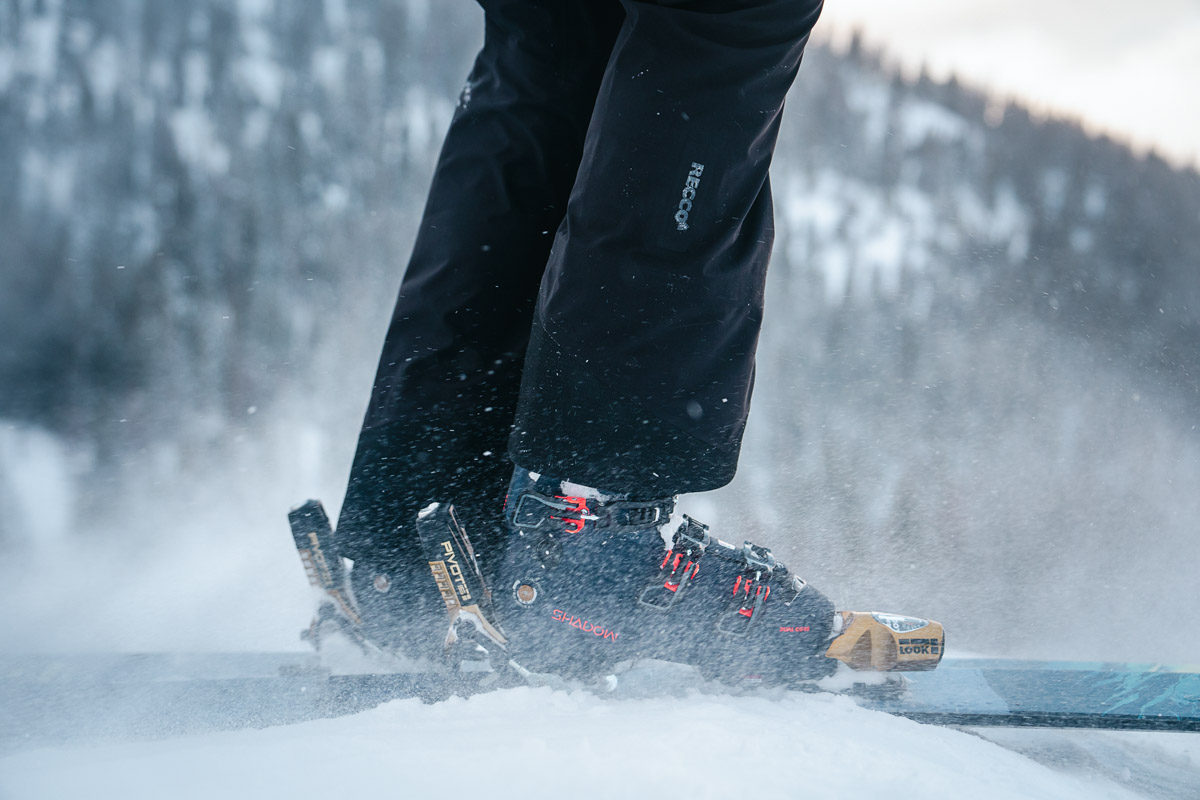
Lange’s Shadow series caused an uproar following its debut in 2024 for its unique technology: the Dual Pivot system and the Suspension Blade, which Lange claimed to increase power transfer and energy efficiency. And after testing the Shadow 130 LV, I don’t think these claims are too far-fetched. I came away impressed with the drive and dampness of this boot, and it proved to be a great companion for everything from deep powder days to choppy terrain. To be sure, it’s not a perfect boot—I found its response to be slow on narrow, technical terrain—but it gives the expert ski boot market a run for its money. Below, I break down my experiences with the Lange Shadow 130 LV ski boot. To see how it stacks up to the competition, check out our article on the best downhill ski boots.
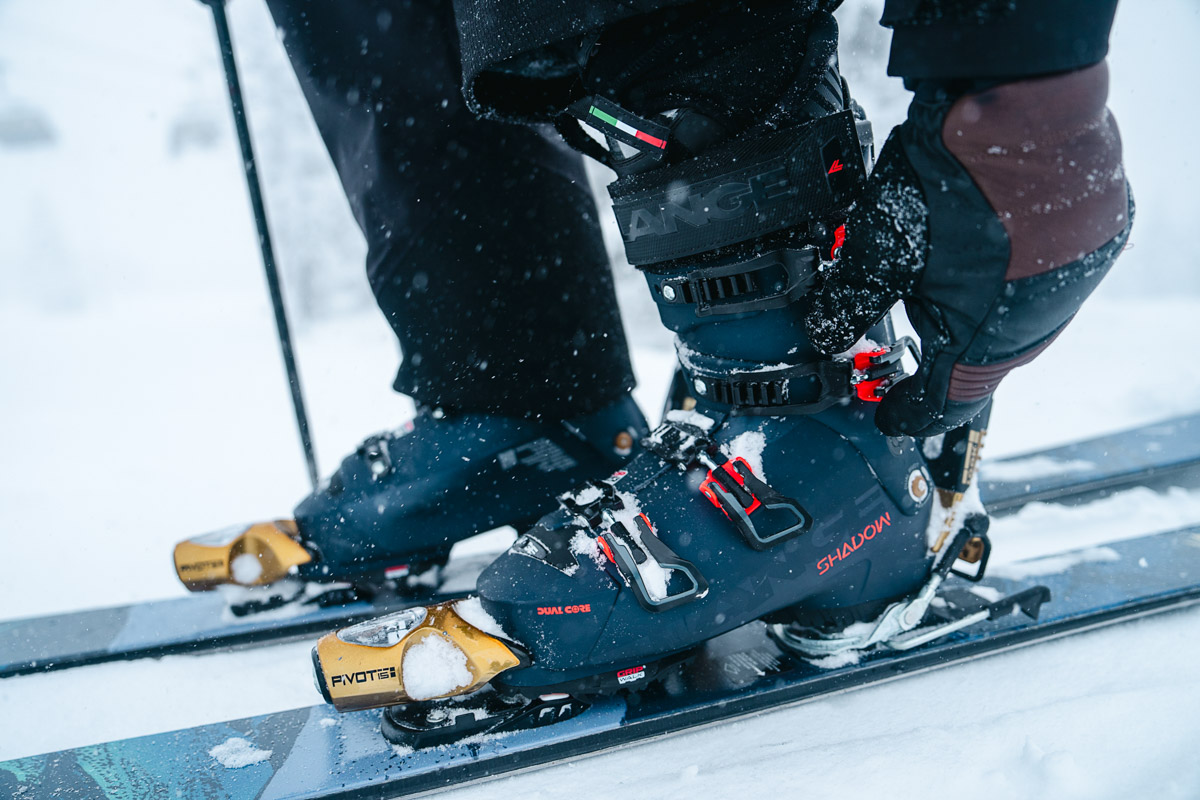
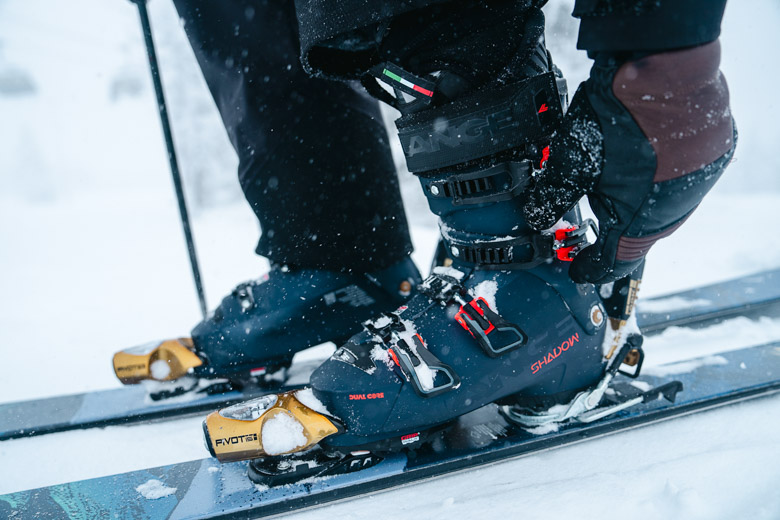
In the vast market of hard-charging downhill ski boots, the Lange Shadow 130 stands out from the crowd with its Suspension Blade and Dual Pivot technology, which aim to provide improved power transfer over traditional boots. Without getting too much into the weeds (you can read more about the tech in Key Features below), the Suspension Blade is a piece of plastic that connects the cuff and the shell of the boot using elastomers rather than rivets. Lange also included an additional pivot point lower on the ankle, which, when combined with the Blade, provides the boot with more leverage and drive.
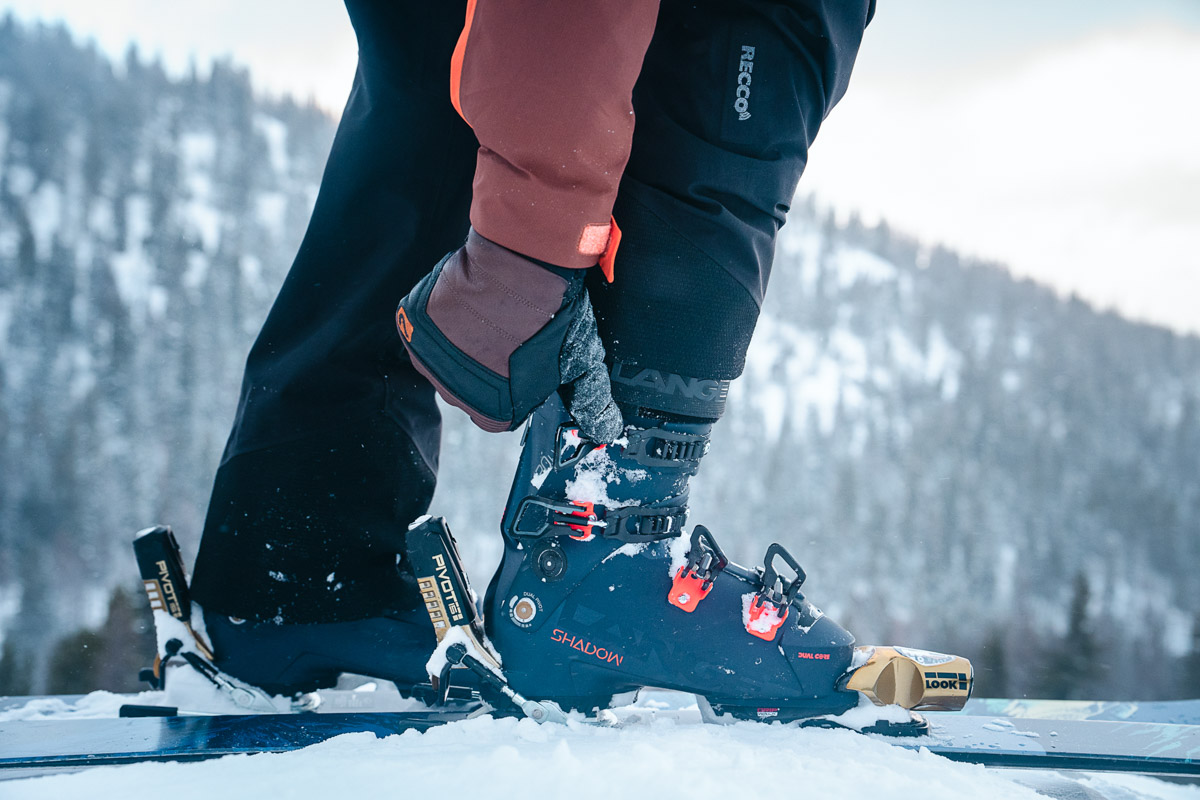
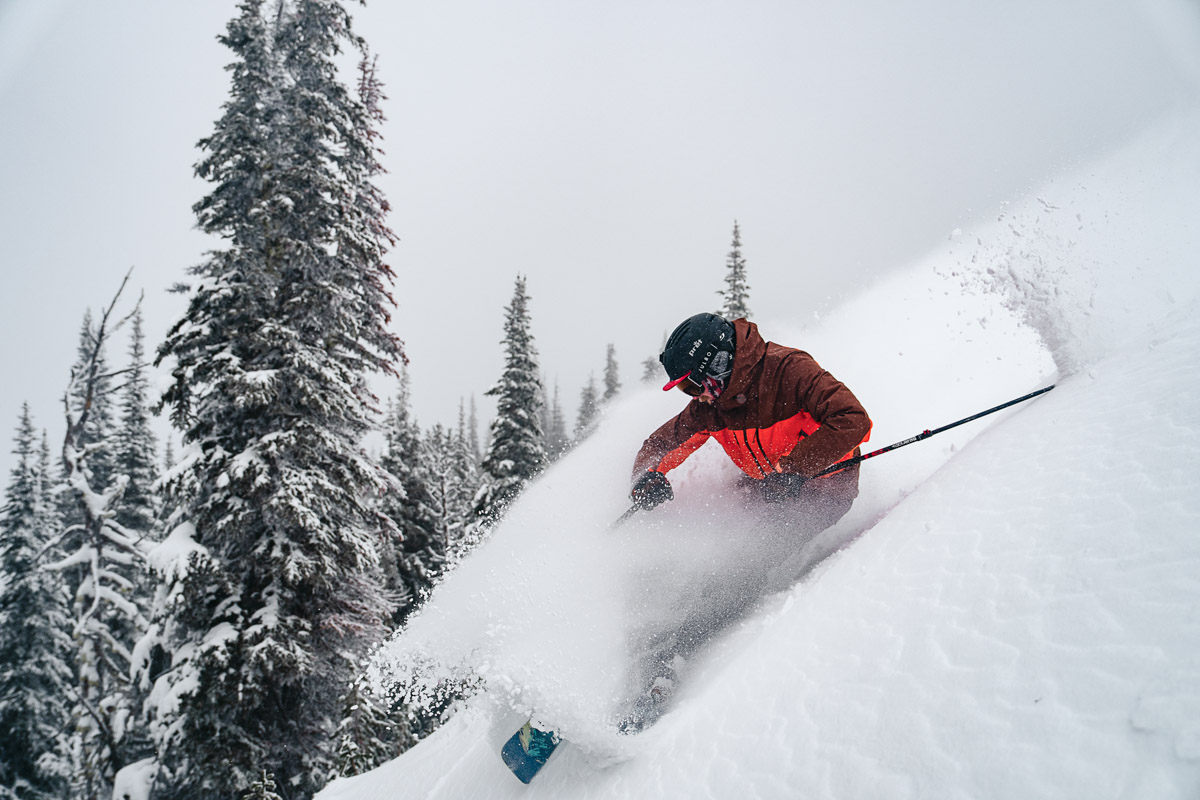
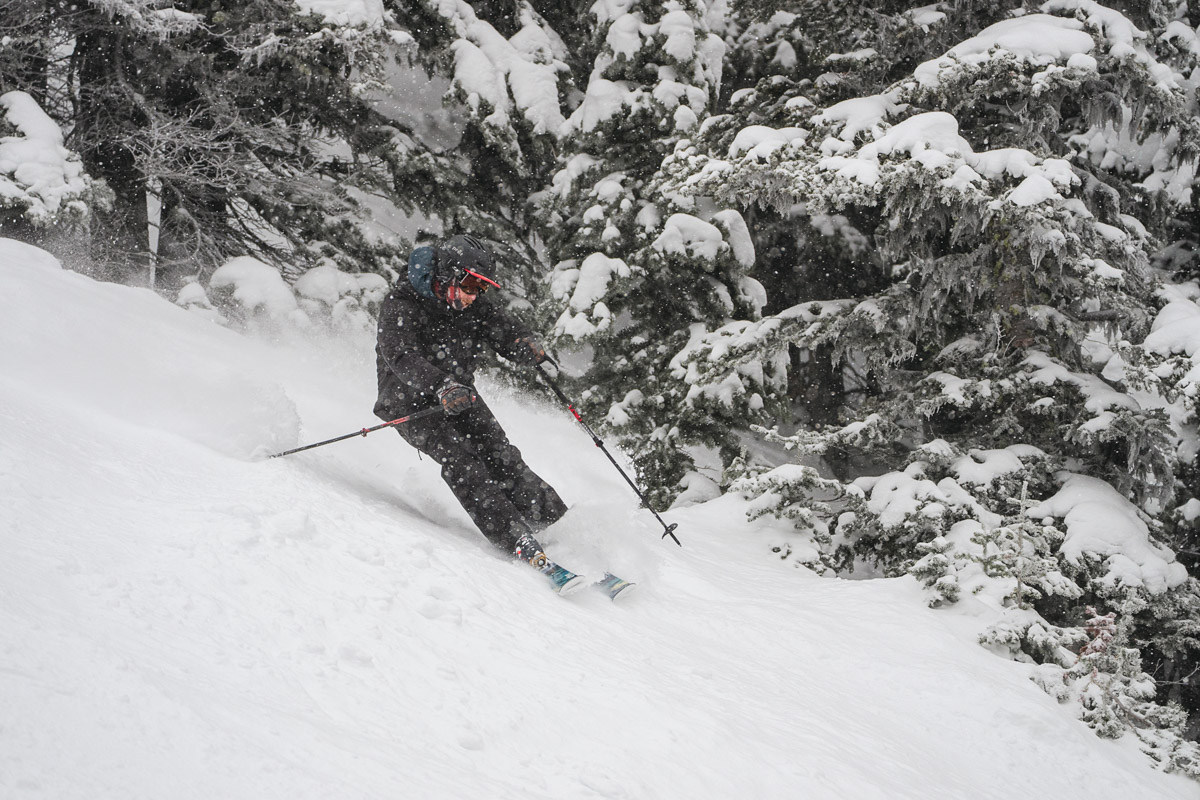
In testing, I was pleased to find that Lange's claim of increased power transfer was true. It required less energy on my end to drive my skis when wearing the Shadow. And not only that, but they were also great at dampening vibrations and bumps on choppy terrain. When compared to traditional ski boot designs that I’ve tested, the Shadow provides a relatively steady and chatter-free ride. I tested these boots with my 4Frnt MSP 99 skis, but I have no doubts that they’ll be able to handle a wider and heavier ski. It’s also worth noting here that I tested the low volume (LV) Shadow, which has a narrower last and greater precision. I think that performance skiers will find the LV the best choice, but the boot is also available in medium and high volume versions for those who prefer a more comfortable fit.
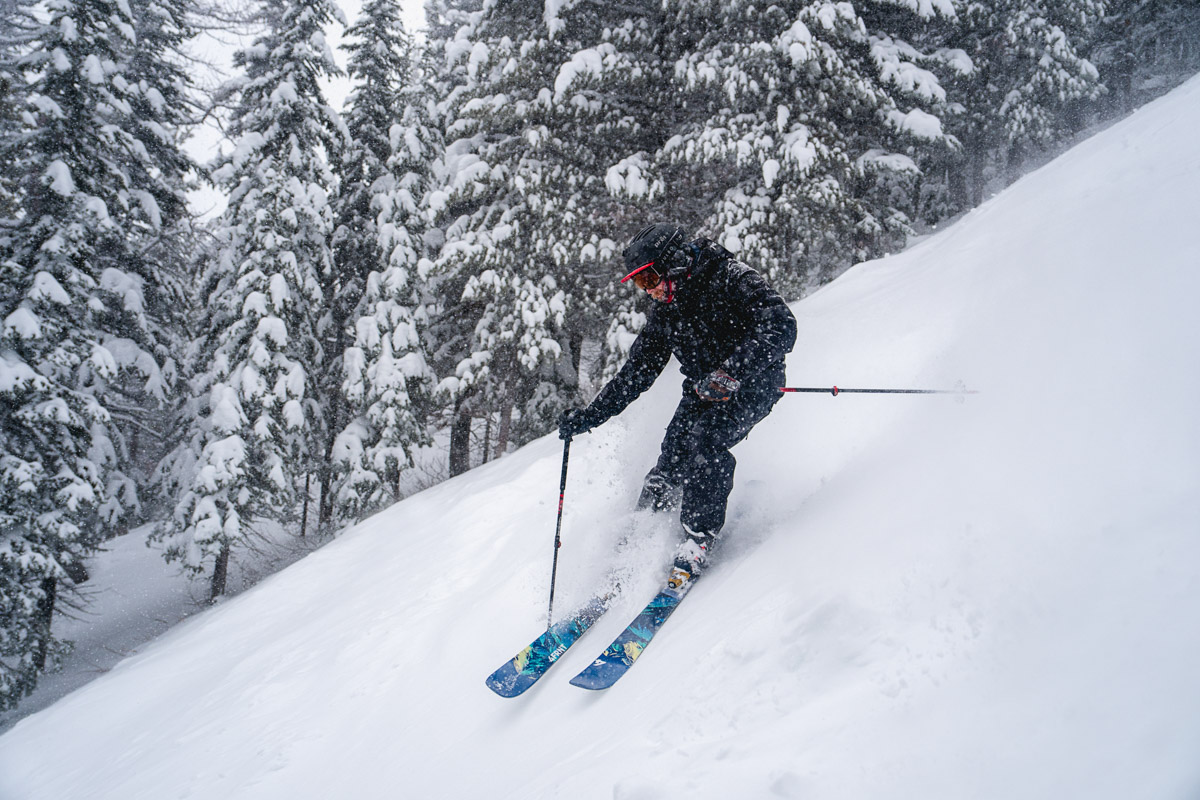
No ski boot is perfect, however, and I found the Shadow limited on steep and technical terrain. Specifically, the added suspension and high weight make it slow to react in tight terrain. This wasn’t a dealbreaker for me, but those looking for a snappy response might not feel satisfied with the Shadow. But in wide powder fields, groomers, and choppy terrain, the Shadow has no issue keeping up.
I’m not surprised that the Shadow lands on the heavy end of the market with the added tech. Combined with the additional Suspension Blade plastic and numerous bolts, the Shadows weigh a hefty 8 pounds 13.1 ounces. For reference, K2’s Recon 130 Boa weighs 8 pounds 4.2 ounces, and Salomon’s S/Pro Alpha 130 (which has similar tech to the Suspension Blade called Power Spine) weighs 8 pounds 4 ounces for the pair.
That said, weight isn’t the most critical factor for a downhill boot. Some extra weight can actually help with energy transfer, which is the Shadow’s main goal. If the boot were lighter, it might not drive the ski as well or dampen chatter as effectively in choppy terrain. The downside to the heft is the lack of response on technical terrain, as I mentioned above. But as long as you keep your expectations reasonable, the weight of the Shadow is far from a dealbreaker.
As touched on above, the Shadow stands out for its Suspension Blade and Dual Pivot tech. The Blade is an additional piece of plastic that connects the lower shell and upper cuff via an elastomer. In combination with the additional leverage provided by the second pivot at the heel, this tech gives the boot improved power transfer compared to a traditional design. In practice, this means the skier doesn’t have to work as hard to transfer their energy into the boot to drive the ski. It’s worth noting here that the bushings at the top of the suspension blade and along the lower pivot are customizable. Lange includes a softer rubber bushing that can replace the stiffer one for a softer flex (Lange claims by 8%). I haven’t had a chance to test the softer bushing, but it will likely provide a more active response that’s needed in technical terrain. For more information on the ins and outs of this tech, check out our Lange Shadow Technical Breakdown article.

Another unique feature of the Shadow is its Dual Core construction. The boot features a stiffer plastic around the cuff, providing power, and a softer plastic around the foot, which offers more give and comfort. Together, these details make for a dynamic boot that adapts to a skier’s riding style and the terrain. Durability isn’t a concern with the softer plastic, either. The shell feels burly and hard-wearing throughout.
The buckles and power strap on the Lange Shadow are perhaps the least-engineered parts of the boot. Unlike many ski boot manufacturers that have switched to Boa closures, the Shadow retains its traditional four-buckle design. The buckles function smoothly and are easy to adjust with ski gloves on. To be sure, they don’t have the same precise fit as Boa closures, but they don’t leave too much else to be desired. The power strap offers a final locked-down feel around the shin, and it’s also easy to adjust when wearing gloves.
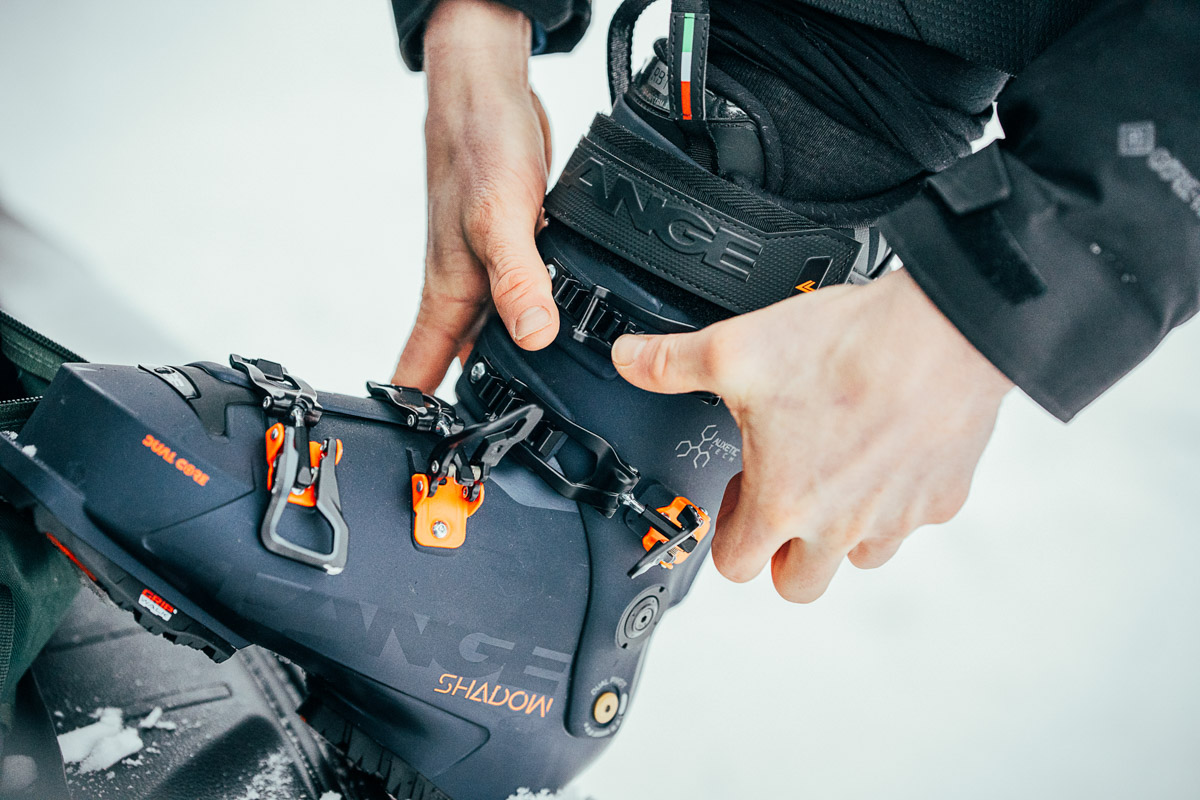
The Shadow’s stock liners have a few features that set them apart. To start, the foam is comfortable, warm, and easy to heat mold. Flexible hexagonal cut-outs at the ankle and side of the foot allow the foam to expand under pressure, which helps prevent hotspots. A strap that runs the length of the Achilles tendon in the back of the liner helps lock the heel in the boot. The tongue boasts soft padding for comfort along the shins, and it’s reinforced with a thin plastic at the front, providing extra protection from the shell. The design is rounded out with a removable spoiler that, when used, adds 5 more degrees of forward lean (the Shadow has 11 degrees without the spoiler). While I personally prefer a stiffer liner in my ski boots, this liner is far from a poor design.
The Shadow has so far proved to be a durable and well-made boot. The plastic along the shell is thick and confidence-inspiring, all buckles are easy to operate, and the liner, while not as stiff as more premium designs, seems likely to hold up in the long run. To be honest, I was a bit wary about the durability of this design considering the additional moving parts, but I haven’t had any issues to date. I’ve only faced one small issue so far: the hex head on one of the pivots is stripped, making it tougher to remove. This is an oversight considering this boot is meant to be customized, and I hope that Lange addresses it in future iterations of the boot. That said, I can't complain too much: the bolts are much easier to replace than rivets, which are more common on downhill ski boots.
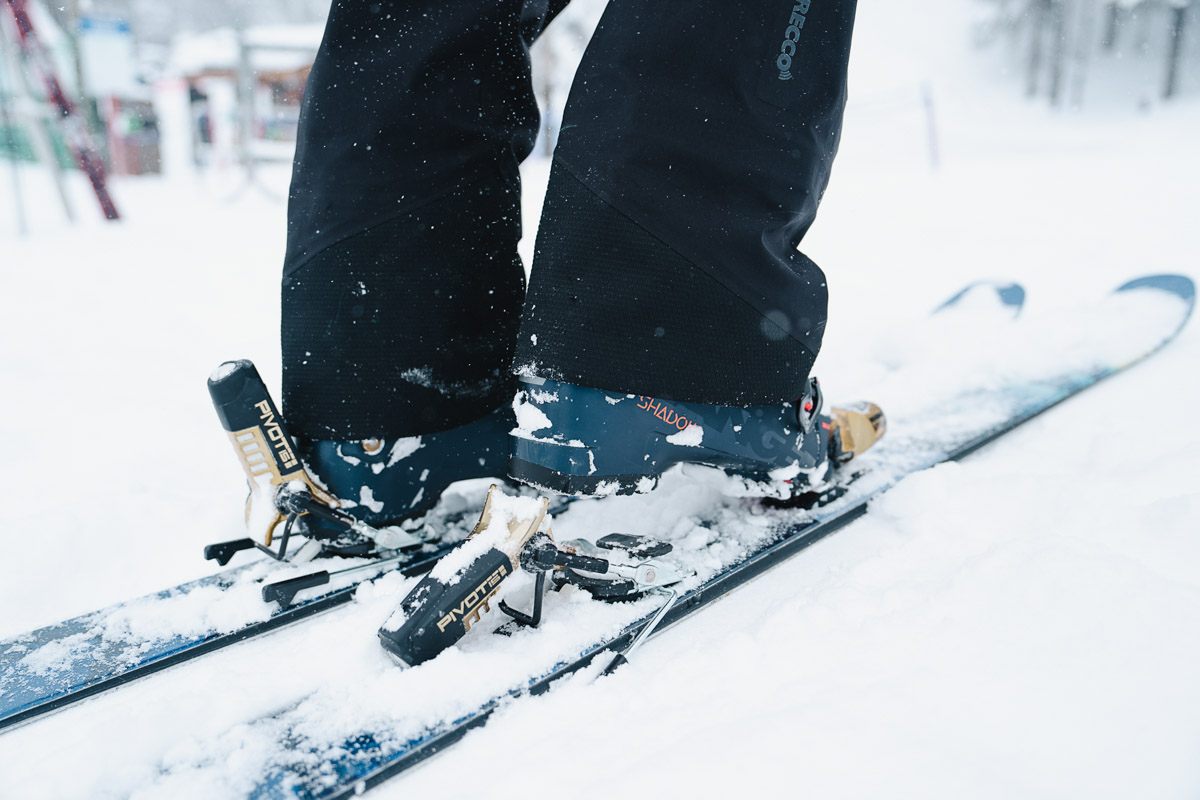
I opted for the low-volume version of the Shadow (97mm last) for a performance fit, but the boot is also offered in a medium-volume version (100mm last) and a high-volume version (102mm last). I also sized down to a 25.5 mondo size, though my feet technically fit in a size 26. In most cases, I punch the shell at the big toe and 5th and 6th toes, but I decided to test this boot before making any permanent changes. I wasn’t surprised to experience some discomfort in my normal hot-spot areas, but I also didn’t find it entirely uncomfortable out of the box. In fact, the toe box felt higher volume than many other Lange boots I’ve tested. The heel cup on the Shadow is noticeably narrower than many other boots on the market. Overall, I wouldn’t call the Shadow LV a comfort boot, but with the proper adjustments by a bootfitter, you can prevent hotspots and blisters without compromising power transfer.
As mentioned above, the Shadow 130 comes in three different volumes: high (102mm last), medium (100mm last), and low (97mm last). Lange also offers the boot in a few different flexes for the men’s and women’s versions. The men’s is offered in a 140 flex, 130 (the flex I tested), 120, and 110. The Shadow 120 is available in low, medium, and high volumes, while the 110 is only offered in a medium-volume fit, and the stiffest 140 is available in a low-volume fit. On the women’s side, the Shadow is offered in flexes of 115, 95, and 85. The women’s Shadow 115—the closest to the 130 flex I tested—comes in low, medium, and high-volume fits that match the lasts of the men's 130. Lastly, the Shadow Junior is a version for kids, and it has a flex of 65.


| Boot | Price | Weight | Lasts | Flexes | Closure |
|---|---|---|---|---|---|
| Lange Shadow 130 LV | $900 | 8 lb. 13.1 oz. | 97, 100, 102mm | 140, 130, 120, 110 | 4 buckle |
| Salomon S/Pro Alpha 130 | $840 | 8 lb. 4.0 oz. | 98mm | 130, 120, 110, 100 | 4 buckle |
| K2 Recon 130 Boa | $900 | 8 lb. 4.2 oz. | 100mm | 140, 130, 120, 115, 110, 100 | 2 buckle, Boa |
| Atomic Hawx Ultra S 130 | $1,065 | 8 lb. 3.3 oz. | 98mm | 130, 110, 100 | 2 buckle, Boa |
The Lange Shadow 130 stands out from the competition with its Suspension Blade and Dual Pivot tech, but there are a few comparable models to consider. The boot that comes closest to the Shadow’s design is the Salomon S/Pro Alpha 130, which has an adjustable Power Spine along the back of the boot. When adjusted in the “direct” position, the spine connects the cuff to the shell for stronger power transfer, and the “progressive” position reverses that. As part of Salomon’s Expert Line, the S/Pro Alpha 130 only comes in a narrow 98 millimeter last. The S/Pro Alpha 130 is a bit lighter than the Shadow 130, likely due to the thinner Custom HD Shell, which makes the heat-molding process quicker. In general, we prefer Lange’s build quality and attention to detail and have found Salomon’s boots less hard-wearing.
Two other models to consider are K2’s Recon 130 Boa and the Atomic Hawx Ultra S 130. Both have a stiff 130 flex and have a Boa closure along the foot for a more precise fit (the Hawx Ultra 130 is also offered in a dual Boa version). The Recon has a 100 millimeter last, the widest among these competitors. The Hawx Ultra 130 is a bit more performance-oriented with a narrow 98 millimeter last, but the adaptable tongue can be respositioned to accommodate different instep heights. As far as price goes, the Hawx Ultra 130 is the most expensive of the bunch, but all come in at a premium. At the end of the day, your choice between these options may come down to fit preferences. But in our opinion, the Shadow 130 proves to be the most well-rounded of the bunch and leaves little to be desired in terms of performance, durability, and versatility.
Back to the Lange Shadow 130 LV Review See our Downhill Ski Boots Guide

832e.jpg?h=fbc67360&itok=ofljNFTS)
a9ac.jpg?h=fbc67360&itok=5myOURFM)

91b6.jpg?h=fbc67360&itok=bkFxgr3u)
14ab.jpg?h=fbc67360&itok=1n06ZZey)
%20(s)a084.jpg?h=fbc67360&itok=sSh2uCys)

f6af.jpg?h=fbc67360&itok=JShxB9ES)