Photo Credit
Price: $200
Weight: 1 lb. 7.5 oz. (women's size 8.5)
Waterproof: Yes (Gore-Tex)
What we like: Lightweight but surprisingly capable; very modern look and feel.
What we don’t: A little lacking in ankle support; shallow lugs have limitations on soft surfaces.
See the Women's Arc'teryx Kopec Mid GTX See the Men's Arc'teryx Kopec Mid GTX
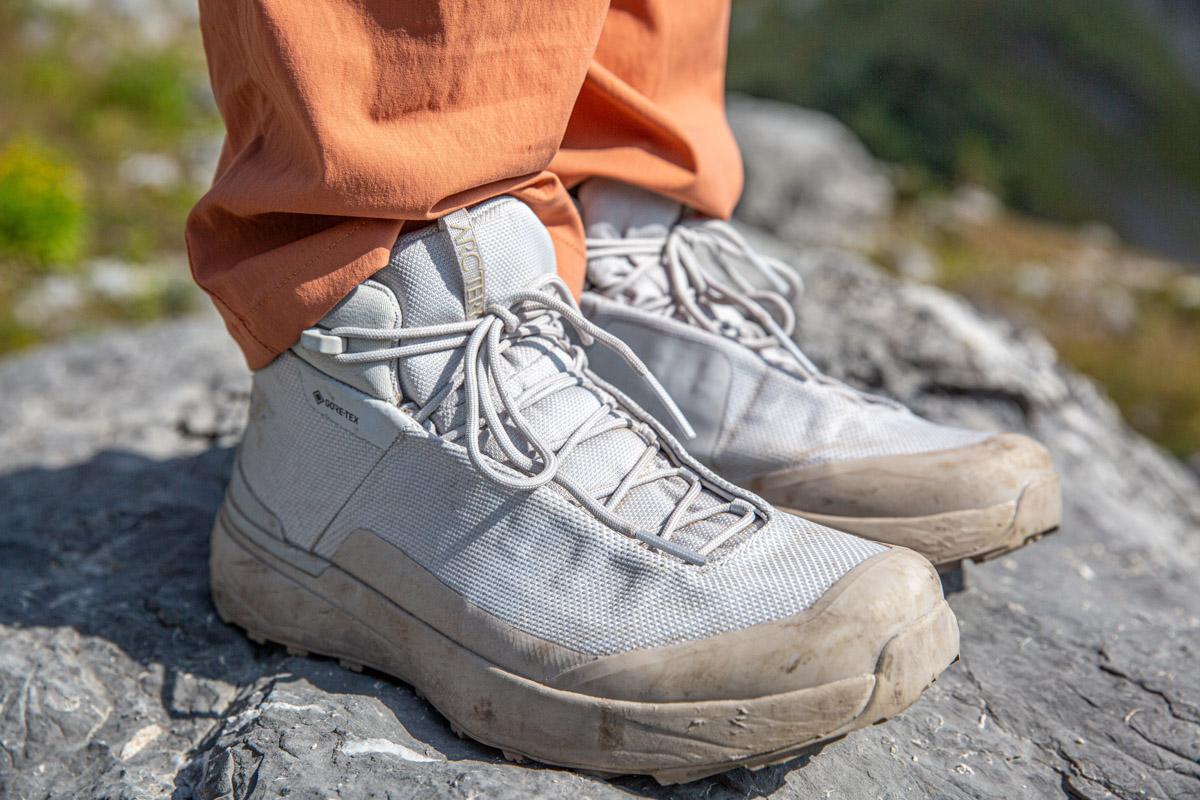
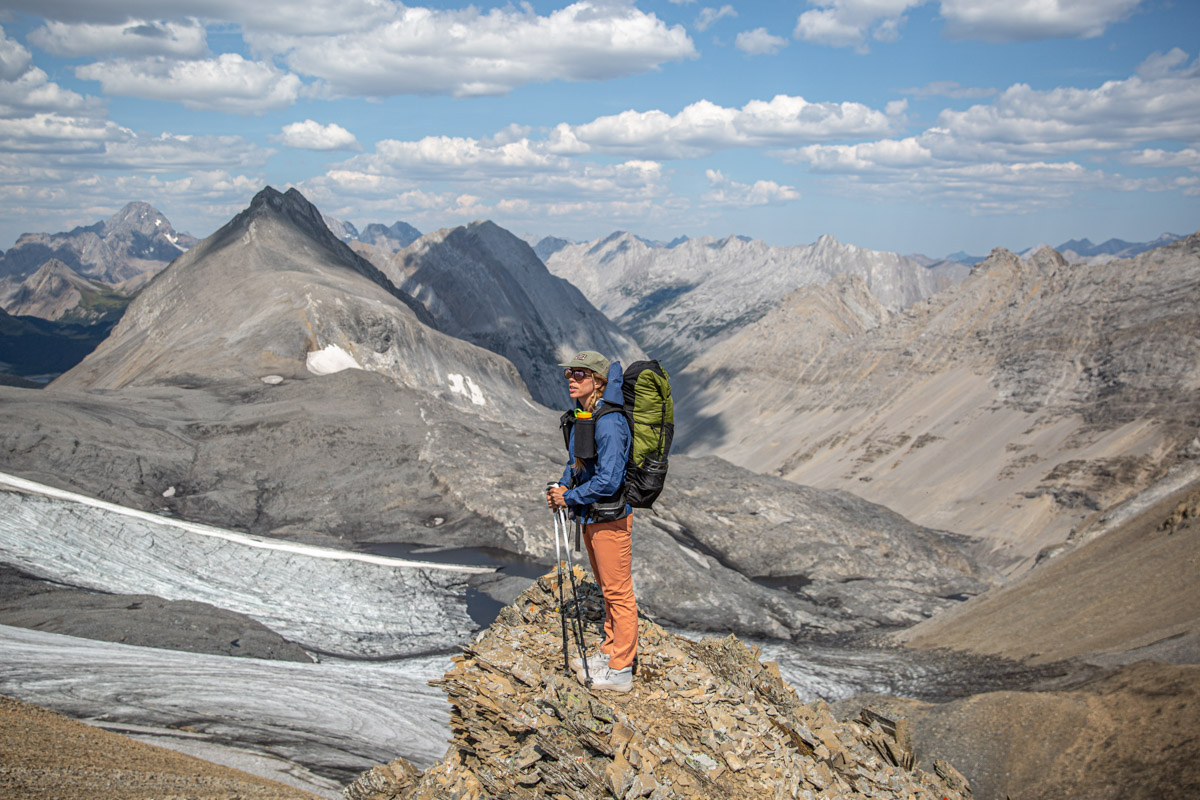
Arc’teryx may not be the first brand that comes to mind for footwear, but they’ve come out with some seriously capable hiking boots and shoes over the years. Replacing the popular Aerios for 2025, the Kopec Mid GTX was quick to impress me during a three-day backpacking loop in the Canadian Rockies. As someone who enjoys moving quickly with minimal weight underfoot, I was struck by the Kopec’s light-but-capable personality, allowing me to confidently navigate everything from easy trail to exposed scrambling on a technical ridgeline. As with most lightweight designs, the boots do sacrifice some support and durability in the name of keeping weight low, but overall, I feel Arc’teryx did a great job balancing conflicting priorities. Below are my thoughts on the Kopec Mid GTX. To see how it stacks up to the competition, check out our articles on the best women’s hiking boots and the best hiking boots.
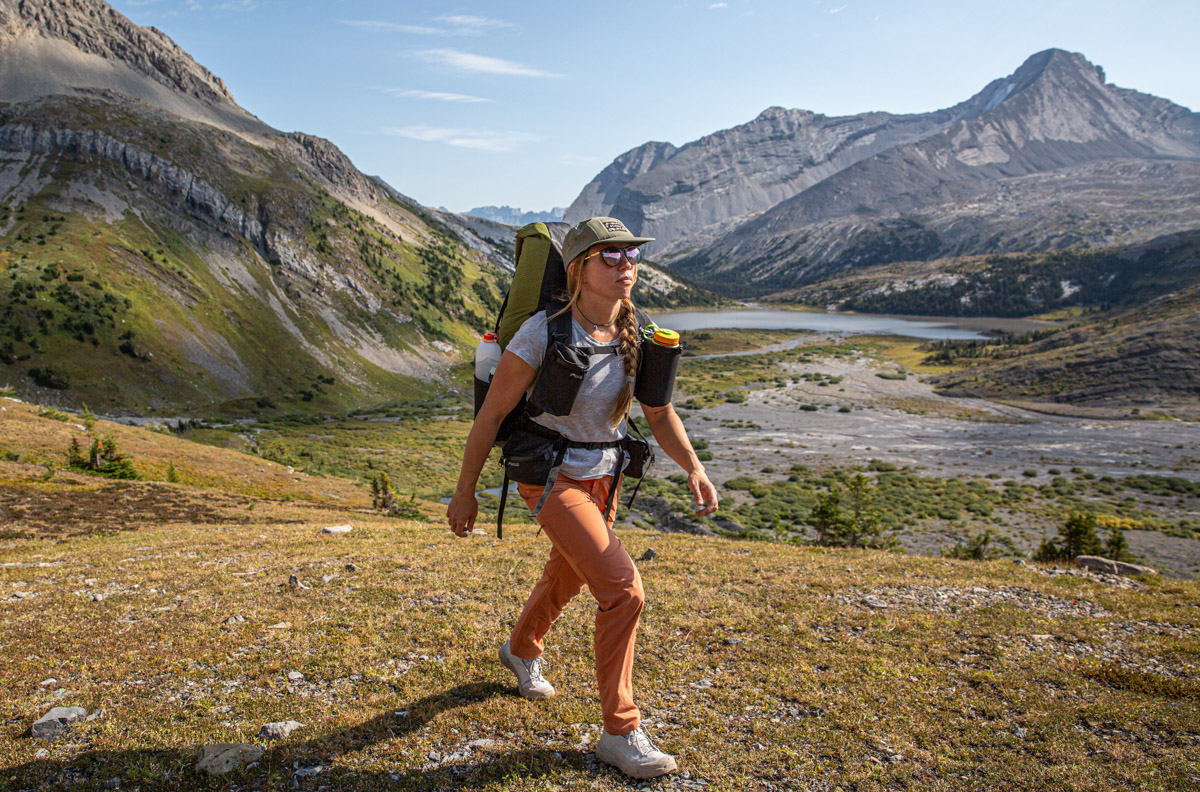
Out of the box, I found the Arc’teryx Kopec Mid GTX to be very comfortable. With zero break-in before hitting the trail, I expected some issues in the form of hotspots or blisters, but that thankfully wasn’t the case. The shoes have a streamlined and flexible build that lends a very natural stride, and they’re lightweight enough to go mostly unnoticed throughout the day. Additionally, while the midsole isn’t very plush, I found it to be plenty padded for keeping my feet happy on long days with a full pack. In fact, I arrived at camp each evening feeling mostly fresh—I never felt like I needed to rip the boots off right away, which is high praise considering I’m almost always eager to slip into a pair of camp slippers or sandals. Finally, the boots have a very athletic personality that makes it easy to move quickly on the trail.
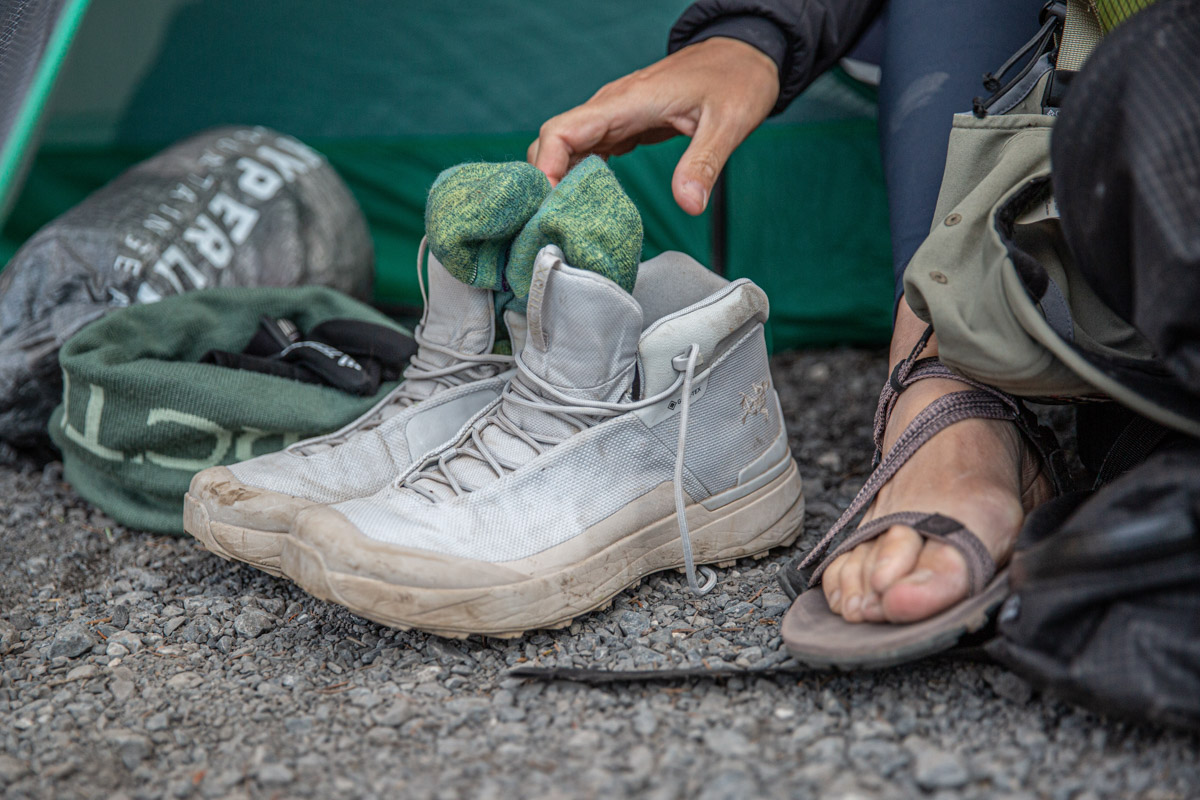
A final contributor to the Kopec’s comfort is fit. Appropriately labeled as a “Comfort Fit” by Arc’teryx, the boots have an accommodating shape that allows for natural swelling throughout the day. The boots ended up being perfect for me when paired with midweight hiking socks, although there was some unwanted room with thinner socks. If possible, I recommend trying on the Kopec before you buy to ensure the fit will work for you and your sock preferences.
The Kopec boots in a women’s size 8.5 weighed in at 1 pound 7.5 ounces for the pair on my scale, which is just under their listed weight of 1 pound 8.7 ounces. In my opinion, this is impressively lightweight for such a well-rounded design. For comparison, the Kopec is right in line with trail runner-inspired hiking boots, such as the Altra Lone Peak 9 Waterproof Mid (1 lb. 10.9 oz.) and NNormal’s Tomir WP (1 lb. 5.4 oz.). By comparison, traditional leather hikers like the Lowa Renegade Evo GTX Mid and Keen Targhee IV Waterproof Mid clock in north of 2 pounds. In testing, the Kopec felt just as lightweight underfoot as its weight would suggest, lending a very nimble personality that belies the boot’s technical capabilities.
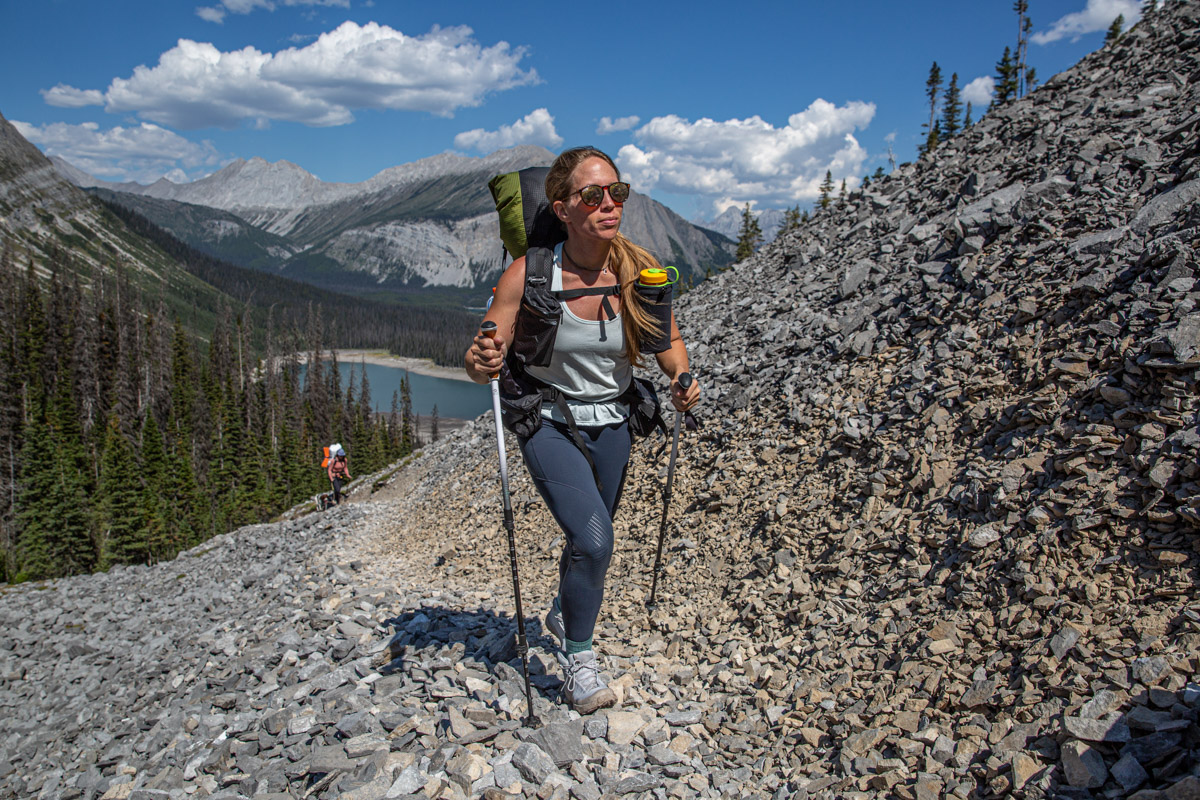
I was very happy to have the Kopec Mid GTX boots with me while backpacking in Canada, as our route took us across a wide range of terrain. The first day was mellow, but the second day involved ascending a steep and loose scree field, traversing a technical ridgeline with a couple short sections of exposure, and ended with an even steeper and looser descent on kitty litter-like gravel. While not the most aggressive, the Vibram Megagrip outsole did a fantastic job keeping me surefooted and upright, leading to zero ankle rolls or slips on terrain that was quite difficult to trust. The Kopec wouldn’t be my first choice in mud, as the lugs are shallow, but otherwise, I have very few qualms about grip.

Like most lightweight designs, the Kopec Mid GTX sacrifices some support and stability in the name of keeping weight low. I often hike and backpack in lightweight, low-top trail runners, so I am used to wearing flexible shoes, but some might find the Kopec a little flimsy-feeling, especially when navigating tricky terrain like boulder fields. The tongue/collar area in particular strikes me as underbuilt: The connection point between the tongue and upper is pretty low, which results in extra space around the tongue that allows rocks and other debris to enter. Combined with the single eyelet, I found it tough to achieve a locked-in fit at the collar, which impacted ankle support. Again, this wasn’t a dealbreaker for me since I’m used to shoes with limited structure, but those coming from traditional leather hiking boots may find the Kopec lacking in support.
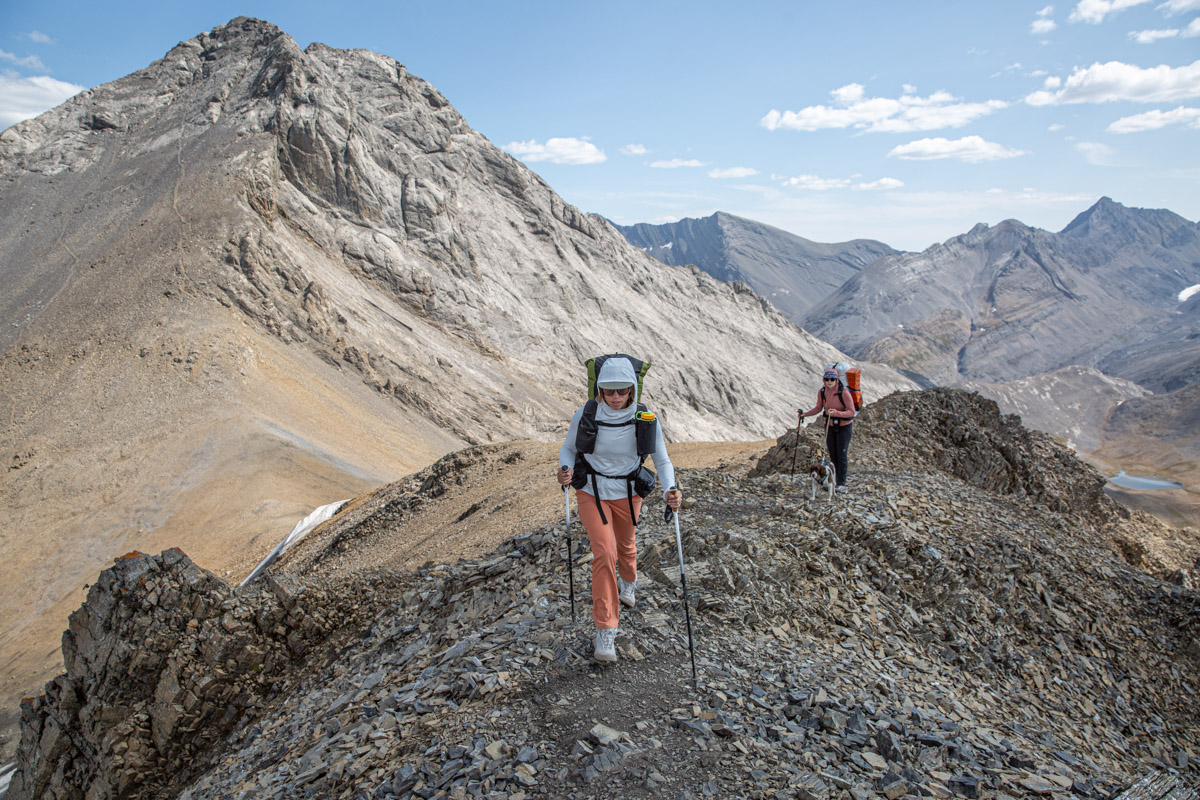
The Kopec Mid GTX features Gore-Tex waterproofing for sealing out moisture, which I found to be reliable in testing. It’s worth noting that our Canada trek was mostly dry, with zero rain and very few water crossings to navigate during our three-day trek. We did encounter several alpine lakes, however, giving me multiple opportunities to submerge the boots. Despite standing in water that reached just below my ankle (covering the entire forefoot of the boot), I didn’t experience any moisture making its way inside. Some reviewers note that the boots are below-average performers in this regard, which may be due to the ePE membrane, a more environmentally friendly alternative to traditional Gore-Tex. However, I haven’t had any issues.
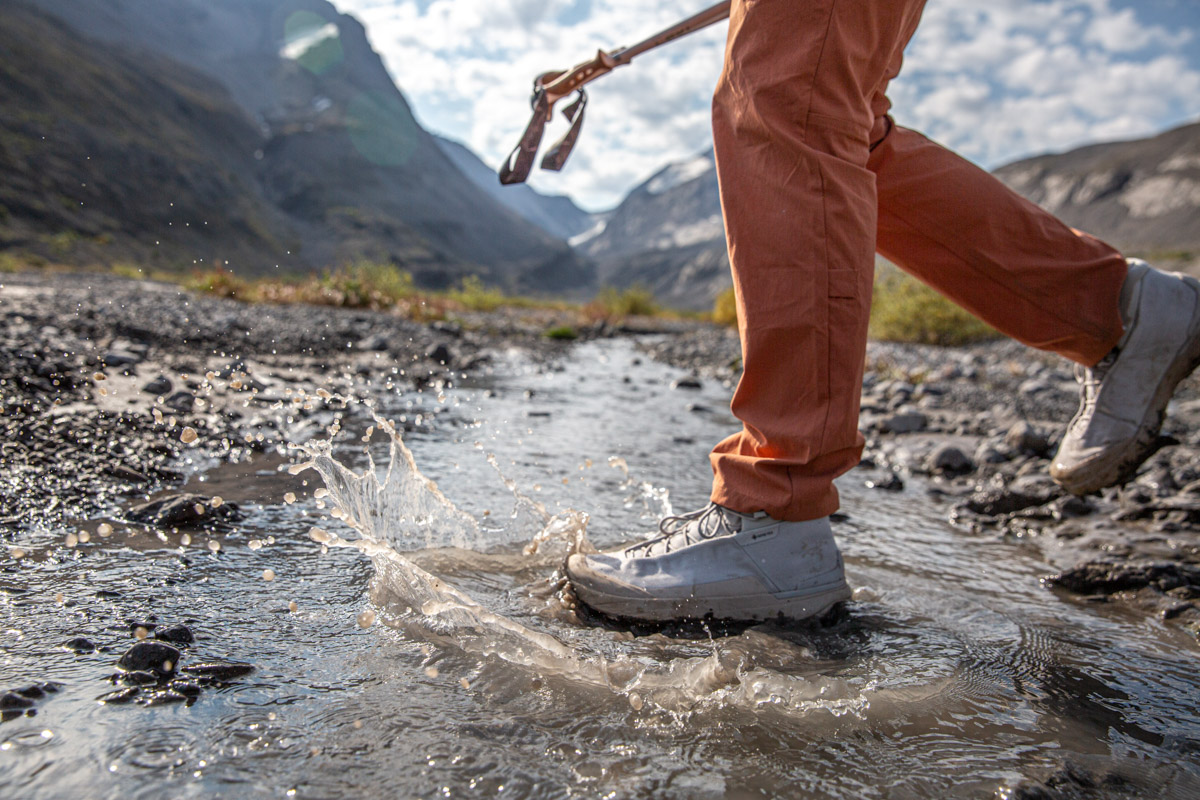
Waterproof hiking boots inherently sacrifice some breathability in the name of protection, but I found the Kopec to be a pretty solid performer for a Gore-Tex design. Part of this may have been due to the all-white color I was testing, but the streamlined build plays a big role. The Cordura mesh upper is lightweight and porous, with no thick overlays to impede ventilation. For reference, our backpacking trip was pretty warm and exposed, with temperatures reaching into the upper 70s Fahrenheit, but I never felt like my feet were overheating in these boots. My socks were a little damp by the time I arrived at camp each evening, but it was nothing out of the ordinary—and a step up from the Hoka Anacapa 2 Mid GTX boots I was also testing. As a bonus, the boots also dried quickly after being submerged in alpine lakes.
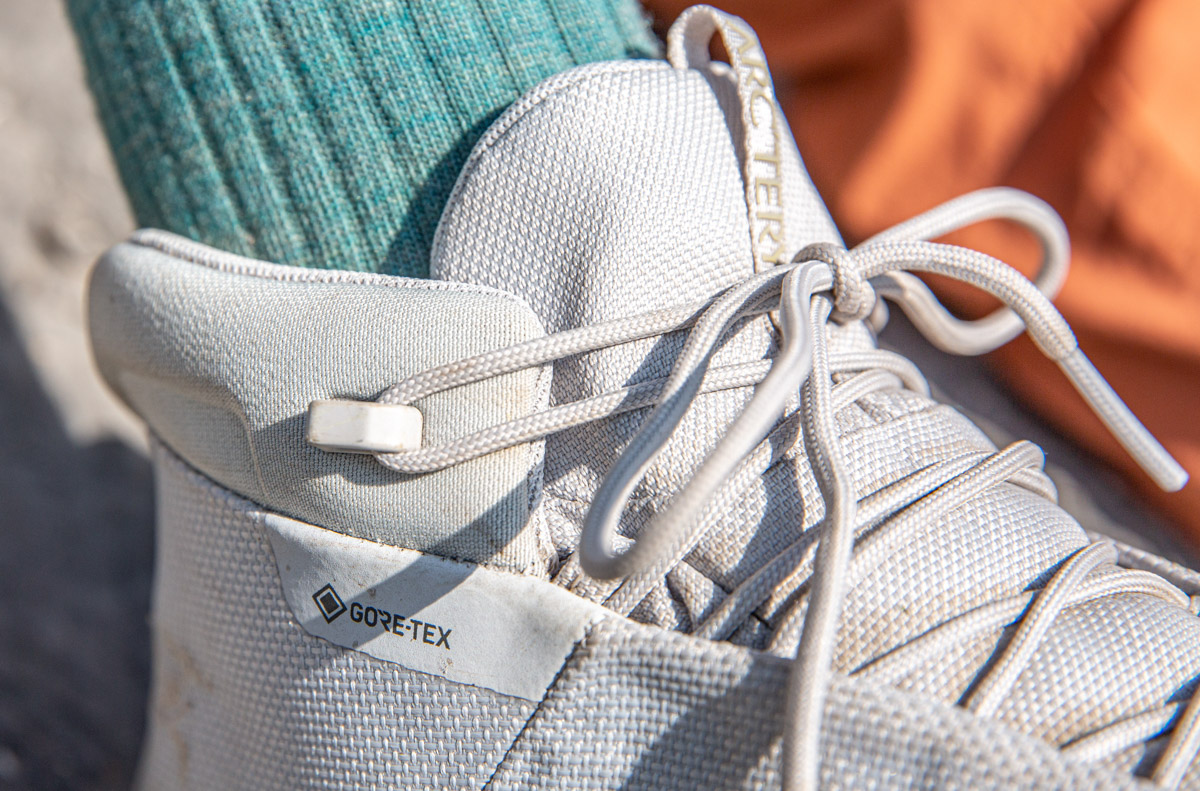
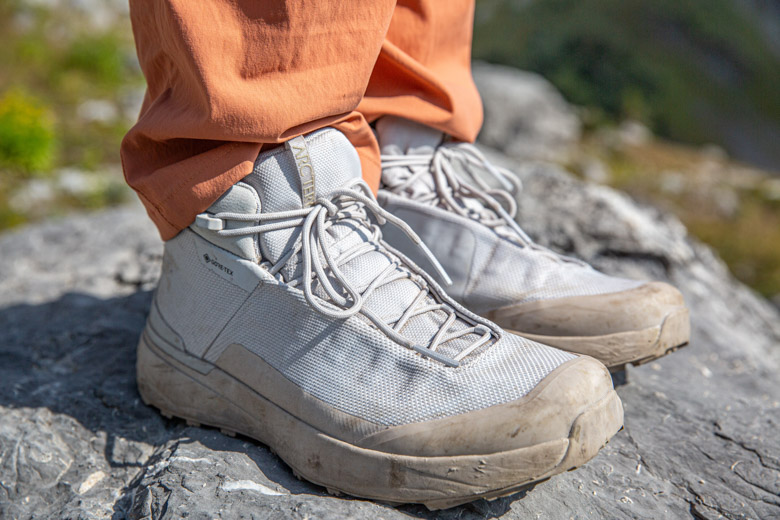
Along with stability and support, durability is another area where lightweight hikers often fall short. In this case, I feel Arc’teryx did a pretty good job of keeping things light without going overboard. While the Kopec is streamlined compared to traditional leather boots like the Lowa Renegade or Keen Targhee, it hasn’t shown any major signs of weakness thus far. After 30+ miles, the outsoles are in great shape with no signs of deterioration, the uppers are free of tears and snags, and the laces are intact with no fraying. There’s some light scuffing along the midsoles, as well as some staining from dirt and dust, but it’s all purely cosmetic. If I were to buy the shoes again, I would opt for a darker color that hides stains better. As a final bonus, the boots have a very modern look and feel—a nice change of pace from the clunky and somewhat unforgiving personality of the La Sportiva Spire GTX shoes I also tested in Canada.

I went with my usual size 8.5 in the women’s Kopec GTX boots and enjoyed the overall fit. Paired with midweight hiking socks, I experienced zero issues with slippage, rubbing, or other signs of an imprecise fit. Also, I appreciate that the toe box is wide enough to accommodate swelling throughout a day of hiking. Despite a couple of long days on the trail with a full pack, my feet never felt fatigued or irritated when we reached camp. I never needed to adjust the laces mid-day, either. I did notice some unwanted room when I swapped to thin (rather than midweight) hiking socks during our hike out, but it was a short day, so I didn’t suffer any hotspots or blisters. If you’re frequently between sizes or exclusively wear very thin socks, it might be a good idea to size down (or try the shoes on before buying if possible).
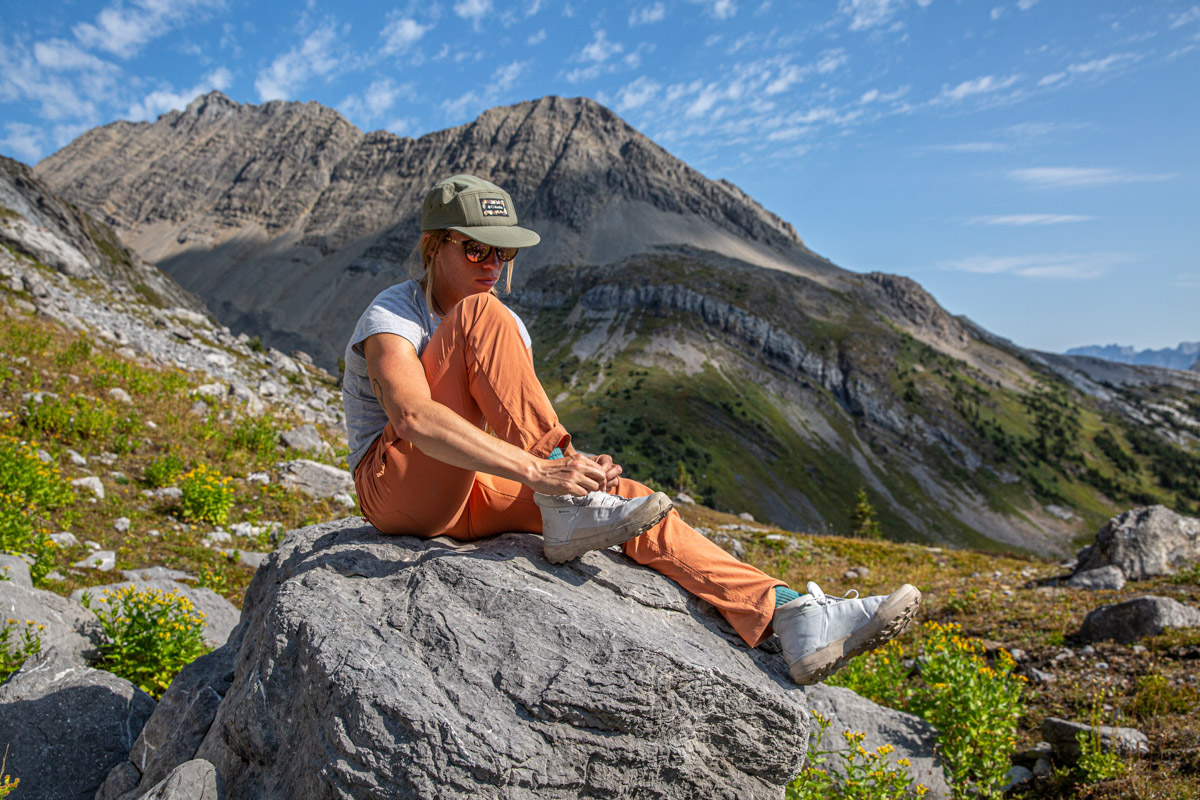
Arc'teryx is one of the leading outdoor brands in its commitment to sustainability, and the Kopec features a few notable eco-friendly elements. As mentioned earlier, the brand utilizes Gore-Tex's ePE waterproof membrane, which is free from any PFAS, or "forever chemicals," that have been deemed unsafe for consumers and the environment. The durable water repellent is also PFAS-free. In future versions of the Kopec, we hope to see a greater use of recycled materials—the current design doesn't use any.
I tested the women’s version of the Kopec Mid GTX boots in Canada, and they are also sold in a men’s model that’s largely identical. Compared to the women’s style, the men’s Kopec Mid GTX costs the same but weighs a little more, comes in different color options, and is available in U.S. sizes from 7 to 13 (the women’s boot is sold in sizes from 5 to 10). For those who don’t need or want the ankle coverage, the Kopec is also sold in a low-top shoe for men and women that will save you a bit of cash and weight. Unfortunately, there’s no non-waterproof shoe available, but the mesh-heavy upper of the Gore-Tex model does a good job of keeping air flowing, in my experience.

| Boot | Price | Category | Weight | Waterproof | Upper |
|---|---|---|---|---|---|
| Arc'teryx Kopec Mid GTX | $200 | Lightweight | 1 lb. 7.5 oz. | Gore-Tex | Synthetic |
| Altra Lone Peak 9 WP Mid | $180 | Lightweight | 1 lb. 10.9 oz. | Cosmo Liner | Synthetic |
| Salomon’s X Ultra 5 Mid Gore-Tex | $185 | All-around/lightweight | 1 lb. 11.5 oz. | Gore-Tex | Synthetic |
| Lowa’s Renegade Evo GTX Mid | $285 | All-around | 2 lb. 2.2 oz. | Gore-Tex | Leather |
The Kopec Mid GTX impressed me in a lot of ways, but there are plenty of capable lightweight hiking boots to consider. From trail running specialist Altra, the Lone Peak 9 Waterproof Mid—a beefed-up spinoff of their popular Lone Peak shoe—is an intriguing alternative to the Arc’teryx boot. Known for its wide toe box and zero-drop profile, the Lone Peak offers slipper-like comfort and a very natural feel underfoot. However, the trade-off is that it can feel sloppy for some, especially on technical terrain. It’s also a bit heavier than the Kopec at 1 pound 10.9 ounces per pair and uses in-house technologies for both waterproofing and traction, which fall short of Gore-Tex and Vibram, respectively. In the end, if you’re willing to spend up, I consider the Kopec to be the more well-rounded lightweight boot.

For a nice middle-of-the-road option, Salomon’s X Ultra 5 Mid Gore-Tex has a lot going for it. While a bit heavier than the Kopec at 1 pound 11.5 ounces per pair, the X Ultra 5 strikes a nice balance between weight, stability, and protection. We're also big fans of Salomon's Contagrip rubber, which has proven reliable over a variety of terrain, from loose dirt to patches of mud and snow. And from a durability standpoint, the X Ultra is a bit more confidence-inspiring with a PU-coated leather/textile upper, thick overlays to protect sensitive areas, and a beefier toe cap than the Kopec. All in all, I enjoyed the Kopec’s flexible and natural feel, but many backpackers will likely find the Salomon’s upgrades in support and structure worth the slight weight penalty.
Finally, for traditionalists and those who need some added support, it’s hard to beat Lowa’s Renegade Evo GTX Mid. While heavier than the Kopec at over 2 pounds for the pair, the Renegade offers significant upgrades in stability, durability, and protection. It also features a more aggressive outsole with deeper lugs, a noticeable boost in ankle support, and a nubuck leather upper that will hold up better over time. In the end, I’d break it down as follows: For fast-paced objectives with a lightweight load, the Kopec is plenty of boot. For multi-day treks with a heavy pack, I’d go with the Renegade.
Back to the Arc'teryx Kopec Mid GTX Review See our Women's Hiking Boot Guide

f7dd.jpg?h=fbc67360&itok=XyD9FfSo)

37d3.jpg?h=fbc67360&itok=TOEvTocq)
fb29.jpg?h=fbc67360&itok=L2y9SVlj)
Sfbfb.jpg?h=fbc67360&itok=-57tipaI)
dd52.jpg?h=fbc67360&itok=BEpS0yNy)
00b0.jpg?h=fbc67360&itok=3lNBbzz3)
6079.jpg?h=fbc67360&itok=94jbD15Q)
6f2e.jpg?h=fbc67360&itok=0H8jyoRL)