.jpg)
.jpg)
Photo Credit
It’s that time of year! Time to find the perfect present for our adventurous loved ones. We have a list of editor-approved gifts for hikers, as well as more outdoor gift guides tailored for other pursuits. Happy gift giving!
For the best combination of protection and support on the trail, look no further than a hiking boot. Compared to other forms of hiking footwear, boots are characterized by their mid-height design, which provides stability on technical terrain or when carrying heavy loads. Below, we break down the best women's hiking boots of 2025, from lightweight, trail-runner-inspired designs to rugged and protective boots for mountain terrain, with La Sportiva’s TX Hike Mid Leather GTX leading the list. For more information, see our comparison table and buying advice below the picks, along with details about our testing process. For a broader perspective, we've also compiled lists of the best hiking boots, which encompass both men's and women's styles, as well as the best hiking shoes and the best women's hiking shoes.
Editor's note: We updated this guide on October 21, 2025, to refine our picks to a smaller list of standout favorites. This involved assessing testing experiences, comparing similar models, and considering use cases (for more information, we included a list of dismissed models below the picks). We also updated our rankings, added new designs, and swept the guide to ensure all other information was up to date at the time of publishing.
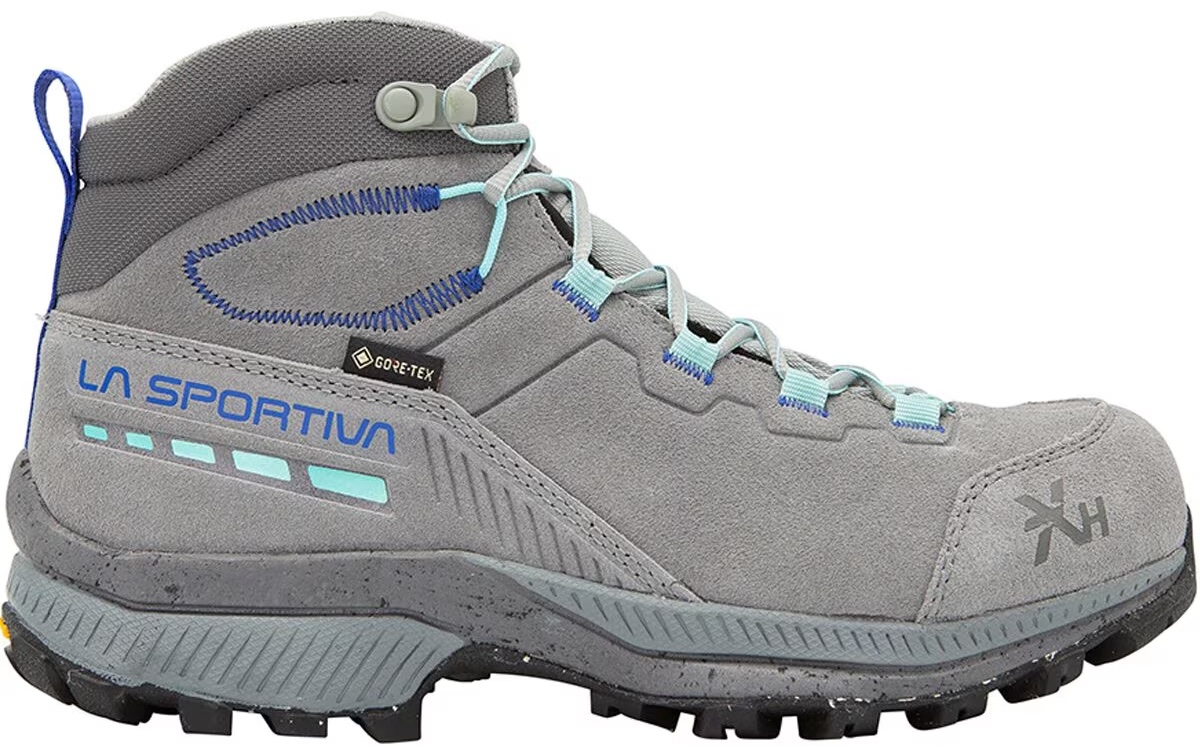 Category: All-around/mountain
Weight: 1 lb. 12.6 oz.
Waterproof: Yes (Gore-Tex)
What we like: A versatile hiker that’s capable on mellow and technical terrain; great durability.
What we don’t: Doesn’t bulldoze through loose terrain quite as well as a burlier, stiffer design.
La Sportiva’s TX collection has traditionally been home to some of our favorite approach shoes (including the TX4), and the TX Hike Mid extends the lineup to hikers and backpackers. The result is a hiking boot that’s very capable in mountain terrain yet still agile, lightweight, and comfortable on long sections of trail. We tested the leather version on a five-day high traverse through Washington’s Glacier Peak Wilderness and found it to be the right tool for the job. It handled the trail approach with ease, and once in the high country, it offered ample stability, traction, and protection for crossing talus fields, boulder-hopping along ridgelines, and trudging up snow (the boot accommodated our aluminum crampons without issue). Unlike many leather boots, we suffered no break-in period thanks to the wide, comfort-focused last that offers extra space around the mid- and forefoot.
In an effort to remain comfortable and lightweight, the TX Hike does make some sacrifices in protection. Some hikers will want to shelter their feet in a burlier and stiffer boot like the Salomon Quest 4 below. These designs can bulldoze their way through snow and talus with ease, or support a super heavy backpack, but they can be painful to break in and uncomfortable on long sections of easy trail. In our opinion, the TX Hike is better suited for those seeking something nimble and precise. And the nubuck upper also helps to bridge the gap: We found it to be impressively durable (it suffered very little wear even with consistent crampon use), and it certainly helps isolate the feet from the elements. It all comes down to a matter of personal preference, but lightweight footwear is unquestionably the way of the future, and the TX Hike Mid Leather (which also comes in a synthetic version) is one of our favorite all-around and mountain-ready designs to date.
Read more: La Sportiva TX Hike Mid Leather GTX review
See the La Sportiva TX Hike Mid Leather GTX
.jpg)
 Category: All-around
Weight: 1 lb. 11.1 oz.
Waterproof: Yes (M-Select Dry)
What we like: A legendary boot that's durable, comfortable, and affordable.
What we don’t: Lacks performance for long days, rough trails, or heavy loads.
If you’re looking to hit the trail without breaking the bank, Merrell’s Moab 3 is a no-brainer purchase. More than almost any other boot, the Moab has achieved legendary status for its combination of performance and comfort at a low weight and price point, and the latest "3" carries the torch. The nubuck leather upper is both protective and durable, while mesh panels along the top and sides allow air to circulate on hot days. In terms of traction, Vibram’s TC5 outsole offers decent grip on everything from hard-packed dirt to rock, and you get a nice amount of cushioning by way of EVA foam in the midsole. We were also impressed with Merrell’s in-house waterproofing, which held up well during a recent and very rainy hiking trip on the Olympic Coast. For hikers and backpackers who stick mostly to maintained trails, we wholeheartedly recommend the Merrell Moab 3 Mid.
What are our gripes with Merrell’s popular budget boot? On particularly technical trails—and especially on wet terrain like mud and snow—traction and stability fall short of those offered by grippier and closer-fitting designs like the Lowa Renegade and La Sportiva Ultra Raptor II, mentioned below. Further, despite clocking in under 2 pounds, the Moab can feel clunky underfoot, especially if you’re used to a more modern trail runner or lightweight boot. But the leather build is fairly tough to kill, and the Moab is truly in a class of its own when it comes to performance for the price. For an upgrade in protection, Merrell also offers the boot with a more premium Gore-Tex membrane, which comes at a slightly higher cost but still strikes us as a solid value for what you get.
See the Merrell Moab 3 Mid Waterproof

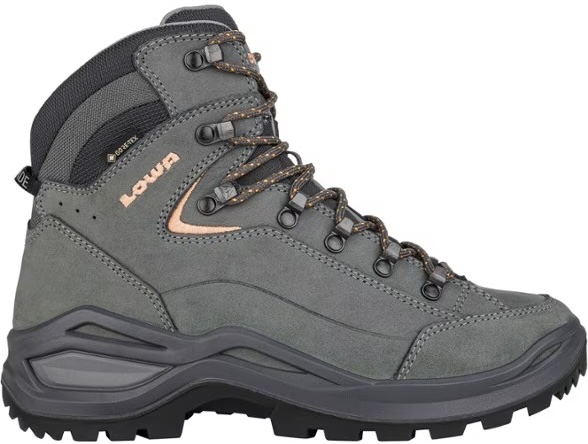 Category: All-around
Weight: 2 lb. 2.2 oz.
Waterproof: Yes (Gore-Tex)
What we like: Great support, comfort, and protection for covering long distances with a full pack.
What we don’t: Overkill for easy hiking; only offered in a waterproof version.
Year after year, Lowa’s Renegade is one of the most beloved hiking boots on the trail, combining the look, feel, and performance of a traditional design with a relatively low weight. As we’d expect from a burly leather boot, it features a hardwearing design and stable construction that translates to great support and protection on technical trails. But the Lowa nails the comfort equation, too: The boot comes in wide, narrow, and regular widths, and—unlike the more streamlined boots here—features a tall and stiff collar for noticeable ankle support. Additionally, the latest Evo model features fewer seams to minimize pressure points and an updated midsole for enhanced comfort. All told, the Renegade is a great middle ground between a bulky leather boot and a lightweight synthetic design, making it one of our favorite designs for backpacking trips.
The obvious downside to the Renegade is price, which is the highest on this list. But if you have the cash to spend, it’s likely that the Renegade will last longer than most of the synthetic options on this list. And while it’s a great option for hikers who prioritize support and protection, it will be overkill for some. In the age of fast-and-light travel, many modern trail-goers will be willing to trade some of the Lowa’s strong suits for a synthetic boot that feels lighter and nimbler underfoot. Furthermore, the Renegade is only available in a Gore-Tex version, which is ideal for shoulder seasons or mountainous hikes, but may overheat in warmer conditions. Still, for tricky terrain or covering long distances with a full pack, the Lowa is a high-quality and durable all-rounder that combines all its features better than most.
Read more: Lowa Renegade GTX Mid review (previous version)
See the Lowa Renegade Evo GTX Mid
.jpg)
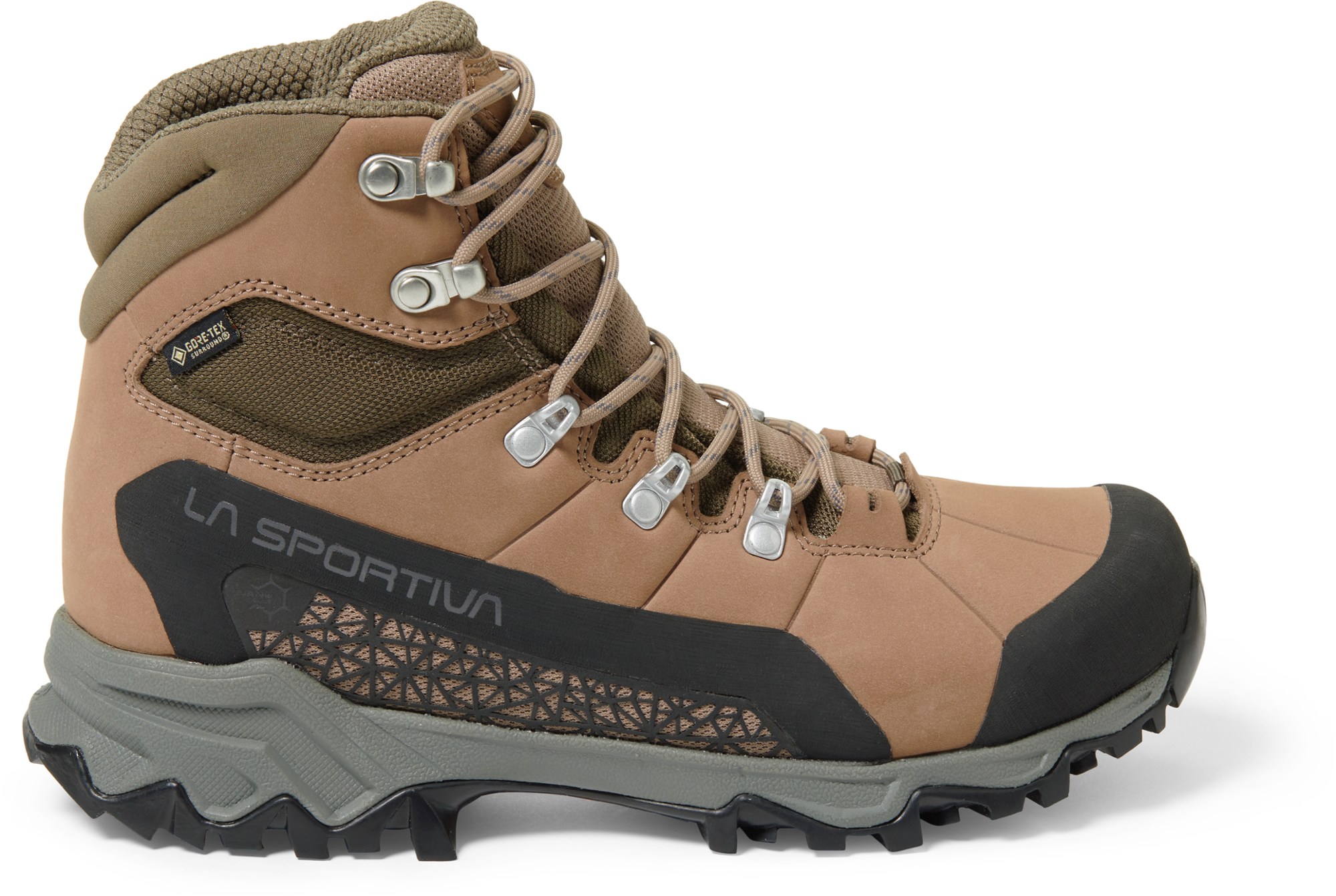 Category: All-around/lightweight
Weight: 1 lb. 10.9 oz.
Waterproof: Yes (Gore-Tex Surround)
What we like: A lightweight leather boot with excellent breathability.
What we don’t: A bit narrow (wide sizes are available) and expensive.
La Sportiva’s Nucleo High II GTX is a quintessential modern boot: light and nimble but with enough support for day hiking and most backpacking trips. At just 1 pound 10.9 ounces, the Nucleo is as lightweight as many synthetic options on this list, but its leather construction provides an added boost in durability and protection. In this way, it's fairly similar to the brand's own TX Hike Mid above, but you'll notice a more cushioned and sprightly feel with the Nucleo High, which is best suited for established trails. This boot also boasts impressive breathability, thanks to a Gore-Tex Surround liner and Nano-Cell technology. In short, Gore-Tex Surround breathes not only out of the upper like most waterproof designs, but also through the sole, which means your feet can dump heat on all sides. You also get patches of Nano-Cell mesh along the sides of each foot—great for keeping air moving—covered with a web-like patch of rubber to maintain durability.
Monikers and fancy tech aside, it all adds up to a really breathable and durable design, particularly for a boot in this weight class. You do pay a premium for the tech, and like many La Sportiva offerings, the Nucleo runs narrow (wide sizes are available). Those seeking a stiffer boot should consider the Lowa Renegade above or the Quest 4 below—our tester found the collar to be relatively flexible during testing. She also didn’t like the style of the boots, which is decidedly sporty. But all told, the Nucleo is a nice upgrade in performance and build quality from an alternative like the Merrell Moab 3 Mid above, with a much nimbler feel than the small weight difference would suggest.
See the La Sportiva Nucleo High II GTX


Category: Mountain/all-around
Weight: 2 lb. 5.7 oz.
Waterproof: Yes (Gore-Tex)
What we like: A supportive and protective boot that’s still impressively comfortable.
What we don’t: Overkill for many hikers and backpackers.
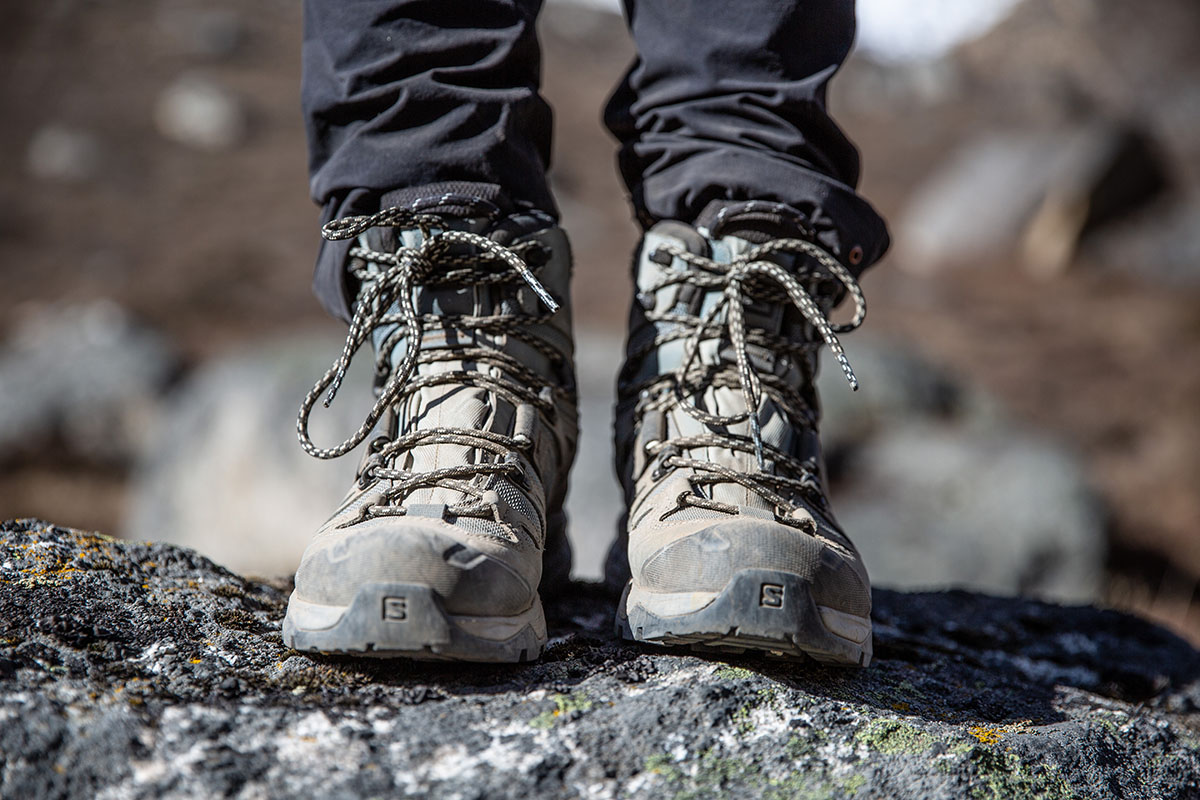
Dedicated backpackers—especially those traveling over more technical terrain—will want something supportive, protective, and reliable. Our favorite in this category is Salomon’s Quest 4 GTX. The Quest features a generous dose of leather in the upper, deep and aggressive lugs, and a solid chassis that lends support underfoot and at the heel (a great feature for high-mileage days). It’s also home to one of our all-time favorite lacing systems, with locking eyelets that secure the heel in place and allow you to tailor fit at the forefoot and ankle. To top it off, comfort is surprisingly high—we wore the Quest 4 during a week of trekking in Nepal and were in no rush to take the boots off at the end of each day.
The Quest 4 GTX toes the line between our all-around and mountain categories, and is one of the only boots here to excel in both environments. We’d have no qualms booting up steep snow or crossing loose talus in the Salomon, but it performs well on-trail, too: The outsole is surprisingly flexible for being so burly, and you get a good deal of cushioning by way of EVA foam in the midsole. Compared to the Renegade above, it has a more precise fit and a thicker, more durable upper, but at the cost of a few ounces and a slightly less planted feel. Keep in mind that both boots are overkill for those who stick primarily to well-established trails, or for those trying to break speed records. Finally, it’s worth noting that we found the Quest 4 runs large—we’re generally between a size 8.5 and 9 in Salomon boots, but ended up in a size 8.
Read more: Salomon Quest 4 GTX review
See the Salomon Quest 4 GTX
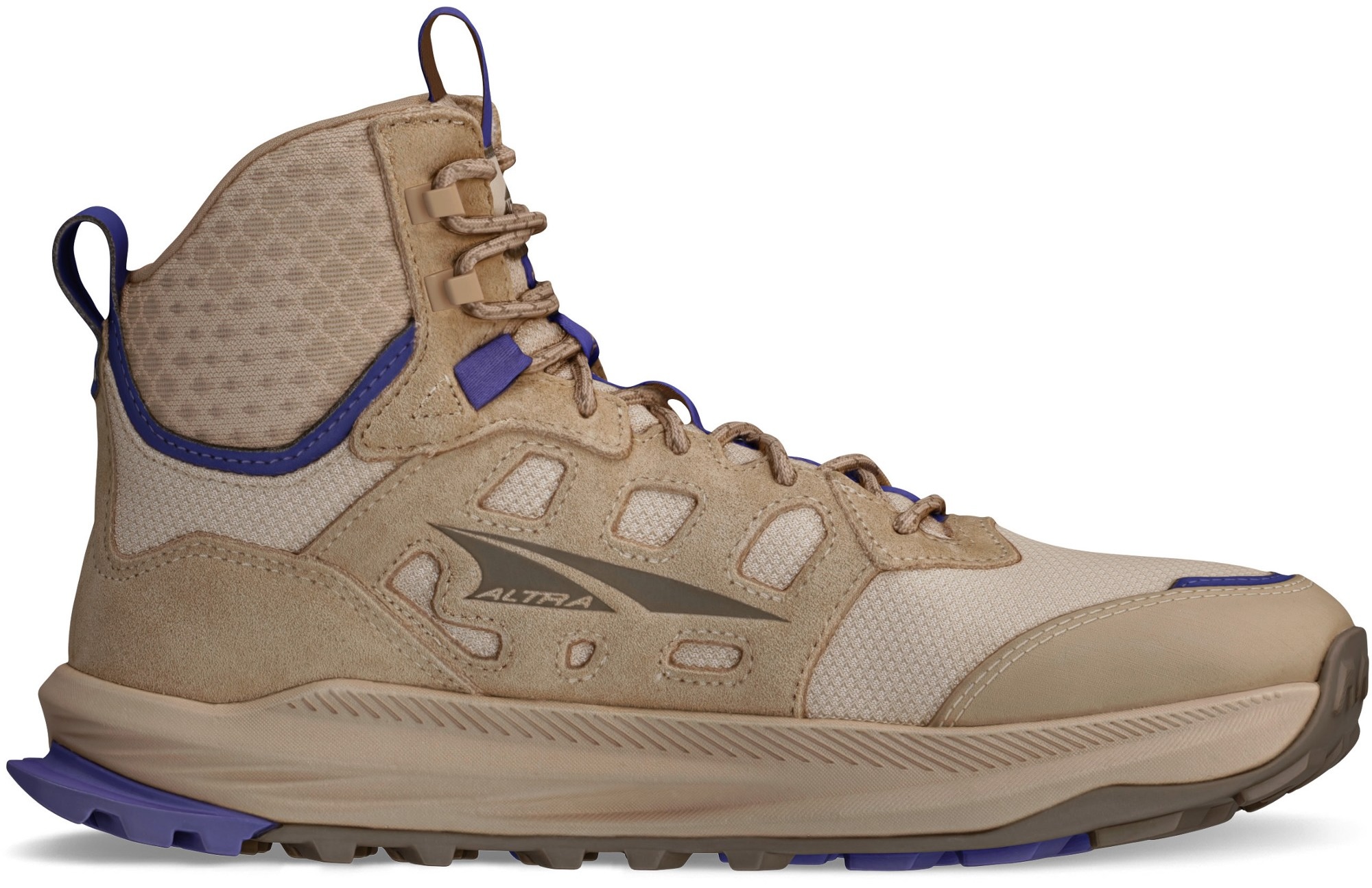
Category: Lightweight
Weight: 1 lb. 8.1 oz.
Waterproof: No (available)
What we like: Flat and roomy footbed offers slipper-like comfort.
What we don’t: Disappointing stability on technical terrain; heavier than the outgoing version.
Altra’s Lone Peak trail running shoe has developed a serious following among comfort-seeking thru-hikers, making the mid-height version an intriguing concept. Combining ankle support and protection with the Lone Peak’s trademark wide toe box, generous cushioning, and zero-drop design, the Hiker 3 offers instant comfort alongside extra performance on tricky terrain or when carrying a load. Further, at just 1 pound 8.1 ounces, it’s among the lightest boots here, which is truly a game-changer for high-mileage days. We’ve recommended various iterations of the Lone Peak to dozens of friends and acquaintances who’ve struck out with more traditional hiking footwear and have yet to lead anyone astray.
We tested the latest 3 in Canada’s Kootenay backcountry, and found it just as comfortable as the last version (which we dubbed the “mountain slipper”). However, despite the updated heel collar, the latest version still lacks the ankle support of the beefier designs. We also still felt the traction was lacking despite the upgrades to the outsole. But if you’re sticking to established trails and prioritizing comfort and weight savings over all else, the Lone Peak Hiker is a great choice. Altra also offers the Lone Peak 9 Waterproof, which features a taller collar, a synthetic upper, and a waterproof membrane. Finally, we recently tested Altra's own Olympus 6 Mid GTX on a backpacking trip in Wyoming and enjoyed its comfortable and capable feel; however, the Lone Peak is significantly lighter and more affordable.
Read more: Altra Lone Peak Hiker review (previous version)
See the Altra Lone Peak Hiker 3


Category: Lightweight
Weight: 1 lb. 7.5 oz.
Waterproof: Yes (Gore-Tex)
What we like: A capable hiker with a classy modern finish.
What we don’t: Lacks ankle support and has shallow lugs.
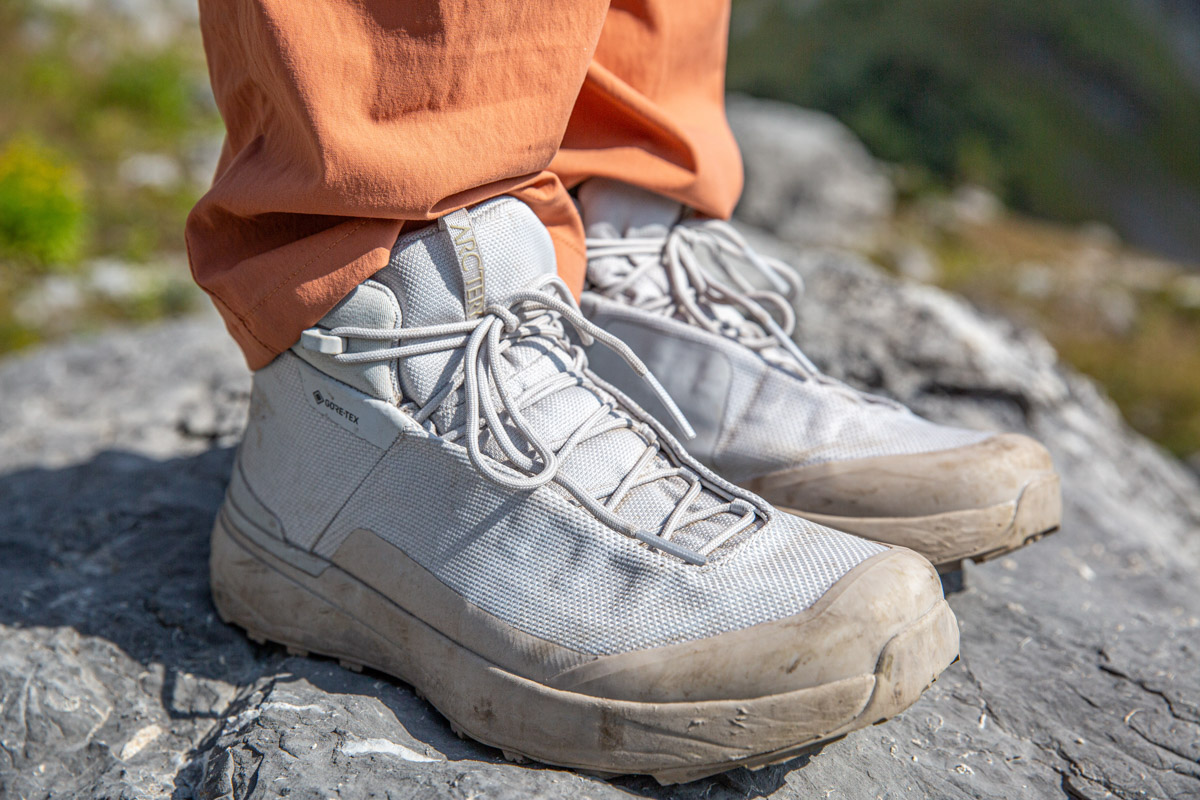
Truth be told, we don’t often reach for hiking boots when headed out on the town, but the Arc’teryx Kopec Mid has us changing our minds. This sleek mid-height boot has a modern look that, in our opinion, looks far classier than the leather or sporty synthetic models on this list. Aesthetics aside, we were also impressed with this boot’s performance on the trail: Its lightweight build was comfortable out of the box and easy to move in, and they were nimble and precise on tricky terrain. And not only were they reliably waterproof, but my feet didn’t overheat at any point. Additionally, the material quality meets our expectations of the brand, and after more than 30 miles of rigorous testing, our pair shows minimal wear.
Like most of the other lightweight synthetic shoes in the list, the Kopec isn’t the most supportive. The flexible collar is great for mobility—and we appreciated it on a few scrambles—but you shouldn’t expect stellar ankle support. We also found the shallow lugs to be lacking in traction on loose dirt and mud, although the Vibram outsole proved trustworthy on boulders, loose gravel, and rocky trails. Lastly, it's worth noting that our white pair collected some stains during testing, especially along the rubber toe bumper (the Cordura upper has held up better). But overall, our impressions were extremely positive. Plus, we weren’t in a hurry to take these boots off when hitting town for dinner after backpacking—a compliment for both the comfort and styling of these kicks.
Read more: Arc'teryx Kopec Mid GTX review
See the Arc'teryx Kopec Mid GTX
 Category: All-around
Weight: 1 lb. 13.4 oz.
Waterproof: Yes (Gore-Tex)
What we like: Extremely comfortable; surprisingly stable and supportive.
What we don’t: Polarizing looks; outsole lacks durability.
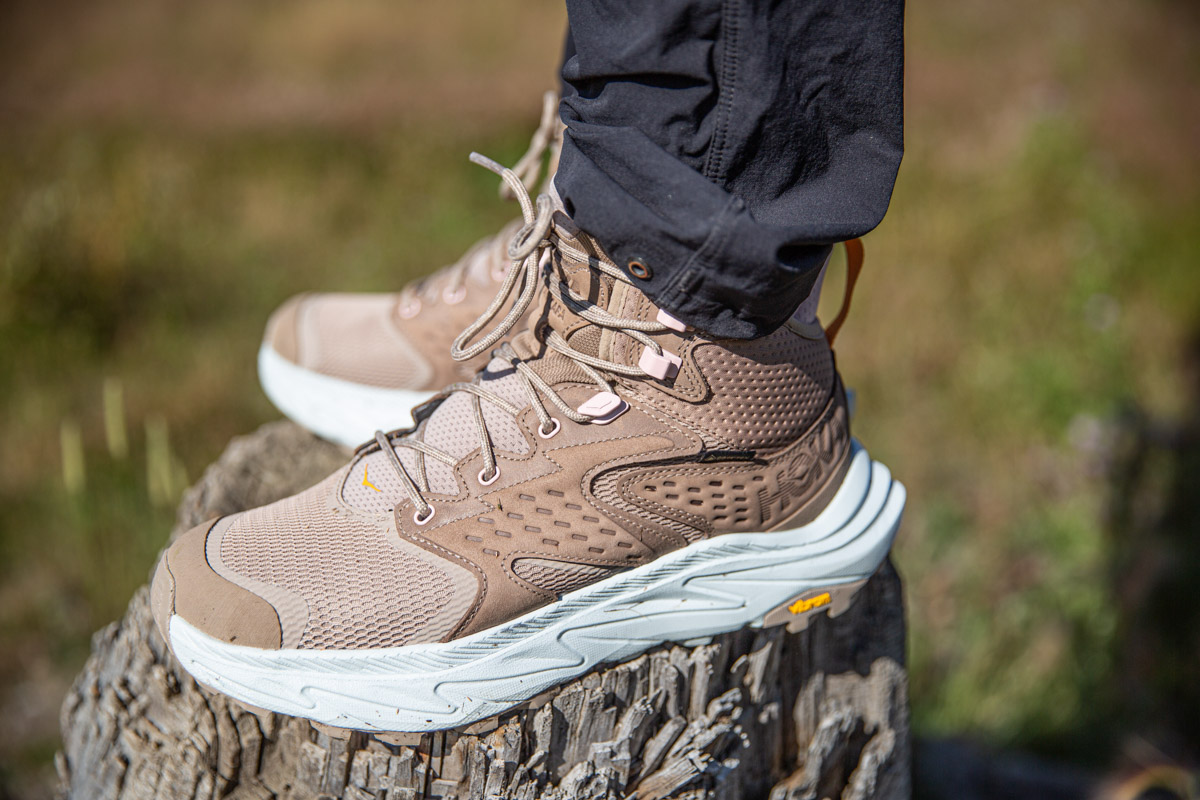
Well, oh well, hiking boots are certainly getting more fun lately. Popular running shoe brand Hoka, known for its lightweight and cushioned designs, has made a significant push in the hiking footwear market. Our favorite from their lineup is the Anacapa 2 Mid, which features Hoka’s well-known springy midsole, a rockered shape for a smooth ride on the trail, and a beefed-up construction that includes durable nubuck leather and a Gore-Tex waterproof liner. During a backpacking trip in Canada’s Kananaskis wilderness and Colorado’s San Juan Mountains, we were pleased with the Anacapa's fast-moving personality, which nicely combines a nimble, trail-runner-like feel with surprisingly good stability and support—reminiscent of a hiking boot.
The Anacapa was updated with a focus on more sustainable materials, along with a few noteworthy changes to the midsole and upper. With a less intrusive heel counter, additional tongue padding, and a slightly softer midsole, the 2 is arguably more comfortable than the previous version. Hoka has also enhanced the toe box for increased durability and protection. However, we were surprised to see that the Vibram Megagrip outsole remains virtually unchanged—like the original, it features large sections of blown rubber that are susceptible to damage from rocky trail use. And it almost goes without saying that the boot’s appearance will be a dealbreaker for some, but we’ve been impressed with the design, which goes a long way to mitigating foot fatigue without compromising much in terms of stability or protection. If you stick mostly to established trails and prioritize cushy comfort, the Anacapa has a lot to offer.
Read more: Hoka Anacapa 2 Mid GTX review
See the Hoka Anacapa 2 Mid GTX
 Category: Mountain/lightweight
Weight: 1 lb. 8.0 oz.
Waterproof: Yes (Gore-Tex)
What we like: A lightweight boot that's tough enough for the mountains.
What we don’t: Feels overbuilt on well-established trails.
La Sportiva’s Ultra Raptor trail runner has earned legendary status amongst the mountain running community, beloved for its high levels of protection and stability alongside a lightweight, trail-runner-esque build. The Mid Leather GTX here elevates the low-top shoe to the next level, featuring a respectably tall collar and a waterproof membrane. The result is a piece of footwear that falls somewhere between a mid-height trail runner and a hiking boot, incorporating the best features from both worlds. For fast-and-light mountain-goers, the Ultra Raptor II Mid Leather GTX is a nimble and quick alternative to boots like the Quest 4 and Renegade above.
If you’re headed above treeline and looking for a capable yet lightweight boot, it’s a tough call between the Ultra Raptor II Mid Leather GTX and the TX Hike Mid Leather GTX above. The Ultra Raptor has a more rockered platform, and its Frixion XF 2.0 sole is even grippier on rock than the TX Hike’s Vibram Ecostep Evo rubber. With beefy toe and heel protection, additional padding around the ankle, and a stiffer midsole and outsole, the boot has an overall burlier feel that is right at home on above-treeline terrain. To be sure, it's overkill for most casual hikes, but those who need to move fast over tricky terrain will appreciate the added support and protection.
See the La Sportiva Ultra Raptor II Mid Leather GTX
 Category: All-around/lightweight
Weight: 1 lb. 11.5 oz.
Waterproof: Yes (Gore-Tex)
What we like: Protective yet lightweight, and more durable than the outgoing 4.
What we don’t: Stiff underfoot and not as supportive as burlier boots like the Renegade above.
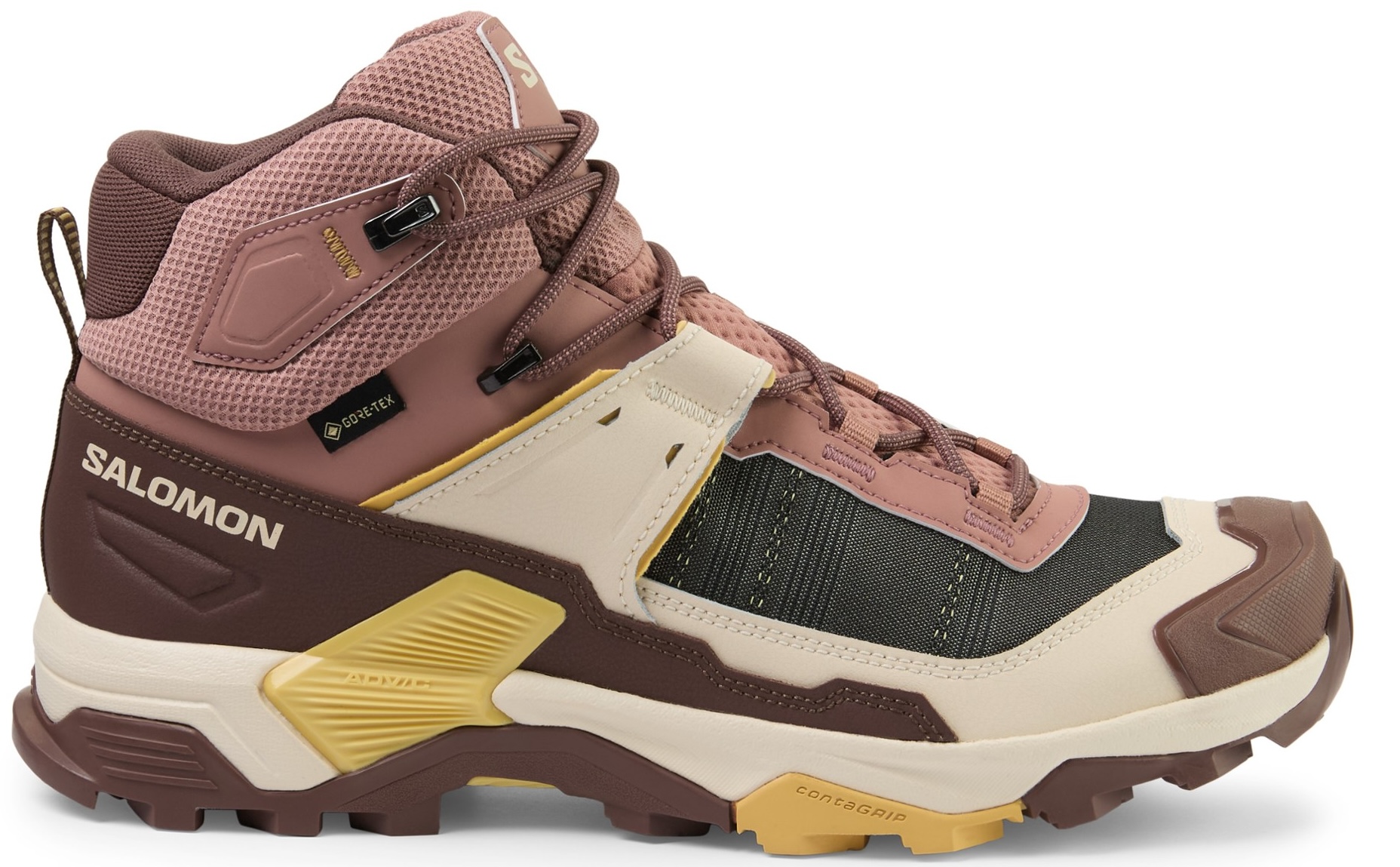
Salomon’s X Ultra Mid series has been a top contender for years, and we’d be remiss not to mention the updated X Ultra 5 here. The 5 strikes a nice balance between nimbleness (thanks to its lightweight build), stability, and protection. We're also big fans of Salomon's Contagrip rubber, which has proven impressively grippy over a variety of terrain, from loose dirt to patches of mud and snow. The fifth iteration of this classic features a modernized and more durable Kevlar-reinforced upper, a slightly stiffer collar, and a more hard-wearing outsole. It also retains the beloved “winged” chassis of the outgoing model, which seats the heel nicely in the back of the boot when the laces are tightened. The cherry on top is the price, which undercuts most of the premium competition without sacrificing much in terms of performance.
That said, we still have some gripes with the latest design. While stability and durability have significantly improved since version 4, we experienced some issues with fit and underfoot comfort in the newest version. Our regular size was too large, which caused some blisters on the trail (we recommend sizing down half a size). Additionally, the included Ortholite insole and thinner midsole didn’t offer much in the way of underfoot cushion. To be sure, not everyone will experience fit or comfort issues, and we believe that the 5 is an overall upgrade from the previous version in terms of stability and durability. We still prefer a boot with a stiffer collar, like the Lowa Renegade above, for backpacking with heavy loads, but the X Ultra 5 Mid is a nice choice if you’re looking for something lighter and nimbler.
Read more: Salomon X Ultra 5 Mid GTX review
See the Salomon X Ultra 5 Mid GTX

Category: Lightweight
Weight: 1 lb. 4.9 oz.
Waterproof: No
What we like: Impressively light without feeling overly compromised; refreshing take on sustainability.
What we don’t: No waterproof version; fit may run large.
Running shoes are a popular choice for hikers, but they lack the ankle support and sturdiness of a hiking boot. NNormal is a relatively new footwear brand that seeks to blend the two with their Tomir Waterproof boot. We tested the previous version (Tomir 01) on a technical, five-day trek deep in the Chilean backcountry and came away impressed by its all-around performance. It’s remarkably lightweight (like a running shoe), but has better-than-expected support, stability, and durability despite very challenging terrain. Given that these shoes were designed with input from accomplished mountain athlete Killian Jornet, it comes as little surprise that they excelled in high mountain environments.
The newest Tomir 02 directly addresses our concerns with the previous model. Most notably, the brand has added more underfoot cushioning, which we found lacking in the 01. The 02 isn’t currently offered in a waterproof version (you can still get the 01 with Gore-Tex waterproofing), and we feel torn on this choice. On the one hand, we did experience issues with overheating in the waterproof 01, and the lack of waterproofing will improve breathability. But on the other hand, that limits the boot to drier environments. It’s also worth noting that the 01 was too big on our tester, but we’ll be sure to report back on the fit of the 02 after testing. At the end of the day, the Tomir is a well-rounded lightweight hiker, and we applaud NNormal for their refreshing take on sustainability—rather than simply incorporating recycled materials (which they do), the company keeps their collection deliberately small to minimize their impact and puts a strong focus on circularity to maximize the shoes’ lifespan and reduce waste.
Read more: NNormal Tomir Boot review (previous version)
See the NNormal Tomir 02 Boot
Category: All-around
Weight: 2 lb. 4.0 oz.
Waterproof: Yes (Gore-Tex)
What we like: Classic Danner looks in a lightweight package; Leaf design can be resoled and rebuilt throughout its lifespan.
What we don’t: Not as stable or protective as most leather boots.
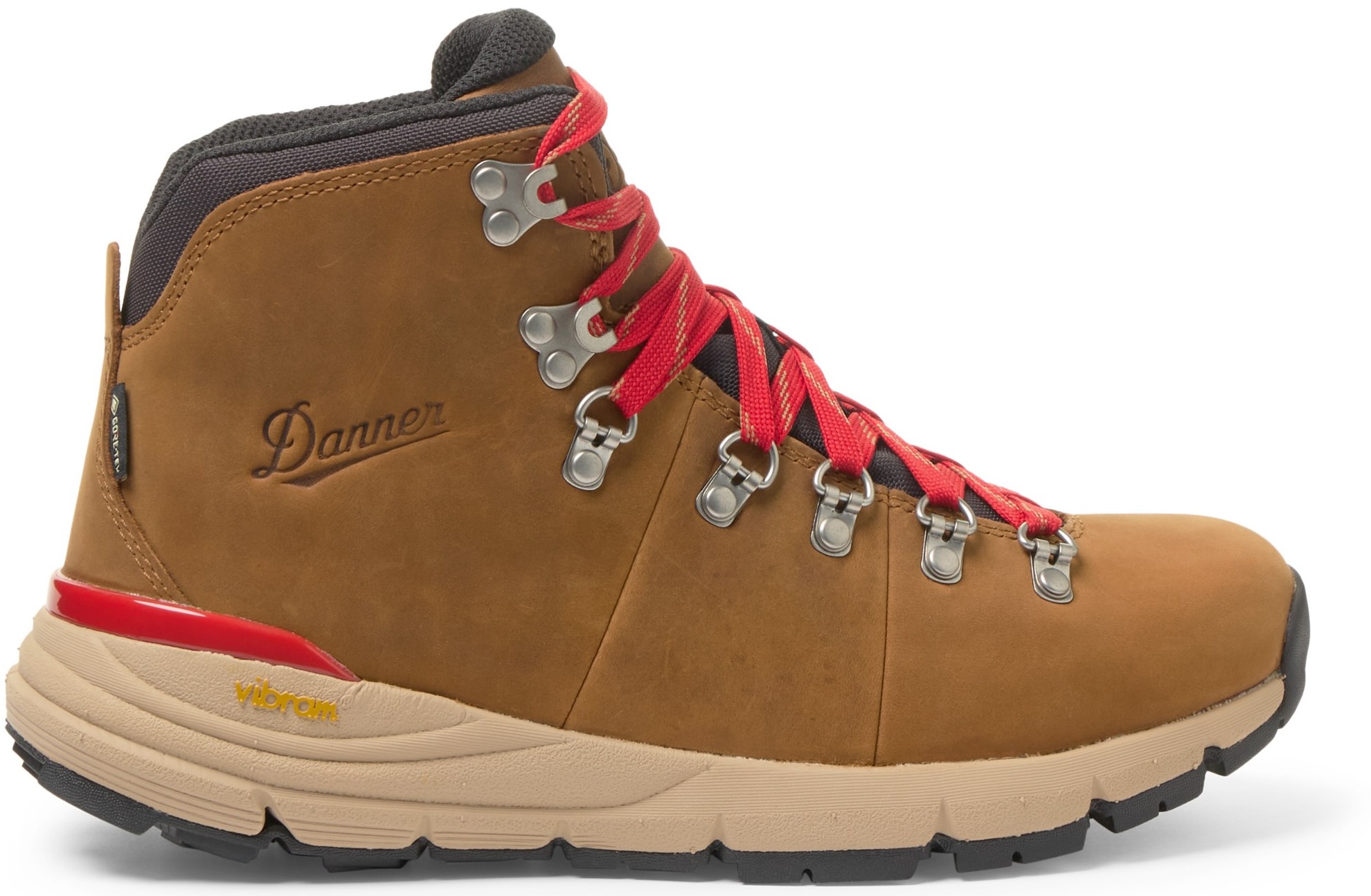
Danner is best known for their throwback, full-leather boots, but their modernized Mountain 600 has struck a chord with the day hiking crowd. The over-the-ankle design is surprisingly flexible underfoot, featuring a cushioned, trail-runner-inspired sole, and boasts a sharp look with a full suede upper and high-quality lacing hardware. A Gore-Tex waterproof membrane combined with the water-resistant suede helps keep your feet protected from mud and wet grass, while also providing a light boost in warmth for wearing around town in the cold (to the detriment of breathability). The Leaf is also designed to be worked on by Danner’s professional cobblers, whose services include both resoles and full rebuilds.
Despite being an ode to leather mountain boots of yore, the Mountain 600 shouldn’t be pushed into super technical terrain. The Danner can’t match the performance of boots like the Salomon Quest above or Zamberlan's Vioz in terms of underfoot stability and protection, and the soft suede upper also doesn’t provide as much support as stiffer designs. The Mountain 600 is also expensive—a cheaper alternative is Keen's Targhee IV, which is also great for hikes on well-established trails (though we didn't find its traction very confidence-inspiring). But if you prioritize out-of-the-box comfort, styling, and everyday versatility—and like the idea of spending your money on a boot that’s built to last—the Mountain 600 Leaf is worth a look.
See the Danner Mountain 600 Leaf GTX
The Keen Targhee series is one of the brand’s most iconic boots, and we tested the latest IV on several hikes in Wyoming and upstate New York. We didn’t include it in this update because we had a few deal-breaker complaints, including poor traction, sloppy performance, and heavy build (read our in-depth review of the Keen Targhee IV).
We also removed the Adidas Terrex Free Hiker 2 GTX from this list because it falls behind other lightweight synthetic boots on this list, like the NNormal Tomir 02 and La Sportiva Ultra Raptor II Mid, in terms of price and performance.
The Zamberlan Vioz GTX also didn’t make it in this update due to its overkill and hefty build, dated design, and astronomical price tag. Those who want a burly hiker can save a lot of money and weight with the Salomon Quest 4 GTX and Lowa Renegade Evo GTX.
Lastly, we also removed the Vasque Breeze from this list because a recent price increase no longer makes it a standout budget pick, especially considering our middling experiences with it on the trail. The Salomon X Ultra 5 Mid GTX is similarly priced but is much more durable, waterproof, and lighter weight (read our in-depth review of the Vasque Breeze).
| Boot | Price | Category | Weight | Waterproof | Upper |
|---|---|---|---|---|---|
| La Sportiva TX Hike Mid Leather | $219 | All-around/mountain | 1 lb. 12.6 oz. | Yes (Gore-Tex) | Leather |
| Merrell Moab 3 Mid Waterproof | $170 | All-around | 1 lb. 11.1 oz. | Yes (M-Select) | Leather/mesh |
| Lowa Renegade Evo GTX Mid | $285 | All-around | 2 lb. 2.2 oz. | Yes (Gore-Tex) | Leather |
| La Sportiva Nucleo High II GTX | $259 | All-around/lightweight | 1 lb. 10.9 oz. | Yes (Gore-Tex) | Leather/mesh |
| Salomon Quest 4 GTX | $230 | Mountain/all-around | 2 lb. 5.7 oz. | Yes (Gore-Tex) | Leather |
| Altra Lone Peak Hiker 3 | $150 | Lightweight | 1 lb. 8.1 oz. | No (available) | Suede |
| Arc'teryx Kopec Mid GTX | $200 | Lightweight | 1 lb. 7.5 oz. | Yes (Gore-Tex) | Synthetic |
| Hoka Anacapa 2 Mid GTX | $195 | All-around | 1 lb. 13.4 oz. | Yes (Gore-Tex) | Leather |
| La Sportiva Ultra Raptor II Mid | $219 | Mountain/lightweight | 1 lb. 8.0 oz. | Yes (Gore-Tex) | Leather |
| Salomon X Ultra 5 Mid GTX | $185 | All-around/lightweight | 1 lb. 11.5 oz. | Yes (Gore-Tex) | Synthetic |
| NNormal Tomir 02 Boot | $190 | Lightweight | 1 lb. 4.9 oz. | No | Synthetic |
| Danner Mountain 600 Leaf GTX | $230 | All-around | 2 lb. 4.0 oz. | Yes (Gore-Tex) | Leather |
While loving backpacking isn’t a prerequisite to working at Switchback Travel, all of our female editors happen to thoroughly enjoy slinging on heavy packs, slipping on our favorite pair of hiking boots, and hitting the trail. Editor Maddie Downie now writes and researches this guide. Raised in the foothills of Colorado, Maddie grew up hiking portions of the Colorado Trail and summiting 14ers, and that love for hiking has followed her to Washington state.
Our most recent testing trip took us to Alberta’s Kananaskis wilderness. Our three-day trek took us through a variety of terrain, ranging from groomed trails to steep talus and rooted, overgrown forest. On these sorts of trips, each boot shows its colors quickly. We evaluate fit out of the box and throughout our trek, pay attention to waterproofing and breathability as we cross rivers and streams in hot temperatures, and keep an eye on each part of the shoe throughout testing. As always, we’ll continue to try out new and noteworthy boots as they hit the market, amending the list above to reflect our current favorites.

The vast majority of hiking boots come in both men’s and women’s versions. In general, women’s boots are designed to fit narrower heels and ankles, with higher arches, and come in women’s sizing and a distinct set of colorways. While the majority of our female friends wear women’s boots, it’s important to note that some women might be better off opting for a men’s model (this is particularly important for those with high-volume feet and ankles). As with all clothing and footwear, your best bet is to try on before buying.
.jpg)
Lightweight
Perhaps no single piece of gear epitomizes the lightweight revolution more clearly than the lightweight hiking boot. These designs are flexible, cushioned (we see a lot of EVA foam here), and—of course—lightweight, which makes them a comfortable and speedy choice for fast-and-light enthusiasts and well-conditioned hikers. And even though some boots in our lightweight category actually look like trail running shoes (such as the NNormal Tomir 02 Boot), it's important to note that they generally feature a noticeably stiffer and more stable underfoot feel—take the La Sportiva Ultra Raptor II Mid Leather GTX as an example, which features a TPU heel stabilizer and foot-hugging leather upper. However, compared to models in our all-around or mountain categories, lightweight boots are much less supportive and protective overall (especially at the ankle), and their durability falls particularly short.
.jpg)
All-Around
Our all-around category represents the core of the market, running the gamut from lightweight synthetic designs to more traditional leather models. All of these boots extend above the ankle and offer great support and protection through sturdy outsoles, relatively stiff midsoles (look for additions like a TPU shank), generous rand and toe bumpers, and robust upper materials. Boots on the lighter end of the spectrum (like Salomon's 1-lb., 11.5-oz. Salomon X Ultra Mid) will feel more sprightly underfoot at the cost of a bit of durability and support, while beefy designs like the 2-pound, 2.2-oz. Lowa Renegade Evo GTX Mid is better suited for those looking for a traditional hiking boot feel. Most hikers and backpackers will settle for a boot in our all-around category, while those with particular needs can opt for a lightweight or mountain boot.
_0.jpg)
Mountain
Most of the designs on our list offer ample support for rooty and rocky trails, but when the going gets tougher (think off-trail terrain or sustained snow), you might want a bit more boot. Somewhere on the spectrum between hiking boot and mountaineering boot, designs in our mountain category are the most robust here and go one step further than a traditional hiker in terms of support (look for slightly taller collars and stiffer midsoles), durability and protection (most feature leather uppers), and traction. Given their rigidity, these boots also pair with aluminum crampons better than more flexible options. Mountain boots will generally be overkill on established trails, but those venturing into the alpine or carrying a particularly heavy load will appreciate the added performance. On the other hand, experienced hikers and those with strong feet can get away with lighter weight—yet still very capable—designs like the La Sportiva TX Hike Mid GTX and Arc'teryx Kopec Mid GTX.
.jpg)
Looking at our list above, women’s hiking boots range from ultralight trail-running-inspired designs, such as the NNormal Tomir 02 Boot (1 lb. 4.9 oz.), to sturdy mountain-ready models that weigh well over 2 pounds per pair. In general, the weight spec can tell us a lot about a boot: A lighter design will be less protective, supportive, and durable overall, but the benefits include less strain on the body (as the saying goes, a pound on the foot equals five on the back) and more flex and cushion, which often translate to increased comfort. Hikers and backpackers will want to aim for that sweet spot between performance and weight. If you’re sticking to the trail with a light load, you can get away with a lightweight hiking boot, while those hauling extra gear or traveling cross-country will appreciate the added support of a heavier boot.
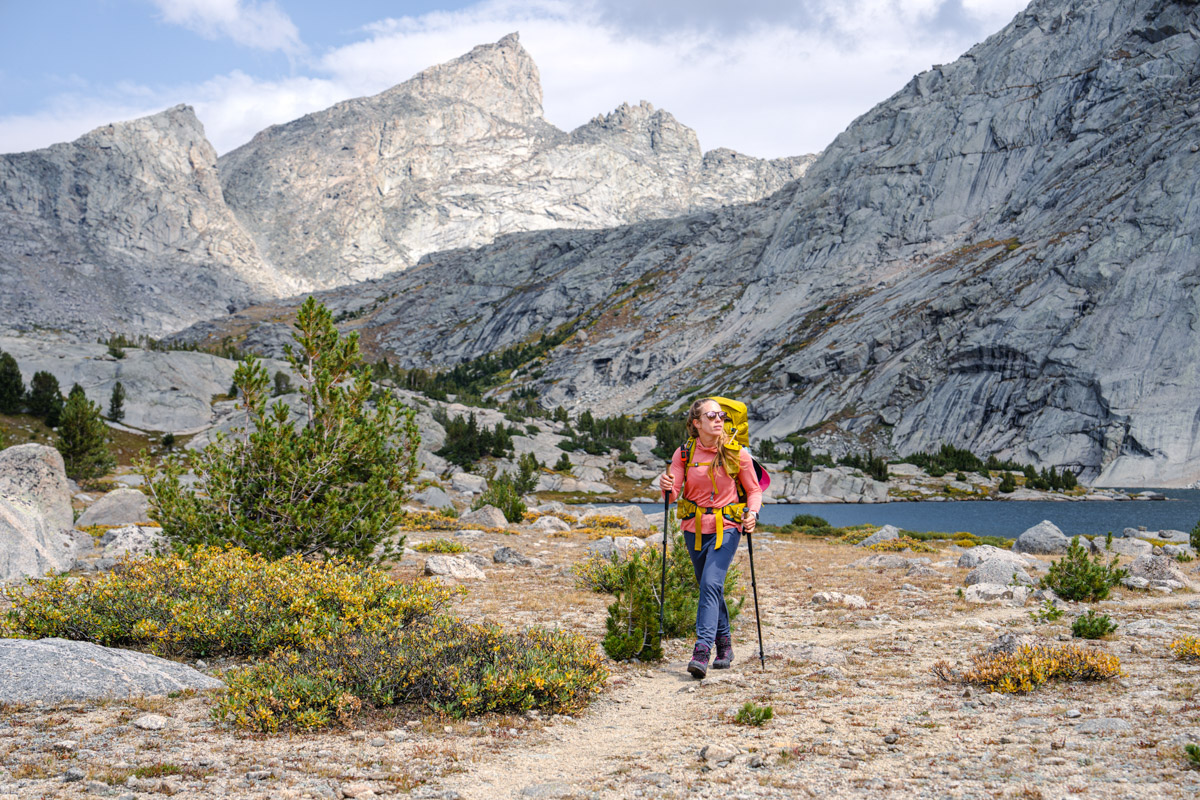
Hiking boots are designed to be stable underfoot, which typically involves a firm outsole and a piece of hard plastic inserted between the midsole and outsole, known as a shank. The length of the plastic can vary from just under the arch to the full length of the boot, depending on intended use. The benefit of a stiff boot is that with a solid platform, the feet will not have to work as hard during ascents and descents, and on off-camber terrain. For this reason, boots in our mountain category are among the stiffest, making them a great choice for off-trail travel with a heavy load. On the other end of the spectrum, lightweight boots generally forgo the additional structure of a shank, which translates to greater flexibility but less stability overall.
.jpg)
For day hikes on flatter or less technical terrain or if you're aiming to move fast and light, we can’t recommend a lightweight and flexible hiking boot enough. Boots like the NNormal Tomir or Altra Lone Peak Hiker 3 are standouts for these uses, provided that you’re fairly well-conditioned and have no pre-existing ankle issues. As your trips become longer and your pack gets heavier, a more substantial boot that provides increased ankle support is a better choice, such as the Lowa Renegade Evo GTX Mid. At the extreme end, mountain boots like the Salomon Quest 4 are excellent for hiking in areas that require maximum support, such as off-trail bushwhacking, traversing exposed terrain, or trekking over rough ground.
The vast majority of hiking boots are waterproof, keeping your feet dry while crossing streams, dodging puddles, or hiking during a light rainstorm. Most designs achieve this by inserting a waterproof and breathable membrane just inside the outer fabric. Gore-Tex liners are the most popular and reliable (as seen in most of the designs on this list), but even in-house technologies like Merrell's M-Select are similar in terms of waterproofing performance (however, breathability can suffer with some of these designs). In addition to the membrane, most boots also feature a water-repellent coating on the outside that helps bead up and shed water droplets.
.jpg)
But before springing for a waterproof boot, it is worth asking if you need the added protection. There are several downsides to this technology: the extra layer adds weight, significantly impacts breathability, and increases the cost. Furthermore, if you do happen to get water inside your boot (which can easily occur in deep snow or water), it doesn’t drain as well and won’t dry out nearly as quickly as a non-waterproof option. In the end, we appreciate the added assurance of a waterproof boot for shoulder-season hiking or backpacking in the mountains, but recommend a non-waterproof design for summer hikes or uniquely hot and dry environments, such as the Utah desert. For more on the waterproofing debate, see our article Do You Need Waterproof Hiking Shoes?
.jpg)
Regardless of what marketers claim, making a boot waterproof inherently affects its breathability. By keeping water from entering from the outside, less moisture (your sweat) can quickly and easily escape from the inside, which means all forms of waterproof footwear can run warm in the summer months. There are, however, big differences between boot models in their ability to ventilate.
.jpg)
We’ve found that heavyweight leather boots with a Gore-Tex lining are often the worst performers, while the Gore-Tex Surround in the mesh-heavy La Sportiva Nucleo High II is a step above. In between, the Lowa Renegade and Salomon Quest 4 both perform decently, thanks to their nylon and leather construction and Gore-Tex liners, and are completely suitable for summer backpacking trips. And if you are willing to ditch the waterproof lining altogether, boots like the Merrell Moab 3 Mid and Altra Lone Peak Hiker 3 are great options for hikers and backpackers.
.jpg)
Laces are often overlooked features on hiking boots, but they play a crucial role in ensuring fit and comfort. Most laces extend to the ankle with standard eyelets and continue up the collar using hooks that come completely undone, so you can get in and out of your boot with ease. Some of the more advanced designs feature locking hooks at the crook of the ankle, which both lock your foot in place and allow you to tailor your fit throughout (loose in the forefoot to accommodate swelling and tight around the ankle for stability, for example). Occasionally, we see a single-pull speed lace design used in hiking boots. While we’re fans of the convenience of these quick-lace systems in a hiking shoe, it’s a trickier sell for us on a mid-height boot, as you only get one option for tightening or loosening your boots, compared to the versatility of a standard design.
.jpg)
A hiking boot’s upper refers to the material above the outsole and the midsole—essentially, all of the fabric that surrounds your foot. Most often, a boot’s upper is made with a mix of synthetic materials (typically nylon), mesh, and leather. The type of material directly correlates with the boot’s durability, water resistance, breathability, and weight.
Synthetic Nylon and Mesh
Woven nylon and open mesh nylon panels are common on boots in our lightweight and all-around categories. These synthetic materials typically excel in terms of breathability and weight savings, but they tend to dry out more quickly when wet. However, they are not known for their durability, and don’t offer as much protection as a thicker leather boot. Synthetic materials also don’t conform to your foot over time as well as leather, but in most cases, the overall fit is still comfortable and snug. Many designs here feature fully synthetic uppers, while others (like the Salomon Quest 4 GTX) have a mix of synthetic and leather for the best of both worlds.

Suede or Nubuck Leather
Suede and nubuck leather have a very similar brushed appearance and are common sights on hiking boots in our all-around and mountain categories (the lightweight Lone Peak Hiker 3 is also made of suede). Both materials are lighter and more flexible than traditional full-grain leather, which means they offer more breathability and an easier break-in period, aren't as prone to showing scuff marks, and shave precious ounces from your feet. Expect nubuck to be tougher than suede—suede is derived from the underside of an animal's skin, while nubuck comes from the outside (and is sanded down to achieve the velvet-like finish)—which is the main reason we see it used more in heavy-duty hiking boots. Ultimately, both materials are excellent alternatives to thick, full-grain leather and are more prevalent in today's modern boots.
.jpg)
Full-Grain Leather
Compared to nubuck and suede, full-grain leather is thicker, stiffer, and tougher overall. You’ll find one-piece leather uppers on high-end boots, such as the Zamberlan Vioz GTX. These designs are neither lightweight nor particularly breathable, but they’re incredibly tough and water-resistant. Leather does require some maintenance to keep in good shape (you’ll want to treat it with a conditioner like Nikwax), but the payoff is a solid construction that’s built to outlast everything else on the market. As an added bonus, some designs (like the Danner Mountain Leaf 600 GTX) can be resoled, so you don’t need to replace the whole boot once you wear down the lugs.
.jpg)
Hiking on off-camber terrain or while carrying a heavy load can put a considerable amount of stress on your feet, so you’ll want to ensure your hiking boot offers a sturdy platform. Combined with the rubber outsole, the midsole plays an essential role in stability, shock absorption, and protection from sharp rocks underfoot. Depending on the design, midsoles vary from very thin and flexible (as in lightweight boots) to stiff and substantial (as seen in leather mountain boots). Most include EVA foam, TPU, or a combination of both in their construction.
.jpg)
EVA
The majority of lightweight hiking boots utilize EVA foam in their midsoles. The cushy, soft material takes some of the sting out of your heel or midfoot impacts and is also extremely lightweight. Not all EVA should be treated equally, and proprietary versions can vary from super-soft to mildly stiff. For logging serious miles on tougher terrain, we prefer a firm and supportive midsole over excessive cushioning. If we’re planning on moving quickly on an easy trail, softer cushioning is a better bet and is commonly found in trail-running-inspired designs, such as the NNormal Tomir and Hoka Anacapa 2 Mid. However, soft midsoles have a tendency to break down over time, so expect these boots to pack out more quickly than dedicated hiking boots.
TPU
For tougher applications or when you want to isolate your feet from rough impacts, manufacturers will use a thermoplastic polyurethane (TPU) midsole. This durable material is far less cushy than EVA but provides better protection and stability underfoot—for this reason, it’s common in boots in our all-around and mountain categories but not used in the trail-runner-inspired designs above. Boots with TPU in their midsole will also keep their shape longer and won’t be prone to compressing like EVA. Because both midsole types have valid applications, it’s common for a manufacturer to use a TPU frame or heel for stability and toughness and add EVA underfoot to increase comfort.
.jpg)
One of the hallmarks of a hiking boot is its ability to provide good traction on a variety of terrain. In a way that more casual footwear can never match, hiking and trail running footwear are leaps and bounds better when the going gets rocky, slippery, and steep. Vibram is the gold standard when it comes to outsole rubber, but not all Vibram compounds should be treated equally: The rubber manufacturer tailors their blends and designs for the specific footwear and brands. Some boots have much larger and sharper lugs underfoot for serious grip in mud, while others prioritize sticky rubber for scrambling over rocks. There are also more entry-level options that just do well on easier trails, like the lugs you’ll find on the bottom of the Merrell Moab 3 Mid Waterproof.
.jpg)
Salomon is one brand that doesn’t outsource their traction needs. Instead, they use their in-house Contagrip for all of their hiking and trail running models. We’ve found that the level of quality and performance is on par with Vibram’s offerings, from their lightweight X Ultra 5 Mid GTX to the burly Quest 4. Keep in mind that, like Vibram, Contagrip compounds can vary from boot to boot (there are a number of different compounds, including Contagrip MA, MD, and TA).
.jpg)
Toe caps or rubber rands cover the front of many hiking boots, and we consider them an essential element of backpacking boot design. These thick pieces of rubber are there to keep your toes in one piece should you accidentally—and in our case, eventually—kick a rock on the trail. Some standouts from our list above include the Lowa Renegade Evo and La Sportiva Ultra Raptor II Mid Leather GTX, which have protection that wraps completely around the front of the foot. To cut weight, some manufacturers occasionally remove or reduce this feature, including Altra Lone Peak All-Wthr Mid boots. After stubbing our toes multiple times while scrambling a 14er wearing the Altra, we definitely prefer that it include more substantial toe protection, but it’s just a compromise in opting for a minimalist boot.
.jpg)
Getting a proper fit can be a real pain, and in many cases, the culprit is a generic, flat insole. Thankfully, removing your stock insoles is extremely easy, and replacing them with an aftermarket model that’s specifically designed for your foot size and shape can remedy most boot maladies. New insoles can provide more or less volume to fill out the boot, improve the fit under the arch, and adjust the cushioning and impact shock. We recommend checking out Superfeet insoles for their wide selection of options and trusted reputation in running shoes, ski boots, and hiking footwear.

In 2025, one of the primary ways brands are innovating is through sustainable design practices that aim to mitigate their impact on the planet. When it comes to footwear, manufacturers are turning to recycled and recyclable materials for everything from laces and lining to foam midsoles and rubber outsoles. It’s in the interest of brands to advertise their products’ recycled content, and this information can be easily found on product webpages and tags. Another way to shop sustainably is to consider the durability of products. If it suits your hiking style, a boot with a more hardwearing upper and sole might last you twice as long as a lightweight design, which reduces your consumption by half. It’s also worth noting services like Danner's Recrafting, which is committed to rebuilding and resoling footwear to keep it on the trail and out of the landfill. And when the time comes to retire your beloved hiking shoes, consider recycling them through programs like Ridwell or TerraCycle.
.jpg)
One of the key decisions in choosing hiking footwear is selecting either an over-the-ankle boot or a low-top shoe. Each style has its respective strengths, and we use them interchangeably for hiking and backpacking trips. The key differentiators are protection, stability, and weight. For rocky terrain, water crossings, snow, and carrying a heavy backpacking pack—or if you have weak or injured ankles—a boot is our preferred option.
.jpg)
On the other hand, a low-top style trims away material and weight, making it the clear choice for those focused on moving fast and light without a large pack (especially in milder weather conditions or on easy trails). Lightweight mid-height designs can be a nice middle ground, with some of the added protection of a boot alongside the nimble feel of a shoe. There isn’t a definite right answer in this debate, but the weight of your gear and style of hiking can make the decision a lot simpler. For more on the topic, see our article on the best women's hiking shoes.
Back to Our Top Women's Hiking Boot Picks Back to Our Women's Hiking Boot Comparison Table


6433.jpg?h=fbc67360&itok=801CB4x1)

-%20sac4b.jpg?h=d4c92dd0&itok=KMSwcfQl)
dd52.jpg?h=fbc67360&itok=BEpS0yNy)
_0f523.jpg?h=fbc67360&itok=Y_CF_sgL)
096e.jpg?h=fbc67360&itok=qJDKriwU)
e622.jpg?h=fbc67360&itok=nggraBnh)
Sfbfb.jpg?h=fbc67360&itok=-57tipaI)
3d89.jpg?h=fbc67360&itok=icVlvF4p)