B.jpg)
M.jpg)
Photo Credit
It's that time of year! Time to find the perfect present for our adventurous loved ones. We have a list of editor-approved gifts for hikers, along with more outdoor gift guides tailored to other pursuits. Happy gift giving!
Waterproof hiking boots are a go-to choice for muddy day hikes and multi-day backpacking trips. While breathability and weight are key factors in any hiking footwear, staying dry is a top priority for hikers venturing into wet conditions or crossing streams. After months and miles of testing waterproof boots on sun-warmed glaciers in Patagonia and shoulder season trails in the Pacific Northwest, we think the best choice is the La Sportiva TX Hike Mid Leather GTX for both men and women. For more information, see our comparison tables, buying advice, and details about our testing process. For a broader list of options, check out our list of the best hiking boots, which includes both waterproof and non-waterproof options.
Editor's note: We updated this guide on November 11, 2025, to narrow our list down to a few carefully chosen models. We did this by reevaluating the testing notes and use cases (see our list of tested and dismissed boots). Lastly, we swept the guide to ensure all other information was up to date at the time of publishing, including prices and specs.
Category: Light/midweight
Upper: Leather
Waterproofing: Gore-Tex
What we like: Approach shoe/hiking boot blend fills the lightweight mountaineering niche.
What we don’t: Not enough support for backpackers, and the fit is wide.
Many rock climbers are already familiar with La Sportiva’s TX approach shoes, but the line between hiker and approacher is blurred when it comes to the TX Hike Mid Leather GTX. This boot has become a favorite thanks to its underfoot confidence, protection, and agility. It’s comfortable on long stretches of maintained trail, but we also love it for more technical treks: It’s lightweight enough for easy boulder hopping, and the tall collar and secure lacing system provide more support than other lightweight hikers. What’s more, we’ve found the leather build durable—ours suffered little wear when worn with a pair of crampons. It has a generous fit and a supple upper, and the Gore-Tex membrane holds up well to slushy spring glaciers and alpine puddles.
The TX Hike has quickly become one of our go-tos for most hikes. The grippy outsole makes it a great choice for scrambles, too. But heavy-load backpackers might find the support in the TX Hike lacking. The supple upper and single eyelet don’t have the same support as the burly Salomon Quest 4. It’s worth pointing out that we found this shoe gets softer over time, so the support you feel out of the box won’t last in seasons to come. What’s more, those with narrower feet might not find the fit they want in this shoe—we’ve found La Sportiva’s footwear to be narrow in the past, but the TX Hike is somewhat of an outlier. So long as it's comfortable, the TX Hike is definitely one to grab if you want a do-it-all boot that can handle most any hike.
Read more: La Sportiva TX Hike review (women's version)
See the Men's La Sportiva TX Hike See the Women's La Sportiva TX Hike

 Category: Light/midweight
Upper: Leather/mesh
Waterproofing: Merrell DRY
What we like: Out-of-the-box comfort, impressive durability, and it won’t break the bank.
What we don’t: Low collar isn’t supportive enough for heavy loads; not the most nimble.
Despite what its price might suggest, the quality of the Merrell Moab 3 WP is anything but budget. In fact, this boot has impressed us with its durability, comfort, and support on a variety of day hikes and light backpacking trips. It has out-of-the-box comfort with generous padding, a soft interior, and a roomy toe box. The leather and mesh upper strike a nice balance between breathability and on-trail protection. We tested this boot on a rainy hiking trip on the Olympic Coast and found its waterproofing similarly reliable to Gore-Tex, without the price hike. And despite the many miles we’ve put on our Moabs over the years, durability has never been a main concern, and the latest version is built with recycled materials (interior mesh and laces) that have proved just as hardwearing as past iterations.
Our gripes with the Merrell Moab 3 can be boiled down to two main points: First, the Moab 3 doesn’t offer enough support for more demanding backpacking. The low collar and single eyelet leave more risk for ankle-rolling and foot fatigue than heavier-duty boots. On the other hand, the Moab’s burly build is somewhat outdated, as things have trended sharply towards athletic and minimalist. But while the Moabs don’t have exaggerated rockered profiles like other lightweight models here, we haven’t felt overly clunky in them either. Overall, the Moab 3 remains a compelling design for casual or hikers, earning it a spot among our favorites.
Read more: Moab 3 Mid WP review (men's version)
See the Men's Merrell Moab 3 Mid WP See the Women's Merrell Moab 3 Mid WP
.jpg) Category: Mid/heavyweight
Category: Mid/heavyweight
Upper: Leather/textile
Waterproofing: Gore-Tex
What we like: A heavy-duty and supportive boot ready to tackle demanding backpacking trips.
What we don't: Overkill for casual users; expensive.
If you’re planning on hauling a heavy backpack over many miles, you’ll want a highly supportive and protective boot. Salomon’s Quest 4 is one of our favorites for this reason: With a high collar and secure lacing system, padding along the ankle, a soft interior lining, and underfoot shock absorption, the Quest is comfortable and supportive on tricky trails and under heavy loads. We found it a reliable companion for off-trail wandering and technical stream crossings: The Contragrip tread grabbed onto submerged rocks, and the Gore-Tex waterproofing and water-resistant collar kept moisture at bay. And while they’re expensive, the Quest 4 has held up well to the trail abuse we’ve subjected it to so far.
With a decent amount of forefoot flex, the Quest 4 isn’t totally lost on mild terrain either, but it’s certainly most at home on technical hikes. Those who stick to groomed trails can save a lot of weight and money by going with the X Ultra 5 or with any of the other lightweight boots here. Users have reported durability issues, specifically with the Quest’s sole, but we have not experienced any concerns in our own testing. In fact, we’ve been impressed with this boot’s ability to keep up with demanding hikes, and we’re quick to suggest it to anyone wanting to kick their backpacking trips up a notch.
Read more: men's Salomon Quest 4 review and women's Salomon Quest 4 review
See the Men's Salomon Quest 4 GTX See the Women's Salomon Quest 4 GTX
Category: Midweight
Upper: Nubuck leather
Waterproofing: Gore-Tex
What we like: A burly leather hiker ideal for hauling serious weight.
What we don’t: Expensive, and we had some durability issues with the previous version.
Leather boasts a lot of appeal over synthetic hiking boots: They’re generally more durable, and there’s no denying the traditional aesthetic. If you’re looking for top-notch build quality and performance, Lowa’s Renegade Evo GTX is a clear choice. Like the Quest 4, this boot offers a lot of support, but it’s lighter (by about five ounces) and more nimble underfoot, making it more appealing for day hikes and maintained trails. And despite its reliable Gore-Tex waterproofing, the leather remains thin enough to keep this boot breathable on mid-summer hikes. Durability is also a high point, and ours came away nearly scot-free after a 120 backpacking trip in Patagonia. The grippy outsole and interior cushioning round out the design nicely, offering both confidence and comfort for long, tricky missions.
The main downside to the Renegade is price, which is the highest on this list. Most casual or weight-conscious hikers won’t need the high level of support that the Lowa offers and can save a lot of cash and several ounces by opting for the lighterweight options on this list. And if we were to nitpick, we think that the Lowa’s lacing system is basic. We prefer the Quest’s lacing system for better heel-locking. But there’s little more to gripe about here. All in all, Lowa hit the mark with the Renegade Evo, and we’ve come to love it for intense, backcountry treks.
Read more: men's Renegade review and women's Renegade review (prior versions)
See the Men's Lowa Renegade Evo See the Women's Lowa Renegade Evo
Category: Lightweight
Upper: Recycled mesh
Waterproofing: Cosmo lining
What we like: A lightweight hiker with a wide toe box and zero drop sole.
What we don’t: Not the most supportive or grippy on wet terrain.
Altra’s best known in the running world for their wide toe box kicks, but their Lone Peak 9 Waterproof Mid is a popular choice among hikers and fastpackers. The hype is in the wide forefoot—which encourages your toes to spread as they would barefoot—but the Lone Peak 9 is worth more than its shape. The midsole provides moderate cushioning for rocky trails, and while the zero-drop design (meaning there’s no height difference between the heel and toe) takes some getting used to, we like how it encourages a natural stride. Its lightweight and flexible construction provides running shoe-like agility, and we’ve found ourselves reaching for it for quick day missions on local trails. And we’ve had luck doing so year-round: The integrated waterproof bootie offers great protection from muddy trails and consistent drizzles, securing a spot in our kit for early-season jaunts.
The Lone Peak 9 Mid’s flexible collar and lack of underfoot support won’t offer enough reinforcement for heavy backpacking missions, but we’ve taken them out on a few weekend overnight treks with little foot soreness to show for it. To be sure, those used to shoes with lots of underfoot support will want to ease into this design with some lighter hikes. We’ve also had some issues with the grippiness of Altra’s outsole, and have come close to slipping on damp bridges and slick rocks. Lastly, we think that many of Altra’s offerings can be polarizing in their style (the wide toe box leans duck-footed), and we often aren’t fans of the women’s-specific colorways. Regardless, Altras are becoming more of a trail staple by the day as hikers become conscious about their foot health.
See the Men's Altra Lone Peak 9 WP Mid See the Women's Altra Lone Peak 9 WP Mid

Category: Lightweight
Upper: Nubuck Leather
Waterproofing: Gore-Tex
What we like: A lightweight hiking boot with good support and protection.
What we don’t: A low collar doesn’t offer a ton of support.
Lightweight hiking boots have become a popular choice among hikers in recent years, and for good reason. A few ounces off your boots translates to greater efficiency on the trail and nimbleness in tricky terrain. We think Scarpa’s Rush Mid 2 Pro GTX pulls lightweight off better than most. At 2 pounds 0.1 ounces for the men's and 1 pound 10.1 ounces for the women’s, the Rush Mid 2 is agile, comfortable, and purpose-built for covering miles. Outfitted with Gore-Tex waterproofing and Scarpa’s tacky outsole, the Scarpa can take on creek crossings and muddy trails. They also have a generous amount of mesh along the top of the boot that offers enough breathability to prevent over-sweating in mid-summer heat.
Another glance at the comparison table shows that the Scarpa Rush Mid 2 GTX is not the lightest boot in this list—that honor goes to the NNormal Tomir. But we think the Scarpa offers a more well-rounded take, offering greater durability and stability than most other options. The TPU frame, relatively stiff midsole, and ankle-high collar offer a surprising amount of support, enough to confidently tackle technical trails with a lightweight climbing pack. But it doesn’t have nearly the same support as the beefier options up top. For another lightweight option with more ankle support, check out La Sportiva’s Nucleo High II, which, in our opinion, ties with the Rush for this spot. The Nucleo’s collar is taller and locks down well with two eyelets. But the Rush is cheaper and, in our opinion, not as flashy on the trail (one of our tester’s main gripes with the Nucelo was its sporty styling), which ultimately gives it our endorsement.
Read more: Scarpa Rush 2 Mid GTX review (men's prior version)
See the Men's Scarpa Rush 2 Pro Mid GTX See the Women's Scarpa Rush 2 Mid GTX

Category: Lightweight
Upper: Synthetic
Waterproofing: Gore-Tex
What we like: A sleek hiking boot that can keep up in town and on the trail.
What we don’t: Little ankle support, and the lighter colors collect stains.
If you’re looking for a boot that you can wear directly from the trail to post-hike lunch, Arc’teryx Kopec Mid GTX has you covered. In our opinion, the Kopec has a sleek, modern aesthetic that translates well to casual use. But they don’t forgo much in performance to achieve their classiness. After testing the Kopec on a multiday backpacking trip in Alberta’s Kananaskis Wilderness, we came away impressed with the boot’s nimbleness and comfort. Their lightweight build makes them easy to move in, and we didn’t experience any hotspots or blisters wearing them straight out of the box. Build quality is also top-notch: The Cordura upper is hard-wearing, and the outsole is grippy and confidence-inspiring. And the Gore-Tex waterproofing held up well to dewy mornings and frequent stream crossings.
The Kopec’s lightweight build doesn’t make it the most supportive. The collar is relatively short and flexible, and the single eyelet doesn’t provide enough reinforcement for hauling heavy loads. We enjoyed the supple collar for scrambles and boulder-hopping, but we’d steer you towards more supportive options for dedicated backpacking use. We also prefer a boot with a deeper lug pattern for hiking through mud and loose dirt. Lastly, we have some gripes with the white color, which collects stains quickly, especially along the rubber toe bumper and midsole. At the time of publishing, Arc’teryx has several colors to choose from, and it might be worth opting for a darker color if you’re planning on wandering off-trail. That said, we like the Kopec for its trail performance.
See the Men's Arc'teryx Kopec Mid GTX See the Women's Arc'teryx Kopec Mid GTX
Category: Lightweight
Upper: Leather
Waterproofing: Gore-Tex
What we like: Lightweight, supportive, and grippy on most terrain.
What we don’t: Overkill for groomed trails.
If you're moving quickly in the mountains, you'll need a lightweight boot you can trust. In this category, our favorite is La Sportiva's Ultra Raptor II Mid Leather GTX. It offers the best of both worlds: The rockered sole and lightweight build are great for efficiency, and a tall collar and beefy outsole provide protection and support. The dual eyelets lock the foot down, and the supple collar is almost gaiter-like, keeping debris from getting into the shoe. What's more, the beefy heel and rubber toe bumper offer excellent protection from roots and sharp rocks. Lastly, we found the boot to be plenty waterproof for most stream crossings and the occasional snow patch.
To be sure, the Ultra Raptor is overkill for most casual endeavors. In most cases, we recommend sticking with the TX Hike, which has a roomier toe box and a more neutral underfoot feel. But if you're planning on tackling above-treeline terrain, the Ultra Raptor is tough to beat: It's grippier than the TX Hike, and has even more padding and protection. Another option is NNormal's Tomir Boot, which is even lighter but sacrifices some protection and support to achieve it. In our opinion, the Ultra Raptor slots into a specific middle ground, and has a lot to offer for folks headed out on tough missions in the mountains.
See the Men's La Sportiva Ultra Raptor II Mid See the Women's La Sportiva Ultra Raptor II Mid
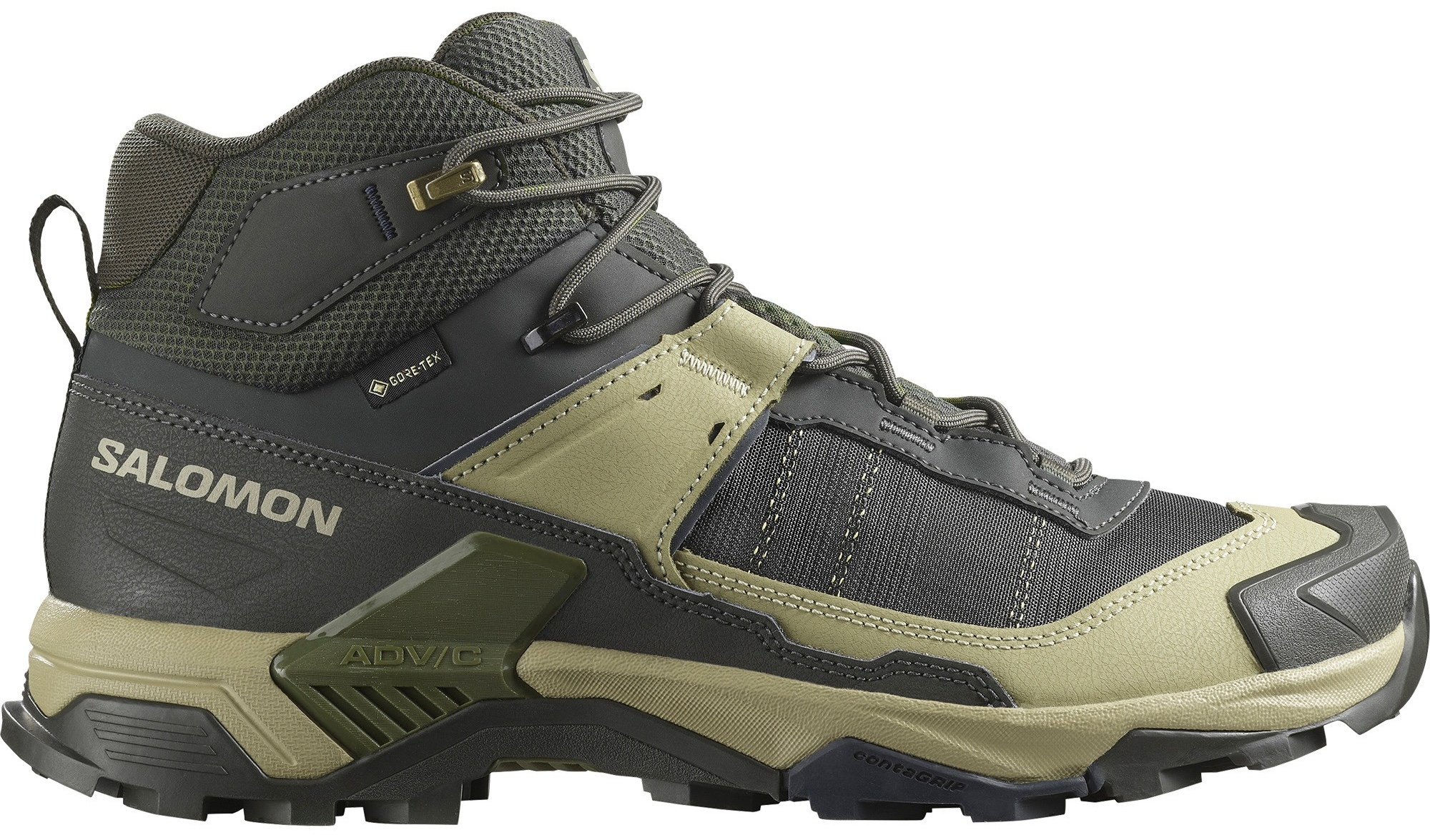 Category: Light/midweight
Upper: Leather/textile
Waterproofing: Gore-Tex
What we like: A well-balanced boot with excellent traction and on-trail performance.
What we don’t: Not supportive or protective enough for tough backpacking trips.
Salomon’s flagship X Ultra series has been a fan favorite among hikers for years, thanks to its reliability and versatility. Version 5 in the series is nimble underfoot, but the ankle-tall collar and thick toe protection also offer a nice dose of support and protection. While far from the stiffest option, we found the X Ultra 5 stable while hauling heavy backpacking gear into the Pasayten Wilderness of Washington, and the winged lacing system makes it easy to snug this boot down. What’s more, Salomon’s Contragrip outsole has proven to be just as all-terrain as the brand claims—it easily grips onto wet rocks, slippery roots, and mud. Salomon also didn’t skimp out on the Gore-Tex waterproofing, which provides reliable protection in creek crossings. In the end, the X Ultra 5 is a jack-of-all-trades boot ready to tackle lightweight backpacking and day-hiking missions, making it a solid all-around choice for the price.
That said, this versatile boot does have a few limitations. To start, its lightweight build doesn’t offer the foot and ankle support of a stiffer boot—Salomon’s Quest 4 below has better foot and ankle support for demanding backpacking trips. Similarly, the lack of underfoot cushion can lead to soreness over rough terrain. Lastly, we had fit issues with the women’s version, which caused blisters during testing (we recommend sizing down by half a size). Gripes aside, we think the 5 is an overall upgrade from the outgoing 4, especially in terms of durability. Both the upper and the outsole have proven much harder-wearing than the last version, and we’re optimistic about the boot's longevity.
Read more: Salomon X Ultra 5 Mid Gore-Tex review (women's version)
See the Men's X Ultra 5 Mid Gore-Tex See the Women's X Ultra 5 Mid Gore-Tex
Category: Lightweight
Upper: Synthetic
Waterproofing: Sympatex
What we like: A super lightweight hiking boot with a surprising amount of stability.
What we don’t: Not a standout breather and runs big.
NNormal is a newcomer to the hiking boot market, but they’re making a splash with their Tomir Waterproof Boot. Designed with legendary long-distance runner Kilian Jornet, the Tomir blurs the line between hiking boot and trail runner. At just 1 pound 5.4 ounces, the Tomir is lighter than many of our favorite trail runners, but it offers surprising foot and ankle support, like a traditional hiking boot. In fact, we tested this boot on a technical multi-day trek in the Patagonian backcountry and were impressed with how well it tackled extremely challenging terrain. Its Sympatex waterproofing is also a boon, performing just as well as Gore-Tex in drizzly weather and through stream crossings.
It’s commonly known that waterproof boots suffer in their breathability, but we found the Tomir boots to be worse off than most. Our tester consistently sweated through her socks on the sun-exposed trails in South America. We also wish that there was a touch more underfoot cushion for protection on rocky trails. Lastly, it’s worth noting that the Tomir is a unisex boot, so you won’t find a women’s specific fit online or in stores. Our female tester did find that the Tomir ran large in her normal size, but it wasn’t so drastic as to cause discomfort or affect performance. All in all, the Tomirs have made a strong impression on us despite being in just their first iteration, and we’re excited to see what else NNormal comes up with in the hiking sphere.
Read more: NNormal Tomir Waterproof Boot review
See the NNormal Tomir Waterproof Boot
 Category: Lightweight
Upper: Textile
Waterproofing: XeroTex
What we like: A barefoot shoe with mild comfort touches, such as a toe band and gusseted tongue.
What we don’t: Doesn’t offer the support, cushion, or rockered profile of an efficient long-distance hiker.
If you're looking for an all-natural option, check out Xero's barefoot hiking boot, the Trail Mid. Right off the bat, we’ll say that we don’t use the term “barefoot” lightly here: With zero drop and a minimal EVA midsole, you’ll be sure to feel every stone and root you step on in these kicks. But they also boast a comfortably snug sock-like fit and a supple construction (you can literally bend this shoe in your hands). The upper extends to the ankle, and the dual hooks allowed us to cinch these boots tight for a surprising amount of support. The materials and tread have proven durable so far, and we’ve had good luck with the XeroTex waterproofing while wearing these on an early-season backpacking trip to Ross Lake in Washington state. The gusseted tongue is an especially thoughtful touch point, providing an extra bit of assurance when hiking through deep creeks.
There are lots of comforts you give up in going with a proper barefoot shoe, the main ones being protection and support. While the Scrambler Mids have more ankle support than we expected, the upper isn’t stiff enough to support a heavy load unless you've trained your feet for it. What’s more, the thinner materials leave your feet more susceptible to trail injury, be that from accidentally kicking a rock or general foot fatigue. The flat profile doesn’t help with momentum, either, and we found it tough to battle up steep trails or move efficiently through flat terrain without some rocker. That said, Xero pulls off the barefoot profile better than most, and they include enough protective features—such as a thin rubber toe rand—to lend some comfort to the true barefoot experience. Like the Altras, we recommend getting used to these boots on easy hikes if you’re not already practiced with barefoot shoes, but if you’re curious about the hype, the Scrambler Mids are a safe way to dip your toes in.
See the Men's Xero Scrambler Trail Mid WP See the Women's Xero Scrambler Trail Mid WP
Our list represents years of hiking boot testing and includes models we believe are the most durable, high-performing, and cost-effective for their use cases. We're constantly testing new and interesting waterproof hiking boots, but not every boot meets our high standards. For transparency's sake, we've included the models we've recently tested and dismissed here.
To start, we removed Hoka's Anacapa 2 Mid GTX from the list because the waterproofing didn't hold up well to testing on a recent backpacking trip in Alberta's wilderness. To be more specific, we felt the waterproofing ended prematurely; coverage ended low on the back of the heel. They were plenty protective for shallow stream crossings, but they weren't reliable enough to earn a spot on this list. You can read more in our in-depth review of the women's Hoka Anacapa 2 Mid GTX.
We also opted to remove the Teva Grandview GTX Mid because we think that the Arc'teryx Kopec Mid better balances casual appeal and on-trail performance. The Grandview has a classy leather aesthetic and holds up well to waterproofing testing, but the Kopec proved more supportive and grippy on a wider range of terrain.
The Keen Targhee IV didn't make the cut this time, either. After testing this boot extensively in Wyoming's Wind River range and upstate New York, we weren't impressed with its traction. In fact, we found it especially slippery when exiting creek crossings and hiking over muddy or wet trails. The waterproofing itself was excellent, but we wouldn't recommend it for wet missions (read more in our in-depth review of the Keen Targhee IV).
We also decided to remove the Columbia Newton Ridge Plus II (and the women's Ridge Plus) because we found them sloppy and unsupportive on anything but well-groomed trails. They're certainly less expensive, but they sacrifice some serious performance factors to achieve that. They struggle to grip on muddy or loose trails, and when testing them on off-camber trails in Eastern Washington, the collar had a habit of buckling.
Lastly, we removed Zamberlan's Vioz GTX boot. While the Vioz is a beautiful and well-made heavyweight hiking boot, it's far too heavy and overkill for most modern users. What's more, it's much more expensive than any of the other boots on this list. For more efficient and comfortable travel, hikers will be better off opting for a midweight or lightweight hiker.
| Boot | Price | Category | Weight | Waterproofing | Upper |
|---|---|---|---|---|---|
| La Sportiva TX Hike Mid Leather | $219 | Light/mid | 1 lb. 15.0 oz. | Gore-Tex | Leather |
| Merrell Moab 3 Mid WP | $170 | Light/mid | 2 lb. 2.9 oz. | Merrell Select | Leather / mesh |
| Salomon Quest 4 GTX | $230 | Mid/heavy | 2 lb. 14.0 oz. | Gore-Tex | Leather / textile |
| Lowa Renegade Evo GTX Mid | $280 | Midweight | 2 lb. 9.6 oz. | Gore-Tex | Nubuck leather |
| Altra Lone Peak 9 WP Mid | $190 | Lightweight | 1 lb. 15.9 oz. | Cosmo lining | Mesh |
| Scarpa Rush Mid 2 Pro GTX | $199 | Lightweight | 2 lb. 0.1 oz. | Gore-Tex | Nubuck leather |
| Arc'teryx Kopec Mid GTX | $200 | Lightweight | 1 lb. 8.0 oz. | Gore-Tex | Synthetic |
| La Sportiva Ultra Raptor II Mid | $219 | Lighweight | 2 lb. 0 oz. | Gore-Tex | Leather |
| Salomon X Ultra 5 Mid Gore-Tex | $185 | Lightweight | 2 lb. 0 oz. | Gore-Tex | Leather / textile |
| NNormal Tomir Waterproof | $195 | Lightweight | 1 lb. 5.4 oz. | Sympatex | Synthetic |
| Xero Scrambler Trail Mid WP | $160 | Lightweight | 1 lb. 7.2 oz. | XeroTex | Textile |
| Boot | Price | Category | Weight | Waterproofing | Upper |
|---|---|---|---|---|---|
| La Sportiva TX Hike Mid Leather | $219 | Light/mid | 1 lb. 12.6 oz. | Gore-Tex | Leather |
| Merrell Moab 3 Mid WP | $170 | Light/mid | 1 lb. 11.1 oz. | Merrell Select | Leather / mesh |
| Salomon Quest 4 GTX | $230 | Mid/heavy | 2 lb. 6.0 oz. | Gore-Tex | Leather / textile |
| Lowa Renegade Evo GTX Mid | $280 | Midweight | 2 lb. 2.2 oz. | Gore-Tex | Nubuck leather |
| Altra Lone Peak 9 WP Mid | $190 | Lightweight | 1 lb. 10.9 oz. | Cosmo lining | Mesh |
| Scarpa Rush Mid 2 Pro GTX | $199 | Lightweight | 1 lb. 10.1 oz. | Gore-Tex | Nubuck leather |
| Arc'teryx Kopec Mid GTX | $200 | Lightweight | 1 lb. 4.8 oz. | Gore-Tex | Synthetic |
| La Sportiva Ultra Raptor II Mid | $219 | Lightweight | 1 lb. 8.0 oz. | Gore-Tex | Leather |
| Salomon X Ultra 5 Mid Gore-Tex | $185 | Lightweight | 1 lb. 12.0 oz. | Gore-Tex | Leather / textile |
| NNormal Tomir Waterproof | $195 | Lightweight | 1 lb. 5.4 oz. | Sympatex | Synthetic |
| Xero Scrambler Trail Mid WP | $170 | Lightweight | 1 lb. 3.4 oz. | XeroTex | Textile |
If you’re anything like us, wet conditions aren’t quick to dampen our enthusiasm for hitting the trails, and we turn to waterproof hiking boots as the key to enjoying the outdoors regardless of the weather. In that way, testing waterproof hiking boots has happened quite naturally over many years, and we’ve packed hundreds of miles into our favorite models. While our attention is, of course, focused on how dry our socks stay when wearing these boots, we also consider other important factors, such as stability, comfort, and protection. We test lightweight models on fast-packing treks, noting their agility and breathability (as much as a waterproof boot can be), and we save demanding backpacking missions for testing hefty leather stompers, sussing out their ankle and foot support under heavy loads. Durability is always on our radar, and we’ll note any signs of wear in our boots after significant use on the trail.
Former editor-in-chief John Ellings curated our initial list of the best hiking boots (both waterproof and non-waterproof) back in 2015, and editor Maddie Downie narrowed it here to those with outstanding waterproofing. As an avid backpacker and hiker, Maddie, of course, participated in plenty of her own testing, and living in Bellingham, Washington—which sees 150 days of rain a year on average—means she can often start testing right out her front door. We also rely on feedback from our team of testers and communicate with the broader hiking community to gather their opinions. We know that waterproof hiking boot options are always changing, so we’ve slotted this guide into regular updates throughout the year to keep the list up to date.
.jpg)
For most hikers, waterproofing is a must-have, and with good reason. The security of staying dry during a surprise downpour on a backpacking trip is enough for many to reach for a waterproof model. Most waterproof hiking boots feature a breathable bootie-style liner tucked inside the outer fabric to block moisture while still allowing some airflow. Gore-Tex is the most widely known and trusted name in the business, but don’t overlook in-house technologies like Keen. Dry or Topo Athletic's eVent. While performance is often comparable in terms of waterproofing and breathability, consistency can vary from brand to brand. To round things out, these boots also have a durable water repellent (DWR) coating to help water bead off the surface instead of soaking in.
.jpg)
That said, just because most hiking boots are waterproof doesn’t mean that all of them should be. Waterproofing is great for stream crossings, mud puddles, and spring runoff—but in hot, dry climates or on sweaty summer days, it can backfire. On a mid-July trip to Utah, for instance, a waterproof liner might turn your boots into a portable sauna. Plus, in truly soaked conditions, even the best waterproof membrane can eventually give out. That’s why some seasoned hikers and backpackers prefer non-waterproof boots paired with gaiters. While this setup won’t block out all water, it does dry out much faster and helps block debris and splashes from entering over the top of your boot.
Ultimately, we think waterproofing is still the best choice for most folks, especially those heading into mountainous terrain where rain, snow, or water crossings are common. A quality waterproof liner will keep you relatively dry even in foul weather, and it adds a bit of insulation during shoulder-season outings. But if you frequent desert environments like Arizona or southern Utah, a non-waterproof model is likely the smarter—and cooler—choice. Unfortunately, most boots don’t offer both versions, but a few do, such as the Merrell Moab 3. For more on this topic, check out our full hiking boots guide for a mix of waterproof and non-waterproof options.
.jpg)
Claiming a waterproof boot is “breathable”—as marketers often do—is somewhat of a misnomer. There’s no way around it—restricting water from entering also restricts sweat and heat from easily escaping. This means that waterproof boots, no matter how advanced, can feel stuffy in the warmer months. Still, breathability levels vary significantly across designs. Heavy-duty leather boots with waterproof membranes tend to be the least breathable, like Zamberlan’s beefy Viox GTX. Midweight options like the Lowa Renegade Evo or Salomon Quest 4 strike a balance, combining nylon and leather with Gore-Tex liners that perform well enough even on summer backpacking trips. For the best ventilation, look for lightweight models with mesh panels in the upper. Designs like the Arc'teryx Kopec Mid GTX or the La Sportiva Ultra Raptor II Mid breathe well enough to wear year-round and still keep water at bay when needed.
.jpg)
Lightweight
Lightweight hiking boots are all about speed and flexibility. They’re nimble enough for day hikes and short backpacking trips, yet still offer more support than a trail running shoe. NNormal's Tomir pulls this off better than most, but other lightweight boots, like the La Sportiva Ultra Raptor II Mid Leather GTX and the Scarpa Rush 2 GTX, also fall into this category. Most use affordable waterproof liners (usually not Gore-Tex), and rely on mesh and nylon to cut weight and cost. You’ll sacrifice some durability and structure, but for most day hikes or light loads, they perform admirably.
There’s also a growing crossover category of mid-height trail runners. Popular shoes like the Altra Lone Peak and Hoka Speedgoat are now available with extended collars for ankle support. These “hiker” versions of trail running shoes retain their cushy, energetic ride but gain protection and support. The trade-offs? Less durability, minimal toe protection, and limited support when carrying a heavy pack or navigating rough trails. But those who like to move fast and light and even mix in some running during their adventures may find that the pros of a nimble boot like Altra’s Lone Peak 9 Waterproof Mid outweigh the cons.
Midweight
Midweight boots sit at the sweet spot: substantial enough to carry a heavy load, but not so bulky that they slow you down. This growing category includes models such as the La Sportiva TX Hike and the Lowa Renegade Evo GTX. You’ll get excellent support and decent stiffness underfoot without the tank-like feel of a heavier boot. Construction quality also steps up here, with premium waterproof liners like Gore-Tex becoming standard. Expect prices to start around $200, but you’ll get a significant boost in comfort and longevity.
Heavyweight
In general, we're seeing the market move away from heavyweight stompers as athletic models become more popular, but if you're venturing into rugged terrain with a full pack or planning cold-weather adventures, a heavyweight boot is worth considering. These stiff, rugged designs are made to withstand abuse. Their thick leather or synthetic uppers paired with Gore-Tex waterproofing make them ideal for snow, rain, and rocky scrambles. And because of their structure, they help reduce fatigue on long climbs and even accommodate strap-on crampons for light mountaineering. But don’t skip the break-in process—these boots need time to mold to your feet before a big trip. Heavyweight hiking boots have mostly been phased out by lighter-weight models, but you can still find several, such as Zamberlan's Vioz GTX. But our list does include some heavier midweight models, such as the Salomon Quest 4 GTX, which straddles the line between the two categories.
Weight is a big factor in performance and comfort. Hiking boots run the gamut: Ultralight designs like the NNormal Tomir can weigh as little as a pound and a half for the pair, while burly, supportive models can exceed 3 pounds. Generally speaking, lighter boots are less protective and supportive, and may not hold up as well over time. This can be a problem if you're hauling a heavy backpack over long distances, but for fastpacking, thru-hiking, or warm-weather trips with a light load, the reduced weight can make a big difference in comfort and speed.
Our philosophy? Use the lightest boot that still meets your needs. For some adventures, that might mean a trail runner-inspired hiker. For others—like hauling gear through rocky terrain or hiking in extreme weather—you’ll need the confidence and protection of a heavier model. One of the best do-it-all options is the Salomon Quest 4 GTX, which strikes a superb balance between weight and ruggedness.
.jpg)
Stability is a core function of a hiking boot, and much of it comes from a hidden hero: the shank. This stiff plastic insert sits between the midsole and outsole, running partially or fully underfoot, depending on the boot. It prevents your heel from dropping too far on ascents, reducing calf fatigue and boosting overall control. More technical boots have longer, stiffer shanks, such as those in full-shank mountaineering boots. On the other hand, many lightweight boots forego shanks for more flexibility and comfort and instead rely on tall uppers for ankle support.
For easy trails and quick day hikes, a light, pliable boot like the Altra Lone Peak 9 Waterproof Mid is more than sufficient. All-natural aficionados might even enjoy the decidedly minimalist barefoot shoe, like Xero's Scrambler Trail Mid WP. But for extended treks or when you’re carrying a heavy pack, the added ankle and foot support of a sturdier boot—like the Lowa Renegade Evo—is well worth it. And if you plan to go off-trail, cross scree fields, or tackle exposed sections, heavyweight boots such as the Salomon Quest 4 offer unbeatable protection and support.
.jpg)
Laces might not be flashy, but they play a huge role in how a boot fits and feels. A poor lacing system that loosens easily can lead to hot spots, blisters, or constant trail-side adjustments. Sometimes, it's just the laces themselves—an easy fix with aftermarket replacements—but more often, it’s the hardware or layout. We’re not big fans of single-pull systems like those found on some Salomon or Adidas models: They’re quick, but lack the fine-tuned adjustability of traditional laces, which can lead to discomfort over many miles when wearing a heavy backpack.
As you move up in boot categories, lacing systems tend to improve. Look for locking eyelets near the ankle—found on boots like the La Sportiva TX Hike Mid Leather GTX or Lowa Renegade Evo—which help keep your foot snugly in place. These also prevent your laces from loosening as you hike and reduce the risk of snags on branches or brush. We're big fans of the lacing systems on the Salomon X Ultra 5, which feature chassis "wings" that secure the heel as the boot is pulled tight. Make sure you’re comfortable with the boot’s lacing system before hitting the trail, especially if you plan on long trips or carrying heavy loads.
The upper is the part of the boot that connects to the sole and wraps around your foot, and the material used here plays a major role in durability, breathability, water resistance, and overall comfort. Most hiking boots use a combination of synthetic materials, mesh, and leather, though high-end models may feature full leather uppers for maximum toughness. Below is a breakdown of the most common materials and how they perform out on the trail.
Synthetic Nylon and Mesh
Synthetic nylon and open mesh panels are especially popular on lightweight and mid-range hiking boots. These fabrics offer excellent breathability and help reduce weight, making them great for warm-weather trips or for hikers prioritizing agility and speed. The trade-off, however, is durability: mesh can tear more easily and absorb moisture more quickly. That said, there are some exceptions. The Salomon Quest 4, for instance, uses tightly woven nylon panels that rival Nubuck leather in toughness, even though they have more visible stitching. This makes them a solid compromise for hikers who want both breathability and a decent lifespan.
.jpg)
Nubuck and Suede Leather
Nubuck leather is made from full-grain leather but features a brushed finish, giving it a softer, suede-like texture. This material is a staple in mid-range hiking boots for good reason: It offers better durability than mesh yet is lighter and more flexible than traditional full-grain leather. Nubuck is also more forgiving in terms of breathability and less prone to wear and tear—such as scuff marks—thanks to its matte finish. You’ll often see it paired with mesh in a boot's construction, where the leather adds structure and resilience in high-wear areas, such as in the Merrell Moab 3 Waterproof.
.jpg)
Full-Grain Leather
Full-grain leather uppers are the gold standard for toughness and water resistance. Found primarily on heavyweight and high-end hiking boots like the Zamberlan Vioz GTX, full-grain leather requires more care and maintenance, but in return, it offers unmatched longevity. These boots aren't the lightest or most breathable, but if you treat them well, they’ll last for many years—often outlasting synthetic alternatives by a long shot. Bonus: some models are resoleable, which extends their lifespan even further.
While the outsole is your boot's tread, the midsole is its shock absorber. This layer, sandwiched between the outsole and insole, plays a key role in how your boot feels underfoot—especially when carrying a heavy load or hiking on rocky terrain. Midsoles are typically made from EVA (ethylene-vinyl acetate), PU (polyurethane), or a combination of both.
EVA
Lightweight hiking boots often use EVA foam in their midsoles, and for good reason. It’s soft, squishy, and does a great job soaking up impact. Boots with EVA feel cushy underfoot and are great for comfort on the trail, especially for day hikes or lightweight overnighters. But not all EVA is created equal—some formulas are firmer and more durable than others. If you’re putting in long miles on rugged trails, you’ll want a boot with a firmer, higher-quality EVA compound. Cheaper or overly soft EVA midsoles can compress and break down faster, much like running shoes, which diminishes long-term support.
PU
For extended backpacking trips or rough, technical terrain, PU midsoles shine. Polyurethane is firmer, more supportive, and built to withstand heavy loads and tough conditions. It’s not as plush as EVA, but it’s far more durable and maintains its shape over time. You’ll find PU midsoles in boots like the Lowa Renegade Evo, and increasingly in mid-range options like the Keen Targhee IV. While PU adds to the cost (and weight), it pays off in long-term performance and foot protection.
A big reason hikers upgrade from sneakers to boots is for better traction—and this is where hiking-specific outsoles shine. Whether you're navigating slippery roots, slick rocks, or muddy switchbacks, a good outsole can make all the difference in staying upright and confident on the trail. Vibram is the gold standard for outsoles, found on everything from entry-level hikers to high-end mountaineering boots. But not all Vibram outsoles are the same—each is tailored to a specific boot’s design. Some feature aggressive, deep lugs (measured in mm) that bite into mud and loose gravel, while others focus on sticky rubber compounds like Vibram’s Megagrip, which excels at scrambling over wet rock. Entry-level designs like those on the Merrell Moab series keep things simpler with shallower tread, which is fine for moderate trails. The key is to look at the lug pattern and rubber compound to gauge what kind of terrain the boot is built for.
.jpg)
That said, there are plenty of in-house outsoles that have proven themselves just as high-performing as Vibram. For instance, Salomon uses its proprietary outsole technology, Contagrip, available in both the X Ultra Mid and Quest 4. Drawing from years of experience in trail running and alpine sports, their outsoles are competitive with Vibram in both grip and durability. We've also had great experiences with the high traction outsole on Keen's Zionic series, which features multi-directional lugs that bite into loose dirt, wet roots, and submerged rocks with ease.
Stubbed toes are a rite of passage on the trail, but the right pair of boots can minimize the damage. Rubber toe caps or full toe rands are standard on most hiking boots and serve as armor against roots, rocks, and general trail hazards. Some models, like the Salomon Quest 4, feature beefy protection, which is great for scrambling or rough trails. On the flip side, ultralight boots—like the Altra Lone Peak 9—may skimp on this feature to save weight. From personal experience, we’d rather carry a couple extra ounces than sacrifice toe protection on technical trails. If you're planning to hike in rocky or mountainous areas, don't overlook this detail.
Even the best hiking boots often come with underwhelming stock insoles. They tend to be generic, flat, and not well-cushioned, which can lead to discomfort over time. The good news? Swapping out the factory insoles is easy and can dramatically improve the fit and feel of your boots. Brands like Superfeet offer a wide range of replacement insoles tailored for different foot shapes, arch types, and cushioning needs. A good insole can add volume to help fill out a loose boot, provide better arch support, or add just enough padding to reduce fatigue on long days.
Sustainability is gaining traction in the hiking world, and more brands are stepping up with eco-conscious designs. This includes using recycled or recyclable materials, bio-based fabrics, and repurposed components in their footwear. Many companies now highlight these features prominently—so if you care about your footprint, keep an eye out for sustainability tags on product pages or boot boxes. Another way to hike more sustainably is to choose durable footwear. Lightweight boots may save weight and feel nimble, but they often break down quickly. If you're willing to carry a few extra ounces and invest in break-in time, a burly leather boot can easily last a decade. Also worth considering are brands like Zamberlan, which offer repair services and resoling options. And when it’s finally time to retire your boots, consider recycling programs like Ridwell or TerraCycle to help keep gear out of the landfill.
A common question for trail-goers is whether to go with hiking boots or hiking shoes. Both have their place, and the right choice depends on the kind of terrain you're tackling, the weight of your pack, and your personal preferences. Boots offer more support and protection, especially around the ankles, making them ideal for rough terrain, snow, or carrying a heavy backpack. On the other hand, many experienced hikers and backpackers are leaning toward low-top hiking shoes or even trail runners. These options are lighter and more flexible, which can reduce fatigue over long distances. With proper training, many hikers find they don’t need the extra ankle support and enjoy the agility of shoes.
.jpg)
Still, for backpacking through rough country or hiking in cold, wet conditions, we usually reach for boots. That said, having both boots and shoes in your gear closet gives you the flexibility to match your footwear to your destination. Think of it this way: If you're serious about hiking, it's not a question of boots or shoes—it's a question of when to wear which.
Back to Our Top WP Hiking Boot Picks Back to Our WP Hiking Boot Comparison Tables



37d3.jpg?h=fbc67360&itok=TOEvTocq)
f7dd.jpg?h=fbc67360&itok=XyD9FfSo)
dd52.jpg?h=fbc67360&itok=BEpS0yNy)


S65f0.jpg?h=fbc67360&itok=VAiYxF4s)
e709.jpg?h=fbc67360&itok=WbYhHTGy)