.jpg)
.jpg)
Photo Credit
It’s that time of year! Time to find the perfect present for our adventurous loved ones. For that person in your life who loves all things cold weather, check out our gift guide for skiers and snowboarders. For ideas tailored to other pursuits, we also have more editor-recommended gift guides to explore. Happy gift giving!
No matter your ability level, picking up a helmet for skiing is a no-brainer. If you’ve been putting off replacing a helmet that’s years old or are new to the sport, recent advancements have made them lighter and even safer, so now is a great time to take the plunge. High-end models on our list offer advanced fit customization and venting, but those who only get up to the mountains a few times a year will be fine with a cheaper option. From local lifts in the Pacific Northwest to technical couloirs in Patagonia, our editors have put dozens of helmets to the test over the years, from feature-packed and teched-out designs to basic but effective options that get the job done. Our top pick for the 2025-2026 season is the Smith Vantage 2 Mips. For more background information, see our comparison table, buying advice, and details about our testing process.
Editor's note: We updated this guide on November 26, 2025 to hone in our list of ski helmets to a carefully-chosen few. We did this by reevaluating testing notes, considering use cases, and removing any helmets that weren't competitive (you can see the helmets we dismissed). We also updated the guide to ensure all other information was up to date at the time of publication and included new photos from recent testing.

Construction: Hybrid in-mold
Weight: 1 lb. 2.0 oz.
Ventilation: Adjustable (40 vents)
What we like: The Vantage puts it all together: comfort, performance, safety, and looks.
What we don’t: Cost.
We’ve tested a lot of ski helmets, and none is more impressive than the Smith Vantage. To start, the quality and attention to detail are clear, with a soft but supportive liner, excellent coverage all around your head, and an easy-to-use Boa dial for adjusting fit. You simply put on the helmet and forget that it’s there—the Vantage feels that comfortable and light. The latest iteration of the Vantage offers a great mix of warmth and ventilation, with 40 vents controlled by two sliders for easy customization, and comes in four sizes from small to extra large. All in all, you won’t find a helmet that's more comfortable and universally capable for frontside and backcountry use.
The Vantage also comes with all the safety bells and whistles in Smith's arsenal. The hybrid in-mold build (tough ABS plastic on top with a lighter in-mold lower) is complemented by the brand’s distinctive honeycomb Koroyd construction, which is intended to improve energy absorption in a crash. And the popular Mips liner, designed to protect your brain in an angled impact, is included. These safety features are tough to quantify, but it’s worth noting that the liner is well-integrated into the low-profile design. Whether the whole package is worth the steep price tag is up to you. Editor’s note: We’ve found the Mips model runs small, so those on the high end of the fit range may want to size up.
Read more: Smith Vantage Mips review (prior version)
See the Smith Vantage 2 Mips


Construction: ABS
Weight: 1 lb. 1.6 oz.
Ventilation: Fixed (8 vents)
What we like: A tough, Mips-equipped helmet for a reasonable price.
What we don’t: Lacks the lightweight feel and high-end fit and comfort of pricier designs.
Sticking to a budget doesn’t always mean you have to sacrifice performance, and the Giro Ledge Mips is a case in point. Most importantly, it covers all the bases in terms of protection, with a tough ABS hardshell, close and adjustable fit, and top-of-the-line Mips technology (to absorb the forces of an angled impact). This is the same safety system used by many more premium (read: pricier) competitors here, so it’s a win to find it for such a reasonable price. You don’t get a lot of other bells and whistles, but there’s enough to make most skiers happy: a goggle retainer hook around back, removable ear pads, and a cool, skate-inspired look. If you’re looking to save without compromising on safety, the Giro Ledge Mips is hard to beat.
The Smith Rodeo is another popular budget pick, featuring a similarly simple yet functional design. But for us, the Ledge’s addition of Mips is well worth the extra cash. A closer alternative is Smith’s Scout Mips, which goes head-to-head with the Giro for a price increase. Choosing between the two helmets is like splitting hairs: Both feature tough hardshells that can take a good knock, eight fixed vents, and availability in a wide range of colors–although neither offers the lightweight build or fit conveniences of higher-end offerings. Notably, the Scout also tacks on an all-season certification, which means it can pull double duty as a skate or bike helmet, while the Ledge is only certified for snow sports. Trying the two on will help settle the score, but in the end, both are high-quality budget designs from leading helmet brands.
See the Giro Ledge Mips Helmet

Construction: Hybrid in-mold
Weight: 1 lb. 3.4 oz.
Ventilation: Adjustable (20 vents)
What we like: High-quality and comfortable.
What we don’t: Not as versatile as the Vantage.
Those sticking to the resort will find a lot to like Smith’s Level and women's Liberty Mips, which balance comfort, styling, and premium touch points better than most. Right away, you can tell the Level and Liberty are thoroughly modern helmets: Both have sleek looks, generous ventilation, and hybrid shell constructions that closely resemble the brand's pricier Vantage. And like the Vantage, the Level and Liberty also use Smith’s Koroyd technology for impact absorption and include Mips liners for solid protection against angled impacts. Throw in a soft and warm interior and a plusher liner than their pricier sibling, and the Level and Liberty have all the right ingredients for a reasonable price.
As the price tag suggests, the Vantage is more premium than the Level and Liberty. To start, the Level and Liberty are heavier (by about 1 oz.) and have a single adjuster for the top vents (the Vantage has two). Further, Smith swapped the Vantage’s premium Boa fit system for an in-house design with a more limited range of adjustment. That said, the level of customization is similar, and we’ve had no complaints with ours in testing so far. Overall, the lighter and airier Vantage is the better all-rounder, but we see little to complain about with the Level and Liberty for lift-assisted use.
Read more: Smith Level Mips review
See the Men's Smith Level Mips See the Women's Smith Liberty Mips

Construction: Hybrid in-mold
Weight: 1 lb. 0 oz.
Ventilation: Fixed (33 vents)
What we like: Lightweight, well-ventilated, and great protection.
What we don’t: Might be heavier and bulkier than ski mountaineers want.
Most backcountry skiers usually opt for minimalist designs that prioritize weight savings and ventilation more than comfort and warmth, but we’ve found that Smith’s Summit Mips does the best job at balancing both. Weighing in at just one pound, the Summit is lighter than the resort and hybrid designs, and it comes equipped with 33 total fixed vents that provide effective cooling. The design features a Boa fit system that folds neatly into the helmet for easy packing, integrated headlamp routing, and attachment points for strapping to a ski backpack. On the protection front, you get Smith’s full suite of premium safety features, including a Mips liner, zonal Koroyd coverage for added energy absorption, and a hybrid in-mold build that nicely balances weight and longevity. Put together, the Summit is a purpose-built lid that’s clearly at home in the backcountry.
The Summit is Smith’s first triple-norm-certified helmet, meeting the safety standards for alpine skiing, mountaineering, and climbing. That said, dedicated ski mountaineers still might find it too heavy or bulky. Salomon’s MTN Lab is another compelling design that shaves a few ounces off the Summit, but it’s a lot more expensive and still overkill for ultralight backcountry pursuits. Petzl’s Meteor is probably the better option for ounce-counters, though its bare-bones construction isn’t as comfortable or protective as the Summit. In our opinion, the Summit is the more versatile choice, and a safer one for freeriders and those who dip inbounds.
See the Smith Summit Mips


Construction: ABS
Weight: 1 lb. 4.1 oz.
Ventilation: Fixed (10 vents)
What we like: Stylish freestyle design and durable build.
What we don’t: A relatively simple design that’s not the most performance-focused.
There’s no rule book that states you need a certain kind of helmet for the park, but freestyle aficionados will benefit from prioritizing certain features over others. First is a hardwearing construction: Durability matters far more than weight when it comes to hitting jibs and sliding rails, so most park rats will want to look for a robust hardshell design. Second is protection: We recommend looking for a helmet with Mips—if rotational impact protection is essential anywhere, it’s when you’re catching big air off kickers. Last but not least, style matters: Most freestyle riders will want a skate-inspired lid, along with the versatility to wear it with or without ear pads and with the goggle strap underneath or over the top.
There are plenty of freestyle options to consider, but Giro's Trig Mips stands out among the competition for its premium feature set at a competitive price. To start, the Trig comes Mips-equipped and with a durable hardshell construction. The ten vents are adjustable, and the back dial helps secure a proper fit. To be sure, the Trig is a sizable step down from more premium options in terms of technology and performance, but the price drop reflects that. All told, there's a reason this lid is so popular among park skiers: It's durable, protective, and looks good.
See the Giro Trig Mips

Construction: In-mold
Weight: 15.8 oz.
Ventilation: Fixed (12 vents)
What we like: Comfortable liner, competitive price, and fun styling.
What we don’t: Non-adjustable vents.
The majority of weekend warriors and resort skiers don’t need to spend up for the utmost in performance and can easily settle for a comfortable, protective, and stylish helmet in the sub-$200 range. Our favorite in this category is the Pret Cynic X2 Mips. This helmet has many premium features, such as the wool-blend liner, which is one of the most comfortable interiors we’ve tested. Wool is excellent at regulating temperature and naturally resists odors. The Mips protection is a great touch for the price, as is the dial fit adjustment, and Pret adds additional security and durability with strategically-placed panels of polycarbonate that thicken sections of the shell. And though it’s a small touch, we love the magnetic buckle, which is easy to use with one hand and with gloves.
To be sure, the Cynic 2 is much more basic than premium designs. Most notably, you’ll have to remove the helmet and the liner to close or open the vents (the closure is a fabric flap on the liner). And if we were to nitpick, we feel torn on the styling: The helmet is sleek and low-profile, but the oversized logo on the side isn’t our favorite. We can hardly complain, considering the price and other quality touches. Another design to consider in this category is Smith’s Method Mips, which features the brand’s Koroyd construction that absorbs energy efficiently in the event of a crash. But we prefer the Cynic for the additional vents and comfy liner, which earns it a spot among our favorites.
See the Pret Cynic X2 Mips

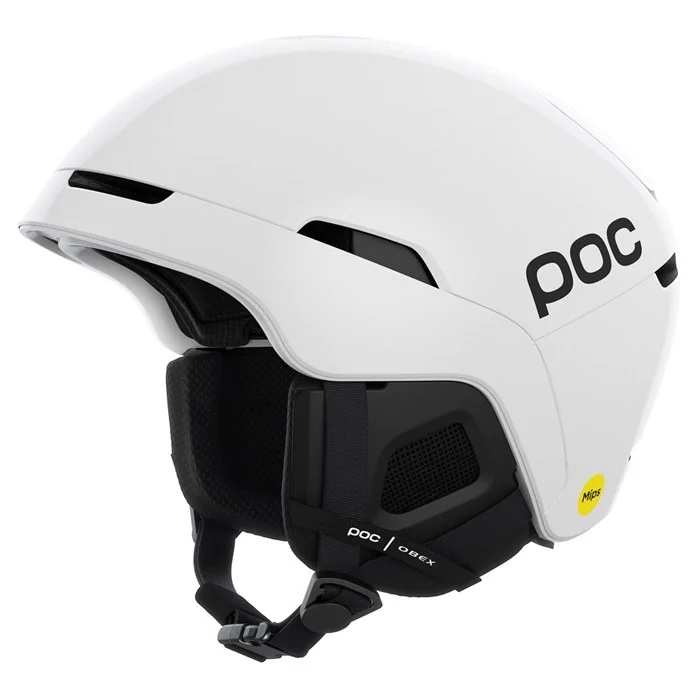 Construction: Hybrid in-mold
Weight: 1 lb. 1.6 oz.
Ventilation: Adjustable (11 vents)
What we like: Solid build and well-integrated safety features.
What we don’t: Bulkier and less ventilated than our top pick.
Sweden-based POC has built a reputation around toughness and safety, and the Obex is its most well-rounded helmet to date. Mixing in-mold construction with a tough ABS shell on top, the helmet is competitively light but can still take a knock (and limit cosmetic damage) thanks to the exterior layer of tough plastic. We also think it’s a classy-looking design with a low-profile shape and clean styling. Rounding out the setup, the Obex features an easy-to-use fit system that evenly secures around the head, adjustable vents, and a proven Mips liner.
What’s not to like about the POC Obex? Despite their best efforts, the helmet remains bulkier and less streamlined than Smith’s Vantage and Level. As a result, we found that it feels a little heavier than its 1-pound 1.6-ounce weight suggests. Further, the interior padding isn’t as plush as the Smith designs, and we prefer more cushioning along the chin strap. Finally, only the top vents are adjustable, which means the helmet can run cold on frigid days. To be fair, these differences still are fairly minor, and the Obex’s combination of a premium safety suite and reasonable price earns it a spot on our list among our favorites for the season.
See the POC Obex Mips

Construction: ABS
Weight: 1 lb. 3.4 oz.
Ventilation: Fixed (10 vents)
What we like: Great price for a well-rounded and surprisingly comfortable lid.
What we don’t: Heavy, no Mips liner, and cheaper-feeling foam.
Top to bottom in their snow helmet lineup, Smith just gets it. The Rodeo is their true budget offering and one of our favorite helmets in its price range. It’s an exercise in smart design, and one of the Rodeo’s biggest accomplishments is avoiding the bulky and off-putting mushroom look associated with cheap helmets. While not as low-profile or techy as the premium Vantage or Level, it’s a notable improvement over most budget models. The helmet also comes equipped with a micro-dial adjustment in the back and is available in a “round contour fit,” which is a better match for rounder head shapes.
As expected, the overall quality of the Rodeo can’t match that of the pricier designs on this list. The warmth and comfort are competitive, though the foam, while thick and warm, feels cheaper and muffles sound more than we prefer. On the whole, we’ve found that it’s often worth upgrading to a mid-range or premium ski helmet, and particularly for those who get in a lot of days on the mountain (the Giro Ledge is a great step up). But as long as you’re willing to compromise on comfort, don’t have a Mips liner on your must-have list, and aren’t prone to overheating (the fixed ventilation is only mildly effective), the Rodeo is a real winner. The Rodeo with Mips is also available.
See the Smith Rodeo
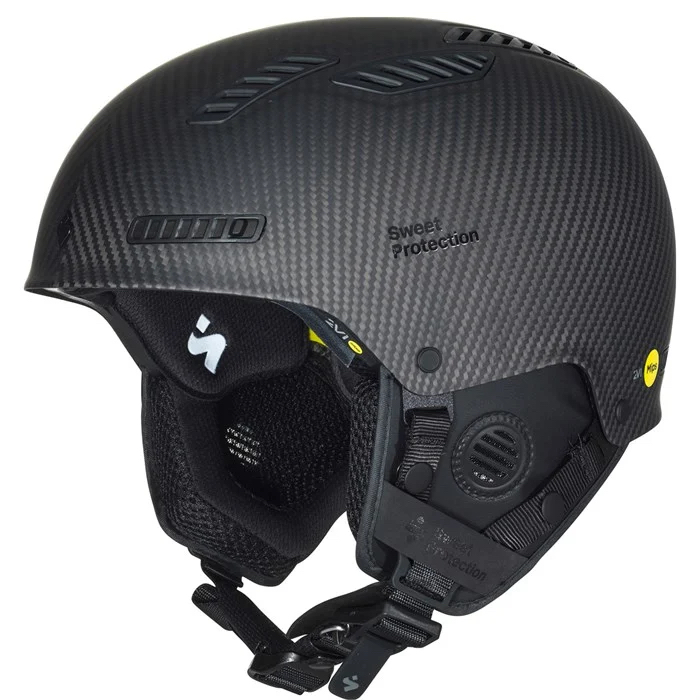 Construction: Hybrid carbon fiber shell
Weight: 1 lb. 6.2 oz.
Ventilation: Adjustable (10 vents)
What we like: A carbon fiber helmet!
What we don’t: Super expensive and fairly heavy.
Right off the bat, it’s readily apparent that the Sweet Protection Grimnir 2Vi isn’t your average ski helmet. The shell is made with gleaming carbon fiber—it’s particularly impressive-looking in the “Natural Carbon” color shown to the right—and the price tag is the highest on this list. What the carbon fiber build and unique two-layer Mips system get you, however, is incredible strength and pro-level performance. Tack on a premium feature set including a magnetic buckle, dial fit adjustment, and adjustable venting, as well as a low-profile fit, and the Grimnir is a compelling design, especially for those who hit big mountain lines with lots of exposure.
It probably won’t come as a shock that the Grimnir 2Vi’s appeal is limited. For one, riders interested in this helmet likely find themselves in hairy situations frequently, and they may need to replace it after a crash well before the liner wears out. Moreover, there isn’t a standardized test to prove that this carbon construction is actually safer than a similarly burly option like Smith’s Nexus or the lighter-weight helmets like Smith’s Vantage 2. In the end, the Grimnir remains a niche product, but Sweet Protection does make the Igniter 2VI Mips, which shares a similar shape and fit but trades the carbon fiber for more practical ABS plastic.
See the Sweet Protection Grimnir 2Vi
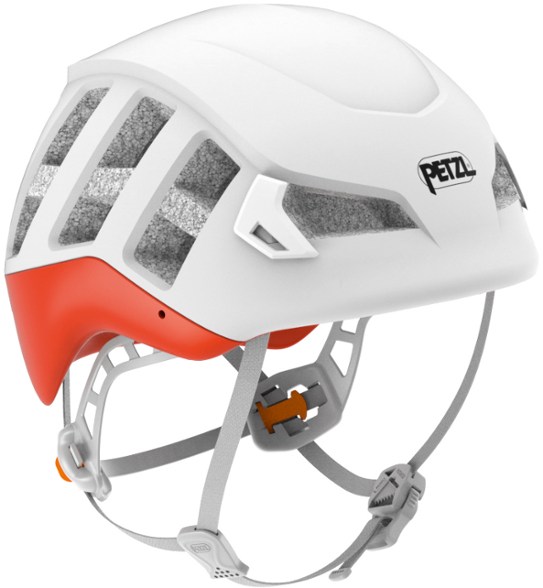 Construction: In-mold
Weight: 8.5 oz. (M/L)
Ventilation: Fixed (23 vents)
What we like: An ultralight climbing helmet that’s CE-certified for ski touring.
What we don’t: Drafty and does not meet standards for resort skiing.
Most dedicated ski mountaineers will balk at the weights of some of our picks, including our top pick for backcountry skiing. Enter the Petzl Meteor and women's Meteora, 8.5-ounce climbing-turned-ski helmets that are truly in a class of their own. The Meteor and Meteora are officially certified for ski touring (EN 12492), offering impact protection on both the top and sides of the head (most climbing helmets only guard against objects falling from above). Though their feature sets are minimalist (to save weight, of course), they are goggle compatible with a rear elastic band to keep them in place, and they have a simple rear adjustment that’s easy to use when wearing gloves. Put together, the Meteor and Meteora are everything ski mountaineers need and nothing they don’t.
But before you hit the skin track with the Petzl Meteor and Meteora, it’s important to recognize their limitations. In particular, these helmets fail to meet the standards for an alpine ski helmet, meaning they don't provide the necessary protection for resort skiing, big lines in the backcountry, and even some skimo races. Second, with 23 fixed vents and no ear pads, they're decidedly drafty and lack that cozy, secure feel you get with a standard ski helmet. In the end, the Smith Summit is a more well-rounded option that will be worth the added ounces for many. But if you ski tour in the winter and climb in the summer, the Meteor and Meteora are do-it-all helmets that excel in both worlds.
See the Men's Petzl Meteor See the Women's Petzl Meteora
There's no denying that the ski helmet market is oversaturated, and each brand seems to have its own "premium safety tech" that's claimed to be the best. To help you cut through the noise, we test new ski helmets every season to determine which ones stand out. We have high standards for performance, comfort, durability, and price, and not every model makes the cut. We understand that you may be curious which ones we've tested and why we've decided not to include them in this guide.
For the most part, most of our dismissals are for helmets that simply don't stand out. These designs are usually not poor performers, but they also don't offer the most durable or comfortable designs, or are far pricier than the competition. From recent testing, we've decided not to include the Anon Merak WaveCel, Giro Jackson Mips, Salomon MTN Lab, Oakley Mod1, Glade Boundary Mips, Smith Nexus Mips, and Giro Grid Spherical for this reason.
We also tested the Oakley Mod5 Mips, which was updated a few seasons back. In testing, however, we didn't find the latest version worth the upgrade. The current version is much heavier than the previous one, and Oakley discontinued the modular brim feature that made the helmet compatible with most goggles (the new version pushed our large goggles down our noses). For the price, we didn't find its overall performance outstanding—especially when it came to ventilation—and we think most skiers will be better off with the Smith Vantage 2 (read our in-depth review of the Oakley Mod5 Mips).

| Helmet | Price | Construction | Weight | Ventilation | Mips? |
|---|---|---|---|---|---|
| Smith Vantage 2 Mips | $265 | Hybrid in-mold | 1 lb. 2.0 oz. | Adjustable (40 vents) | Yes |
| Giro Ledge Mips | $125 | ABS | 1 lb. 1.6 oz. | Fixed (8 vent) | Yes |
| Smith Level Mips | $250 | Hybrid in-mold | 1 lb. 3.4 oz. | Adjustable (20 vents) | Yes |
| Smith Summit Mips | $260 | Hybrid in-mold | 1 lb. 0 oz. | Fixed (33 vents) | Yes |
| Giro Trig Mips | $180 | ABS | 1 lb. 4.1 oz. | Fixed (10 vents) | Yes |
| Pret Cynic X2 Mips | $160 | In-mold | 15.8 oz. | Fixed (12 vents) | Yes |
| POC Obex Mips | $240 | Hybrid in-mold | 1 lb. 1.6 oz | Adjustable (11 vents) | Yes |
| Smith Rodeo | $85 | ABS | 1 lb. 3.4 oz. | Fixed (10 vents) | No |
| Sweet Protection Grimnir 2Vi | $480 | Hybrid carbon shell | 1 lb. 6.2 oz. | Adjustable (10 vents) | Yes |
| Petzl Meteor | $115 | In-mold | 8.5 oz. | Fixed (23 vents) | No |
As snow starts to fall, many editors at Switchback Travel get giddy with excitement. Whether we’re lapping our local resort or skinning up steep slopes in the backcountry, we love getting outside in the winter and pushing our limits on skis and snowboards. We kicked off this guide all the way back in 2015 with an initial selection of ten worthy designs. Editor Maddie Downie now manages the guide, putting together her experiences skiing both on and off piste. While she enjoys a groomed lap at Mount Baker Ski Resort, she loves backcountry skiing and hoofing it up steep North Cascades volcanoes in the springtime.
Our current lineup is the result of ongoing testing, feedback from trusted contributors, and extensive research. Given the increasing variety of styles and designs available, our picks span a wide range, from budget-friendly lids for infrequent resort riders to high-end backcountry offerings for committed uphill enthusiasts and ski mountaineers. To make our list, each helmet had to stand out in one or more areas, with many striking an effective balance between on-snow performance and price. Factors like weight, bulk, breathability, fit, and comfort all come into play when we're testing helmets, and we make sure to take the time to evaluate long-term durability, too. We will continue to update our list, adding and removing options based on our experiences.

Construction styles for ski helmets can be broken into three general categories: ABS for the best durability, in-mold for the lightest weight, and hybrid in-mold for a nice compromise between the two.
.jpg "Our top picks are a mix of ABS, in-mold, and hybrid construction types")
ABS
Diving a little deeper, ABS helmets like the Giro Ledge Mips and Smith Rodeo are made in the traditional style with a hard plastic shell and a foam liner glued to the inside. The combination is simple but tough—ABS will scratch, but it's far less likely to show cosmetic damage like dings and dents than other materials. It’s also the most affordable helmet construction, and many ABS helmets are certified for all-season use while biking, skateboarding, or roller skating. The tank-like design does come at the expense of weight, bulk, and ventilation: Put on an ABS helmet back-to-back with an in-mold or hybrid design, and the ABS model will look and feel more cumbersome. But given their strengths, ABS helmets are a great choice for everyone, from beginner skiers and penny pinchers to those who are especially hard on their gear.
.jpg)
In-Mold and Hybrid
In-mold and hybrid in-mold technology is found on many mid-range and high-end helmets. In-mold construction combines a thin shell (often polycarbonate) with an EPS foam liner right from the start, and they’re molded together. What you get is an integrated piece, which cuts weight, adds a premium finish, and lets the helmet work as a single unit to absorb impacts. Ventilation also improves with these designs, though the degree of improvement will vary by model and price. Some of our favorite in-mold designs are great crossover models for both resort and backcountry use, including the Pret Cynic X2 Mips and Petzl Meteor.
.jpg)
Durability is the primary downside of an in-mold helmet, particularly in terms of protection against cosmetic damage like dings and dents. For this reason, hybrid helmets have become increasingly popular. Hybrid in-mold designs add a hardshell layer (often along the top) for improved aesthetic durability. Because of the added material, they’re generally a few ounces heavier than standard in-mold designs but are a better choice for riders who get after it in the park or on big-mountain terrain (or simply for those who want a quality build that should last a long time). However, their price, often $200 or more, puts hybrid designs out of reach for many occasional riders. A number of our top picks use this type of construction, including the Smith Vantage 2 and Smith Level.
.jpg)
Mips
In an effort to increase safety, many snow helmets offer additional protective features beyond the standard shell and foam combo. Among these technologies, none has been adopted as widely as the Mips (short for "Multi-directional Impact Protection System") liner. Mips was designed to reduce brain damage in angled impacts (as might occur during a high-speed skiing fall or a botched landing) by using a liner that moves independently of the outer shell. It’s simple: A thin plastic layer connects to the helmet with a few small tabs and moves independently, in theory helping prevent rotational forces from passing through to the brain. Mips’ more premium Spherical technology uses two pieces of EPP foam in a ball-and-socket configuration to achieve the same level of impact reduction.
.jpg)
Beyond the formidable research that has gone into Mips and comparable technologies, the beauty of the designs is that they have essentially no impact on comfort or the profile of the helmet. As such, you see Mips being adopted on anything from Smith’s premium Vantage all the way down to the Giro Ledge Mips. Some helmets we’ve tested do appear to fit slightly smaller as a result, but the impact is negligible otherwise. How often Mips technology is a safety benefit is difficult to quantify, and we haven’t found any solid evidence-based research, but all indications point to it being a nice extra safety measure to protect your head (how much that’s worth is up to you). For more information on Mips, we’ve found the technology page of the Mips website to be a helpful resource.
Koroyd and WaveCel
In addition to Mips, some helmet manufacturers have begun to replace standard EPS foam with cellular or honeycomb-like materials like WaveCel (found in Anon helmets) and Koroyd (Smith's solution). These materials can absorb more energy than EPS, while minimizing bulk and weight and maximizing ventilation. WaveCel in particular is so adept at absorbing angled impacts and reducing rotational forces that current WaveCel-equipped lids forgo a Mips liner. Koroyd has become ubiquitous in Smith’s designs (seen in the Vantage, Level, and Summit), and Anon now offers a few WaveCel-equipped helmets. You’ll pay more for the innovation, but many riders will appreciate the added assurance and increased breathability.
.jpg)
EPS vs. EPP Foam
A final safety consideration is the choice between EPS and EPP foam. Most snow helmets feature EPS foam, which is more affordable than EPP foam but also more brittle. When subjected to enough impact, EPS will crack, meaning these helmets will need to be retired after a fall. On the other hand, EPP foam springs back into shape after impact and can take multiple hits during its lifespan, making it a great choice for park rats and aggressive riders who subject their helmets to a lot of abuse. In addition, it doesn’t require an ABS or polypropylene shell to help distribute the force. We see EPP used extensively in climbing helmets due to its lightweight construction (i.e., no need for a shell), but it has yet to become widespread in snow helmets.
.jpg)
Tasked with keeping you safe from hard impacts on the hill, the helmets on our list have a non-motorized snow sports safety certification from US-based ASTM International. Despite construction differences, these helmets all follow a basic design with a shell exterior and impact-absorbing interior, and are appropriate for both skiing and snowboarding (you can find our dedicated list of snowboarding helmets here). If you’re headed to the slopes, it’s important that you use a helmet designed for the job (i.e., don’t use a mountain bike helmet for skiing), and refrain from using it for tasks outside of its intended use (such as snowmobiling). And of course, the onus is still, as it should be, on the user to ride within your limits.
.jpg)
There are a few snow helmets that have multiple certifications for use outside of skiing. Helmets with climbing certification (EN 12492) provide increased protection against falling objects (from above) in addition to impact protection at the front, rear, and sides. If you’re a skier who ventures into the backcountry or deep into the mountains, you’ll want to look for a helmet certified for both snow sports and climbing (the Salomon MTN Lab, Smith Summit, and Petzl Meteor are popular options). And good news for uphill athletes: These lids all feature lightweight and breathable designs for great performance on the skin track or boot pack.
Finally, helmets with an all-season certification (EN 1078) will be of particular interest to freestyle-oriented skiers who spend the warmer half of the year riding bikes, skateboarding, or roller skating. These designs, like the Smith Scout, are often built with a solid ABS shell that can take a beating on the pavement. Like most snow helmets, they also feature removable ear pads, which are essential for summer use. A few in-mold helmets are also triple-norm certified, including the aforementioned MTN Lab and Summit. Because of their fragile constructions, we don’t recommend these lids for dedicated use around pavement, but for mountain missions that require a mix of biking, skiing, and climbing, they're without rival.
.jpg)
We place a high priority on ventilation. Throughout the course of an average resort day, we open and close our vents on multiple occasions as we hunker down on a windy lift ride or heat up on a sidecountry hike. The technology behind keeping you at a comfortable temperature isn’t as simple as putting a bunch of holes in the helmet—that winter air is rather cold and can lead to dreaded brain freeze when you are trying to let out some steam.

First, look at the total number of vents of the helmet (we’ve provided this information in the specs for each helmet and in the comparison table). Not all vents are created equal, but this number gives you a good starting point as to how much ventilation the helmet offers. To be sure, there is a correlation between the number of vents and the cost of the helmet. One of the best ventilators, the high-end Smith Vantage, has an impressive adjustable 40 vents, while a budget model like the Oakley Mod1 only has six small fixed openings.

Then you have both adjustability and design considerations. Many premium and mid-range helmets have adjustable vents that can be opened or closed to let through the amount of air you prefer. Adjustability is highly preferred over static vents. And effective designs direct air through intakes at the front and “exhaust” the heat out the top and back. Budget helmets often have fixed openings that cannot be shut, although a well-designed passive system can still do a decent job regulating body heat. For long uphill slogs, you may need to ditch the helmet altogether, although we always recommend dealing with the heat if there is a chance for rockfall.
.jpg)
Liner comfort is one of the most noticeable differences between budget models and mid-range and high-end ski helmets. More expensive options like the Sweet Protection Grimnir 2Vi and POC Obex feature padding along the interior that balances softness with support, and if you nail the fit, you’ll hardly notice the helmet throughout the day. Cheaper designs often use squishy foam that packs out over time, feel uncomfortable when worn all day, and muffle sound. For these reasons, we recommend spending up if you plan to get out a lot in the winter. Like an uncomfortable pair of ski boots, you’ll notice it if you don’t.

In addition to comfort, your liner can be a great source of insulation. In our experience, a quality design like what’s included with Smith’s Level offers about as much warmth as a midweight winter hat (we’ve been comfortable wearing the Level down into the single digits). Spending up often gets you better insulation, while sticking with a cheap lid can lead to issues with warmth (especially around the ears). Finally, keep in mind that on particularly frigid days or if you’re prone to running cold, you can slip on a beanie underneath (just make sure to choose a helmet size that accommodates the extra thickness).
.jpg)
Within their specific construction type—ABS, in-mold, or hybrid in-mold—most ski helmets weigh approximately the same. For the medium-sized helmets we tested, that’s 14 to 16 ounces for in-mold, 17 to 19 ounces for hybrid, and 20+ for ABS. And between categories, there are noticeable differences in how they feel—in-mold and hybrid helmets are less prone to feeling heavy during a long day on the hill. However, simply weighing a helmet won’t tell you the whole story of how it feels on your head. Good padding and a snug but comfortable fit can easily make up for a couple of ounces. It’s one of many reasons we love the Smith Vantage. It’s not the lightest, but you’ll quickly forget it's there.
.jpg)
The bulkiness of a helmet plays into this perception of weight. Cheap helmets made with a basic ABS construction are thick and feel cumbersome. The Smith Rodeo was the worst offender on our list, but it’s still much better than even the cheapest helmet options. In contrast, our top picks all have a low-profile fit and don’t feel like you’re hauling around a heavy appendage.
Goggle Retainer Clips
Goggle retainers are a simple but appreciated feature. The built-in clip holds goggle straps in place and helps reduce the risk of losing your ski goggles in a crash or otherwise. Designs vary somewhat: Many budget helmets use a simple plastic piece that flips open, while higher-end helmets use a more secure strap or cord. Pricier models are typically a little more confidence-inspiring and easier to manipulate—particularly without removing the helmet—but all the designs we've tried perform their intended function.
.jpg)
Chinstrap Buckles
For securing a chinstrap, ski helmets fall into two camps: traditional side-release buckles and magnetic systems. We’ve found that both designs are fully functional and wouldn’t necessarily make a buying decision based on this feature. That said, there are a few pros and cons of each to consider. Starting with the side release buckle, this proven method is secure—pinch to release and push to lock into place—easy to use with bare hands, and relatively low-profile. But the buckle is difficult to pinch with gloved hands, which is where the magnetic system comes into play. Fidlock is the leader here, and we’ve found their magnetic designs to be moderately more convenient—just get the two ends close enough and they’ll snap into place—and haven’t had any issues with failure or an unexpected release in a crash.
.jpg)
Audio Compatibility
Most helmets are compatible with some sort of audio system. For example, Smith and Giro work well with Outdoor Tech's Chip systems. In both cases, the ear cups have a built-in pocket that can accommodate speakers. “Audio” helmets, like POC's Communication line, will have integrated speakers and a cable for connecting to a phone or music player. If you go this route, plan to spend a little extra for quality speakers and reliable electronic hardware. Simply put, cheaper options don’t sound as good and are prone to failing. While skiing, it’s always a good idea to keep the volume down or use non-noise-cancelling speakers for safety—we can't say we recommend skiing with headphones in, despite their popularity. While it may impact sound quality, the safety trade-off of being able to hear other skiers or someone shouting at you is a net win.
Action Camera Mounts
Bringing a camera along while skiing lets you record ski runs, tricks, and just general fun on the mountain. GoPros have become the tool of choice for on-the-move filming, and the good news is that most come with adhesive mounts that can be affixed to any helmet. Some models go a step further and come with a GoPro-compatible mount to make it easier to take the camera on and off.
.jpg)
Getting sized for safety gear isn’t a good time to guess, so if you don’t already know it, measure your head circumference before making an online purchase. All you’ll need is a soft-sided measuring tape or string: Wrap it around your head, about an inch above your ears and eyebrows, to get your measurement (in centimeters). As long as the manufacturer is close in their listings—the only discrepancies we’ve seen recently are the smaller-fitting Mips helmets—this should get you a decent fit. Checking out a ski helmet sizing guide can help, too.
.jpg)
But to go from a decent fit to a great fit, we recommend popping into your local ski shop to try on a variety of helmets. Helmet shape and fit can vary across the board—both between brands and between models—and it’s possible that any given design simply won't fit your head shape. We've made sure to call out the various fit discrepancies in our writeups, but there's no substitute for trying on each helmet for yourself. To maximize compatibility, many of Smith’s helmets come in two fits: a standard fit and their “Round Contour Fit,” which accommodates rounder head shapes with more width at the rear and a shorter length.
There are a few final factors to keep in mind when dialing in a proper fit. For one, we strongly recommend opting for a helmet with a Boa dial (or similar technology). Some budget designs use adjustable padding instead, but there’s simply no substitute for the wraparound cinch of a rear dial. Second, if you see a helmet that claims to be one-size-fits-most, we advise steering clear even if your head circumference falls within the listed parameters. Something so accommodating just won’t fit as well as a more fine-tuned size.
.jpg)
As with getting the perfect helmet fit, goggle compatibility is easiest if you can try them on. An ill-fitting helmet and goggle system can be either too tight, which pushes the helmet up and the goggles down your nose, or too loose, leaving some of your forehead vulnerable to cold air. The easiest way to guarantee a good fit is to stick within the same brand—Smith helmets work great with Smith goggles, and the same goes for Giro and POC—but we encourage you not to limit yourself if there’s a goggle or helmet that’s caught your eye.
.jpg)
In testing, we’ve found that some helmets are extremely accommodating of a wide range of goggle types. Giro’s helmets not only work well with all Giro-branded goggles, but we’ve also found that many provide an excellent fit for anything from the large Anon M3 or Dragon X2 to the classic Smith I/O Mag. Smith’s popular Vantage and Level helmets are also reasonably accommodating, fitting big-sellers like the Oakley Airbrake and Flight Deck, but we had issues with tall frames like the Dragon X2.
.jpg)
While a number of ski helmets are unisex and are perfectly fine for either men or women, there is a wide selection of women’s-specific snow helmets. These models are similar to men’s versions, but with different colorways for the shell and liner, and a smaller fit. There will often be a name change, but the technology stays the same—and so does the pricing. When applicable, we've included links to both the men's and women's helmet versions.

The decision to replace an old ski helmet isn’t always a clear one, and there are still debates to this day about when’s the perfect time. We’ll start simple: If you take a substantial crash and hit your head, it’s time to replace your helmet. Full stop. Additionally, if you have a helmet made with EPS foam—the vast majority of designs utilize this construction—and take a hard enough hit to crack the foam, it’s smart to replace it. Remember, EPS foam is designed to crush on impact, so even dropping the helmet from a few feet on a concrete floor could create this level of damage. EPP foam designs are built to withstand multiple impacts, but if the damage is direct and serious, it's always best to replace.
.jpg)
In terms of longevity, that’s where the waters get murkier. Many manufacturers recommend replacing every three to five years—and even sooner if you’re a high-volume user. On the other hand, research has shown the foam can last significantly longer (in one case, 26 years) and still perform its intended function. For some thoughtful, data-backed takes on when to replace your helmet, we've found the Snell Foundation and the Bicycling Helmet Safety Institute to be valuable resources. In the end, here’s our opinion: This is a safety device, and in a world of $800 skis and $200+ lift tickets, we think springing for a new helmet when you’re in doubt about its condition is a smart investment.
Back to Our Top Ski Helmet Picks Back to Our Ski Helmet Comparison Table

4c66.jpg?h=fbc67360&itok=dlfBRc5A)
14ab.jpg?h=fbc67360&itok=1n06ZZey)
%20(s)6a81.jpg?h=fbc67360&itok=uxnbaW_R)
832e.jpg?h=fbc67360&itok=ofljNFTS)
4ed2.jpg?h=fbc67360&itok=SDjaYCfy)
90ed.jpg?h=fbc67360&itok=5fkKemHt)
0ec1.jpg?h=fbc67360&itok=oGaifWVw)
ed0c.jpg?h=fbc67360&itok=zzzA91dc)
a40f.jpg?h=fbc67360&itok=dOXfpJ-4)