.jpg)
.jpg)
Photo Credit
It’s that time of year! Time to find the perfect present for our adventurous loved ones. We have a list of editor-approved gifts for backpackers, as well as more outdoor gift guides tailored for other pursuits. Happy gift giving!
Backpack-style coolers are a fun bunch: They’re easy to carry, lighter than traditional hard-sided models, and borrow heavily from hiking daypacks with padded suspension systems and exterior storage for stashing small extras. From burly waterproof options to two-in-one designs that offer both gear and cooler storage, we break down the top backpack coolers of 2025, our top pick being the Hydro Flash 20L Day Escape. For more background, check out our detailed comparison table, buying advice, and details about our testing process. For more options, we've also compiled lists of our favorite hard-sided, soft-sided, and wheeled coolers.
Editor's note: We updated this guide on November 24, 2025, to narrow our list to a more carefully considered few, taking into account use case, testing notes, and price (you can see which models we dismissed). Finally, we swept the guide to ensure all other information was up to date at the time of publishing and included some new photos from recent testing.

Capacity: 36 cans (without ice)
Weight: 2 lb. 10.1 oz.
Ice retention: 36 hours
What we like: Great all-around performance in a streamlined and good-looking package.
What we don’t: Small opening, no hipbelt or zippered storage; on the pricey end.
Our favorite model after several years of testing is Hydro Flask’s 20L Day Escape. It's well-built, with cushioned shoulder straps and a thick, waterproof exterior that withstands rough use. The handles at the rear and sides make it easy to take on and off, and the exterior lash points are useful for strapping to a kayak or boat. The closure system is another highlight, with a smooth-operating zipper that requires minimal force to open (not always the case with watertight designs), provides a reliable seal, and is easy to realign if it separates. All told, it’s a sleek, well-rounded design, nicely sized for everything from grocery runs and picnics to day trips to the lake or river.
No backpack cooler is perfect, however, and the Hydro Flask Day Escape comes with a few downsides. First, the opening is on the smaller side, making it difficult to stuff bulkier items like egg cartons through the top (Yeti’s Hopper M20 has a much wider, more accommodating shape). Second, the cooler doesn’t have any zippered storage, although the aforementioned lash points and side water bottle pocket should suffice for most. There’s no hipbelt for transferring the weight onto your hips, although most people won’t be hauling their cooler more than a mile or so from the car. Finally, the Day Escape is expensive for a backpack. For a cheaper alternative (at the sacrifice of structure and cooling capability), see Icemule’s Pro Large. But at the end of the day, we think the Day Escape best balances insulation performance, build quality, comfort, and price, earning it our top spot for the season.
See the Hydro Flask 20L Day Escape
.jpg)
 Capacity: 28 cans (without ice)
Weight: 2 lb. 12.0 oz.
Ice retention: 12 hours
What we like: Most of the features we look for at a hard-to-beat price.
What we don’t: Cheaper-feeling components, limited ice retention, and a non-leakproof zipper.
Backpack coolers can get expensive, but there are plenty of budget-friendly options available, including Coleman’s Chiller 28-Can Backpack Cooler. For a low price, the Coleman combines a generous 28-can capacity (without ice) with an impressively functional design. Highlights include padded straps at the shoulders and waist (the latter of which is relatively rare in this space), practical zippered storage at the front and inside, a generous zippered opening for easy loading and unloading, large side water bottle pockets, and a bungee system for securing extra gear. All told, the Chiller is a cheap yet practical design for day trips to the park or beach and can even double as a short-hike pack (it looks and feels a lot like a standard backpack).
That said, as with most budget designs, the Coleman Chiller 28-Can Backpack Cooler has a decidedly cheaper feel than many premium (read: pricier) competitors. For starters, despite having welded seams, the Chiller’s zipper isn’t leakproof, which can lead to messes if you’re not careful. Further, while decently insulated for the price, the Coleman’s basic foam insulation won’t keep ice frozen for more than a day at most, and you’ll likely end up with a soupy interior on warm summertime outings in full sun. But you’d be hard-pressed to find a better combination of features and price, making the Chiller a great option for those who prioritize value over waterproofing and standout ice retention.
See the Coleman Chiller 28-Can
 Capacity: 36 cans (without ice)
Weight: 5 lb. 9.6 oz.
What we like: Class-leading cooling capabilities and typical Yeti build quality.
What we don’t: Overkill for many users.
Yeti is synonymous with premium hard-sided coolers, and they’ve translated that top-end performance and build quality into the Hopper M20. Like most Yeti designs, the M20 combines thick, closed-cell foam insulation with a burly, hardwearing shell that offers impressive cold retention and is highly resistant to snags and tears. In testing this cooler, we were also impressed by the robust feel of the opening, which uses strong magnets to close and quick-release buckles to prevent leaks during travel. Finally, like the rest of their soft-sided offerings, the M20 features the brand’s signature HitchPoint Grid, which lets you easily connect add-ons like their Rambler Bottle Sling or SideKick Dry Gear Case (sold separately). Taken together, it's well built, looks great, and outperforms just about everything else.
However, as with most Yeti products, the Hopper M20 doesn’t come cheap. For a similar price, you can step up to their much larger Tundra 45 hard-sided cooler, which gets the clear edge in ice retention. That said, the Hopper is much easier to carry thanks to generously cushioned shoulder straps and thick grab handles on the sides. Further, similar to our experiences with the soft-sided M30, the M20’s magnet-equipped top is rigid and requires some force to open wide enough for loading large items (though it closes easily with a gentle push). Finally, the M20 doesn’t compress as well as softer and more flexible options like the Hydro Flask Day Escape or the Icemule Jaunt. But the Yeti name is hard to beat, and the Hopper M20 has its place for committed day trippers and weekenders looking to maximize durability and cold retention. Yeti also offers the Hopper M12, which can fit 24 cans (without ice) and costs less than the M20.
See the Yeti Hopper M20

 Capacity: 24 cans (with ice)
Weight: 7 lb. 3.2 oz.
Ice retention: 24 hours
What we like: Excellent storage, durability, and carrying comfort.
What we don’t: The priciest design on our list and overkill for most.
If you’re in the market for a large and feature-rich backpack cooler, Icemule's Boss is one of the most premium and well-appointed options. The rugged design is built to last with a thick, waterproof exterior, welded seams, coated zippers, and a functional roll-top closure that provides easy access and effectively seals out moisture. Features also abound, including three generously sized zippered pockets (one at each side and one at the front), exterior bungee straps, and plenty of lash points and gear loops for securing smaller items to the outside. The suspension system is also well equipped to handle a full load, with thick padding along the shoulder straps and hipbelt, and a cushioned mesh backpanel that effectively isolates your back from the contents of the bag. Finally, like Icemule's soft-sided Classic series, the Boss is a great match for water sports like kayaking or paddleboarding thanks to its waterproof construction and buoyancy.
However, in addition to being the most expensive option on our list, the Icemule Boss is hefty at just over 7 pounds and noticeably bulky compared to more malleable options like the Hydro Flask Day Escape. This lack of packability is limiting for those short on storage space in their garage or vehicle, and the design is decidedly overkill in both price and performance for short day trips like picnics or quick afternoon paddles. For considerably less, the Day Escape checks most boxes for recreational use while coming in well over 4 pounds lighter and featuring a much sleeker, more streamlined appearance. If you like the feature-rich design but want something cheaper, check out the Engle Roll Top. But if you plan to haul a lot of extras and can justify the added expense, the Boss leaves little to be desired in terms of storage and carrying abilities.
See the Icemule Boss Backpack Cooler
.jpg)
 Capacity: 12 cans (with ice)
Weight: 2 lb. 8.0 oz.
Ice retention: 40 hours
What we like: A functional two-in-one option with separate gear and cooler compartments.
What we don’t: Limited capacity for food and beverages.
REI’s Cool Trail Split Pack stands out as one of the few backpack coolers that can accommodate gear, too. The hybrid design is simple but well executed: The bottom compartment is leakproof and rated to keep contents cold for up to 40 hours, while the top portion of the pack is uninsulated and provides a separate area to stuff other day-hiking necessities or non-perishable snacks like crackers and fruit. Additionally, the cooler insert is removable, making cleaning a breeze and providing added storage space for gear during travel or short outings from camp. The Cool Trail Split Pack also draws on traditional daypack design with well-padded, adjustable shoulder straps, external pockets for small accessories, and front lash points for securing items to the outside.
The biggest compromise is cooler capacity: The insulated insert can fit just 12 cans with ice, which is much less than traditional models like the Hydro Flask Day Escape, which offers around three times the space (36 cans without ice). REI does sell the standard Cool Trail Pack Cooler, which can fit 20 cans with ice and tacks on a padded hipbelt, but costs more. All in all, it’s a functional and innovative option for those who want a cooler and a daypack in one—provided you pack light.
See the REI Co-op Cool Trail Split Pack
.jpg)
 Capacity: 16 cans (with ice)
Weight: 2 lb. 0 oz.
Ice retention: 24 hours
What we like: Light, streamlined, and compresses small for storage.
What we don’t: Minimalist feature set and subpar ice retention.
The Jaunt 15L will appeal to minimalists who prioritize weight and packability. The 15-can capacity is undeniably on the smaller end, but the 2-pound Jaunt is a nice match for grocery trips and farmers’ market runs, keeping a lunch and beverages cold for the day, or short outings to the park or beach. It also compresses down well for storage, thanks to the flexible materials and valve to release excess air, is easy to clean (just wipe down the liner), and comes in a nice selection of vibrant colorways and patterns. And like the Boss and Icemule's own Pro Large, the Jaunt’s roll-top closure makes it easy to pack and unpack and provides a nice seal against moisture.
That said, there are some inherent compromises with the Jaunt’s minimalist design. First, the Icemule is low on features with just one exterior pocket that’s small and narrow (it can’t fit a plus-sized smartphone, for instance). It also lacks a hipbelt, which isn’t entirely uncommon in this category; nevertheless, it is appreciated for extended carrying comfort. Finally, the 24-hour listed ice retention feels overly optimistic—in use, we found the Jaunt kept food and beverages cold all day in the sun, but most of the crushed ice had turned to water by late afternoon. For less, Coleman’s Chiller 28-Can Backpack Cooler is larger, offers better storage, and stacks up similarly in terms of insulating performance. But if you set reasonable expectations, the Jaunt’s low weight and excellent packability make it a great companion for solo adventurers limited on space.
See the Icemule Jaunt 15L
.jpg)
 Capacity: 20L
Weight: 2 lb. 9.6 oz.
Ice retention: 24 hours
What we like: Thick exterior, easy-to-access interior, and classy color selection at a good price.
What we don't: Minimalist feature set and middling ice retention.
Many of the options on this list have a sporty or utilitarian style, which works great for camping or canoeing trips. But there’s something to be said about a classy cooler for picnics and outdoor concerts. Our favorite in this category is Hydro Flask’s 20L Carry Out Soft Cooler Pack. Though it costs less than the Day Escape, it boasts a similarly thick 600D exterior that can withstand heavy use and abuse, along with welded seams for added leak protection. The padded shoulder straps are a bonus, and we like that they can be stowed away when not in use. The sub-3-pound weight makes it easy to haul, and a compression-molded base provides stability and keeps perishables protected during transport. Finally, it comes equipped with a small pocket at the front for stashing low-profile items like a phone or wallet and a side water bottle pocket. Most of all, we love the selection of colors and designs, which are sure to make it stand out at the beach or park.
While we think this design is best suited for more casual endeavors, we did put it through the wringer on a canoe trip this fall and found it rugged. To be fair, it does come with its downsides. Along with its fairly streamlined exterior, the Carry Out falls short in one key area: ice retention. Spending up for the Day Escape will get you a noticeable boost in insulating performance, along with exterior lash points for securing the cooler to a boat or attaching extras like Hydro Flask’s Dry Storage pouches (sold separately). We feel these advantages are worth the price increase, though the Carry Out’s wraparound lid makes it much easier to pack/unpack, and clean. And a final note: Hydro Flask unfortunately couldn’t provide a can capacity for the Carry Out, but the non-backpack version holds 38 cans without ice, while the Day Escape (also 20L) fits 36 without ice—so expect something in that ballpark.
See the Hydro Flask 20L Carry Out Pack

 Capacity: 24 cans (with ice)
Weight: 3 lb. 8.0 oz.
Ice retention: 24 hours
What we like: Great durability and waterproofing at a low price.
What we don’t: Less structure than many competitors.
Splitting the difference between the fully featured Boss and packable Jaunt is Icemule's Pro Cooler. Offered in 23- and 33-liter capacities, the smallest "Large" version is our favorite: It’s manageably sized with a 24-can capacity (including ice), the padded shoulder straps keep it comfortable even when loaded down, and the ventilated backpanel does a good job keeping you cool while moving. It’s also well suited for rough use with a thick (1,000D) waterproof build, welded seams, and a roll-top closure that effectively seals out water and makes it easy to snug down over a half-full load (the air valve at the top helps, especially when you want to roll the cooler up for storage). Finally, we love the stretchy bungee system at the front, which is great for securing bulkier items like a lightweight jacket or small towel.
One downside of the Icemule Pro's dry bag-like construction is its lack of structure. Compared to many other designs here, the Pro can feel sloppy if loaded improperly, but the upside is that it can be compressed with the roll-top closure. This also translates to less insulating power, although the Pro’s 24 hours of ice retention is good in this category. In comparing the Pro with other backpack options, you can go colder with alternatives like Yeti’s Hopper M20 or more modern with the Hydro Flask 20L Day Escape, both of which offer more structure and leak protection. But where the Icemule Pro stands apart is value: It undercuts most of the competition in price while still delivering solid performance and durability.
See the Icemule Pro Large
 Capacity: 24 cans (with ice)
Weight: 4 lb. 6.4 oz.
Ice retention: 72 hours
What we like: Great carrying comfort and insulating performance with an integrated hydration reservoir.
What we don’t: Large, bulky, and bladder design could be improved.
CamelBak is best known for its hydration reservoirs, and we think it did a great job integrating them into its ChillBak Pack 30. The most notable feature is the included 6-liter water bladder, positioned behind the backpanel and accessible via a U-shaped zipper, with a spigot on the side for quick fill-ups. The rest of the design is standard but thoughtfully executed, including a roll-top closure for easy access, a sturdy base that provides structure even when empty, a well-padded back panel and shoulder straps, a hipbelt, and exterior side pockets and gear loops for divvying up smaller items and attaching gear. Insulating performance is also impressive in this category: CamelBak lists ice retention of 72 hours, which aligns well with our testing experience. All told, it’s a promising design with unmatched appeal for group outings, such as single-pitch climbing or a day at the beach.
All that said, we do think there’s some room for improvement with the ChillBak 30. Specifically, the bladder is difficult to fill while secured in the pack and takes some effort to remove (you’ll need to undo the buckle and disconnect the hose from the base of the reservoir, which takes some patience and finesse given the small space). The side pockets are also prohibitively small and narrow (it’s almost impossible to fit a water bottle or cell phone inside), and the exterior is relatively barebones with just a couple of lash points and a single grab handle at the upper back. Finally, the ChillBak is decidedly large, bulky, and expensive, though the 6-liter Fusion reservoir is a hefty investment on its own and helps bridge the gap. All told, it’s not a perfect first iteration, but we applaud CamelBak for its ingenuity and consider the ChillBak one of the most innovative options. Note: The ChillBak is currently on its way out and discounted while supplies last, making it a great time to score a good deal.
See the CamelBak ChillBak Pack 30
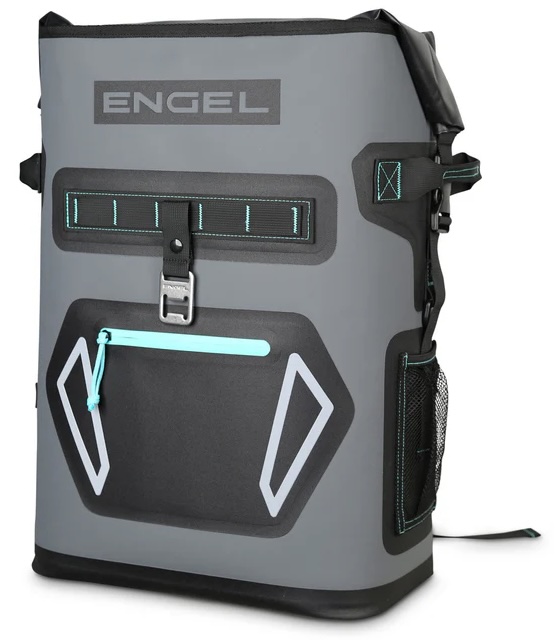 Capacity: 36 cans (without ice)
Weight: 3 lb. 8.0 oz.
Ice retention: 72 hours
What we like: Great insulating performance and durability in a high-end package.
What we don’t: On the bulky side.
Engel’s HD series is a standout, and the brand's Roll Top High Performance Backpack Cooler marks its first foray into the backpack cooler space. Like the HD series, the Roll Top sports a welded construction (most competitors are sewn) that’s designed to seal in cold and minimize leaks, and it's noticeably robust, with an 840-denier (D) shell and TPU film to reinforce the front and back. The wide, roll-top opening is also one of our favorites: The top of the pack is rigid, allowing you to unfold the opening to load and unload the cooler without the collar flopping around awkwardly. Finally, the feature set is thoughtfully executed, including multiple grab handles, an integrated bottle opener (fairly uncommon in this space), front and side pockets, D-rings and side straps for securing the cooler to a boat and attaching gear externally, and even a vacuum valve for releasing excess air.
In addition to its functional feature set and great long-term durability, the Engel Roll Top High Performance Backpack Cooler is also one of the best insulators on our list, with a claimed three days of ice retention. We always recommend erring on the conservative side with these specs, but the Engel’s welded construction, vacuum valve, and high-quality insulation make it better equipped to seal in cold than many competitors. That said, these features do add considerable bulk: The rigid design doesn’t compress down for storage and will take up a good amount of space in your garage or trunk. In the end, the Roll Top falls into a nice middle ground, offering better durability and storage than the similarly priced Hydro Flask Day Escape while saving you a considerable amount over the Icemule Boss.
See the Engel Roll Top High Performance
Our recommendations are the result of years of testing backpack coolers and include those that have met our high standards for build quality, cold retention, and price. We're constantly testing new and interesting models, but not every cooler makes the cut. But we understand you might be interested in learning what models we tested and dismissed and why we decided to do so.
We removed the RTIC Backpack Cooler from this list because availability was limited at the time of publication and because we encountered some concerning reviews on RTIC's website. We plan to retest this cooler and ensure it deserves a spot on this list.
We removed the Arctic Zone Titan 24 Can Backpack Cooler because the Coleman Chiller 28 Can has proven to be a better budget option. Not only is it bigger, but it has a better build quality.
The Carhartt 24 Can Two Compartment Cooler Backpack didn't make the cut because the REI Trail Split is a better alternative. Though the Carhartt is more expensive than the REI, it lacks the same durability and performance. Most notably, the Carhartt lacks structure, which makes it difficult to pack food without squishing it.
Lastly, we decided to remove the Pelican Dayventure Backpack Cooler. While this design is rugged and more comfortable than the REI Trail Split (not to mention, it's fully insulated), it has a much smaller capacity and is much heavier. For the price, we simply don't think the Pelican is worth it.
In the budget category, options we have dismissed are Arctic Zone’s Titan 24 Can, which is similar to the Coleman in terms of performance, but has a different aesthetic and a more rigid structure. From Coleman’s line, there’s the more rigid Xpand and canvas Backroads, but we consider the Chiller to be the most well-rounded of the bunch.
There are other hybrid cooler/daypack designs we've looked at, including Carhartt’s Insulated Two Compartment Cooler Backpack, which has a classic backpack design but sacrifices structure. Pelican’s Dayventure Backpack Cooler has an extremely durable build and full insulation, but it's heavy and expensive. We think the REI is the best executed of the bunch.

| Cooler | Price | Capacity | Weight | Other Sizes | Ice* |
|---|---|---|---|---|---|
| Hydro Flask 20L Day Escape | $200 | 36 cans (without ice) | 2 lb. 10.1 oz. | None | 36 hours |
| Coleman Chiller 28-Can | $49 | 28 cans (without ice) | 2 lb. 12.0 oz. | None | 12 hours |
| Yeti Hopper M20 | $325 | 36 cans (without ice) | 5 lb. 9.6 oz. | 24 cans | Unavail. |
| Icemule Boss | $380 | 24 cans (with ice) | 7 lb. 3.2 oz. | None | 24 hours |
| REI Co-op Cool Trail Split | $85 | 12 cans (with ice) | 2 lb. 8.0 oz. | None | 40 hours |
| Icemule Jaunt 15L | $120 | 16 cans (with ice) | 2 lb. 0 oz. | 10 can | 24 hours |
| Hydro Flask 20L Carry Out Pack | $120 | 20L (cans unavail.) | 2 lb. 9.6 oz. | None | 24 hours |
| Icemule Pro Large | $135 | 24 cans (with ice) | 3 lb. 8.0 oz. | 32 can | 24 hours |
| CamelBak ChillBak Pack 30 | $300 | 24 cans (with ice) | 4 lb. 6.4 oz. | None | 72 hours |
| Engel Roll Top High Performance | $190 | 36 cans (without ice) | 3 lb. 8.0 oz. | None | 72 hours |
*Editor's note: This number represents claimed ice retention. In real-world use, depending on specific circumstances, we've found these times to be lower. More in our "Ice Retention and Cooling Capabilities" section.
As seasoned outdoor-goers, we’re fairly accustomed to hauling heavy packs into the backcountry, but we especially like it when they’re full of our favorite food and beverages. To compile our initial list of 15 backpack coolers in 2023, managing editor Sarah Nelson put several leading designs to the test with her coworkers in the Pacific Northwest. A former full-time vanlifer who still spends much of the year on the road, Sarah puts a premium on efficient designs that can keep ice frozen for several days—because no one likes having to constantly drain melted ice and restock. Editor Maddie Downie took over the guide in 2024. Based in Washington state, Maddie loves spending long summer days car camping and at the beach, making her a prime candidate for testing backpack coolers.
Through continued testing and feedback from our friends and the online camping community, we’ve whittled down our favorites to the 10 backpack coolers on our list. When we put these designs through their paces, our primary consideration is ice retention, which we evaluate by testing coolers side by side in warm to hot weather, since we know most folks will be adventuring in the heat of the summer. We also evaluate carrying comfort, with factors like strap padding and backpanel design being big contributors, and keep an eye on how each cooler holds up over time. Finally, details like zippers, storage, and exterior lash points can make or break a design, so we make sure to use every feature. As new and noteworthy backpack coolers emerge, we’ll be sure to add any standouts.
.jpg)
Backpack coolers are a somewhat niche category: They fall under the umbrella of soft-sided coolers and are a purpose-built option for those who want the easy portability of a backpack with the insulating performance of a cooler. In practice, we’ve found them great for short approaches to a picnic spot or fishing hole and basecamping by the water for an afternoon. They can also be a great supplement to a larger hard-sided model, providing additional space to store extra food or beverages when camping with a bigger group.

That said, backpack coolers have limited appeal for overnight trips and multi-day outings. Unlike hard-sided models that can keep food and beverages cold for days (or even weeks) on end, backpack coolers aren’t built to keep contents cold for more than a few days at maximum. They’re also generally much smaller than hard-sided designs, typically offering around 30 liters of capacity at the high end. Finally, backpack coolers are fairly expensive considering their modest storage capacity and all-around performance. But if hands-free hauling is a priority for your done-in-a-day adventures, they're a worthy purchase.
As you'll see in your research, there isn't a universally adopted method for measuring a cooler's interior capacity. Some use cans as a unit of measure, while others use liters, quarts, or gallons. That said, “cans” is the most commonly listed for backpack coolers (hard-sided models are generally listed in quarts), and we’ve used that spec whenever available throughout this article. But there are still some discrepancies to be aware of, the biggest being whether ice is included in that estimate. We did our best to clarify in the write-ups and comparison table, but it’s an important distinction to keep in mind when shopping for a backpack cooler.
For reference, the largest options above are the Hydro Flask 20L Day Escape and Yeti Hopper M20, both of which can fit up to 36 12-ounce cans without ice, while the smallest is REI Split Trail, which REI estimates can fit just 12 cans with ice. In our experience, the sweet spot is often right in the middle, with many of our most frequently used backpack coolers offering space for around 18 to 24 cans with ice. These designs are the right size for day trips or weekend road trips, manageable in terms of weight and portability, and won’t take up a ton of space in your vehicle or garage.
Backpack coolers are relatively poor performers in terms of ice retention—most can only keep contents cold for a day or two at maximum in ideal (read: favorable) conditions. External factors play a huge role here, including air temperature, how often you open the lid, how much sunlight you expose the cooler to, and how much ice you use (most brands recommend a 2:1 ice-to-food ratio). For maximum performance, you can pre-chill your cooler before loading it by filling the interior with freezer packs and/or ice for at least a few hours to bring the interior temperature down. When you’re ready to hit the road, swap in pre-chilled packs or fresh ice at the optimal ratio, along with your drinks and food.
Most cooler manufacturers provide a “claimed ice retention” spec in their product listings. From our list, times range from 12 hours at the low end for the Coleman Chiller 28-Can to three days at the high end for Engel’s Roll Top High Performance and CamelBak’s ChillBack Pack 30 (24 hours is standard). That said, we always take manufacturer-provided specs with a grain of salt, and there isn’t an established, standardized test here. In practice, most of the claimed ice retention times feel inflated to us, perhaps due to extremely favorable testing conditions (storing the cooler inside with the lid closed in cool temperatures, for example). If we had to generalize, we would say you can expect approximately half the claimed ice retention time in real-world use, give or take, depending on your specific circumstances.
.jpg)
Weight and portability are two clear reasons to choose a backpack cooler over a hard-sided design: They’re far lighter and easier to tote around, whether you’re hiking to your favorite campsite or schlepping lunch and gear to a local lake or river for an afternoon paddle. A quick glance at our comparison table reveals that most options hover around the 2- to 4-pound range, with the largest and most robust designs weighing 5 to 6 pounds (or more). For reference, the rigid and feature-rich Icemule Boss is the heaviest model on our list at 7 pounds 3.2 ounces, while the minimalist and more flexible Icemule Jaunt 15L is the lightest at just 2 pounds. On a related note, comfortable shoulder straps and/or grab handles can go a long way toward maximizing portability.
.jpg)
Right away, we’ll note that backpack coolers aren’t designed to be hauled for long distances like a true daypack or backpacking pack. They do, however, keep your hands free and make walking over uneven ground far easier than with hard-sided or traditional soft-sided coolers. In addition to their low weight, most backpack coolers come with padded shoulder straps and back panels to keep you comfortable on the move, as well as exterior pockets and lash points for additional gear storage. A few options (including the Coleman Chiller, Icemule Boss, and CamelBak ChillBak) also feature a hipbelt to transfer weight to your hips, which can improve long-distance carrying comfort, but it’s not necessary for most.
From our experience, price usually correlates with nicer suspensions and padding, with high-end designs like the Yeti Hopper M20 and Icemule Boss leading the charge. And we’ve found that budget coolers with simpler strap systems, like those from Coleman and Arctic Zone, aren’t as comfortable to carry for extended stretches (plus cheap foam is more prone to breaking down over time). An additional consideration is the cooler's shape and size. And in general, tall and rectangular designs with a fairly rigid structure are among the least comfortable. All that said, every single model on our list is perfectly serviceable for hauling food and beverages over short distances, such as to a beach, boat, or campsite.
.jpg)
Durability varies considerably among backpack coolers, and a good way to differentiate models is to look at denier (D), a measure of fabric thickness. Rigid designs like Yeti’s Hopper M20 and Engel’s Roll Top High Performance (both 840D) sit at the top of the pack. These designs have tough exteriors that feel very confidence-inspiring around sharp gear and have stood up well to regular use throughout testing with little wear to show for it. Icemule’s Pro Large cooler is another standout in this area, with a thick (1,000D) and dry-bag-like exterior that’s well-equipped for rough-and-rugged outdoor adventures. Softer, more malleable options like Icemule's Jaunt 15L feel significantly less burly and may be more prone to wear and tear over time, but they’re well-built for casual outdoor use.
.jpg)
On a related note, it’s worth pointing out that price and build quality often correlate pretty closely: Budget-friendly designs like the Arctic Zone Titan 24 Can, Coleman Chiller 28-Can Backpack Cooler, and Carhartt Insulated Two Compartment Cooler Backpack have noticeably cheaper-feeling constructions and components than their more premium counterparts (they'll also be the first to leak as your ice melts). Again, these options may be totally workable for casual day trips and infrequent use, but committed outdoor-goers who plan to use their cooler regularly (and especially around water) will likely benefit from spending up.
Many mid-range and high-end coolers use highly water-resistant zippers or openings to help prevent leaks. Taking it a step further are fully waterproof coolers like Icemule's Pro, which has a dry-bag-like shape and can be submerged. RTIC’s Backpack Cooler and Hydro Flask’s 20L Day Escape are also fully waterproof, including welded seams and watertight zippers, while Icemule's Boss tacks on a handy air valve to keep it afloat should conditions get rougher than expected. Most other options are highly water-resistant and can withstand light moisture. Still, kayakers and paddle boarders will likely want to step up to a fully waterproof option for added assurance while out on the water.
.jpg)
There's a lot to like about coolers that boast a separate compartment for housing gear, like the REI Cool Trail Split Pack, the Carhartt Insulated Two Compartment Cooler Backpack, and the Pelican Dayventure Backpack Cooler. These hybrid designs are simple but well executed: You get an insulated bottom compartment for keeping food and beverages cold, while the upper section can be used for stashing layers, snacks, and accessories. The Pelican is the only design of the bunch that’s fully insulated (you can utilize both areas for food and drinks), while the REI and Carhartt only include insulation in the bottom compartment. The biggest downside is that the gear storage eats into the cooler's capacity, giving these packs limited appeal for group outings and other situations when you need to keep a full day’s worth of food and beverages cold. But they’re great for packing a light lunch and a couple of drinks, and the REI’s cooler insert is removable, so you can use the entire capacity for gear.
.jpg)
The opening style and closure system of a backpack cooler may not seem all that important, but we can tell you firsthand that it will have a sizable impact on both convenience and overall performance. And styles vary considerably between models. The Yeti Hopper M20, for instance, has a magnet-equipped opening that closes easily but can be difficult to prop open wide enough to fit large items. Many zipper-equipped options, such as RTIC’s Backpack Cooler, also require significant force to operate the zippers, though the wraparound design makes it easier to prop the lid open. The downside is that these styles are often prone to leaks. Another one of our favorites is the watertight zipper on Hydro Flask’s 20L Day Escape, which requires minimal force to open, provides a reliable seal, and is easy to realign if it separates.
.jpg)
A final style worth calling out is the roll-top opening, which is shared among all of Icemule's options as well as CamelBak’s ChillBak Pack 30 and Engel’s Roll Top High Performance. We've found that roll tops create a wide opening for loading and unloading items, and when combined with a flexible structure (like the Icemules), they're easy to compress around a half-filled bag. Downsides include the fact that the roll top takes more time to secure than a zipper and requires two hands to work. In the end, each style has its pros and cons, but a smooth-operating zipper, like the one that comes with the Hydro Flask's Carry Out Pack, is our personal favorite.

Pockets and Organization
Backpack coolers come in a range of shapes and designs, but many include at least one exterior pocket for stashing small valuables like a phone, wallet, or keys. In practice, we’ve found these helpful for keeping track of our belongings, whether we’re spending a day at a local state park or enjoying an afternoon at the beach. We also appreciate when these pockets are water-resistant, which provides a little extra assurance against splashes or precipitation. A couple of models that include functional stash pockets include Icemule's Boss and Hydro Flask's Carry Carry Out.

External Attachment Points
Many backpack coolers, including Yeti’s Hopper M20 and Hydro Flask’s 20L Day Escape, feature daisy-chain webbing on the outside for securing extra gear. In use, we’ve found this area useful for keeping valuables like keys close at hand (we use a carabiner to attach them). And we particularly like the stretchy bungee system on Icemule's Pro and Boss models, which makes it easy to secure a lightweight jacket or small towel.
.jpg)
Other Features
A few other notable features to be on the lookout for include integrated bottle openers and vacuum ports for adding or releasing air. The Engel Roll Top High Performance comes with a bottle opener and a unique vacuum valve that lets you suck out excess air before use, maximizing its insulation power. Icemule's Boss has a similar valve system, though in this case the process involves adding air to boost cooling and buoyancy, then removing it to compress the cooler for storage.
Another feature worth calling out is the REI Cool Trail Split Pack’s removable cooler insert, which makes for easy cleaning and lets you use the full gear capacity on day hikes. Some coolers also boast attachment points for strapping down to a boat or truck bed, which can add a nice dose of security in rough waters or on rocky drives to the trailhead. Finally, CamelBak's ChillBak is the only cooler line to include a hydration reservoir, which is great for adventures like single-pitch climbing or group adventures when you'll want to keep everyone hydrated.
.jpg)
Many soft cooler manufacturers also sell compatible accessories that can attach directly to the outside of their coolers. For instance, Hydro Flask’s 20L Day Escape has thread-through points on the outside for securing one of their Dry Storage Bags (offered in small, medium, and large sizes). Icemule sells a similar storage pouch, as well as an ultralight dry bag that fits nicely inside their Pro coolers for added assurance against leaks (although we haven’t had any issues to date). And Yeti’s accessories for their soft coolers are relatively limited compared to their hard-sided collection, although we do like their similar SideKick Dry Gear Case that attaches to the HitchPoint grid on their Hopper M20, as well as the Molle Zinger for securing a multitool or bottle opener. Finally, several brands offer small add-ons, like leakproof food containers, though you can realistically buy them anywhere.
The price spread among backpack coolers is significant, ranging from just $49 for the Coleman Chiller 28-Can up to $380 for Icemule’s top-end Boss. What do you get by spending up? As we touched on previously, durability, waterproofing/leakproofing, and cost often correlate closely, with top-shelf designs like the Boss and Engel’s Roll Top High Performance all boasting impressively thick and rigid exteriors that will stand up well to long-term use. That said, even the cheapest options on our list are reasonably well-built and will get the job done for days at the beach or lake, which should be enough to sway many.
.jpg)
Additionally, unlike hard coolers, the difference in ice retention between backpack models isn’t all that sizable, which can make it harder to justify spending the premium. To be sure, these top-end designs have their appeal for those who want the easy portability of a backpack cooler without compromising on build quality, but they’re not worth the investment for most. If you’ve got the budget, it’s almost certainly worth opting for a hard-sided model instead. You’ll incur a sizable weight penalty, but the boost in cooling capabilities and overall performance will be well worth that trade-off for many.
Most of us are accustomed to using crushed ice in our coolers, and for good reason: It’s cheap, readily available at most gas stations and supermarkets, and easily fills the gaps between food and beverages. That said, it’s also the fastest to melt and will need to be replaced fairly frequently, which we experienced firsthand while testing many of the models on a warm late-season outing in Washington State. After an afternoon in direct sunlight, most of the crushed ice we had dumped inside our various coolers had turned to water, resulting in soupiness and sloshing. And in the case of the $45 Arctic Zone Titan, moisture had started seeping through the non-waterproof interior. To make things worse, most backpack coolers don’t come with drainage ports, which can make it difficult and tedious to remove excess water (you’ll have to turn them upside down to dump excess moisture, which isn’t always a mess-free process).
.jpg)
To prevent issues like these, we strongly recommend using dedicated ice packs in your backpack cooler instead (unless you're only using the cooler to carry drinks and/or cans). To simplify the buying process, most major brands offer designs that work well in their coolers, and the best part is that you can use them repeatedly without ever having to drain melted ice. They can be a fairly expensive addition (Yetis range from around $15 to $30, depending on size) and require refreezing once they lose their coldness, but they’re the simplest and least messy option for soft coolers. A final alternative is using blocks of ice, which take much longer to melt than crushed ice but are bulky and take up a lot of space. And one last note: Dry ice will damage the interior of most soft-sided models, so be sure to steer clear.
Before investing in a backpack cooler, it's prudent to consider how long it’s covered under warranty. A one-year warranty is standard, while three to five years is on the generous end. For reference, Yeti and Pelican both offer three-year warranties on their backpack coolers, while RTIC’s are covered for just 90 days. Importantly, all of these are limited warranties that solely cover defects in materials or workmanship and exclude damage from typical wear and tear. One exception is REI Co-op, which offers a full refund or replacement within one year of purchase for members (90 days for non-members). Finally, it’s worth noting that many companies provide different warranties for their hard-sided versus soft-sided offerings. For example, Yeti’s hard-sided Tundra series comes with a five-year warranty, compared to three for the Hopper collection.
.jpg)
Backpack coolers are relatively easy to care for, but following a few simple steps can make a big difference in their longevity. After each trip, it’s good practice to clean out the interior with a mixture of warm water and mild soap. For tough stains, apply a baking soda and water solution and let it sit for about 20 minutes before washing it off. Pesky odors can be treated with a diluted bleach and water solution. Make sure to rinse thoroughly before leaving the cooler out to air dry with the lid open, which will minimize the chance of mold or mildew buildup. Once it’s dry, store your cooler in a dry place with the zipper closed. Finally, if any of the zippers are giving you issues, ensure there's no debris between the teeth and apply a lubricant (like Gear Aid's Zipper Cleaner and Lubricant) on both sides to keep them running smoothly.
We exclusively cover backpack-style coolers in this guide, which offer the ultimate in portability. For a step down in price, traditional soft-sided models are also relatively easy to carry (much more so than heavy hard-sided designs), but lack the shoulder straps and suspension system of backpack-style designs for shuttling longer distances. For multi-day trips, however, hard-sided models are far and away the best option. Namely, they retain ice for much longer (two to 10 days is standard), are inherently far more durable and hardwearing, and come in larger capacities. Many hard coolers also boast helpful features like drainage systems to help you empty out water once your ice has melted and lockable lids to bear-proof your cooler when camping in bear country.
.jpg)
In terms of drawbacks, hard-sided coolers are significantly heavier, bulkier, pricier, and less portable than both soft coolers and backpack-style models, but most committed campers will find those trade-offs worth it for the boost in overall performance. (Alternatively, if you're willing to spend up, hard-sided wheeled coolers offer the best of both worlds in terms of cold retention and portability.) Some of our favorite designs include RTIC’s Ultra-Light lineup, Yeti's Tundra series, and Pelican’s Elite collection. For a full list of options (including buying considerations specific to hard-sided offerings), check out our article on the best coolers.
Back to Our Top Backpack Cooler Picks Back to Our Backpack Cooler Comparison Table

_03327.jpg?h=fbc67360&itok=dlH2L5Ek)
%20(s)2bb7.jpg?h=9545d21b&itok=qywt9roP)
1030.jpg?h=fbc67360&itok=5cY5pjyV)
58ff.jpg?h=fbc67360&itok=-Rsj9UCw)
0a48.jpg?h=fbc67360&itok=IjTMtW86)
3145.jpg?h=fbc67360&itok=-0j0ZbsI)

%20(s)2b8c.jpg?h=fbc67360&itok=df-JkMuB)
2c1f.jpg?h=fbc67360&itok=nM6URf95)